



Does Sealing Pavers Make Them Slippery? What Every Homeowner Needs to Know
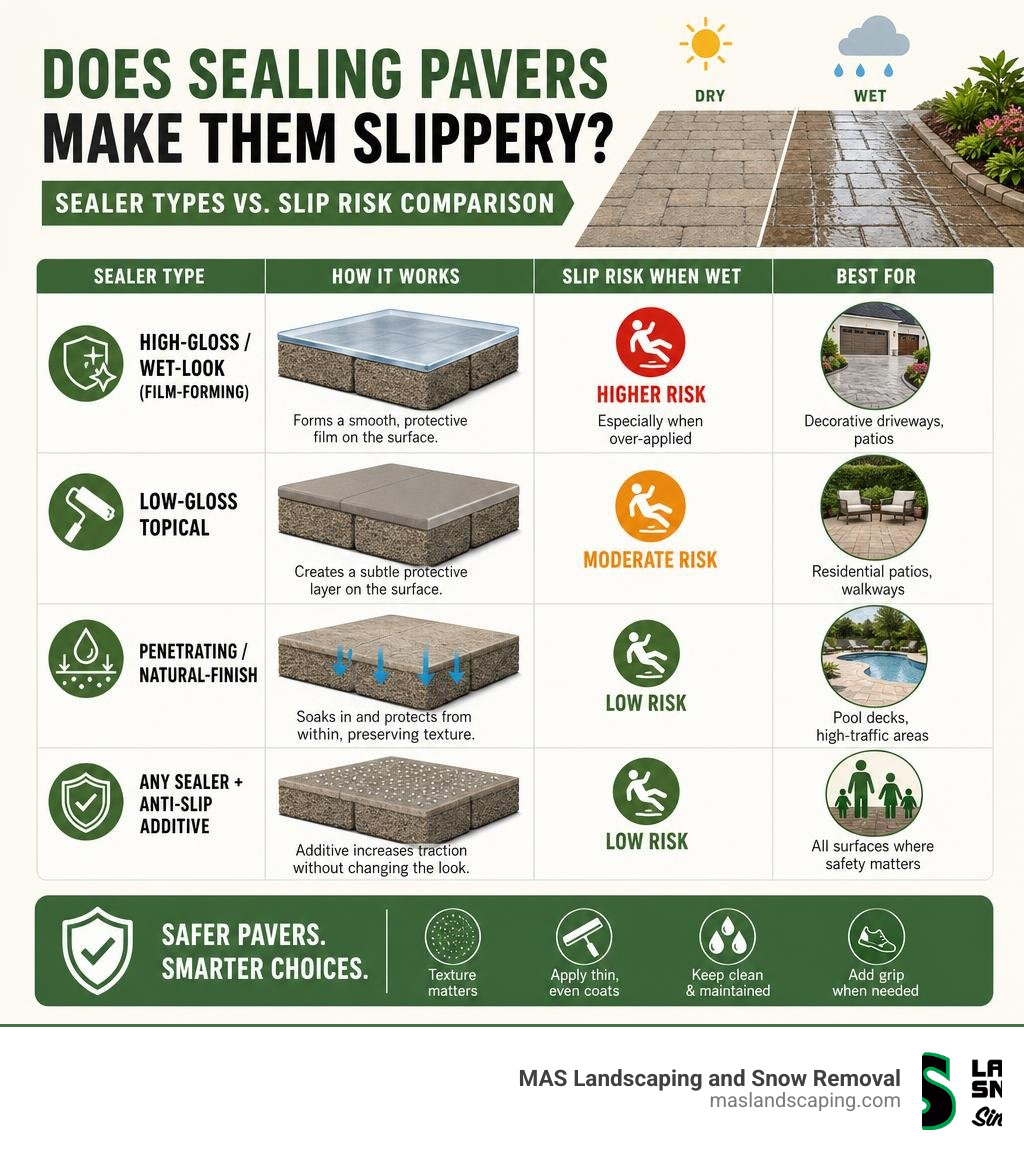
Does sealing pavers make them slippery — and is it worth the risk? Here’s the short answer before we dig into the details:
Quick Answer: It Depends on the Sealer Type
| Sealer Type | Slip Risk When Wet | Best For |
|---|---|---|
| High-gloss / wet-look (film-forming) | Higher risk, especially when over-applied | Decorative driveways, patios |
| Low-gloss topical | Moderate risk | Residential patios, walkways |
| Penetrating / natural-finish | Low risk | Pool decks, high-traffic areas |
| Any sealer + anti-slip additive | Low risk | All surfaces where safety matters |
The short version: topical sealers that sit on top of the paver surface can create a slick film — especially when wet or applied too thick. Penetrating sealers soak into the paver and leave the surface texture mostly intact, which means far less slip risk.
Pool decks, shaded walkways, and sloped surfaces are where this distinction matters most.
A common real-world scenario: a homeowner seals their pool patio with a glossy wet-look product, loves how it looks — then discovers on the first rainy day that it feels like walking on wet glass. That’s not a product defect. It’s a product mismatch.
The good news? With the right sealer choice, proper application, and a few simple precautions, you can have both the look you want and a surface that stays safe underfoot.
Discover more about does sealing pavers make them slippery:
Does Sealing Pavers Make Them Slippery? The Core Science
To truly understand why some sealed surfaces feel like an ice rink while others feel completely safe, we have to look at the physics of traction. Unsealed concrete pavers are naturally porous. They possess a high degree of both macro-texture (the visible bumps, ridges, and slopes on the surface) and micro-roughness (the microscopic pores within the concrete itself). When you step on a raw paver, your shoe or bare foot grips these tiny ridges, creating friction.
When water is introduced to an unsealed paver, much of it is immediately absorbed into the porous network or drains away through the joint sand.
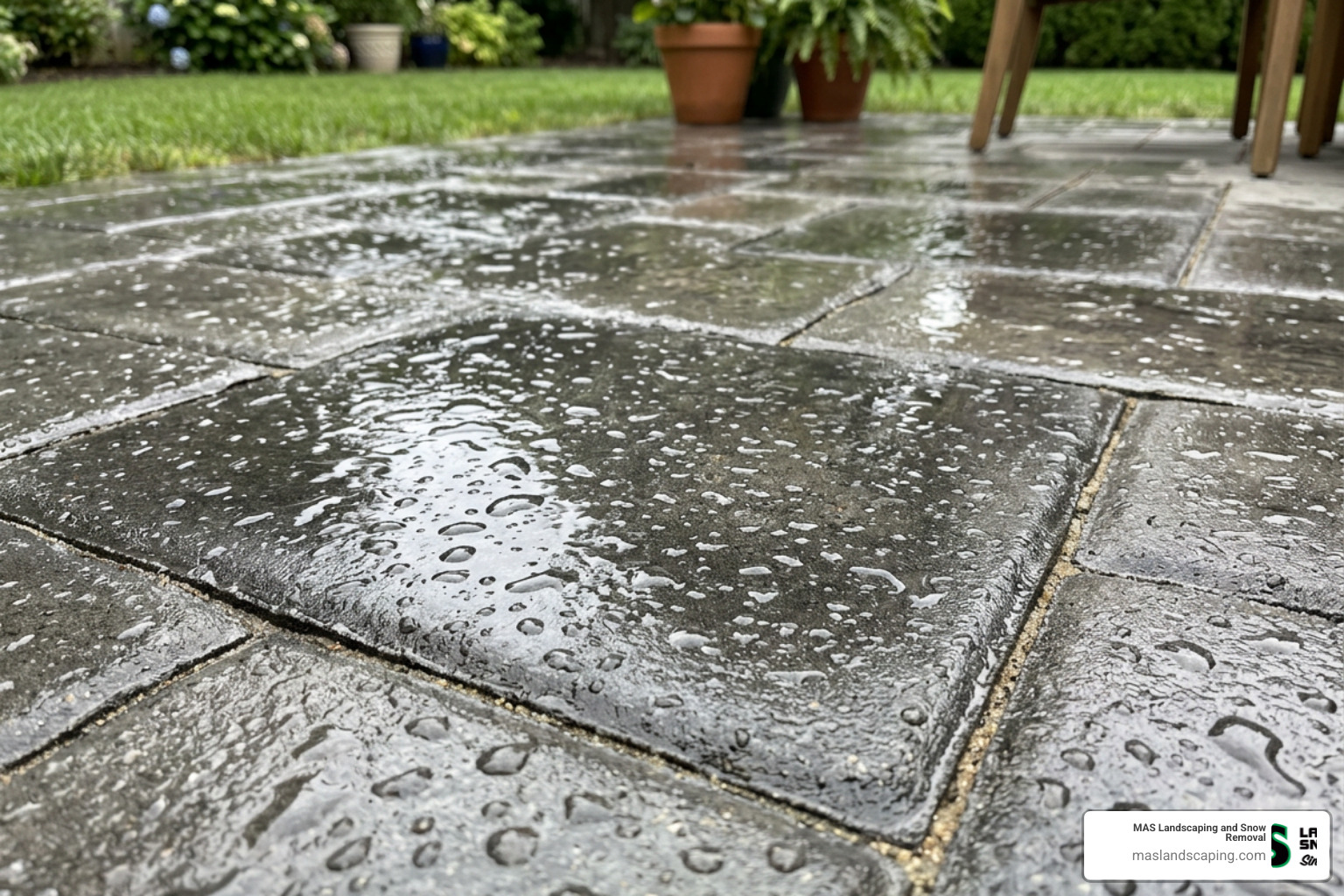
Once you apply a sealer, however, you alter how the surface interacts with water and physical pressure. The core science of whether does sealing pavers make them slippery comes down to the fundamental difference between two primary categories of sealers: topical (film-forming) sealers and penetrating (non-film-forming) sealers.
- Topical (Film-Forming) Sealers: These products form a protective, continuous barrier on top of the paver surface. They are popular because they lock in joint sand, intensify the paver’s color, and provide a beautiful sheen. However, because they create a physical film, they can bridge and fill the micro-roughness of the concrete. If applied too thickly, they create a smooth, non-porous sheet. When rainwater or pool splashes hit this film, the water cannot soak in. Instead, it pools on top, creating a thin lubricating layer. When your foot makes contact, it can easily hydroplane across the smooth surface.
- Penetrating Sealers: These sealers work entirely differently. Instead of sitting on top, they dive deep into the pores of the concrete or natural stone, bonding chemically with the substrate. They make the paver hydrophobic (water-repellent) from the inside out. When water hits a penetrating-sealed paver, it beads up and sheds off, but the physical texture of the surface remains completely unchanged. The micro-roughness is preserved, leaving the traction levels virtually identical to an unsealed paver.
Understanding this distinction is key to protecting your outdoor investment. If you are debating whether to protect your hardscape, reading up on Should You Seal Your Paver Patio? A Complete Guide to Protection and Longevity will help you weigh the benefits of stain protection and joint stabilization against safety considerations. You can also explore the specific mechanics of traction in this detailed guide on Will Sealing Brick Pavers Make Them Slippery.
Does Sealing Pavers Make Them Slippery? The Role of Sealer Chemistry
The chemical formulation of your sealer plays a major role in its final texture and slip risk. Topical sealers are typically built around acrylic polymers, urethanes, or epoxies, and they can be either water-based or solvent-based.
- Solvent-Based Acrylics: These are known for producing a rich, deep color enhancement and a high-gloss finish. However, solvent-based acrylics form a tighter, harder, and slicker film on the surface. They are also prone to “blushing” (turning a hazy white) if moisture is trapped beneath the surface during application. Because the cured film is exceptionally smooth, solvent-based acrylics pose the highest natural slip risk when wet if they are applied without a traction additive.
- Water-Based Acrylics: These products generally dry to a thinner, more breathable film. They tend to have a lower gloss level (often a satin or semi-gloss finish) and do not darken the pavers quite as as solvent-based alternatives. Because the film is thinner, it preserves a bit more of the paver’s natural macro-texture, making them slightly less slippery than heavy solvent-based finishes—though safety precautions are still highly recommended.
- Water-Based Urethane Hybrids: These modern formulas offer the best of both worlds: excellent durability, strong UV resistance, and solid joint sand stabilization. While they still form a protective film, they can be applied in controlled, thin coats that minimize the risk of creating a slick surface, especially when paired with the right application tools.
Does Sealing Pavers Make Them Slippery? How Paver Texture Matters
The type of hardscape material you have installed on your property dictates how it will behave once sealed. Different materials absorb and interact with sealer formulations in unique ways:
- Standard Concrete Pavers: These usually have a moderate level of built-in texture. If they are relatively new, they have plenty of surface profile to help maintain traction, even under a thin layer of topical sealer. However, older, worn concrete pavers that have lost their top layer of fine aggregate can become slicker once a film-forming sealer is applied.
- Natural Stone (Travertine, Slate, and Granite): Travertine is incredibly popular for pool decks due to its luxurious look and cool-under-foot feel. However, travertine has a very dense, tight pore network. Applying a topical, glossy sealer to travertine is a recipe for a slippery surface. For dense natural stones, a breathable penetrating sealer is almost always the safest and most effective choice.
- Clay Bricks: Clay is highly porous and absorbs sealers deeply. While they can handle topical sealers well, high-solids sealers can pool in the shallow texture of smooth-faced bricks, creating unexpectedly slick patches.
Sealer Finishes and Slip Resistance: Wet-Look vs. Natural
Choosing the right finish is a balancing act between aesthetic appeal and safety. Homeowners love the dramatic look of wet-look sealers because they make faded pavers look vibrant and brand new. However, that glossy sheen comes with physical trade-offs.
To help you visualize how different finishes affect traction, maintenance, and appearance, we have broken down the three most common options:
| Finish Type | Visual Effect | Traction Level (Wet) | Maintenance Level | Best For |
|---|---|---|---|---|
| Wet-Look / High-Gloss | High shine; deepens and darkens paver colors significantly. | Low (Slippery without additives) | Moderate (Requires periodic recoating and careful cleaning) | Decorative driveways, low-traffic borders, front entryways |
| Low-Gloss / Satin | Subtle sheen; moderate color enhancement without a mirror finish. | Moderate (Additives recommended for wet areas) | Moderate | Backyard dining patios, garden walkways |
| Natural / Matte | No shine; preserves original color or provides invisible protection. | High (Maintains original grip) | Low | Pool decks, sloped walkways, shaded areas prone to algae |
As you can see, higher gloss levels correlate directly with higher slip risks. If you want to dive deeper into the aesthetic and physical differences between these options, check out this comparison of Paver Sealer Finishes: Natural Look vs. Wet Look. For a step-by-step approach to selecting the perfect sealant for your specific hardscape setup, read our comprehensive Choosing the Best Paver Sealer for Your Patio: A Buyer’s Guide.
How to Prevent and Reduce Slip Risks on Sealed Pavers
If you have your heart set on a gorgeous, color-enhancing wet-look finish but are worried about turning your patio into a slip-and-slide, do not panic. You do not have to sacrifice beauty for safety. There are highly effective, industry-proven methods to maintain excellent traction on sealed surfaces.
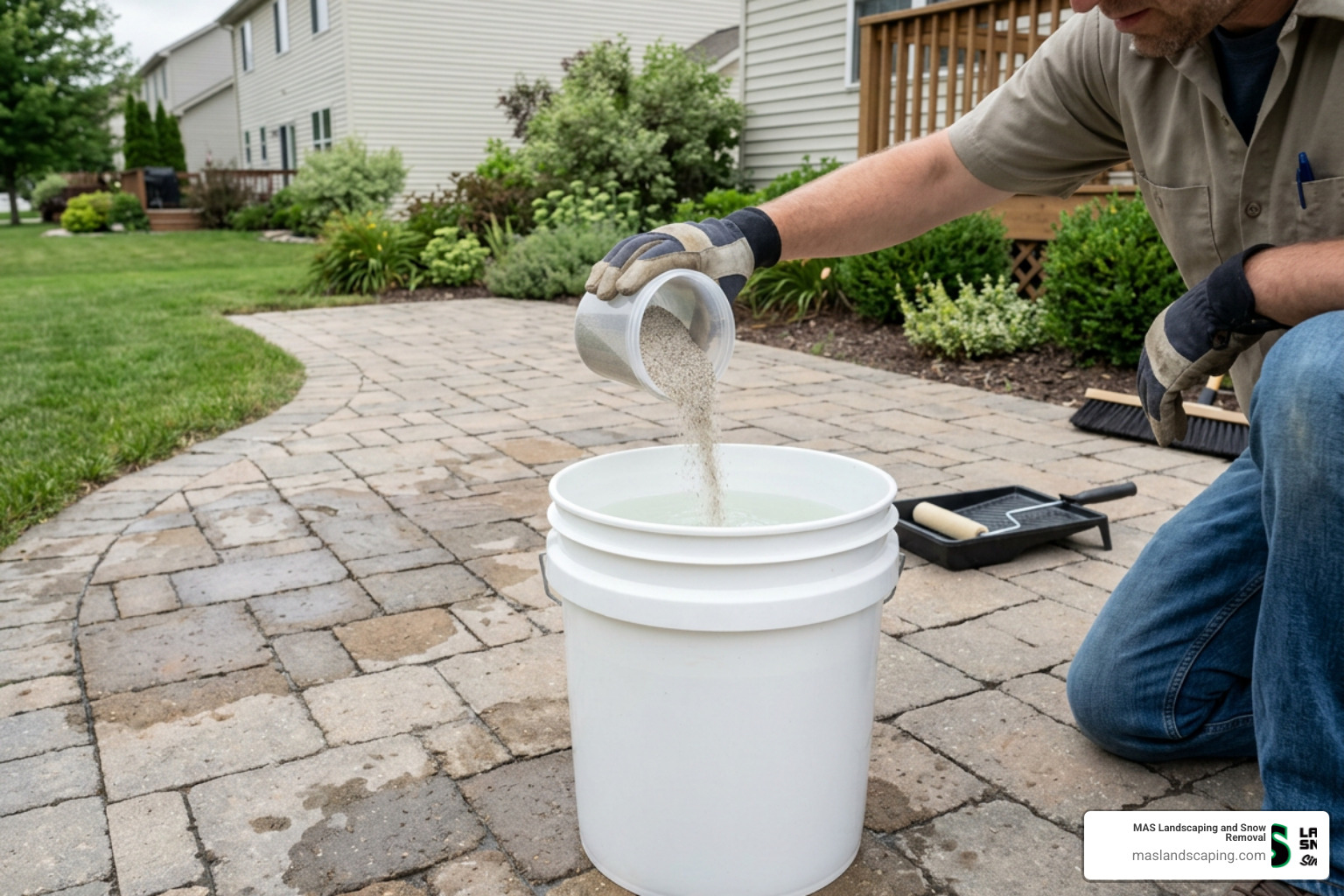
The key to a safe, slip-resistant finish lies in two main pillars: using the right anti-slip additives and executing flawless application techniques. For a deeper look at safety protocols, especially around water-heavy zones, read our guide on Sealing Pavers for Pool Areas: Slip Resistance and Safety. If you are planning a DIY project, make sure to follow the foundational steps outlined in How to Seal Patio Pavers in 5 Easy Steps.
Choosing the Right Anti-Slip Additives
An anti-slip additive is a finely textured grit that is mixed directly into the liquid sealer before application or broadcasted over the wet surface. Once the sealer cures, these tiny particles remain suspended in the film, creating a microscopic sandpaper-like texture that provides excellent grip for shoes and bare feet.
Not all additives are created equal. Here are the most common types used in the hardscaping industry:
- Polycarbonate Grit (e.g., Shark Grip): This is widely considered the gold standard for residential paver sealing. Polycarbonate is extremely lightweight, which means it stays evenly suspended in the sealer bucket rather than sinking to the bottom. It is virtually invisible once cured, preserving the clear, glossy look of your sealer while providing a reliable, comfortable grip that is gentle on bare feet.
- Aluminum Oxide: This is an incredibly durable, hard mineral additive. It provides unmatched slip resistance and is highly resistant to wear. However, because it is heavy, it requires constant stirring during application to prevent settling. It can also feel quite abrasive under bare feet, making it better suited for commercial walkways or steep driveways rather than residential pool decks.
- Polypropylene Beads: Similar to polycarbonate, these are lightweight plastic beads that suspend easily in water-based and solvent-based sealers. They provide a soft, comfortable texture that is perfect for pool areas.
Proper Application Techniques to Avoid Slick Surfaces
Even the best sealer with the highest-quality slip additive can become dangerously slick if applied incorrectly. Over-application is the number one cause of slippery sealed pavers.
When sealer is applied too thickly, it pools in the low spots, creating thick, glassy pockets of acrylic that completely bury the paver’s natural texture. To avoid this, we always recommend applying two thin coats rather than one heavy, thick coat.
Additionally, using a roller to “back-roll” the sealer immediately after spraying helps distribute the product evenly and eliminates puddles.
Moisture management is another critical factor. If you seal pavers that are still damp from a recent rain or pressure washing, the water vapor trying to escape from the ground will get trapped beneath the sealer film. This causes the sealer to separate from the paver, leading to a hazy white appearance and a slick, unstable surface. Always perform a moisture test (such as taping a clear plastic sheet to the pavers for 24 hours to check for condensation) before sealing.
If you are working with polymeric sand in the joints, you must take extra precautions. Failing to clean away residual polymer dust before sealing can lead to a blotchy, sticky, and slick mess. To avoid these headaches, refer to our expert advice on How to Seal Pavers After Polymeric Sand Without Issues.
Safe Sealing Practices for Pool Decks, Patios, and Walkways
Designing a safe hardscape environment requires looking at the entire system, not just the liquid in the sealer bucket. This is especially true here in New England, where our local weather patterns throw everything from humid summer downpours to freezing nor’easters at our outdoor spaces.
When we plan a sealing project in areas like Lynnfield, Everett, or Malden, we must account for several environmental factors to ensure long-term pedestrian safety:
- Pool Chemicals and Salt Systems: Modern saltwater pools are incredibly popular, but they present a unique challenge. When saltwater splashes onto a sealed pool deck and evaporates, it leaves behind microscopic salt crystals. On a smooth, sealed surface, these dry crystals can act like tiny ball bearings, drastically reducing traction. Using a penetrating sealer or a matte-finish topical sealer with a high concentration of polycarbonate grit is essential around salt pools.
- Drainage and Slopes: A properly constructed patio or pool deck should have a 1% to 2% slope away from home foundations and pool coping. This ensures water sheds quickly. If your hardscape has minor low spots where water tends to collect, a high-gloss sealer will only exacerbate the issue by holding the water on top of the film.
- Shade and Algae Growth: In damp, shaded New England backyards, mold, mildew, and algae love to call unsealed pavers home. While sealing helps prevent these organic growths from rooting in the paver pores, a slick, wet topical sealer in a shaded corner can quickly grow a microscopic layer of algae that is incredibly slippery. Regular maintenance and choosing a highly breathable sealer are critical in these zones. To learn more about stopping slipperiness before it starts, check out the specialized advice in How do you stop pavers from being slippery – CoverTec Products.
- New England Winter Care: Sealed driveways and walkways face harsh conditions during our Saugus winters. When clearing snow, always use a plastic shovel or a shovel with a protective rubber edge. Metal blades can scratch and gouge the sealer film, ruining the aesthetics and creating uneven wear spots. For ice melting, calcium chloride-based de-icers are generally much safer for sealed concrete pavers than harsh rock salt (sodium chloride), which can cause spalling and degrade the sealer over time. For driveway-specific sealing tips, read Seal the Deal: The Ultimate Guide to Driveway Paver Sealing.
Frequently Asked Questions About Slippery Pavers
How do you fix sealed pavers that are too slippery?
If you or a previous homeowner applied a sealer that turned your patio into a safety hazard, you have a few options to restore traction:
- Chemical Stripping: If the sealer was applied way too thick or is starting to peel and turn white, the best solution is to strip it off entirely. Using a professional-grade solvent stripper, you can dissolve the old acrylic film, wash it away, and start fresh with a penetrating sealer or a thin topical coat mixed with anti-slip grit.
- Apply a Grip Coat: If the existing sealer is still in good structural condition but is simply too slick, you can apply a very thin “re-coat” of compatible sealer mixed with a high volume of polycarbonate traction additive. This new layer will bond to the old sealer and introduce the necessary texture.
- Use a Slip-Resistant Treatment: For natural stone or porcelain tiles that cannot be easily stripped, specialized chemical treatments can be applied to microscopically etch the surface, increasing the dynamic coefficient of friction without altering the appearance.
How long does the slip resistance of traction additives last?
The slip resistance provided by traction additives is not permanent; it wears down gradually alongside the sealer itself. In high-traffic areas—such as the path leading directly from the pool steps, walkway entryways, or right outside the back door—the microscopic grit will slowly polish down over time.
On average, in a typical residential setting under New England weather conditions, a high-quality polycarbonate traction additive will maintain excellent slip resistance for 2 to 4 years. When you notice water is no longer beading on the pavers, or if the surface starts to feel smooth and slick underfoot again when wet, it is time to schedule a light clean and a fresh maintenance coat with integrated grit.
Can you add non-slip grit to water-based sealers?
Yes, absolutely! You can add non-slip grit to both water-based and solvent-based sealers. However, the mixing and application process differs slightly depending on the chemistry:
- Water-Based Acrylics: Because water-based sealers are generally thinner and have a different molecular weight, lightweight polycarbonate additives (like Shark Grip) suspend beautifully in them. You simply pour the additive into the sealer bucket and stir thoroughly.
- Keep Stirring: Even lightweight grit can eventually settle if left sitting. Whether you are using water-based or solvent-based products, make it a habit to stir your sealer bucket every 10 to 15 minutes during the application process to ensure an even distribution of traction media across your entire patio.
Conclusion
So, does sealing pavers make them slippery? The answer is a definitive “only if done incorrectly.” By choosing the right sealer for your specific hardscape material, opting for a natural or low-gloss finish in wet areas, and always incorporating a premium anti-slip additive, you can enjoy all the benefits of sealed pavers—stain resistance, joint stabilization, and enhanced curb appeal—without ever worrying about a slip-and-fall hazard.
At MAS Landscaping and Snow Removal, we have spent years helping homeowners throughout Essex and Middlesex counties protect and beautify their outdoor living spaces. Based proudly in Saugus, MA, we understand the unique demands that our local climate puts on concrete pavers, natural stone, and clay brick. Whether you need help restoring a slippery patio, pressure washing away years of New England grime, or installing a brand-new hardscape masterpiece from scratch, our team is here to deliver professional, personalized, and safe results.
Ready to protect your outdoor space without sacrificing safety? Contact MAS Landscaping for professional patio installations and paver sealing services today, and let us help you build a beautiful, worry-free backyard retreat!
