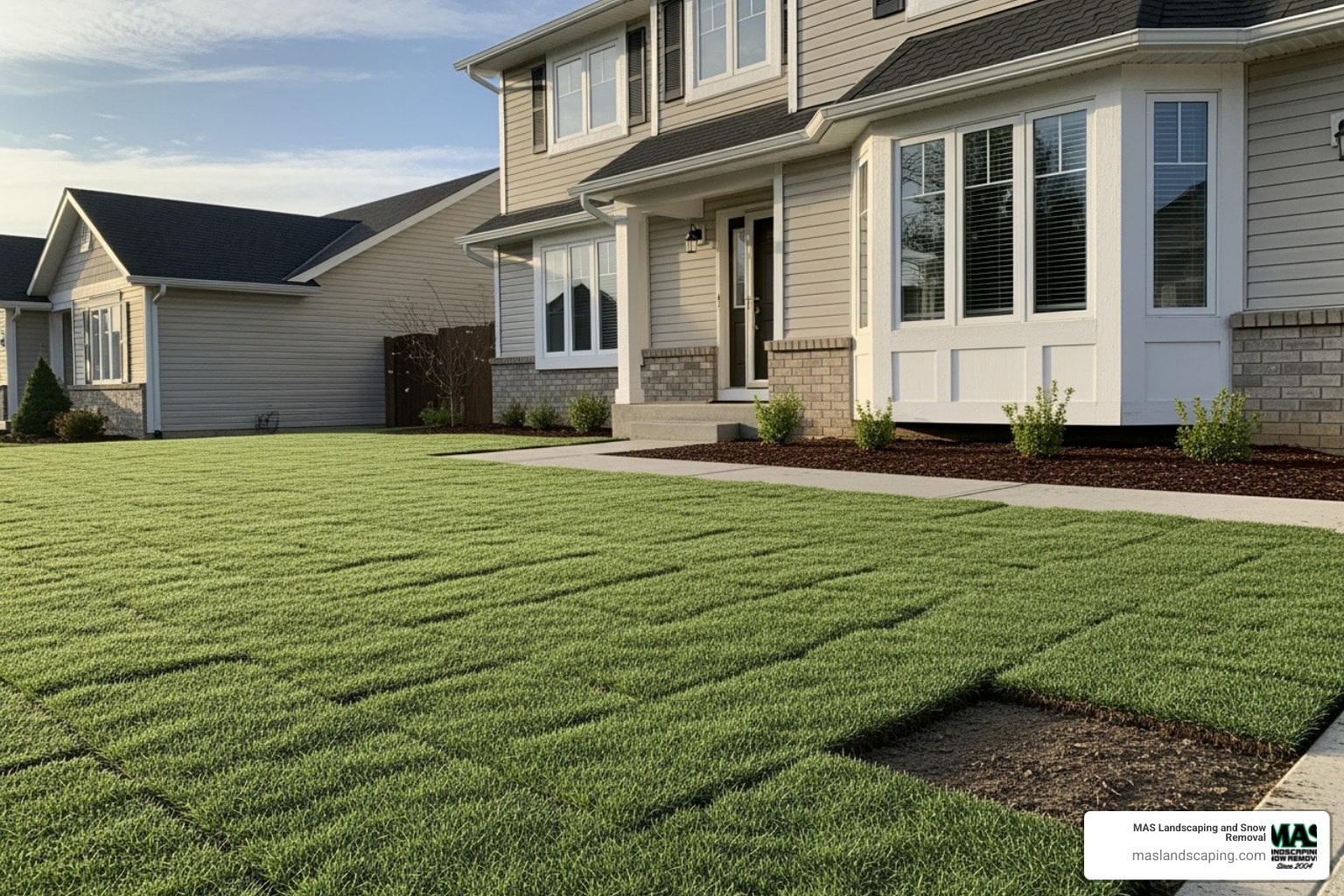



How to maintain a new lawn after installation 30-Day Lush
Why Your New Lawn’s First Month Makes or Breaks Its Future
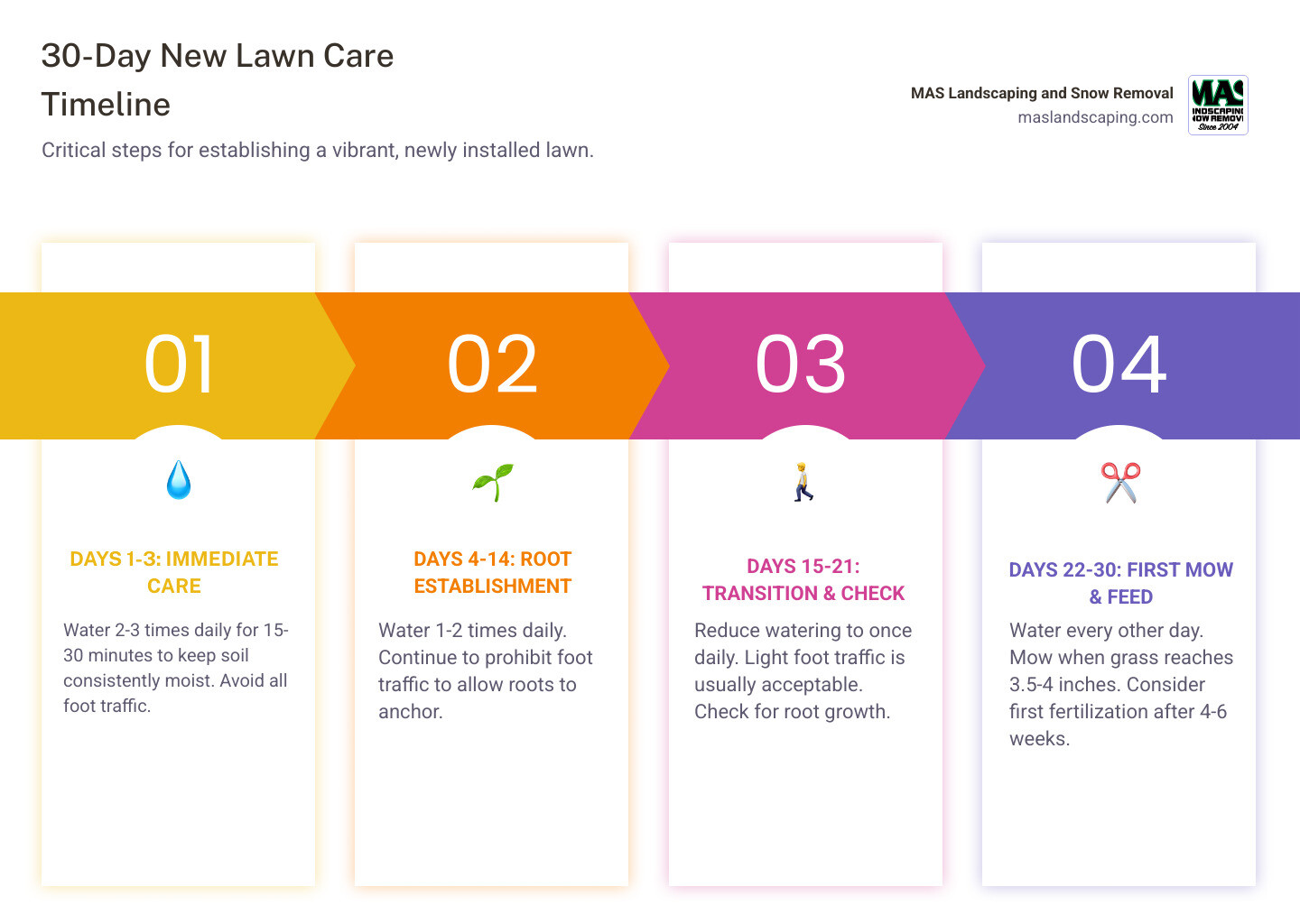
How to maintain a new lawn after installation boils down to three critical practices: consistent watering, minimal foot traffic, and delayed first mowing. Here’s your quick-start guide:
The 30-Day New Lawn Care Essentials:
- Days 1-14: Water 2-3 times daily for 15-30 minutes to keep soil consistently moist
- Days 15-30: Reduce to once daily watering, then every other day
- No foot traffic for at least 2 weeks
- First mow at 10-14 days when grass reaches 3.5-4 inches
- First fertilizer after 4-6 weeks, not before
You’ve just invested in a beautiful new lawn, a significant upgrade to your home’s curb appeal. But what most homeowners don’t realize is that the first 30 days after installation are absolutely critical. This is when your new lawn either establishes the strong, deep roots needed for long-term health or struggles and thins out.
During these crucial weeks, your new grass is vulnerable. It’s experiencing what landscapers call “transplant shock” as its roots haven’t yet anchored into the soil. Without the right care during this establishment phase, even the highest-quality sod can fail.
Proper new lawn maintenance isn’t complicated; it just requires consistency. From the first watering to the first mow, each step builds on the last to create a lawn that’s not just surviving, but thriving. In this guide, we’ll walk you through exactly how to maintain a new lawn after installation, week by week, to ensure you get the lush, healthy lawn you envisioned.
Find more about how to maintain a new lawn after installation:
The Critical First Two Weeks: Intensive Care for New Sod
Think of the first two weeks as the most critical period in your new lawn’s life. Your sod is in recovery mode, adjusting to its new home and working to establish roots. Your primary mission is to help those roots take hold and avoid “transplant shock,” the biggest threat to your lawn’s survival in these early days. With consistent attention, you can guide your new lawn through this intensive care period and set it up for long-term success.

The Immediate Watering Schedule for Newly Installed Sod
The clock starts ticking the moment your sod is installed. You must water within 30 minutes of installation. This first watering needs to be a deep, thorough soaking that reaches 4-6 inches into the soil below. This settles the sod, eliminates air pockets, and prevents delicate new roots from drying out.
For the first three days, water 2-3 times daily in light sessions of 15-30 minutes per zone. The goal is to keep the topsoil consistently moist, like a damp sponge. During a hot Massachusetts summer, you may need to water more frequently.
From days 4 through 14, you can dial it back to 1-2 times per day, with each session lasting 30-45 minutes. The soil should remain moist but not waterlogged.
Early morning watering (4 AM to 10 AM) is best when learning how to maintain a new lawn after installation. This allows the grass blades to dry before evening, reducing the risk of fungal diseases. It also minimizes water loss from evaporation. Avoid watering after 5:30 PM, as wet grass overnight invites lawn diseases. According to research from the University of California’s Agricultural and Natural Resources department, proper watering timing is just as crucial as the amount of water applied.
Here’s your watering roadmap for the critical first two weeks:
| Timeline | Frequency | Duration per Zone | Key Goal |
|---|---|---|---|
| Day 1 (Post-Install) | 1-2 times | 45-60 minutes | Thoroughly soak sod and 6 inches of soil beneath |
| Days 2-3 | 2-3 times daily | 15-30 minutes | Keep topsoil consistently moist, not soggy |
| Days 4-14 | 1-2 times daily | 30-45 minutes | Maintain consistent moisture, encourage rooting |
Keep Off the Grass: Why Foot Traffic is Forbidden
It’s tempting to walk on your gorgeous new lawn, but you must stay off the grass for at least two weeks. No walking, no playing, no pets.
Why? Your new sod’s roots have not yet anchored into the soil. Foot traffic compacts the soil, making it harder for roots to penetrate. Each step can shift the sod and break the fragile, newly forming root connections, or create air pockets that cause the sod to dry out and die.
If you absolutely must cross the lawn, lay down sheets of plywood to distribute your weight. After two weeks, light foot traffic is generally okay, but keep activity to a minimum for the first month. The more time you give the roots to establish, the more resilient your lawn will be. Need to create permanent pathways? Check out our landscaping services for ideas that protect your lawn investment.
The Establishment Phase (Weeks 3-6): Transitioning to a Routine
Your new sod has survived the critical first two weeks. Now, during the establishment phase, we shift from constant attention to a sustainable routine. This period is about encouraging deeper roots, preparing for the first mow, and planning for initial fertilization to build long-term resilience.
How to Maintain a New Lawn After Installation: Watering Adjustments
After two weeks, it’s time to adjust your watering strategy. How to maintain a new lawn after installation in weeks 3-6 means watering less frequently but for longer each time. This encourages roots to grow deeper in search of moisture, creating a stronger, more drought-resistant lawn.
During week three, water once daily. By week four, move to an every-other-day schedule. After one month, aim for about an inch of water spread across one or two sessions per week.
Watch for signs of overwatering: a spongy feel underfoot, puddles, mushrooms, or a sour smell. This means roots are suffocating. Conversely, signs of underwatering include curling sod edges, cracked soil, and a blue-gray tint to the grass. A footprint that stays compressed is also a clear sign your lawn is thirsty.
For a simple check, use the screwdriver test. If a long screwdriver slides easily six inches into the soil, your moisture level is good. If it’s difficult to push in, it’s time to water.
For help automating your watering schedule, learn more info about our irrigation services.
Your First Mow and Beyond: Mowing for Health
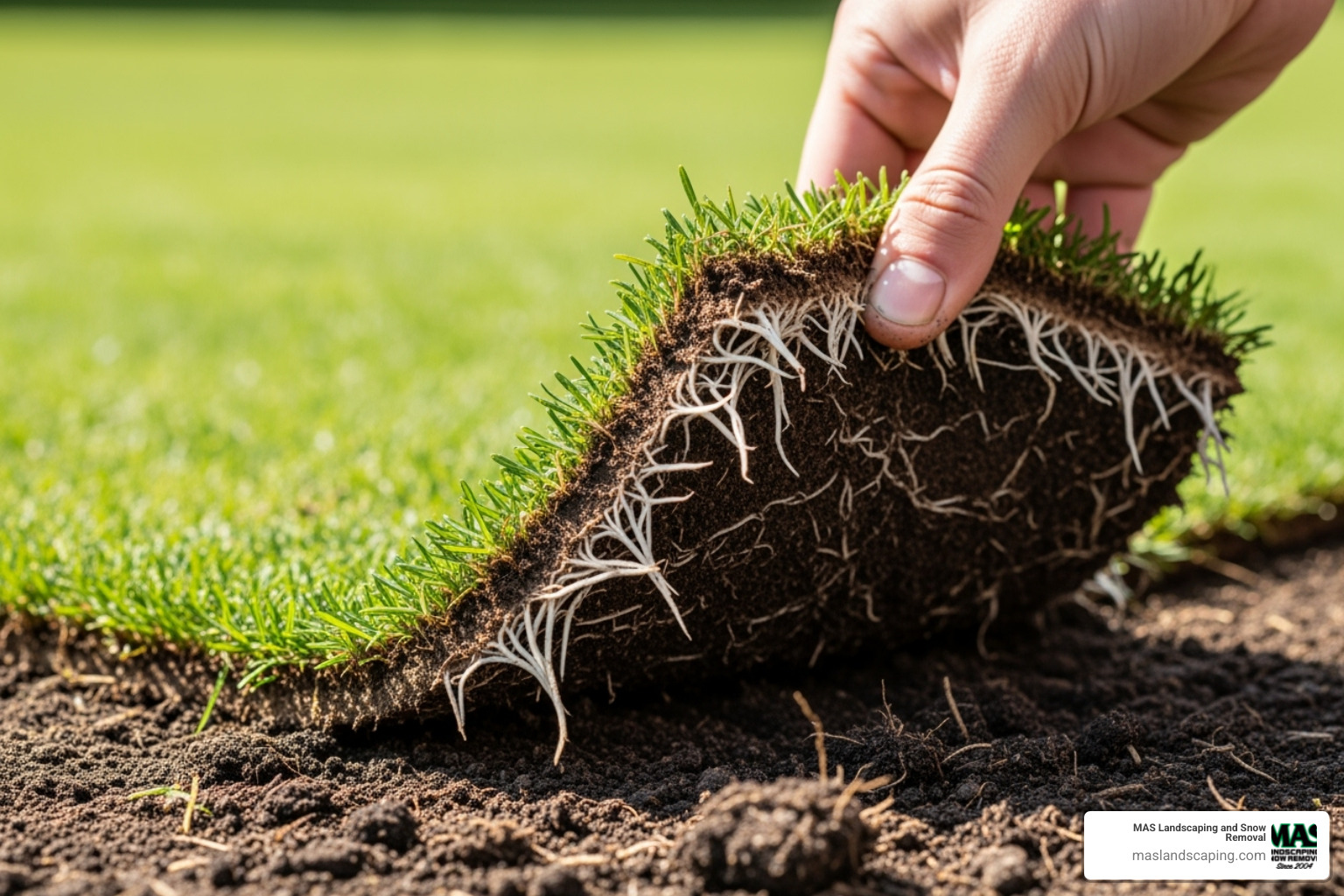
Patience is key before your new lawn’s first mow. Wait until the sod has been down for 2-3 weeks and the grass is 3.5 to 4 inches tall. Before mowing, gently tug a corner of the sod. If it holds firm, the roots have anchored and you’re ready. If it lifts easily, wait a few more days. Most lawns are ready around the 10-14 day mark.
For the first mow, set your mower blade high, to about 3 inches. Always follow the one-third rule: never cut more than one-third of the grass blade’s length in a single mowing. This prevents stressing the young grass.
Ensure your mower blades are sharp. Dull blades tear grass, inviting disease. Always mow when the grass is dry to prevent clumping and disease spread. For the first mow, bag the clippings to reduce stress on the young turf.
Feeding Your Lawn: When and How to Fertilize
Fertilizer is vital for your lawn, but timing is everything.
Wait a full 4-6 weeks before fertilizing new sod. Most sod arrives pre-fertilized from the farm. Adding more too soon can burn the delicate new roots and inhibit root development.
After the first month, your lawn is ready for a starter fertilizer high in phosphorus (the middle number in the N-P-K ratio). Phosphorus is the key nutrient for boosting root growth. Look for a blend like 16-24-12.
Use a broadcast spreader for even distribution and to avoid burning the grass. Always follow the package directions; more is not better. For a detailed guide on choosing the right product, see our post on the Best Fertilizer for New Sod.
Troubleshooting Common New Lawn Problems
Even with diligent care, new lawns can present challenges. The key is to recognize warning signs quickly and act. Our Massachusetts climate, with its humid summers and dry spells, can stress young grass. Here’s a guide to the most common issues and how to solve them.
Decoding Discoloration: Yellowing and Brown Patches
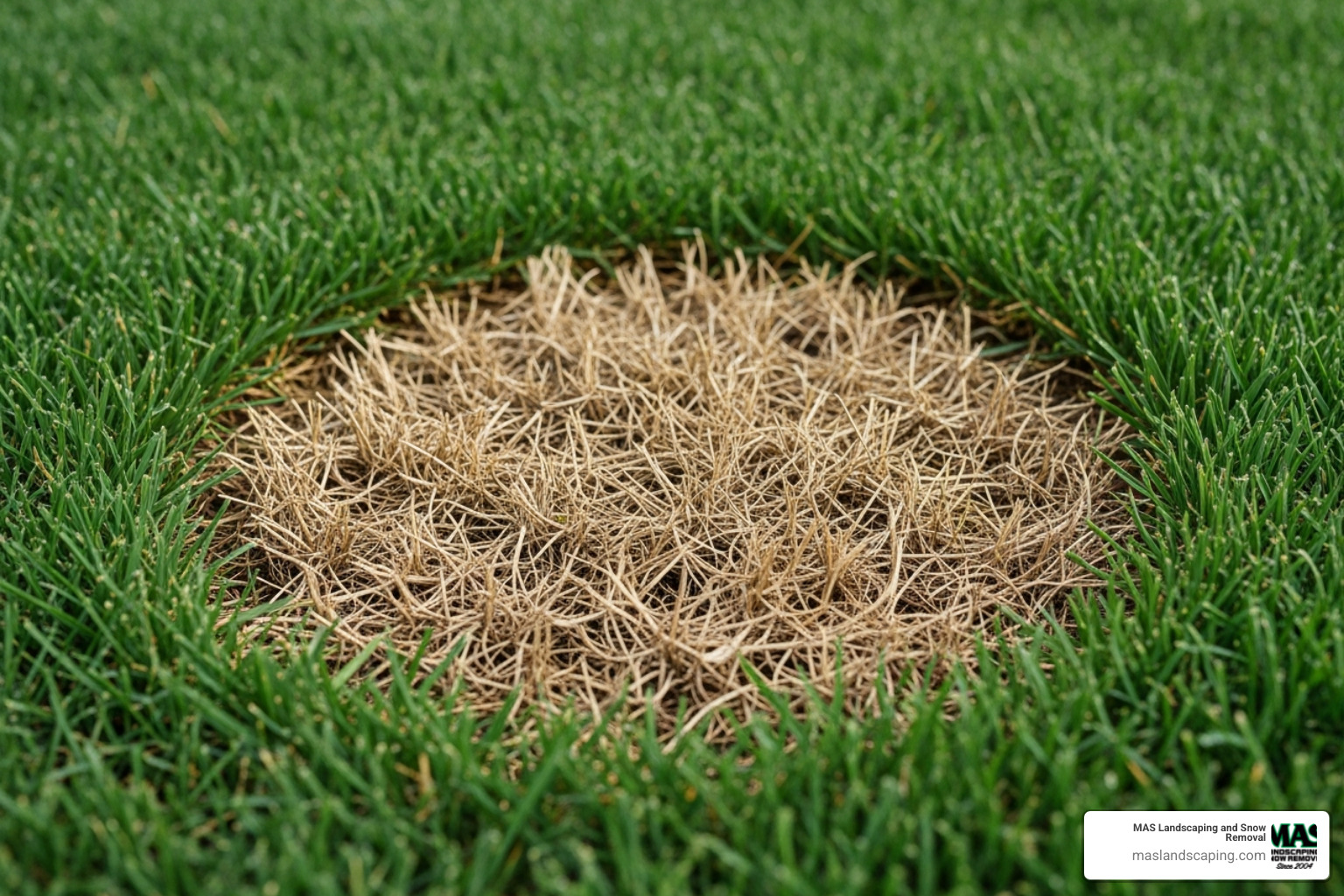
What are common problems that affect new sod, such as yellowing or brown patches? Discoloration is the most frequent concern when learning how to maintain a new lawn after installation. The color change tells a story.
- Yellowing: Often, this is just transplant shock as the grass adjusts. Consistent, proper watering usually resolves it. However, yellowing can also signal both underwatering (dry soil, curling blades) and overwatering (soggy soil).
- Brown Patches: This usually points to underwatering, especially if the grass feels brittle and sod edges are curling. Heat stress during hot spells can also cause brown, crispy patches; increase watering frequency during extreme heat.
- Pet Urine: Small, round brown spots, often with a dark green ring, are a sign of pet urine burn. Flush these spots immediately with plenty of water to dilute the salts.
- Overwatering: If brown patches feel mushy or smell sour, the roots are suffocating. Cut back on watering immediately.
Identifying and Treating Lawn Diseases and Pests
New sod is vulnerable to fungal diseases, especially in humid Massachusetts summers.
How can I identify and treat fungal diseases or mould on new sod? Look for circular patches of brown, tan, or reddish grass, or a white/gray webbing on blades in the morning. Common diseases include brown patch, dollar spot, and Pythium blight. The best prevention is watering in the early morning so blades dry quickly. If disease appears, adjust watering and consider a fungicide for severe cases after a professional diagnosis.
How do I deal with insect pests like grubs or chinch bugs on new sod?
- Grubs: These C-shaped larvae eat grass roots. Signs include brown patches that don’t respond to water and sod that can be rolled back like a carpet. If you find more than 5-10 grubs per square foot, treatment is needed.
- Chinch Bugs: These tiny insects suck moisture from grass blades, causing yellow-to-brown patches in sunny areas. To test for them, pour a mix of 2 tablespoons of dish soap in 2 gallons of water over a suspected area; the bugs will float to the surface.
Treatment depends on the pest and infestation severity. For help, check out our yard maintenance services.
Winning the War on Weeds in a New Lawn
Seeing weeds in your new lawn is frustrating, but patience is your best tool.
What are the best methods for controlling weeds in a new lawn? For the first month, do as little as possible. New grass is extremely sensitive to chemical weed killers. Applying herbicides too soon can kill your young turf.
Wait at least one month, or until you’ve mowed at least four times, before using any chemical weed control. Until then, your safest method is to pull weeds by hand, ensuring you get the entire root.
A few weeds are normal. As your grass thickens, it will naturally outcompete most weeds. Your best long-term defense is a dense, healthy turf, encouraged by proper mowing, watering, and fertilizing.
How to Maintain a New Lawn After Installation for Long-Term Success
Now that your lawn is establishing, the key to protecting your investment is a consistent, long-term care routine. Those first weeks were about survival; now it’s about helping your lawn thrive. Proactive maintenance will ensure your lawn remains the lush, green carpet you envisioned.
Establishing a Mature Lawn Care Routine
After 6-8 weeks, your lawn’s needs change. Adjust your care routine accordingly.
- Long-Term Watering: For a mature lawn, aim for 1 inch of water per week, delivered in one or two deep sessions. This encourages deep, resilient roots that can withstand dry spells, unlike the shallow roots promoted by frequent, light watering.
- Mowing: Settle into a rhythm of mowing every 5-7 days, always following the “one-third rule.” Adjust mower height with the seasons: about 3 inches in spring, raised to 3.5-4 inches in the summer heat to shade the soil, and lowered for the final cut of the fall to prevent snow mold.
- Ongoing Fertilization: After the first 6 months, adopt a yearly feeding schedule. For New England’s cool-season grasses, fall is the most important time. Two fall applications (one around Labor Day, another 6-8 weeks later) boost root development. A spring application helps the lawn green up.
Our Massachusetts climate dictates a seasonal approach. Spring is for cleanup, summer is for managing heat stress and pests, fall is ideal for aeration and overseeding, and winter requires limiting traffic on frozen grass.
For homeowners who prefer to enjoy their lawn without the worry, our team provides year-round care. Learn more about our residential landscaping services.
The Role of Aeration in a New Lawn
What is aeration, and when should I do it? Aeration is the process of creating small holes in your lawn to relieve soil compaction caused by foot traffic, mowing, and natural settling. Compacted soil prevents roots, water, and nutrients from penetrating.
While you don’t aerate brand new sod, we recommend aerating within 6-12 months after installation, and then annually in the fall. The benefits are significant:
- Relieves soil compaction, allowing roots to grow stronger.
- Improves water and nutrient absorption into the root zone.
- Increases airflow to the roots.
- Encourages deeper root growth for a more drought-resistant lawn.
- Creates ideal pockets for overseeding to thicken turf.
Think of aeration as your lawn’s annual deep breath, setting it up for another year of health.
Frequently Asked Questions about New Lawn Maintenance
After two decades of serving homeowners in Chelsea, Medford, and Revere, we’ve compiled answers to the most common questions about new lawn care.
How do I know if my new sod has successfully established its roots?
Use the gentle tug test. After 2-3 weeks, carefully try to lift a corner of a sod piece. If it resists and feels anchored, the roots have taken hold. You may also see new white roots knitting the seams together, and the lawn will feel firm underfoot. Full establishment typically takes 4-6 weeks.
Is it possible to overwater new sod, and what are the signs?
Yes, overwatering is a common and damaging mistake. The signs are clear:
- The ground feels spongy or mushy underfoot.
- Puddles remain on the surface long after watering.
- Algae or mushrooms appear in wet areas.
- The soil develops a sour, unpleasant smell.
Overwatering leads to a shallow root system, making the lawn weak. If you see these signs, reduce your watering and allow the soil to dry out more between sessions.
How long should I wait before applying weed killer to my new lawn?
Patience is crucial. New grass is extremely sensitive to the chemicals in herbicides. Applying them too soon can damage or kill your young turf.
We strongly recommend you wait at least one month, or until the lawn has been mowed at least four times, before using any weed killer. This gives the grass time to develop a strong root system. In the meantime, hand-pulling weeds is the safest and most effective method. A few weeds are normal; a healthy, thick lawn will eventually crowd them out.
Conclusion
Your new lawn’s journey from installation to a lush carpet is a rewarding process. The effort you put in during the first critical weeks—consistent watering, staying off the grass, and timing the first mow—pays off with a healthy, resilient lawn that improves your property for years.
How to maintain a new lawn after installation is about consistency and understanding your lawn’s needs at each stage. By following these steps, you’ll be rewarded with a lawn that has the deep, strong roots needed to thrive in our New England climate. Soon, you’ll be enjoying a beautiful lawn that is the pride of the neighborhood.
For homeowners throughout Saugus, Everett, Lynnfield, Malden, Melrose, Medford, Revere, and Chelsea, maintaining a beautiful lawn can be a challenge. That’s where professional expertise makes a difference. At MAS Landscaping, we’ve spent over two decades helping local families create and maintain the outdoor spaces they’ve always wanted. We understand the unique challenges of our Massachusetts climate and are committed to providing the personalized care your landscape deserves.
Whether you need help with installation, ongoing maintenance, or just want the peace of mind that comes with professional care, we’re here for you. Explore our comprehensive landscaping services and find how we can help transform your outdoor space into something truly special.