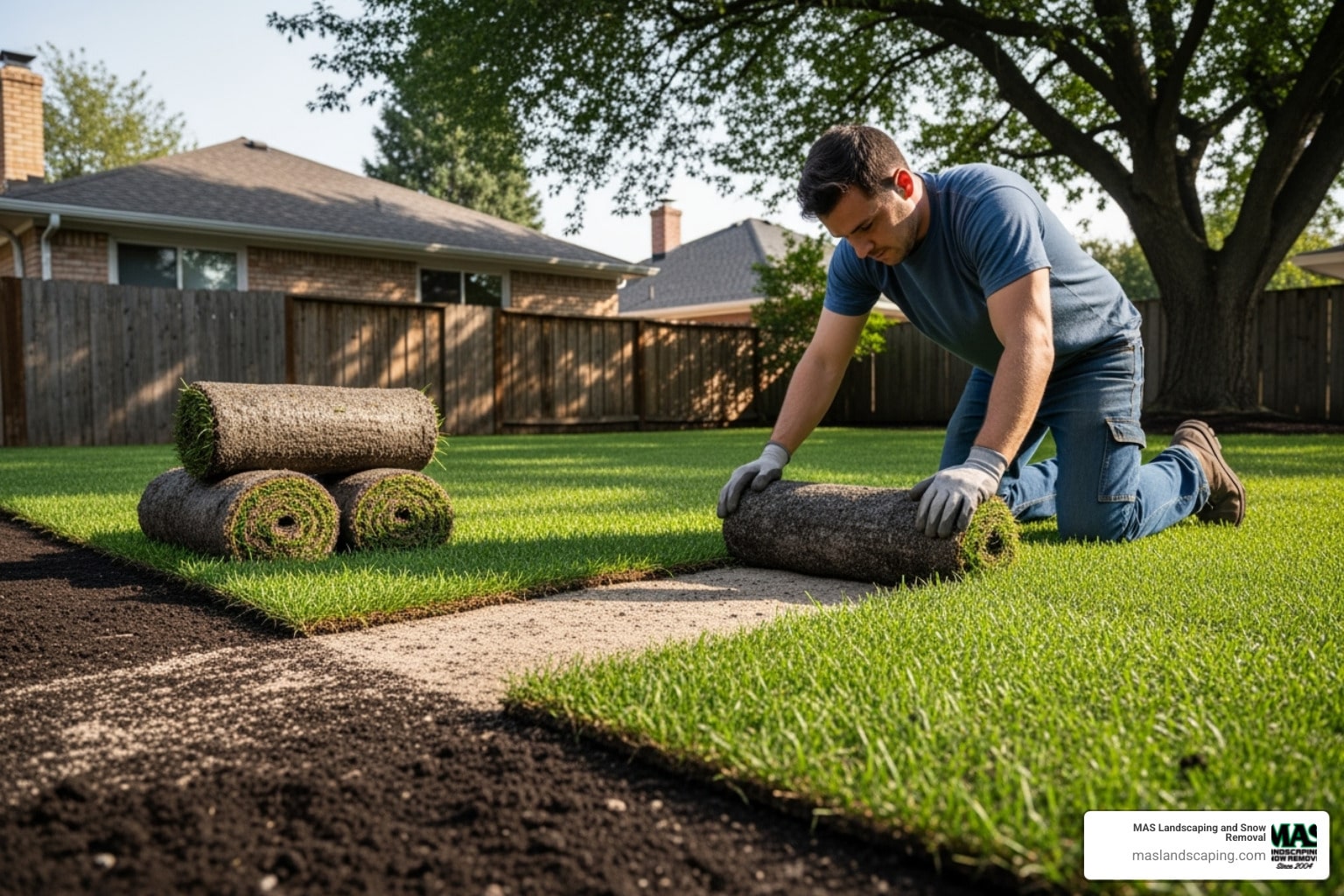



Laying a new turf lawn: 4 Perfect Steps
Instant Green: Your Guide to Laying a New Turf Lawn
Changing your outdoor space with a lush, green lawn can be quicker than you think. Laying a new turf lawn provides an instant upgrade, creating a vibrant, usable surface in just a few hours.
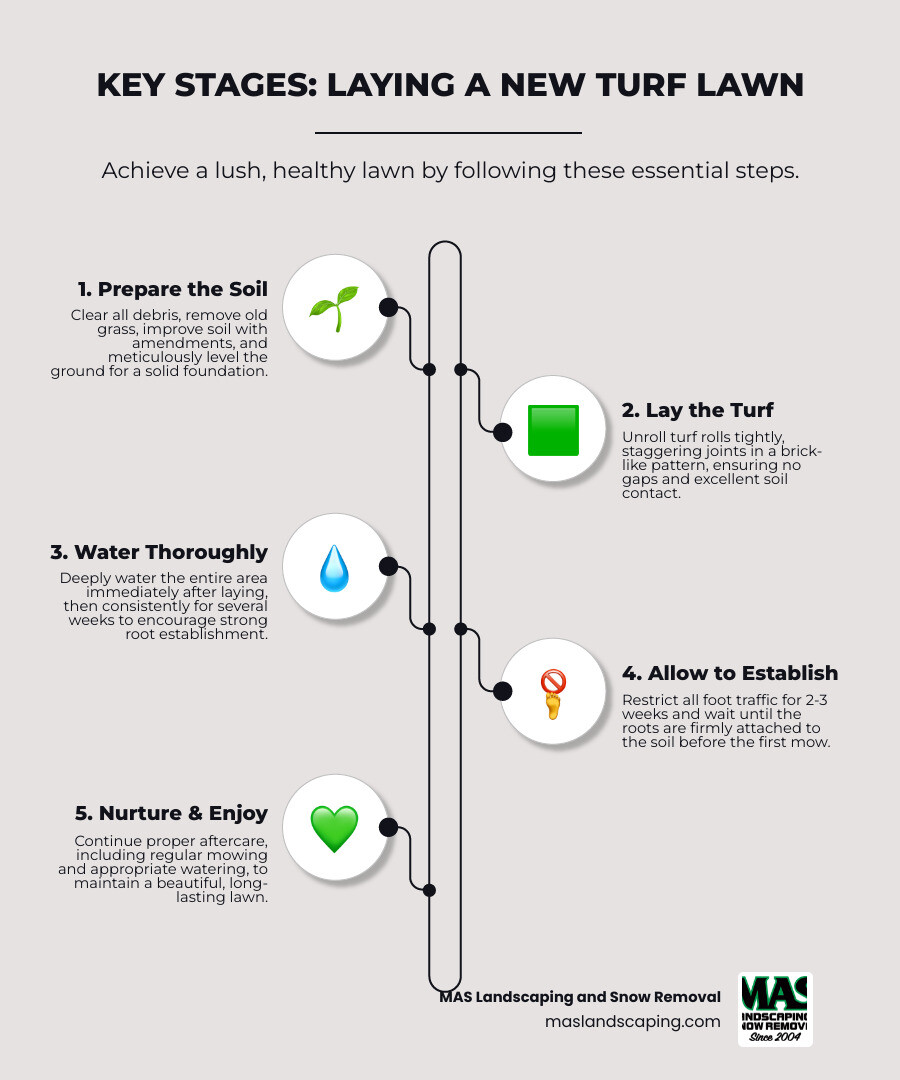
Here’s a quick overview of the key steps:
- Prepare the Soil: Clear, improve, and level the ground.
- Lay the Turf: Unroll turf tightly, stagger joints, and ensure good soil contact.
- Water Thoroughly: Water immediately after laying and consistently for the first few weeks.
- Allow to Establish: Limit foot traffic and wait for roots to establish before mowing.
This guide covers everything from planning and soil preparation to laying and aftercare. Laying turf is the easiest way to get an instant green lawn, perfect for when you need a usable space quickly for family activities or events.
Let’s get started on turning your yard into a picture-perfect lawn.
Learn more about laying a new turf lawn:
Before You Begin: Planning and Preparation
Proper planning is the first step to success when laying a new turf lawn. Getting these initial steps right will help you avoid problems down the road and ensure a beautiful result.
Choosing the Right Turf for Your Oasis
Choosing the right turf is crucial for a healthy, long-lasting lawn. Growers offer various mixes for different needs. Common types include:
- Utility Grass: A tough, hard-wearing mix, often with perennial rye grasses. It’s perfect for high-traffic areas like family lawns with kids and pets.
- Fine Turf: For a manicured, ornamental look, this turf has a delicate, lush texture. It typically requires more maintenance.
- Shade-Tolerant Mixes: Essential for yards with shady spots, this mix prevents thin growth and ensures even coverage.
Consider your lifestyle, sun exposure, and expected foot traffic when making your choice.
Turf vs. Seed: Why Go Instant?
When creating a new lawn, you can either plant grass seed or lay turf. While seed is cheaper initially, turf offers significant advantages for those wanting instant results.
Here’s a quick comparison:
| Feature | Turf (Sod) | Grass Seed |
|---|---|---|
| Cost | Higher initial cost | Lower initial cost |
| Time to Use | Instant! Walkable in 2-3 weeks | Weeks to months for growth, longer before heavy use |
| Labor | More intensive upfront, but done quicker | Less intensive to sow, but needs ongoing care for longer |
| Weeds | Few initial weeds | More weed competition during early growth |
| Erosion | Excellent for preventing soil washouts | Poor at first, vulnerable to erosion |
| Final Result | Immediate lush, mature lawn | Gradual growth, full density takes time |
The biggest advantage of turf is the instant gratification of a mature lawn in hours, not months. This is ideal if you need a usable lawn quickly for an event or family activities.
Tools and Materials: Your Landscaping Arsenal
Gathering your tools and materials beforehand will make the process of laying a new turf lawn much smoother. Here’s a checklist of what you’ll need:
- Spade or Shovel: For digging and cutting.
- Garden Fork or Rotavator: For loosening and aerating soil.
- Rake: A bow rake for leveling and a leaf rake for clearing debris.
- Wheelbarrow: For hauling soil, compost, and turf rolls.
- Utility Knife or Box Cutter: For precise turf cutting.
- Lawn Roller: To ensure good turf-to-soil contact (often available for rent).
- Hose and Sprinkler: For watering before and after laying turf.
- Topsoil or Soil Amendments: To improve existing soil.
- Compost or Organic Matter: To improve soil structure and fertility.
- Starter Fertilizer: To give new turf a healthy start.
- Measuring Tape or Wheel: For accurately measuring your lawn area.
- Sturdy Planks or Boards: For walking on newly laid turf.
- Gloves: To protect your hands.
Measuring Your Lawn: The Math Behind the Green
Accurate measurements are crucial to ensure you order the right amount of turf. Most turf is sold in rolls of 1 square meter (or ~10.76 sq ft).
- Measure the Area: Use a measuring tape to find the length and width of the area. For irregular shapes, break the area into smaller rectangles and add their measurements together.
- Calculate Square Footage: Multiply the length by the width to get the total area.
- Order Extra: Always order 5-10% more turf than your calculated area. This buffer covers cuts, irregular shapes, and any potential shortages.
Turf is a living product and should be laid within 24 hours of delivery. Accurate measurements help ensure a smooth, timely installation.
For more information about our Lawn Installation services, please don’t hesitate to reach out to us! We’re here to help.
The Groundwork: How to Prepare Soil for Laying a New Turf Lawn
Proper soil preparation is the most critical step for the long-term success of your new turf lawn. Healthy soil is the foundation for healthy grass.
Step 1: Clear the Area
Start with a clean slate by removing anything that could hinder your new turf. Remove old grass and weeds using a sod cutter for large areas or a sturdy hoe for smaller spots. Ensure all perennial weeds are completely removed, as they can grow through the new lawn. Then, clear debris like rocks, roots, and construction remnants larger than about 10mm.
Step 2: Improve the Soil
Next, improve the soil to create a loose, nutrient-rich bed for the roots. Dig or rotovate the soil to a depth of at least 6-10 inches (15-25 cm) to break up any compaction. This allows air, water, and roots to penetrate easily. Compacted soil leads to a shallow-rooted, less resilient lawn. For larger areas, a rotavator is invaluable, and we can assist with our Bobcat Services.
For more detailed guidance on preparing your ground, check out our page on How to Prepare Ground for Sod.
Step 3: Add Amendments
Enrich the loosened soil to give your turf the best start. Incorporate organic matter by mixing in a 3-4 inch (7-10 cm) layer of well-rotted compost to improve soil structure. If your soil quality is poor or you need to raise the level, add topsoil. A minimum depth of 2 inches (50mm) is recommended for turf. Finally, apply a starter fertilizer just before laying the turf to give the new roots an immediate nutrient boost.
Find out more about the Best Fertilizer for New Sod to ensure your lawn gets off to a flying start.
Step 4: Level and Firm the Ground
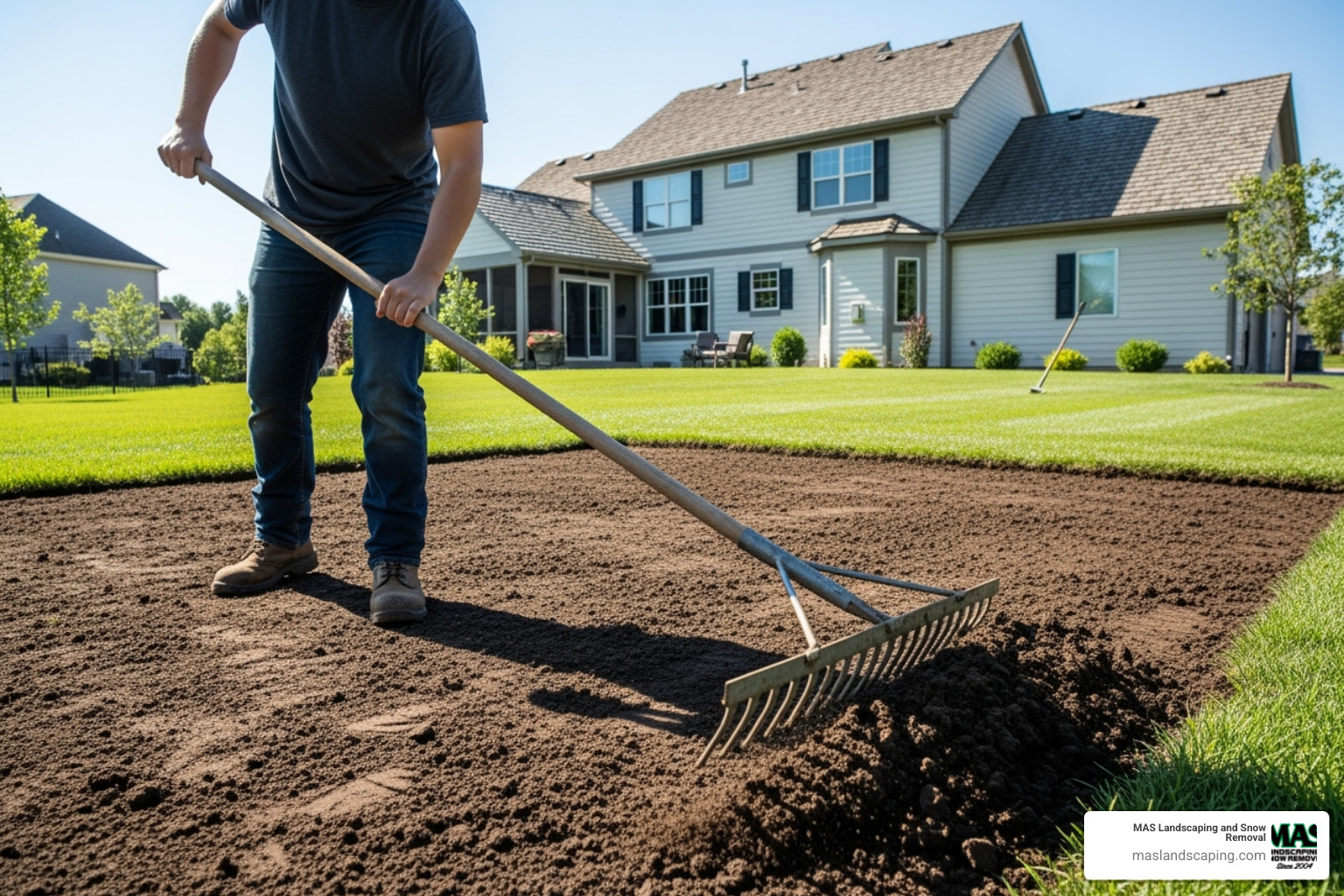
The final preparation step is to create a smooth, even surface. Rake the area level, removing small stones. Then, firm the soil by shuffling over the entire area (the ‘Gardener’s Walk’), which reveals low spots. Rake again and repeat until the surface is firm and level underfoot.
Ensure the final soil level is about 1 inch (2-3 cm) below adjacent hardscapes like patios or sidewalks to account for the turf’s thickness. This prevents trip hazards. For large areas, a lightly filled lawn roller can help create a uniformly firm surface.
The Main Event: A Step-by-Step Guide to Laying Your Turf
With your soil prepped, it’s time to roll out the green carpet and bring your new lawn to life.
Urgency is Key: Time is of the Essence!
Turf is a living product and must be laid as quickly as possible after delivery, ideally within 24 hours. If left rolled up, especially in warm weather, the grass can be damaged. If a delay is unavoidable, follow these steps:
- Keep Rolls Covered: Place the turf rolls in a shady spot.
- Keep Moist: Lightly sprinkle them with water or cover them with moist burlap.
- Unroll if Necessary: For longer delays, unroll the turf on a driveway and keep it watered.
The Correct Technique for Laying a New Turf Lawn
Follow these steps for a seamless, healthy lawn.
- Choose Your Starting Point: Begin laying a new turf lawn along the longest straight edge of your area, working across the site so you are always facing bare soil.
- Work from Planks: Use sturdy planks or boards on the laid turf to stand on as you work. This prevents footprints and depressions in the prepared soil.
- The Brickwork Pattern: Stagger the joints of each turf roll like brickwork. This avoids noticeable seams and creates a stronger surface.
- Butt Edges Tightly: Push the edges of each turf piece snugly against its neighbor. Do not overlap or stretch the turf, as this can cause gaps to form later.
Cutting and Fitting Your Turf
Some cutting will be necessary for a neat finish around edges and obstacles.
- Trimming Edges: Use a sharp utility knife or spade to trim excess turf along paths and borders for a clean edge.
- Around Obstacles: Carefully cut the turf to fit snugly around sprinkler heads, garden beds, or other features.
- Finishing Touches: After laying all the turf, gently tamp down the entire lawn with the back of a rake or a lightweight lawn roller (filled about 1/3 with water). This ensures good contact between the turf and the soil, eliminating air pockets that can dry out roots.
Aftercare is Everything: Nurturing Your New Lawn to Success
You’ve laid your new turf, but the work isn’t over. The next few weeks of aftercare are crucial for establishing a healthy, resilient lawn that will last for years.

The Crucial First Weeks: Watering Your New Turf
Watering is the most important task after installation. The goal is to keep the turf and the soil beneath it consistently moist to encourage deep root growth.
Here is a general watering schedule:
- Initial Soak (Immediately): Within 30 minutes of finishing, give the lawn a deep soaking of about 1 inch (2-3 cm) of water. This should saturate the turf and the top layer of soil.
- First Week: Water daily, or twice daily in hot weather, to keep the turf saturated.
- Weeks 2-4: Reduce watering to two to three times a week. This encourages roots to grow deeper in search of moisture.
- Beyond Week 4: Once the turf is rooted (check by gently lifting a corner), transition to deeper, less frequent watering, perhaps once a week depending on rainfall and climate.
For more detailed guidance, check out our page on How to Care for New Sod.
Mowing and Foot Traffic Guidelines
Patience is key for mowing and foot traffic on your new lawn.
- Stay Off the Grass!: Avoid walking on your new turf for at least 2-3 weeks. Heavy foot traffic can shift the turf and prevent roots from establishing.
- Your First Mow: Wait until the grass is about 2-3 inches (5-6 cm) tall, which usually takes about three weeks. For the first mow, set your mower blades high and never remove more than one-third of the grass blade’s height. Use a sharp blade to ensure a clean cut, which helps prevent disease. After the first cut, plan to mow about once a week.
Troubleshooting Common Problems & FAQs
Even with careful preparation, you might encounter a few issues after laying a new turf lawn. Here’s how to troubleshoot common problems and answers to frequently asked questions.
My New Turf is Turning Yellow or Brown
Yellow or brown patches are usually a sign of stress. The most common causes are:
- Underwatering: The turf and the soil beneath it are too dry. Check by lifting a corner.
- Poor Soil Contact: Air pockets between the turf and soil prevent roots from getting water.
- Transplant Shock: Minor browning is normal as the turf adjusts to its new environment.
To fix: Increase watering for dry soil. For air pockets, roll or press the turf down to ensure good contact. Consistent watering should resolve transplant shock.
My New Turf is Sinking or Has Lumps
This is usually caused by improper ground firming before the turf was laid, causing the soil to settle unevenly.
To fix: For minor dips, brush a thin layer of sieved topsoil into the grass once it has rooted. For larger lumps, you may need to peel back the turf, adjust the soil level, and replace the turf, watering it well afterward.
Gaps are Appearing Between Turf Rolls
Gaps appear when turf rolls shrink from drying out. This highlights the need for quick installation and consistent watering.
To fix: Brush a mix of fine sand and topsoil into small gaps to encourage the edges to knit together. For wider gaps, you may need to insert small pieces of turf. For more insights into creating and maintaining a lush, healthy lawn, see scientific research on lawn care best practices.
Why use turf instead of grass seed?
Turf offers several key advantages over seed:
- Instant Lawn: Transforms bare soil to a green lawn in one day.
- Erosion Control: Immediately stabilizes soil, especially on slopes.
- Fewer Weeds: The dense mat of grass prevents most weeds from sprouting.
- Faster Use: The lawn is ready for light use much sooner than a seeded one.
How much does laying a new turf lawn cost?
The cost to install a new turf lawn varies based on the area size, turf type, required soil preparation, and whether it’s a DIY project or a professional installation. Key factors include the cost of turf rolls, materials like topsoil and compost, and labor.
Please note that cost estimates found online are general and do not reflect actual pricing from MAS Landscaping. Project-specific factors like site accessibility can also influence the final price. For an accurate, personalized quote for your project in the Saugus, MA area, we always recommend reaching out to us directly. You can also learn more about the general factors on our page about the Cost to Install New Lawn Sod.
What is the best time of year to lay turf?
The best time for laying a new turf lawn is during the milder weather of spring (mid-March to May) and autumn (mid-September to November). These seasons offer moderate temperatures and reliable rainfall, which helps roots establish without the stress of extreme heat or cold. Autumn is often considered ideal as the soil is still warm from summer. Avoid laying turf in the peak of summer or when the ground is frozen or waterlogged.
Conclusion: Enjoy Your Beautiful New Lawn
You now have a complete guide to laying a new turf lawn, from planning and soil prep to the laying process and essential aftercare.
The reward is a beautiful lawn that offers instant beauty, erosion control, and a usable green space much faster than seeding. A healthy lawn boosts property value and provides a perfect setting for family activities and relaxation.
Achieving this result requires attention to detail and consistent care, especially in the first few weeks. With the right approach, you’ll have an outdoor space that is the envy of the neighborhood.
If this project feels overwhelming, or you want guaranteed professional results without the hassle, our expert team at MAS Landscaping is ready to help. Based in Saugus, MA, we proudly serve homeowners and businesses in Everett, Lynnfield, Malden, Melrose, Medford, Revere, Chelsea, and surrounding communities. We are dedicated to crafting beautiful, functional outdoor spaces with professionalism and a personal touch.
Ready to transform your landscape and step onto a perfect, plush lawn? Explore our Landscaping Services to find how we can turn your outdoor vision into a vibrant reality.