



Introduction: Why Sealing Your Pavers is a Smart Investment
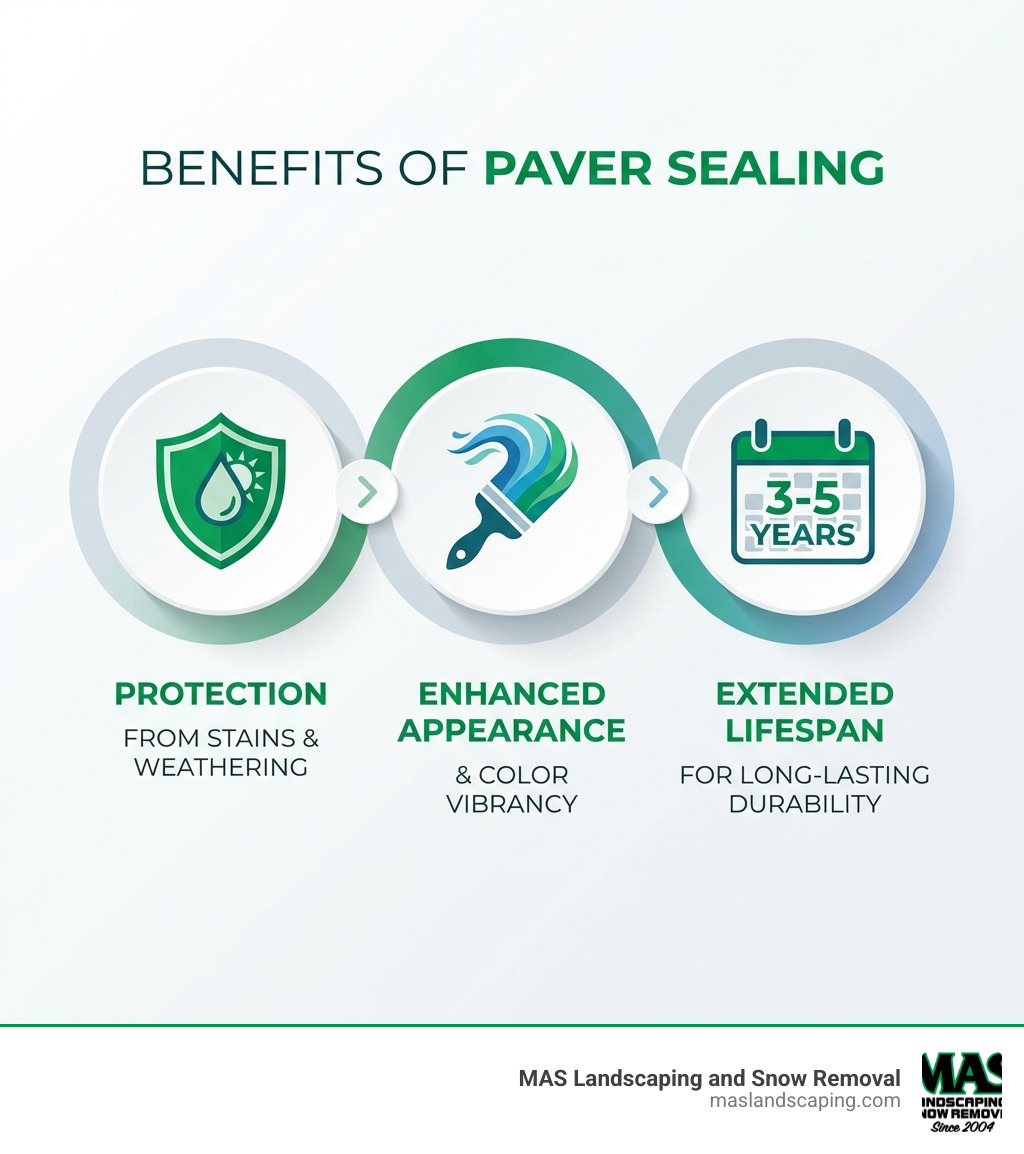
Sealant for pavers is a protective coating applied to the surface of pavers to improve their appearance and durability. It acts as a barrier against moisture, stains, UV rays, and other environmental factors that can damage or degrade pavers over time.
Quick Answer: Choosing the Right Paver Sealant
- Water-Based Sealers – Low odor, easy cleanup, natural matte finish, ideal for protecting against water and dirt
- Solvent-Based Sealers – High-gloss “wet look” finish, better for oil/grease protection, stronger odor
- Film-Forming Sealers – Create a physical barrier on the surface, offer maximum protection but may need reapplication every 1-3 years
- Penetrating Sealers – Absorb into paver pores, maintain natural look, typically last 3-5 years
Protecting your home’s paver driveway, patio, or walkway is a smart investment. Properly sealed pavers not only look better but also last longer, making them a popular choice for homeowners.
Why seal your pavers? Concrete is naturally porous, meaning it absorbs stains from oil, dirt, and organic matter. Sealing pavers helps them resist these stains, maintain their color, and withstand freeze-thaw cycles and daily wear.
Beyond protection, sealed pavers are easier to clean, often just needing a simple wash. A well-maintained paver surface can also increase your property’s curb appeal and value.
Whether you’re protecting a new installation or refreshing an existing one, this guide will help you choose the right sealant for your pavers.
Glossary for sealant for pavers:
Understanding the Essentials of Paver Sealant
Sealant for pavers acts as a protective shield for your hardscapes, defending against weather, spills, and grime. Its primary function is stain prevention. Porous pavers, like concrete, can absorb oil, barbecue sauce, or even dirt from rainwater. A quality sealant fills these pores, creating a non-absorbent surface that makes spills easier to clean before they set.
In climates like ours in Everett, Lynnfield, and the surrounding MA towns, UV rays from the sun can fade paver colors. Sealants with UV inhibitors act like sunscreen, preserving the original hue. Many sealants also help with weed inhibition by hardening the joint sand between pavers, making it difficult for weeds to take root.
Finally, sealants help prevent efflorescence—the white, powdery haze caused by natural salts rising to the surface. Applying sealant after the initial efflorescence period can stop it from reappearing. For more details on hardscape preparation, explore our guide on More info about hardscape installation.
The Key Benefits of Sealing Your Pavers
Investing in a quality sealant for pavers offers several key advantages for our clients across the North Shore.
- Improved Stain Resistance: Sealed pavers are far less susceptible to common stains like oil, grease, rust, and organic debris. A spilled glass of wine on a sealed patio is often a simple wipe-and-go.
- Improved Color and Appearance: Sealants can dramatically improve paver beauty. “Wet look” sealers deepen colors with a subtle sheen, while “natural look” options enrich tones without adding gloss, boosting curb appeal. For more on this, see A guide to natural-look sealers.
- Easier Maintenance: Sealed surfaces are smoother and less porous, so dirt and grime don’t cling as readily. Routine sweeping or a light rinse is often all that’s needed.
- Boosted Structural Integrity: By stabilizing the jointing sand, sealants reduce erosion and help prevent pavers from shifting, which is crucial for driveways and high-traffic walkways.
- Freeze-Thaw Protection: In our Massachusetts climate, water can seep into unsealed pavers, freeze, expand, and cause cracking. Sealant minimizes water absorption, mitigating damage from these cycles and extending your hardscape’s lifespan.
Film-Forming vs. Non-Film-Forming (Penetrating) Sealers
When choosing a sealant for pavers, you’ll find two main categories: film-forming and non-film-forming (penetrating). They differ in how they interact with the paver and the finish they provide.
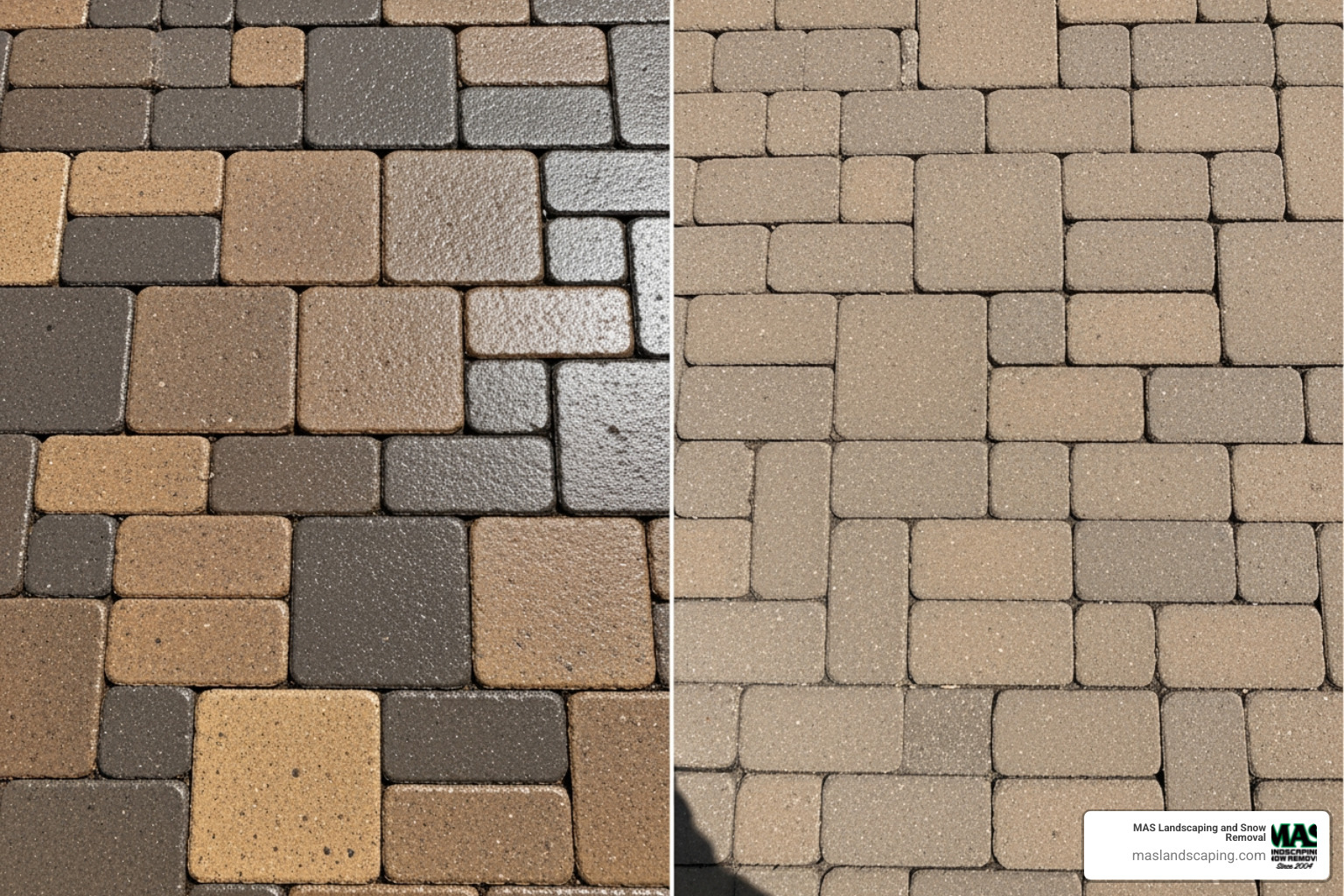
Film-Forming Sealers: These create a visible, protective layer on top of the paver.
- Surface Barrier: They form a physical barrier offering maximum protection against stains and abrasion.
- Glossy Finish: They often provide a “wet look” or “gloss” finish, which improves color and vibrancy.
- Longevity: The physical layer shows wear more visibly and may need reapplication every 1-3 years, depending on traffic and exposure.
Non-Film-Forming (Penetrating) Sealers: These absorb deep into the paver’s pores.
- Deep Absorption: They create a water-repelling barrier from within the paver.
- Matte Finish: They maintain the natural look and feel of pavers with a “matte” or “invisible” finish, without adding a sheen.
- Longevity: They tend to last longer, typically 3-5 years, and wear away more evenly without peeling. You’ll know it’s time to reapply when water no longer beads on the surface.
The choice depends on your desired aesthetic and the level of protection you need.
Choosing the Best Sealant for Your Pavers
Selecting the right sealant for pavers ensures the best outcome for your hardscape. Understanding the different characteristics is key, especially with the regional conditions in Everett, Lynnfield, and our other MA service areas.
Here’s a quick comparison of the two main types:
| Feature | Water-Based Sealers | Solvent-Based Sealers |
|---|---|---|
| VOC Levels | Low (more environmentally friendly) | High (stronger fumes, higher environmental impact) |
| Odor | Mild, less noticeable | Strong, pungent |
| Cleanup | Easy, with water | Requires solvents (mineral spirits, xylene) |
| Finish | Typically matte or natural look (can have low gloss) | Often high-gloss or “wet look” |
| Application Ease | Generally easier, more forgiving | Can be more challenging, dries faster |
| Primary Benefit | Water and dirt protection, natural aesthetic | Oil/grease protection, color improvement, glossy finish |
Water-Based vs. Solvent-Based: What’s the Difference?
The main distinction between water-based and solvent-based sealant for pavers is their chemical carrier.
Water-Based Sealers: Using water as their carrier, these are known for being user-friendly and environmentally conscious.
- Low VOCs & Mild Odor: They have low volatile organic compounds (VOCs), meaning fewer harmful fumes and a milder odor, making them ideal for residential areas.
- Easy Cleanup: Spills and tools clean up easily with just water.
- Finish: They typically provide a natural, matte, or low-gloss finish, preserving the paver’s original look while protecting against water and dirt. For more on different looks, see A guide to wet-look sealers.
Solvent-Based Sealers: Using chemical solvents as their carrier, these are known for robust performance and dramatic finishes.
- High VOCs & Strong Odor: These have higher VOCs, resulting in strong fumes that require good ventilation during application.
- Complicated Cleanup: Cleanup requires specific solvents like mineral spirits or xylene.
- Finish: They are favored for creating a high-gloss or “wet look” finish that deeply improves paver color. They also offer superior protection against oil and grease stains.
Your choice depends on whether you prioritize ease of use and environmental impact or a high-gloss finish and maximum oil stain protection.
Matching the Sealant to Your Paver Type
Different paver materials have varying porosities, which influences the best sealant choice.
- Concrete Pavers: The most common type in our service areas like Malden and Medford. They are porous and work well with both film-forming and penetrating sealers. An acrylic, film-forming sealant is great for a “wet look,” while a penetrating silane-siloxane is ideal for a natural finish. Manufacturers recommend waiting 60-90 days after installation before sealing to allow for curing and efflorescence.
- Brick Pavers: Often more porous than concrete, they absorb more sealant. Penetrating sealers are excellent for preserving their natural, earthy tones. Be mindful that film-forming sealers can make them slippery when wet.
- Natural Stone Pavers: For materials like bluestone or granite, a non-film-forming, penetrating sealer is usually preferred. This allows the stone to “breathe” and prevents an unnatural sheen. Always test a small, inconspicuous area first.
Some manufacturers offer pre-sealed pavers, like Unilock’s EasyClean™ technology, which can delay the need for aftermarket sealing. Regardless of paver type, they must be thoroughly cleaned and completely dry before sealing. Our guide on Information on paver prep provides comprehensive steps.
Understanding the Cost of Sealant for Pavers
When budgeting for paver sealing, costs can be broken down into DIY versus professional services. Please note that any pricing mentioned reflects average costs based on internet data and is not actual pricing for MAS Landscaping services. Professional quotes will vary based on project specifics.
DIY Costs:
- Sealant: A gallon of sealer can range from an average of $80 to $150, covering 80 to 150 square feet. High-end specialty sealers can exceed $250 per gallon.
- Equipment & Supplies: Renting a pressure washer can cost an average of $70-$200+ for a day. Specialized cleaners and application tools (sprayers, rollers) can add another $70-$150+ to your budget.
- Total DIY: A small project might cost under $350, while larger projects can easily exceed $500-$1000+.
Professional Services:
Hiring a professional ensures expertise and guaranteed results. A full professional paver sealing service, including cleaning and application, can range from an average of $500 to $3,000+, depending on the area’s size and the sealant used.
While the upfront cost is higher, professional sealing saves time and avoids potential application errors. For a better understanding of overall project expenses, see Learn about paver patio installation costs.
The Complete Guide to Applying Sealant for Pavers
Applying sealant for pavers correctly is crucial for achieving a durable, beautiful finish. It’s a process that requires patience and attention to detail.
Step 1: Preparation is Key
Proper preparation is the most critical step for successful paver sealing.
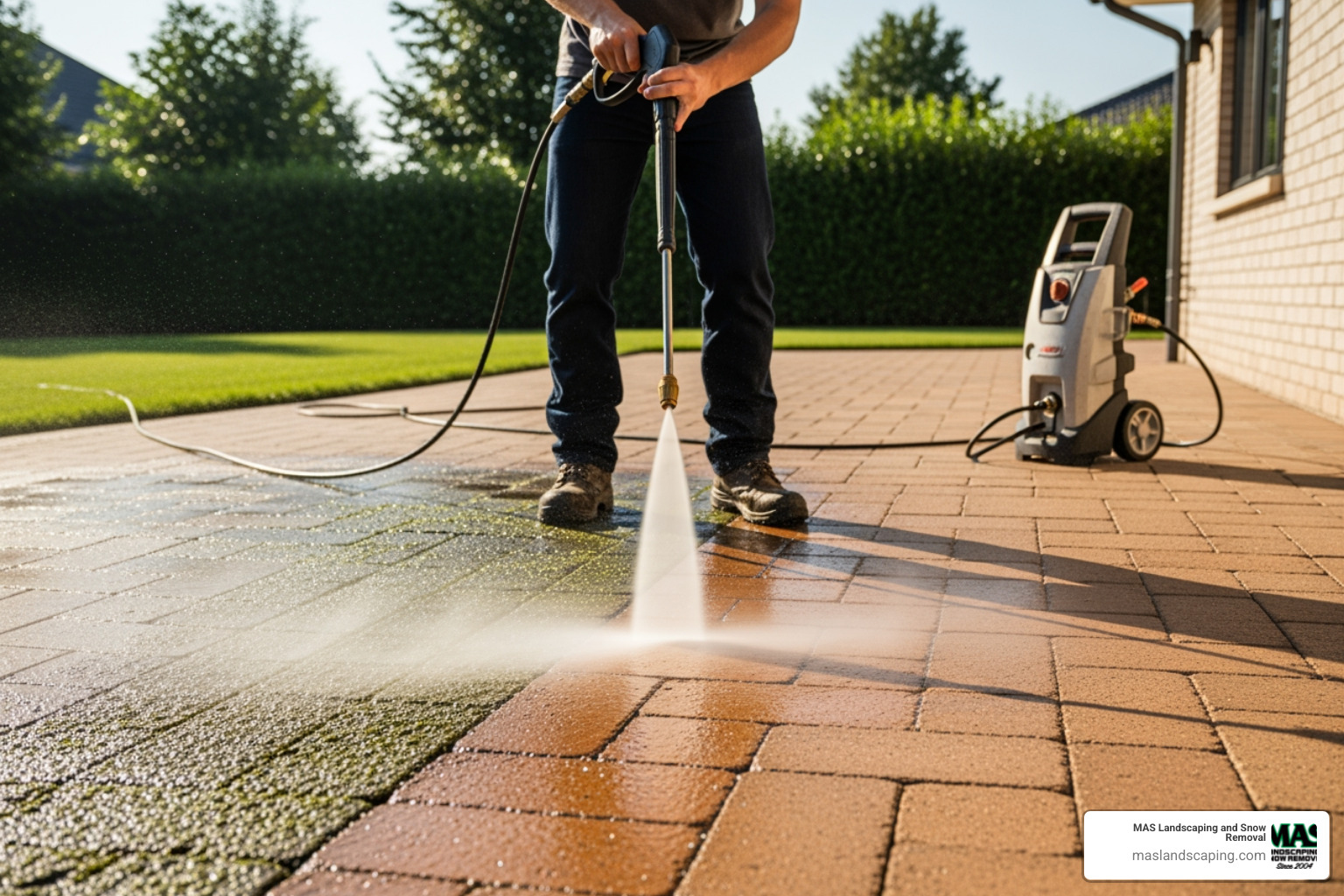
- Cleaning the Surface: Pavers must be spotless. A thorough pressure washing removes dirt and grime. For new pavers, a product like Techniseal® Paver Prep cleans and opens the pores for better sealant penetration.
- Stain and Weed Removal: Use paver-specific cleaners for tough stains (oil, rust) before the main wash. Physically remove all weeds from the joints.
- Leveling Pavers: Lift and re-level any settled or shifted pavers before sealing.
- Efflorescence Check: For new pavers, wait until any white haze (efflorescence) has dissipated. This can take 60 to 90 days, a standard recommendation from industry bodies like the Interlocking Concrete Pavement Institute (ICPI). Sealing too early traps this moisture and salt.
- Drying Time: Pavers must be completely dry before sealing. This can take 24 to 48 hours, depending on the weather. Trapped moisture can cause a cloudy or milky finish.
Step 2: The Ideal Application Conditions
Weather plays a huge role in a successful application of sealant for pavers.
- Ideal Temperature: Apply between 50°F and 90°F. Applying when it’s too hot can cause the sealant to dry too quickly, leaving streaks. Too cold, and it may not cure properly.
- Low Humidity: High humidity can extend drying times and cause hazing.
- No Rain Forecast: You need at least 24-48 hours of dry weather after application. Rain can wash away or damage uncured sealant.
- Avoiding Direct Sunlight: Apply in the morning or late afternoon when pavers are cool. A hot surface can cause the sealant to flash dry, leading to uneven coverage.
For a complete walkthrough, consult our guide on More on how to seal paving.
Step 3: The Correct Application Process for Sealant for Pavers
With clean, dry pavers and good weather, you’re ready to apply the sealant.
- Tools Needed: Use a high-quality pump sprayer for even distribution and a foam or short-nap roller to back-roll and remove excess.
- Work in Sections: Apply sealant in small, manageable sections (60-100 sq ft) to prevent it from drying too quickly.
- Maintain a Wet Edge: Overlap your application sections to maintain a “wet edge,” which helps prevent lap marks and ensures a uniform finish.
- Avoid Puddles: Apply enough sealant to saturate the paver, but immediately roll out any puddles or excess material to prevent shiny, sticky spots.
- Second Coat: If recommended by the manufacturer, apply a second thin coat. Follow the product’s specific instructions for timing (e.g., wet-on-wet or after the first coat is tack-free).
- Curing Time: Allow the sealant to cure completely. Avoid foot traffic for at least 24 hours and vehicle traffic for 48 hours or more, depending on the product.
- Check Your Work: A properly sealed surface should have an even finish. For penetrating sealers, test by dropping water on the surface; it should bead up, indicating water repellency.
Frequently Asked Questions About Paver Sealing
Homeowners in our service areas of Everett, Lynnfield, and Malden often ask about sealant for pavers. Here are answers to the most common questions:
How long does paver sealant last and how often should I reapply it?
The lifespan of sealant for pavers is typically three to five years. However, this depends on several factors:
- Type of Sealant: Film-forming sealers may need reapplication every 1-3 years, while longer-lasting penetrating sealers often go 3-5 years.
- Weather and Traffic: Harsh New England weather and high-traffic areas like driveways will cause sealant to wear down faster.
When to Reapply: Look for signs of wear. For film-forming sealers, this includes dulling or peeling. For penetrating sealers, the main sign is when water no longer beads up on the surface. Reapply when you notice these signs, or as a general rule, every 3-5 years. For professional help, you can Find local paver sealer companies.
How long should I wait before sealing new pavers?
It’s crucial to wait before sealing new pavers. We recommend waiting 60 to 90 days after installation. This allows time for two important processes:
- Curing: New concrete pavers need time to fully cure and harden.
- Efflorescence: This natural process allows salts to escape the paver as a white, powdery residue. Sealing too early traps this efflorescence, creating a permanent cloudy look that is very difficult to fix.
What are the most common mistakes to avoid when sealing pavers?
Avoiding these common pitfalls will ensure your project is a success:
- Sealing Dirty or Damp Surfaces: This is the #1 cause of failure. Sealant won’t adhere to dirt and will trap moisture, causing a milky finish. Pavers must be perfectly clean and dry.
- Applying in Poor Weather: Sealing in direct sun, high heat, or when rain is forecast can cause streaks, unevenness, or wash away the product.
- Over-Application: Applying too much sealant creates puddles, which can lead to sticky, shiny, or white spots. Always apply thin, even coats.
- Using the Wrong Sealer: Matching the sealer to your paver type and desired look is essential. A high-gloss sealer may not be right for natural stone that needs to breathe.
- Not Testing First: Always test the sealant on a small, hidden area to check the final color and finish before committing to the entire surface.
- Ignoring Manufacturer Instructions: Every product is different. Read and follow the specific directions for application, drying times, and safety.
Conclusion: Protect Your Investment with Professional Paver Sealing
Applying the right sealant for pavers is a vital step in maintaining the beauty and longevity of your outdoor living spaces. From protecting against stains and harsh Massachusetts freeze-thaw cycles to enhancing color and simplifying maintenance, the benefits are clear. Properly sealed pavers not only look fantastic but also contribute to your property’s long-term value.
We understand that navigating the options—from water-based to solvent-based and film-forming to penetrating—can be daunting. That’s where our local expertise at MAS Landscaping comes in. Serving homeowners in Everett, Lynnfield, Malden, Melrose, Medford, Revere, Saugus, and Chelsea, MA, we provide professional service to ensure your hardscapes are protected and beautiful.
Whether you’re looking to protect a new paver patio or revitalize an existing driveway, our team has the knowledge to select and apply the ideal sealant for your needs. Let us help you safeguard your investment for years to come.
Contact us for professional paver sealing services today to discuss how we can bring paver perfection to your property.
