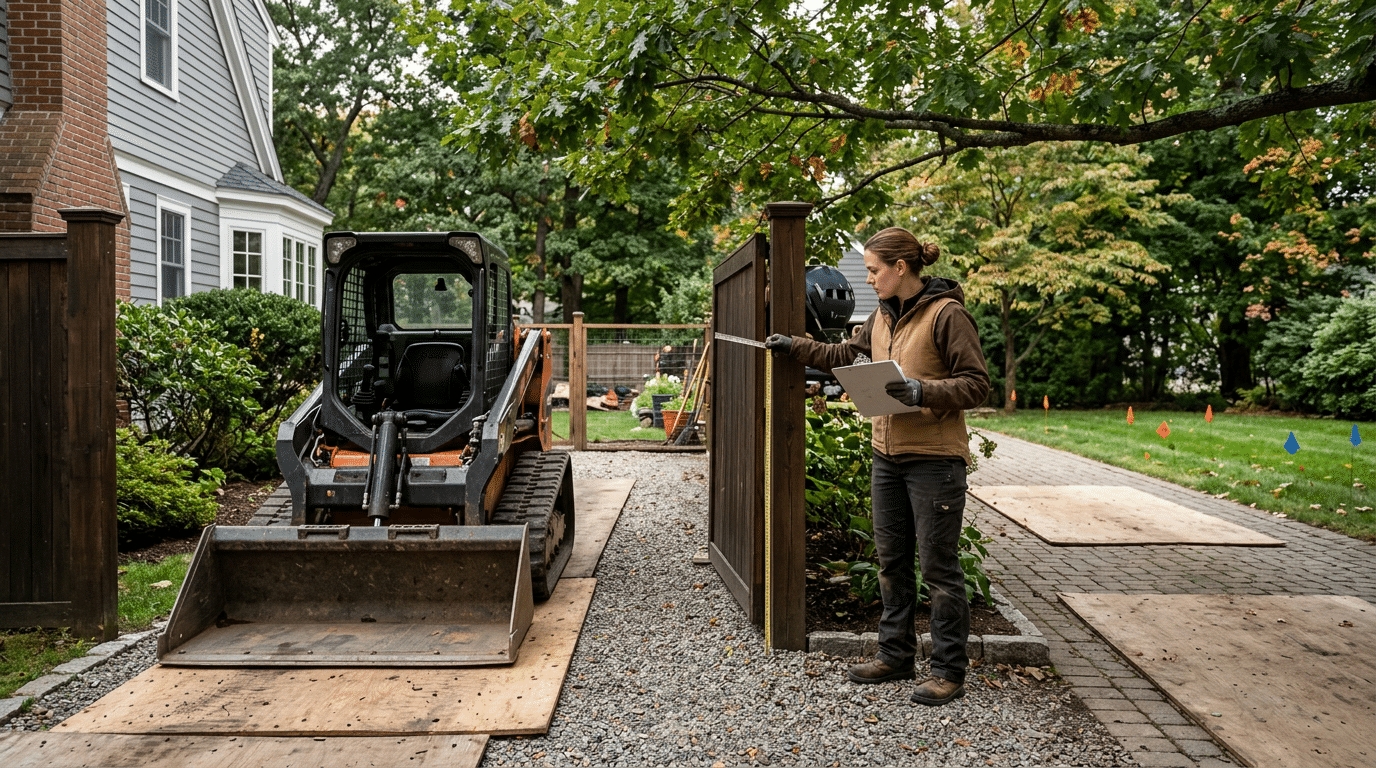



Before compact equipment enters a property, verify the entire travel path—not only the work area. Measure gates and turns, check slope and ground bearing, locate utilities and private lines, identify overhead hazards, protect pavement and roots, plan staging and truck access, and define how disturbed areas will be restored.
Measure the route with the actual machine and attachment in mind
Machine width is only one dimension. Confirm height, length, turning envelope, attachment width, delivery-trailer position, tail swing, and the space needed to load material. Air conditioners, bulkheads, meters, steps, eaves, fences, and parked vehicles can make a nominally wide gate unusable.
| Access check | Record | Possible response |
|---|---|---|
| Width and turns | Narrowest gate, wall, corner, and attachment clearance | Different machine, temporary gate removal, alternate route |
| Ground and slope | Soft areas, wet soil, side slopes, retaining edges, buried structures | Mats, timing change, hand work, engineered access |
| Vertical clearance | Branches, wires, eaves, clotheslines, lights | Qualified pruning, utility coordination, route change |
| Surface protection | Driveway material, pavers, lawn, roots, drainage | Protection plan and restoration allowance |
Complete utility planning before excavation
The Massachusetts Dig Safe guide explains that excavation includes movement or removal of earth and outlines premarking and notification requirements. Utility marking may not cover private irrigation, lighting, septic, well, drainage, or owner-installed lines. The contractor and owner should assign responsibility for public and private locating before work.
Protect structures, roots, and buried systems
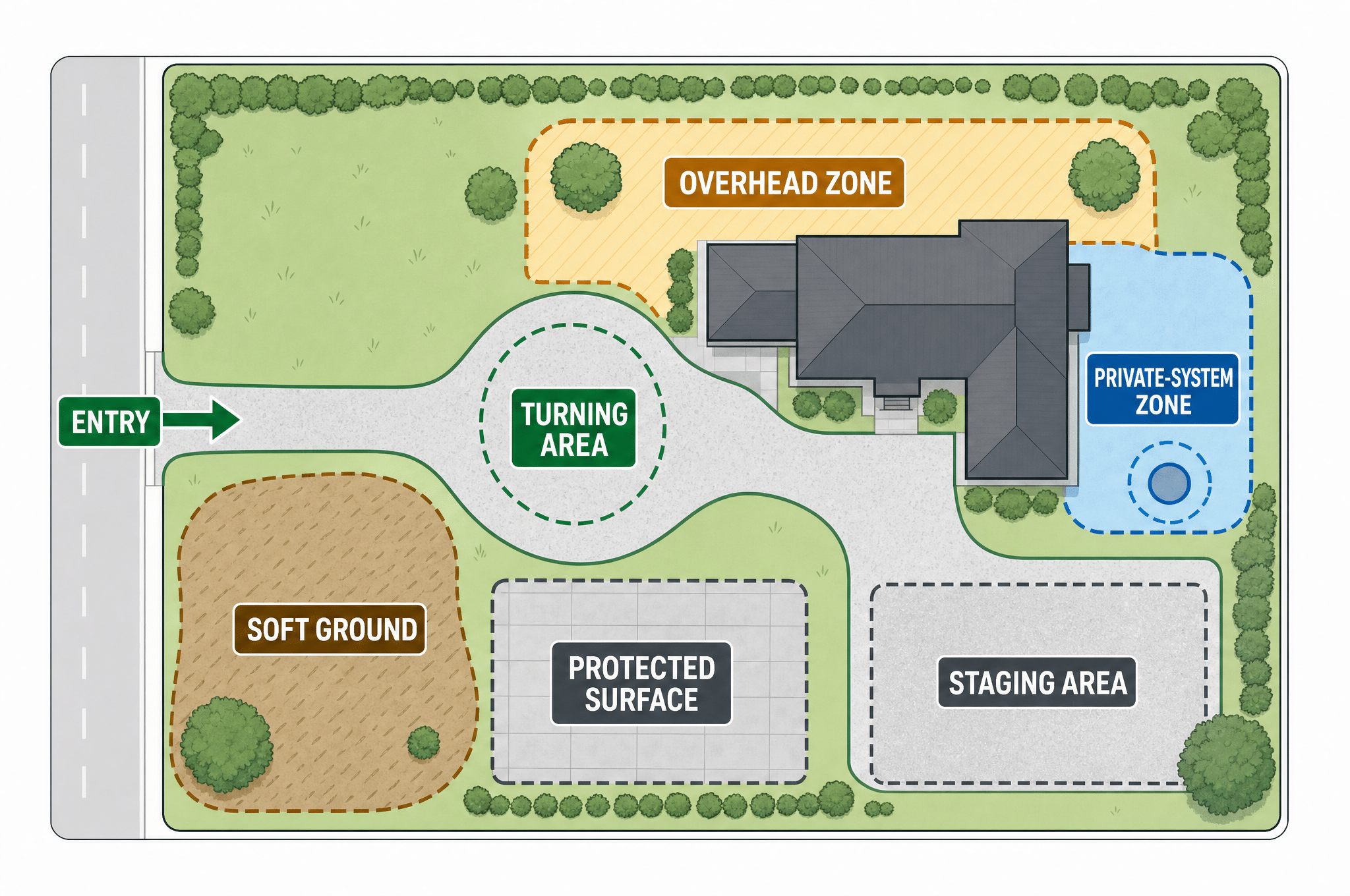
Identify septic tanks and leach fields, dry wells, shallow drains, oil or propane lines, wells, foundation drains, and recently backfilled areas. Do not route equipment over a buried structure simply because the lawn looks firm. Establish tree-protection and no-storage zones; compacting wet soil in a root area can cause lasting damage.
Plan trucks, materials, and neighbors
- Legal and practical truck/trailer position without blocking sightlines or emergency access
- Material delivery and spoil loading sequence
- Dust, mud, noise, and street-cleaning controls
- Property-line and easement confirmation
- Permission for any access outside the owner’s property
- Daily secure condition for gates, holes, materials, and equipment
Define restoration before tracks touch the yard
Photograph pavement, fences, lawn, beds, and structures along the access path. State whether restoration includes loam, seed, sod, mulch, paver resetting, fence reinstallation, irrigation repair, or only rough grading. Weather can change the damage risk; the operator should have authority to pause rather than rut an unsafe route.
Access questions
Is a Bobcat always the right machine?
No. “Bobcat” is often used generically. Machine size, tracked or wheeled undercarriage, attachment, lift capacity, slope, access, ground conditions, and task determine the equipment.
Can equipment cross a paver driveway?
Only after the contractor evaluates the pavement assembly, machine/load, turning, and protection. Surface appearance does not reveal base capacity.
What happens if the ground becomes saturated?
The access plan should include a weather pause and rescheduling rule. Continuing can damage soil, utilities, drainage, and finished surfaces.
MAS Landscaping serves Saugus and nearby communities with site, hardscape, and landscape work. Review the company’s services and contact information and bring access measurements and utility notes to the estimate.