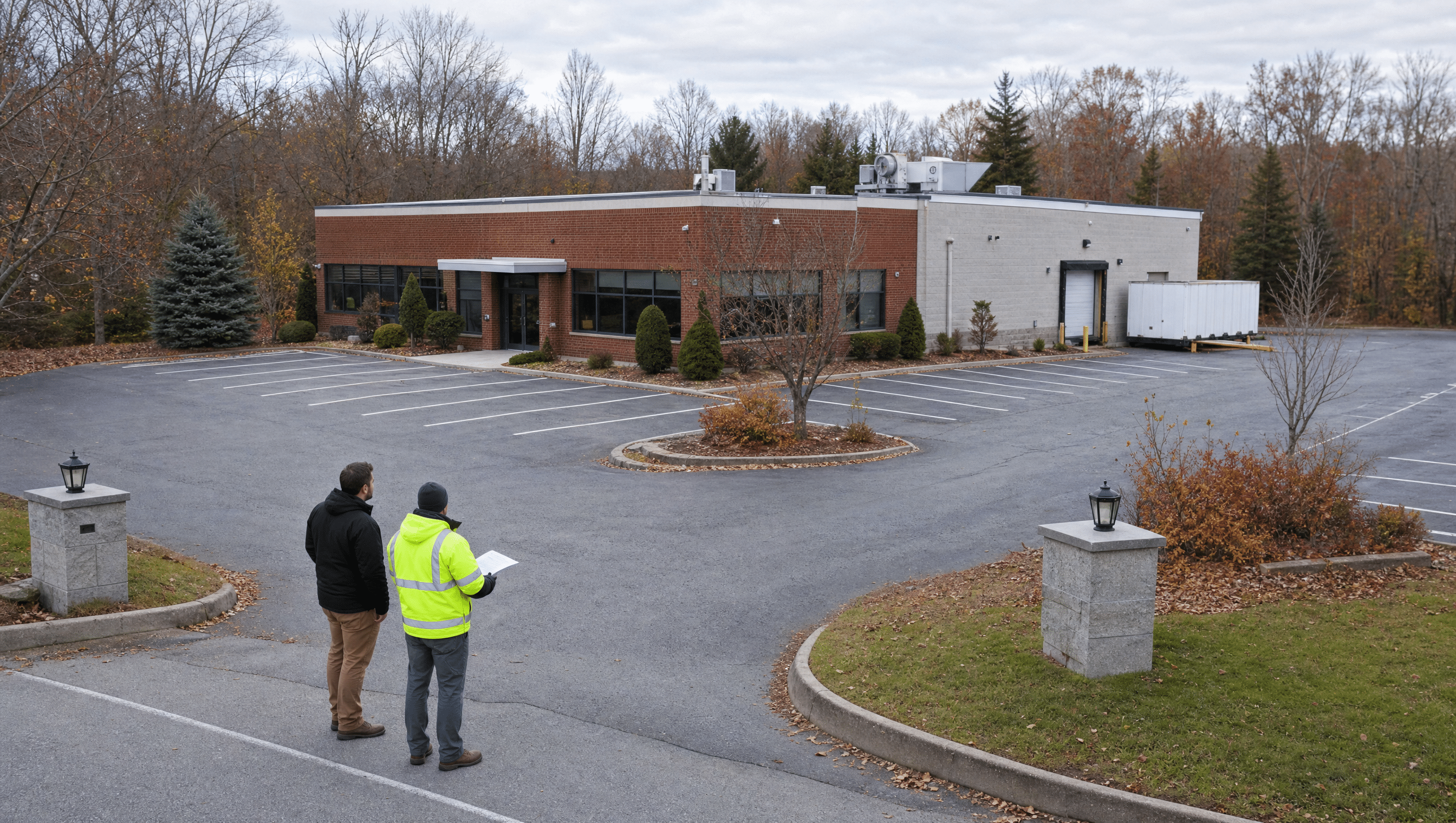



Small commercial lots need more planning because every snow pile competes with parking, visibility, accessible routes, deliveries, and safe circulation. A preseason plan should rank entrances and pedestrian paths, reserve snow storage, identify hazards, define service triggers, assign parked-car responsibilities, and set a process for refreeze and overflow.
Map how the property opens
Start with the required opening time and the people who arrive first. Mark the main drive, fire access, accessible parking and access aisles, route to the accessible entrance, employee walk, loading area, trash enclosure, hydrants, and neighboring curb cuts. Identify which areas must be usable first and which can wait.
| Constraint | Plan decision | Verify after service |
|---|---|---|
| One-way or tight vehicle flow | Plow direction, turning points, and no-stack sight triangles | Lane width and visibility |
| Accessible parking and route | Priority clearing and off-route storage | Space, aisle, curb ramp, path, and entrance connection |
| Limited snow capacity | Primary/overflow stack and hauling trigger | Parking loss, utilities, drainage, and sightlines |
| Roof and drainage | Keep shed zones and inlets clear; monitor melt path | Ponding and overnight refreeze |
Preserve the accessible route
ADA.gov explains that accessible parking must connect to the accessible entrance by an accessible route and provides requirements for access aisles and surface slopes; see its accessible parking guidance. Snow should not narrow the access aisle, bury signage, block the curb ramp, or force users into vehicle traffic.
Choose storage by what happens during a thaw
A pile at the high corner may send meltwater across the entrance. A pile at the low corner may cover the catch basin. Walk the intended storage path during rain and note utilities, signs, hydrants, plantings, neighboring drainage, and sightlines. Establish a hauling or relocation threshold before capacity is gone.
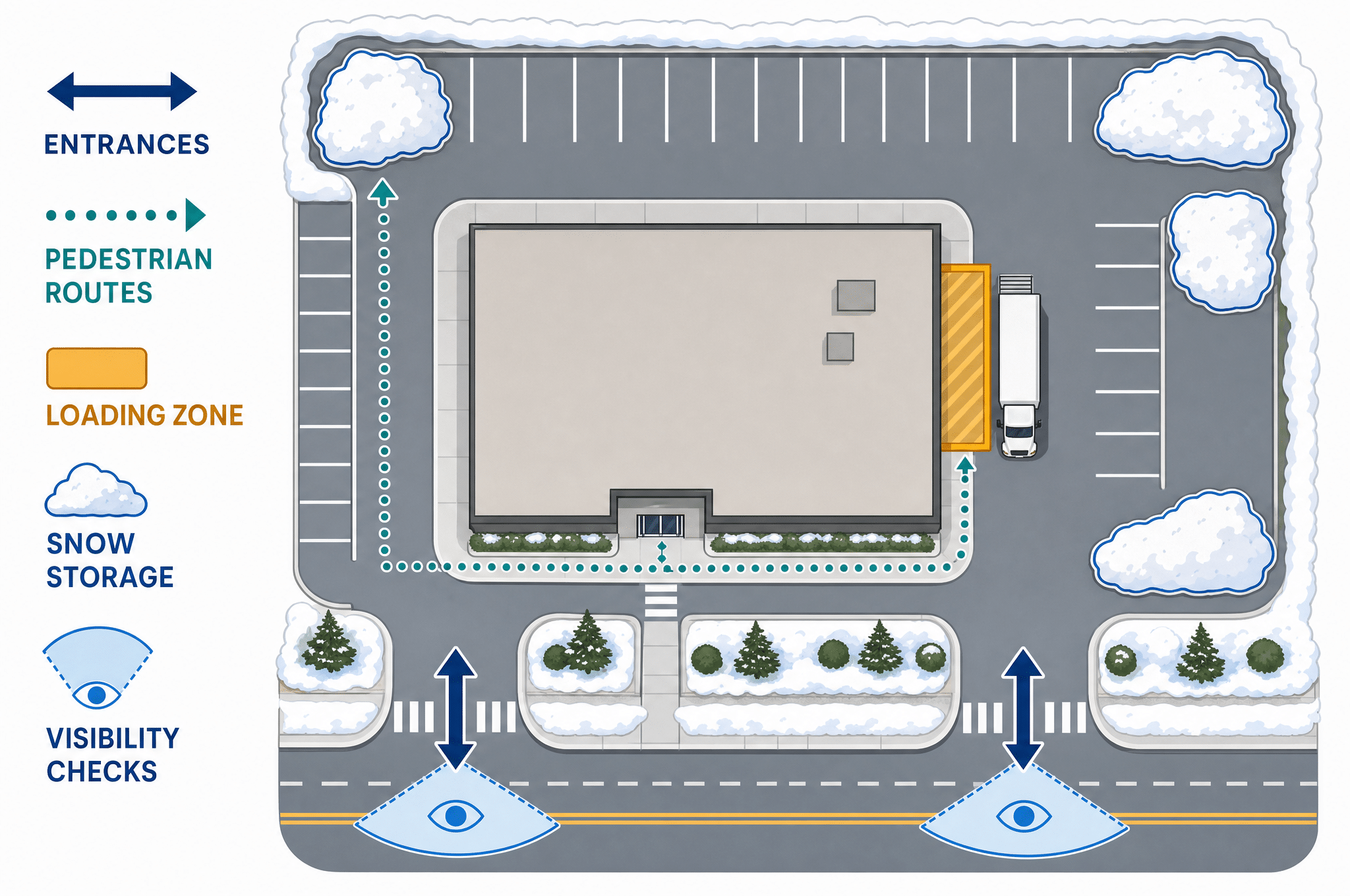
Write the operating agreement
- Weather source, plowing/treatment triggers, and who monitors conditions
- Opening deadline and priority sequence
- Owner process for moving employee, tenant, or customer vehicles
- Walkway and entrance responsibilities
- Material approval, sensitive surfaces, and storage location
- Return visits for drifting, continued precipitation, and refreeze
- Completion, incident, and damage reporting
OSHA’s winter-weather guidance highlights vehicle, cold, and work-zone hazards. The plan should leave enough room and time for safe equipment operation rather than relying on tight maneuvers around arriving pedestrians.
Run a post-storm correction loop
After the first meaningful storm, photograph storage, routes, drains, and conflict points. Record where cars prevented full service and whether the opening sequence matched the business. Update the plan after restriping, tenant changes, construction, landscape changes, or a new delivery pattern.
Small-lot questions
Can snow be stacked in unused accessible spaces?
No. Accessible spaces, access aisles, signs, curb ramps, and routes must remain available as required; plan storage elsewhere.
When should hauling start?
Set a site-specific trigger based on lost parking, visibility, route width, drainage, forecast, and remaining storage—not simply pile height.
Who treats refreeze?
Name the monitoring window, trigger, responsible party, approved material, and documentation in the service agreement.
MAS Landscaping serves small commercial properties in Saugus and surrounding communities. Use the company’s production site to discuss a property-specific snow plan before the lot is covered.