




Why Homeowners Are Choosing Putting in New Sod for Instant Results
Putting in new sod transforms your yard from bare dirt to a lush, green lawn in less than a day. While grass seed can take weeks or even months to establish, sod gives you immediate curb appeal and a fully functional lawn within two weeks of installation.
Quick Answer: The Essential Steps for Installing New Sod
- Test and prepare your soil – Till 4-6 inches deep, adjust pH to 6.0-7.5, and add organic matter
- Measure and order sod – Calculate square footage and add 5-10% extra for waste
- Grade the site – Level soil to 1 inch below sidewalks and driveways
- Lay sod immediately – Install within 24 hours of delivery in a staggered brick pattern
- Water deeply – Irrigate daily for 1-2 weeks, then reduce frequency gradually
- First mow – Cut when grass reaches 3-4 inches tall, about 7-10 days after installation
Several factors make sod the better choice over seed for many homeowners. Sod provides instant erosion control, which is crucial for sloped yards or areas with heavy spring rainfall. It also comes with established roots and a mature turf that resists weeds, diseases, and pests from day one.
The trade-off? Cost. Sod typically runs 5-10 times more expensive than seed, but you’re paying for convenience, speed, and a higher success rate. For homeowners who need their lawn functional quickly—or who’ve struggled with failed seeding attempts—sod delivers results that are worth the investment.
This guide walks you through every step of the installation process, from soil testing to that first satisfying mow. Whether you’re starting fresh on new construction or replacing a patchy existing lawn, you’ll learn the techniques professionals use to ensure your sod takes root and thrives.
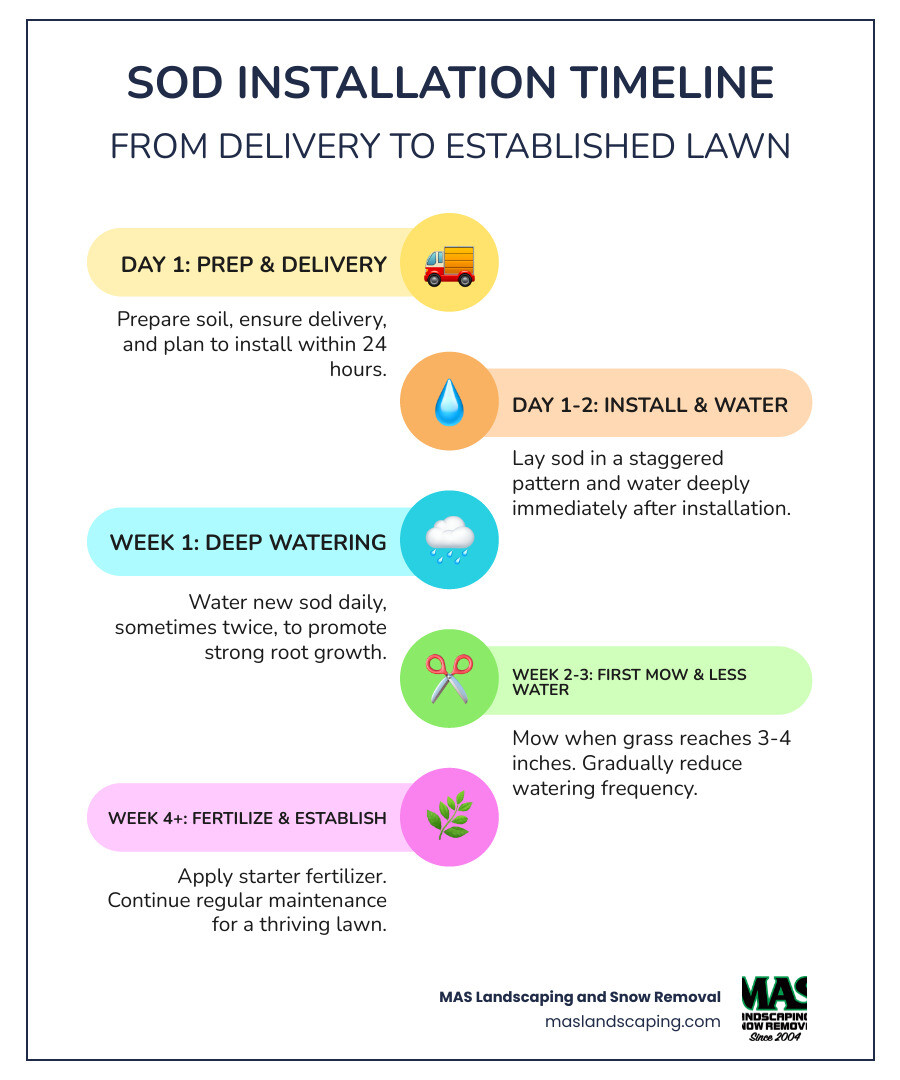
Simple guide to putting in new sod terms:
Sod vs. Seed: The Benefits of an Instant Lawn
When envisioning a lush, green lawn, homeowners in Everett, Lynnfield, and Malden face a choice: grass seed or sod. Both methods have their merits, but understanding the key differences helps determine the best fit for your landscaping goals.
| Feature | Sod | Seed |
|---|---|---|
| Cost | Higher upfront investment | Lower initial cost |
| Establishment | Instant; rooted in 2 weeks | 1-3 months for full coverage |
| Labor | High initial installation | High long-term maintenance |
| Erosion Control | Immediate stabilization | Poor until established |
| Weed Resistance | High (mature turf) | Low (vulnerable during growth) |
| Property Value | Instant curb appeal | Delayed improvement |
We generally recommend sod for homeowners in Saugus, Melrose, or Revere when:
- You need immediate results. Sod provides an instant green carpet, perfect for selling a home or hosting an event.
- Erosion is a concern. For sloped properties, sod’s established root system immediately stabilizes the soil.
- You want to minimize weeds. Sod arrives as a mature lawn, giving it a head start against weeds that plague newly seeded areas.
- You’re repairing bare spots. For quick fixes, sod offers a more reliable solution than waiting for seed to grow.
While the initial Cost of Putting in a New Lawn with sod is higher, the advantages in speed and stability often outweigh this for many clients. For those considering grass seed, remember to explore options like those found at Grass Seed.
Preparing the Foundation: Soil and Site Prep
Before unrolling that green carpet, the most critical step in putting in new sod is preparing the ground. Proper soil preparation ensures your new sod will root deeply and thrive for years in your Malden, Medford, or Chelsea property.
Soil Testing: The Secret to a Healthy Lawn
A soil test is the first step. For a small fee, your local extension service can analyze a sample to provide nutrient and pH recommendations. Turf thrives in well-aerated soil with a pH between 6 and 7.5. You can find more information here: Scientific research on soil testing.
Clearing and Grading the Area
- Removing Existing Growth: Use a sod cutter to remove old grass or a systemic herbicide for stubborn weeds.
- Removing Debris: Clear away rocks and roots that hinder root growth.
- Rough Grading: Ensure water flows away from structures with a slope of about 1 foot every 50 feet.
Tilling and Amending the Soil
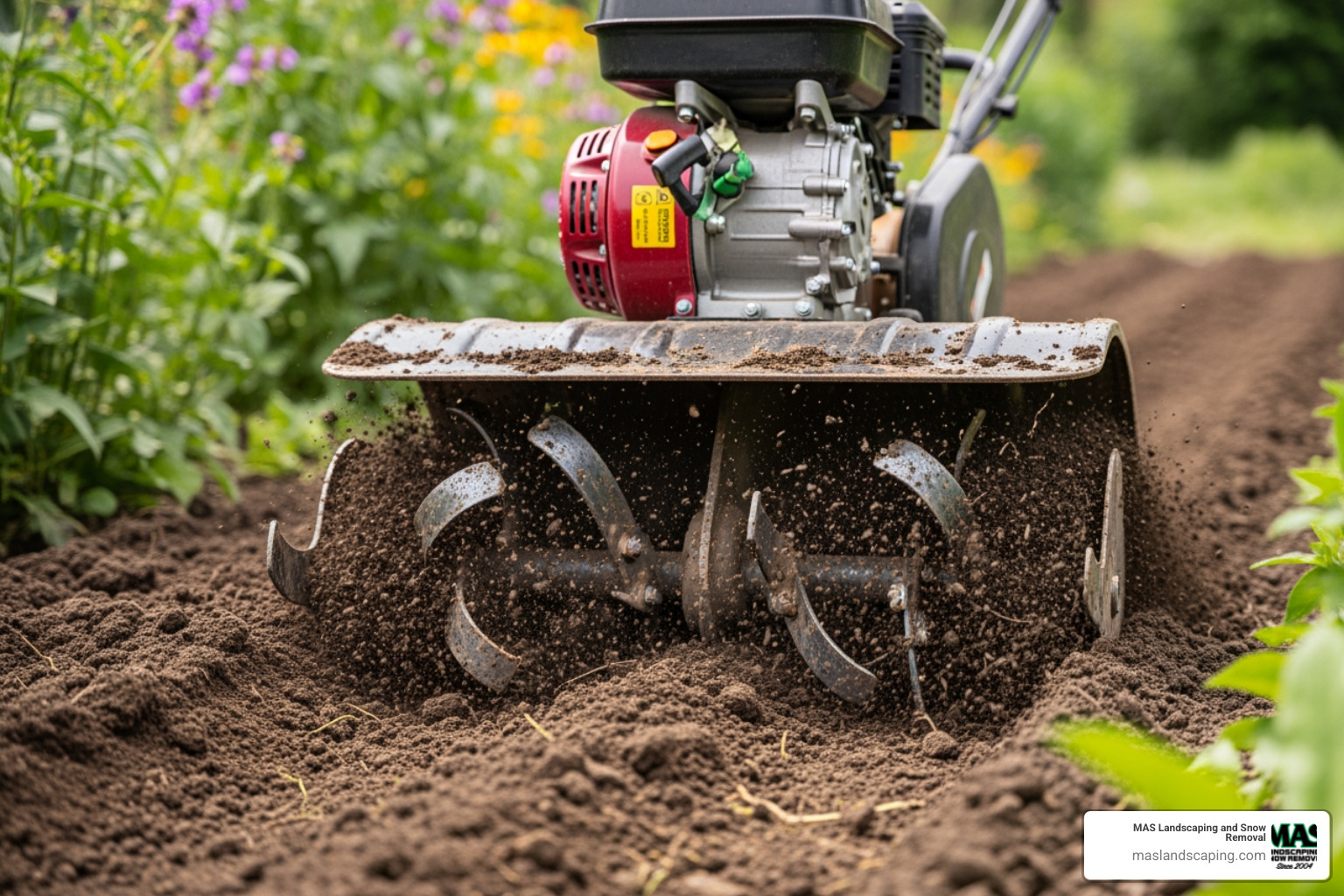
- Loosen the Soil: Use a rototiller to a depth of 3 to 6 inches to improve aeration.
- Add Organic Matter: Incorporate 2 to 3 inches of compost to improve water retention.
- Incorporate Amendments: Add lime, sulfur, or starter fertilizer based on your soil test.
- Final Leveling: Rake the soil so it is 1 inch below sidewalks and patios.
- Moisten: Water the soil 24-48 hours before installation so it is moist but not saturated.
For an in-depth look, check our guide on How to Prepare Ground for Sod.
Measuring Your Yard for putting in new sod
- Divide and Conquer: Break the area into rectangles, squares, or circles.
- Calculate Square Footage: Multiply length by width. For circles, use πr².
- Add for Overage: Order 5 to 10 percent extra to account for irregular shapes and trimming.
Use tools like the Lawn Area Calculator to help with your order.
Step-by-Step Guide to putting in new sod
Once your soil is perfectly prepped, the exciting part begins: laying the sod! This is where your lawn truly comes to life. Whether you’re in Lynnfield, Saugus, or Melrose, the principles of successful sod installation remain the same.
Delivery and Timing
Sod is a living product, and time is of the essence. We always ensure sod is delivered fresh and installed the same day it arrives. Palleted sod builds up heat very quickly, especially on warm days, which can damage the grass. Ideally, we plan installation for a clear, relatively cool day, avoiding the scorching heat of summer if possible.
Laying the First Rows
- Dampen the Soil: Even if you watered 24-48 hours prior, lightly moisten the soil surface again just before you start laying. This helps the sod adhere and prevents it from drying out too quickly.
- Start Straight: We begin laying sod along the longest straight edge of the area, like a driveway or a fence line. This helps ensure your rows are straight and true.
- Work Systematically: We work across the area, laying sod in a staggered “brick” pattern. This means the ends of the sod rolls in one row are offset from the ends in the adjacent rows. This technique avoids continuous seams, which can be weak points and more noticeable.
- No Walking on New Sod: Try to avoid walking directly on the freshly laid sod. If necessary, place boards over the sod to distribute your weight.
For a comprehensive visual guide, you can refer to our detailed instructions on How to Install Sod.
Best Practices for putting in new sod in Rows
Achieving a seamless, professional-looking lawn requires attention to detail as you lay each piece.
- Tight Seams, No Overlap: Butt each piece of sod tightly against its neighbor, both end-to-end and side-to-side. There should be no gaps, but also no overlapping. Overlapping can create unevenness and prevent proper rooting. We often use our thumbs to push the edges snugly together, ensuring there are no air pockets or bare soil showing along the seam.
- Staggered Joints: As mentioned, maintaining a staggered, brick-like pattern is key. This distributes pressure evenly and prevents long, noticeable lines in your new lawn.
- Using a Utility Knife: A sharp utility knife or sod-cutting knife is your best friend for precise cuts. We use it to trim sod around obstacles, create curves, and fit odd shapes. For cleaner cuts, sometimes we fold the sod piece up and cut from the underside.
- Placing Small Pieces: Avoid using very small pieces of sod along the outside edges, as these tend to dry out and die quickly. Instead, tuck smaller pieces into the center of the lawn area where they are better protected.
- Filling Gaps: Despite our best efforts, small gaps might appear. We fill these with sod scraps or topsoil to ensure a uniform surface and prevent drying.
Pressing and Rolling Your New Turf
Once all the sod is laid, the next crucial step is to press it down firmly. This ensures excellent contact between the sod’s roots and the prepared soil beneath.
- The Importance of Contact: A tight connection between the sod and the soil is the secret to roots knitting quickly into the soil. Air pockets can cause the sod to dry out and prevent roots from establishing.
- Using a Lawn Roller: We typically use a lawn roller to gently but firmly press the sod into place. We roll in a grid pattern, making sure to cover the entire area. The soil should be firm enough that someone walking on it will sink in no more than 1/2 inch.
- DIY Alternative (Plywood Method): If a lawn roller isn’t available, a piece of plywood can work in a pinch. Place the plywood on the sod and walk across it to apply even pressure.
- Check for Connection: After rolling, we might gently lift a corner of a sod piece to check if the ground beneath is moist and if the sod is making good contact.
- Avoid Rolling After Heavy Rain: If heavy rain occurs during or immediately after installation, we generally avoid rolling to prevent compacting saturated soil, which can be detrimental.
By following these steps, we ensure that your new sod has the best possible chance to establish strong roots and grow into a vibrant, healthy lawn.
Post-Installation: Watering and Maintenance
The first few weeks after installation are critical for root establishment. Proper watering and maintenance determine whether your sod thrives in Everett, Chelsea, or Lynnfield.
Watering and Mowing Schedules
- Immediate Watering: Begin within 30 minutes of installation. Apply at least 1 inch of water to wet the top 3-4 inches of soil.
- First Week: Water daily, preferably in the morning. In hot weather, a second afternoon session may be needed.
- Second Week: Reduce frequency to every other day, ensuring deep saturation.
- Third Week: Cut back to twice per week to encourage roots to grow deeper.
For more guidance, see How to Care for New Sod.
First Mow and Beyond
- When to Mow: Mow about 7-10 days after installation once the grass reaches 3 inches.
- Mower Settings: Set the blade to 2 inches. Use a walk-behind mower to avoid damaging the fragile root system.
- Clippings: Bag clippings for the first mow to avoid smothering the new grass.
See our guide on How to Maintain a New Lawn After Installation.
Fertilizing Your New Lawn
- Initial: Incorporate starter fertilizer during soil prep.
- Post-Installation: Apply another round of starter fertilizer 3-4 weeks after installation.
- Ongoing: Feed the lawn 3-4 times per year (Spring, Summer, Fall). For product advice, see Best Fertilizer for New Sod.
Frequently Asked Questions about New Sod
Here are answers to common questions from homeowners in Everett, Medford, and Revere.
Can I lay sod without tilling the soil?
We do not recommend it. Tilling loosens compacted soil, improves drainage, and allows roots to penetrate deeply. Without tilling, sod may struggle to establish and will be less resilient to drought.
How much does putting in new sod cost?
Note: These are average costs based on internet data and not actual costs for MAS Landscaping. Average pricing ranges from $1,000 to $9,000 per 1,000 square feet depending on grass type and labor.
DIY sod costs often start around 40-60 cents per square foot. Professional installation includes labor for prep and grading, which increases the upfront cost but ensures a higher success rate and instant curb appeal.
When is the best time of year to install sod?
In Massachusetts, we install sod from mid-April through October. Early fall (late August to October) is ideal for cool-season grasses as the soil is warm but the air is cool. Early spring is also a great time. We generally avoid the peak heat of July to prevent excessive stress on the new turf.
Conclusion
Putting in new sod is more than just laying down grass; it’s an investment in the immediate beauty and long-term health of your outdoor living space. From the initial soil preparation and precise measurement to the careful laying of each strip and diligent post-installation care, every step contributes to the lush, green lawn you envision. We’ve seen how a properly installed sod lawn can transform a property, offering instant curb appeal, effective erosion control, and a significant head start against weeds compared to traditional seeding.
While the process requires attention to detail and a bit of elbow grease, the reward of an instant, established lawn is undeniable. For homeowners in Saugus, MA, and surrounding areas like Everett, Lynnfield, Malden, Melrose, Medford, Revere, and Chelsea, MAS Landscaping and Snow Removal is here to help you achieve your dream lawn. Our commitment to professionalism, personalized service, and local expertise ensures that your sod installation project is handled with the utmost care, from start to finish.
Ready to give your property the green carpet treatment it deserves? Contact us today to discuss your sod installation needs and let us bring our expertise to your landscape. Our team is equipped to manage every aspect, ensuring your new lawn thrives and improves your home’s beauty for years to come.
For all your landscaping needs, including professional Sod Installation, reach out to MAS Landscaping and Snow Removal. We’re dedicated to creating functional, beautiful outdoor spaces that you’ll love.
