

Why Understanding Brush Removal Costs Matters
Brush removal prices vary widely depending on your project’s scope and complexity. Whether you’re dealing with overgrown vegetation, post-storm debris, or clearing land for a new project, understanding the cost factors helps you budget effectively and avoid surprises.
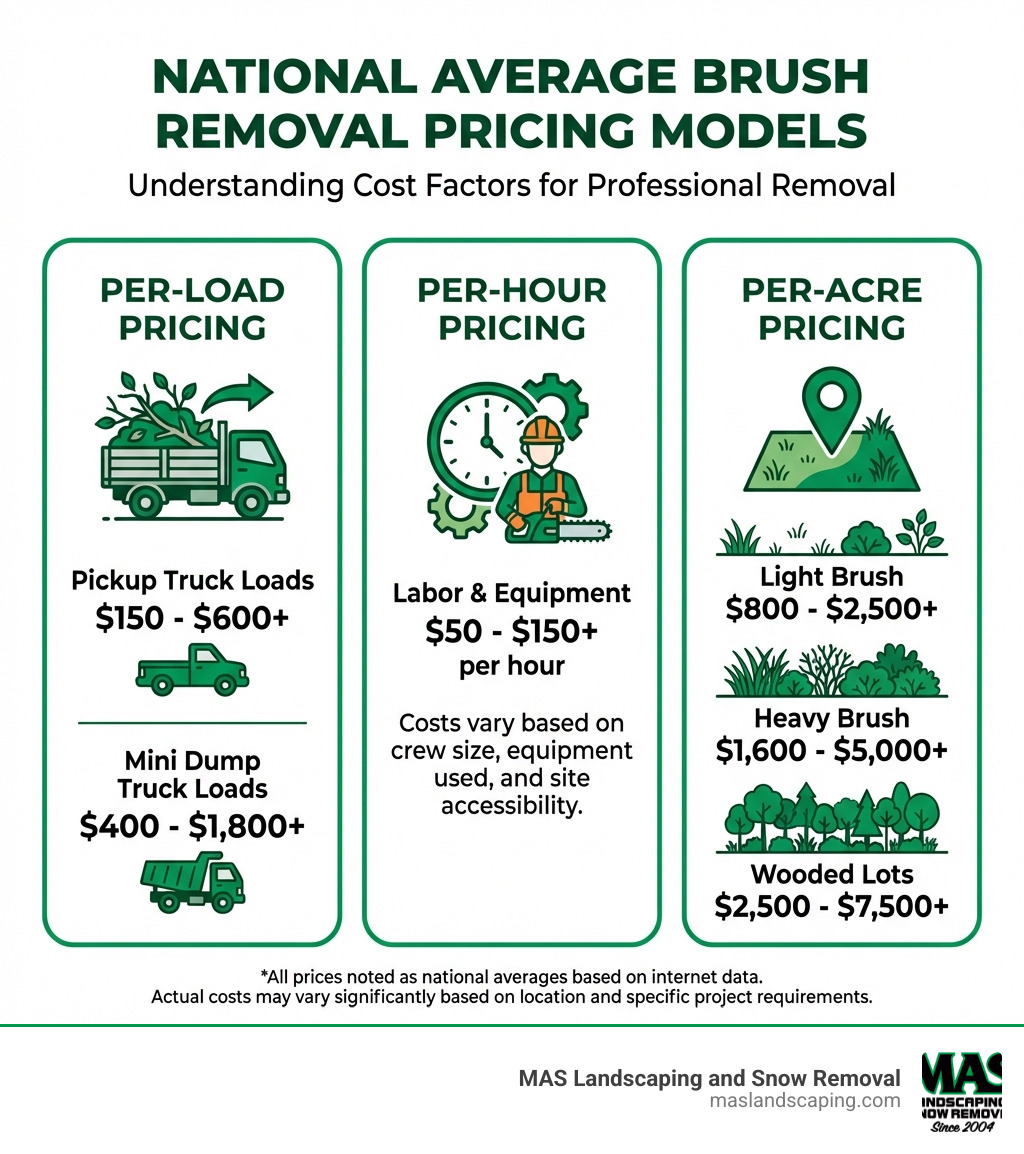
National Average Brush Removal Costs (based on internet data, not MAS Landscaping quotes):
| Pricing Method | Average Cost Range |
|---|---|
| Per Load | $150 to $600+ per pickup truck load |
| Per Hour | $50 to $150+ per hour for labor |
| Per Acre | $800 to $7,500+ depending on brush density |
Most homeowners in the Greater Boston area face brush removal needs at some point. Maybe you’re reclaiming overgrown corners of your property, clearing storm damage, or preparing land for landscaping improvements. Whatever your situation, the question is always the same: What’s this going to cost me?
The answer depends on several factors. How much brush do you have? A few piles of branches costs far less than clearing a half-acre of dense vegetation. Can trucks easily access the area? Steep slopes and tight spaces increase labor time. What type of brush are you removing? Light weeds and small branches are much easier to handle than thorny bushes or small trees.
This guide breaks down the pricing models, cost factors, and hidden expenses that affect your final bill. You’ll learn what professional services typically include, when DIY makes sense, and how to save money without sacrificing quality.
Brush removal prices vocab explained:
Understanding Brush Removal Pricing Models
When you’re looking to tackle an overgrown yard or clear out storm debris, you’ll encounter a few common ways that brush removal services structure their brush removal prices. These models help us estimate the effort, equipment, and disposal involved in each unique project.
Per-Load Pricing
This is a straightforward pricing model often used for brush piles or smaller jobs. We estimate how many standard pickup truck loads your brush will fill. For reference, one pickup truck load is roughly equivalent to 2 to 4 cubic yards of brush.
National average costs for brush pile removal typically fall within the range of $150 to $200 per pickup-truck load. However, depending on the density, type of brush, and local disposal fees, this can easily extend to $600 or more per load. Larger volumes might be estimated in terms of mini dump truck loads, which can hold about 4-5 pickup truck loads. A full load for a mini dump truck might range from $400 to $1,800+ nationally, depending on the service and region.
Per-Hour Labor Rates
For more complex jobs where the volume is hard to estimate, or for tasks that require specialized equipment and skilled operators, services may charge an hourly rate. This is common for jobs like clearing dense undergrowth or areas with difficult access.
We’ll discuss typical hourly rates for labor and equipment operators in more detail below, but generally, this covers the time our crew spends on your property, from cutting and clearing to loading and hauling.
Per-Acre Land Clearing
When you’re looking to clear larger tracts of land, perhaps for a new construction project or to reclaim extensive overgrown areas, pricing often shifts to a per-acre basis. This method accounts for the sheer scale of the work, including the use of heavy machinery, extensive labor, and significant disposal needs. The density and type of vegetation play a huge role in these costs.
Flat-Rate Project Quotes
For well-defined projects, we can often provide a flat-rate quote after an on-site assessment. This gives you a clear, upfront cost for the entire job, offering peace of mind without worrying about fluctuating hourly rates. This model is usually reserved for tasks where the scope is very clear and predictable.
How much does it cost to remove a brush pile?
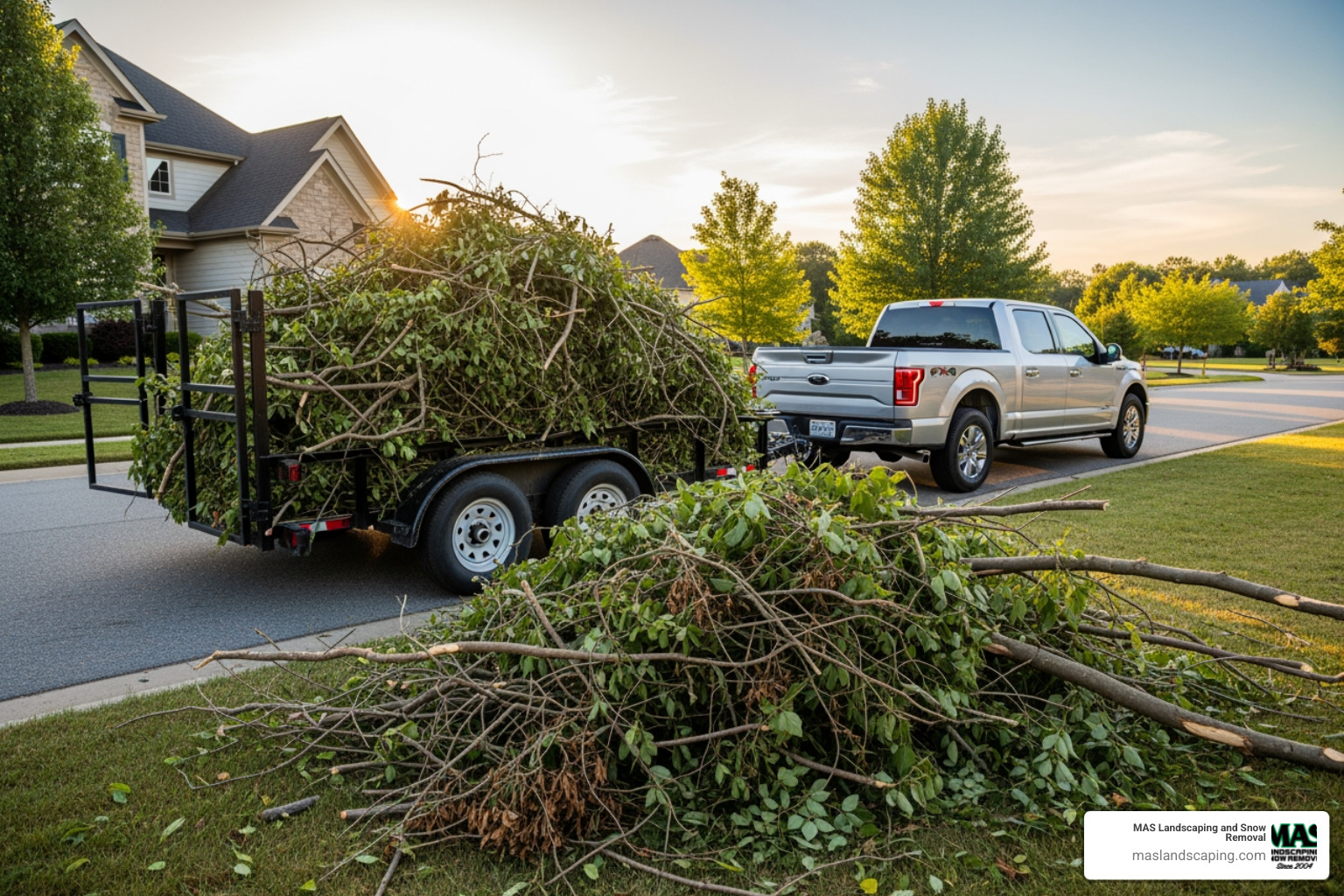
Brush piles are a common sight after a storm, a landscaping project, or just years of neglect. The cost to remove them, as we’ve noted, is often quoted per load. Nationally, you can expect brush pile removal costs to average $150 to $200 per pickup-truck load. However, depending on the volume and local factors, this can range up to $600 or more for a single pickup truck load.
If you have a substantial amount, say enough to fill a mini dump truck (which is about 4-5 pickup truck loads), the national average cost could be anywhere from $400 to $1,800+. These are volume-based prices and, like all figures mentioned, are national averages based on internet data, not actual costs for MAS Landscaping. We always recommend a personalized quote for your specific needs in Everett, Lynnfield, Malden, Melrose, Medford, Revere, Saugus, or Chelsea, MA.
How much does it cost to clear an acre of brush?
Clearing an entire acre of brush is a much larger undertaking than simply removing a few brush piles. It often involves different equipment and more extensive labor. This is what we refer to as land clearing.
- Light Brush Clearing: For areas with sparse, easily managed brush, national averages for clearing can range from $800 to $1,800 per acre, potentially reaching $2,500+ depending on conditions.
- Heavy Brush Clearing: If your acre is choked with dense, thick brush, thorny bushes, or small trees, the national average cost can increase significantly, from $1,600 to $3,000 per acre, and in some cases, up to $5,000+ per acre.
- Wooded Lot Clearing: For areas with a mix of heavy brush and more mature trees, you might see national average costs ranging from $2,500 to $5,000 per acre, possibly reaching $7,500+ for particularly challenging wooded lots.
These are broad estimates. The actual brush removal prices for land clearing will depend heavily on the specific vegetation, terrain, and accessibility of your property. For more information on maintaining a tidy outdoor space, check out our insights on yard clean-up services.
Key Factors That Influence Brush Removal Prices
Understanding the average costs is a great starting point, but what truly shapes your final brush removal prices? Several critical factors come into play, especially here in the diverse landscapes of Massachusetts.
- Volume of Debris: This is perhaps the most obvious factor. A small pile of clippings will cost less than a mountain of storm-felled branches. The more brush you have, the more labor, equipment, and disposal space are required.
- Site Accessibility: Can a truck and necessary equipment easily get close to the brush? If our crew has to haul brush long distances by hand, steer narrow gates, or work around existing structures, it adds to the labor time and complexity, increasing costs.
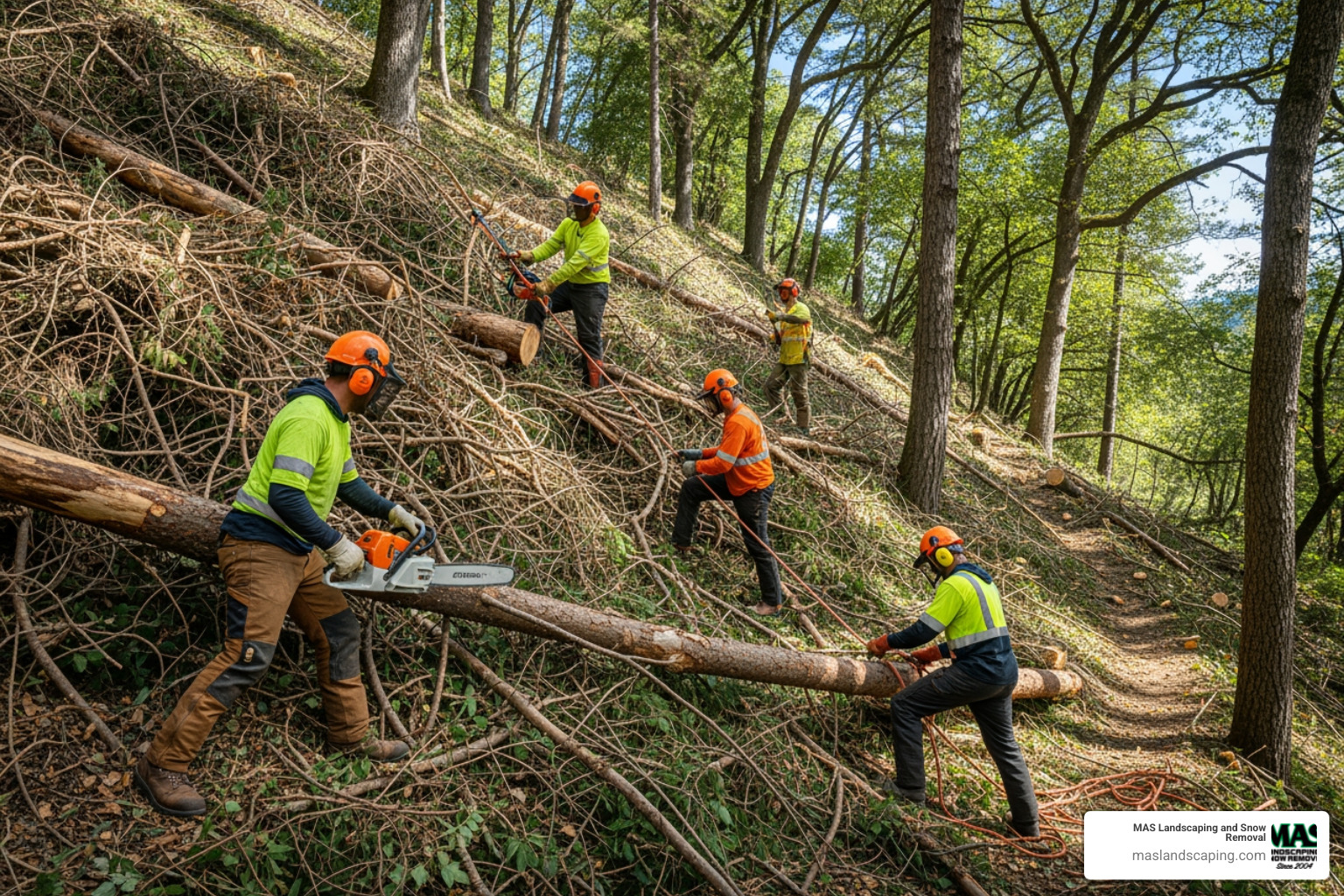
- Steep Slopes and Obstacles: Working on uneven or steep terrain is more challenging and time-consuming. Fences, sheds, delicate landscaping, or even power lines can create obstacles that require extra care and specialized techniques, all of which impact the price.
- Labor Costs: As with any service, the cost of skilled labor is a primary driver of overall expense. This includes not just the physical removal but also the planning, equipment operation, and cleanup.
- Geographic Location: While we focus on our service areas of Everett, Lynnfield, Malden, Melrose, Medford, Revere, Saugus, and Chelsea, MA, it’s worth noting that regional economic factors, local disposal fees, and prevailing wages all influence brush removal prices. Even within Massachusetts, costs can vary slightly from one town to the next.
- Disposal Methods: How the brush is disposed of also affects the cost. Chipping on-site, hauling to a recycling center, or taking it to a landfill all have different cost implications, including fuel and dump fees.
How do different types of brush affect removal costs?
Not all brush is created equal, and the type of vegetation you need removed directly influences the effort and equipment required, affecting the brush removal prices.
- Light Brush: This typically includes weeds, small branches, grass clippings, and easily manageable plant material. It’s often quicker to clear and can sometimes be chipped on-site or loaded by hand. This requires less specialized equipment and often less intensive labor.
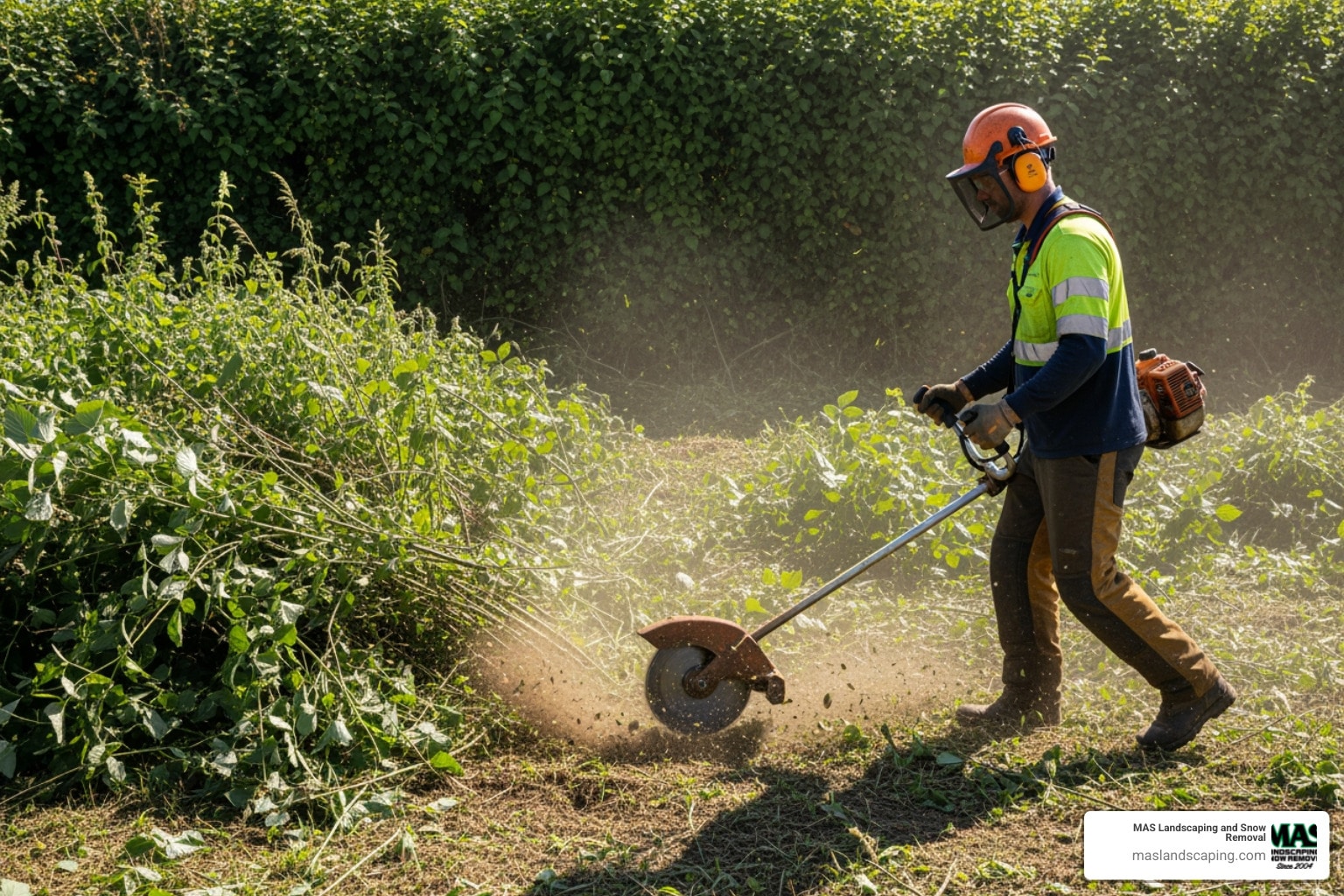
- Heavy Brush: This category encompasses denser vegetation like thickets, thorny bushes (hello, multiflora rose!), larger limbs, and small trees (saplings up to 6-8 inches in diameter). Heavy brush is more labor-intensive to cut, often requires chainsaws or brush cutters, and can be more difficult to load and chip. The density can make it a real workout for our crew!
- Large Limbs and Small Trees: While technically brush, these require more advanced cutting tools and often heavier lifting. Their removal can be more time-consuming and may necessitate specific safety protocols.
The difference in material directly impacts the labor and equipment needed. For example, clearing light brush might just need hand tools and a chipper, while heavy brush could require Bobcats, specialized brush clearing equipment, and more crew members. The cost of labor, including wages and associated expenses, is a significant part of any service. For more details on the broader context of labor costs, you can explore resources like the Bureau of Labor Statistics’ Employer Costs for Employee Compensation.
What is the typical hourly rate for brush removal labor?
For jobs where an hourly rate is applied, it’s important to understand what those rates generally cover.
- Labor-Only Costs: Nationally, brush cleanup labor costs average $50 to $80 per hour per person. However, depending on the skill level required, specialized tasks, and regional demand, this can extend up to $150+ per hour per person.
- Crew Rates: For larger jobs, you might be quoted a crew rate, which accounts for multiple team members. For instance, a common setup might be one lead operator and two laborers.
- Equipment Operator Rates: If the job requires heavy machinery like a Bobcat or a forestry mulcher, the hourly rate will be higher to account for the specialized skill of the operator and the cost of running the equipment. For example, forestry mulching can range from $125 to $300 per hour nationally, and potentially up to $400+ per hour depending on the machine and operator expertise.
These hourly rates cover not just the time spent actively removing brush, but also the time for setup, breakdown, and loading. We aim for efficiency to keep your costs down! For heavy-duty clearing, our Bobcat services can dramatically reduce labor time.
Beyond the Brush Pile: Associated Services and Additional Costs
Sometimes, brush removal is just one piece of a larger puzzle. You might encounter additional costs or related services that factor into your overall project budget.
- Hauling Fees: This covers the transportation of the brush from your property to a disposal site. It’s often bundled into the overall quote but is a distinct cost component.
- Disposal & Dump Fees: This is where the brush officially goes to its final resting place. Landfills, recycling centers, or composting facilities charge fees based on weight (per ton) or volume. Nationally, dump-site fees range from $30 to $100 per ton, but can vary depending on local regulations and the type of material.
- Equipment Costs: While included in hourly rates for specialized services, if you’re renting equipment for a DIY job, you’ll need to factor this in. For professionals, this is part of our operational costs.
- Forestry Mulching: This is an efficient method for clearing large areas of dense brush and small trees. A specialized machine grinds the vegetation into mulch on-site, returning nutrients to the soil and eliminating hauling costs. Nationally, forestry mulching costs range from $125 to $300 per hour, and can reach $400+ per hour for larger, more powerful machines or complex terrain.
- Land Grading: After significant brush removal or land clearing, you might want the area graded for proper drainage or future landscaping. This is a separate service with its own costs, typically ranging from $500 to $2,000 nationally, depending on the scale.
- Permit Fees: In some municipalities in Massachusetts, especially for large-scale land clearing or work near wetlands, permits may be required. These fees can range from $50 to $200 nationally and are usually the homeowner’s responsibility to acquire, although we can advise on what might be needed.
What are the costs for related removal services?
Often, brush removal goes hand-in-hand with other yard cleanup tasks. Here are some national average costs for related services (based on internet data, not MAS Landscaping quotes):
- Shrub & Bush Removal: If you’re removing specific shrubs or bushes rather than just brush piles, costs can range from $25 to $150 per bush (for bushes up to 6 feet tall). For larger or more complex bushes, this can go up to $200+ per bush.
- Tree Branch Removal: For individual tree branches, especially larger ones that have fallen or need pruning, costs typically start at $75 and can go up to $250 for small to medium branches. For very large limbs (over 10 feet), costs can reach $400+ minimum.
- Tree Stump Removal: After a tree is cut down, the stump remains. Stump removal (grinding) usually costs $80 to $250 per stump for the first one, with additional stumps often costing $30 to $60 each. Complex or very large stumps can reach $300+ per stump.
Professional vs. DIY Brush Removal: A Cost-Benefit Analysis
When faced with a brush removal project, many homeowners ponder the age-old question: “Should I do it myself or hire a pro?” Let’s break down the pros and cons.
DIY Cost Factors
Going the DIY route means you’re trading your time and effort for potential monetary savings.
- Tool Rental: You might need to rent equipment like a wood chipper, heavy-duty brush cutter, or even a small trailer. Rental costs can quickly add up, especially for multi-day projects.
- Safety Gear: Don’t forget sturdy gloves, eye protection, hearing protection, and appropriate clothing. Safety is paramount!
- Your Time and Effort: This is often the biggest hidden cost. Brush removal is physically demanding and time-consuming. Do you have the time to dedicate to it, or would you rather spend that time with family or on other pursuits?
- Disposal: You’ll still need to figure out how to transport and dispose of the brush, incurring fuel costs and dump fees.
Professional Service Benefits
Hiring a professional service like MAS Landscaping offers several distinct advantages, especially for our clients in Everett, Lynnfield, Malden, and surrounding areas.
- Efficiency: We have the right equipment and experienced crews to get the job done quickly and efficiently, saving you valuable time.
- Safety: Brush removal, especially heavy brush or large branches, can be hazardous. Our teams are trained in safe removal techniques and equipped with proper safety gear.
- Proper Disposal: We handle all aspects of disposal, ensuring your brush is removed and processed according to local regulations, often at recycling or composting facilities.
- Expertise: We understand the nuances of different brush types, terrain challenges, and the most effective removal methods, ensuring a thorough job.
For small, manageable piles of light brush, DIY might be feasible. But for larger projects, dense vegetation, or challenging access, the benefits of professional help often outweigh the perceived cost savings of doing it yourself.
Cost-saving tips for brush removal
Even when hiring professionals, there are ways to be a savvy homeowner and potentially reduce your brush removal prices:
- Pre-stacking Brush: If you can safely gather and consolidate your brush into a few accessible piles, it can significantly reduce the labor time required for our crew to collect and load it.
- Creating Clear Access Paths: Ensure there’s an unobstructed path for our crew and equipment to get to the brush. Removing small obstacles beforehand means we spend less time maneuvering and more time removing.
- Checking Municipal Pickup Options: Before calling us for a quote, check if your town (like Lynnfield, MA, with its Leaf Yard, or other local municipalities) offers periodic yard waste or brush collection. This might cover smaller amounts.
- Scheduling in the Off-Season: While demand is generally consistent, sometimes scheduling non-urgent brush removal during less peak landscaping seasons (e.g., late fall or early spring before the busy season) might offer more flexibility.
- Sourcing Supplies and Tools from Local Home Improvement Stores: If you’re doing any preliminary DIY work, consider checking local stores like Lowes, Home Depot, or Menards for tools or supplies you might need.
Frequently Asked Questions About Brush Removal Prices
What services are typically included in a brush removal quote?
A comprehensive brush removal quote from MAS Landscaping typically includes:
- Loading Labor: The physical work of gathering, cutting, and loading the brush onto our trucks or chippers.
- Hauling Services: Transportation of the brush from your property to the disposal site.
- Standard Disposal Fees: The costs associated with properly disposing of the brush at a local facility.
What’s usually not included in a standard brush removal quote (and would be quoted separately if needed):
- Stump Grinding: This is a distinct service for removing tree stumps.
- Final Raking/Cleanup: While we aim for a tidy workspace, extensive final raking or fine detail cleanup beyond standard site clearing might be an additional service.
- Seeding/Landscaping: Any subsequent landscaping, planting, or seeding of the cleared area would be a separate project.
What is the difference between brush and yard waste?
This distinction is important, especially for municipal collection rules.
- Brush: Generally refers to woody material such as branches, tree limbs, small logs, and shrub trimmings. Pieces are typically larger and more rigid, often requiring cutting or chipping.
- Yard Waste: Encompasses softer organic materials like grass clippings, leaves, weeds, pine needles, and garden debris. These are usually smaller, decompose more quickly, and can often be bagged or composted.
Many cities, including some in our service area like Lynnfield, MA, have specific guidelines for their Leaf Yard or yard waste collection programs, often distinguishing between brush and other yard waste. It’s always a good idea to know these local rules.
How does the size and accessibility of the brush pile impact the price?
The size and accessibility of your brush pile are two of the most significant factors influencing brush removal prices.
- Volume Calculation: The larger the pile, the more labor, time, and truck space it demands. We assess the volume to determine the number of loads and the duration of the job.
- Access for Machinery: If our trucks or chippers can easily back right up to the brush, it speeds up the loading process dramatically. If the brush is far from a paved surface, or if access is blocked by narrow paths, fences, or other obstacles, it means more manual labor, more time, and potentially the use of smaller, specialized equipment, all of which increase costs.
- Labor Time Increase: Difficult access or very large, unwieldy brush piles mean our crew spends more time cutting, hauling, and loading by hand. This directly correlates to higher labor costs.
- Risk Assessment: Working in challenging conditions, such as on steep slopes or around delicate structures, requires extra caution and specialized techniques, which can also factor into the pricing due to increased risk and necessary expertise.
- Urban vs. Rural Properties: In densely populated areas like Everett, Revere, or Chelsea, MA, access can often be tighter, requiring more careful planning and potentially increasing labor time compared to more open, rural properties.
Conclusion: Reclaiming Your Yard Without Breaking the Bank
Understanding brush removal prices and the factors that influence them is key to a successful and stress-free project. Whether you’re clearing out post-storm chaos, preparing for a new landscaping vision, or simply tidying up an overgrown area in Everett, Lynnfield, Malden, Melrose, Medford, Revere, Saugus, or Chelsea, MA, knowing what to expect financially empowers you.
While DIY might seem like a cost-saver for smaller tasks, the value of professional expertise often shines through for larger, more complex, or hazardous jobs. Our team at MAS Landscaping and Snow Removal brings the right equipment, experience, and efficiency to handle your brush removal needs safely and effectively. We pride ourselves on personalized service and local expertise, changing your outdoor spaces.
Ready to reclaim your yard? Don’t let the brush win! Contact us for a professional brush removal quote today, and let us help you understand the specific costs for your project. We’re here to make your property beautiful and functional again.