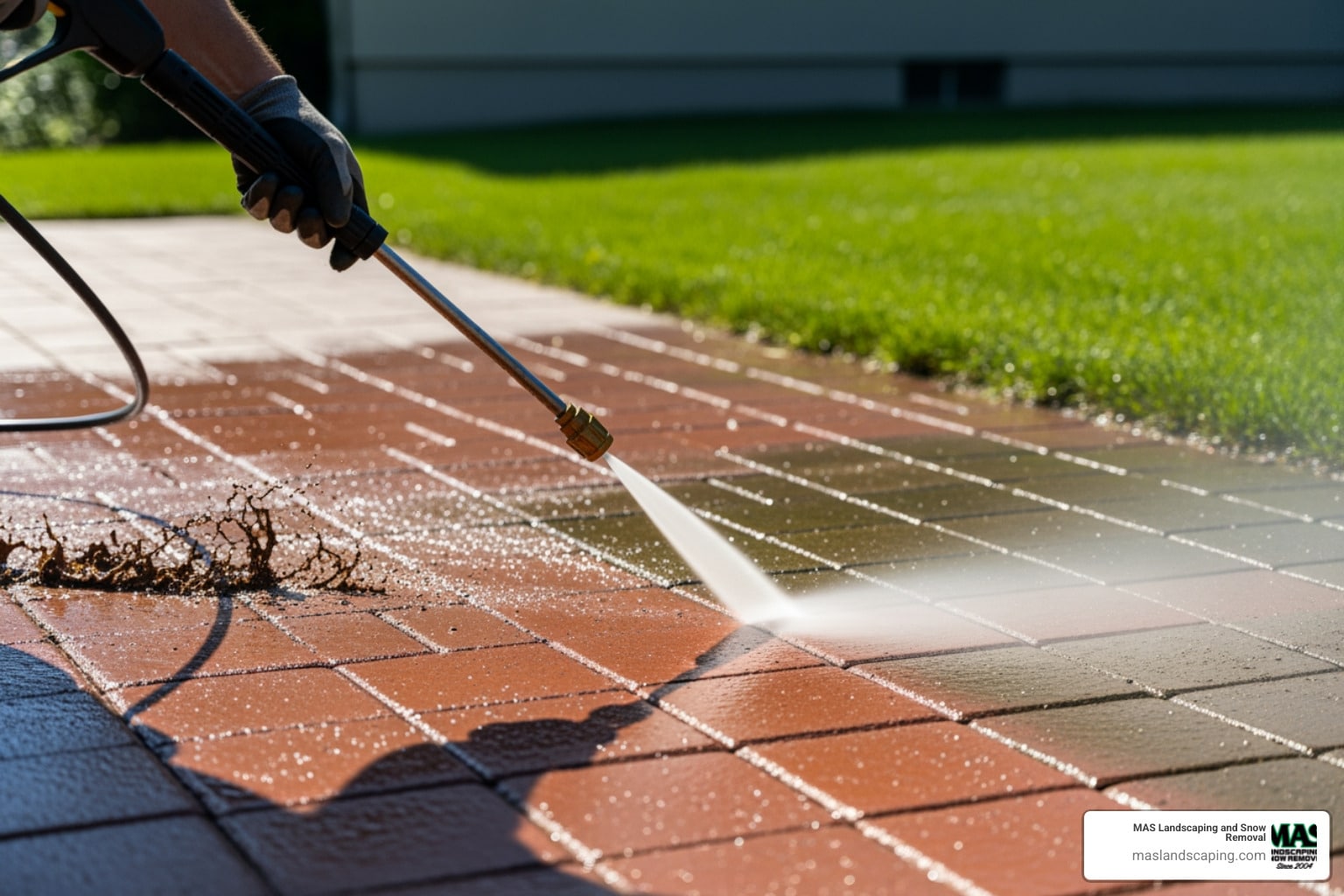


Why Protecting Your Paver Patio Matters
Sealing paver patio surfaces is one of the most important maintenance tasks you can do to protect your outdoor investment. Whether you just installed a beautiful new patio or you’re looking to restore an existing one, understanding the sealing process helps you make the right decision for your property.
Quick Answer: The Paver Sealing Process
- Clean thoroughly – Remove all dirt, stains, and debris
- Wait for proper conditions – 50-90°F, low humidity, no rain for 24-48 hours
- Apply sealer – Use sprayer or roller in even coats
- Allow to cure – Wait 24-48 hours before use
- Reseal regularly – Every 3-5 years for ongoing protection
Installing a beautiful patio can take your outdoor space from muddy mess to garden-party-ready almost overnight. But before you start enjoying those summer barbecues, you need to think about protection.
Here’s the reality: concrete pavers are porous. They absorb stains, fade from UV rays, and can deteriorate from weather exposure. Sealing creates a protective barrier that keeps your pavers looking fresh and extends their lifespan significantly.
The process isn’t complicated, but it does require proper preparation, the right weather conditions, and careful application. You’ll need to clean your pavers thoroughly, choose the right type of sealer for your needs, and apply it correctly to avoid common mistakes like cloudy finishes or peeling.
Most homeowners choose to seal their pavers approximately every three years, though this varies based on sun exposure, foot traffic, and weather conditions in your area. For the Greater Boston region, where we experience harsh winters and hot summers, proper sealing becomes even more critical for protecting against freeze-thaw cycles and salt damage.
Whether you tackle this as a DIY project or hire a professional, understanding what’s involved helps you get the best results and truly protect your investment.
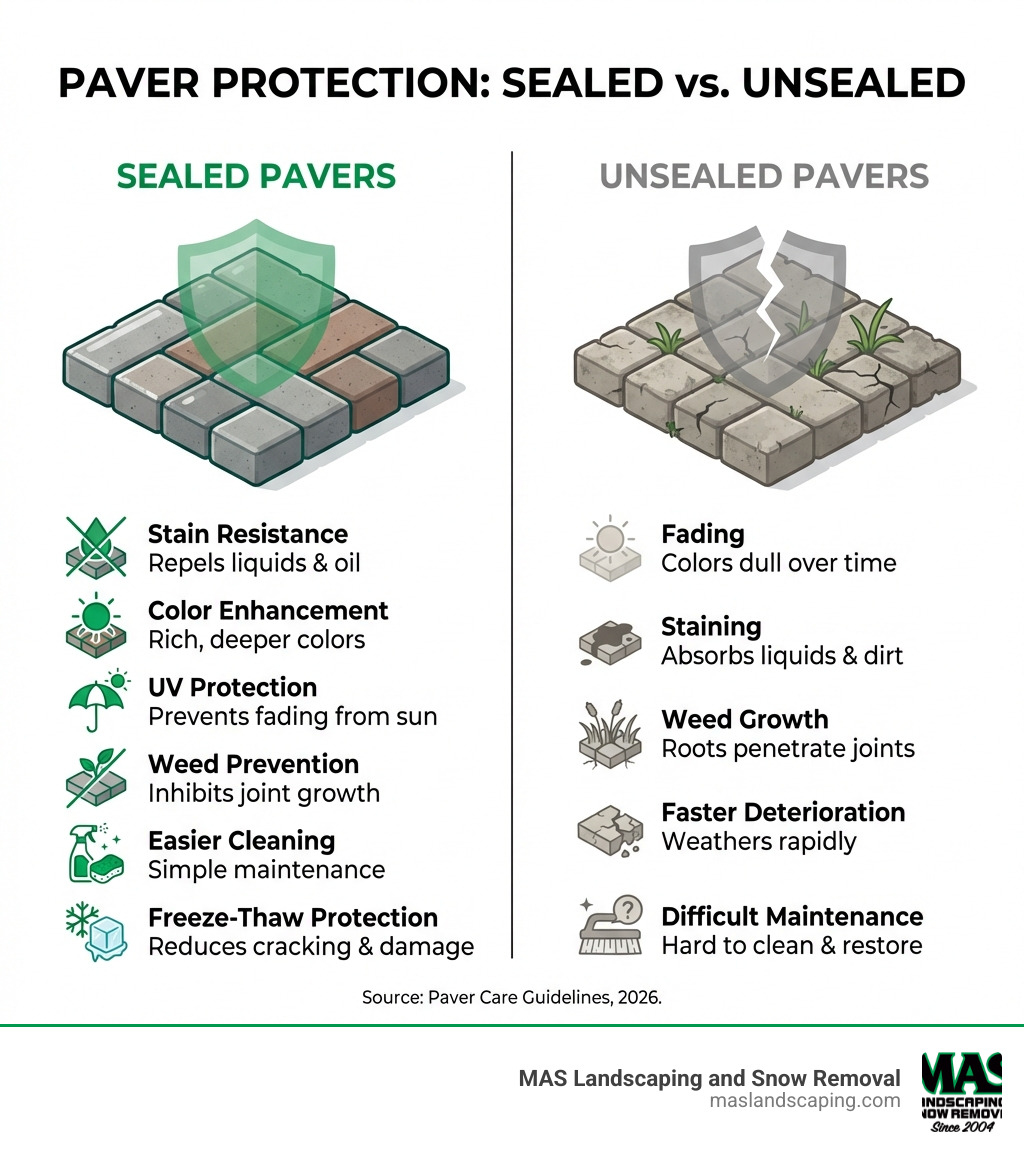
Sealing paver patio terms at a glance:
Why Seal Your Paver Patio? The Pros and Cons
At MAS Landscaping, we understand that your paver patio is a significant investment in your home. It’s a place for relaxation, entertainment, and making memories. But just like any outdoor feature, pavers face a constant battle against the elements, stains, and wear and tear. This is where sealing paver patio surfaces comes into play, offering a shield of protection that keeps your outdoor living space looking its best for years to come.
The Benefits of Sealing a Paver Patio
Sealing your pavers is less about simple maintenance and more about preserving the beauty and integrity of your hardscape. It’s a proactive step that protects your investment, especially given the diverse weather conditions we experience in areas like Saugus, Everett, and Lynnfield, MA.
Here’s why we strongly recommend sealing paver patio surfaces:
- Increased Stain Resistance: Pavers, especially concrete ones, are porous. A quality paver sealer acts as a barrier against oil, grease, food spills, and tree sap, making stains less likely and cleanup much easier. It also helps limit mold and mildew buildup, which can be a common issue in our humid climate.
- Improved Color and Appearance: UV rays from the sun can cause the vibrant colors of your pavers to fade over time. Sealing protects against this UV degradation, helping maintain color. Many sealers also enrich the natural tones, giving your patio either a subtle improvement or a “wet look,” depending on the product you choose.
- Protection Against Weather and Erosion: New England weather can be tough on pavers. Exposure to water and salts can lead to pitting, cracking, and surface flaking. Sealing helps guard against freeze-thaw damage and erosion, which in turn helps keep pavers from loosening or shifting.
- Joint Stabilization: Many modern sealers penetrate the joint sand between pavers and harden it. This reduces sand displacement from rain, wind, and ants, and makes it harder for weeds to sprout.
- Easier Cleaning and Maintenance: Sealed pavers are less porous and smoother, so dirt, grime, and organic matter do not adhere as easily. Routine maintenance often comes down to simple sweeping and occasional washing with appropriate cleaners.
- Increased Durability and Longevity: By limiting water absorption, stains, and surface wear, sealing can significantly extend the service life of your patio and keep it looking newer for longer.
- Increased Home Value: A well-maintained, attractive paver patio improves curb appeal and can make your home more appealing to potential buyers.
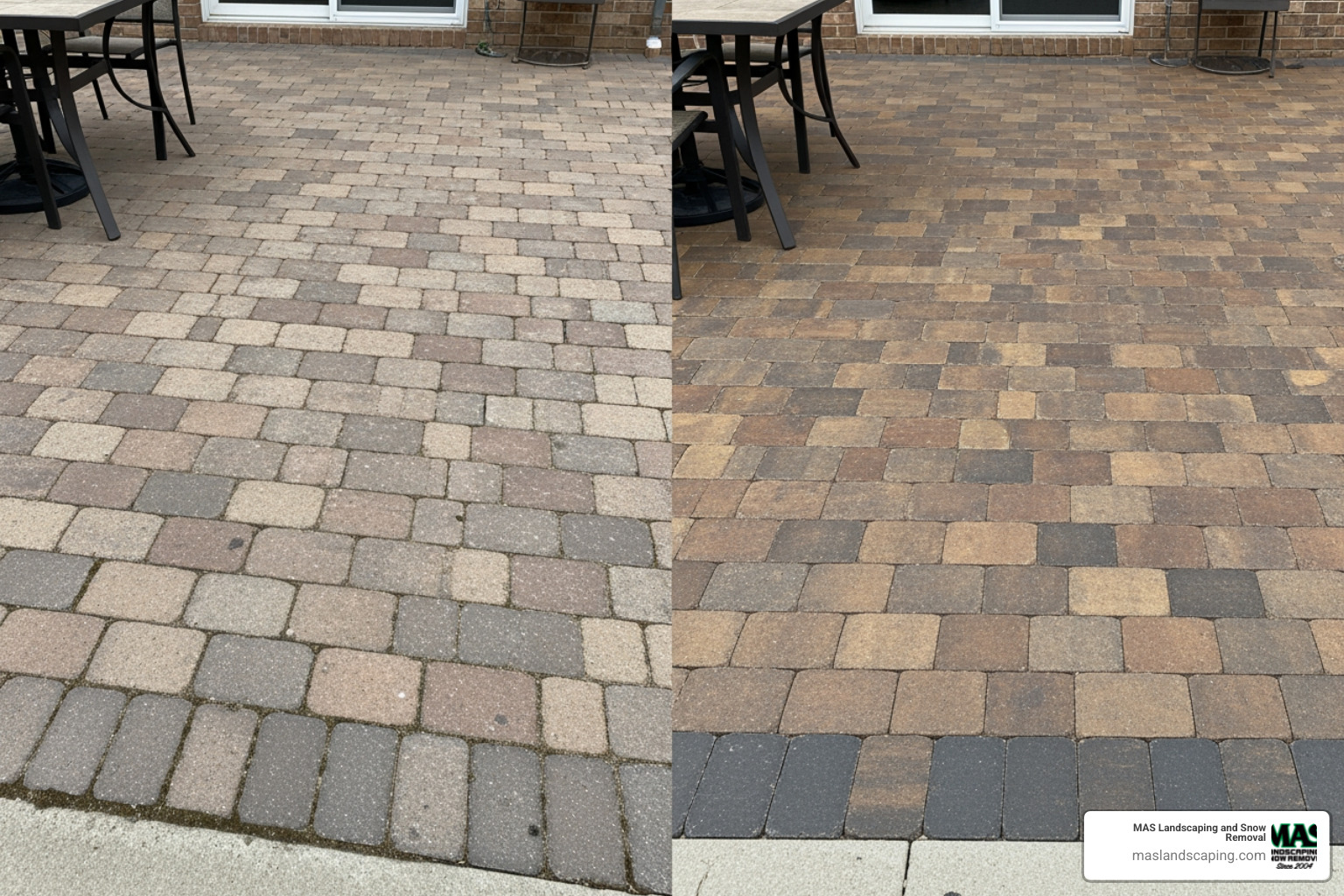
For more information on changing your outdoor space, explore our patio installation services.
Potential Downsides to Consider
While the benefits of sealing paver patio surfaces are compelling, it is also important to be aware of the potential downsides so you can make an informed decision:
- Added Cost: Sealing requires an initial investment in materials and, if you hire a professional, labor. A gallon of sealant can range from $80 to $150, and you will need tools for cleaning and application. Although sealing can help prevent future repair costs, it is still an upfront expense.
- Reapplication Time: Sealing is not a one-time task. Most sealers need to be reapplied every 3-5 years, depending on traffic, weather exposure, and the specific product used.
- Slippery Surface Risk: Some high-gloss or “wet look” film-forming sealers can create a smoother surface that becomes slippery when wet. This is especially important to consider on walkways, steps, and pool decks. Matte or satin finishes, or penetrating sealers, are often better choices for these areas.
- Potential for Error: Applying sealant without proper prep or technique can lead to issues like milky hazing, peeling, or uneven sheen. Correcting these problems often requires stripping the sealer and starting over, which is time-consuming.
- Plant Damage Risk: Overspray or accidental spills can harm nearby plants and garden beds if not protected. This risk increases on windy days or when spraying close to delicate landscaping.
- Sealer Compatibility Issues: If your pavers have been sealed before, it is crucial to ensure the new product is compatible with the existing sealer. Incompatible products can cause poor adhesion or discoloration. Testing a small hidden area or consulting a professional is always wise.
Choosing the Right Sealant and Finish
Selecting the right paver sealant is just as important as the application process itself. With so many options on the market, it can feel overwhelming. We will break down the main types to help you make an informed choice for your sealing paver patio project.
Water-Based vs. Solvent-Based Sealers
The fundamental choice often comes down to water-based or solvent-based sealers. Both have their merits, and recent advancements in chemistry mean that water-based options are now highly effective and often preferred.
| Feature | Water-Based Sealers | Solvent-Based Sealers |
|---|---|---|
| Finish Appearance | Typically provide a natural, matte, or satin look. Many water-based products subtly improve color without creating a thick surface film, though some are available in higher-sheen versions. | Often deliver a richer color improvement and can achieve higher gloss or pronounced “wet look” finishes. They tend to deepen colors more dramatically. |
| Durability | Offer solid protection and are more than adequate for most residential patios and walkways. They may need reapplication a bit more often than some heavy-duty solvent formulas, depending on conditions. | Known for strong, long-lasting protection and higher resistance to chemicals and heavy traffic, especially in driveway or commercial settings. Some formulas can last longer between reapplications. |
| Application | Easier for most DIY homeowners. Generally more forgiving, with slower flashing (drying) times that reduce lap marks when applied correctly. | Can flash off more quickly, especially in warm weather, which makes maintaining a wet edge more challenging. Often better handled by experienced applicators. |
| Cleanup | Simple soap-and-water cleanup for tools and equipment, which makes the process more user-friendly and convenient. | Require mineral spirits or similar solvents for cleanup, adding time and the need for additional materials and proper disposal. |
| VOCs/Odor | Typically much lower in volatile organic compounds (VOCs) and have milder odor, making them a better choice for environmentally conscious projects and for use near doors or windows. | Often higher in VOCs and have a stronger odor during application and early curing, so good ventilation and appropriate safety gear are important. |
| Cost | Comparable in price per gallon to many solvent-based formulas, and often more economical when you factor in easier cleanup and fewer safety supplies. | Can be similar or slightly higher in price per gallon, especially for premium, high-gloss products. Overall project costs can increase when including solvents and specialty sprayers. |
Understanding Sealant Finishes: From Matte to Wet Look
Different finishes allow you to fine-tune the final appearance and safety of your patio. The same paver can look very different depending on the finish you choose.
Common Finish Options
- Matte/Natural Finish: Offers a very low sheen, preserving the original look of the pavers while still providing protection. Ideal if you want your patio to look as close to unsealed as possible.
- Satin/Semi-Gloss Finish: Adds a gentle sheen and moderate color improvement without a mirror-like shine. This is a popular middle-ground choice for many homeowners.
- Gloss/High-Gloss Finish: Creates a noticeable shine and stronger color enrichment. It can highlight textures and patterns but may show dust, footprints, and imperfections more readily.
- “Wet Look” Finish: Often a high-gloss, film-forming sealer that mimics the appearance of pavers right after they have been sprayed with water. It dramatically deepens colors, but on smooth surfaces it can increase slipperiness when wet.
When choosing a finish for sealing paver patio areas that see a lot of foot traffic or are frequently wet (like pool decks), it is important to weigh appearance against traction. If you prefer a glossier look in these locations, ask about sealers that accept non-slip additives so you can boost grip without sacrificing style.
To choose the right sealant for your project, our team is here to help. Our expertise in paver installations and maintenance covers everything from landscape design to selecting the best products for your specific needs.
Aftercare, Maintenance, and Troubleshooting
Congratulations, you have sealed your paver patio. Long-term care, knowing when to reapply, and being prepared to fix common mistakes are all part of responsible paver ownership.
How Often to Reseal and Common Mistakes to Avoid When Sealing a Paver Patio
Reapplication Schedule
The basic rule of thumb for reapplying paver sealer is every 3 to 5 years. However, this can vary based on several factors:
- Traffic: High-traffic areas (like busy walkways or driveways) will wear down faster than low-traffic areas.
- Exposure: Pavers exposed to constant bright sun, heavy rainfall, salt from de-icing, or frequent freeze-thaw cycles (common in Greater Boston service areas like Malden and Melrose) may need more frequent reapplication.
- Sealer Type: Some premium penetrating sealers can last significantly longer than basic products, while lower-end options may degrade more quickly.
- Visual Cues: A good indicator that it is time to reseal is when your pavers start to absorb water quickly, or when water no longer beads noticeably on the surface.
Common Mistakes to Avoid
Even seasoned DIYers can make errors when sealing paver patio surfaces. Here are frequent pitfalls:
- Sealing a Wet Surface: Applying sealer to pavers that are not completely dry can trap moisture, causing cloudy spots, hazing, or peeling. When in doubt, wait longer and use a simple taped-plastic test to check for trapped moisture.
- Over-Application: Too much sealer, especially film-forming types, can lead to a thick, uneven, or overly glossy finish that may become slippery or peel. It is safer to apply two thin coats than one heavy one.
- Uneven Coats: Rushing the job or failing to maintain a wet edge can produce a blotchy, inconsistent appearance. Working in manageable sections and using a steady pattern helps maintain uniform coverage.
- Sealing in Direct, Hot Sun: High surface temperatures cause sealers to dry too quickly, leading to poor bonding and an increased risk of whitening or premature failure. Aim for mild temperatures and shade when possible.
- Ignoring Manufacturer Instructions: Each sealer has specific guidelines for coverage, drying times, and recoat windows. Skipping these details can reduce performance and shorten the life of the sealer.
- Sealing on a Windy Day: Wind can blow sealant onto siding, vehicles, and plants, and can carry dust and leaves onto your wet sealer.
- Leaving Sprinklers On: Automatic sprinklers can spray water onto curing sealer, leaving white marks or streaks. Shut them off for at least 48 hours before and after sealing.
How to Fix Common Sealing Mistakes
If something goes wrong with your freshly sealed patio, many issues are fixable with the right approach.
- Cloudy/Hazy Finish or White Spots (Moisture Trapped)
- For Solvent-Based Sealers: You may be able to reactivate the sealer by applying a light mist of xylene and immediately rolling it with a clean roller. This can soften the coating and allow trapped moisture to escape. Always test in a small, inconspicuous area first and use proper safety gear.
- For Water-Based Sealers: Xylene does not generally help. Significant moisture problems usually require stripping the sealer and starting over once the pavers are completely dry.
- Over-Applied Sealer (Thick, Peeling, Inconsistent)
- In cases of over-application or too many layers, a stripping agent designed for paver sealers is often necessary.
- Stripping Agents: Follow the product instructions carefully. Typically you will apply the stripper, allow it to dwell, then scrub and rinse thoroughly to return the pavers to their unsealed state.
- Once stripped and fully dry, you can reseal using thinner, more controlled coats under proper weather conditions.
Patience and small test areas are your best tools when making corrections. For comprehensive maintenance strategies, consult this General Paver Maintenance Guide. You can also view examples of our work in our hardscaping photo gallery.
Frequently Asked Questions about Paver Sealing
We often hear similar questions from homeowners in Everett, Medford, and Chelsea, MA, about sealing paver patio surfaces. Here are some of the most common ones:
Should all types of pavers (brick, concrete, stone) be sealed?
The short answer is generally yes, most types of pavers can benefit from sealing, although the necessity and type of sealer can vary:
- Concrete Pavers: These are the most common and arguably benefit the most from sealing. Concrete is inherently porous, making it highly susceptible to staining and color fading from UV exposure. Sealing concrete pavers is crucial to protect them against these issues and to improve their vibrant colors. It’s important to choose a breathable sealer that allows moisture to escape, preventing efflorescence buildup.
- Brick Pavers: Clay brick pavers are often considered neat and tend to be more stain-resistant and color-stable than concrete pavers. However, they are still absorbent. Sealing brick pavers can improve their natural appearance, protect against mildew, and prolong their life. A matte or low-gloss finish is often preferred to maintain their traditional look.
- Natural Stone Pavers: This category includes limestone, granite, bluestone, and slate. Natural stone is very durable but can vary significantly in porosity. Sealing natural stone helps protect against staining and can bring out the stone’s inherent beauty. Always test on an inconspicuous area first, as some sealers can alter the stone’s natural characteristics.
For interlocking pavers, regardless of material, use a sealer that can penetrate the joints to provide comprehensive protection from top to bottom, stabilizing the sand and inhibiting weed growth.
Does sealing make pavers slippery?
This is a common and very important concern, especially for areas like pool decks or walkways where safety is paramount. The answer is: it depends on the type of sealer and finish.
- High-Gloss and “Wet Look” Sealers: These are often film-forming sealers that create a thin, glossy coating on the paver surface. While they offer a dramatic aesthetic improvement, they can indeed become very slippery when wet. We generally advise caution with these types of sealers in high-traffic areas or near water.
- Matte, Satin, or Natural Finish Sealers: These sealers typically provide a lower sheen or no sheen at all. Many are penetrating sealers that soak into the paver rather than forming a topical layer. They do not significantly alter the surface texture and are generally a safer alternative, as they don’t increase slipperiness when wet.
- Non-Slip Additives: If you desire a glossier finish but are concerned about slipperiness, some sealers can incorporate non-slip additives. These fine, clear granules are mixed into the sealer or broadcast onto the wet surface to provide extra traction.
When choosing a sealer for your sealing paver patio project, especially for areas with a lot of foot traffic or moisture, we prioritize safety. We can guide you in selecting options that offer excellent protection without compromising on slip resistance. For more details on safe and attractive hardscaping, explore our walkway installation services.
What is the average cost of sealing a paver patio?
The cost of sealing paver patio surfaces can vary widely depending on whether you choose to DIY or hire a professional, the size of your patio, the type of sealer, and the amount of preparation needed.
DIY Costs:
- Sealant: A gallon of paver sealant typically costs between $80 to $150. Water-based sealers generally cover 100 to 150 square feet per gallon, while solvent-based sealers cover 80 to 120 square feet per gallon.
- Tools: If you don’t own them, you might need to purchase a pump sprayer ($30-$50), a roller ($15-$30), safety gear ($20-$50), and possibly special cleaners ($20-$50 per gallon). Renting a gas-powered pressure washer can cost around $100 per day.
Professional Costs:
Hiring a professional for sealing paver patio services typically includes cleaning, preparation, materials, and labor. Professional pressure washing alone can range from $100-$500 depending on square footage. The overall cost for professional sealing is usually calculated per square foot.
Note: These are average costs based on internet data and not actual costs for MAS Landscaping. Average pricing can range from $1.50 to $6.00 per square foot, with some high-end services reaching $10.00 or more per square foot.
While DIY can save on labor, professionals bring expertise, specialized equipment, and often access to higher-quality, longer-lasting products, which can prevent costly mistakes and ensure a superior finish.
Protect Your Investment with Professional Paver Sealing
We’ve explored the ins and outs of sealing paver patio surfaces, from the myriad benefits to the potential pitfalls and intricate application steps. It’s clear that while sealing is crucial for protecting your investment and enhancing your outdoor living space, it’s also a task that requires careful planning, proper technique, and the right products.
For homeowners in Saugus, Everett, Lynnfield, Malden, Melrose, Medford, Revere, and Chelsea, MA, we understand the unique challenges our climate presents to outdoor hardscapes. Harsh winters with freeze-thaw cycles and de-icing salts, combined with humid summers, make proactive protection like paver sealing even more vital.
While the idea of a DIY project can be appealing, the reality is that applying sealant can be tricky. Mistakes like improper cleaning, sealing a wet surface, over-application, or choosing the wrong product can lead to frustrating and expensive corrections. If you’re unsure about handling the work yourself or simply prefer to spend your weekends enjoying your patio rather than working on it, hiring a professional is a wise choice.
At MAS Landscaping, we bring local expertise, professional equipment, and a commitment to personalized service to every sealing paver patio project. We ensure proper preparation, select the optimal sealer for your specific paver type and desired finish, and apply it with precision to guarantee a beautiful, long-lasting result. This peace of mind means you can relax, knowing your patio is protected and looking its best.
Don’t let your beautiful paver patio fade, stain, or deteriorate before its time. Protect your investment and improve your home’s curb appeal with professional paver sealing. To learn more about how we can help maintain the beauty and longevity of your outdoor spaces, please find professional patio paver sealer companies near you.