

Why Choosing the Right Clearing Equipment Matters
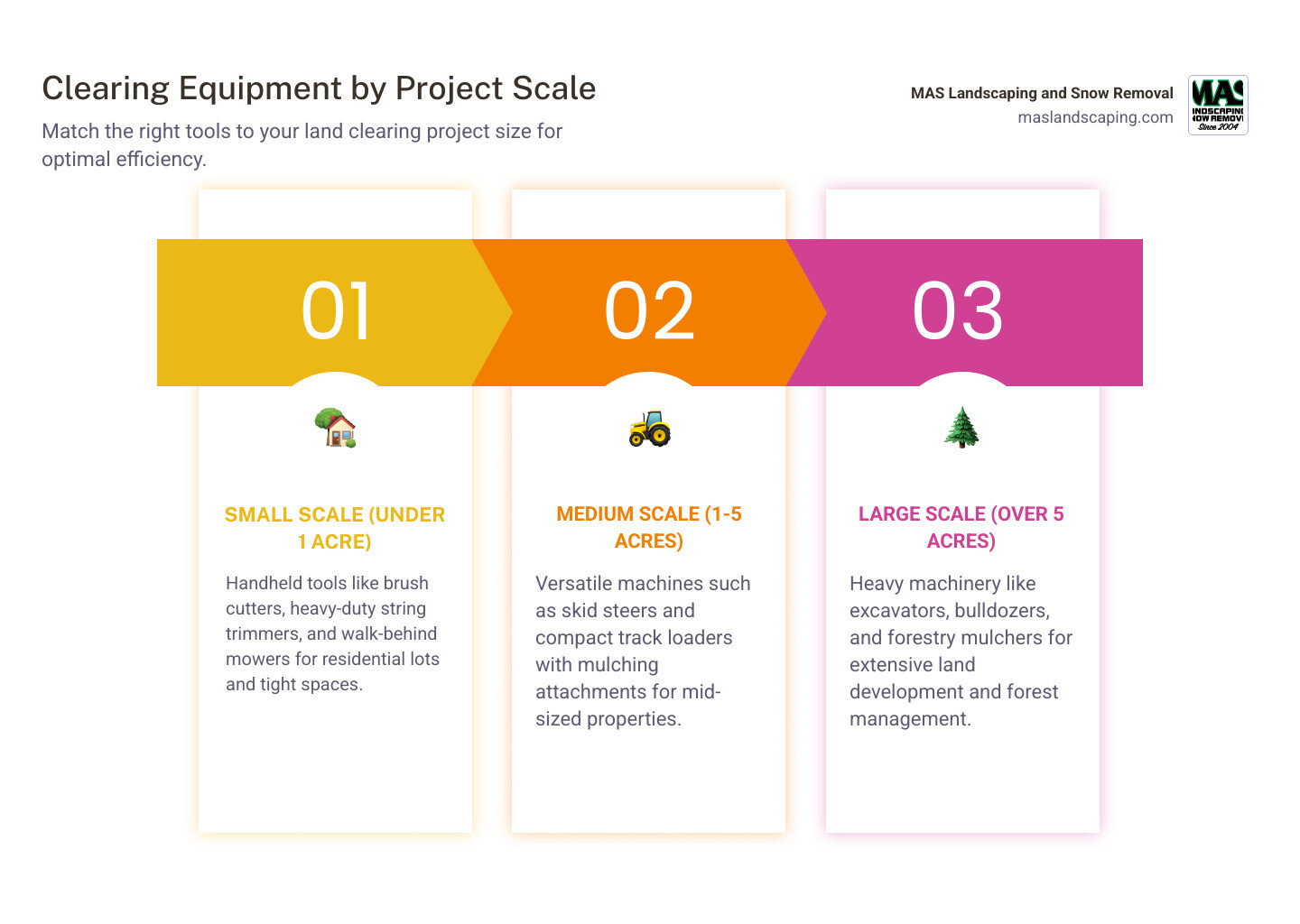
The best equipment to clear brush and small trees depends on your project size and terrain. For small residential lots, handheld tools like brush cutters and walk-behind mowers work well. Medium properties benefit from versatile machines like skid steers and compact track loaders with specialized attachments. Large acreage requires heavy equipment such as excavators, bulldozers, and forestry mulchers.
Quick Equipment Guide by Project Size:
- Small (under 1 acre): Brush cutters, heavy-duty string trimmers, walk-behind brush mowers
- Medium (1-5 acres): Skid steer loaders, compact track loaders with mulching attachments
- Large (5+ acres): Excavators, bulldozers, forestry machines with grapple attachments
Land clearing is one of the most important steps in preparing a site for construction, agriculture, or simply reclaiming your property from nature’s grip. Whether you’re facing a tangled mess of overgrown brush along your fence line or dealing with woody saplings taking over your back forty, having the right tools transforms an overwhelming task into a manageable project.
The stakes are higher than aesthetics alone. Overgrown vegetation can fuel wildfires, damage fences, reduce property visibility, and create security risks. As one forest management expert notes, the right equipment doesn’t just clear land—it can shift fuel volume into smaller size classes, reduce fire hazards, and improve overall land health.
But walk into any equipment rental yard and you’ll face dozens of options. Dozers, excavators, skid steers, mulchers, brush hogs—each designed for specific conditions and scales. Choose wrong and you’ll waste money, time, and possibly damage your property. Choose right and you’ll work efficiently while minimizing soil disturbance and achieving your desired outcome.
This guide breaks down the equipment landscape into three clear categories based on project scale. We’ll explore the tools that work best for small residential lots, medium-sized properties, and large acreage. You’ll learn which attachments improve versatility, when renting makes more sense than buying, and the critical safety considerations that protect both operators and property.
Clearing Equipment Categorized by Project Scale
When tackling overgrown land, the first step is to assess your project’s scale. This determines the most effective, efficient, and safe tools. From a small backyard cleanup in Saugus to preparing a larger lot in Lynnfield, our approach adapts to your specific needs.
Handheld and Walk-Behind Tools: The best equipment to clear brush and small trees on a budget
For smaller residential lots, tight spaces, or selective clearing, handheld and walk-behind tools are your best friends. They offer a DIY-friendly approach and allow for precision where larger machines simply can’t go. These tools are ideal for tackling individual saplings, dense thickets along a fence line, or overgrown sections of your yard.
- Brush Cutters: These powerful tools are designed to cut through dense shrubs and small trees quickly. Think of them as an upgraded string trimmer, often featuring a heavy-duty blade instead of just a line. They’re excellent for clearing vegetation that’s too thick for a string trimmer but doesn’t warrant a chainsaw.
- Heavy-Duty String Trimmers: While typically used for grass, many string trimmers can be “beefed up” with specialized attachments. Some kits can turn a standard string trimmer into a brush cutter capable of taking down woody brush up to 3/8-inch thick. Others, like the Beaver Blade attachment, can slice through saplings as thick as 3 inches. This makes your everyday trimmer surprisingly versatile for light to moderate brush.
- Pole Saws: When you need to reach higher branches without climbing, a pole saw is invaluable. These tools, often battery-powered or gas-powered, allow us to trim small tree limbs and dense brush from a safe distance, making them perfect for tidying up around property lines or clearing overhead obstacles.
- Walk-Behind Brush Mowers: For larger walkable areas with dense brush, woody saplings, and tough weeds, a walk-behind brush mower is a true workhorse. Often called “self-propelled,” these machines are beasts in the field, chopping through saplings up to 3 inches thick. They’re excellent for reclaiming overgrown sections of your property where a regular lawnmower would simply get stuck or damaged. While some heavy-duty brush cutters are massive machines used by government agencies like the BLM for fuel reduction, the walk-behind versions are perfectly scaled for residential and small commercial properties in areas like Everett or Malden.
These tools are crucial for precision work, especially when we want to selectively clear certain plants while preserving others. They are also generally more budget-friendly options for homeowners or those with smaller, one-time clearing needs.
Mid-Sized Properties: The Power of Versatility
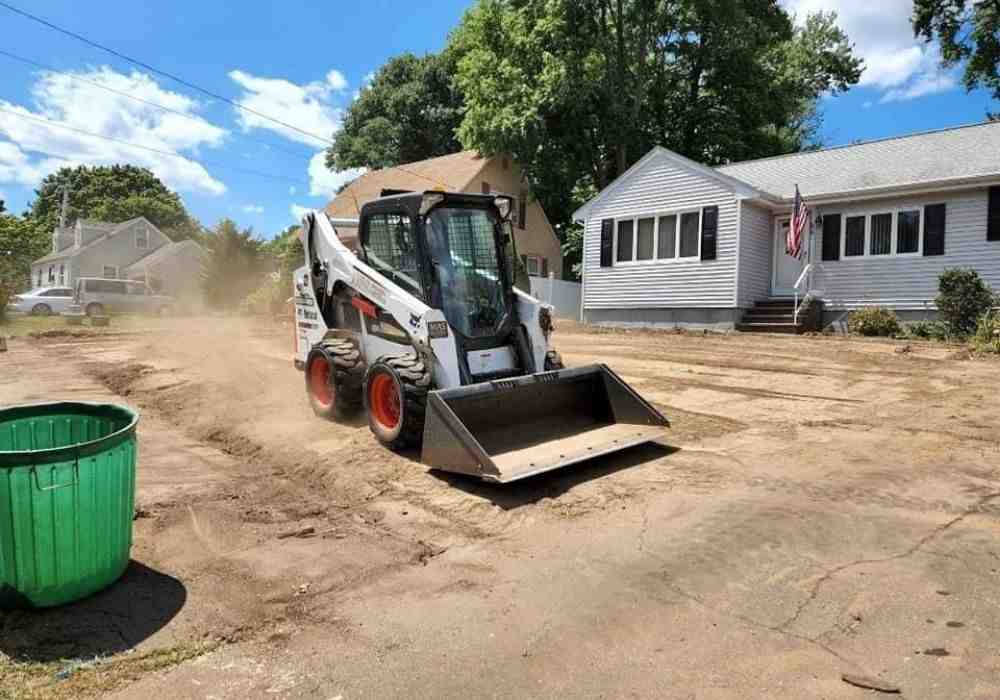
When your project spans 1 to 5 acres, or involves more challenging terrain than a simple flat lawn, we step up to the mid-sized equipment category. This is where machines like skid steers and compact track loaders (CTLs) shine, offering a blend of power, maneuverability, and incredible versatility through their attachment capabilities. These machines are often the go-to for many of our landscaping projects in Medford and Melrose.
- Skid Steer Loaders: These compact machines are ideal for jobs with limited space where maneuverability matters. Skid steers are incredibly agile, allowing us to steer tight spots and work around existing structures or trees. Their power-to-size ratio makes them highly efficient for various tasks, from clearing dense foliage with mulching heads to moving debris with grapple buckets.
- Compact Track Loaders (CTLs): Built with rubber tracks, CTLs are champions on challenging terrain. They provide superior traction and flotation on muddy, swampy, or soft ground, preventing sinking and minimizing turf damage. This makes them perfectly suited for working in New England’s varied soil conditions, especially after heavy rains. Their stability on rough surfaces also improves safety and operator comfort.
Advantages of Skid Steers and CTLs:
- Maneuverability: Their compact size and steering mechanisms allow for tight turns and operation in confined areas.
- Power: Despite their size, they pack a punch, capable of handling significant loads and powering heavy attachments.
- Attachment Versatility: This is their biggest asset. With a quick-attach system, we can swap between numerous tools in minutes, changing a single machine into a multi-tasking powerhouse. This versatility is why we rely on them heavily for a wide range of services. For more information on how these versatile machines can transform your property, check out our bobcat services.
These machines are the workhorses for many of our projects, offering efficient land clearing while being mindful of ground disturbance. They bridge the gap between handheld tools and heavy excavators, providing the perfect balance for medium-sized properties.
Large Acreage: The best equipment to clear brush and small trees on a large scale
For expansive properties, large-scale developments, or projects involving significant tree removal and major grading, we bring in the heavy artillery. This equipment is designed for maximum power and efficiency, turning vast, overgrown landscapes into cleared, usable land. These are the machines we deploy for major site preparation or reclaiming large tracts of land in areas like Chelsea or Revere.
- Bulldozers: When sheer power is required, bulldozers are some of the most formidable land clearing equipment available. Equipped with heavy blades, they excel at pushing over large trees, removing stubborn shrubs, and leveling ground. Bulldozers are often on the front lines, clearing significant obstacles and preparing the terrain for subsequent work.
- Excavators: Essential for their power and flexibility, excavators are incredibly versatile for land clearing. Their hydraulic arms can be fitted with various attachments to dig, uproot trees, move boulders, and even break through concrete. Excavators are particularly effective for precise stump removal, allowing us to pull out root systems and manage debris with accuracy. For instance, an excavator with a thumb attachment is highly effective for piling logs, brush, and stumps.
- Forestry Machines: These are purpose-built, heavier, and more rugged than general excavators, specifically designed for logging and heavy forestry operations. They are engineered to withstand the demanding conditions of dense woodland clearing, offering improved protection for the operator and greater durability for continuous heavy-duty work. While less common for typical residential clearing, they are vital for specific large-scale forestry management tasks.
For projects involving significant woody material, specialized mulchers mounted on these heavy machines are indispensable. A horizontal shaft mulcher, for example, can handle much larger material, up to 30 inches in diameter, making it vastly more capable than smaller vertical shaft mulchers which typically top out at 6-8 inches. These forestry mulchers shred vegetation into particles, leaving them on-site as mulch, which helps reduce erosion and enriches the soil. You can learn more about these powerful tools in the Forest Operations Equipment Catalog: Mulchers.
When facing large-scale land clearing, these machines provide the muscle and precision needed to transform vast, overgrown areas into functional spaces, whether for construction, agriculture, or simply creating a more accessible and beautiful property.
The Ultimate Toolkit: Essential Attachments for Clearing Land
The true power of modern land clearing equipment lies in its versatility, largely thanks to the array of specialized attachments available. These tools allow a single machine to perform multiple functions, significantly increasing productivity and efficiency. Choosing the right attachment for the job is key to success, whether we’re cutting, grinding, or simply moving debris.
| Attachment Type | Best For | Material Size | Finish |
|---|---|---|---|
| Mulcher | Dense brush, small trees, vegetation | Up to 30 inches (forestry mulchers) | Fine mulch, left on-site |
| Brush Hog | Overgrown grass, dense shrubs, saplings | Up to 4 inches (heavy-duty rotary cutters) | Coarse cut, some scattering of debris |
| Flail Mower | Grass, brush, roadside vegetation | Up to 2-3 inches | Fine, even cut, minimal debris scattering |
For Cutting, Grinding, and Mulching
These attachments are designed to eliminate vegetation, turning unwanted growth into manageable material or even valuable mulch.
- Brush Hogs (Rotary Cutters): These robust attachments, often referred to as rotary cutters, are excellent for cutting through dense shrubs and small trees quickly. They’re similar to a heavy-duty lawnmower but built to tackle much tougher vegetation. Mid-duty rotary cutters can handle brush up to 2 inches in diameter, while heavy-duty models can cut through brush up to 4 inches thick. They are perfect for clearing overgrown fields, creating firebreaks, and maintaining large open areas.
- Flail Mowers: For precise cutting of grass, brush, and roadside vegetation, flail mowers are a top choice. Their design prevents debris from scattering widely, making them safer to use near roads, buildings, or other structures. They provide a finer, more even cut than brush hogs and are excellent for maintaining a neat finish.
- Forestry Mulcher Heads: These are the ultimate tools for processing vegetation on-site. Mulcher attachments shred and pulverize small trees, shrubs, and other vegetation into fine mulch. This process acts as an on-site recycling system, enriching the soil, suppressing weeds, and retaining moisture. Horizontal shaft mulchers, in particular, can handle large material, some up to 30 inches in diameter, making them highly effective for heavy clearing tasks.
- Stump Grinders: After cutting down trees, the stumps can be an eyesore and an obstacle. Hydraulic stump grinders are designed to get below ground level, eliminating the need for extensive excavation. These powerful attachments, which can range from 70 to 300 horsepower, grind the stump into wood chips, leaving the area clear and ready for new landscaping or construction. We always recommend wearing proper safety gear, including gloves, goggles, long-sleeve clothing, and work boots, when operating stump grinders due to flying debris.
For Moving, Piling, and Hauling
Once vegetation is cut or ground, these attachments help us manage and remove the debris, ensuring a clean and tidy worksite.
- Grapple Buckets: These are essential for grabbing logs, rocks, and irregularly shaped debris. A grapple attachment is far more efficient than a standard bucket for moving large, bulky items, allowing us to quickly clear and pile material for disposal or processing.
- Root Rakes: After removing trees and large brush, root rakes are perfect for sifting through the soil, pulling out roots, rocks, and other buried debris while leaving valuable topsoil behind. This is crucial for preparing the ground for planting or construction.
- Dozer Blades: While often associated with bulldozers, smaller dozer blades can be attached to skid steers or compact track loaders for light grading, spreading soil, or pushing piles of debris. This helps us refine the terrain and organize the cleared material.
Effective debris management is a critical part of any land clearing project. Whether we’re chipping branches on-site or hauling away larger logs, these attachments help streamline the entire process, contributing to a cleaner and more organized property. For larger cleanup efforts, we also offer comprehensive yard clean ups to handle all the residual debris.
Choosing the Best Equipment to Clear Brush and Small Trees for Your Project
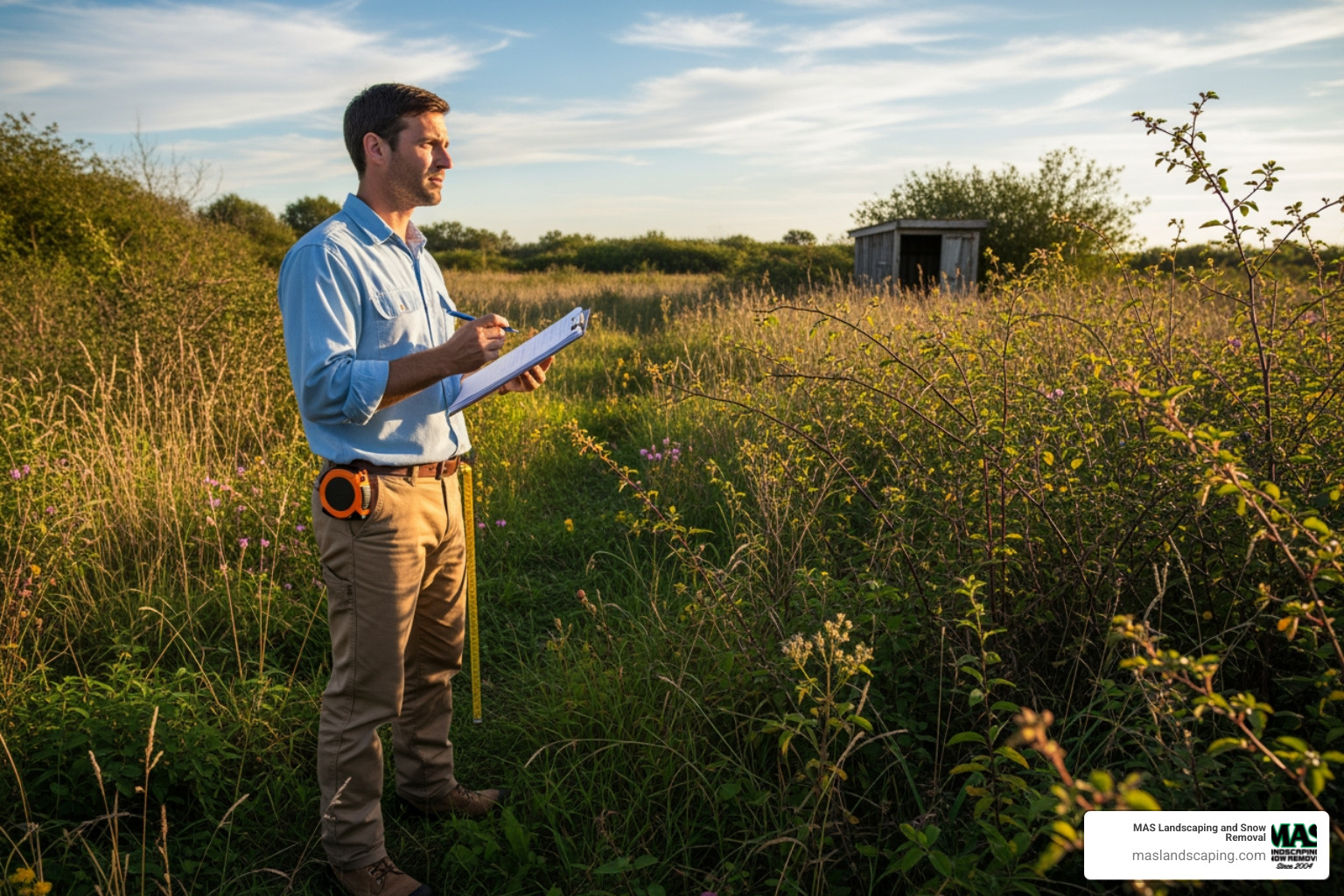
Selecting the right equipment is paramount for a successful land clearing project. It’s not just about having powerful machinery; it’s about matching the tools to the specific demands of your property and project goals. Before we even think about turning a key, we carefully evaluate several key factors.
Factors to Evaluate Before You Start
- Project Size & Scale: As we’ve discussed, the size of the area to be cleared dictates the type of equipment. A small residential yard in Chelsea will require different tools than several acres of overgrown land in Lynnfield. The larger the area, the more likely we’ll need heavy machinery for efficiency.
- Vegetation Type (grass, woody brush, trees): What exactly are we clearing?
- Grass and light brush: Flail mowers and brush hogs are excellent.
- Dense woody brush and saplings (up to 4 inches): Heavy-duty string trimmers with attachments, walk-behind brush mowers, or skid steers with brush hog attachments.
- Small trees (4-12 inches): Skid steers or compact track loaders with mulching heads or tree shears.
- Large trees (over 12 inches) and stumps: Excavators, bulldozers, or specialized forestry machines.
- Vegetation Density: A few scattered saplings are a different challenge than a thick, impenetrable jungle. Very dense growth often requires the higher power and cutting capacity of specialized mulchers or heavy machinery. For example, mulching operations become less effective in stands with more than 100 trees per acre or over 25 tons of debris per acre.
- Terrain & Soil Conditions: The ground itself plays a huge role.
- Flat, accessible areas: Most equipment can operate effectively.
- Muddy, swampy, or soft ground: Compact track loaders (CTLs) are superior due to their flotation and minimal ground disturbance.
- Steep slopes (over 20% grade) or broken terrain: Excavator-mounted mulchers offer better control and can work on slopes greater than 30%. Rocky ground can quickly wear out mulcher teeth and pose safety hazards.
- Limited access: Skid steers and handheld tools are ideal for maneuvering in tight spots or around existing landscaping.
- Debris Disposal Plan: What happens to the cleared material?
- Mulching on-site: Forestry mulchers and chippers turn vegetation into beneficial mulch, enriching soil and suppressing weeds. This is often an eco-friendly and cost-effective solution, especially in areas like Saugus where burning regulations might be strict.
- Hauling away: Grapple buckets and loaders are essential for collecting and transporting debris off-site.
- Budget Considerations: This factor influences everything from equipment choice to whether to rent or hire professionals. We’ll dig deeper into this next.
By carefully considering these factors, we can develop a strategic plan and select the absolute best equipment to clear brush and small trees for your specific project, ensuring efficiency, safety, and optimal results.
To Own or To Rent? Making the Smart Financial Decision
One of the biggest decisions for any land clearing project is whether to purchase the necessary equipment or opt for a rental. For homeowners or businesses in Malden, Medford, or any of our service areas, this choice has significant financial implications.
The Benefits of Renting Equipment
For most property owners and many businesses, renting land clearing equipment is often the most sensible and cost-effective approach.
- Lower Upfront Cost: Purchasing heavy machinery requires a significant capital investment. Renting allows us to access powerful, specialized equipment without the enormous initial outlay, freeing up funds for other aspects of your project.
- No Maintenance or Storage Hassles: Equipment ownership comes with ongoing costs for maintenance, repairs, and secure storage. When you rent, these responsibilities fall to the rental company. We simply pick up the machine, use it, and return it. This is a huge benefit, especially for large, specialized machines that require expert servicing.
- Access to Modern Technology: Rental fleets are typically updated regularly, meaning you get access to the latest models with advanced features and improved efficiency. This ensures you’re using cutting-edge equipment without the depreciation worries.
- Perfect for One-Time Projects: If you have a single large clearing project, buying a machine that will sit idle for most of the year doesn’t make financial sense. Renting provides the flexibility to get the right tool for the job, exactly when you need it.
- Trying Before Buying: Renting offers a chance to test different types of equipment and attachments to see what works best for your specific needs before committing to a purchase.
- Reduced Overhead Costs: Beyond maintenance, ownership includes insurance, transportation, and potential licensing fees. Renting streamlines these costs significantly.
For many, the learning curve and potential for inefficiency or damage when operating heavy equipment for the first time can also make renting less attractive than hiring a professional. As one forum user noted, “Renting equipment and learning to use it is fun, but not an efficient way to spend money.” For complex jobs, hiring an experienced professional like MAS Landscaping is often the most cost-effective and efficient solution.
When Purchasing Equipment Makes Sense
While renting is often preferred, there are specific scenarios where purchasing equipment can be a smart long-term investment.
- Frequent, Ongoing Use: If your property or business requires regular, extensive land clearing, the cumulative cost of rentals might eventually exceed the purchase price.
- Long-Term Property Management: For very large properties in rural areas that require continuous maintenance and clearing, owning certain pieces of equipment can provide immediate availability and control.
- Landscaping as a Business: As a landscaping company, owning a core fleet of versatile equipment is essential for our daily operations, ensuring we always have the right tools on hand for our clients in Everett, Saugus, and beyond.
- Immediate Availability and Control: Owning equipment means it’s always ready when you are, without waiting for rental availability or scheduling pickups and drop-offs.
The decision balances project scope, frequency of use, budget, and your comfort level with operating heavy machinery.
Safety First: Operating Land Clearing Equipment Responsibly
Operating land clearing equipment, from a heavy-duty string trimmer to a bulldozer, inherently involves risks. Our top priority at MAS Landscaping is always the safety of our team, our clients, and their properties. Understanding potential hazards and adhering to strict safety protocols is non-negotiable.
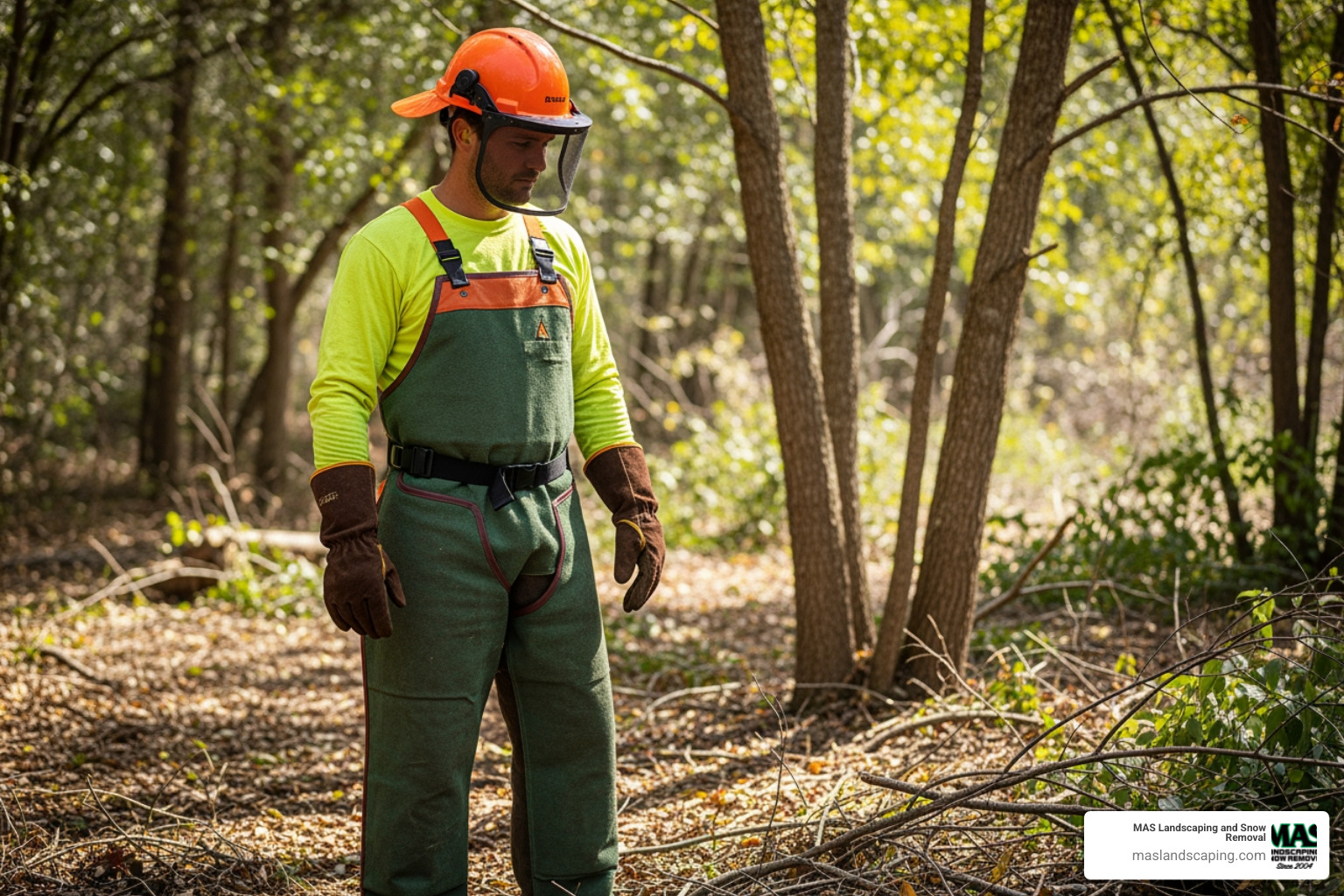
Essential Personal Protective Equipment (PPE)
Proper PPE is your first line of defense against injury. We insist on the following for any land clearing task:
- Head Protection (Hard Hat): Crucial for protecting against falling branches or debris, especially when working near trees.
- Eye & Face Protection (Safety Glasses, Face Shield): Flying debris, wood chips, and dust are constant threats. A face shield over safety glasses provides comprehensive protection.
- Hearing Protection: Many land clearing machines are loud. Earplugs or earmuffs prevent long-term hearing damage.
- Durable Gloves: Protect hands from cuts, scrapes, splinters, and vibration.
- Steel-Toed Boots: Essential for protecting feet from heavy equipment, falling objects, and sharp debris.
- High-Visibility Clothing: Especially important when working on larger sites or near roads, ensuring operators are easily seen by others.
Operational Best Practices
Beyond PPE, adhering to best practices significantly reduces the risk of accidents:
- Pre-Operation Equipment Inspection: Before starting any machine, a thorough check is vital. This includes checking fluid levels, tire pressure (if applicable), cutting blade sharpness, and ensuring all safety guards are in place and functional.
- Surveying the Work Area for Hazards: We always walk the entire work area before beginning. We look for hidden obstacles like rocks, pipes, stumps, and especially power lines or other utilities. This pre-assessment helps us plan safe pathways and identify potential trouble spots.
- Understanding Machine Limits: Every piece of equipment has its capabilities and limitations. For instance, mulchers are designed for clearing vegetation, not for felling large trees. Pushing a machine beyond its design limits can lead to breakdowns, damage, and accidents. Operator skill is often more important than the specific piece of equipment.
- Maintaining a Safe Distance for Bystanders: The work zone should always be clearly marked and kept free of unauthorized personnel. Flying debris, swinging equipment, and unpredictable movements pose serious risks to anyone too close.
- Never Working Alone on Large Jobs: For significant land clearing projects, having a spotter or another team member present is crucial. They can assist with communication, monitor the work area, and provide immediate help in an emergency.
- Special Considerations for Mulchers: “The biggest safety concern is flying objects thrown by the head.” This underscores the need for robust Falling Object Protective Structures (FOPS) on the operating machine and strict adherence to clear zones.
By integrating these safety measures into every project, we ensure that our land clearing operations are not only efficient but also as safe as possible for everyone involved.
Conclusion: Reclaiming Your Land with the Right Tools and Strategy
Clearing brush and small trees from your property is a transformative project that improves safety and boosts curb appeal. As we’ve explored, the best equipment to clear brush and small trees isn’t a one-size-fits-all answer. It’s a strategic choice based on your project’s scale, vegetation, terrain, and budget.
From handheld brush cutters for selective trimming in a small Revere garden to powerful excavators and forestry mulchers for reclaiming acres of overgrown land in Lynnfield, each tool plays a vital role. Understanding the capabilities of attachments like grapple buckets, brush hogs, flail mowers, and stump grinders further refines our approach, allowing us to tackle diverse challenges with precision and efficiency.
For many, renting equipment offers a flexible, cost-effective solution, providing access to modern machinery without the burdens of ownership. However, for complex, large-scale, or particularly hazardous jobs, the expertise of professional operators like MAS Landscaping is invaluable. Our experience ensures that the work is done safely, efficiently, and with minimal environmental impact, always adhering to strict safety protocols and utilizing the right equipment for the task.
The satisfaction of seeing a tangled, overgrown space transformed into a clean, usable, and beautiful landscape is immense. Whether you’re preparing for new construction, enhancing your property’s safety, or simply creating a more enjoyable outdoor environment, we are here to help.
For complex or large-scale jobs, professional help is the safest and most efficient route. At MAS Landscaping, we pride ourselves on our professionalism, personalized service, and local expertise in creating functional, beautiful outdoor spaces across Everett, Lynnfield, Malden, Melrose, Medford, Revere, Saugus, and Chelsea, MA.
Let us help you reclaim your land. Get a professional quote for your overgrown property cleanup today, and let’s turn your vision into a reality.