

Cheap Retaining Wall Ideas: Top 3 Budget Solutions
Why Affordable Retaining Walls Are Essential for Every Property
Looking for cheap retaining wall ideas that deliver both function and style? Many homeowners face the challenge of managing sloped yards, preventing soil erosion, and creating usable outdoor space without spending a fortune.
Quick Answer: Top Cheap Retaining Wall Ideas
- Pressure-treated wood: Costs 50-75% less than stone or engineered blocks
- Gabion baskets: Wire cages filled with rocks offer durability and drainage
- Concrete/cinder blocks: Easy to stack, no mortar required for small walls
- Repurposed materials: Broken concrete, salvaged bricks, or on-site stones
- Terracing: Multiple shorter walls instead of one tall, expensive structure
Retaining walls solve real problems like hillside erosion and lack of usable yard space. They prevent soil loss, create level planting areas, and can add property value when done right.
The good news is that you don’t need to break the bank. With smart material choices and strategic design, you can create a functional, affordable solution.
The key is understanding which materials work best for your specific situation and knowing when to tackle the project yourself versus calling in professionals.
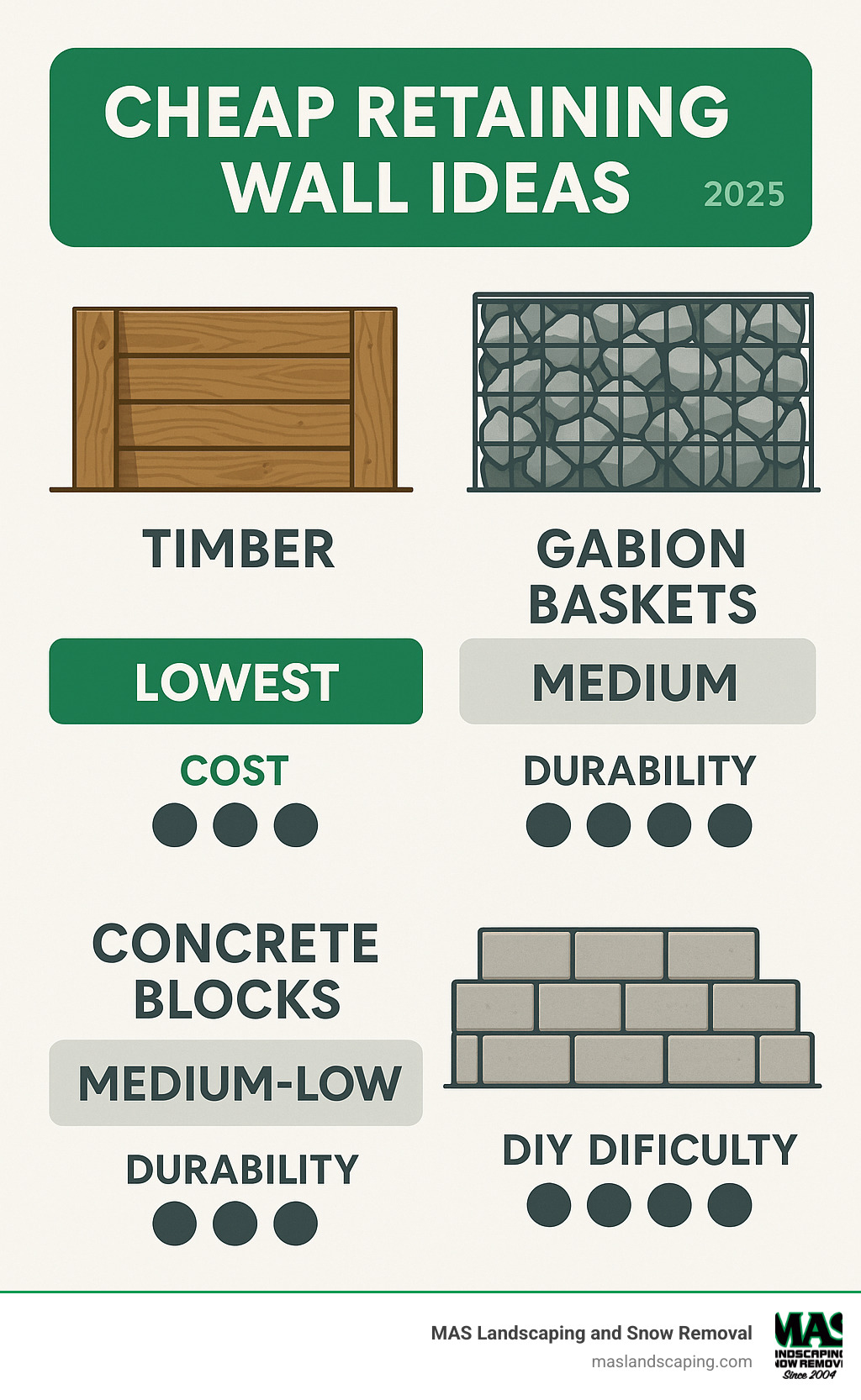
Quick look at cheap retaining wall ideas:
Top Budget-Friendly Retaining Wall Materials
The secret to finding cheap retaining wall ideas that actually work? It’s all about choosing the right materials for your specific situation. While professional retaining wall installations can vary widely in cost, the material you choose often makes the biggest difference in your final bill.
Let’s explore the most budget-friendly options that won’t leave you broke or disappointed.
Pressure-Treated Wood & Timber
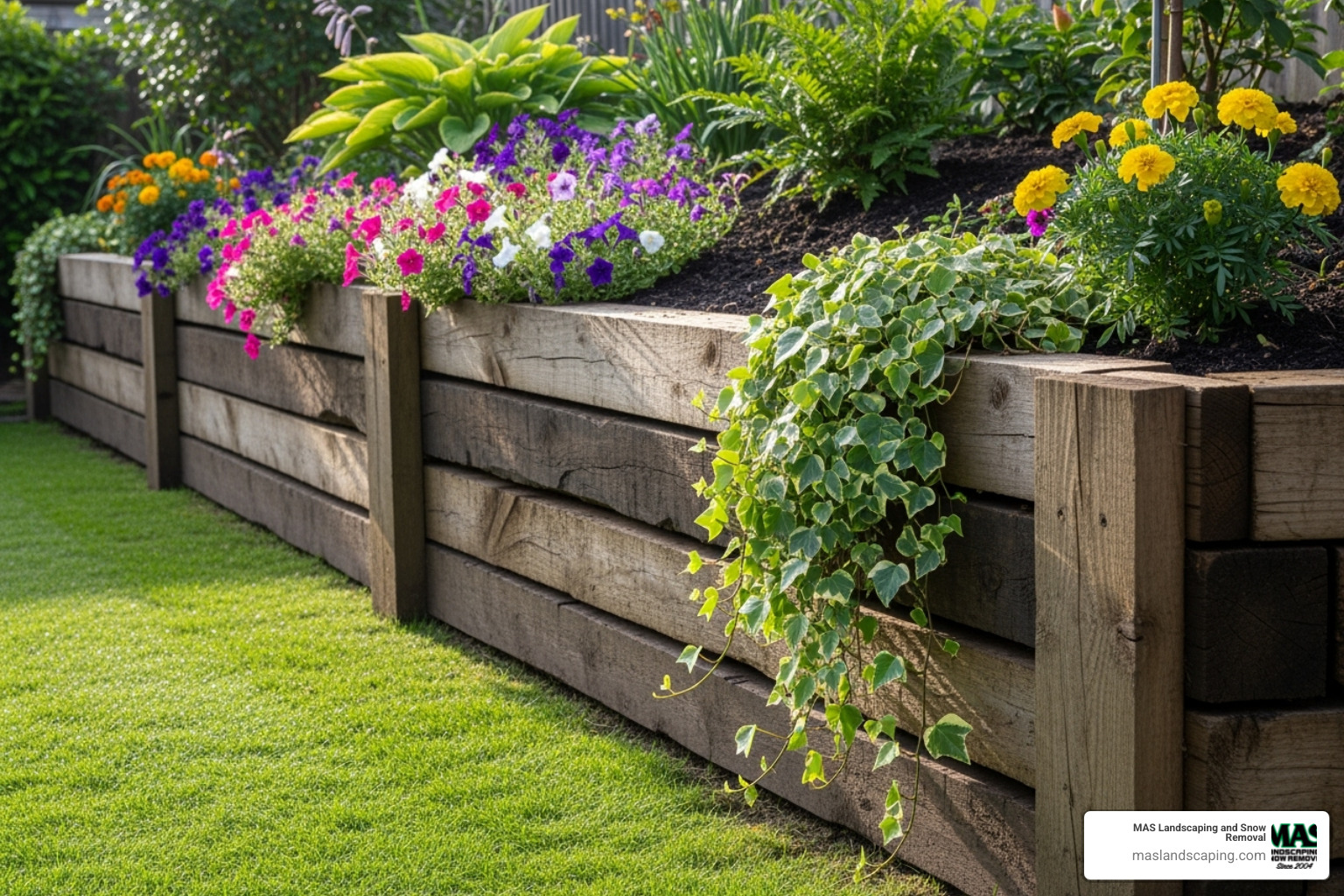
For cheap retaining wall ideas that blend naturally into your landscape, pressure-treated wood is hard to beat. Its rustic charm is appealing, and it’s forgiving for first-time builders.
The beauty of timber lies in its simplicity. You can cut it with standard tools, it’s lightweight enough to handle alone, and mistakes aren’t catastrophic. The natural wood look fits perfectly in garden settings.
The good news? Modern pressure-treated lumber resists rot and insects. The reality check? Even with treatment, you’re looking at a lifespan of about 5 to 10 years before needing replacement.
Here’s where many DIYers go wrong: drainage is absolutely critical with timber walls. Without proper drainage, water pressure builds up, leading to warping, rot, and eventual failure. Good drainage isn’t optional; it’s essential.
One safety note about older materials: if you’re considering salvaged railroad ties, be aware that older ones were treated with creosote, which can leach into soil. The Environmental Protection Agency has information on creosote and its potential impacts. Modern pressure-treated lumber uses safer alternatives.
For professional installation and guidance, check out More info about our Retaining Wall Services.
Gabion Baskets
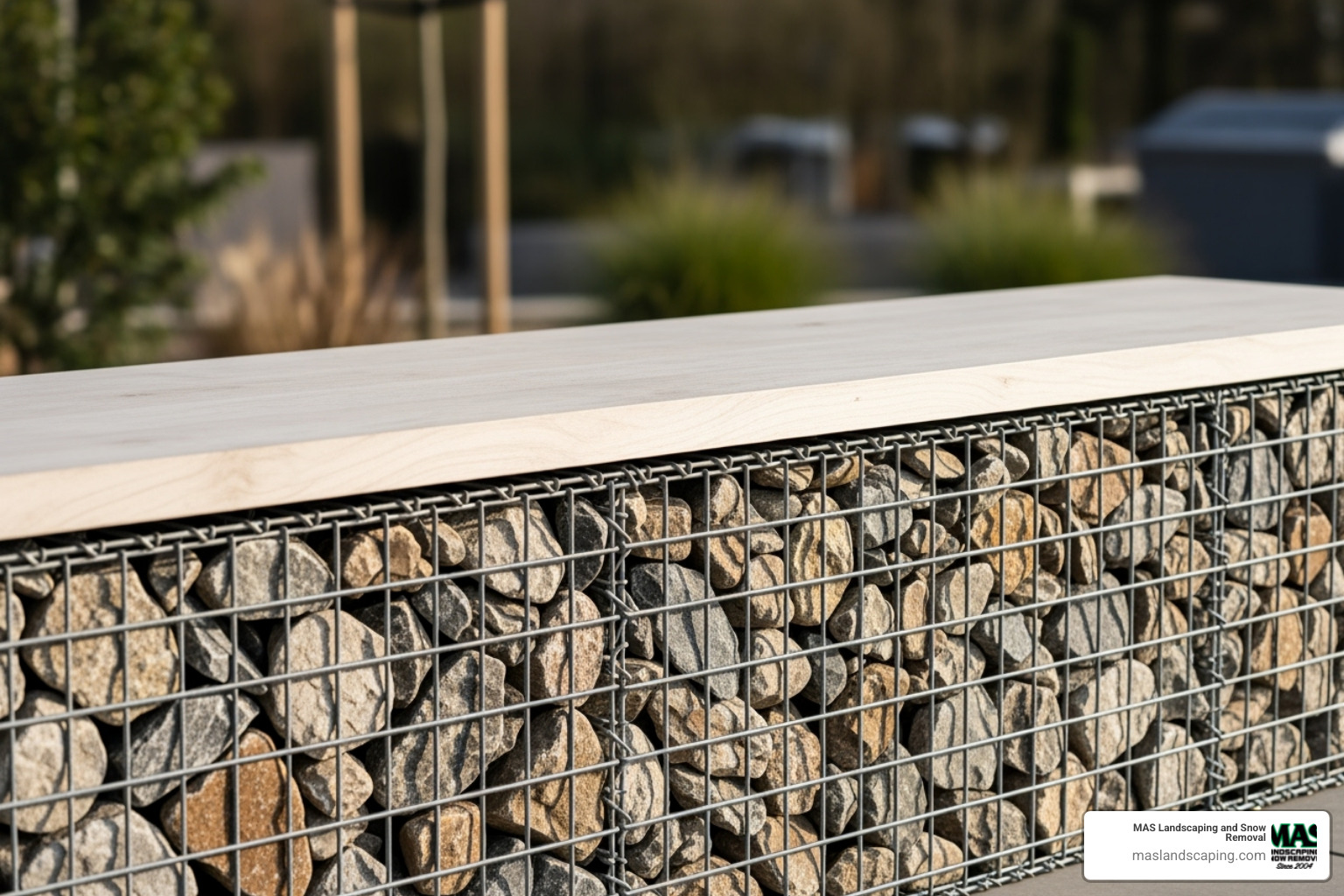
One of our favorite cheap retaining wall ideas is gabion baskets. These wire cages filled with rocks get stronger over time as vegetation and silt fill the gaps.
Gabions offer an industrial-chic look and are surprisingly DIY-friendly. The wire baskets come in manageable pieces, assembly is straightforward, and the results look modern.
The drainage advantage is huge. Water flows right through, eliminating the hydrostatic pressure that can destroy other walls. This natural permeability makes them incredibly stable and long-lasting.
A money-saving tip: Fill the interior with cheaper materials like rubble or broken concrete and use attractive stones only for the visible faces. This can cut your material costs significantly.
Sourcing your fill material creatively is where gabions really shine as a budget option. On-site rocks, salvaged concrete, or locally sourced stone can make these walls incredibly affordable. If you’re buying decorative stone, granite typically offers the best value.
Lower gabion walls even pull double duty – top them with timber and you’ve got garden seating. They also become habitat for beneficial wildlife, adding an ecological bonus to your landscape.
For design inspiration, visit More info about Garden Wall Designs.
Concrete & Cinder Blocks: The Go-To for Cheap Retaining Wall Ideas

When contractors think cheap retaining wall ideas, concrete and cinder blocks often top the list. They’re reliable, versatile, and surprisingly easy to work with.
Interlocking concrete blocks are a DIY hero. They’re designed to stack without mortar for shorter walls, with built-in alignment features that make installation forgiving. Each block locks into place, creating a stable structure.
The versatility factor is impressive, working for curved walls, stepped designs, and various heights. They’re also consistent in size and quality.
Many people don’t realize the difference between cinder blocks and concrete blocks. Traditional cinder blocks are lighter but less strong. Modern concrete blocks use denser aggregates for better strength and durability, making them the better choice for retaining walls.
The durability is hard to argue with – properly installed concrete block walls can last 20 to 40 years or more with minimal maintenance. That’s significantly longer than timber options.
For step-by-step guidance, check out How to Build a Landscaping Wall with Blocks. The National Concrete Masonry Association also provides excellent technical resources.
| Material Type | Typical Lifespan | DIY Difficulty | Best For |
|---|---|---|---|
| Pressure-Treated Wood | 5-10 years | Easy | Natural settings, temporary solutions |
| Gabion Baskets | 50+ years | Moderate | Drainage areas, modern aesthetics |
| Concrete/Cinder Blocks | 20-40+ years | Moderate | Long-term solutions, straight walls |
Repurposed & Salvaged Materials: The Ultimate Cheap Retaining Wall Ideas
Want the absolute cheapest retaining wall? Use materials you don’t have to buy. Salvaged and repurposed items create unique walls at minimal cost.
Broken concrete (urbanite) creates surprisingly attractive walls with a natural stone look. Break old slabs into manageable pieces that fit together like a puzzle.
Salvaged bricks and blocks are goldmines for budget builders, often available from demolition sites or online marketplaces at a fraction of new costs. Their weathered look adds instant character.
If your property has natural stones or boulders, you have a free retaining wall. It requires more effort, but the results are beautiful and permanent.
The trade-offs are real with salvaged materials. You save on cost but spend more on labor and time. Sourcing consistent materials and transportation can be challenging, and the rustic aesthetic might not suit every style.
Safety considerations matter with salvaged materials. Be cautious about potential contaminants in materials like old railroad ties or concrete from unknown sources. Always ask permission before taking materials from construction sites.
For ideas on working with natural stone materials, see More info about Boulder Retaining Wall Cost.
The key with any of these cheap retaining wall ideas is matching the material to your specific situation. Consider your timeline, skill level, aesthetic preferences, and long-term maintenance expectations. Sometimes spending a bit more upfront saves money in the long run.
Smart Design & Landscaping: More Cheap Retaining Wall Ideas
Cheap retaining wall ideas aren’t always about the cheapest materials. Often, the smartest approach is a design that uses less material altogether.
Wall height and length are the biggest cost drivers in any retaining wall project. A single, tall wall across a steep slope is rarely budget-friendly, regardless of the material.
The good news is that you can work with your landscape instead of against it. Clever design thinking can dramatically cut costs.
The secret is smart slope management. Sometimes the best solution is several smaller walls, or even no wall at all. Let’s explore how strategic design can keep your project affordable.
For more inspiration on landscape wall solutions, check out More info about Landscape Walls.
Terracing: Break Up Slopes with Shorter Walls
One of our favorite cheap retaining wall ideas for steep slopes is terracing. Instead of one massive, expensive wall, you create multiple shorter walls that step up the slope like a staircase.
This approach is brilliant for several reasons. First, shorter walls mean less soil pressure, allowing for simpler, less expensive materials and construction methods.
The real magic is the usable space you create. The flat areas between walls become perfect planting beds, turning an unusable slope into a beautiful, multi-level garden feature.
A practical bonus: most municipalities require permits for retaining walls over 3 or 4 feet tall. Building two 2-foot walls instead of one 4-foot wall can often help you avoid permit fees and engineering plans, saving significant money.
The aesthetic benefits are pretty impressive too. Multiple shorter walls look more natural and less imposing than a single towering structure. They follow the natural contours of your yard and create visual interest that a single wall simply can’t match.
For detailed information about costs when working with slopes, visit More info about Building a Retaining Wall on a Slope Cost.
Incorporate Natural Slopes & Planting
Sometimes the cheapest retaining wall is no wall at all, or at least a much smaller one. Before planning a major construction project, consider working with your landscape’s natural tendencies.
If your slope isn’t too severe, you might be able to regrade the area to create a gentler incline. This can then be stabilized with strategic planting rather than expensive hardscaping.
Plants are nature’s engineers. Deep-rooted shrubs and groundcover plants create a “living retaining wall” that holds soil in place naturally. Their root systems interweave through the soil, creating a stable network that prevents erosion.
This approach costs a fraction of a traditional retaining wall and requires no structural maintenance—just regular garden care.
Working with your landscape instead of fighting against it often produces the most beautiful and cost-effective results. Your slope doesn’t need an expensive engineering solution if nature can provide a simpler one. Sometimes the most neat cheap retaining wall ideas are the ones that barely look like retaining walls at all.
DIY vs. Professional Installation: Weighing the Real Costs
When exploring cheap retaining wall ideas, the DIY vs. pro decision is key. While DIY seems cheaper, the reality is more nuanced.
Labor is a significant cost, so doing the work yourself can save money upfront. Small retaining walls under 3 feet are often perfect DIY candidates, especially with user-friendly materials like interlocking blocks or timber.
However, as walls get bigger and more complex, potential DIY savings can turn into costly mistakes. Fixing a failed DIY wall can cost more than professional installation from the start.
The sweet spot for DIY projects is usually those shorter, simpler walls where you can focus on learning proper techniques without the high stakes of structural failure. For anything taller or more complex, the peace of mind that comes with professional expertise often outweighs the labor cost savings.
For detailed information about professional services, see More info about Retaining Wall Installation.
Essential Tools & How to Save
Even a budget-friendly project requires basic tools, but you can acquire them without breaking the bank.
Your essential toolkit includes a sturdy shovel, long and short levels, and a tamper or plate compactor for a stable base—don’t cut corners here! A wheelbarrow, string line, and stakes are also vital, along with basic safety gear like gloves and glasses.
To keep tool costs down, rent rather than buy specialized equipment like a plate compactor. Borrow from friends when possible, and stick to the basics instead of buying every gadget.
Hidden Costs & Long-Term Maintenance
The sticker price on materials isn’t the full story; hidden costs can make cheap retaining wall ideas more expensive than they seem.
Proper drainage materials are essential but often overlooked. You’ll need gravel for backfill, a perforated drainage pipe, and geotextile fabric. These items are not optional if you want your wall to last, as they prevent failure from water pressure.
Future maintenance costs vary by material. Pressure-treated wood is cheap upfront but may need replacement in 5-10 years. A slightly more expensive concrete block wall could last for decades with minimal maintenance.
Material longevity is crucial for a truly cost-effective wall. Spending a bit more initially can save money and hassle later.
Safety, Permits, and When to Call a Pro
Retaining walls aren’t just decorations; they’re structural elements holding back tons of soil and water pressure, so safety and liability are serious concerns.
Wall height regulations exist for good reason. Most municipalities, including in Massachusetts, require permits for walls over 3-4 feet tall. This is a safety measure, often requiring an engineer’s approval.
Soil type and site conditions are critical. Clay soil behaves differently than sand, and extra loads behind the wall (like a driveway) create pressure that must be factored into the design.
Water pressure is the number one enemy of retaining walls. Without proper drainage, water builds up, creating enormous pressure that can cause a collapse. We’ve seen walls fail catastrophically because drainage was an afterthought.
Our recommendation: DIY can work for simple walls under 3 feet if you follow proper techniques. For anything taller, more complex, or in challenging soil, the expertise and insurance of a professional are worth the investment.
At MAS Landscaping, we’ve been installing retaining walls for over 35 years. We understand soil conditions in the Saugus area, local permit requirements, and the critical importance of proper drainage design. Sometimes the most cost-effective solution is getting it right the first time.
For professional guidance on your retaining wall project, please consider More info about our Retaining Wall Company.
Frequently Asked Questions about Affordable Retaining Walls
When it comes to cheap retaining wall ideas, we get asked the same questions over and over again. Let’s tackle the big ones that keep homeowners up at night (or at least wondering while they’re out in the yard looking at that troublesome slope).
What is the absolute cheapest material for a retaining wall?
This is a popular question, and the answer depends on what you mean by “cheapest.”
Poured concrete has low raw material costs, but the need for forms, equipment, and professional help adds up, making it less budget-friendly overall.
For most DIY projects, pressure-treated pine timber and pre-made concrete blocks are your best bets. Pine is lightweight and easy to work with, while concrete blocks are versatile and widely available.
The absolute cheapest option is salvaged materials that cost nothing but your labor. Items like broken concrete (“urbanite”), on-site rocks, or salvaged bricks can be used. The trade-off is a significant investment of time and effort, but your wallet will thank you.
The key is matching your material choice to your specific situation. A small garden wall might be perfect for reclaimed materials, while a larger structural wall might need the reliability of new concrete blocks.
How can I make my cheap retaining wall look better?
A budget-friendly wall doesn’t have to look cheap. There are many creative ways to improve its appearance.
Paint and coatings can transform plain concrete or cinder block walls. A coat of exterior paint or stucco can give a smooth, finished look that appears more expensive.
Stone veneers are another great option. These lightweight sheets attach to your wall and mimic the look of natural stone without the weight or cost.
Capstones add a professional touch to the top of any wall and can double as casual seating.
Our favorite way to beautify a wall is with plants. Cascading flowers, climbing vines, and container gardens soften hard edges and add life, making any wall look intentional and beautiful.
For more creative improvement ideas, check out More info about Decorative Retaining Wall.
Do I need a permit for a small retaining wall?
Permits are a serious consideration for retaining walls. The short answer is: it depends on your local municipality.
Most cities and towns, including those in Massachusetts, have height regulations, usually around 3 to 4 feet. If your wall exceeds this height, you’ll almost certainly need a permit for safety reasons. Taller walls hold back tremendous pressure and can be devastating if they fail.
It gets tricky: even shorter walls might need permits if there are surcharges—extra weight from driveways, foundations, fences, or steep slopes above the wall. These add significant pressure regardless of wall height.
We’ve seen homeowners get caught off guard by this, building a 3-foot wall supporting a driveway without realizing they needed a permit.
Our strongest advice: always check with your local building department before you dig. A quick call can save you from fines, demolition orders, or costly rebuilds. Getting permits upfront is much easier than dealing with the consequences later. These regulations exist to protect you and your property.
Conclusion
Creating an effective retaining wall on a budget is achievable with the right approach. We’ve explored numerous cheap retaining wall ideas that prove you don’t need a fortune to solve slope and erosion challenges.
Budget-friendly options are varied. From the natural warmth of timber and the industrial look of gabions to the simplicity of concrete blocks or the creativity of repurposed materials, there’s a solution for every style.
Smart design choices stretch your dollar further. Terracing a slope with shorter walls saves money and looks more natural. Sometimes, the best solution is a smaller wall combined with strategic plantings.
Proper planning is vital. While DIY offers savings, knowing when to call a professional is crucial. Don’t cut corners on drainage, foundations, or local regulations. These elements ensure your wall’s longevity.
Balancing cost with durability is key. A slightly more expensive material that lasts for decades can be a better long-term value than the cheapest option needing early replacement. Factor in maintenance and longevity when making your choice.
For projects in the Saugus, MA area, including Everett, Lynnfield, Malden, Melrose, Medford, Revere, and Chelsea, MAS Landscaping provides expert installation. Our local expertise means we understand the soil, weather, and building requirements that ensure a successful, cost-effective retaining wall.
With careful material selection, smart design, and attention to fundamentals, you can create a functional and attractive wall that serves your property well without breaking the bank.
Contact us for a professional retaining wall installation and let us help you turn your slope challenges into landscape opportunities.