




Why Choosing the Right Poured Concrete Retaining Wall Contractor Matters
A poured concrete retaining wall near me search typically means you’re dealing with a sloped yard, soil erosion, or the need to create more usable outdoor space. Here’s what you need to know right away:
Quick Comparison of Local Concrete Wall Options:
| Wall Type | Best For | Typical Lifespan | Key Advantage |
|---|---|---|---|
| Poured Concrete | Tall walls, heavy loads, commercial projects | 50-100 years | Maximum strength and custom shapes |
| Concrete Block (CMU) | Mid-height walls, modular designs | 40-75 years | Faster installation, versatile |
| Segmental Block | Landscape walls under 4 feet | 25-50 years | DIY-friendly, decorative options |
If you live in the Greater Boston area, you know that Massachusetts soil conditions, freeze-thaw cycles, and sloped properties create unique challenges. A failing retaining wall isn’t just an eyesore—it threatens your property’s foundation, landscaping investment, and safety.
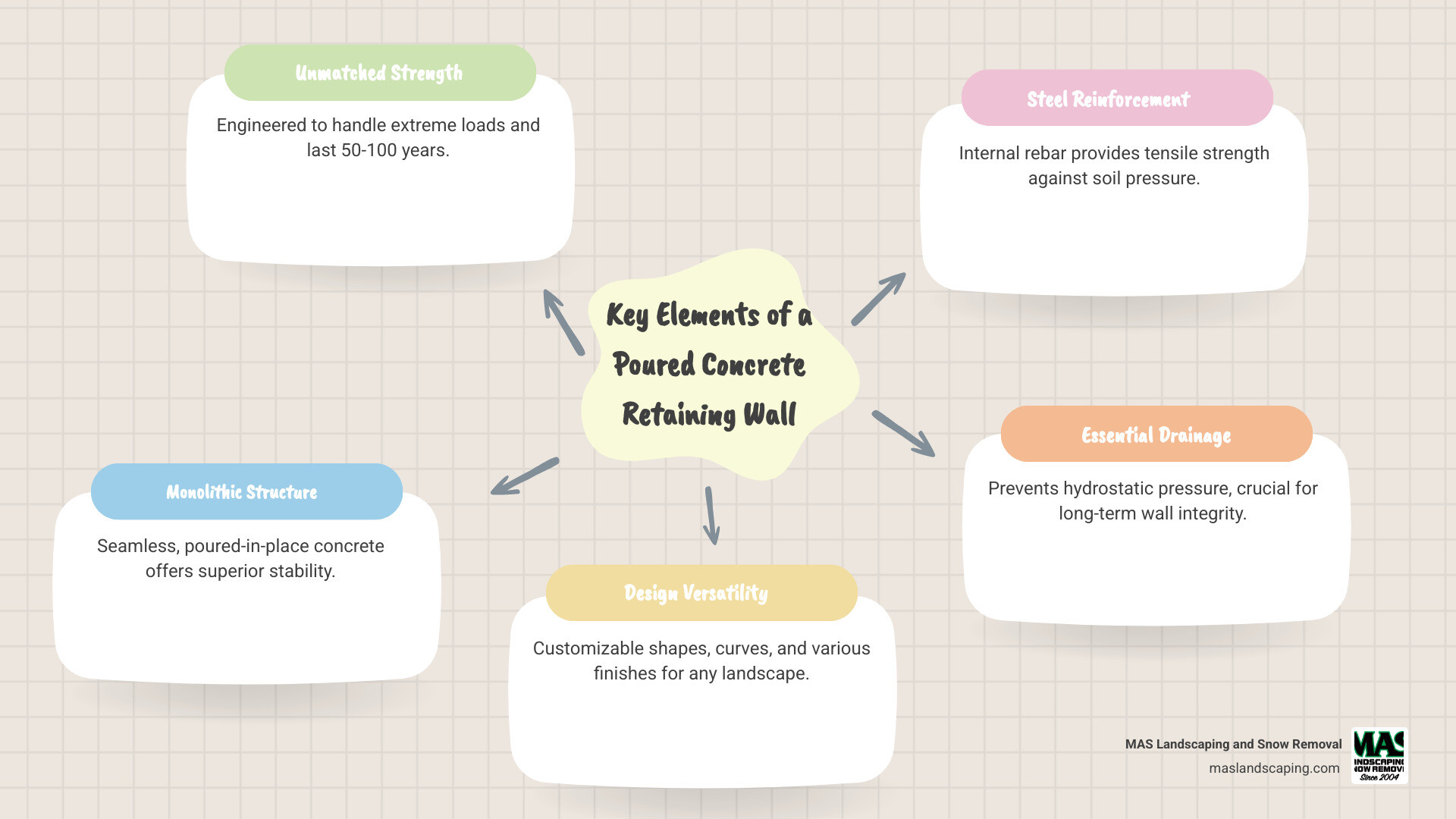
Poured concrete retaining walls offer the strongest, most durable solution for managing steep grades and heavy soil pressure. Unlike stacked block systems, poured-in-place concrete creates a seamless, monolithic structure that can be engineered to handle extreme loads and shaped to fit any landscape design.
The catch? Not all contractors have the expertise to build them correctly. A wall that’s improperly engineered or lacking adequate drainage can crack, lean, or fail within just a few years—turning your investment into a costly repair nightmare.
This guide will help you understand what makes poured concrete walls different, what they truly cost, how the installation process works, and most importantly, how to find a qualified local contractor who will build a wall that lasts 50 years or more.
Easy poured concrete retaining wall near me glossary:
Understanding Poured Concrete Retaining Walls
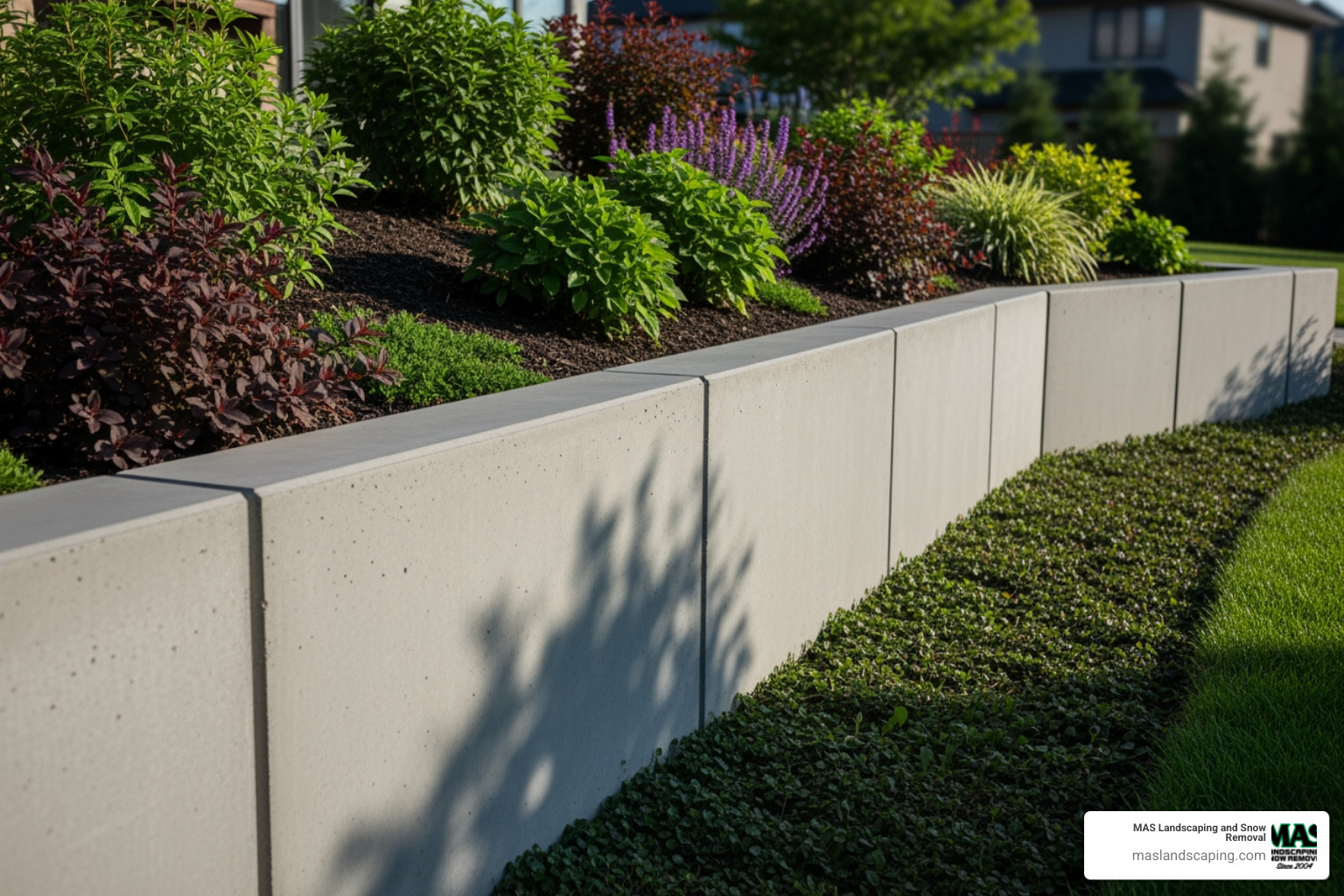
When we talk about a poured concrete retaining wall near me, we’re referring to a structure carefully built on-site by pouring liquid concrete into custom-built forms. This method creates a single, solid, or monolithic structure, unlike walls constructed from individual blocks or timbers. This inherent solidity is a key reason why poured concrete is often the preferred material for projects demanding maximum strength and longevity.
These walls are essentially designed to hold back soil and create a difference in ground elevation, changing unusable slopes into functional, beautiful spaces. While various materials exist for retaining walls, such as concrete blocks, natural stone, or even timber, our focus here is on poured concrete. Its superior performance and design flexibility make it an outstanding choice, especially for larger or taller walls that need to handle significant pressure, like those often found in the diverse terrain of Massachusetts. You can find a general overview of retaining walls and their purposes on Wikipedia.
Advantages of Poured Concrete
Choosing a poured concrete retaining wall near me comes with a host of benefits that make it a top contender for many landscaping and hardscaping projects:
- Best Strength and Durability: Poured concrete walls are renowned for their incredible strength. They can be engineered to handle immense lateral earth pressure, which increases significantly with every foot of height. This makes them ideal for tall walls or commercial applications, especially in areas where soil stability is a concern. With proper installation, our walls generally have a design service life of at least 50 years, often lasting much longer, providing enduring structural support for your property. They prevent soil erosion and landslides, protecting your property for decades.
- Exceptional Design Flexibility: One of the most exciting aspects of poured concrete is its versatility. Unlike rigid block systems, concrete can be poured into virtually any shape or curve. This means we can create custom designs that perfectly complement your landscape, offering a sleek, modern aesthetic that blends seamlessly with your outdoor space. Whether you envision sweeping curves or sharp angles, a poured concrete wall can bring your modern-landscape-design to life.
- Versatile Finishes: Beyond their structural integrity, poured concrete walls offer numerous aesthetic possibilities. They can be left with a smooth, plain face for a minimalist look, or we can incorporate a variety of designs. This includes stamping patterns to mimic the appearance of brick or natural stone, or even integrating color directly into the concrete mix for a consistent, long-lasting finish. This allows for a unique appearance that can be textured, colored, or stained to match your home’s style.
Potential Drawbacks to Consider
While the advantages of a poured concrete retaining wall near me are substantial, it’s also important to consider the potential drawbacks:
- Installation Complexity: Building a poured concrete retaining wall is a highly specialized job. It involves intricate formwork, precise steel reinforcement, and careful concrete pouring techniques. Walls with elaborate curves, for example, require complex formwork that adds to the overall project complexity. This isn’t a DIY project; it demands professional expertise to ensure structural integrity and a quality finish.
- Higher Initial Investment: Compared to some other retaining wall options, such as basic timber or segmental block walls, poured concrete typically requires a higher initial investment. This is due to the specialized labor, materials, and equipment involved in its construction. However, this upfront cost is often offset by the wall’s longevity and minimal maintenance requirements over its lifespan.
- Potential for Cracking: While durable, concrete can crack if not properly engineered and installed. Problematic cracks can stem from a poor base, inadequate reinforcement, lack of control joints, improper mix or placement, and insufficient curing. Without proper waterproofing, moisture can move through the wall and discolor the surface. More critically, without proper drainage, hydrostatic pressure can build up behind the wall, causing it to lean outwards, potentially requiring costly repairs or replacement. This underscores the absolute necessity of hiring a qualified professional.
The Real Cost of a Poured Concrete Retaining Wall
Disclaimer: The following prices are based on national averages from online sources and do not represent a quote from MAS Landscaping. Costs vary significantly based on project specifics.
When considering a poured concrete retaining wall near me, one of the first questions on your mind is likely about the cost. For a basic poured concrete retaining wall, you can expect to pay, on average, between $30 and $85 per square foot. However, it’s crucial to understand that this is a broad range. Complex projects with difficult access, significant height, or custom finishes can push costs significantly higher, potentially ranging from $150 to over $250 per square foot. This wide range highlights why get a detailed estimate for your specific project. For more information on pricing, you can visit our page on poured concrete walls cost.
Key Factors That Influence Your Final Price
Several critical factors will influence the final price of your poured concrete retaining wall near me:
- Wall Dimensions: The height and length of your retaining wall are primary cost drivers. Soil pressure increases significantly for every foot of height increase, meaning taller walls require more robust engineering, reinforcement, and a more substantial footing. Walls over 4 feet tall, for instance, often need to be poured in two phases – first the footings, then the wall – which increases labor costs.
- Site Accessibility: The ease with which equipment and materials can access your construction site plays a significant role. If heavy machinery can’t easily reach the area, or if the site is challenging to steer, labor costs can rise. Difficult access for excavation and concrete delivery can add considerable expense. Our landscape-grading-services-near-me can assess and prepare your site efficiently.
- Design Complexity: While poured concrete offers incredible design flexibility, elaborate curves or intricate shapes require more complex formwork. This specialized formwork takes more time and skilled labor to construct, directly impacting the overall cost. Simple, straight walls will generally be more affordable than custom, curvilinear designs. Explore possibilities for your poured concrete retaining wall design.
- Finishes and Features: The aesthetic choices you make for your wall can also influence the price. While plain, smooth-faced concrete is an option, adding decorative elements like stamping to mimic stone or brick, staining for color, or incorporating built-in lighting will increase material and labor costs. Integral coloring, where pigment is mixed into the concrete, is another popular option.
- Engineering and Permits: For retaining walls greater than 4 feet in height, an engineered plan, retaining wall permits, and sometimes even a Geologic and Soils Engineering Exploration Report are typically required. These requirements ensure the wall’s stability and compliance with local building codes in Massachusetts towns like Saugus, Everett, or Malden. It is wise to seek the expertise of an engineer if the wall is crucial to the stability of a home or other structure. This planning and permitting process adds to the project’s overall cost but is non-negotiable for safety and legality.
The Professional Installation Process: From Design to Finish
Installing a poured concrete retaining wall near me is a multi-step process that demands precision, expertise, and adherence to engineering specifications. It’s not just about pouring concrete; it’s about building a durable, lasting structure that performs its critical function for decades. We pride ourselves on the critical steps we take for a lasting wall. For more on our services, visit our retaining wall installations page. You can also find a comprehensive guide to the construction process on Concrete Network.
Step 1: Engineering, Design, and Permitting
This initial phase is arguably the most critical. Despite their seemingly simple appearance, retaining walls require extensive planning and professional engineering to maintain their shape and integrity.
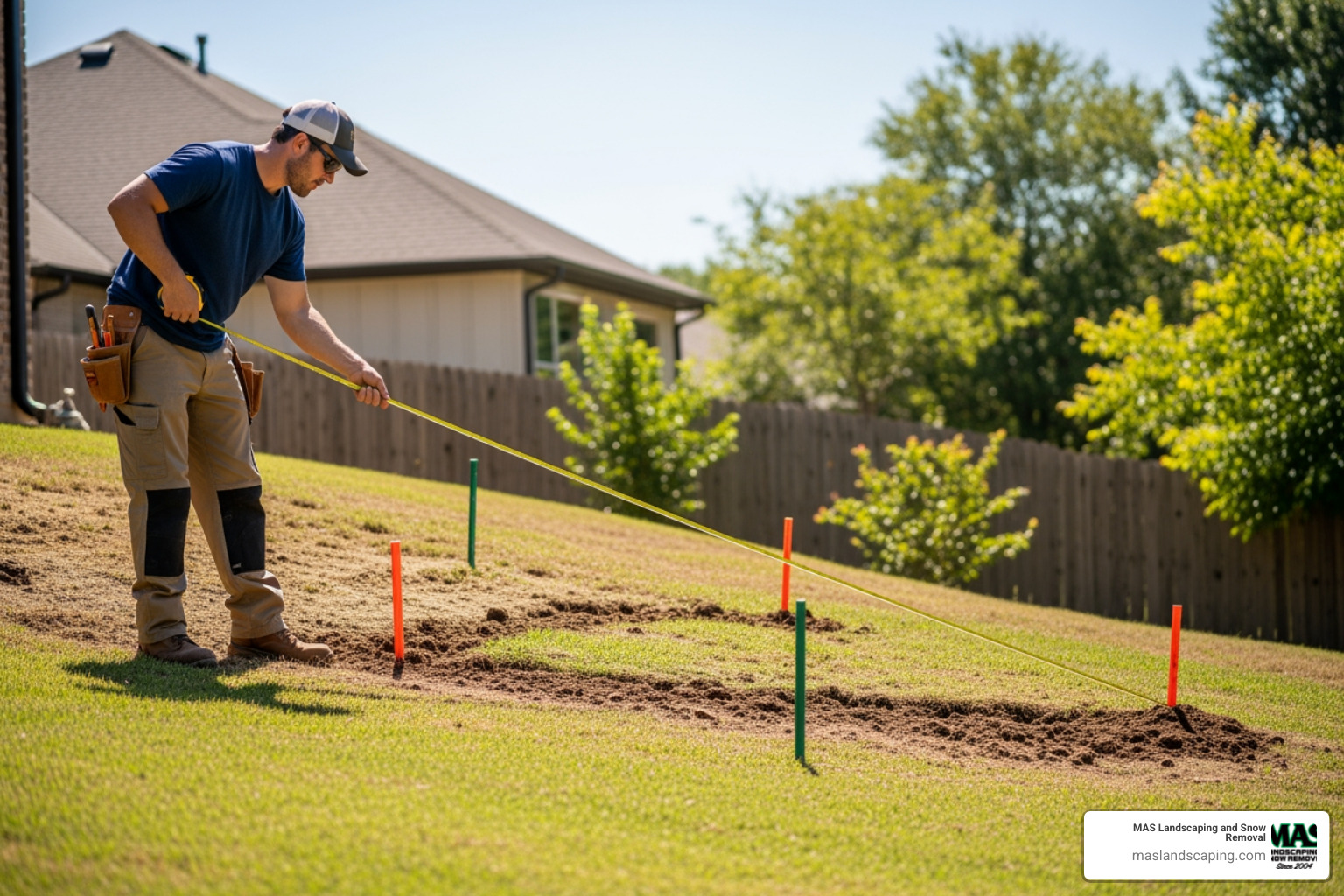
- Site Evaluation and Soil Testing: We begin with a thorough evaluation of your property. This includes understanding the soil conditions, assessing the slope, and identifying any potential challenges. Soil testing might be necessary to determine crucial parameters like unit weight, internal friction angle, cohesion, and groundwater levels, all of which affect the lateral earth pressure the wall will need to withstand.
- Calculating Lateral Earth Pressure: The primary load a retaining wall resists is the lateral earth pressure exerted by the soil behind it. Calculating this distribution accurately is vital. For example, a basic retaining wall (3 feet high and 15 feet long) may have to withstand up to 20 tons of soil pressure, especially during heavy rain. For every foot of height increase, this pressure significantly increases. Our experts calculate these factors to ensure your wall won’t fail over time, especially considering Massachusetts’ unique freeze-thaw cycles.
- Planning for Drainage: Effective drainage is designed into the wall from the outset. Without it, hydrostatic pressure can build up behind the wall, leading to catastrophic failure.
- Navigating Local Permits: For walls over 4 feet in height, an engineered plan and retaining wall permits are typically required. We handle the complexities of navigating local building codes and regulations in towns like Malden, Saugus, Everett, Chelsea, Medford, Melrose, Lynnfield, and Revere, MA, ensuring all necessary approvals are secured before construction begins.
Step 2: Excavation and Footing Construction
With the design and permits in hand, we move to prepare the site.
- Excavating to Proper Depth: The area for the wall is excavated to the specified depth. This depth is crucial, as the footing must extend below the frost line in Massachusetts to prevent frost heave, which can severely damage the wall over time.
- Creating a Stable, Compacted Base: A stable foundation is paramount. We install and compact a base layer of gravel or crushed stone. This provides a level, firm, and well-drained surface upon which the concrete footing will be poured. Proper compaction prevents future settlement that could lead to cracking or leaning.
- Pouring a Reinforced Concrete Footing: For taller walls, the footing itself is a significant structure. It’s often reinforced with steel rebar and poured as the first phase of the wall. This robust footing distributes the wall’s weight and the soil pressure across a wider area, anchoring the wall securely.
Step 3: Formwork, Reinforcement, and Pouring
This is where the wall begins to take shape.
- Building the Wall Forms: Custom wooden or metal forms are carefully constructed according to the engineered design. Proper formwork construction is imperative for a smooth, straight, and aesthetically pleasing finish, ensuring no waves or bulges in the final wall.
- Placing Steel Rebar: Before concrete is poured, a network of steel rebar is carefully placed within the forms. This reinforcement provides the tensile strength that concrete lacks, allowing the wall to resist bending and cracking under the immense lateral pressure of the soil. The rebar cage is tied together to create a rigid internal structure.
- Pouring the High-Quality Concrete Mix: Finally, the high-quality concrete mix is delivered and carefully poured into the forms. Our experienced team ensures even distribution and proper consolidation, eliminating air pockets and achieving maximum density and strength. For walls over 4 feet, this is often the second phase of pouring after the footing has cured.
Step 4: Curing, Drainage, and Backfilling
The work isn’t done once the concrete is poured. These final steps are crucial for the wall’s long-term performance.
- Curing the Concrete: Concrete doesn’t just dry; it cures through a chemical process. While it reaches initial set (hard enough to walk on) within 24-48 hours, it gains approximately 70% of its design strength at 7 days and reaches full strength at around 28 days. We ensure the concrete is properly protected and allowed to cure slowly, preventing rapid moisture loss that can lead to surface cracks.
- Installing a Drainage System: Once the forms are removed and the concrete has cured sufficiently, the crucial drainage system is installed. This typically includes a layer of gravel backfill directly behind the wall, often combined with a perforated drain pipe (weep holes or drain tile) at the base. This system collects water that seeps through the soil and directs it away from the wall, preventing the buildup of hydrostatic pressure.
- Backfilling the Wall: Finally, the area behind the wall is carefully backfilled with appropriate material, typically gravel or crushed stone for good drainage, and then native soil. This process is done in lifts, with proper compaction at each stage, to ensure uniform pressure distribution against the wall and prevent future settlement.
How to Find a Qualified Poured Concrete Retaining Wall Near Me
Searching for a poured concrete retaining wall near me isn’t just about finding someone who can pour concrete; it’s about finding a qualified, experienced professional who understands the engineering, local regulations, and specific challenges of your property. Hiring an expert is crucial for a safe, durable, and aesthetically pleasing result. We specialize in hardscape installations, and our team of hardscape contractors is ready to help.
Checklist for Vetting Local Contractors
To ensure you’re choosing the best team for your project in places like Everett, Lynnfield, or Medford, here’s a checklist for vetting local contractors:
- Licensing and Insurance: Always verify that the contractor is properly licensed and insured. This protects you from liability in case of accidents or damage during the project. It’s a non-negotiable step for any reputable company.
- Local Experience: A contractor with deep roots in Massachusetts will have invaluable knowledge of local soil conditions, climate patterns (especially those notorious freeze-thaw cycles!), and specific building codes in your town. This local expertise is vital for designing and constructing a wall that will withstand the elements. Look for landscaping-companies-near-me with a proven track record.
- Portfolio and References: Ask to see examples of their past work, specifically poured concrete retaining walls. A strong portfolio demonstrates their capabilities and aesthetic range. Don’t hesitate to request client testimonials or contact references to hear about their experiences firsthand. Reviewing past hardscape retaining wall projects can give you a clear idea of their craftsmanship.
- Detailed Quotes: A reputable contractor will provide a comprehensive and transparent quote that breaks down all costs, including materials, labor, excavation, drainage, and any engineering or permitting fees. Beware of unusually low bids, as they might indicate shortcuts in materials or labor that could compromise the wall’s integrity. Quality concrete installation isn’t cheap, but it costs far less than replacing failed work in a few years.
Key Questions to Ask a Potential Poured Concrete Retaining Wall Near Me Contractor
Once you’ve narrowed down your list, engage with potential contractors using these key questions:
- How many poured concrete walls have you installed, and can I see examples? This helps gauge their specific experience with poured concrete, which differs significantly from block or timber walls.
- What drainage solutions do you recommend for my property? A knowledgeable contractor will discuss options like gravel backfill, drain pipes, and weep holes, explaining why certain solutions are best for your specific soil and slope.
- Do you handle the permitting process, including engineering plans if required? For walls over 4 feet, permits and engineered plans are typically mandatory. A good contractor will manage this complex process for you, ensuring compliance with local regulations in your Massachusetts town.
- What is your project timeline, and what kind of warranty do you offer? Understanding the estimated duration and the warranty on their workmanship and materials provides peace of mind and clarity on expectations.
- How do you account for Massachusetts’ freeze-thaw cycles in your design and construction? This question probes their local expertise and how they protect your wall from the unique climatic challenges of our region.
Longevity and Maintenance for Your Investment
A poured concrete retaining wall near me is not just a structural necessity; it’s a long-term investment in your property. Understanding its expected lifespan and minimal maintenance requirements will help you protect that investment and ensure its continued performance and aesthetic appeal.
How Long Do Poured Concrete Walls Last?
With proper engineering, high-quality materials, and expert installation, a poured concrete retaining wall can boast an impressive lifespan. Our walls generally have a design service life of at least 50 years, and it’s not uncommon for them to last 100 years or more. This exceptional durability is a testament to the inherent strength of poured concrete, especially when reinforced with steel and designed to handle heavy loads and local environmental conditions. When built correctly, these walls are highly resistant to the elements, providing decades of reliable service.
Common Issues and How to Prevent Them
Even with their robust nature, poured concrete retaining walls can encounter issues if not properly handled. Knowing these common problems and their prevention is key:
- Cracking: While some hairline cracks in concrete are normal due to shrinkage and thermal changes, problematic cracks can arise from a poor base, inadequate reinforcement, lack of control joints, an improper concrete mix, or insufficient curing. Prevention involves proper site evaluation, adequate base preparation, appropriate reinforcement (rebar), strategically placed control joints, and a quality concrete mix.
- Leaning or Bulging from Hydrostatic Pressure: This is perhaps the most serious issue and almost always points to inadequate drainage. Without a proper drainage system behind the wall, water can accumulate, creating immense hydrostatic pressure that pushes against the structure, causing it to lean, bulge, or even fail. This is why expert engineering and proper drainage are non-negotiable.
- Surface Discoloration (Efflorescence): This white, powdery residue can appear on concrete surfaces when moisture moves through the wall, dissolving salts and depositing them on the surface as it evaporates. While largely aesthetic, it can be prevented with proper waterproofing during construction and by ensuring good drainage to minimize moisture migration.
Prevention is always better than cure. Expert engineering, meticulous attention to proper drainage, correct steel reinforcement, and using a high-quality concrete mix are the cornerstones of building a resilient and long-lasting poured concrete retaining wall.
Maintenance Requirements for a Poured Concrete Retaining Wall Near Me
One of the significant advantages of a poured concrete retaining wall is its low maintenance. Once properly installed, these walls require minimal upkeep to ensure their longevity and appearance:
- Periodic Cleaning: Like any outdoor surface, your concrete wall will benefit from occasional cleaning to remove dirt, mildew, and algae buildup. A simple power wash or scrubbing with a mild detergent and brush can keep it looking fresh.
- Inspecting for New Cracks: While hairline cracks are normal, it’s wise to periodically inspect your wall for any new or widening cracks. Catching potential issues early can prevent them from escalating into larger problems.
- Ensuring Clear Drainage Paths: Regularly check that weep holes, drain pipes, and the gravel backfill area are free from debris, leaves, or soil that could obstruct water flow. Clear drainage is paramount to preventing hydrostatic pressure buildup. Our hardscape-maintenance-service can assist with these checks and ensure your drainage remains effective.
By following these simple maintenance steps, your poured concrete retaining wall will continue to provide structural integrity and aesthetic appeal for generations.
Conclusion: Secure Your Property with a Professional Installation
The quest for a poured concrete retaining wall near me often begins with a challenge – a sloped yard, erosion issues, or the desire for more usable outdoor space. As we’ve explored, poured concrete retaining walls offer the ultimate solution, combining superior strength, impressive longevity, and remarkable design versatility. They are the robust backbone your landscape needs to withstand the test of time and the rigors of the Massachusetts climate.
The critical takeaway is that the success and durability of your poured concrete retaining wall hinge entirely on professional installation. From the initial engineering and soil analysis to the meticulous formwork, steel reinforcement, and expert drainage solutions, every step requires specialized knowledge and experience. An improperly built wall is not just a wasted investment; it’s a potential hazard.
At MAS Landscaping, we bring local expertise and a commitment to professionalism to every project in Saugus, MA, and the surrounding communities, including Everett, Lynnfield, Malden, Melrose, Medford, Revere, and Chelsea. We understand the unique conditions of our region and are dedicated to creating functional, beautiful hardscapes that improve your property’s value and safety.
Don’t leave your retaining wall to chance. Secure your property and lift your landscape with a professionally installed poured concrete retaining wall. Contact us for a detailed estimate on your retaining wall project today, and let us help you build a solution that lasts a lifetime.
