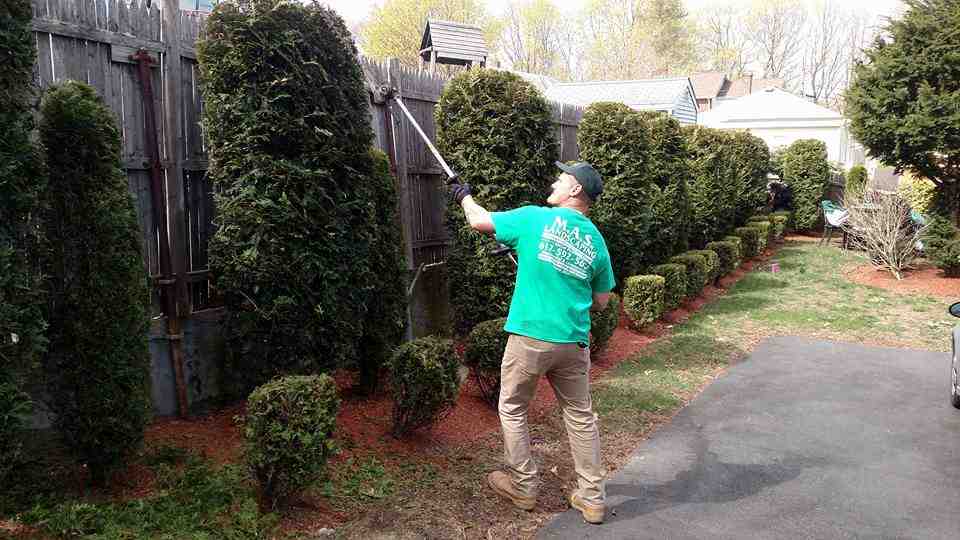



Why Finding the Right Tree and Shrub Pruning Service Near Me Matters for Your Property
Finding a reliable tree and shrub pruning service near me is one of the most important decisions you can make for your landscape’s long-term health, safety, and curb appeal.
Here’s a quick answer if you’re short on time:
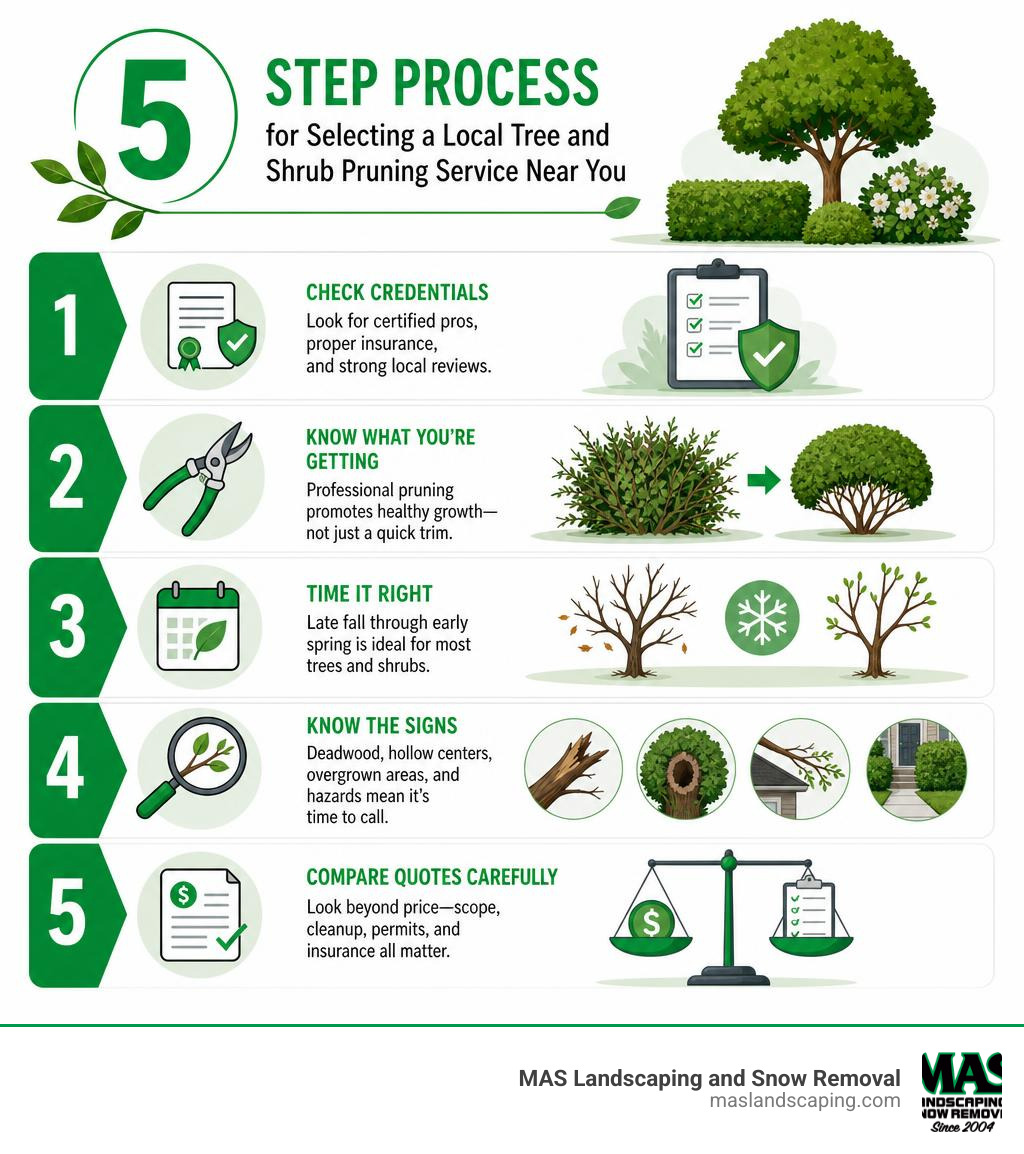
- Search with credentials in mind — look for ISA-certified arborists, proper insurance, and strong local reviews
- Understand what you’re buying — professional selective pruning is very different from basic shearing or DIY trimming
- Time it right — late fall through early spring is ideal for most trees and shrubs in New England
- Know the warning signs — deadwood, hollow shrub centers, branches over your roof, and overgrown walkways all signal it’s time to call
- Compare quotes carefully — scope, cleanup, permits, and insurance all matter as much as price
Most homeowners don’t think about pruning until something goes wrong — a limb scrapes the roof, a shrub blocks the front door, or a storm drops a branch on the driveway.
But waiting too long is exactly what turns a routine pruning job into a costly fix.
Proper pruning isn’t just about appearances. When done correctly by a trained professional, it improves how your plants grow from the inside out, reduces disease risk, and helps your trees and shrubs handle New England winters and storms far better. When done wrong — through over-shearing, topping, or flush cuts — it can stress plants for years or even kill them.
For homeowners and business owners in the Greater Boston area, the challenge isn’t just finding a pruning service. It’s finding the right one — someone who understands local species, seasonal timing, and the specific pressures your landscape faces.
This guide walks you through five practical ways to do exactly that.
Tree and shrub pruning service near me terminology:
Way 1: Search for a tree and shrub pruning service near me With Real Local Credentials
When you search for a tree and shrub pruning service near me, do not stop at the first name that appears. Local availability is helpful, but credentials are what protect your plants, your property, and your wallet.
In areas like Saugus, Everett, Lynnfield, Malden, Peabody, Danvers, Wakefield, Melrose, Stoneham, and nearby North Shore and Greater Boston communities, landscapes deal with tight property lines, mature shade trees, older foundation plantings, winter storms, salt exposure, compacted urban soil, and overhead utilities. That means pruning is not just “cutting branches.” It is plant care, safety work, and property protection rolled into one.
A qualified pruning provider should understand:
- Local tree and shrub species common in Massachusetts landscapes
- Seasonal pruning windows for New England weather
- How to identify dead, diseased, weak, or rubbing branches
- How to prune without topping, stripping, or over-thinning
- How to protect nearby lawns, walkways, siding, fences, and driveways
- When a certified arborist evaluation is needed
Professional standards matter. ISA-certified arborists have specialized training in tree biology, diagnosis, and pruning methods. TCIA-style safety and professionalism standards are also useful signals when evaluating a tree care company. Even if every crew member is not an arborist, the company should have access to trained plant-care knowledge and should be able to explain why each cut is being made.
You can also compare review patterns through local directories such as local review research, but look beyond star ratings. Read what customers say about communication, cleanup, punctuality, plant knowledge, and whether the crew respected the property.
If you are looking for broader property care along with pruning, our team can help you understand how pruning fits into complete outdoor care through local landscaping services.
How to verify a qualified pruning professional
Before hiring, ask for proof rather than promises. A reputable company should not get offended by basic questions. If they do, that is a pruning-shaped red flag.
Here is what to verify:
-
Insurance
- Ask for proof of general liability insurance.
- Ask whether workers’ compensation coverage applies to the crew.
- Tree work and ladder work carry risk, so insurance is not optional.
-
Professional training
- Ask whether an ISA-certified arborist is involved in assessment or recommendations for larger trees.
- Ask whether crews are trained in proper pruning cuts, jobsite safety, and property protection.
-
Pruning standards
- A qualified professional should talk about selective pruning, branch collars, deadwood removal, clearance, structure, and plant health.
- Be cautious if the only plan is “we’ll just trim it back hard.”
-
Equipment and safety practices
- Mature trees may require pole tools, ropes, rigging, lifts, or specialized saws.
- Shrubs may require hand pruning instead of hedge shears, especially when correcting overgrowth.
-
Cleanup policy
- Ask whether branches, clippings, and debris are removed.
- Ask whether final cleanup is included or billed separately.
-
Local experience
- A company working in Saugus, Lynnfield, Everett, Malden, Revere, Chelsea, Medford, Somerville, Danvers, Beverly, Andover, and surrounding areas should understand local lots, town rules, and common landscape styles.
-
Written estimate
- The estimate should describe the work clearly.
- “Trim bushes” is vague. “Selective prune front yews for size reduction, remove dead interior wood, clear walkway, remove debris” is much better.
Questions to ask a tree and shrub pruning service near me before hiring
Use these questions before you book:
- Do you service my town or neighborhood regularly?
- Do you have experience with the specific trees and shrubs on my property?
- Will pruning be done by hand, with shears, with saws, or with a combination?
- Are you planning selective pruning or just exterior shearing?
- Will you remove dead, diseased, crossing, or rubbing branches?
- How much live growth do you recommend removing?
- Is this the right season to prune this plant?
- Will you avoid topping trees and flush cuts?
- Will you clean up and remove debris?
- Do I need to check town, condo, or HOA rules first?
- Can I get the scope in writing?
- What happens if you discover decay, cavities, pests, or unsafe limbs?
A trustworthy pruning company will answer clearly. If the answer is “Don’t worry, we do this all the time,” but they cannot explain the plan, keep looking.
Way 2: Know the Difference Between Professional Pruning, DIY Trimming, and Shearing
Not all cutting is pruning.
That may sound like something only plant people say at parties, but it matters. A lot.
Professional pruning is selective. It focuses on plant health, structure, safety, light, airflow, and natural shape. DIY trimming can be useful for small, simple maintenance. Shearing mostly cuts the exterior surface of a shrub or hedge. Shearing has a place, especially for formal hedges, but if it is the only method used year after year, shrubs can develop a dense outer shell and a weak, bare interior. This is often called hollow shrub syndrome.
| Method | What it does | Best for | Main risk |
|---|---|---|---|
| Professional selective pruning | Removes specific branches for health, structure, clearance, and shape | Trees, shrubs, ornamentals, overgrown plantings | Low risk when done correctly |
| DIY trimming | Light cutting by homeowner at ground level | Small shrubs, minor touch-ups, dead flower heads | Improper cuts or wrong timing |
| Shearing | Cuts the outside surface evenly | Formal hedges and quick shaping | Dense outer growth, dead interior, poor airflow |
| Topping | Cuts the upper crown or major limbs indiscriminately | Almost never appropriate | Weak regrowth, decay, stress, hazards |
| Over-pruning | Removes too much live growth | Not recommended | Sunscald, stress, poor recovery |
The big difference is plant response.
When a professional makes selective cuts, the goal is to guide growth throughout the plant. More light can reach inner branches. Air can move through the canopy. Deadwood is removed. Crossing branches stop rubbing against each other. The plant keeps a more natural form.
When shrubs are repeatedly sheared, all the growth is pushed to the outside. The plant may look neat from the curb, but inside it can become woody, shaded, and bare. That is like wearing a fancy jacket over a skeleton. Stylish? Maybe. Healthy? Not so much.
Why selective pruning protects plant health
Selective pruning protects plants because it works with their biology.
A proper pruning cut is usually made just outside the branch collar, which is the swollen area where a branch connects to a trunk or larger limb. That collar contains tissue that helps the plant close the wound. Cutting too close, often called a flush cut, damages that protective area. Cutting too far away leaves a stub that may die back and invite decay.
Selective pruning can help:
- Remove dead, damaged, or diseased wood
- Reduce the spread of decay
- Improve airflow through dense branches
- Increase sunlight penetration
- Correct weak structure in young trees
- Reduce rubbing or crossing limbs
- Direct growth away from roofs, siding, windows, and walkways
- Maintain a better root-to-canopy balance
- Improve flowering and plant vigor when timed correctly
For trees, structural pruning is especially important when they are young. Correcting narrow branch angles, co-dominant stems, and crowded leaders early can prevent bigger problems later. For mature trees, the goal is usually maintenance, risk reduction, clearance, and health preservation.
For shrubs, selective pruning helps prevent the “green meatball” look that happens when everything is rounded with shears. Some shrubs tolerate that. Many do not love it.
When DIY trimming is safe—and when it is not
DIY trimming can be perfectly fine when the work is small, safe, and simple.
Homeowners can usually handle:
- Light shaping of small shrubs
- Removing a small dead twig with hand pruners
- Cutting back soft annual or perennial growth
- Minor touch-ups at ground level
- Deadheading certain flowering shrubs or perennials
But call a professional when you see:
- Branches over a roof, driveway, sidewalk, or street
- Any work requiring a ladder with cutting tools
- Branches near power lines
- Hanging or broken limbs
- Large deadwood
- Cracks, cavities, decay, or mushrooms near the trunk
- A tree that recently started leaning
- Co-dominant stems or weak branch unions
- Large shrubs with dead interiors
- Overgrown foundation plantings that need staged reduction
- Storm damage
A good rule: if you need a ladder, chainsaw, or prayer, call a professional.
Way 3: Time Your Pruning Around New England Seasons
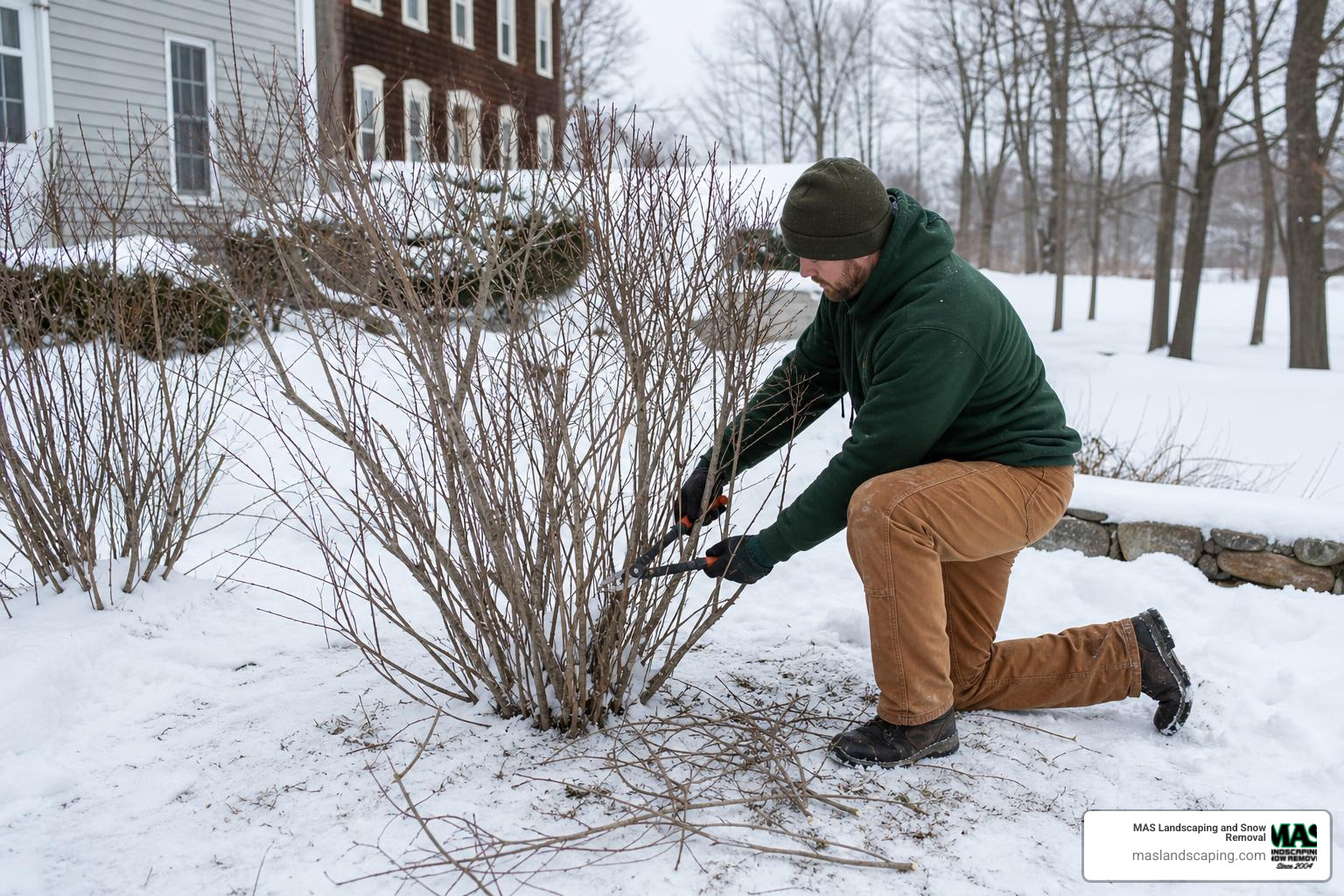
Timing can make the difference between a plant that rebounds beautifully and one that sulks for a season.
In Massachusetts, the best pruning window depends on the plant species, condition, and goal. However, late fall through early spring is often ideal for many trees and shrubs because plants are dormant, insects are less active, fungal pressure is lower, and branch structure is easier to see without leaves.
This is why dormant pruning is so valuable in New England. Our landscapes deal with freeze-thaw cycles, heavy wet snow, nor’easters, coastal wind, and spring disease pressure. Pruning at the right time helps plants enter the growing season with cleaner structure and fewer problems.
If you are already planning seasonal property care, pruning can often be coordinated with broader landscape maintenance.
Best pruning windows for trees and shrubs in Massachusetts
Here is a practical Massachusetts pruning calendar:
| Plant type | Best general timing | Notes |
|---|---|---|
| Most deciduous trees | Late fall through early spring, often late winter | Structure is visible and trees are dormant |
| Young shade trees | Dormant season or species-appropriate timing | Focus on strong structure and central leader |
| Mature shade trees | Every few years, often dormant season | Remove deadwood, improve clearance, reduce risk |
| Spring-flowering shrubs | Right after flowering | Avoid removing next year’s flower buds |
| Summer-flowering shrubs | Late winter or early spring, depending on species | Many bloom on new growth |
| Evergreens | Carefully timed, often late spring or early summer depending on species | Wrong timing or deep cuts can cause brown patches |
| Formal hedges | Light maintenance during growing season | Avoid cutting into bare old wood unless species tolerates it |
| Hazard limbs | Any time of year | Safety comes first |
Spring-flowering shrubs are where many homeowners accidentally sabotage themselves. Plants like forsythia, lilac, azalea, rhododendron, and some hydrangeas may set flower buds on old wood. If they are pruned at the wrong time, you may remove the blooms before they happen. It is not personal. The shrub is not mad. It is just budless.
Evergreens also need care. Some evergreens do not regenerate well from old interior wood. Heavy shearing or cutting too deeply can leave permanent bare spots or brown-out.
How dormant pruning helps with disease management
Dormant pruning helps because many insects, fungi, and bacterial pathogens are less active in colder months. That does not mean disease disappears in winter, but it often lowers the risk of spreading certain problems during pruning.
Dormant pruning also gives professionals a clearer view of:
- Dead branches
- Crossing limbs
- Weak branch unions
- Cracks or cavities
- Dense canopy sections
- Old storm damage
- Poor structure hidden by leaves
For oaks and other disease-sensitive trees, dormant pruning is often the safest general approach. In regions where oak wilt is a concern, arborists commonly avoid unnecessary oak pruning during warmer high-risk periods. In Massachusetts, local conditions and current pest or disease guidance should always be considered, but the principle is the same: prune at the time that best protects the tree.
Sanitation also matters. Diseased wood should be removed carefully, tools should be managed responsibly, and infected debris should not be left sitting against healthy plants.
Way 4: Spot the Signs Your Landscape Needs Professional Pruning
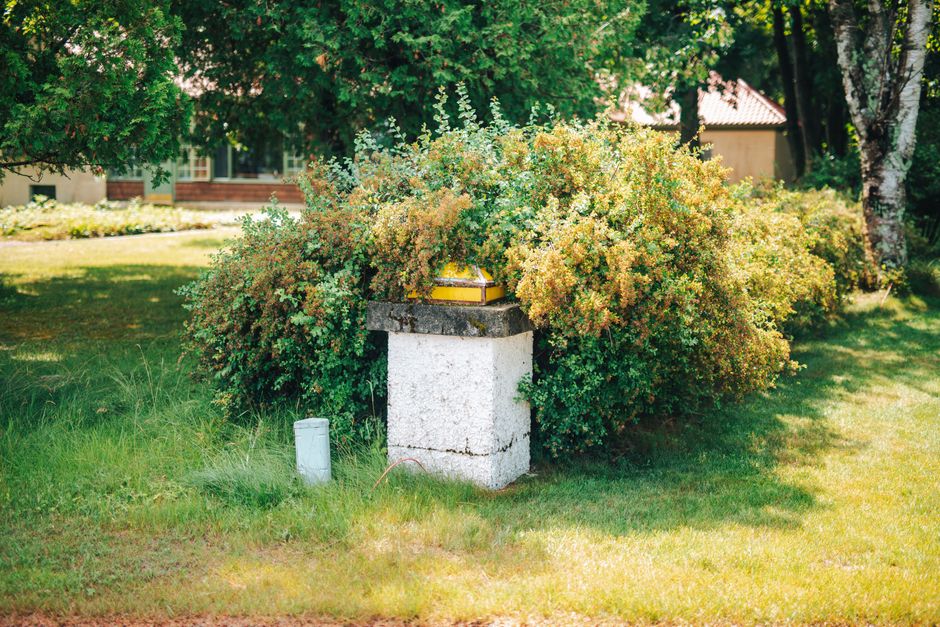
Your trees and shrubs usually tell you when they need help. Unfortunately, they do not send emails. They use dead branches, weird growth, blocked walkways, and suspicious leaning instead.
Look at your landscape after storms, before winter, and again in early spring. If something looks crowded, cracked, dead, or inconveniently aimed at your house, it is time to pay attention.
Tree warning signs that call for an arborist
Call for a professional evaluation if you notice:
- Dead branches in the canopy
- Hanging or broken limbs
- Branches touching the roof, siding, gutters, or windows
- Branches blocking driveways, walkways, or street visibility
- Cracks in major limbs or the trunk
- Cavities or hollow areas
- Mushrooms or fungal growth near the base
- Peeling bark with dieback above it
- A sudden lean
- Soil lifting around roots
- Storm damage
- Large rubbing or crossing branches
- Two main stems competing with each other
- Branches growing into utility lines
- Dense canopy that catches heavy wind
- Declining top growth or canopy dieback
Deadwood removal is one of the most common reasons to schedule professional pruning. Dead branches do not heal. They become more brittle over time and are more likely to fail during wind, snow, or ice.
Canopy density is another issue. Trees that are too dense may block sunlight from lawns and gardens, trap moisture, and catch wind like a sail. Selective thinning can improve airflow and reduce weight without stripping the tree.
Never allow a company to “top” a tree as a quick fix. Topping creates weak regrowth, opens large wounds, and can make a tree more dangerous in the long run.
Shrub warning signs homeowners often miss
Shrubs can decline quietly. One day they look a little large, and the next day your front walk feels like a jungle tunnel.
Watch for:
- Hollow centers with green growth only on the outside
- Dead interior branches
- Leggy growth
- Poor flowering
- Shrubs blocking windows or doors
- Branches rubbing against siding
- Foundation crowding
- Dense growth trapping moisture
- Fungal leaf spots
- Brown evergreen patches
- Overgrown hedges leaning outward
- Repeated shearing with no interior thinning
- Shrubs growing into walkways or driveways
Hollow shrub syndrome is especially common in shrubs that have been sheared for years. The outside becomes dense, while the inside loses leaves because sunlight cannot reach it. Professional pruning can often improve the structure, but severe cases may need phased renovation rather than one aggressive cutback.
Foundation shrubs deserve special attention in older Massachusetts homes. Overgrown plantings can trap moisture against siding, block airflow, hide pests, and make maintenance harder. Pruning can restore clearance while preserving the plant when possible.
Way 5: Compare Scope, Pricing, Cleanup, and Local Rules Before You Book
Once you have a few potential companies, compare the full scope, not just the bottom-line number.
We do not recommend choosing a pruning provider based only on the lowest quote. Pruning is skilled work. A vague low quote can become expensive if it leads to plant damage, poor cleanup, unsafe work, or surprise add-ons.
Professional pruning costs vary widely based on internet data and general industry factors, but we do not list one-size-fits-all pricing because every property is different and those figures are not actual MAS Landscaping and Snow Removal costs. A fair estimate depends on an in-person look at the plants, access, risk, debris volume, equipment needs, and the goals of the work.
Factors that influence pruning scope include:
- Number of trees and shrubs
- Plant height and spread
- Species and growth habit
- Amount of deadwood
- Safety hazards
- Proximity to buildings, fences, vehicles, and utilities
- Need for ladders, lifts, rigging, or specialty equipment
- Debris removal and disposal
- Storm urgency
- Parking and site access
- Whether work must be phased over time
For ongoing outdoor upkeep, pruning can be part of a broader yard maintenance plan.
Red flags when comparing tree and shrub pruning service near me quotes
Be careful if a quote includes or suggests:
- No proof of insurance
- No written scope
- “We’ll cut everything way back” with no plant-specific plan
- Tree topping
- Flush cuts against the trunk
- Removing too much live canopy in one visit
- Heavy shearing on every shrub regardless of species
- No cleanup details
- Cash-only pressure
- No discussion of access or property protection
- No references or review history
- No mention of permits, town rules, or utility concerns
- A promise to make an old overgrown shrub “perfect” in one visit
A good pruning estimate should make you feel informed, not rushed.
What a professional pruning visit usually includes
A professional pruning visit often includes:
-
Site walk-through
- Review goals, problem areas, access, and safety concerns.
-
Plant assessment
- Identify species, condition, structure, disease signs, and growth habit.
-
Deadwood removal
- Remove dead, damaged, or hazardous branches.
-
Structural pruning
- Improve branch spacing, reduce rubbing limbs, and address weak attachments.
-
Canopy thinning
- Selectively reduce density for light and airflow without over-pruning.
-
Canopy lifting
- Raise low branches for walkways, driveways, lawns, and vehicles.
-
Clearance pruning
- Move branches away from roofs, siding, gutters, windows, paths, and signs.
-
Shrub shaping
- Maintain natural form, improve size, and reduce crowding.
-
Disease-conscious pruning
- Remove infected or declining wood where appropriate.
-
Debris cleanup
- Collect branches, clippings, and work debris.
-
Final review
- Walk the property with the client and confirm the work matches the plan.
For smaller shrubs, this may be simple and quick. For larger trees, it may involve more planning, equipment, and careful lowering of limbs to protect the property.
Permits, HOA rules, and local restrictions to check first
Pruning is usually less regulated than removal, but local rules still matter.
Before work begins, check whether any of the following apply:
- Municipal tree bylaws
- Public shade tree rules
- Trees in the right-of-way
- Conservation restrictions
- Wetlands buffer zones
- Utility easements
- Stormwater areas
- Condo association rules
- HOA approvals
- Historic district considerations
- Shared boundary trees
- Rental property requirements
In Massachusetts, public shade trees near streets may be subject to local or state rules. Trees near wetlands, protected areas, or conservation land may require extra review. If pruning becomes removal, the rules may change significantly.
When in doubt, ask the town, property manager, HOA, or a qualified professional before cutting.
Frequently Asked Questions About Tree and Shrub Pruning Services
How often should mature trees and shrubs be pruned?
Most mature trees benefit from professional pruning every 3 to 5 years, depending on species, age, condition, location, and storm exposure. Younger trees may need structural pruning every 2 to 3 years while they are developing strong branch architecture.
Shrubs vary more. Many landscape shrubs benefit from annual or seasonal pruning, while formal hedges may need more frequent maintenance during the growing season. Spring-flowering shrubs should often be pruned after bloom. Evergreens need careful, species-specific pruning because some do not recover well from deep cuts.
The best schedule is health-based, not calendar-only. A shrub blocking a walkway or a tree with dead limbs should be addressed when the issue appears.
Can professional pruning prevent storm damage and improve sunlight?
Yes, professional pruning can reduce storm risk and improve sunlight, although it cannot storm-proof a tree completely. New England weather likes to keep us humble.
Selective pruning can help by:
- Removing dead or cracked limbs before they fall
- Reducing weight on overextended branches
- Improving branch structure
- Increasing airflow through dense canopies
- Reducing roof and siding contact
- Creating clearance over driveways and walkways
- Letting more light reach lawns, gardens, and lower plantings
- Improving air movement to reduce moisture-related disease pressure
Pruning can also extend the useful life of landscape plants. Replacing mature trees and shrubs is often more disruptive than maintaining them properly.
What should be included in a written pruning estimate?
A written pruning estimate should include:
- Which trees and shrubs are included
- The pruning goals for each area
- Whether work includes deadwood removal, thinning, shaping, lifting, or clearance
- Any access needs
- Cleanup and debris removal details
- Whether disposal is included
- Approximate schedule
- Proof of insurance upon request
- Permit or approval responsibilities
- Any exclusions
- Notes about hazards, decay, or recommended arborist evaluation
If pricing is discussed, average internet pricing is not the same as an actual MAS Landscaping and Snow Removal estimate. The only reliable number is one based on your property, plant condition, access, and requested scope.
Conclusion
Finding the right tree and shrub pruning service near me is about more than making your yard look tidy. It is about protecting plant health, improving safety, preserving curb appeal, and making sure your landscape keeps working for your property year after year.
At MAS Landscaping and Snow Removal, we bring local experience, professional service, and a practical understanding of North Shore and Greater Boston landscapes. From Saugus to Everett, Lynnfield, Malden, Peabody, Danvers, Wakefield, Stoneham, Medford, Melrose, Revere, Chelsea, and nearby communities, we help property owners maintain outdoor spaces that are healthy, functional, and beautiful.
If your shrubs are swallowing the walkway, your trees are brushing the roof, or your landscape just needs a smarter maintenance plan, we are here to help.