




New Lawn Installation Near Me: Top 5 Expert Tips 2024
When you’re searching for new lawn installation near me, it’s clear you want a lush, green space that transforms your outdoor area. Imagine your kids playing on fresh grass or hosting a summer BBQ with a pristine lawn as your backdrop. The benefits of a new lawn go beyond aesthetics; a well-maintained lawn can improve air quality, provide a cooling effect in hot weather, and even increase your property’s value.
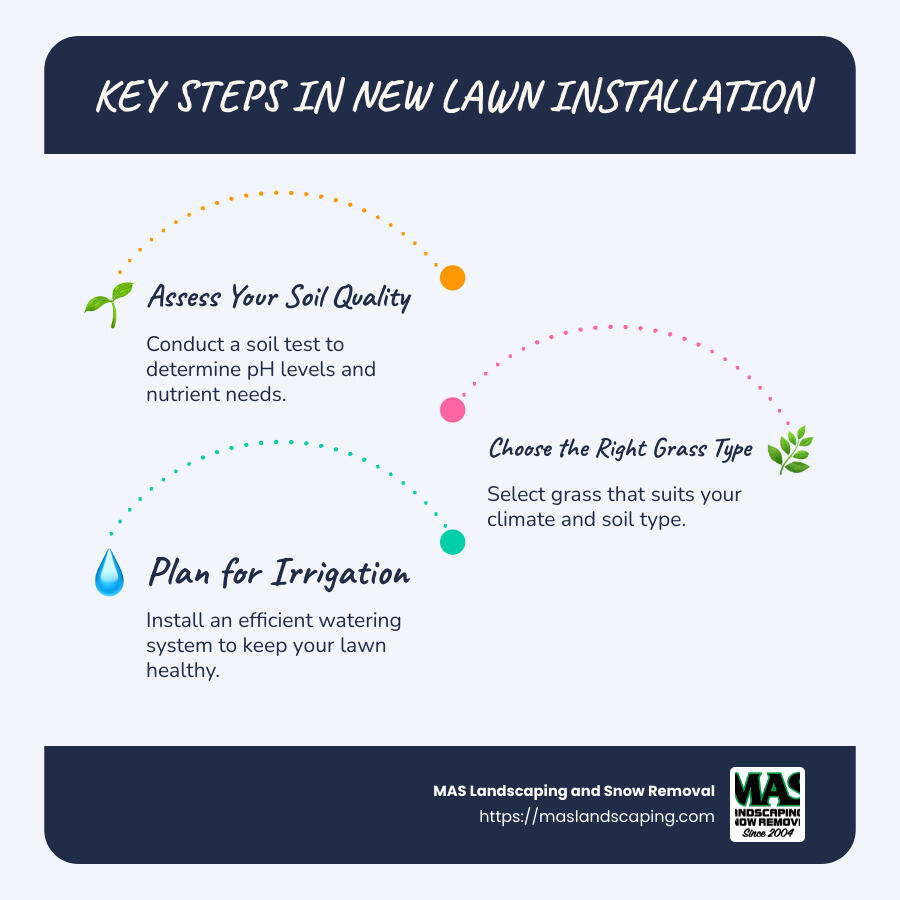
At this initial stage, consider these key steps to ensure your lawn installation project is a success:
- Assess Your Soil Quality:
- Conduct a soil test to determine pH levels and nutrient needs.
- Choose the Right Grass Type:
- Select grass that suits your climate and soil type.
- Plan for Irrigation:
- Install an efficient watering system to keep your lawn healthy.
Installing a new lawn is a big investment, but with proper planning and expert help, you’ll reap the benefits for years to come. Keep reading for a deeper dive into everything you need to know about creating the perfect lawn.
New lawn installation near me glossary:
– how long does the new lawn installation process take
– how much does it cost to install a new lawn
– how to install a new lawn
Understanding New Lawn Installation Near Me
When you’re searching for new lawn installation near me, it’s clear you want a lush, green space that transforms your outdoor area. Imagine your kids playing on fresh grass or hosting a summer BBQ with a pristine lawn as your backdrop. The benefits of a new lawn go beyond aesthetics; a well-maintained lawn can improve air quality, provide a cooling effect in hot weather, and even increase your property’s value.
Types of Lawns
When it comes to new lawn installation, you have two main options: sod and seed. Each has its pros and cons, so let’s break it down:
- Sod: This is pre-grown grass that you can roll out like a carpet. It’s quick and provides an instant lawn but can be more expensive.
- Seed: This involves spreading grass seeds over prepared soil. It’s cheaper but takes longer to establish and requires more initial care.
Benefits of a New Lawn
A new lawn offers a range of benefits that go beyond just looking good:
- Environmental Benefits: Grass can improve air quality by trapping dust and pollutants. It also helps in cooling the environment, reducing the heat island effect common in urban areas.
- Health Benefits: A well-maintained lawn can improve mental well-being and provide a safe place for kids to play.
- Property Value: A lush, green lawn can increase the curb appeal and overall value of your property.
The Installation Process
Here’s a step-by-step overview of what to expect during the installation process:
- Ground Preparation:
- Removing Old Grass: All old grass and weeds need to be removed to ensure a clean slate.
- Soil Amendment: If necessary, amend the soil to improve its quality. This might involve adding compost or other organic matter.
- Grading: Ensure the soil is level and slopes away from your home to prevent water pooling.
- Sod Laying or Seeding:
- Sod Installation: Lay the sod pieces tightly together, staggering the seams like bricks. This ensures there are no gaps.
- Seeding: Spread the grass seed evenly and cover lightly with soil to protect it from birds and wind.
- Irrigation Setup:
- Set up an efficient watering system to keep the lawn hydrated. Fresh sod, for instance, requires watering three to four times a day initially.
- Initial Care:
- Watering: Avoid overwatering but ensure the lawn never dries out. Water three to four times a day for sod initially.
- Foot Traffic: Minimize foot traffic on the new lawn for at least two weeks to allow roots to establish.
By following these steps and consulting with experts, you can ensure your new lawn installation is a success.
Keep reading to learn more about the costs and budgeting for your new lawn installation project.
Key Factors to Consider Before Installing a New Lawn
Before diving into your new lawn installation project, it’s crucial to consider several key factors. These will ensure your lawn thrives and looks great for years to come.
Soil Quality
Good soil is the foundation of a healthy lawn. Here’s what you need to know:
- Testing: Conduct a soil test to determine pH levels and nutrient content. This helps you understand what amendments might be needed.
- Amending Soil: If your soil is lacking, consider adding compost or other organic matter. This improves soil structure and fertility, giving your new lawn a better start.
“Amending the soil if necessary is a critical step,” says the experts at The Grounds Guys. “It ensures your lawn has the nutrients it needs to thrive.”
Climate
Your local climate plays a significant role in the success of your lawn. Different grass types are suited to different climates:
- Warm-Season Grasses: Ideal for hot climates. Examples include Bermuda and St. Augustine.
- Cool-Season Grasses: Best for cooler climates. Examples include Kentucky Bluegrass and Ryegrass.
Understanding your climate helps you choose the right grass type, ensuring it will thrive and require less maintenance.
Lawn Size
The size of your lawn affects both the cost and the amount of maintenance required. Here’s how to plan:
- Measuring: Use a measuring tape to calculate the total square footage of the area you plan to cover.
- Budgeting: Larger lawns will require more sod or seed, increasing costs. Be sure to budget for this.
“Determining how much sod you should buy is simple: it’s all about calculating the square footage of the area you plan to cover,” according to Forbes.
Watering Needs
Proper irrigation is essential for a new lawn, especially in the initial stages:
- Setting Up Irrigation: Install an efficient watering system to keep your lawn hydrated. Fresh sod, for example, needs to be watered three to four times a day initially.
- Watering Schedule: Avoid overwatering but never let the sod dry out. Adjust the frequency based on weather conditions.
By considering these factors, you’ll be well-prepared for a successful new lawn installation. Proper planning ensures your lawn thrives and remains a beautiful part of your landscape.
Keep reading to learn more about the step-by-step process of new lawn installation.
Step-by-Step Guide to New Lawn Installation
Installing a new lawn can be a rewarding project, but it requires careful planning and execution. Here’s a straightforward guide to help you through the process, from ground preparation to irrigation setup.
Ground Preparation
1. Remove Old Grass and Weeds
Start by clearing the area of any existing grass, weeds, and debris. This ensures a clean slate for your new lawn.
- Tools Needed: Sod cutter, rake, and shovel.
- Tip: Use a sod cutter to remove old grass efficiently. A rake and shovel can help clear out any remaining debris.
2. Amend the Soil
Healthy soil is crucial for a thriving lawn. Test your soil to determine its pH and nutrient levels.
- Soil Testing: Conduct a soil test to identify deficiencies.
- Amendments: Add compost or organic matter to improve soil structure and fertility.
“Amending the soil if necessary is a critical step,” says the experts at The Grounds Guys. “It ensures your lawn has the nutrients it needs to thrive.”
3. Grade the Soil
Ensure your soil is level and has proper drainage. This helps prevent water pooling and promotes even growth.
- Tools Needed: Skid loader or grading rake.
- Tip: Slightly slope the soil away from buildings to prevent water damage.
Sod Laying
1. Lay the Sod Along Straight Edges
Start laying sod along a straight edge, such as a driveway or sidewalk, to keep lines straight and uniform.
- Tip: Lay sod in a brick-like pattern to avoid long seams, which can dry out and become uneven.
2. Stagger the Seams
Stagger the seams of the sod pieces to create a more natural look and reduce the risk of gaps.
- Tip: Press the edges of the sod pieces together tightly to prevent them from drying out.
3. Use a Lawn Roller
After laying the sod, use a lawn roller to press it down. This ensures good contact between the sod and soil, promoting root growth.
- Tools Needed: Lawn roller.
- Tip: Lightly water the sod before rolling to help it settle.
Irrigation Setup
1. Install an Efficient Watering System
Proper irrigation is essential for the establishment of your new lawn.
- Options: Consider drip irrigation or a sprinkler system for even coverage.
- Tip: Fresh sod requires watering three to four times a day for five to ten minutes during the first week.
2. Watering Schedule
Follow a strict watering schedule to help your sod take root.
- First Week: Water three to four times a day for five to ten minutes.
- Second Week: Water for 30 minutes daily, twice a day if necessary.
- Third Week and Beyond: Reduce watering gradually as the sod establishes.
“Avoid overwatering, but never allow the sod to dry out,” advises The Grounds Guys.
By following these steps, you can ensure a successful new lawn installation. Proper preparation, careful sod laying, and efficient irrigation are key to creating a lush, green lawn that improves your landscape.
Next, we’ll dive into the costs and budgeting for a new lawn installation.
New Lawn Installation Near Me: Costs and Budgeting
Installing a new lawn is a significant investment, and understanding the costs involved can help you plan effectively. Here’s a breakdown of the key factors, budgeting tips, and average expenses to consider.
Cost Factors
Several elements influence the total cost of a new lawn installation:
- Soil Quality and Preparation
- Soil Amendments: Adding compost or organic matter to improve soil quality can cost around $38 per ton.
- Ground Preparation: Removing old grass and weeds, and grading the soil may involve hiring equipment like skid loaders, which can cost about $350 for rental, including tax, insurance, and fuel refill.
- Sod or Seed
- Sod Installation: Sod is generally more expensive than seeding but offers immediate results. The cost of sod can vary based on the type and quality.
- Seeding: Seeding is a more budget-friendly option. For instance, 75 lbs of seed might cost around $150, though this amount is often more than needed.
- Labor Costs
- Professional Installation: Hiring professionals ensures quality work but comes with labor costs. For example, topsoil labor might be around $2,000, and seeding labor about $200.
- DIY Installation: If you choose to do it yourself, you save on labor costs but need to factor in your time and effort.
- Irrigation System
- Installation: Setting up an efficient irrigation system is crucial for sod establishment. Costs can vary based on the system type and yard size.
Budget Tips
To manage costs effectively, consider these budgeting tips:
- Evaluate Soil Quality: If the existing soil is good, you might not need to add much topsoil, saving on material and labor costs.
- DIY Where Possible: For smaller tasks like seeding or initial soil preparation, doing it yourself can save money. However, for larger tasks, professional help might be more cost-effective in the long run.
- Choose Quality Materials: Invest in high-quality sod or seed to ensure long-term success and reduce the need for replacement or repair.
- Plan for Maintenance: Factor in the cost of follow-up care, such as fertilization and weed control, to keep your lawn in top shape.
Average Expenses
Here’s a rough estimate of the average expenses for a 7,200 square foot lawn installation:
| Item | Cost Estimate |
|---|---|
| Mixed Soil (25 Ton) | $950 |
| Seed (75 lbs) | $150 |
| Tax | $66 |
| Skid Loader Rental | $350 |
| Pick Up/Delivery (Soil/Seed) | $250 |
| Lawn Prep Work (Skid Use) | $240 |
| Top Soil Labor | $2,000 |
| Seeding Labor | $200 |
| Aerating | $65 |
| Total | $4,271 |
These figures are illustrative and can vary based on your location and specific project requirements. For more precise estimates, consider contacting local experts like MAS Landscaping and Snow Removal.
By understanding these cost factors and budgeting tips, you can plan your new lawn installation effectively, ensuring a beautiful and sustainable lawn without breaking the bank.
Next, we’ll explore how to maintain your new lawn to keep it looking lush and healthy.
Maintaining Your New Lawn
Once your new lawn is installed, proper maintenance is key to ensuring it thrives. Here are some essential tips for watering, mowing, and fertilizing your new grass.
Watering Schedule
First Week:
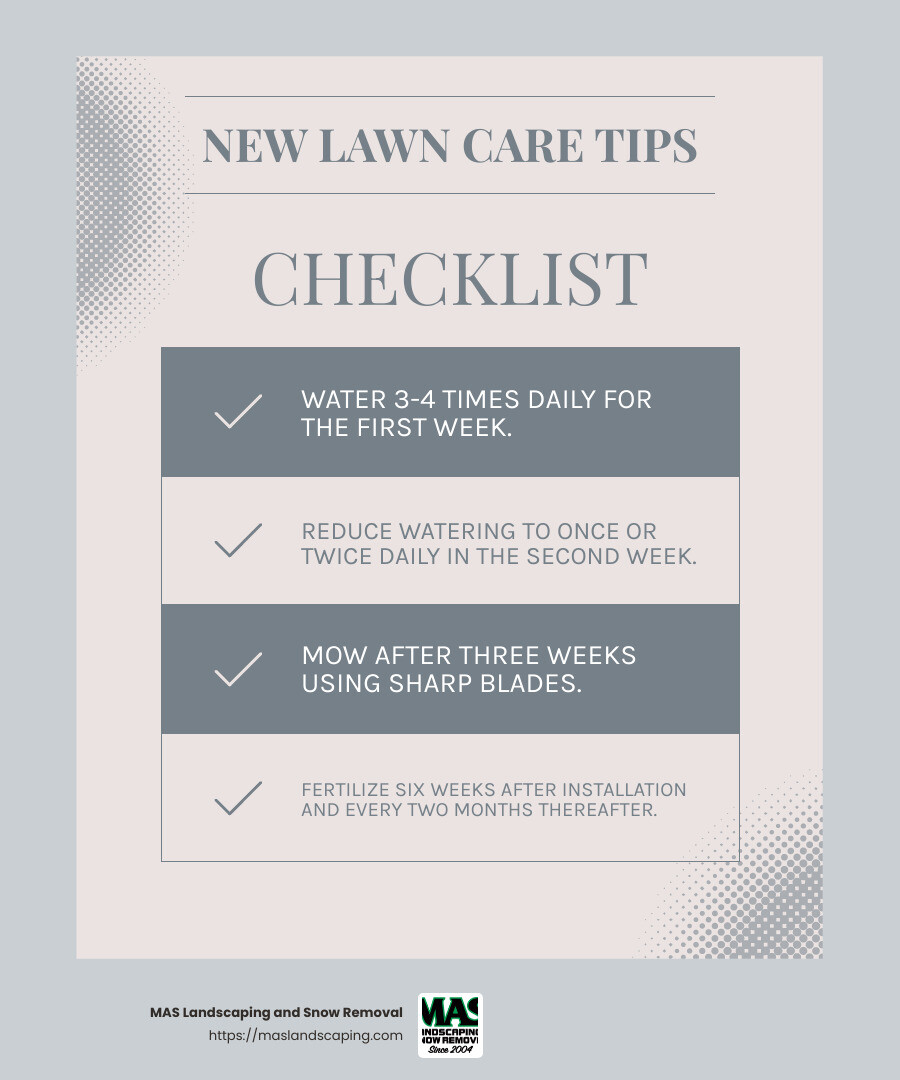
– Water 3-4 times a day for 5-10 minutes each session. This keeps the sod moist but not waterlogged.
– Avoid watering in the evening to prevent fungal growth.
– Minimize foot traffic to help the sod establish roots.
Second Week:
– Reduce watering frequency to once or twice a day, but increase the duration to 30 minutes per session. This encourages deeper root growth.
Third Week and Beyond:
– Water the lawn deeply but less frequently, about once a week. Ensure the soil moistens to a depth of 6 inches.
Mowing Tips
- Wait Three Weeks: Do not mow your new lawn until it has been established for at least three weeks.
- High Mower Deck: Set your mower to a high setting and never cut more than one-third of the grass blade length.
- Sharp Blades: Always use sharp mower blades to avoid tearing the grass, which can lead to disease.
Fertilization
- Initial Fertilization: Apply a starter fertilizer six weeks after installation. This helps the grass develop strong roots.
- Ongoing Fertilization: Continue to fertilize every two months, except during the lawn’s dormancy period in winter.
Pro Tip: Consider using organic fertilizers to promote a healthy soil ecosystem and reduce chemical runoff.
By following these simple steps, you can keep your new lawn in top condition, ensuring it remains lush and vibrant for years to come.
Next, we’ll address some frequently asked questions about new lawn installation.
Frequently Asked Questions about New Lawn Installation
What is the best time of year to install a new lawn?
The ideal time to install a new lawn depends on the type of grass you choose and your local climate. Generally, fall and early spring are the best times for most regions.
- Cool-season grasses (like Kentucky bluegrass and fescue) thrive when planted in the fall. The cooler temperatures and increased rainfall help the grass establish strong roots before winter.
- Warm-season grasses (like Bermuda and zoysia) are best planted in late spring or early summer. These grasses need warmer soil to germinate and grow.
Pro Tip: Avoid installing new lawns during extreme weather conditions, such as the peak of summer or the dead of winter, to minimize stress on the grass.
How long does it take for a new lawn to establish?
The time it takes for a new lawn to establish can vary based on several factors, including the type of grass, soil quality, and care.
- Sod lawns typically establish faster than seeded lawns. You can expect sod to start rooting within 2-3 weeks. Full establishment usually takes about 6-8 weeks.
- Seeded lawns take longer to establish. Germination can take anywhere from 7-21 days, depending on the grass type. Full establishment may take 2-3 months.
Pro Tip: During the establishment period, follow a strict watering and maintenance schedule to ensure the grass develops a strong root system.
Can I install a new lawn myself or should I hire professionals?
Installing a new lawn can be a DIY project, but it requires time, effort, and some know-how. Here are some considerations:
DIY Installation:
– Pros: Cost savings, personal satisfaction, and flexibility in scheduling.
– Cons: Time-consuming, physically demanding, and potential for mistakes if you lack experience.
Professional Installation:
– Pros: Expertise, efficiency, and access to specialized equipment. Professionals can handle soil preparation, grading, and irrigation setup with precision.
– Cons: Higher upfront cost.
Case Study: One homeowner in Marlboro, NJ, praised the professional installation of their new sod lawn by a local expert. The team provided detailed care instructions and ensured the lawn was perfectly set up, resulting in a lush, green yard within weeks.
Pro Tip: If you choose to DIY, consider starting with a smaller area to gain experience. For large projects or if you want guaranteed results, hiring professionals can be a worthwhile investment.
By addressing these common questions, we hope to make your new lawn installation process smoother and more successful.
Next, we’ll conclude with some final thoughts and tips for long-term lawn care.
Conclusion
At MAS Landscaping and Snow Removal, we understand that installing a new lawn is a significant investment in your home’s curb appeal and functionality. Our team is committed to delivering high-quality results that meet your expectations and improve the beauty of your outdoor space.
Satisfaction Guarantee
We stand by our work with a 100% satisfaction guarantee. Our dedicated professionals ensure that every project is completed to the highest standards. From initial consultation to the final touches, we keep you informed and involved, ensuring your vision comes to life.
Quote from a Happy Client: “MAS Landscaping transformed our yard into a lush, green paradise. Their attention to detail and commitment to quality were evident in every step of the process. We couldn’t be happier with the results!”
Long-Term Care Tips
Once your new lawn is installed, proper maintenance is crucial to its long-term health and beauty. Here are some essential tips:
- Watering Schedule: Fresh sod needs consistent watering to establish roots. For the first week, water lightly but frequently. In the second week, switch to deeper, less frequent watering to encourage root growth.
- Mowing Tips: Wait about three weeks before the first mow. Keep the mower deck high and never cut more than 1/3 of the grass blade length.
- Fertilization: Apply a balanced fertilizer six weeks after installation. This helps your lawn get the nutrients it needs to thrive.
Pro Tip: Regularly check for signs of pests or diseases. Early detection and treatment can prevent significant damage.
Ready to Transform Your Lawn?
By choosing MAS Landscaping and Snow Removal, you’re partnering with a team that values professionalism, communication, and customer satisfaction. Our expertise in new lawn installation ensures that your outdoor space will be both beautiful and functional for years to come.
Ready to get started on your dream lawn? Contact us today for a free consultation and let us help you create the perfect outdoor oasis.
By following these guidelines and partnering with experts, your new lawn will not only look great but also stand the test of time. Thank you for considering MAS Landscaping and Snow Removal for your lawn installation needs. We look forward to working with you!
