



Why a Good Paving Slab Sealer Can Make or Break Your Patio
A paving slab sealer is one of the most effective ways to protect your outdoor patio from stains, weeds, weathering, and colour fade — but only if you pick the right one.
Quick answer: best paving slab sealers by use case
| Patio Type | Best Sealer Type | Finish Options |
|---|---|---|
| Precast concrete slabs | Water-based or solvent acrylic (film-forming) | Wet-look, satin, matt |
| Indian sandstone / flagstone | Breathable penetrating / impregnating sealer | Natural, colour-boost |
| Slate or dense stone | Penetrating sealer (1 coat often enough) | Natural, satin |
| Block paving | Solvent-based polyurethane | Wet-look, gloss |
| Indoor concrete tiles | Water-based only (no VOCs) | Matt, natural |
Here’s the core problem most homeowners face: there are dozens of sealer products on the market, and the wrong choice can cause real damage — trapped moisture, white haze, or a finish that peels within a year.
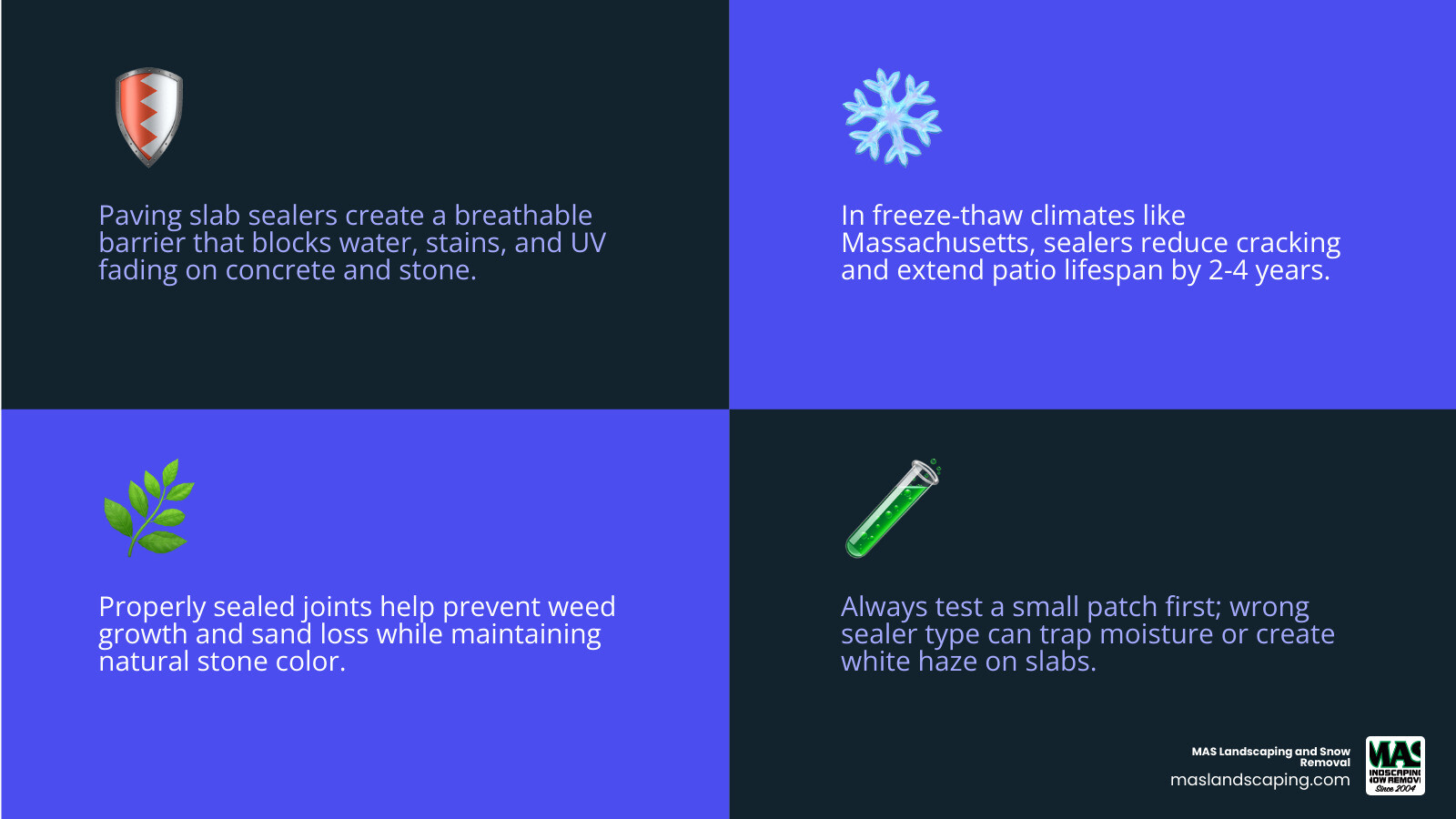
For homeowners in the Greater Boston area, the stakes are even higher. Harsh New England winters, freeze-thaw cycles, and spring rain mean your patio takes a serious beating. The right sealer acts as a protective barrier against all of it.
This guide walks you through every major decision — from sealer types and surface prep to application tips and how long protection actually lasts.
Terms related to paving slab sealer:
What Is Paving Slab Sealer and When Is It Worth Using?
A paving slab sealer is a protective treatment applied to patio slabs made from concrete, stone, brick, or similar hardscape materials. Its job is simple: reduce water absorption, limit staining, slow down weathering, and make routine cleaning easier.
On patios in places like Saugus, Lynnfield, Everett, Malden, Medford, Wakefield, Reading, and nearby Massachusetts communities, sealing can be especially worthwhile because patios deal with:
- freeze-thaw stress in winter
- spring moisture and algae growth
- summer UV exposure
- food, grease, and drink spills
- leaf staining and general grime
What paving slab sealer actually does
Different sealers work in different ways:
- Film-forming sealers sit on the surface and create a protective coat.
- Penetrating or impregnating sealers soak into the pores and repel water from within.
- Some products also help stabilize jointing sand between paving units.
In practical terms, a good sealer can help with:
- reducing porosity and water uptake
- limiting oil, grease, and organic stain penetration
- slowing colour fading from sun exposure
- reducing moss, algae, and weed-friendly moisture retention
- improving abrasion resistance on concrete surfaces
- protecting joints from erosion
That said, sealer is not magic in a can. It helps, but it does not make a patio indestructible, self-cleaning, or immortal. If it did, we would all be out of a job.
Benefits for concrete and stone patios
For precast concrete slabs, sealing is often a strong value move because concrete is usually porous and benefits from extra stain and moisture protection. A film-forming acrylic sealer can also enrich colour and create a more finished appearance.
For natural stone, the benefit depends on the stone:
- Sandstone often benefits from breathable penetrating protection because it is porous.
- Slate and other dense stones may need less product and often do best with a natural-look penetrating sealer.
- Some stones darken noticeably with colour-enhancing products, so testing first matters.
Main benefits include:
- easier cleanup after spills
- reduced water ingress
- better resistance to algae and dirt buildup
- improved appearance, from natural to wet-look
- longer service life with less surface wear
When sealing may not be the best choice
Not every patio should be sealed.
We usually advise caution when:
- the paving is designed to remain permeable for drainage
- the slabs are still damp or newly installed and not fully cured
- there is an unknown existing sealer already on the surface
- moisture is already trapped below the slabs
- the owner dislikes any change in colour or sheen
A lot of sealer failures come from sealing the wrong surface, not from buying a bad product.
Types of Paving Slab Sealer: Which One Fits Your Patio?
Choosing a sealer starts with understanding the four main families.
| Sealer Type | How It Works | Typical Finish | Odor/VOCs | Typical Durability | Typical Coverage |
|---|---|---|---|---|---|
| Water-based | Surface protection with easier cleanup | Natural, matt, satin | Lower odor, lower VOCs | Often 2-3 years | Around 8 m2/L on some products |
| Solvent-based acrylic | Film-forming, deeper penetration than many water-based coatings | Satin to wet-look | Higher odor, VOCs present | Often 2-4 years | Around 5-8 m2/L per coat |
| Polyurethane | Harder resin film, strong joint stabilization | Wet-look, gloss | Higher odor, VOCs present | Often 4-6 years | Varies by porosity |
| Penetrating/impregnating | Soaks into pores, breathable water repellency | Natural, invisible, low-sheen | Varies by formula | Around 3 years, sometimes longer | Can range from 3-4 m2/L on porous stone to 10-12 m2/L on dense stone |
Water-based vs solvent-based paving slab sealer
Water-based sealers are usually easier to apply, lower in odor, and friendlier for users who want simpler cleanup. Research also shows some water-based paving sealers can cover about 8 square metres per litre, which is efficient on suitable surfaces.
They are a good fit when you want:
- lower fumes
- a subtler finish
- easier tool cleanup
- less aggressive odor around homes and neighbors
Solvent-based sealers usually penetrate more aggressively and often create stronger colour enhancement or a richer surface finish. But they come with more fumes, more ventilation concerns, and stricter application conditions. Technical data sheets also warn against using some solvent-based products indoors or in enclosed spaces.
Acrylic, polyurethane, and penetrating sealers explained
Acrylic sealers are one of the most common patio options. They create a surface film, enhance colour, and are available in matt, satin, or glossier looks. They are popular for precast slabs and decorative concrete.
Polyurethane sealers are tougher and generally longer-lasting than acrylics. Research commonly places them in the 4-6 year range when conditions are right. They are often chosen when joint sand stabilization matters, especially on block-style paving.
Penetrating or impregnating sealers work differently. Instead of leaving much of a visible film, they soak into the paving and protect the pores while allowing the surface to breathe. That breathability makes them especially useful on natural stone.
If you want a deeper dive into material-specific options, see our guides on Concrete Paver Sealer and Natural Look Paver Sealer.
Best sealer by slab material and finish goal
A simple rule of thumb:
- Precast concrete flagstones: acrylic film-forming sealers are often the best fit
- Sandstone and Indian stone: breathable impregnating sealers are usually safer
- Slate or dense stone: penetrating sealer with a natural finish is often ideal
- Block paving: polyurethane can be excellent where joint stabilization is important
If the goal is appearance:
- wet-look = usually solvent acrylic or polyurethane
- satin = acrylic or some enhanced natural-look products
- matt/natural = penetrating sealer or low-sheen water-based product
How to Choose the Best Paving Slab Sealer for Your Patio
The best sealer is not the one with the flashiest label. It is the one that matches the slab material, joint type, drainage setup, and finish you actually want to live with.
Before choosing, we recommend checking:
- how porous the slabs are
- whether the patio has been sealed before
- whether joints are sanded, mortared, or polymeric
- how much foot traffic the area gets
- how much sun or shade it receives
- whether the area tends to stay damp
- whether you want colour enhancement or no visible change
A quick splash test helps. If water darkens and absorbs quickly, the slab is porous and likely to need more product.
Best choice for precast concrete paving slabs
Precast concrete slabs generally respond well to film-forming sealers because they benefit from:
- stain resistance
- slight colour enrichment
- abrasion protection
- easier washing
- optional joint sand locking on the right systems
For this type of patio, two coats are common. Research for concrete slab sealers often shows first-coat coverage around 4-6 square metres per litre, with the second coat stretching a little farther depending on porosity.
Best choice for natural stone like sandstone or slate
Natural stone needs more caution.
For sandstone, we usually lean toward breathable impregnating sealers because sandstone is porous and can hold moisture. A breathable treatment helps repel water while reducing the risk of trapping moisture under a shiny film.
For slate and other denser stones, one coat may sometimes be enough because absorption is lower. Some dense materials can cover 10-12 square metres per litre with penetrating products, while porous sandstone may only manage 3-4 square metres per litre and may need multiple coats.
Always test first, especially if you are sealing:
- Indian sandstone
- limestone
- slate
- textured flagstone
Some sealers deepen colour more than expected. What looked “subtle” on the label can become “permanently damp sweater” in real life.
Finish guide: wet-look, satin, matt, or natural
Finish is not just about style. It also affects maintenance and slipperiness perception.
- Wet-look: richest colour boost, most visible sheen, shows imperfections more
- Satin: balanced enhancement, less dramatic than gloss
- Matt: low sheen, keeps a more understated look
- Natural/invisible: aims to preserve the original appearance
If you are choosing mainly by appearance, these may help:
How to Prepare and Apply Patio Sealer Properly
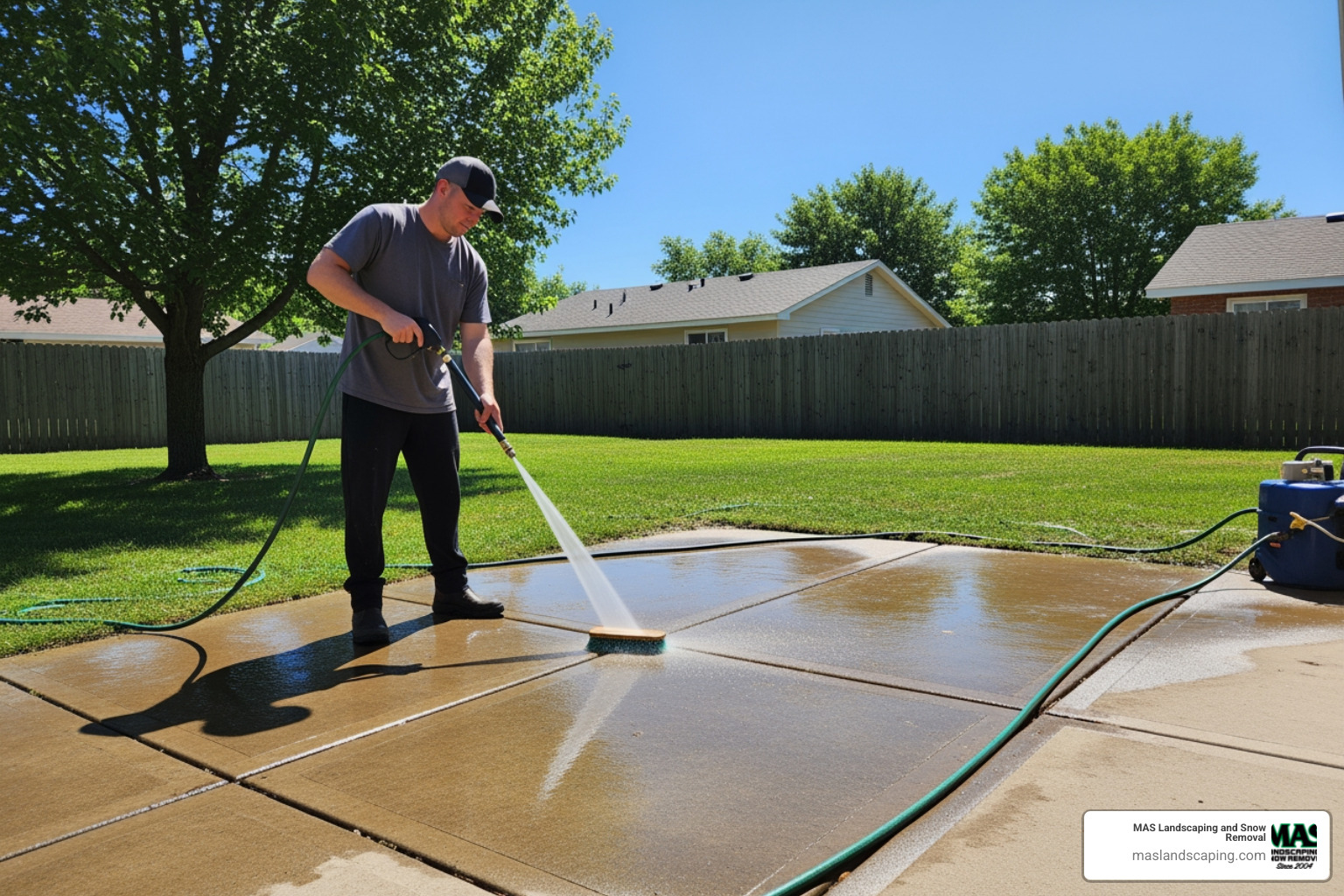
Bad prep ruins good sealer. This is probably the most important sentence in the whole article.
Cleaning, efflorescence removal, and joint preparation
Before sealing, the patio should be:
- clean
- dry
- free of grease, dirt, dust, moss, algae, and loose debris
- free of white salt deposits where possible
Efflorescence, the chalky white residue seen on concrete and some paving, often needs a dedicated cleaner before sealing. Technical sheets also note that even after treatment, efflorescence can sometimes reappear, so no product should be treated as a miracle cure.
Preparation usually includes:
- Sweep the patio thoroughly.
- Treat moss, algae, and weeds.
- Degrease oil or BBQ stains.
- Wash the patio carefully.
- Allow it to dry fully.
- Re-sand joints if needed.
If pressure washing is used, keep it controlled. For paver and slab surfaces, low pressure is safer than blasting the face off the patio in the name of cleanliness. After washing, joints often need fresh kiln-dried sand if the system uses sanded joints.
If polymeric or brush-in joint compounds were recently used, residue on the slab surface must be removed before sealing. Otherwise, you can end up with haze or white residue under the sealer.
For cleaning guidance, see How to Choose the Best Driveway Paver Cleaner.
How to apply paving slab sealer step by step
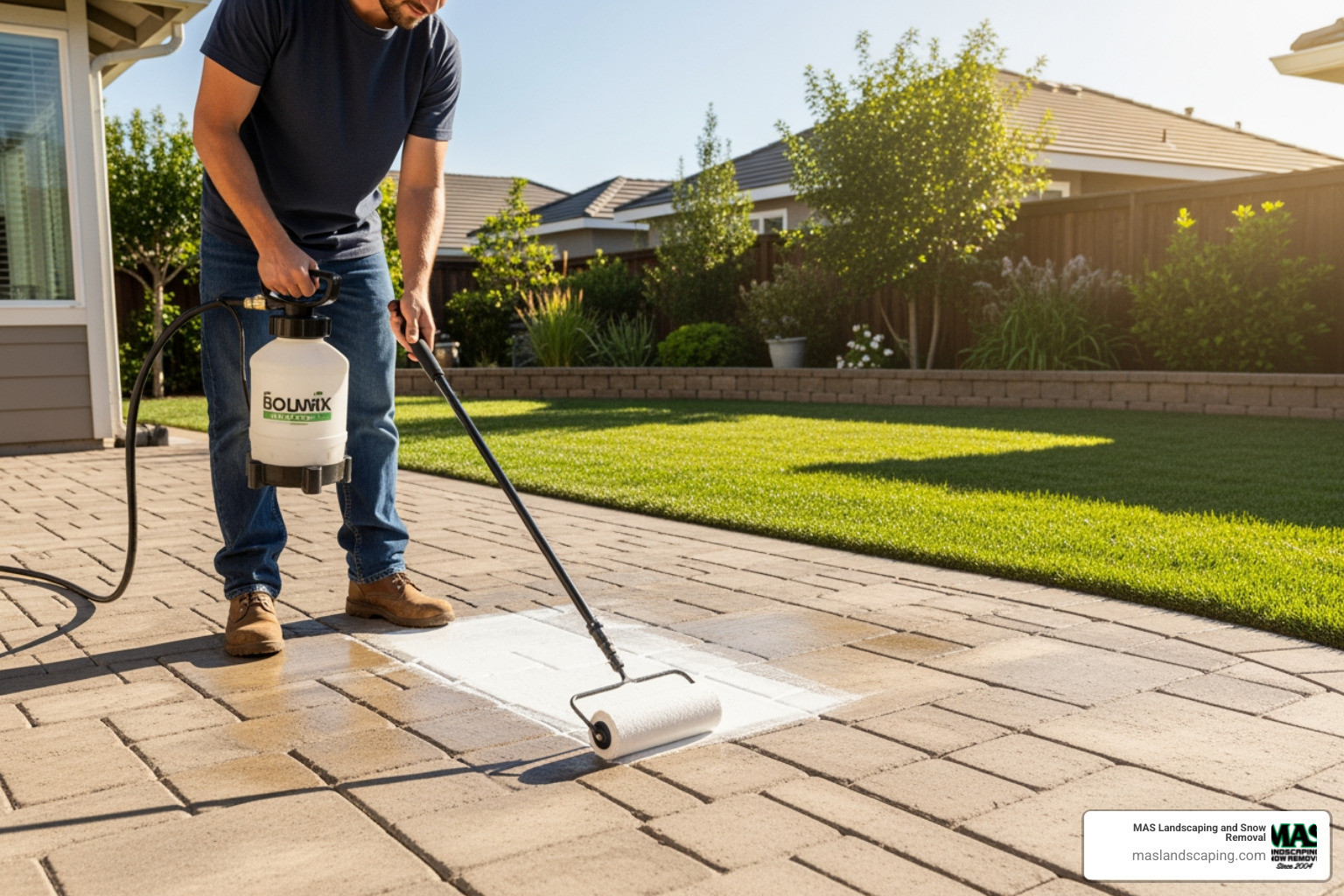
Most patio sealers are applied with one or more of these:
- pump sprayer
- short-pile roller
- brush
A simple process looks like this:
- Test a small hidden area first.
- Check the weather forecast.
- Mask nearby walls, doors, plants, and ponds.
- Start in a corner and work in manageable sections.
- Apply a thin, even coat.
- Maintain a wet edge to avoid overlap marks.
- Remove excess product rather than letting puddles dry.
- Apply the second coat within the manufacturer’s window.
Thin coats are better than heavy coats. Over-application is a common reason sealers turn cloudy, patchy, or sticky.
For a more detailed walkthrough, see How to Seal Patio Pavers in 5 Easy Steps.
Coverage rates, number of coats, and ideal weather
Coverage depends heavily on porosity, but research shows useful benchmarks:
- precast concrete slabs: about 4-6 m2/L for the first coat
- second coat on concrete: often around 5 m2/L
- some water-based products: around 8 m2/L
- solvent acrylics: around 5-8 m2/L per coat
- porous sandstone: around 3-4 m2/L
- dense slate or granite: around 10-12 m2/L
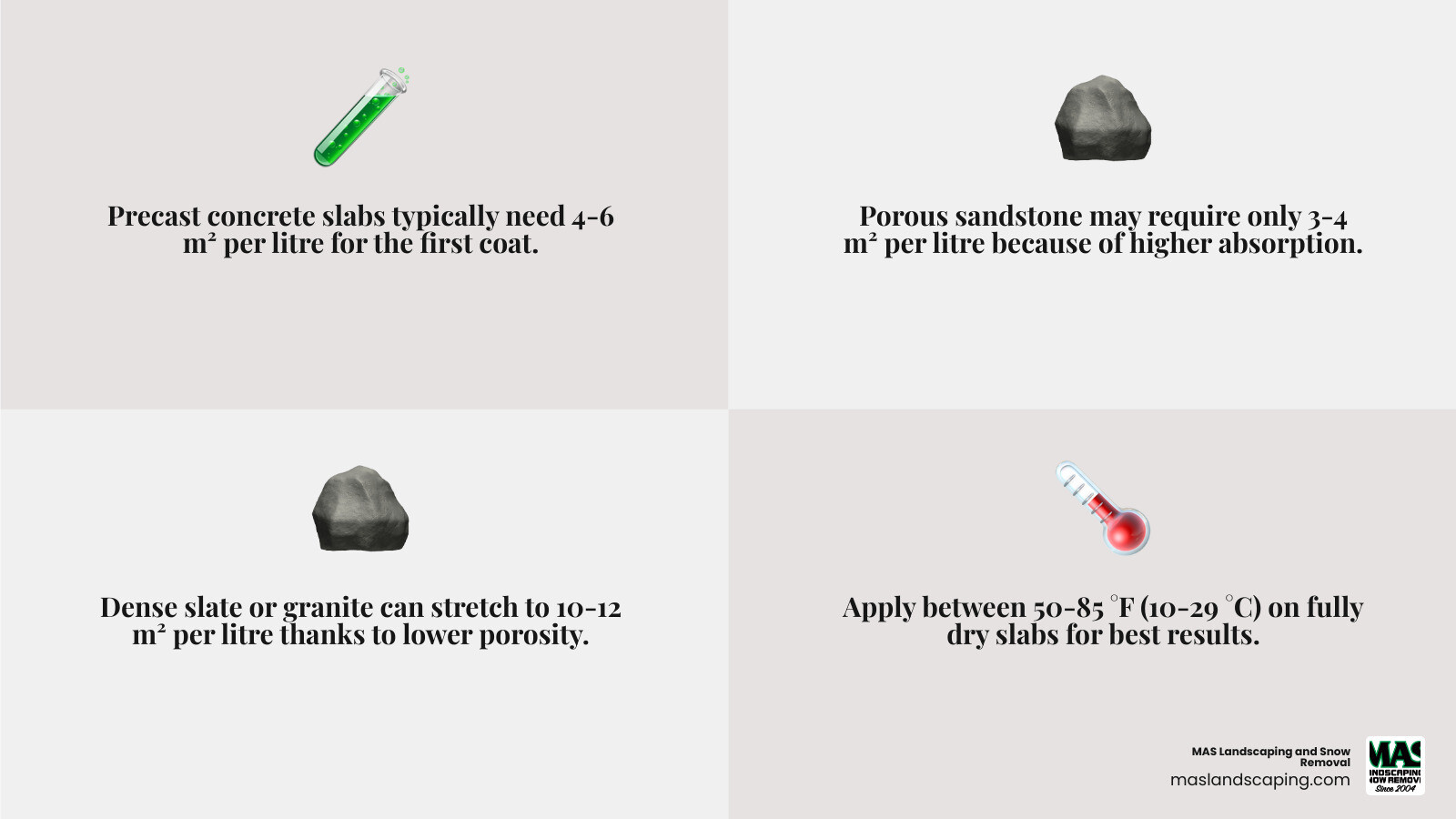
Most patios need 1-2 coats. Very porous surfaces may need more, while dense stone may need only one.
Weather matters a lot. Technical guidance commonly recommends application when:
- slabs are fully dry
- no rain is expected for at least 24 hours, sometimes longer
- air and surface temperatures are in the safe range
Several product sheets place acceptable application ranges roughly between 5C and 25C, or about 50F to 85F depending on product. Many also warn not to seal in very hot weather. Some sources specifically caution against applying when slabs are above about 23C or when ground temperature is above 30C.
You can review examples of technical guidance here:
How Long Paving Slab Sealer Lasts, Maintenance, and Mistakes to Avoid
How long sealers typically last and when to reapply
Typical lifespan depends on chemistry, weather, and use:
- acrylic sealers: often 2-4 years
- many general patio sealers: around 3 years
- polyurethane sealers: often 4-6 years
- heavy traffic or harsh exposure: shorter lifespan
In Massachusetts, shaded patios may stay damp longer and grow algae faster, while sunny patios can see more UV wear. Freeze-thaw cycles also speed up breakdown if water gets into unprotected pores.
A simple field test is the water-beading test. If water no longer beads and starts soaking in quickly, it may be time to clean and recoat.
Ongoing patio care after sealing
A sealed patio still needs maintenance, just less drama.
Good habits include:
- sweeping regularly
- washing with mild detergent when needed
- cleaning spills promptly
- removing algae before it gets established
- checking joints after washing or winter weather
- using furniture pads to reduce scratching
For winter care in our service area, be careful with de-icers. Some sources warn that de-icing salts can shorten the life of the sealer or damage concrete surfaces. If a de-icer is necessary, calcium chloride-based products are generally a safer bet than standard rock salt, and even then, moderation is wise.
Common sealing mistakes and safety considerations
Most sealer problems trace back to a few familiar mistakes:
- sealing damp slabs
- applying too much product
- sealing in hot sun
- sealing when rain is coming
- ignoring old sealer on the surface
- failing to test first
- using the wrong product for natural stone
- not re-sanding joints after cleaning
Safety matters too, especially with solvent-based products. Follow label directions on:
- gloves
- eye protection
- respirators where required
- ventilation
- ignition sources and flammability
- keeping children and pets away until fully dry
- protecting plants, ponds, and adjacent surfaces from overspray
For broader best practices, see The Ultimate Guide to Sealing Your Patio Pavers Like a Pro.
Frequently Asked Questions About Paving Slab Sealer
Can you apply a new paving slab sealer over an old one?
Sometimes, but not blindly.
If the old sealer is failing, peeling, whitening, or of unknown type, applying a new one over it can cause adhesion failure. Many technical sources advise removing old coatings first, especially before using penetrating sealers that need access to the pores.
Best practice:
- identify the old sealer if possible
- clean thoroughly
- strip failing coatings if necessary
- test a small area first
Will paving slab sealer make my patio slippery?
It can, depending on the product and finish.
Glossy film-forming sealers can increase slipperiness perception, especially when wet. Some technical data sheets specifically warn that sealed surfaces may become more slippery in wet conditions.
Risk is usually higher with:
- gloss or wet-look finishes
- smooth concrete
- dense stone with little surface texture
- over-applied surface coatings
Lower-sheen or penetrating sealers usually reduce this issue. Some systems also allow anti-slip additives.
What does patio sealing usually cost?
Costs vary by patio size, slab porosity, product type, prep work, and whether you do it yourself or hire a professional. DIY cost usually depends on coverage math more than anything else: porous slabs need much more product than dense stone.
Professional work typically costs more because it includes:
- proper cleaning
- stain treatment
- joint re-sanding
- materials
- labor
- reduced risk of application mistakes
We do not list pricing here because actual project scope varies too much, and internet averages are often misleading. The key takeaway is that a cheap sealer job can become expensive if it traps moisture, turns white, or needs to be stripped and redone.
Conclusion: Choosing a Sealer That Protects Without Causing Problems
The best paving slab sealer is the one that matches your patio material, your finish goals, and our local Massachusetts weather conditions.
If you remember only a few things, make them these:
- match the sealer to the slab
- always test a small area first
- prep thoroughly
- apply thin coats in the right weather
- maintain the patio after sealing
For precast concrete, acrylic sealers are often the practical choice. For sandstone, slate, and other natural stone, breathable penetrating sealers are usually the safer route. And for any patio, the fastest path to failure is rushing the prep.
If you want help protecting an existing patio or planning a new one in Saugus, Lynnfield, Everett, Malden, or nearby areas, explore our patio installation services. At MAS Landscaping and Snow Removal, we focus on practical outdoor solutions that look good, last longer, and do not create avoidable maintenance headaches later.
