



Outdoor Turf Cost: Top Factors & Tips for 2025 Success
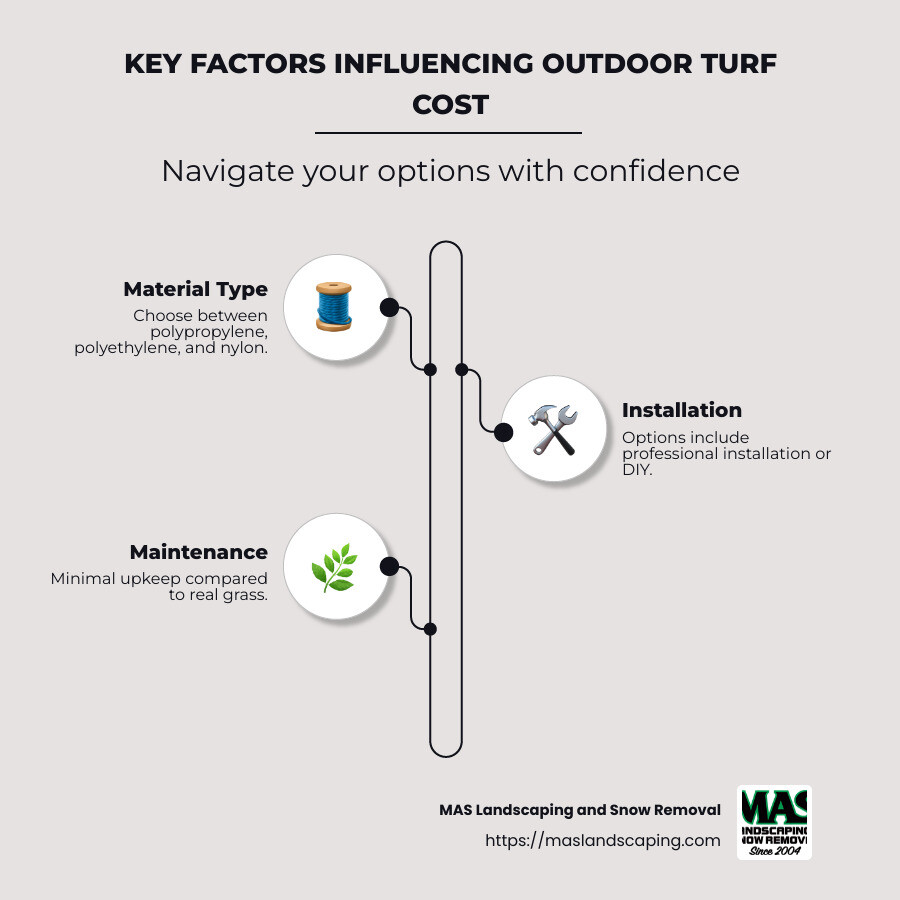
When considering the outdoor turf cost, there are several key factors that come into play. Here’s a quick snapshot:
- Material Type: Polyethylene, polypropylene, nylon.
- Location: Different costs in different areas.
- Installation: Professional or DIY options.
- Maintenance: Minimal upkeep compared to real grass.
Now, let’s dig into why understanding these aspects is important for homeowners and business owners in the Greater Boston area.
Artificial turf has steadily become a popular choice for those seeking a low-maintenance, durable, and aesthetically pleasing alternative to natural grass. Whether you have a sprawling backyard or a modest patio, outdoor turf offers the benefit of year-round greenery without the hassle of constant upkeep. It’s also designed to withstand various weather conditions, making it an ideal choice for New England’s unpredictable climate.
Yet, the decision to invest in artificial grass extends beyond its initial appeal. Understanding the various costs associated with outdoor turf, from installation to long-term maintenance, empowers you to make an informed decision that aligns with your budget and landscaping goals. This guide will break down the costs and benefits, offering a comprehensive overview to help you steer your choices confidently.
Outdoor turf cost terminology:
– cost to astroturf garden
– synthetic grass price per square foot
– pet turf installation cost
Factors Influencing Outdoor Turf Cost
When planning an artificial turf project, understanding the factors that impact the outdoor turf cost is crucial. Let’s break down these elements to help you make an informed decision.
Material Type
The type of material you choose significantly affects the cost. There are three main types of artificial turf materials:
- Polyethylene: Known for its soft texture and natural look, polyethylene is a popular choice for residential lawns and playgrounds. It’s cost-effective but less durable than other options.
- Polypropylene: This is the most affordable option, suitable for low-traffic areas. It offers moderate durability but doesn’t replicate the realism of natural grass as closely as other types.
- Nylon: The premium choice, nylon turf is highly durable and ideal for high-traffic areas like sports fields. It mimics the appearance of real grass but comes with a higher price tag.
Labor Costs
Labor costs depend on whether you opt for professional installation or a DIY approach. Hiring professionals ensures a seamless installation with a warranty, but it increases the overall cost. DIY can save you money, but it requires time and effort, as well as the right tools.
Location
Your location plays a role in the cost of artificial turf. Regional cost variations are influenced by:
- Cost of Living: Higher living costs can lead to increased labor and material prices.
- Local Demand: Areas with high demand for artificial turf may see higher prices.
Yard Size and Shape
The size and shape of your yard affect both material and labor costs:
- Square Footage: Larger areas require more material, increasing the cost.
- Rectangular vs. Irregular Shapes: Rectangular areas are easier and cheaper to install compared to irregular shapes, which require more cutting and fitting.
Blade Shape and Infill
The design of the turf blades and the type of infill used can also impact costs:
- Blade Shape: Options like straight-blade and diamond-blade offer different aesthetics and durability levels.
- Infill Types: Materials like crumb rubber and silica sand provide support and cushioning, with varying cost implications.
Drainage and Edging
Proper drainage and edging are essential for a long-lasting turf installation:
- Drainage Systems: These prevent water accumulation, which can damage turf over time.
- Landscape Edging: This keeps the turf in place and can include materials like metal, plastic, or stone.
- Weed Barriers: These prevent weed growth, adding to the longevity of your turf.
Understanding these factors ensures a well-planned turf project that fits your budget and meets your landscaping needs. Next, we will explore the cost breakdown by turf type to further guide your decision-making process.
Cost Breakdown by Turf Type
Choosing the right type of artificial turf can have a significant impact on the outdoor turf cost and its suitability for your needs. Let’s explore the specifics of each turf type to help you make the best choice for your project.
Polypropylene Turf
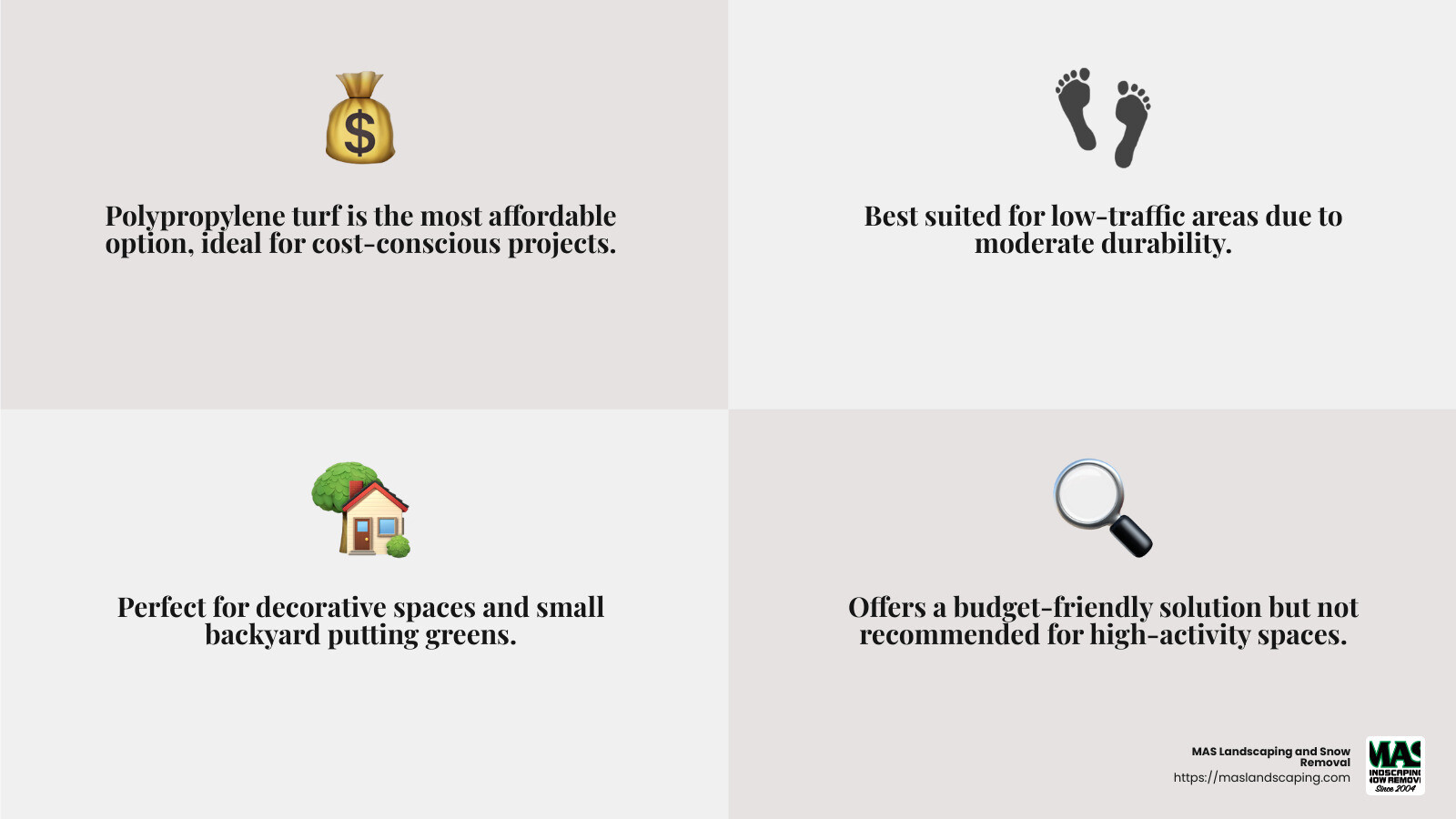
Polypropylene turf is the most budget-friendly option, making it an attractive choice for those looking to keep costs low. Despite its affordability, it offers moderate durability, which is ideal for areas with low foot traffic like decorative spaces or small backyard putting greens.
- Affordability: It’s the least expensive option, but remember, you get what you pay for.
- Durability: Best for low-traffic areas; not recommended for high-activity spaces.
- Best Uses: Ideal for decorative purposes or areas where foot traffic is minimal.
Polyethylene Turf
Polyethylene turf strikes a balance between cost and performance. It’s known for its soft texture and natural appearance, making it a popular choice for residential lawns and playgrounds. While not as durable as nylon, it offers a good mix of aesthetics and resilience.
- Cost-Effectiveness: Offers a natural look without breaking the bank.
- Moderate Durability: Suitable for moderate-use areas like family backyards.
- Applications: Perfect for residential lawns and playgrounds where a soft feel is important.
Nylon Turf
Nylon turf is the premium option, renowned for its exceptional durability and realistic appearance. It’s ideal for high-traffic areas such as sports fields, where resilience is crucial. While it comes with a higher price tag, its longevity and lifelike look make it a worthwhile investment for those who prioritize quality.
- Premium Option: Highest cost, but offers best durability and realism.
- High Durability: Best for high-traffic areas, ensuring long-lasting performance.
- High-Traffic Areas: Perfect for sports fields and areas with heavy use.

Understanding the differences between these turf types will help you select the right one based on your budget and usage needs. Next, we’ll explore how regional variations can affect the cost of your artificial turf installation.
Regional Cost Variations
When considering the outdoor turf cost, it’s important to recognize how regional factors can influence pricing. Different areas of the U.S. have unique characteristics that affect the cost of materials, labor, and installation. Let’s explore the regional cost variations across the country.
Northeast U.S.
In the Northeast, cities like New York and Boston experience a wide range of weather conditions, from hot summers to cold, snowy winters. These climatic variations can impact the choice of turf and its cost. For instance, freeze-resistant backing may be necessary to withstand harsh winters, potentially increasing costs. Additionally, the high cost of living in these cities can drive up labor expenses.
Southeast U.S.
The Southeast, including cities like Atlanta and Knoxville, is known for its warm and humid climate. This region often requires turf with improved UV resistance to prevent fading under the intense sun. While the cost of living is generally lower than in the Northeast, the need for specialized materials to handle the climate can affect the overall price.
Midwest U.S.
In the Midwest, with cities like Chicago and South Bend, artificial turf needs to endure both hot summers and freezing winters. This dual requirement means that turf in this region must be both UV-resistant and freeze-resistant, which can add to the cost. However, labor costs in the Midwest are often lower than in coastal regions, which can help balance out the expense.
Northwest U.S.
The Northwest, including Seattle and Beaverton, experiences a lot of rainfall. As a result, drainage systems are a critical component of turf installations in this area. The need for effective drainage solutions can increase the overall cost of installation. Additionally, the lush green landscapes of the Northwest mean that homeowners often prefer more realistic and dense turf, which can be more expensive.
Southwest U.S.
In the Southwest, cities like San Diego and Gilbert face arid conditions with minimal rainfall. Turf in this region must be highly UV-resistant to withstand the intense sun and heat. While the lack of rain reduces the need for complex drainage systems, the demand for high-quality, UV-resistant materials can drive up costs. However, the popularity of artificial turf in water-scarce areas can sometimes lead to competitive pricing due to high demand.
Understanding these regional differences can help you anticipate the potential costs and requirements for artificial turf in your location. Next, we’ll look at additional costs and considerations that might influence your decision.
Additional Costs and Considerations
When planning an artificial turf installation, it’s crucial to consider the additional costs that can impact your overall budget. These costs can include grass removal, landscape edging, maintenance, UV protection, and shock pads.
Grass Removal
Before installing artificial turf, removing existing grass is essential. This process can involve manual removal, using a sod cutter, or applying herbicides. Each method has its own cost implications, typically ranging from $0.50 to $2 per square foot. While this is an added expense, it ensures a clean base for your new turf, preventing weed growth and enhancing longevity.
Landscape Edging
Edging is important for defining the boundaries of your turf and keeping it secure. The cost of landscape edging varies based on the material used. Plastic edging can cost between $2 to $10 per linear foot, while metal edging ranges from $5 to $20 per linear foot. Choosing the right edging material can provide a polished look and help maintain the integrity of your installation.
Maintenance Costs
Although artificial turf is low-maintenance, some upkeep is necessary to maximize its lifespan. Annual maintenance tasks include brushing to keep the blades upright, infill replenishment, and leaf removal. Regular maintenance helps prevent matting and compaction, ensuring your turf looks its best. Additionally, pet owners may need to clean and deodorize the turf to prevent odors.
UV Protection and Shock Pads
UV protection is critical for preventing fading and deterioration under the sun. While it can increase the cost by 10% to 15%, it offers long-term savings by reducing the need for replacements. Shock pads provide cushioning and safety, particularly for sports fields or play areas. These pads can add $1 to $2 per square foot but extend the turf’s lifespan by absorbing impact and reducing wear.
Understanding these additional factors helps you plan a comprehensive budget, ensuring your artificial turf installation meets your needs and lasts for years to come. Next, we’ll explore the pros and cons of professional installation versus a DIY approach.
Pro Installation vs. DIY
When deciding between professional installation and DIY installation for your artificial turf, consider both the costs and the effort involved. Each approach has its own set of advantages and challenges.
Pro Installation
Cost per Square Foot: Professional installation typically costs more per square foot compared to DIY. This includes labor and expertise, ensuring that the turf is installed correctly and efficiently.
Benefits: Hiring professionals can save you time and the hassle of managing the installation process. Experts can handle complex tasks like proper drainage, precise cutting, and seam joining. Plus, they often provide a warranty. This offers peace of mind, knowing that any issues will be addressed by the installers.
Potential Issues: While more expensive upfront, professional installation can prevent costly mistakes and repairs down the line. Pros are equipped to handle unique challenges, such as sloped terrains or intricate shapes, which might be difficult for a DIYer.
DIY Installation
Cost Savings: If you’re looking to save money, DIY installation can be a more budget-friendly option. By doing it yourself, you eliminate labor costs, which can result in significant savings.
Tools Needed: Basic tools like a shovel, hammer, and tape measure are essential. You might also need a turf cutter and a power broom. If you already own these tools, your expenses will be lower.
Time Investment: Installing turf yourself requires a significant time commitment. You’ll need to plan, prepare the ground, and ensure every detail is executed correctly. It can be a rewarding project, but it’s also labor-intensive.
Potential Issues: DIY installation can lead to mistakes if not done carefully. Issues like improper drainage or uneven seams can affect the turf’s performance and longevity. Without a warranty, any mistakes could mean additional costs for repairs or adjustments.
The choice between professional and DIY installation depends on your budget, skill level, and willingness to invest time. Weighing these factors can help you decide the best approach for your artificial turf project.
In the next section, we’ll answer some frequently asked questions about outdoor turf costs to further guide your decision-making process.
Frequently Asked Questions about Outdoor Turf Cost
Do you need a permit to install artificial grass?
When planning to install artificial grass, it’s important to check with your local authorities and Homeowners Association (HOA). Some areas may require a permit, especially if you’re installing a large area of turf. Regulations can vary widely depending on where you live, so it’s always a good idea to verify the requirements in your community before starting your project. This ensures that you comply with local laws and avoid any potential fines or issues down the road.
Is artificial grass worth having?
Artificial grass can be a worthwhile investment for many homeowners. One of the main benefits is the significant maintenance savings. Traditional lawns can cost between $1,500 to $6,000 per year to maintain, including watering, mowing, and fertilizing. In contrast, artificial turf requires minimal upkeep, which can save you money over time.
However, it’s important to consider the property value impact. While artificial grass can reduce maintenance costs, it may lower your home’s value by up to 5% if you plan to sell in the future. This is because some buyers prefer natural grass. Weighing these factors can help determine if artificial grass is the right choice for you.
How much does it cost to maintain artificial grass?
Maintaining artificial grass is relatively low-cost compared to natural lawns. Annual maintenance costs typically range from $250 to $350. This includes:
- Brushing: To keep the turf looking neat and upright, regular brushing is recommended. This costs about $165 per year.
- Minimal Watering: While not always necessary, occasional watering can help remove debris and mud. This can cost between $0 to $100 annually.
- Infill Replenishment: Infill helps keep the grass blades upright and provides cushion. Replenishing infill might cost around $85 per year.
Regular maintenance ensures your artificial turf remains attractive and lasts for many years. Simple tasks like removing leaves and debris can be done yourself, further reducing costs. By understanding these maintenance needs, you can keep your synthetic lawn looking its best with minimal effort.
In the next section, we’ll dig into the conclusion, summarizing the long-term benefits of artificial turf and the expert services offered by MAS Landscaping and Snow Removal.
Conclusion
Investing in artificial turf offers numerous long-term benefits that can transform your outdoor space into a low-maintenance, visually appealing area. Unlike traditional lawns, artificial grass requires minimal upkeep, saving you both time and money. Over the years, this maintenance efficiency can lead to significant cost savings, making it a smart choice for many homeowners.
The durability of artificial turf is another major advantage. High-quality options like nylon turf can last for decades, providing a lush, green appearance year-round. This longevity means fewer replacements and repairs, further enhancing the value of your investment.
At MAS Landscaping and Snow Removal, we pride ourselves on delivering professional service with a personal touch. Our team is dedicated to helping you choose the perfect turf solution custom to your specific needs. With our local expertise in the Saugus, MA area, including Everett, Lynnfield, and Malden, we understand the unique challenges and opportunities of landscaping in this region.
Our commitment to quality and customer satisfaction ensures that your project is completed to the highest standards. From the initial consultation to the final installation, we work closely with you to create a beautiful and functional outdoor space that meets your vision.
Ready to improve your landscape with artificial turf? Contact us today to learn more about our services and how we can help you achieve the perfect outdoor environment. With MAS Landscaping and Snow Removal, you’re choosing a partner who values professionalism and local expertise, ensuring your outdoor space remains stunning and sustainable for years to come.
