

Remove Overgrown Bushes: 5 Ultimate Steps
Why Overgrown Bushes Need to Go
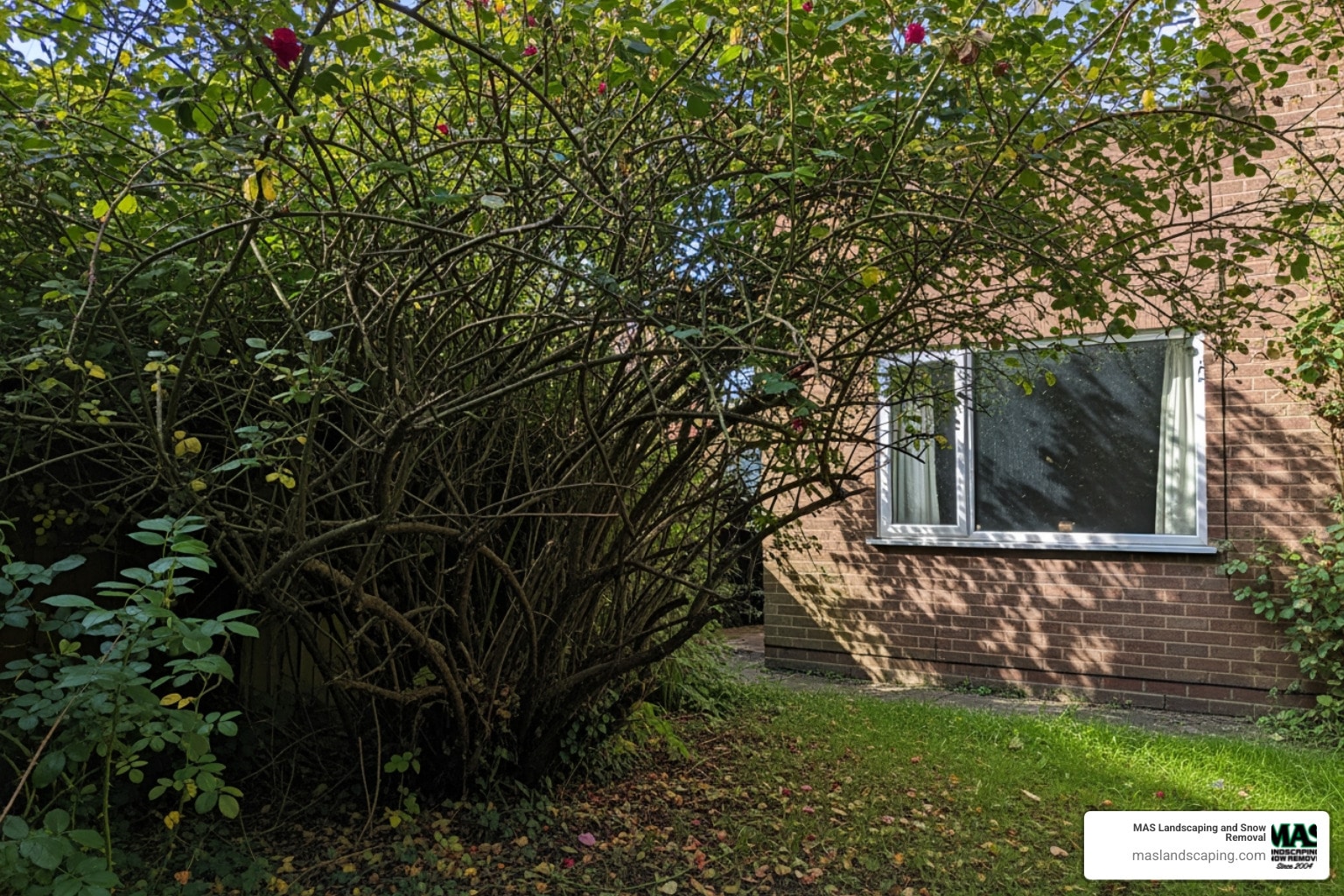
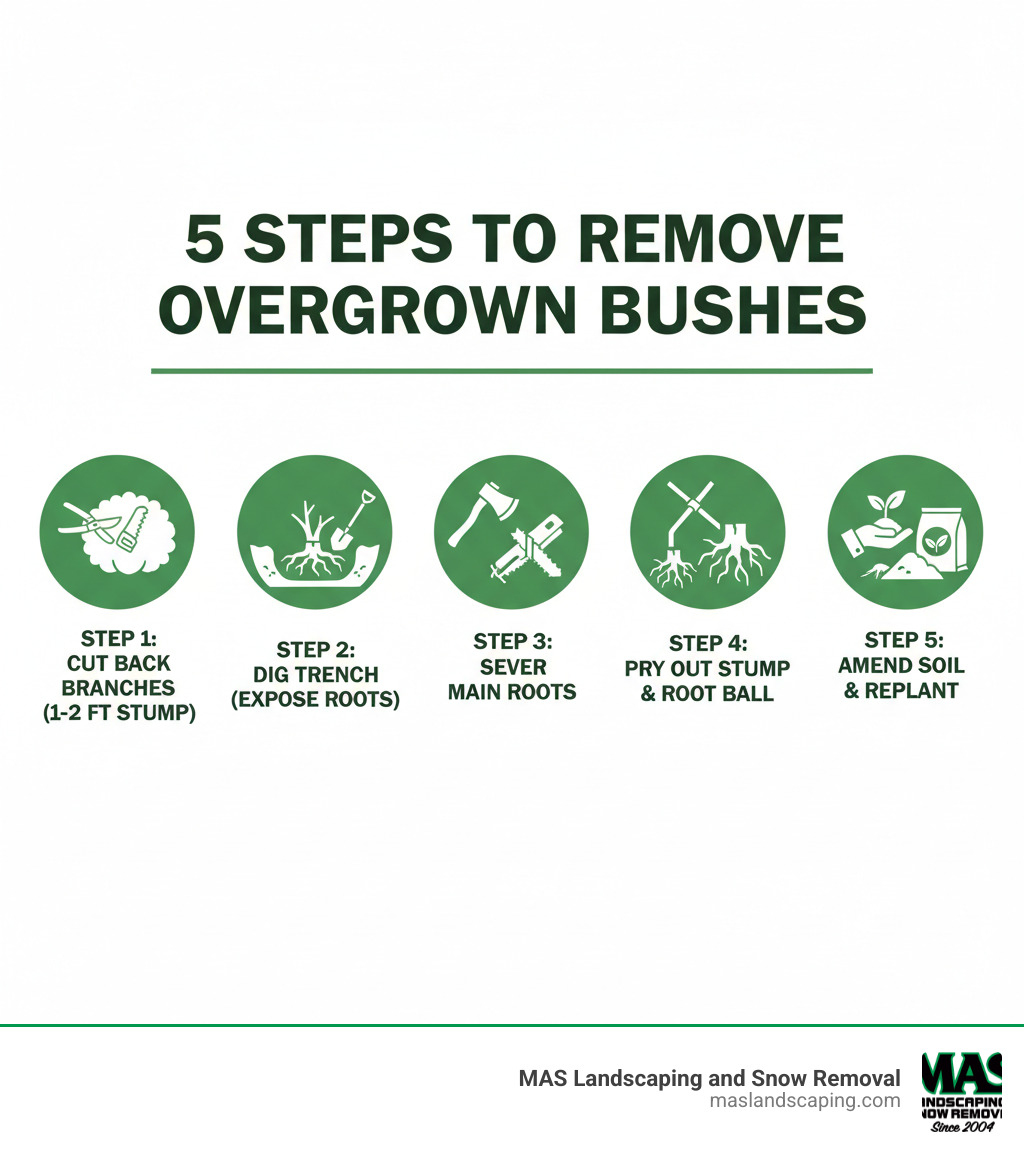
Remove overgrown bushes when they block windows, damage your foundation, or make your yard look neglected. The process is straightforward: cut the branches, dig a trench to expose the roots, sever the roots, and pull out the stump. Most homeowners can complete this project in 45 minutes to a few hours with the right tools.
Whether it’s blocking your view, scraping your siding, or you’re just ready for a landscape change, an overgrown shrub can feel like a daunting problem. The good news is that removing a bush is a manageable DIY project. With the right technique, you can reclaim your space in an afternoon. One experienced DIYer removed a 6-foot-wide bush in just 45 minutes.
While the work is physical, the process is simple. Success comes from preparation: having the right tools, choosing the right time, and prioritizing safety. This guide walks you through everything from planning your project to disposing of debris and preparing the ground for new plants.
Planning Your Bush Removal Project
Before you start digging, a little planning will save you time and prevent safety issues, like hitting a buried utility line or realizing you’re missing a key tool.
Common Reasons to Remove Overgrown Bushes
Homeowners in areas like Everett and Lynnfield remove shrubs for many reasons. Diseased or dying plants should be removed to prevent problems from spreading. Overgrown shrubs can block windows, create driveway blind spots, or become safety hazards with thorns or by creating hiding spots. Sometimes, it’s about a landscape redesign to create space for a patio or flower bed. Critically, bushes too close to a foundation can cause structural damage to pipes and walkways, while branches rubbing on siding cause deterioration. Finally, removing an old shrub can dramatically improve your curb appeal. For larger projects, you might explore landscape cleanup services.
The Best Time of Year for Shrub Removal
Timing is key. The best time to remove overgrown bushes is during late fall or early spring. During these dormant seasons, removal causes less stress on the surrounding garden. The cooler weather makes the physical labor more bearable, and the ground is softer and easier to dig than in frozen winter or baked summer soil.
Avoid removing shrubs during peak summer heat or when the ground is frozen solid.
Essential Tools and Safety Gear
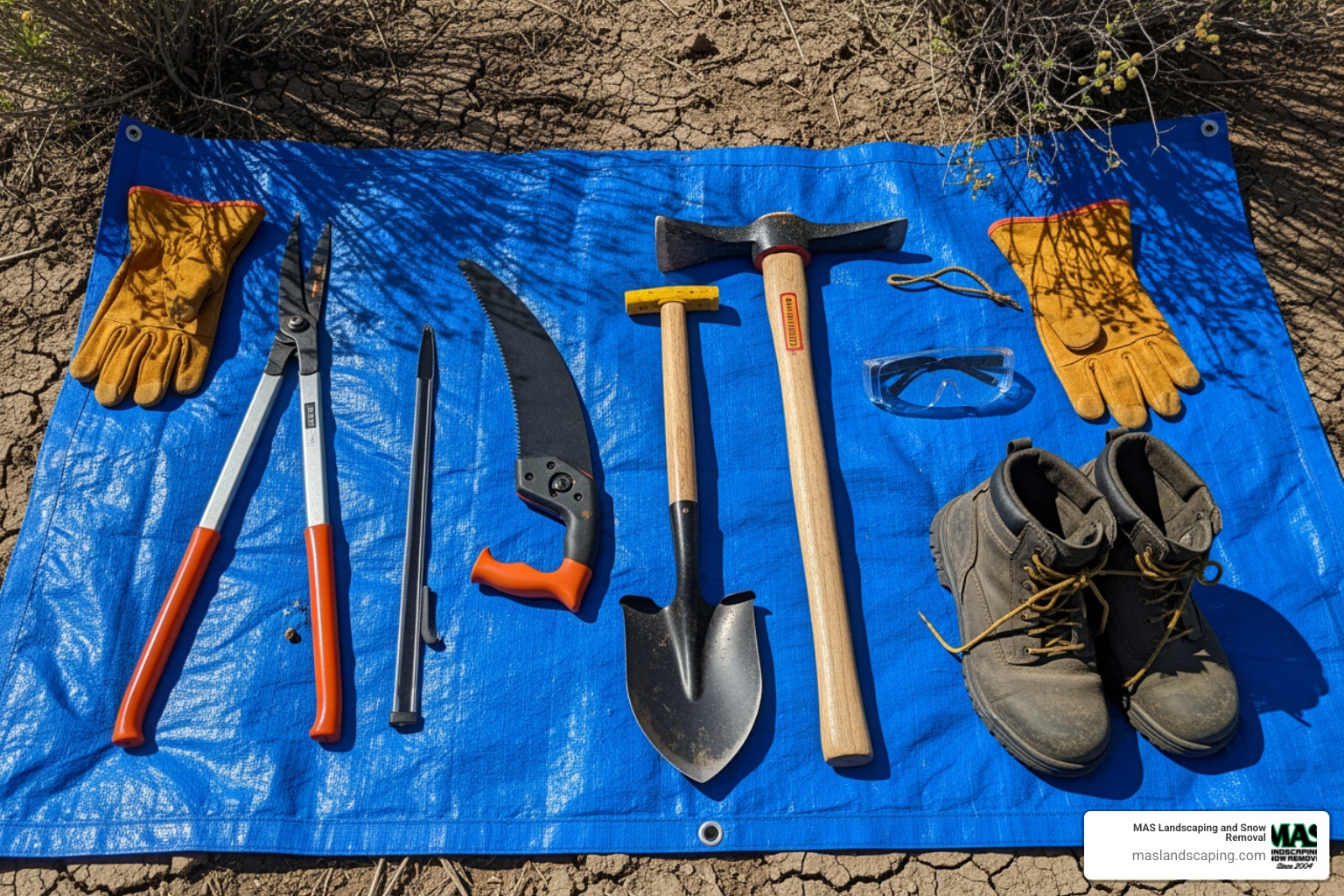
The right tools are crucial. You’ll need:
- Bypass loppers for branches up to 1.5 inches.
- A pruning saw for thicker limbs.
- A pointed shovel for digging.
- A mattock or pickaxe for chopping roots and breaking up soil.
- A chainsaw (optional) for very large shrubs.
- A wheelbarrow or tarp for debris.
Safety is non-negotiable. Always wear:
- Heavy-duty gloves
- Eye protection (goggles or safety glasses)
- Sturdy, closed-toe boots
- Long pants and sleeves
If using a chainsaw, chainsaw chaps are essential. About 36% of chainsaw injuries affect the operator’s legs, and jeans offer no protection. Wearing chainsaw chaps is a must, along with hearing protection.
Finally, call 811 a few days before you dig. This free service marks underground utility lines to prevent a dangerous and expensive accident. It’s free, easy, and could save your life.
A Step-by-Step Guide to Remove Overgrown Bushes
With your tools and safety gear ready, you can begin. Removing overgrown bushes is a systematic process of cutting, digging, and pulling. By following these steps, you can manage the job effectively.
Step 1: Cut Back the Branches
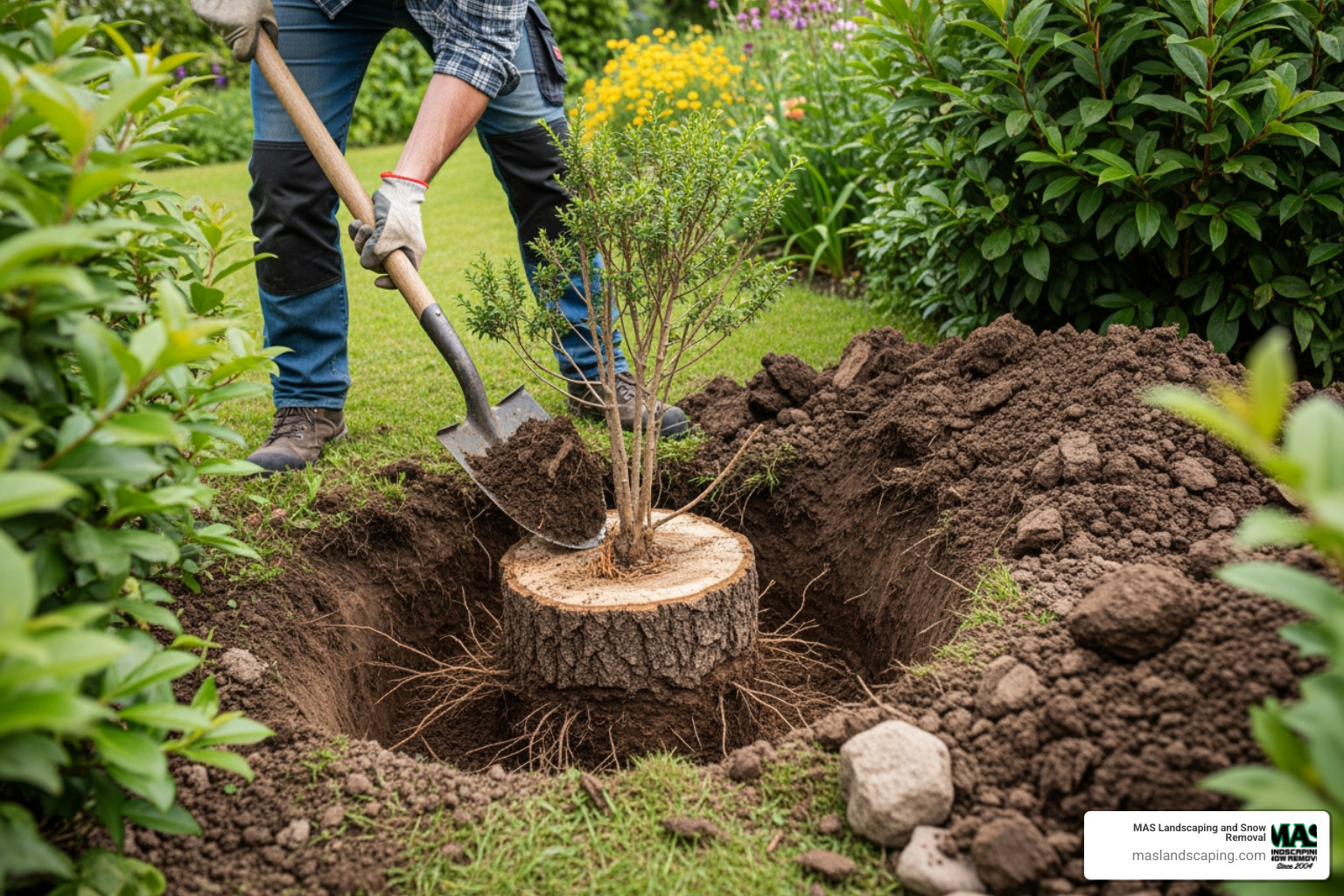
Start by cutting away all branches to get clear access to the trunk. Use bypass loppers for smaller branches (under 1.5 inches) and a pruning saw or chainsaw for larger limbs. Crucially, leave a 1- to 2-foot stump. This stump will act as a lever later when you remove the root ball. This step typically takes 15-20 minutes.
Step 2: Expose the Root System
Next, use your pointed shovel to dig a trench around the stump, about a foot or two out from the base. The goal is to expose the main roots radiating from the central root ball so you know where to cut.
Step 3: Sever the Roots
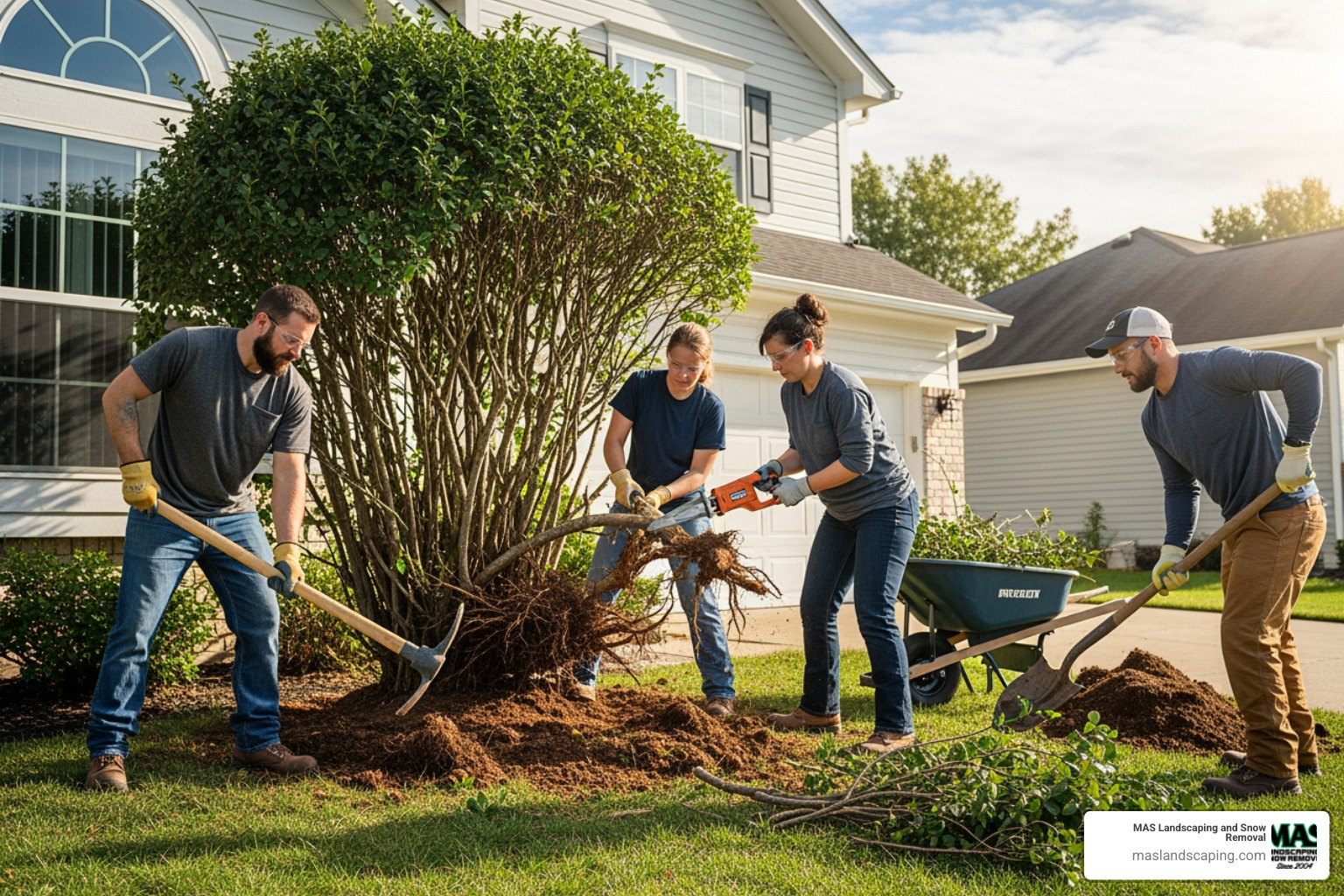
This is the most physical part. Use the axe-like blade of your mattock to chop through all the roots you exposed. For very thick roots, a reciprocating saw with a demolition blade is highly effective. Be thorough and cut roots on all sides of the stump. The more you sever now, the easier the next step will be.
Step 4: Remove the Stump and Root Ball
Now, extract the stump. Use your shovel or mattock to pry under the root ball while rocking the stump back and forth. Use the 1 to 2 foot stump as a handle to wiggle it free. For stubborn stumps, use leverage techniques: place a sturdy board under the root ball and use a rock or another piece of wood as a fulcrum to multiply your force. If you feel major resistance, you’ve likely missed a thick anchor root. Find it and cut it.
Once the root ball is free, lift it out of the hole. If you’re facing multiple large shrubs, consider professional overgrown property cleanup services, available in Saugus, Malden, and nearby towns.
After the Removal: Debris Disposal and Site Prep
Congratulations, the bush is out! Now for the final steps: debris disposal and site preparation. This part is easier but crucial for a healthy, clean landscape.
How to Dispose of Shrub Debris
You have several options for the pile of branches and roots:
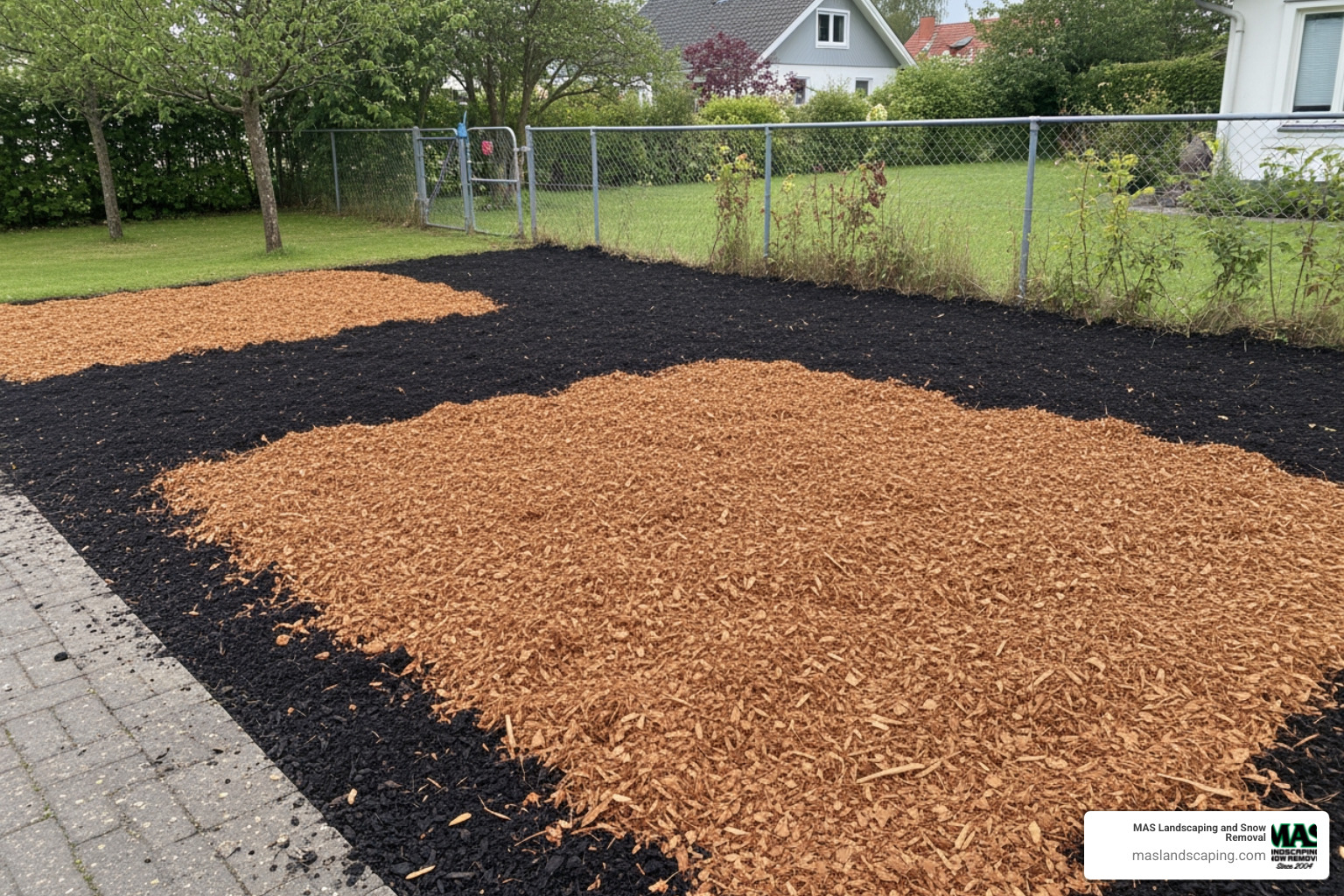
- Chip branches into mulch: Rent a wood chipper to turn waste into valuable mulch for your garden beds.
- Compost: Add smaller twigs and leaves to your compost pile.
- Municipal curbside pickup: Check your town’s (e.g., Medford, Revere) guidelines for yard waste collection.
- Recycling center: Haul larger debris to your local transfer station.
- Professional removal: For a hassle-free option, our brush removal services in Lynnfield, Melrose, and surrounding areas can haul everything away for you.
Preparing the Ground for New Planting
Don’t just fill the hole. Proper site prep prevents future issues like nutrient depletion and soil compaction from decaying roots.
- Remove remaining roots: Rake through the area and pull out any leftover root fragments.
- Amend the soil: The soil is likely depleted. Mix in several inches of compost or other organic matter to add nutrients and improve structure.
- Level the area: Use a rake to smooth the ground and prevent water from pooling.
- Water thoroughly: This helps the new soil settle and reveals any low spots that need more fill.
Your site is now clean, enriched, and ready for new planting or grass seed.
Can’t Remove It? Best Practices for Pruning Overgrown Bushes
Sometimes, you don’t need to remove overgrown bushes. A healthy but unruly shrub can often be saved with strategic pruning. Correct pruning can restore a plant’s health and shape, giving it a fresh start. If you’re unsure, our landscape maintenance services can provide expert care.
Pruning Techniques: Thinning vs. Shearing
Shearing uses hedge shears to trim the outer surface into a uniform shape. While fast, it creates a dense outer shell that blocks light and air from the plant’s interior, leading to dead wood and disease. Experts recommend avoiding shearing unless maintaining a formal hedge, and even then, limit it to once per year.
Thinning is a healthier approach. You selectively remove individual branches back to a main stem or lateral branch. This thinning improves air circulation and sunlight penetration, encouraging new growth from within and maintaining the shrub’s natural form.
Remember the 1/3 Rule: Never remove more than one-third of a plant’s total wood in a single season to avoid stressing it.
Rejuvenation and Renewal Pruning for Severe Overgrowth
For severely overgrown shrubs, more aggressive methods are needed.
Rejuvenation Pruning: This drastic technique involves cutting all branches back to just 6 to 12 inches from the ground in late winter or early spring, as recommended by Colorado State University. The plant responds with vigorous new growth, but you may lose flowers for a few years.
Renewal Pruning: This is a gentler, three-year approach. Each year, you remove one-third of the oldest stems at ground level. By the end of the third year, the entire plant has been renewed without a drastic change in appearance or a total loss of flowers.
DIY vs. Hiring a Professional
While removing a bush is a manageable DIY project for many, sometimes hiring a professional is the smarter, safer choice.
When is it Advisable to Call a Professional?
Consider calling a professional in these situations:
- Very large or numerous shrubs: A pro team has the heavy equipment to handle jobs that would take a DIYer an entire weekend.
- Proximity to structures or power lines: Working near your foundation, buried pipes, or electrical lines requires expertise and insurance to prevent costly damage or injury.
- Lack of proper tools: Renting heavy-duty tools like a chainsaw or mattock can be costly. Professionals arrive with everything needed.
- Physical limitations: Bush removal is strenuous work. If you have health concerns or aren’t up for the physical strain, it’s best to hire out.
- Time constraints: If your time is limited, the value of hiring a service to complete the job quickly often outweighs the cost.
Understanding the Cost to Remove Overgrown Bushes
When weighing your options, it’s helpful to understand potential costs. These are average costs based on internet data and not actual costs for MAS Landscaping—but they’ll give you a general sense of what to expect.
Professional bush removal can range from $450 to over $1,400, depending on several factors:
- Shrub size: A massive, old shrub costs more to remove than a small one.
- Root complexity: Deep taproots or extensive root systems require more labor.
- Site accessibility: Difficult access (fences, slopes, delicate surrounding plants) increases the time and effort involved.
- Disposal costs: The price typically includes hauling away all debris.
For homeowners in the Saugus, MA area and surrounding communities like Chelsea and Everett, MAS Landscaping can provide a custom quote for your project. Our page on yard clean up service cost offers more detail on pricing factors.
Conclusion
You now have a complete guide to dealing with unruly shrubs. We’ve covered why and how to remove them, the best tools and safety practices, and how to handle the cleanup and site prep afterward. The reward for removing overgrown bushes is a cleaner, more open yard with improved curb appeal—a blank slate for your next landscaping project. We also covered strategic pruning as an alternative for saving a plant that’s just overgrown.
Of course, not every project is ideal for a DIY approach. Some bushes are too large, too close to structures, or too difficult to remove safely without professional help. For homeowners throughout Everett, Lynnfield, Malden, Melrose, Medford, Revere, Saugus, and Chelsea, MA, our team at MAS Landscaping is ready to help. We have the equipment and experience to get the job done safely and efficiently.
Whether you do it yourself or let us handle the heavy lifting, taking action is the first step toward improving your outdoor space. For more information, explore our brush removal services near you. Your dream yard is waiting.