




What Are Landscape Walls and Why Do They Matter?
Landscape walls are one of the most versatile features you can add to any outdoor space — and they do a lot more than just look good.
Here’s a quick overview of what they are and what they do:
- Definition: Landscape walls are structures built from materials like concrete blocks, natural stone, or modular systems to shape and define outdoor spaces.
- Structural support: They hold back soil on slopes, prevent erosion, and stabilize uneven terrain.
- Aesthetic enhancement: They add visual depth, texture, and style to any yard or commercial property.
- Usable space: They turn sloped, unusable land into flat areas for patios, gardens, or walkways.
Whether you’re dealing with a hillside that’s slowly washing away or simply want to add a polished, finished look to your yard, landscape walls are a proven solution.
In the Greater Boston area, where properties often feature uneven grades and harsh seasonal weather, a well-built landscape wall isn’t just a nice-to-have — it’s often a necessity. The right wall protects your soil, your foundation, and your investment.
This guide covers everything you need to know: materials, installation, engineering, design ideas, and what to expect from the process.
Key terms for landscape walls:
Retaining Walls vs. Landscape Walls

While people often use the terms interchangeably, there is a subtle but important difference between a retaining wall and a general landscape wall. Understanding this difference helps us determine the right engineering and material needs for your project.
A retaining wall is a structural powerhouse. Its primary job is to hold back a significant amount of soil, often managing dramatic grade changes on a property. These are essential for preventing landslides and erosion on steep slopes. Because they are under constant pressure from the earth behind them (and the water that collects in that earth), they require specific engineering, such as hardscape retaining wall techniques that ensure they won’t tip or buckle.
On the other hand, decorative outdoor walls or freestanding landscape walls are often more about aesthetics and spatial organization. These walls sit on flat ground and are finished on both sides. Think of them as the “room dividers” of your backyard. They can be used to create a cozy nook for a fire pit, define the edge of a patio, or act as a seat wall for guests.
Functional Benefits of Landscape Walls
Why should you consider adding landscape walls to your Massachusetts property? Beyond the “wow” factor, they offer several practical advantages:
- Erosion Control: In towns like Lynnfield and Saugus, heavy rains can wash away topsoil. A well-placed wall keeps your mulch and dirt where they belong.
- Property Value: Professional hardscaping is a major selling point. It shows that the property is well-maintained and structurally sound.
- Privacy Screening: A taller freestanding wall can act as a beautiful, natural-looking barrier between you and the neighbors.
- Increased Usable Acreage: By “terracing” a slope, we can turn a hill you can’t even walk on into a series of flat, beautiful garden beds or play areas.
For homeowners in Essex and Middlesex counties, these structures are vital for retaining wall design & construction in Andover, MA and surrounding areas where the “rolling” New England terrain often requires smart soil management.
Popular Materials for Landscape Walls
Choosing the right material is the most fun part of the process, but it’s also the most critical for longevity. In April 2026, we are seeing a huge variety of high-tech and traditional materials that can withstand our tough Massachusetts winters.
Concrete Blocks and Segmental Systems
Modern concrete landscape blocks have come a long way from the plain gray bricks of the past. Brands like VERSA-LOK, Belgard, and Techo-Bloc offer systems that mimic the look of hand-hewn stone while offering the precision of factory engineering. These are often “mortarless,” meaning they use a pin or lip system to lock together. This is a huge advantage in New England because the wall can “flex” slightly during the freeze-thaw cycles without cracking.
Natural Stone
There is nothing quite like the timeless look of retaining wall stone. Whether it’s a dry-stacked fieldstone wall or a mortared granite structure, natural stone offers a rustic charm that blends perfectly with the historic character of towns like Peabody and Danvers.
| Feature | Concrete Blocks (SRW) | Natural Stone |
|---|---|---|
| Installation Speed | Fast (Modular) | Slower (Artisan) |
| Durability | Extremely High | High (if maintained) |
| Design Style | Modern/Structured | Rustic/Timeless |
| Cost | Generally more affordable | Higher labor/material cost |
| Maintenance | Low | Low to Moderate |
Choosing the Right Landscape Walls for Your Style
Your choice should complement your home’s architecture. For a contemporary home in Everett or Malden, you might choose a Weston Stone Retaining Wall | Natural Stone Appearance | Belgard for its clean lines and sophisticated texture. If you prefer something more rugged, the Prescott wall system offers heights of 2 ¼ in and 4 ½ in, allowing for a random, natural-looking pattern that mimics chiseled stone.
Engineering and Installation Essentials
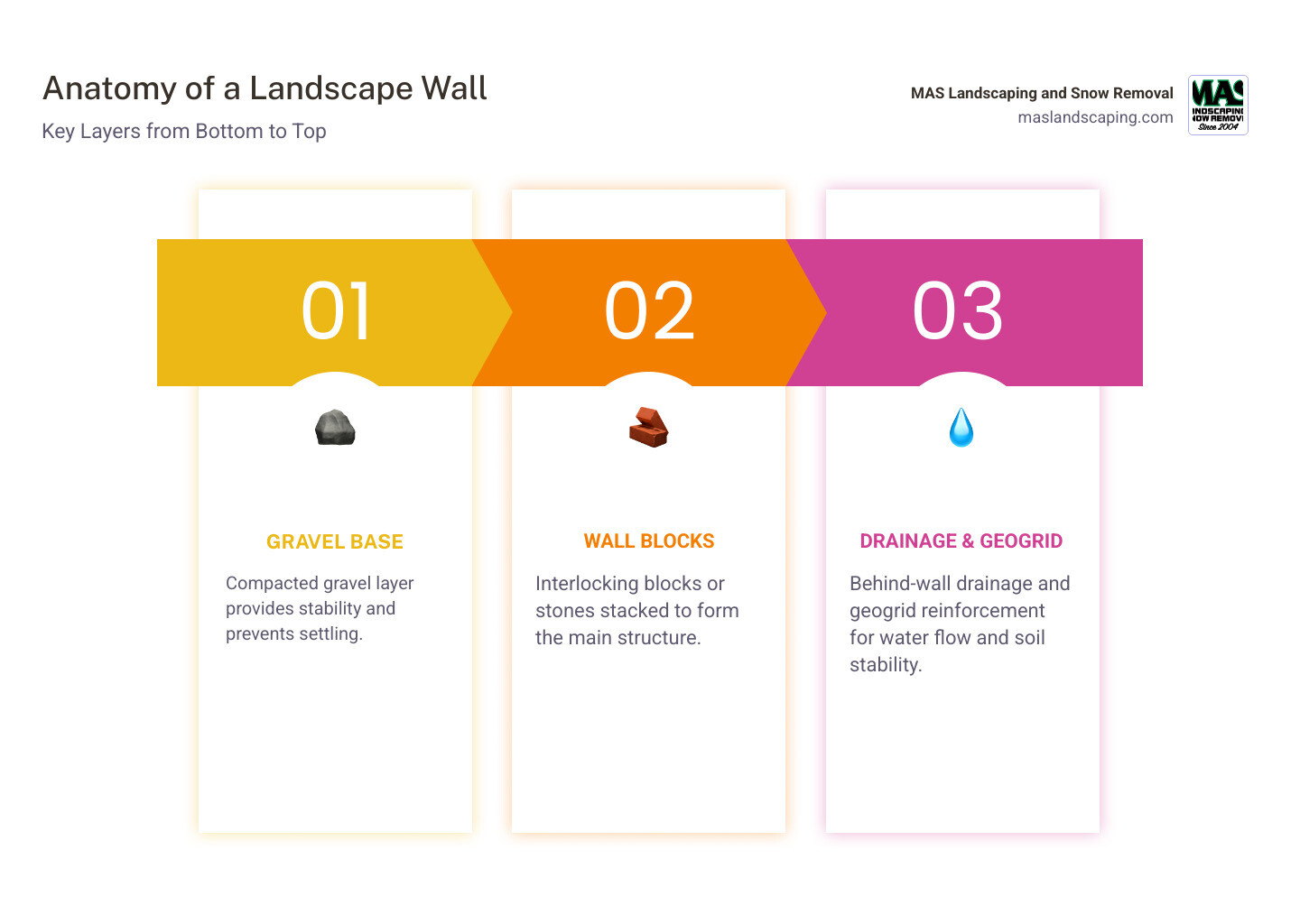
A wall is only as good as what you can’t see. At MAS Landscaping, we know that the “guts” of the wall are what keep it standing for decades. Proper retaining wall installation follows a very specific sequence.
- Base Preparation: We start by digging a trench and filling it with a compacted gravel base. Without a solid foundation, the wall will eventually sag or lean.
- Compaction: Every layer of stone and backfill must be compacted. We don’t just toss dirt behind the wall; we use vibrating plate compactors to ensure the soil is dense and stable.
- Pinning and Interlocking: Systems like VERSA-LOK use a unique hole-to-slot pinning system. This provides an automatic setback, ensuring the wall leans slightly into the hill for better strength.
- Drainage: This is the #1 reason walls fail. Water trapped behind a wall creates “hydrostatic pressure.” We install perforated pipes and clean gravel backfill to give that water an easy way out through “weep holes.”
Building block by block constructing a retaining wall that lasts requires patience and precision. It’s not just about stacking blocks; it’s about managing the forces of nature.
Safety for Tall Landscape Walls
When a wall gets tall — usually over 3 or 4 feet — it needs extra help. This is where geogrid reinforcement comes in. Geogrid is a high-strength synthetic mesh that we layer into the soil behind the wall. It “ties” the wall into the earth, creating a massive, stable block of reinforced soil.
For very tall projects, we might use a precast concrete retaining wall guide to determine if engineered panels or large-scale blocks are necessary. Some systems, like VERSA-LOK, can even be built 50 feet tall or higher when properly stabilized with geogrid!
Design Ideas and Applications
Landscape walls are the building blocks of a great outdoor living room. Here are a few ways we use them to transform local yards:
- Tiered Gardens: Instead of one giant, imposing wall, we can build two or three smaller “terraces.” This creates beautiful planting pockets and is often much more visually appealing.
- Outdoor Kitchens: We use modular wall units to build the “chassis” for grills, pizza ovens, and outdoor refrigerators.
- Fire Pits and Seat Walls: A low wall (about 18 inches high) is the perfect height for extra seating around a fire pit.
- Stairs and Entryways: Walls can “wrap” around a set of stairs, creating a grand entrance to your front door or a smooth transition to a lower patio.
For more inspiration, check out our outdoor retaining wall ideas and landscaping ideas for retaining walls galleries.
Cost and Maintenance Guide
Investing in landscape walls is an investment in your property’s future. While the upfront cost can be significant, the longevity of these structures often spans decades.
Several factors influence the final price:
- Material Choice: Natural stone generally costs more than manufactured concrete blocks.
- Site Accessibility: Can we get a Bobcat into your backyard, or do we have to move every block by hand?
- Wall Height: Taller walls require more excavation, more backfill, and engineering like geogrid.
- Labor: Hardscaping is heavy, skilled work that requires a professional touch to ensure safety.
Pricing and Longevity Factors
When planning your budget, it is helpful to look at industry averages. Please note that these are average costs based on internet data and not actual costs for MAS Landscaping. Every project is unique based on the soil conditions and slope of your specific yard in Saugus or Reading.
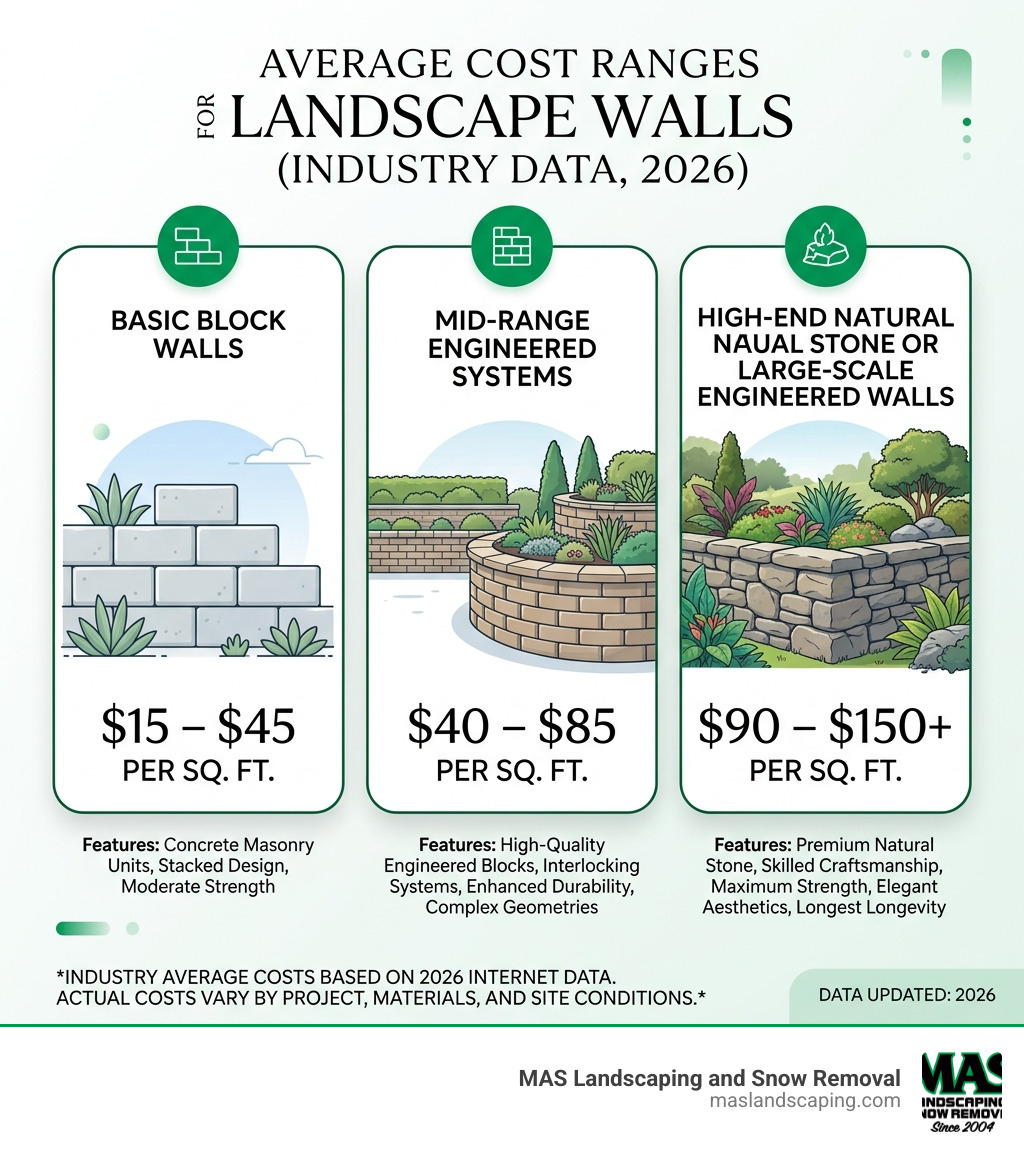
Generally, you can expect a wide range of pricing depending on the complexity:
- Basic Block Walls: $15 – $45 per square foot.
- Mid-Range Engineered Systems: $40 – $85 per square foot.
- High-End Natural Stone or Large-Scale Engineered Walls: $90 – $150+ per square foot.
To get a better idea of the math, check out the ultimate guide to retaining wall costs from square foot to finished project and our breakdown of poured concrete walls cost.
Maintenance Tip: Once your wall is built, keep an eye out for efflorescence — that white, powdery salt that sometimes appears on concrete. It’s harmless and can be cleaned with a specialized solution. Also, ensure your drainage outlets stay clear of debris so water doesn’t back up.
Frequently Asked Questions about Landscape Walls
How high can I build a landscape wall without engineering?
In most Massachusetts towns, including Saugus and Peabody, you can typically build a wall up to 3 or 4 feet high without needing a structural engineer’s stamp. However, always check local building codes, as some areas have stricter requirements for walls near property lines or “surcharge loads” (like a driveway sitting right above the wall).
What is the best material for a durable landscape wall?
For the best balance of durability and cost in the New England climate, segmental concrete blocks (like those from Belgard or Techo-Bloc) are hard to beat. They are designed to withstand the freeze-thaw cycle and don’t require mortar, which can crack over time.
Do landscape walls require a permit in Massachusetts?
Yes, in many cases. If the wall is over a certain height (usually 4 feet) or if it’s structural, you will likely need a permit from your local building department. As local experts, we can help navigate the requirements for retaining wall design & construction in Beverly, MA and other nearby towns.
Conclusion
At MAS Landscaping and Snow Removal, we’ve spent years mastering the art and science of landscape walls. Based in Saugus, MA, we understand the specific challenges of our local geology — from the rocky soil of Essex County to the clay-heavy ground in Middlesex County.
Whether you need a massive structural retaining wall to save a sliding hillside or a decorative seat wall for your new patio in Everett or Lynnfield, our team is committed to professionalism and personalized service. We don’t just stack blocks; we build foundations for your outdoor life.
Ready to transform your yard with a wall that’s as beautiful as it is functional?
