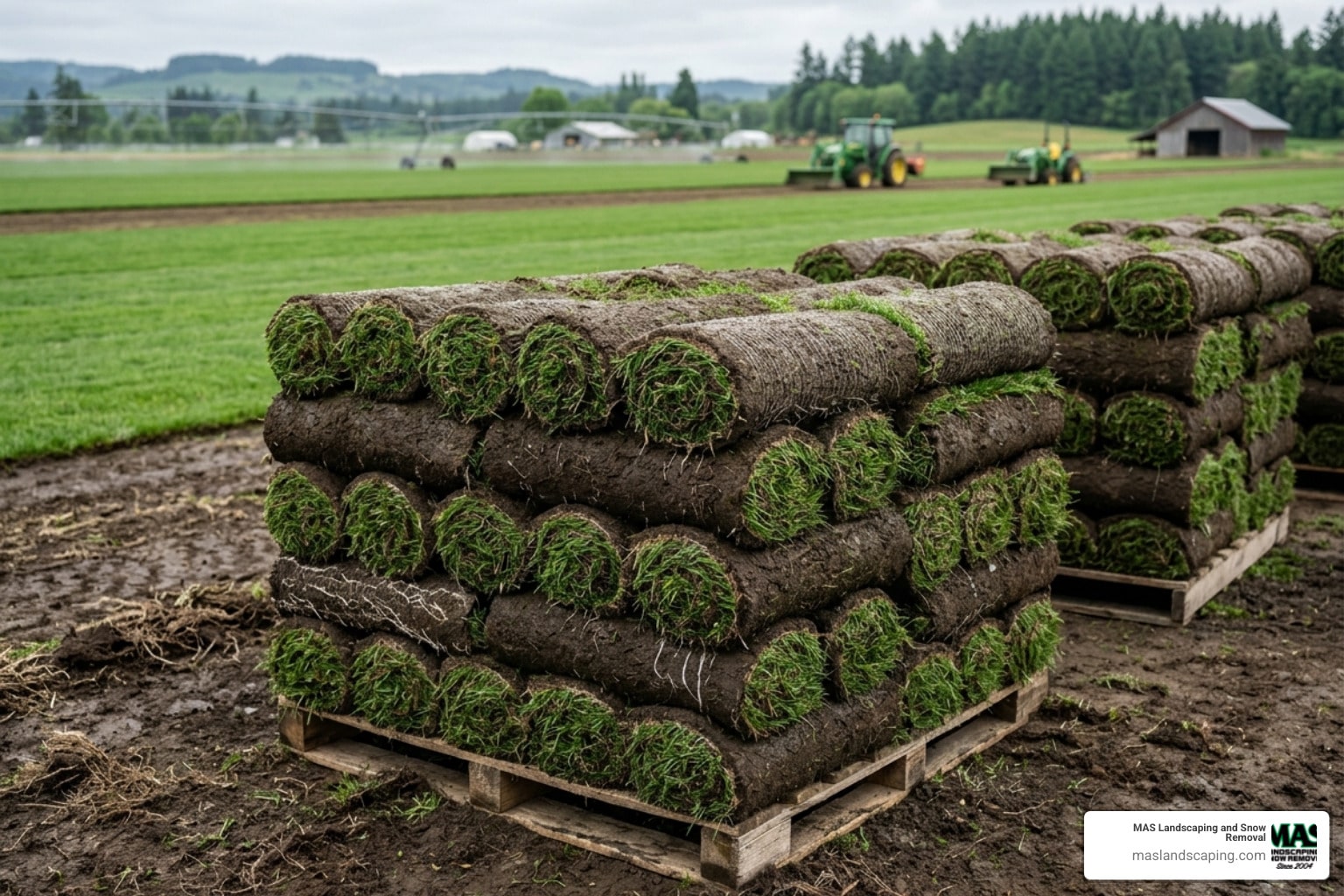



1. How Do You Plan and Prepare Your Site for Sod Installation?
A successful sod installation begins long before the first roll is laid. Proper planning and site preparation are paramount, ensuring your new lawn has the best chance to thrive. This involves accurately measuring your space, selecting the ideal grass type for our Massachusetts climate, meticulously preparing the soil, and choosing high-quality sod.
Accurately Measuring Your Lawn and Calculating Sod Needs
Before ordering, we need to know precisely how much sod you’ll require. Start by breaking down your lawn area into simple geometric shapes like rectangles, squares, and circles. Measure the length and width of each section, then calculate the square footage. For circles, measure the radius, then use the formula π * radius². Sum these areas to get your total square footage.
It’s crucial to factor in a waste percentage for cuts around curves, irregular edges, and potential mistakes. We recommend ordering 5–10% more sod than your calculated area. A standard pallet of sod typically covers 450–500 square feet, so divide your total square footage by this number to determine how many pallets you’ll need, then round up. More info about sod installation
Choosing the Best Grass Type for Your Region and Conditions
Selecting the right grass type is critical for a long-lasting, healthy lawn, especially in our New England climate. For Massachusetts, cool-season grasses are generally the best choice as they are adapted to our fluctuating temperatures.
Here’s a general guide to help you choose:
| Grass Type (Cool-Season) | Sun Exposure | Foot Traffic | Regional Suitability (MA) | Notes |
|---|---|---|---|---|
| Kentucky Bluegrass | Full Sun | High | Excellent | Dense, lush, good recovery, needs more water/fertilizer. |
| Tall Fescue | Sun to Partial Shade | Moderate to High | Excellent | Drought-tolerant, deeper roots, coarser texture. |
| Fine Fescues | Partial to Full Shade | Low to Moderate | Good (for shady areas) | Shade-tolerant, fine texture, low maintenance. |
| Perennial Ryegrass | Full Sun | High | Good (often in mixes) | Quick to establish, good for erosion control, often mixed with KBG. |
When making your selection, consider:
- Sunlight: How many hours of direct sun does your lawn receive daily? Some grasses tolerate shade better than others.
- Foot Traffic: Will your lawn be a high-traffic area for kids and pets, or more for aesthetic appeal?
- Maintenance: Are you looking for a low-maintenance option or prepared for more frequent care like fertilization and watering?
Preparing the Soil for Optimal Sod Rooting
This is arguably the most critical step. Poor soil preparation is a leading cause of new sod failure. For more information on the science of turf establishment, the Purdue University Extension provides an excellent resource on Establishing a Lawn From Sod.
- Soil Testing: We highly recommend conducting a soil test several weeks before installation. This will tell you your soil’s pH and nutrient levels, guiding us on necessary amendments. Most turfgrasses prefer a pH between 6.0 and 7.0.
- Removing Existing Turf and Weeds: All existing vegetation, including old grass and weeds, must be removed. Laying sod over existing grass will prevent proper rooting and lead to decomposition and disease. Options include:
- Herbicide: A non-selective herbicide can effectively kill off existing vegetation. Follow product instructions carefully.
- Sod Cutter: Renting a sod cutter is an efficient way to remove large areas of existing turf.
- Manual Removal: For smaller areas, a shovel or grub hoe can be used.
- Rough Grading for Drainage: Ensure your lawn has a slight slope (1-2%) away from your home’s foundation and other structures. This prevents water pooling, which can damage your home and drown your new sod.
- Amending the Soil: Based on your soil test results, incorporate amendments like compost or other organic matter. This improves soil structure, drainage, and nutrient retention. For heavy clay soils common in some parts of our service areas like Everett or Malden, adding organic matter is particularly beneficial. If recommended, apply a starter fertilizer high in phosphorus at this stage to encourage strong root development. Preparing Lawn For New Sod
- Tilling the Soil: Loosen the top 4-6 inches of soil with a rototiller. This provides a soft bed for the sod roots to penetrate easily.
- Final Grading and Leveling: Rake the tilled soil smooth, removing any rocks, debris, or large clumps. Ensure the finished grade is about 1 inch below sidewalks, driveways, and other hardscapes.
- Allow Soil to Settle: If time permits, allow the prepared soil to settle for a few days, especially after significant tilling or adding amendments. Lightly watering the area can help with settling.
Selecting and Ordering High-Quality Sod
The quality of your sod directly impacts the success of your new lawn.
- Reputable Suppliers: We always recommend sourcing sod from local sod farms rather than big box stores. Local farms often provide fresher sod better suited to our regional conditions.
- Checking for Freshness: Upon delivery, inspect the sod. It should be uniformly green, moist, and have an earthy smell – never sour or sulfuric. The roots should be visible and intact, not dry or brittle.
- Timely Delivery and Installation: Sod is perishable. It must be installed within 24 hours of delivery, or even within 12 hours in hot weather, to prevent it from drying out and deteriorating. Coordinate delivery for the day you plan to install.
- Storing Sod: If there’s a slight delay, store sod rolls in a shaded area and mist them lightly to keep them moist.
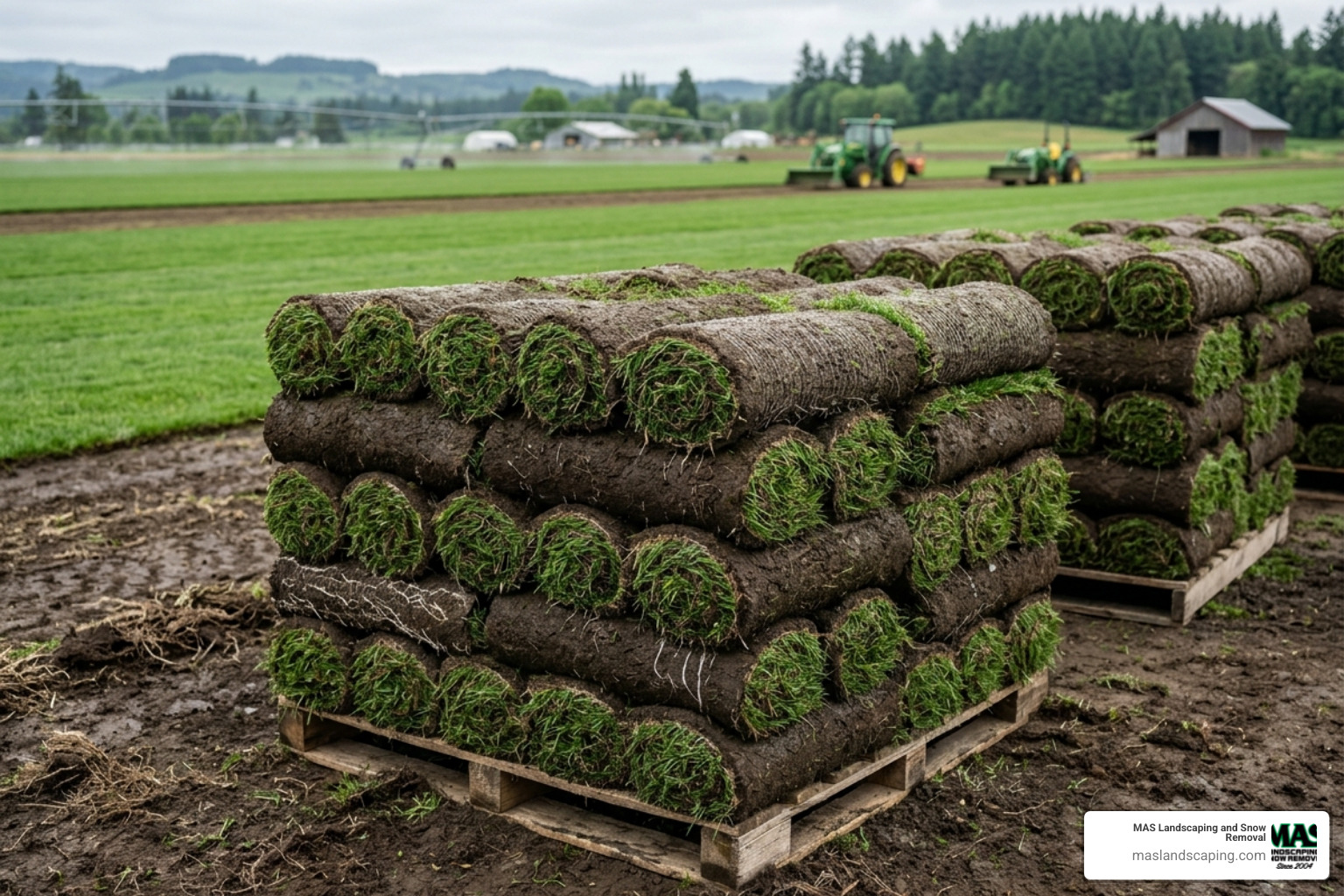
2. What Essential Tools and Materials Do You Need for Sod Installation?
Having the right tools and materials on hand will make your sod installation process much smoother and more efficient. While some items you might already own, others may need to be rented or purchased. Safety is paramount; always consult OSHA guidelines when operating heavy machinery like powered sod cutters.
Essential Tools for DIY Sod Installation
Here’s a checklist of tools you’ll need:
- Sod Cutter: Essential for removing existing turf. You can rent a manual or powered version.
- Rototiller: To loosen and amend the soil.
- Wheelbarrow: For moving soil amendments, rocks, or debris.
- Rakes: Both a bow rake (for heavy grading) and a leaf rake (for final smoothing).
- Shovel: For digging, spreading, and general soil work.
- Utility Knife or Sod Cutting Tool: A sharp, heavy-duty utility knife or a specialized sod cutter is crucial for trimming sod rolls.
- Garden Hose with Sprinkler Attachment: For watering the prepared soil and the new sod.
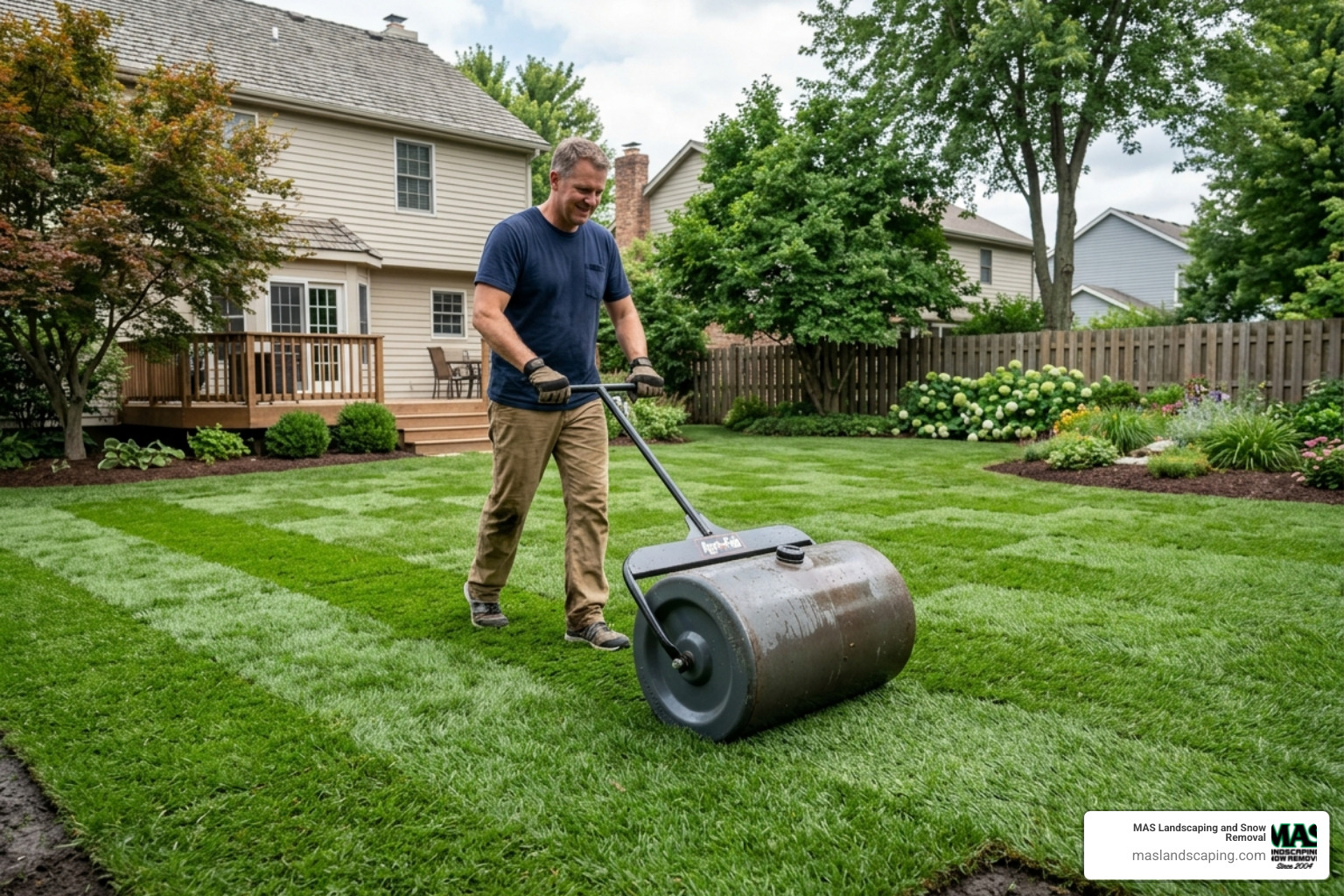
- Lawn Roller (Water-Filled): To ensure good contact between the new sod and the soil beneath. This can usually be rented.
- Hand Tamper: Useful for compacting small areas or ensuring firm contact.
- Work Gloves: To protect your hands during this labor-intensive process.
- Safety Glasses: Recommended, especially when using power tools.

Key Materials for a Successful Sod Project
Beyond the sod itself, here are the materials you’ll want to have ready:
- High-Quality Sod Rolls or Pallets: Ordered based on your measurements and chosen grass type.
- Starter Fertilizer: A high-phosphorus blend to promote root growth.
- Topsoil or Compost: For amending your existing soil as needed.
- Soil Amendments: Such as lime or sulfur, if your soil test indicates a need to adjust pH.
- Sod Staples: Particularly useful if you’re installing sod on a slope to prevent slippage.
- Measuring Tape: For accurate measurements during layout.
- Marking Paint or String: To help define edges and guide your installation. More info about how to install sod
3. How Do You Lay Sod Step-by-Step for a Flawless Finish?
With your site prepared and materials ready, it’s time for the exciting part: laying the sod! This step requires precision and attention to detail to ensure a seamless, healthy lawn. For a detailed visual guide on the physical layout process, This Old House offers excellent step-by-step imagery.
The Step-by-Step Process for Laying Sod
- Start with a Straight Edge: Begin laying your first row of sod along the longest straight edge of your lawn. This could be a driveway, patio, or the foundation of your house. This provides a clean, straight line to guide subsequent rows.
- Lay in a Brick Pattern: As you lay additional rows, stagger the seams like bricks in a wall. This technique prevents long, continuous seams that can dry out, separate, or create channels for water runoff.
- Butt Joints Tightly: Press each piece of sod firmly against the previous one, ensuring the edges meet snugly without overlapping. Avoid leaving any gaps, as these areas are prone to drying out and will be noticeable in your finished lawn.
- Cut to Fit: Use a sharp utility knife or a specialized sod cutting tool to trim sod around curves, obstacles like trees or sprinkler heads, and to fit the edges of your lawn. Always cut from the soil side of the sod for cleaner, more precise edges.
- Address Slopes: If you are laying sod on a slope, place the sod strips perpendicular to the direction of the slope. This helps prevent the sod from sliding downhill. For steeper inclines, use sod staples to secure the pieces in place until they root.
- Fill Gaps and Seams: After laying several rows, lightly fill any minor gaps or visible seams with fine topsoil or sand. This helps the sod pieces knit together and prevents the edges from drying out.
- Roll the Sod: Immediately after laying, use a water-filled lawn roller over the entire newly sodded area. Roll in two perpendicular directions to ensure excellent contact between the sod and the prepared soil beneath. This eliminates air pockets and promotes faster rooting.
- Water Immediately: Begin watering the newly laid sod as you go, especially on warm days. Do not wait until all the sod is laid to start watering. This critical step prevents the sod from drying out and going into shock.
Ensuring Proper Soil Contact and Seam Management
The goal during laying is to create a uniform, smooth surface where every piece of sod makes firm contact with the prepared soil. The rolling step is non-negotiable; it pushes out air pockets that can cause dry spots and ensures the roots can immediately begin to grow into the underlying soil. Proper seam management, by butting pieces tightly and staggering them, is key to preventing visible lines and ensuring an even, healthy lawn.
4. What is the Critical Aftercare for Your New Sod Lawn?
The first few weeks after installation are crucial for your new sod’s survival and long-term health. Proper watering, careful mowing, and restricted foot traffic will ensure strong root establishment. You can find more detailed maintenance schedules in these Sod Installation Instructions.
The Essential Watering Schedule for New Sod
Watering is the most critical aspect of new sod aftercare. The goal is to keep the sod and the top few inches of soil consistently moist, encouraging roots to grow down into the prepared soil.
- First 1-2 Weeks (Establishment Phase): Water frequently and lightly, typically 2-4 times a day, to keep the top 1-2 inches of soil consistently moist. Avoid overwatering to the point of puddling, which can lead to fungal issues. The sod should never be allowed to dry out during this period.
- Weeks 2-4 (Root Development Phase): Gradually reduce the frequency of watering but increase the duration. Aim for deep watering, 1-2 times a day, to encourage roots to grow deeper into the soil (moist to 4-6 inches). This promotes a more drought-tolerant lawn.
- Beyond 4 Weeks (Long-Term Establishment): Transition to deep, infrequent watering. Most established lawns in our region need about 1 inch of water per week, either from rainfall or irrigation. Water deeply once or twice a week rather than lightly every day.
- Monitoring Moisture: To accurately check moisture levels, use a screwdriver or a soil probe. Push it into the soil; if it goes in easily to a depth of 3-4 inches, your sod is adequately moist. If it’s difficult to push in, it’s time to water.
When Can You Mow, Fertilize, and Allow Foot Traffic?
Patience is key during these early weeks.
- Mowing: Wait 2-4 weeks after installation, or until the grass is 3-4 inches tall and firmly rooted. You can perform a “tug test” by gently lifting a corner of a sod piece; if it resists, the roots are establishing. When you do mow, set your mower to its highest setting and never remove more than one-third of the grass blade height. Ensure your mower blades are sharp to avoid tearing the new grass.
- Fertilizing: We applied a starter fertilizer high in phosphorus before laying the sod to stimulate root growth. For established sod, wait 4-6 weeks after installation before applying a balanced lawn fertilizer. Always follow soil test recommendations for ongoing fertilization.
- Foot Traffic: Minimize all foot traffic for the first 1-2 weeks to allow the sod to knit with the soil. After 2-3 weeks, light traffic is usually acceptable once roots have begun to establish. Avoid heavy use, such as sports or parties, for 4-6 weeks to ensure the roots are fully anchored.
Long-Term Maintenance for a Healthy Lawn
Once your sod is established, a consistent maintenance routine will keep it looking its best:
- Regular Fertilization: Based on your grass type and ongoing soil tests, establish a regular fertilization schedule.
- Proper Mowing: Continue to mow at the appropriate height for your grass type, generally 2.5-3.5 inches for most cool-season grasses, and never remove more than one-third of the blade.
- Integrated Pest Management (IPM): Monitor for pests and diseases, addressing issues proactively and using environmentally responsible methods.
- Weed Control: Manually remove weeds as they appear. If using herbicides, ensure your lawn is fully established (typically after the third mowing) and use selective products.
- Aeration and Dethatching: Consider these practices as needed to improve air, water, and nutrient penetration, especially for compacted soils. More info about landscape maintenance
5. What Are the Costs of Sod Installation (DIY vs. Professional)?
When considering a new sod lawn, understanding the potential costs is essential. The price can vary significantly depending on whether you choose a DIY approach or opt for professional installation, as well as factors like the size of your lawn and the type of sod. According to Constructly Tools, budgeting for equipment is just as important as the sod itself.
Understanding DIY Sod Installation Costs
Choosing to install sod yourself can lead to considerable savings, primarily by eliminating labor costs. Please note that these are average market costs based on internet data and not actual costs for MAS Landscaping.
- Materials Only: Based on average internet data for April 2026, the cost for sod materials typically averages around $0.45 per square foot, but can range from $0.30 to $1.80 per square foot depending on the grass variety and quality. This includes the sod itself, starter fertilizer, and any necessary soil amendments like compost.
- Example: For a standard 2,000 square foot lawn, the total DIY material cost could range from $600 to $3,600.
- Additional DIY Costs: Don’t forget to factor in equipment rentals. A sod cutter, rototiller, and water-filled lawn roller can add an extra $100-$300 per day to your project budget.
Professional Sod Installation Pricing
Hiring professionals like us at MAS Landscaping provides expertise, efficiency, and peace of mind. These figures represent national averages and do not constitute a specific quote.
- Full Service: Professional sod installation, which typically includes labor, materials, and comprehensive site preparation, averages around $1.50 per square foot, with project costs generally ranging between $0.75 and $6.00 per square foot. For more complex projects, premium sod varieties, or extensive site preparation and grading, costs can reach the higher end of this spectrum.
- Example: For a 2,000 square foot lawn, professional installation could range from $1,500 to $12,000 depending on the specific requirements of the site.
- Factors Affecting Cost: Several elements influence the final price, including:
- Grass Type: Some sod varieties are more expensive than others.
- Lawn Size: Larger areas often benefit from economies of scale, but overall costs increase.
- Site Accessibility: Difficult-to-reach areas may incur higher labor costs.
- Existing Lawn Removal: The method and effort required to remove old turf.
- Soil Amendments and Grading: Extensive soil work or significant regrading will add to the cost.
When to Consider Professional Sod Installation
While DIY can offer significant savings, professional installation often ensures a higher quality outcome and saves you from the demanding physical labor. For homeowners in the Saugus, MA area and surrounding communities like Everett, Lynnfield, Malden, and Medford, MAS Landscaping offers comprehensive sod installation services. We handle everything from precise soil testing and expert grading to the efficient laying of high-quality sod and initial watering. Our deep understanding of local soil conditions and climate ensures your new lawn thrives in the New England environment. More info about new lawn installation cost
6. How Can You Avoid Common Sod Installation Mistakes?
Even with the best intentions, mistakes can happen during sod installation, leading to disappointing results. Being aware of the most common pitfalls can help you avoid them and ensure your new lawn flourishes. For further troubleshooting tips, Lawn Love provides a great overview of common pitfalls.
Top Mistakes to Steer Clear Of
- Insufficient Soil Preparation: This is, without a doubt, the most frequent and impactful mistake. Laying sod over compacted, nutrient-poor, or uneven soil will severely hinder root growth, leading to poor establishment, an unhealthy lawn, and eventual failure. Always prioritize thorough soil testing, amending, and proper grading.
- Not Watering Immediately and Adequately: New sod is incredibly vulnerable. It needs immediate and consistent moisture to prevent shock and encourage rooting. On hot days, the fine feeder roots can dry out and die in as little as 30 minutes if not watered promptly. Inadequate watering during the initial weeks is a primary cause of new sod failure.
- Leaving Gaps or Overlapping Seams: Gaps between sod pieces allow the exposed edges to dry out quickly, creating unsightly brown lines and hindering uniform growth. Conversely, overlapping pieces can prevent the underlying sod from making proper soil contact, leading to dead spots. Always butt seams tightly and stagger rows like bricks.
- Walking on New Sod Too Soon: Excessive foot traffic before the sod has had a chance to root can displace the pieces, create uneven spots, and compact the soil, all of which impede healthy establishment.
- Applying the Wrong Fertilizer: Using a high-nitrogen fertilizer too early can “burn” new sod, causing damage. A starter fertilizer, rich in phosphorus, is specifically designed to promote root development and should be applied before laying the sod.
- Installing Over Existing Grass or Weeds: Sod requires direct contact with prepared soil to root successfully. Laying it over old grass or weeds creates a barrier, preventing root penetration and often leading to the decomposition of the underlying vegetation, which can generate heat and disease.
- Ignoring Sod Freshness: Always inspect your sod upon delivery. A sour, sulfuric smell or noticeable yellowing indicates that the sod has begun to decompose. Installing compromised sod significantly increases the risk of failure. Don’t hesitate to reject a delivery if the sod isn’t fresh and healthy.
Tips for Troubleshooting and Ensuring Success
To give your new lawn the best possible start, we recommend these proactive measures:
- Regularly Check Soil Moisture: Don’t just rely on surface appearance. Use a screwdriver or soil probe to check moisture levels 3-4 inches deep. This is the most reliable way to know if your sod is getting enough water.
- Perform the “Tug Test”: Before your first mow or allowing heavy foot traffic, gently try to lift a corner of a sod piece. If it resists and feels anchored, its roots are establishing well.
- Address Drainage Issues Promptly: If you notice water pooling, address the underlying grading issue quickly to prevent waterlogged spots that can suffocate new roots.
- Consult with Local Experts: For any concerns or questions specific to your lawn and our local Massachusetts climate, don’t hesitate to reach out to professionals like us at MAS Landscaping. Our local expertise can provide tailored advice and solutions.
Frequently Asked Questions about Sod Installation
How long does it take for sod to root and establish?
Sod typically shows initial rooting within 10-14 days if properly installed and watered. Full, deep root establishment, where the sod is firmly anchored and can withstand more traffic and less frequent watering, usually takes 4-6 weeks.
What is the best time of year to install sod in Massachusetts?
For the cool-season grasses commonly used in Massachusetts, early to mid-autumn (late August to October) is generally considered the ideal time. The cooler temperatures and increased rainfall during this period are perfect for root establishment without the stress of summer heat. Early spring (April to May) is also a good option, allowing roots to establish before the peak summer heat. We advise against installing sod in the peak of summer or when the ground is frozen.
Can I install sod myself, or should I hire a professional?
DIY sod installation is a feasible option and can save you money on labor costs. However, it is a physically demanding project that requires meticulous attention to detail, especially regarding soil preparation and immediate, consistent watering. For larger projects, areas with complex grading, or if you simply prefer a guaranteed professional finish, hiring a landscaping company like MAS Landscaping ensures expert execution and long-term success. Our team has the equipment, experience, and local knowledge to handle your sod installation efficiently and effectively.