


Preparing Lawn for New Sod: 7 Ultimate Steps
Why Proper Lawn Preparation Matters for Sod Success
Properly preparing your lawn for new sod is the most critical factor for success. High-quality sod laid on poorly prepared ground will struggle, leading to a patchy lawn that may ultimately fail.
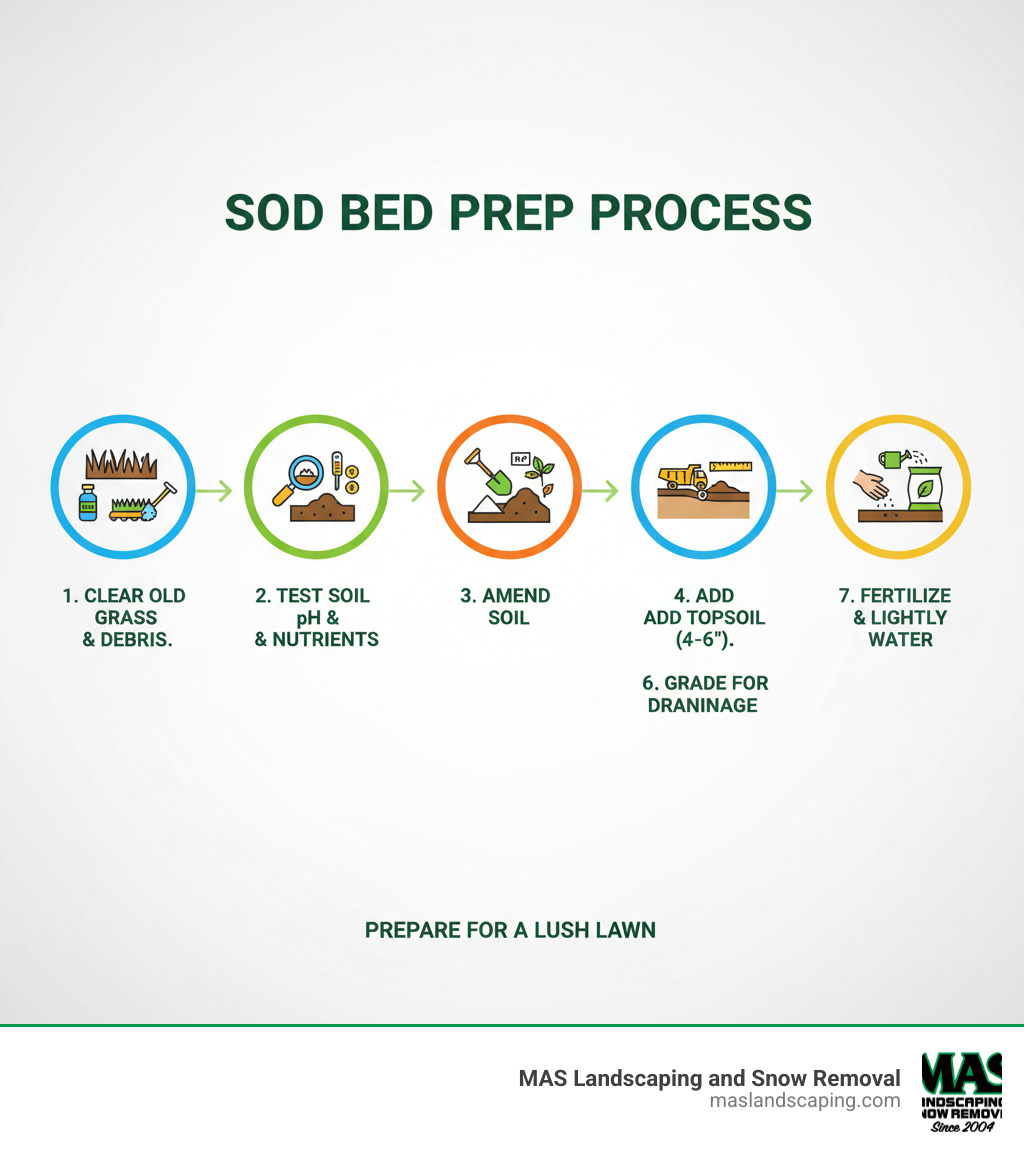
Quick Answer: The 7 Essential Steps for Preparing Lawn for New Sod
- Remove old grass and weeds – Kill or strip away all existing vegetation
- Clear debris – Remove rocks, roots, and any material larger than 2-3 inches
- Test and amend soil – Adjust pH to 6.0-7.0 and add necessary nutrients
- Add quality topsoil – Build up to 4-6 inches of topsoil depth
- Till the soil – Loosen compacted ground to 4-6 inches deep
- Grade for drainage – Slope away from structures and level the surface
- Apply starter fertilizer – Use high-phosphorus formula and lightly water
According to turfgrass experts, sod installed on properly prepared ground develops deeper roots, making it more resistant to weeds, disease, and drought. Without this prep work, new sod can suffer from shallow roots, uneven growth, and poor drainage.
While the preparation is labor-intensive, it’s a straightforward process most homeowners can tackle. The payoff is a lush, green lawn that instantly transforms your outdoor space.
The biggest mistake is skipping steps. Laying sod on old grass or hard soil creates long-term problems and may force you to start over.
Know your preparing lawn for new sod terms:
Step 1: Clearing the Canvas – Removing Old Grass and Debris
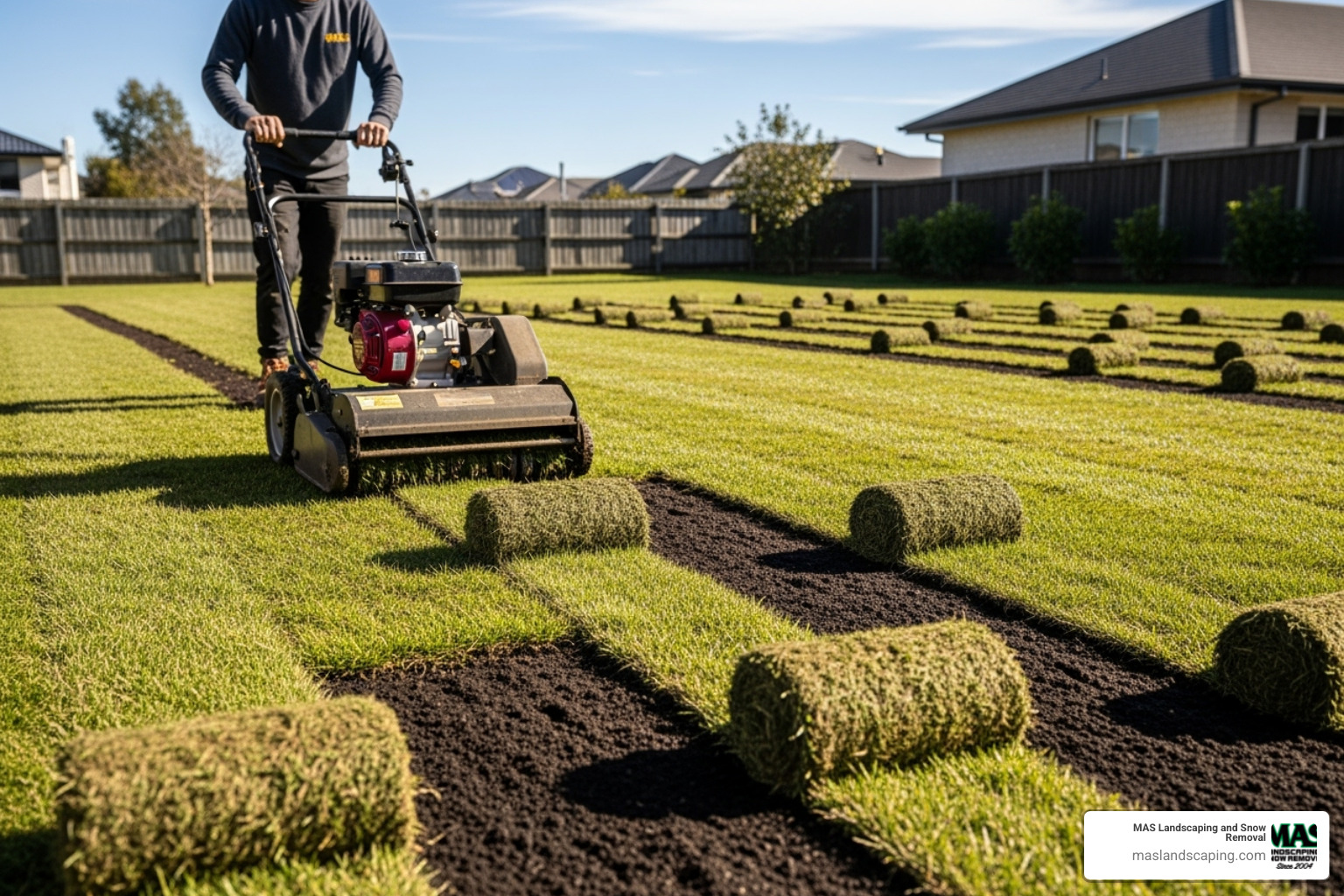
Just as you wouldn’t paint over dirty walls, you shouldn’t lay new sod over an old lawn. When preparing lawn for new sod, starting with a clean slate is non-negotiable.
Why a Clean Slate is Non-Negotiable
Laying sod over existing grass prevents the new roots from reaching the soil. This lack of direct sod-to-soil contact is essential for rooting and leads to shallow roots, brown patches, and an uneven, failed lawn. Old grass and weeds will also compete with your new turf for water and nutrients, and can even grow through the new sod.
Methods for Removal
You have several options for clearing away the old vegetation, depending on your lawn’s condition.
- Non-selective Herbicide: For severe weed issues, a non-selective herbicide can be effective. Apply it several weeks before sod installation, following all label instructions and safety precautions carefully. A second application may be needed for stubborn weeds.
- Organic Methods: For a chemical-free approach, smother the area with clear plastic sheeting for several weeks to let the sun cook the vegetation. Alternatively, a thick layer of compost can suppress growth while enriching the soil.
- Manual Removal: On smaller lawns, a sharp shovel can be used to physically remove the old turf. It’s hard work but effective.
- Sod Cutter: For larger areas, renting a sod cutter is the most efficient option. This machine slices under the turf, allowing you to roll it up for easy removal. We can also handle this step as part of our service.
Clearing Rocks, Roots, and Other Debris
After removing the old turf, walk the area and clear away any debris larger than 2-3 inches, such as rocks, sticks, and old roots. These items create air pockets that dry out sod and cause an uneven surface. A landscape rake is the best tool for this final cleanup.
If your yard needs more extensive clearing or cleanup, we offer comprehensive yard clean-up services to get your property ready for change.
Step 2: Building a Healthy Foundation with Soil Testing and Amendments
With the area cleared, the next step in preparing lawn for new sod is focusing on the soil. A healthy soil foundation is crucial for a successful lawn.
The Importance of Soil Testing
Skipping a soil test is a gamble. This simple test provides a detailed report on your soil’s health, taking the guesswork out of amendments.
What a Soil Test Reveals
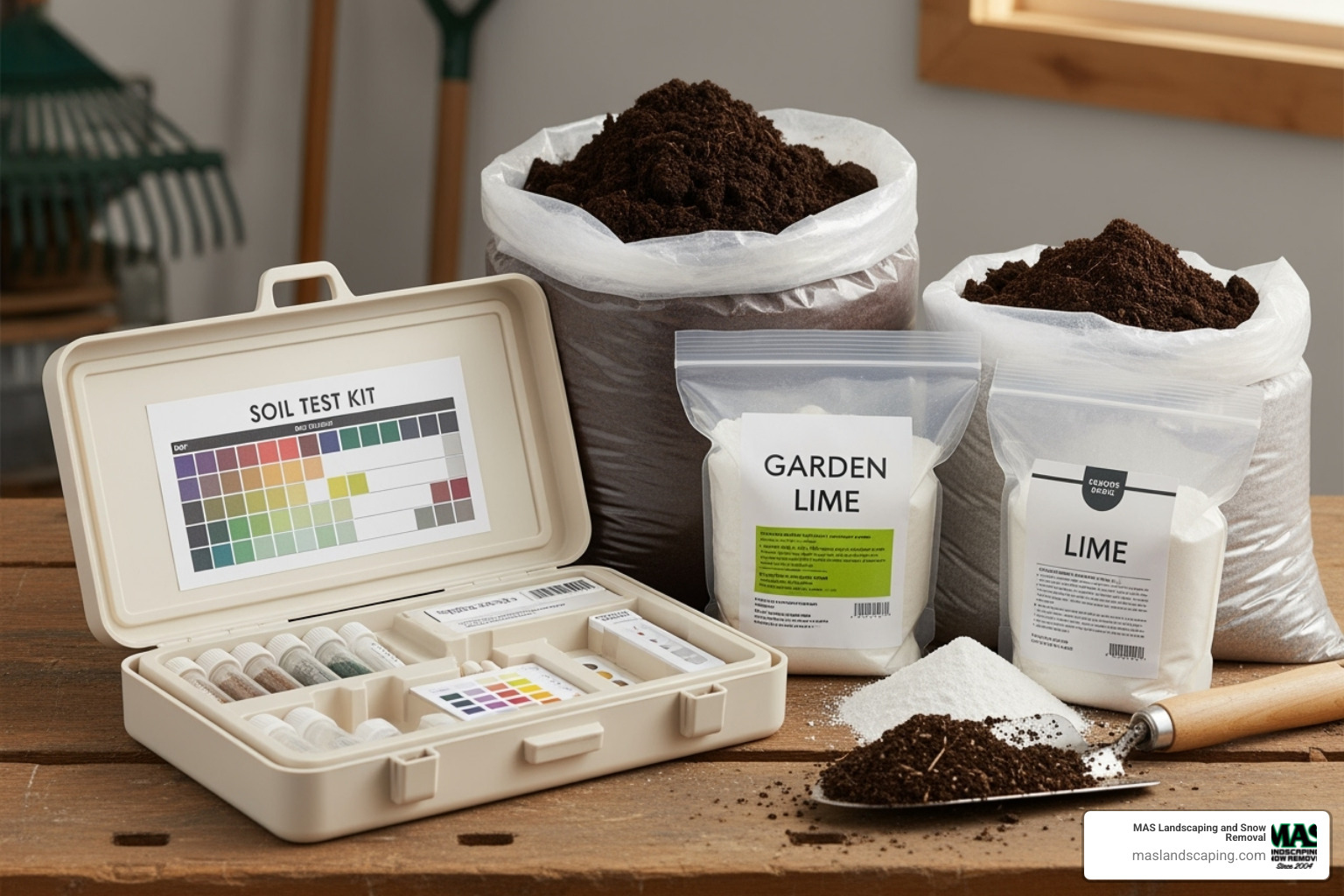
A soil test reveals two key things: soil pH and nutrient levels. For turfgrass, the ideal pH is between 6.0 and 7.0. If the pH is off, grass can’t access available nutrients. The test also identifies deficiencies in key nutrients like nitrogen, phosphorus, and potassium. Phosphorus is especially vital for new sod as it promotes strong root development.
How to Amend Your Soil
Based on the test results, amend the soil. Add agricultural lime to raise the pH of acidic soil or sulfur to lower the pH of alkaline soil. We also recommend adding quality compost to nearly every lawn. It improves soil structure, water retention, and provides a slow release of nutrients. A layer of 1 to 3 cubic yards per 1,000 square feet is a good target for poor soils.
Building Up Your Topsoil Layer
Your lawn needs a base of 4-6 inches of quality topsoil for deep root growth. If your existing layer is thin or poor, we’ll add fresh, screened topsoil, often mixed with organic matter, to reach this depth.
For professional help creating the perfect soil environment, check out our Learn about our soil conditioning services.
A Guide to Preparing Lawn for New Sod
Tilling the Soil
Tilling is essential to break up compaction, even in good soil. Use a rototiller to loosen the soil to a depth of 4-6 inches. This improves aeration and water drainage while mixing in your amendments. After tilling, rake out any remaining debris.
Grading for Proper Drainage
Proper grading is crucial to prevent water damage. We ensure a gentle slope away from your house and other structures to guide water away. We also eliminate any low spots where water could pool, which can lead to root rot and disease. The final grade should be set about ¾ to 1 inch below hardscapes like sidewalks and patios to accommodate the thickness of the sod.
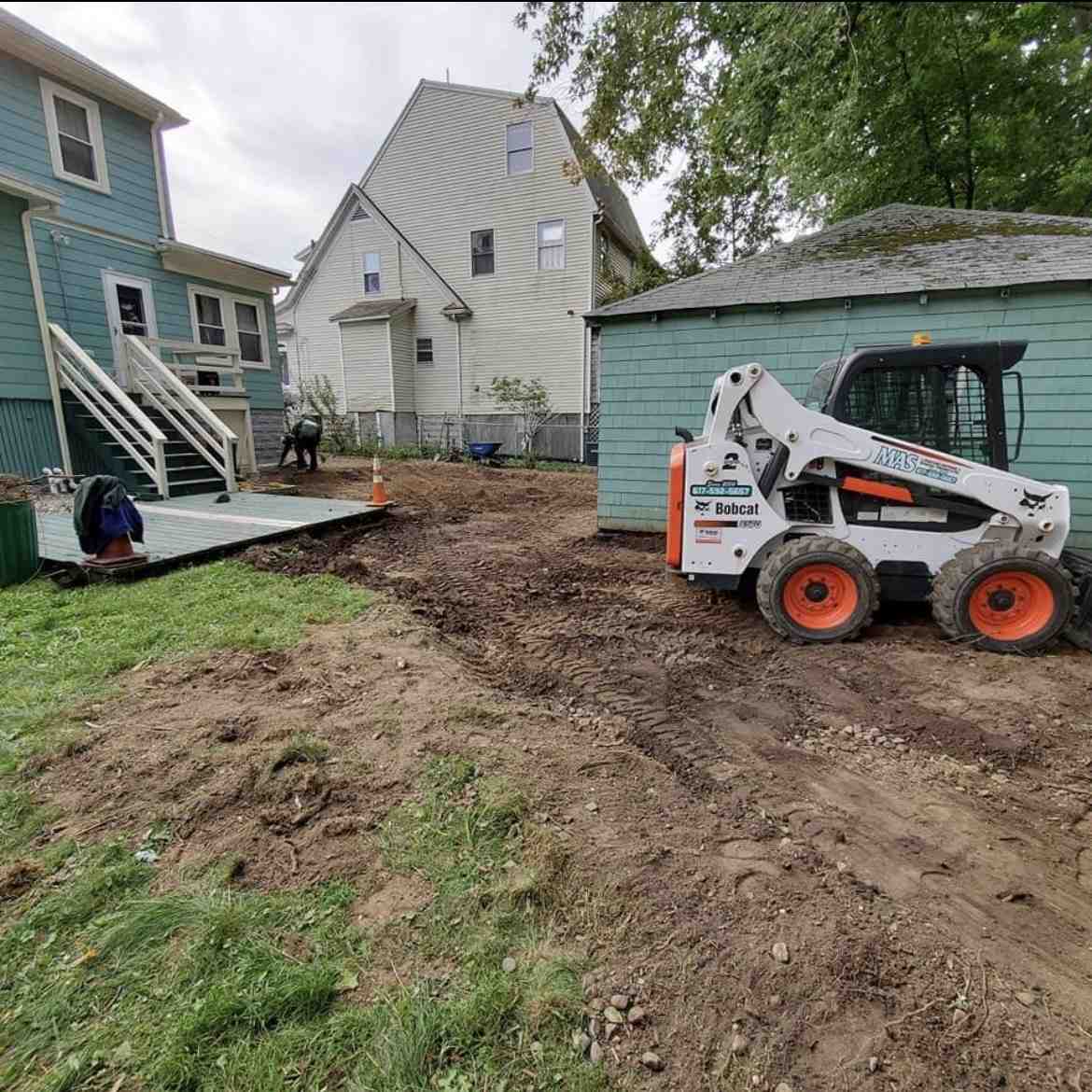
Getting the grade right requires both experience and the right equipment. Our team handles everything from rough shaping to fine-tuning. Explore our grading and bobcat services.
Step 3: Final Touches for a Perfect Sod Bed
These final steps in preparing lawn for new sod are crucial for giving your new turf the best possible start.
Applying a Starter Fertilizer
New sod experiences transplant shock, and a starter fertilizer provides a needed boost. Choose a high-phosphorus fertilizer (look for a high middle number in the N-P-K ratio) to promote root growth. Spread it evenly and rake it into the top 1-2 inches of soil to ensure it’s available to the new roots.
For more detailed information on selecting the right nutrients for your new lawn, visit our guide on Find the best fertilizer for new sod.
Creating a Smooth Surface
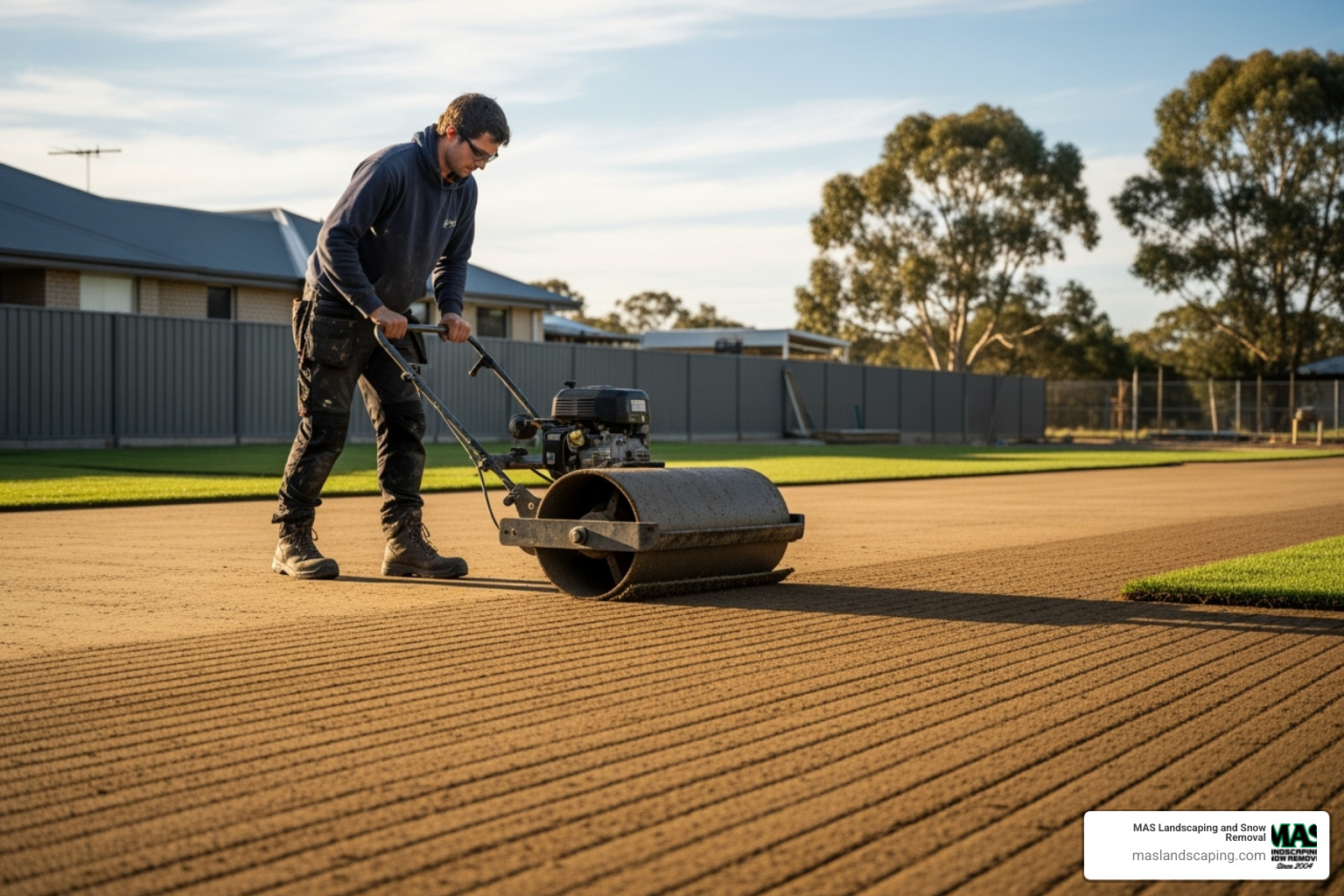
Sod will conform to the surface it’s laid on, so every bump and dip will show. Use a landscape rake for a final pass to create a perfectly smooth surface, ensuring the grade remains ¾ to 1 inch below adjacent hardscapes.
Lightly Compacting the Soil
After tilling, the soil needs to be lightly firmed to prevent settling later. Use a lawn roller, filled about halfway with water, and roll the entire area in a grid pattern. This also helps reveal any remaining low spots that need to be filled and smoothed.
Pre-Installation Watering
The day before installation, lightly water the prepared soil. Moistening the soil reduces transplant shock for the new sod. The goal is to make the soil evenly damp, not soggy, creating a welcoming environment for new roots.
Step 4: Choosing Your Turf and Understanding Post-Installation Care
After preparing lawn for new sod, the next steps are choosing the right turf and understanding post-installation care. What you do in the first few weeks is critical for long-term success.
How to Choose the Right Sod
In Massachusetts, cool-season grasses like Kentucky Bluegrass, Fescues, and Perennial Ryegrass are ideal. Your choice should depend on key factors:
- Sun Exposure: Some varieties need full sun, while others (like Fine Fescues) are more shade-tolerant.
- Foot Traffic: For active areas, durable grasses like Tall Fescue or self-repairing Kentucky Bluegrass are excellent choices.
When the sod arrives, ensure it’s green, moist, and has a visible root system.
Initial Care Timeline for New Sod
The first month is critical.
- Watering: Water is your top priority. Start by watering daily for the first week to keep the sod and underlying soil consistently moist. Gradually reduce frequency over the next three weeks to watering deeply once or twice a week. This encourages deep root growth. Always water in the morning.
- Mowing: Don’t mow for at least 10 days, or until the grass reaches 3 inches. Use a sharp blade and never cut more than one-third of the grass height.
- Foot Traffic: Keep off the new lawn for at least 3-4 weeks to allow the roots to establish without being disturbed.
For comprehensive guidance on maintaining your investment beyond these first critical weeks, our detailed resource on how to care for new sod covers everything from ongoing watering schedules to seasonal maintenance.
Essential Tools for Preparing Lawn for New Sod
Having the right equipment makes the job much easier.
- Clearing & Moving: Shovel, wheelbarrow, landscape rake.
- Soil Prep: Rototiller, lawn roller, soil test kit.
- Materials: Quality topsoil, compost, high-phosphorus starter fertilizer.
- Installation: Utility knife, garden hose with a sprinkler.
Frequently Asked Questions about Preparing Lawn for New Sod
Can I lay new sod directly over my old grass?
No. Laying sod over old grass or even hard-packed dirt is a recipe for failure. The new roots cannot make proper contact with the soil, leading to shallow rooting, an uneven surface, and a struggling lawn. Preparing lawn for new sod always requires removing the old lawn to create a clean slate for direct soil-to-sod contact.
How much does professional sod installation cost?
The cost of professional sod installation varies widely. Based on national averages we’ve seen online, the price can range from $1 to $7 or more per square foot. The final cost depends on factors like lawn size, the amount of site preparation required, the type of sod selected, and local labor rates. Please note this is a national average, not a direct quote from MAS Landscaping. For a personalized estimate that reflects your property’s unique needs, it’s best to get a custom quote. Get an estimate for your new lawn cost.
How long after preparing the soil can I lay the sod?
Ideally, you should lay sod within 24 hours of final soil preparation. Sod is a living, perishable product. The longer it sits on a pallet, the more it dries out and becomes stressed, which hinders its ability to root successfully. Your prepared soil bed should be fresh and moist, ready for immediate installation. Plan to have your sod delivered on the day you intend to lay it.
Conclusion
Properly preparing your lawn for new sod is a detailed process, but it’s the most important investment you can make in your new lawn’s future. By following the key steps—clearing the old lawn, testing and amending the soil, tilling, grading, and applying a starter fertilizer—you create the foundation for a healthy, resilient turf.
This preparation ensures your sod develops deep, healthy roots, making it more drought-tolerant and disease-resistant. The result is a lush, low-maintenance lawn that stays beautiful for years, not just for a few weeks.
If the process seems overwhelming, MAS Landscaping is here to help. We provide expert sod installation services for homeowners throughout the Saugus, MA area, including Everett, Lynnfield, Malden, Melrose, Medford, Revere, and Chelsea. Whether you need help with a single step or the entire project, our team brings local expertise and professional care to create the lawn of your dreams.
Let us help you make it a reality.
Contact us for professional sod installation