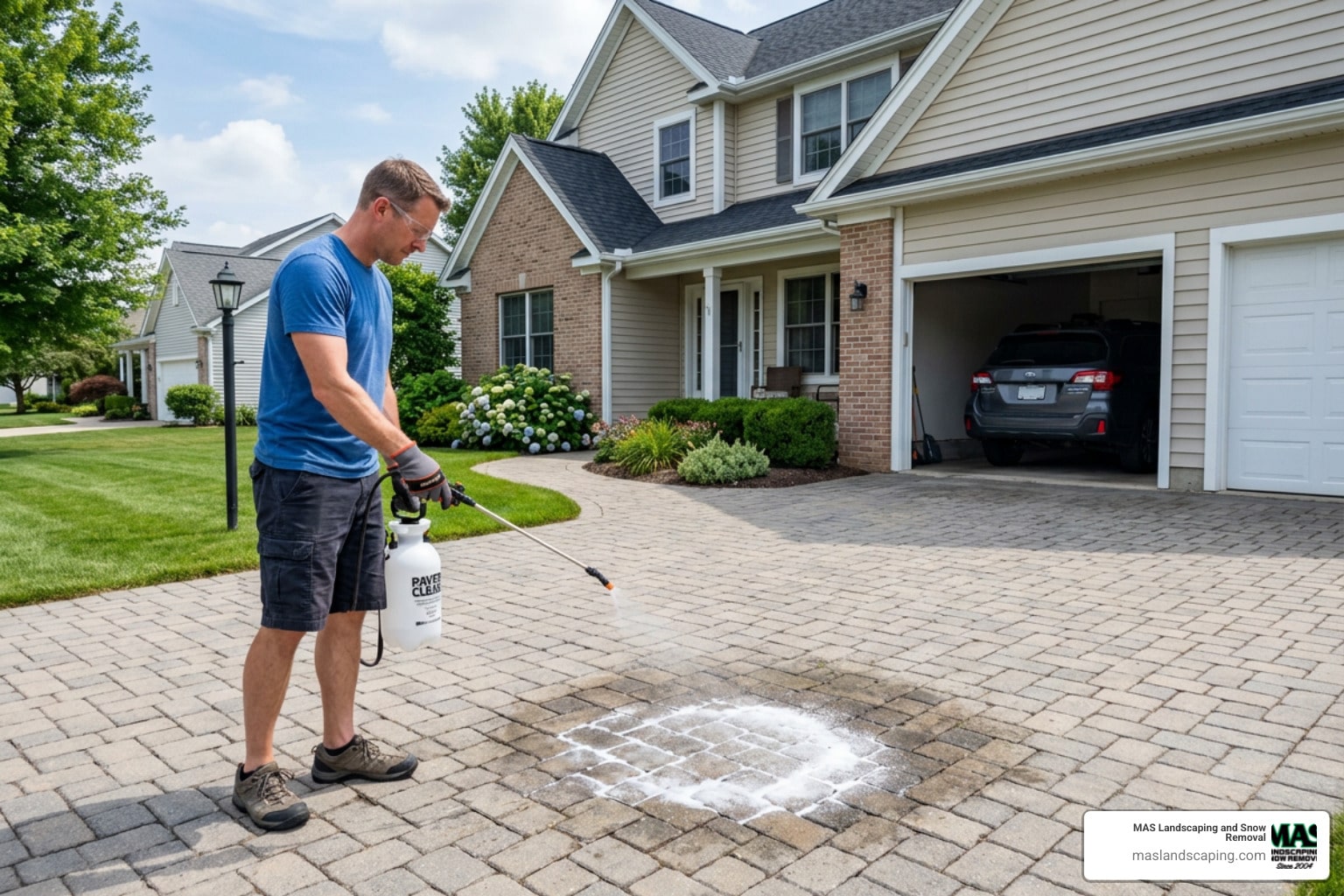


Why the Right Driveway Paver Cleaner Makes All the Difference
A driveway paver cleaner is a specialized cleaning product designed to remove stains, organic growth, and grime from paver surfaces without causing damage. Here’s a quick overview of what works best:
Best driveway paver cleaners by stain type:
| Stain Type | Best Cleaner Type | Example Products |
|---|---|---|
| Oil & grease | Concentrated degreaser | Zep, Quick-E-Paver |
| Moss, mold & algae | Oxidizing or bleach-based | Simple Green Oxy Solve, 30 SECONDS |
| Efflorescence (white film) | Mild acid or efflorescence remover | Eco Etch Pro, Akona |
| General dirt & grime | pH-neutral or alkaline cleaner | BEEST, Simple Green |
| Multiple stain types | Multi-purpose concentrate | Quick-E-Paver, Paver Magic |
Your driveway is one of the first things people notice about your home. Over time, pavers collect oil drips, mold, algae, and a chalky white residue called efflorescence — and that buildup can make even a well-designed driveway look years older than it actually is.
The good news? Cleaning pavers is very manageable when you use the right product for the job.
The challenge is that not all cleaners are created equal. Using the wrong one — like undiluted muriatic acid or high-strength bleach — can damage your pavers, wash out the joint sand, or harm surrounding plants. That’s why choosing the right driveway paver cleaner matters as much as doing the cleaning itself.
In this guide, we’ll walk you through everything you need to know: cleaner types, step-by-step application, stain-specific treatments, pressure washing tips, and when it makes sense to call in a professional.
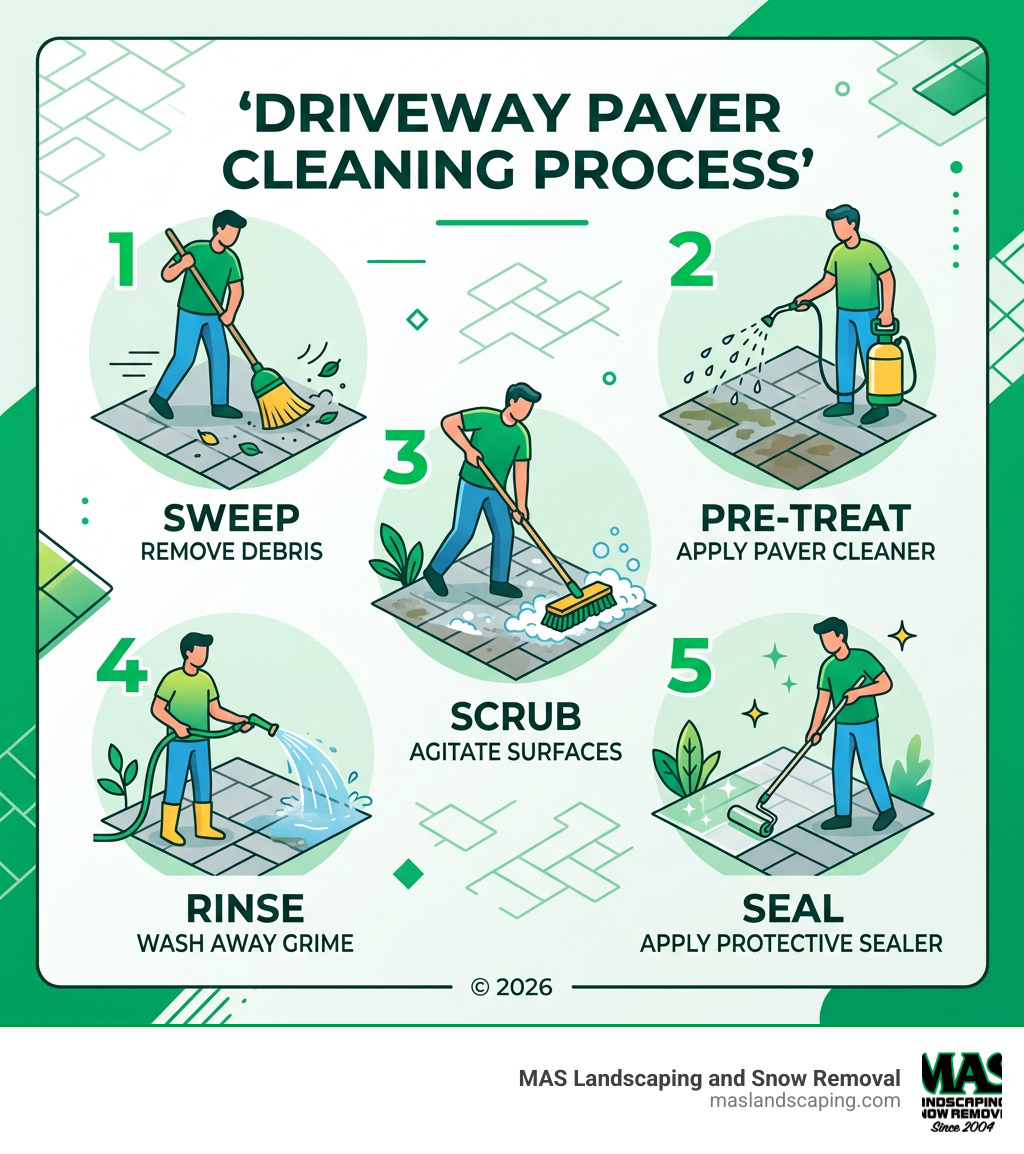
Simple guide to Driveway paver cleaner:
Effective Types of Driveway Paver Cleaner
When we head out to a job in Lynnfield or Malden, the first thing we look at is the type of stain we’re fighting. Not every driveway paver cleaner is built for every battle. Understanding the chemistry behind these solutions helps you avoid “etching” your stones or killing your prize-winning hydrangeas.
Alkaline Cleaners
These are your heavy-duty degreasers. Products like Zep Concentrated Driveway & Concrete Cleaner fall into this category. They are fantastic for lifting stubborn oil and grease stains that vehicles inevitably leave behind. Because they have a high pH, they break down the molecular bonds of oils, making them easy to rinse away.
Acidic Solutions
Acid-based cleaners are the “special forces” of the cleaning world. They are primarily used to treat efflorescence—that annoying white, salty film that sometimes creeps up on concrete pavers. However, we always tell our neighbors in Saugus to be careful: strong acids like muriatic acid can strip the finish off your pavers if used incorrectly. It’s usually better to use a mild, specialized efflorescence remover.
pH-Neutral and Biodegradable Cleaners
For general maintenance and light dirt, a pH-neutral cleaner is your safest bet. These are environmentally friendly and won’t harm your landscaping. Quick-E-Paver Cleaner, for instance, is a popular choice because it contains no acids, solvents, or caustics. It’s safe for both old and new projects. You can check out the Quick-E-Paver Cleaner SDS/TDS for more technical details on its safety profile.
Comparing Popular Driveway Paver Cleaner Brands
Choosing a brand can feel like picking a favorite sports team—everyone has an opinion. We’ve broken down the most popular options based on effectiveness and typical use cases.
| Brand | Best For | Key Feature |
|---|---|---|
| Quick-E-Paver Cleaner | Old & New Projects | Non-acidic, non-caustic, made in the USA. |
| Zep Degreaser | Heavy Oil/Grease | Professional grade; 1 gallon makes up to 20 gallons. |
| Simple Green Oxy Solve | Algae & Mildew | Uses peroxide power; 4.4/5 star rating from over 10k users. |
| 30 SECONDS | Organic Growth | Instant results on mold and mildew; very popular for DIY. |
| BEEST Cleaner | Multi-surface | Highly concentrated; 4.5/5 star rating for heavy grime. |
Eco-Friendly and Non-Acidic Options
If you’re worried about your lawn or your pets, you’re not alone. Many of our clients in Everett and Medford specifically request “green” solutions.
- Simple Green Oxy Solve: This is a total outdoor pressure washer cleaner that uses oxygen to lift stains. It’s biodegradable and safer for use around plants.
- BEEST Paver Cleaner: This is a powerhouse for those who want professional results without the harsh chemical smell. It’s effective on concrete, cement, and decks while remaining safe on grass.
- SealGreen Paver Cleaner: This is a unique biodegradable powder. Not only does it clean, but it also helps toughen the concrete surface by reacting with weak spots in the stone, creating a better bond for future concrete paver sealer.
Step-by-Step Guide to Cleaning Paver Driveways
Cleaning your driveway isn’t just about spraying water and hoping for the best. It’s a process. Here is how we recommend you handle it:
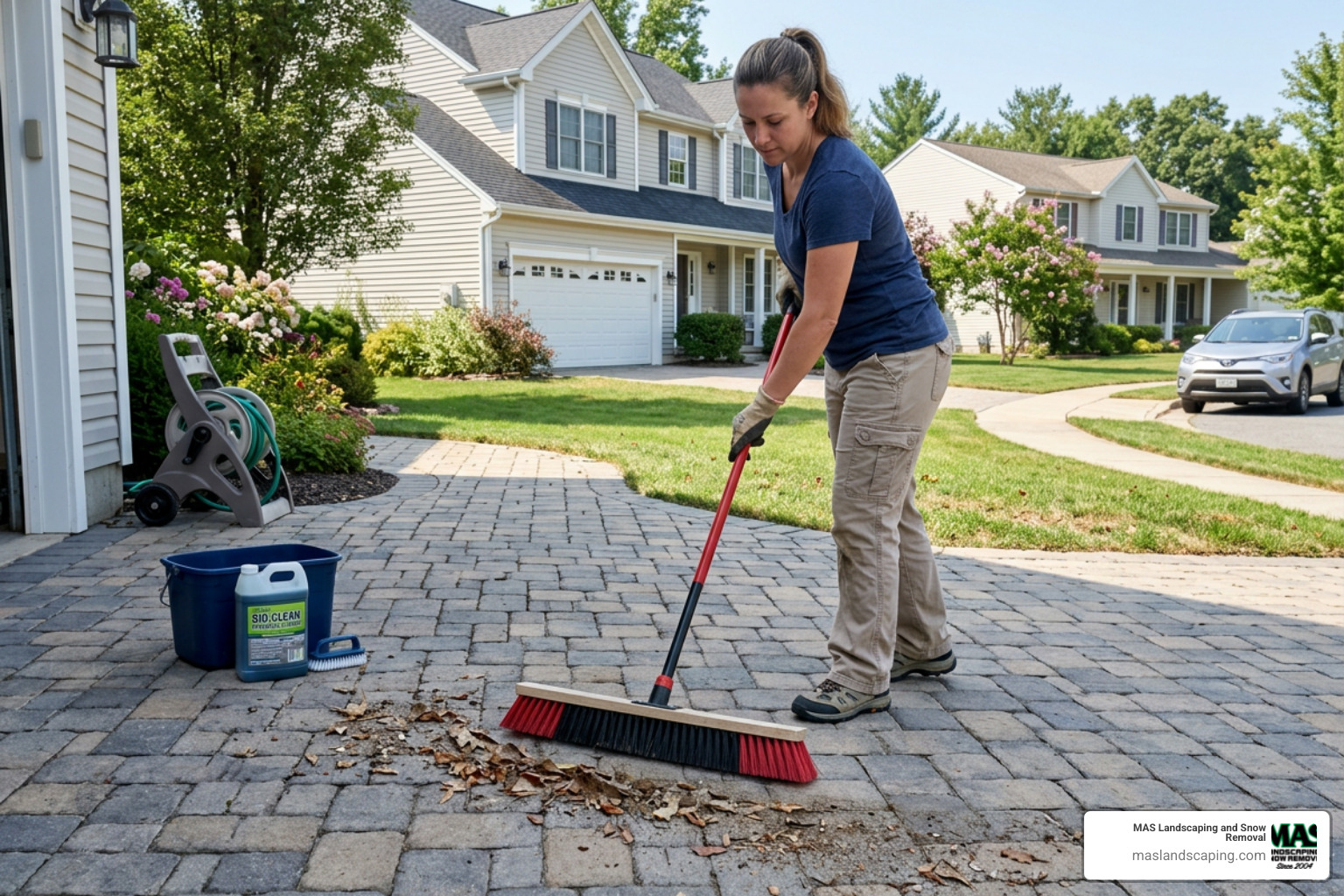
- Inspect and Sweep: Start by removing any furniture or vehicles. Sweep the area thoroughly to remove loose dirt, leaves, and sticks. If you have weeds growing in the joints, pull them now or use a dedicated tool like a wire brush with a weed hook.
- Pre-Wet the Surface: Never apply a driveway paver cleaner to a bone-dry surface. Wetting the pavers first prevents the cleaner from soaking in too deep and drying out too quickly.
- Mix and Apply: Follow the dilution instructions on your product. For example, Zep recommends 6 oz per gallon for light soil and 12 oz for heavy stains. Use a pump sprayer for even coverage.
- Dwell Time: This is the most important step! Let the cleaner sit for about 10–15 minutes. This allows the chemistry to do the heavy lifting. Do not let it dry. If it starts to dry, mist it lightly with water.
- Agitate: For stubborn spots, use a stiff-bristle nylon brush. Scrub in a circular motion to lift the grime out of the pores of the stone.
- Final Rinse: Rinse the entire area with clean water. Start at the highest point of the driveway and work your way down to ensure all suds and dirt are washed away.
Treating Common Stains: Oil, Moss, and Efflorescence
Different stains require different tactics. Here’s the “cheat sheet” for the tough stuff:
- Oil and Grease: If you have a fresh spill, cover it with kitty litter or cornstarch to absorb the liquid first. Once dry, sweep it up and apply a heavy-duty degreaser like Zep or WB0090 World’s Best Concrete Cleaner.
- Moss, Mold, and Algae: These organic growths love the damp New England weather. Use an oxidizing cleaner or a product like 30 SECONDS Outdoor Cleaner. These kill the spores so the growth doesn’t come back next month.
- Efflorescence: This looks like a white, powdery haze. It’s caused by natural salts in the concrete. Use a specialized efflorescence cleaner like Eco Etch Pro. It gently dissolves the salt without damaging the paver.
For those who are visual learners, you can Watch cleaning tutorials on YouTube to see these techniques in action.
Pressure Washing and Safety Precautions
A pressure washer is a powerful tool, but in the wrong hands, it’s a “paver destroyer.” We’ve seen DIYers accidentally carve lines into their stones because they used the wrong tip or too much pressure.
- PSI Settings: For most pavers, you want to stay between 1,500 and 2,000 PSI. Professional units can go up to 4,000 PSI, but they are used with specific attachments and experience.
- Fan Tips: Use a 25-degree or 40-degree nozzle (usually the green or white tips). Never use the 0-degree “red” tip; it’s like a laser beam that will pit your pavers.
- Surface Cleaners: If you have a large driveway in Saugus or Peabody, use a circular surface cleaner attachment. It provides even pressure and prevents the “zebra stripe” look.
- Joint Protection: Aim the spray at an angle, not directly down into the joints. If you blast the joints, you’ll wash out the polymeric sand, which stabilizes the pavers and prevents weeds.
Safety Tips for Your Driveway Paver Cleaner
Cleaning chemicals can be hazardous if not handled with respect. Always keep these safety tips in mind:
- Protective Gear: Wear safety glasses and gloves. Some cleaners, like Zep, carry California Proposition 65 Warnings because they contain chemicals like ethylbenzene. You don’t want that on your skin or in your eyes.
- Plant Protection: Before you start, saturate surrounding grass and shrubs with plain water. This creates a “buffer” so that if any cleaner splashes on them, it’s already diluted. Rinse the plants again after you finish.
- Runoff Management: Be mindful of where the soapy water goes. Try to direct runoff toward a flat grassy area rather than directly into storm drains.
- Ventilation: If you are cleaning a garage floor or a semi-enclosed area, ensure there is plenty of airflow to avoid inhaling fumes.
Maintenance and the Importance of Sealing
Once your pavers are sparkling clean, you probably don’t want to do this again for a long time. That’s where sealing comes in. We always tell our clients that cleaning without sealing is like washing your car and never waxing it—it looks great for a week, then starts to fade.
Benefits of Sealing:
- UV Protection: Prevents the sun from bleaching the color out of your pavers.
- Stain Resistance: Creates a barrier so oil and wine spills sit on top rather than soaking in.
- Weed Prevention: Hardens the joint sand, making it nearly impossible for seeds to take root.
- Color Enhancement: You can choose a wet look paver sealer guide for a vibrant finish or a natural look paver sealer if you prefer the original matte appearance.
If you’re unsure about the process, read our guide on how to seal patio pavers or how to seal pavers.
Preventing Future Driveway Stains
Maintenance is the key to longevity. You don’t need a heavy driveway paver cleaner every month if you follow these simple habits:
- Routine Sweeping: Don’t let wet leaves sit on your pavers. They release tannins that can leave permanent brown “tea” stains.
- Immediate Spot-Cleaning: If you notice an oil drip from a guest’s car, hit it with a little dish soap and water immediately.
- Seasonal Inspections: Every spring and fall, walk your driveway. Look for cracked pavers or areas where the joint sand has settled.
- Organic Debris Removal: Keep grass clippings off the driveway. As they decompose, they create the perfect environment for mold and algae.
Professional vs. DIY Cleaning Costs
Is it worth doing it yourself? It depends on your budget and your free time.
DIY Cleaning:
- Pros: Cheaper upfront; you work on your own schedule.
- Cons: You have to buy or rent a pressure washer; buying professional-grade chemicals can be expensive; it’s back-breaking labor.
- Material Costs: You’ll likely spend money on the cleaner, a brush, and maybe some replacement sand.
Professional Cleaning:
- Pros: We use commercial-grade equipment (like 8 GPM / 4,000 PSI washers); we handle the chemical mixing and safety; we can offer paver restoration near me services that include re-sanding and sealing.
- Cons: Higher upfront cost than a bottle of soap and a garden hose.
Average Pricing for Driveway Maintenance
Based on internet data, the costs for driveway cleaning vary significantly depending on the size of the area and the severity of the stains. Please note that these are average costs based on general market data and are not the actual costs for MAS Landscaping.
- DIY Range: $50 – $300 (Covers basic chemicals, rental equipment, and safety gear).
- Professional Range: $400 – $2,500 (Includes deep cleaning, specialized stain treatment, and often sealing for larger properties).
For a large estate in Andover or a complex multi-car driveway in North Reading, the high end of professional service can easily exceed $2,500, especially if significant restoration or stripping of old, failing sealers is required.
Frequently Asked Questions about Paver Cleaning
How often should I clean my paver driveway?
For homes in the North Shore area (like Saugus or Wakefield), we recommend a deep clean once a year, usually in the spring to wash away winter salt and grime. A light rinse every few months keeps things looking fresh.
Will a pressure washer damage my paver joints?
It can if you aren’t careful. If you blast the water directly into the gaps, you will remove the sand. This is why we recommend using a surface cleaner attachment or holding the wand at a 45-degree angle. If you do lose sand, you’ll need to top it off with new polymeric sand once the pavers are dry.
Can I use household bleach on my pavers?
We generally advise against it. While bleach kills mold, it can be very harsh on the pigments in your pavers and is terrible for your lawn. Oxygen-based cleaners (like Simple Green Oxy Solve) are much safer and just as effective.
Conclusion
Choosing the right driveway paver cleaner is the first step toward a home that looks its absolute best. Whether you are dealing with oil stains in Malden or moss growth in Boxford, the right product and technique will protect your investment for years to come.
At MAS Landscaping and Snow Removal, we pride ourselves on our local expertise. Based in Saugus, MA, we serve the entire surrounding area, including Danvers, Peabody, and Melrose. We don’t just “wash” driveways; we restore them. From professional-grade cleaning to expert sealing and joint stabilization, we make sure your outdoor space is both beautiful and functional.
Ready to give your driveway the “wow” factor? Dont get burned by picking the wrong local paver sealing pros—give us a call today!
For more information on our services and to see our full range of capabilities, you can View our full Product Catalog and FAQ. We look forward to helping you make your pavers look brand new again!
Helpful Resources: