



Understanding What You’ll Pay for a New Lawn

The cost to put in new grass depends on the installation method you choose, your yard size, and how much preparation your soil needs. Here’s what most homeowners can expect:
Quick Cost Overview:
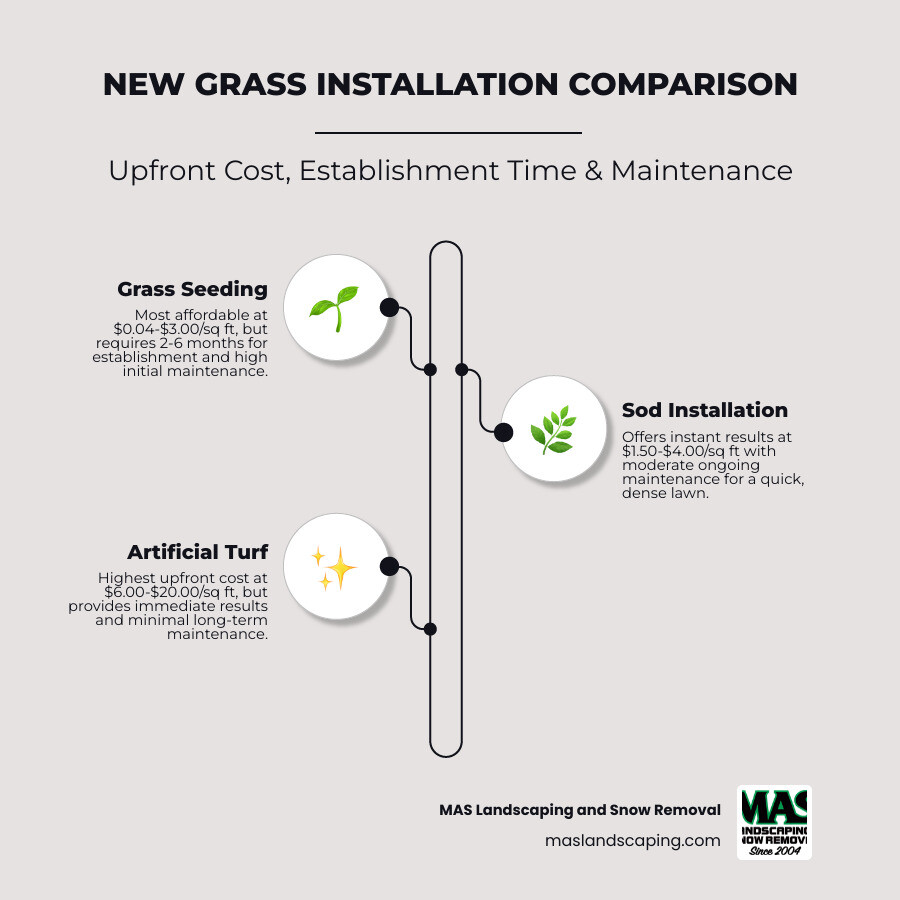
- Seeding: $0.04 – $3.00 per square foot (slowest but most affordable)
- Sod Installation: $1.50 – $5.00 per square foot (instant results, moderate cost)
- Artificial Turf: $6.00 – $20.00 per square foot (highest upfront cost, minimal maintenance)
- Soil Preparation: $0.50 – $2.00 per square foot for removal and grading
- Professional Labor: $50 – $100 per hour
Note: These are national average costs based on internet research and do not reflect actual pricing for MAS Landscaping. High-end projects can cost 3x or more than these averages.
If you’re looking at a tired, patchy lawn and dreaming of lush green grass, you need to know what you’re getting into financially. The truth is, there’s no single answer to “how much does new grass cost?” A small, seeded yard might cost a few hundred dollars, while a large property with professional sod installation and extensive soil prep could run into the tens of thousands.
Your total cost depends on several key factors: the installation method (seed, sod, or artificial turf), your yard’s size and condition, the necessary soil preparation, whether you DIY or hire professionals, the type of grass you choose, and your location.
This guide breaks down all these factors so you can budget realistically and choose the best option for your property and wallet.
Relevant articles related to cost to put in new grass:
New Lawn Installation Methods & Average Costs
Choosing how to install your new lawn is one of the biggest decisions you’ll make, and it dramatically affects what you’ll pay. Each method offers different benefits, timelines, and price points.
Disclaimer: All prices mentioned are national averages based on internet research and do not reflect actual costs for MAS Landscaping. Costs can vary significantly based on location, project scope, and material quality, with high-end projects potentially costing 3x or more than the average.
Comparing the Upfront Cost to Put in New Grass by Method
Grass Seeding is the most wallet-friendly option, with seed costs typically ranging from $0.04 to $3.00 per square foot, depending on quality. The trade-off for the lower price is time; a seeded lawn can take two to six months to fully establish, requiring consistent watering and protection from weeds and foot traffic. However, seeding offers the widest variety of grass types, allowing for custom blends that are more resilient to pests and diseases. For detailed guidance, see our guide on Laying a New Lawn with Grass Seed.
Hydroseeding is a middle-ground option where a slurry of seed, mulch, and fertilizer is sprayed onto the soil. It typically costs between $0.50 and $1.00 per square foot. The mulch protects the seeds, leading to faster germination than traditional seeding, especially on slopes.
Sod Installation: The Instant Lawn Solution
If you want to go from dirt to a gorgeous green lawn in a single day, sod installation is the answer. Sod is pre-grown grass that arrives in rolls and is laid out like a living carpet for immediate results.
The cost to put in new grass using sod typically ranges from $1.50 to $5.00 per square foot based on national averages. While more expensive upfront than seeding, sod provides instant curb appeal, prevents soil erosion, and crowds out weeds from day one. Professional installation is crucial to ensure proper grading and root contact, allowing the sod to establish within a few weeks. That natural grass lawns may need re-sodding every 3-5 years depending on use and maintenance. Learn more on our Sod Installation page.
Artificial Turf: The Low-Maintenance Alternative
For those tired of mowing and watering, artificial turf is a high-investment, low-maintenance solution. National averages for synthetic grass installation range from $6.00 to $20.00 per square foot. This significant upfront cost covers high-quality turf and professional installation, including base preparation and drainage.
The long-term value is where artificial turf shines. With a lifespan of 15-25 years and virtually no maintenance costs (no watering, mowing, or fertilizing), many homeowners find it pays for itself within 3-5 years. It provides a perfect-looking lawn year-round, drains well, and is safe for kids and pets. Explore this option further on our pages for Artificial Turf for Yards and Artificial Grass Installation.
Key Factors That Influence the Cost to Put in New Grass
Beyond the installation method, several other factors will influence the final cost to put in new grass. These elements involve preparing your yard and ensuring its long-term health.

Soil Preparation: The Foundation of Your New Lawn
Proper soil preparation is the most critical factor for a successful lawn and a significant component of the cost. This can include:
- Old lawn removal: Killing and removing old turf, which can cost $0.50 to $2.00 per square foot.
- Soil testing: Identifying pH and nutrient deficiencies, typically costing $10 to $150.
- Grading: Ensuring proper drainage to prevent water pooling, which can cost $0.40 to $2.00 per square foot.
- Adding topsoil: Providing a nutrient-rich base for roots, costing $10 to $50 per cubic yard plus delivery.
- Rototilling: Loosening compacted soil to improve drainage and aeration, with costs ranging from $0.10 to $0.65 per square foot.
Our guide on How to Prepare Ground for Sod offers more detail on this vital step.
Yard Size, Layout, and Accessibility
The size of your yard is a primary cost driver, as more square footage requires more materials and labor. However, larger projects may benefit from economies of scale, potentially lowering the per-square-foot rate. A complex layout with irregular shapes, garden beds, trees, or patios requires more intricate cutting and labor, increasing costs. Furthermore, limited accessibility for equipment can increase labor time and project expenses.
For ideas on integrating different landscape elements, see our insights on Backyard With Pavers and Artificial Grass.
DIY vs. Professional: The Labor Cost to Put in New Grass
Deciding between DIY and hiring a professional significantly impacts the cost. Professional landscapers typically charge $50 to $100 per hour, but this guarantees expertise, efficiency, and proper technique, helping you avoid costly mistakes. A DIY approach saves on labor but requires equipment rentals (a sod cutter can be $105/day), time, and physical effort. The success rate for DIY projects is often lower, making professional installation a worthwhile investment for many homeowners. Our Lawn Installation services ensure your new lawn gets the best possible start.
Grass Type and Regional Variations
The grass you choose affects both cost and performance, especially in the Massachusetts climate where cool-season grasses are best.
- Kentucky Bluegrass: Known for its beautiful color and durability. Sod costs nationally range from $0.45 to $1.50 per square foot.
- Fescue: A durable, drought-tolerant choice that performs well in shade. Sod costs generally range from $0.40 to $1.30 per square foot.
- Perennial Ryegrass: Germinates quickly and is often used in blends for high-traffic areas. Sod costs typically run from $0.30 to $1.00 per square foot.
Zoysia, a warm-season grass, is not ideal for Massachusetts as it stays brown for much of the year. Local supplier availability and demand also affect pricing. We source the best quality grass suited for our New England environment.
These pricing figures are national averages based on internet research and do not reflect MAS Landscaping’s actual costs. High-end specialty grasses can cost three times or more than these averages.
Long-Term Costs: Maintenance, Lifespan, and ROI
When considering the cost to put in new grass, it’s crucial to look beyond the upfront payment. Your lawn is a long-term investment, and the ongoing expenses for natural grass and artificial turf follow very different paths.
Ongoing Maintenance for Natural Grass
A natural lawn requires continuous care. This includes regular mowing, fertilizing (averaging $65-$100 per application), and aeration ($75-$250 per service). The biggest ongoing expense is often water; a 2,500-square-foot lawn can use over 50,000 gallons annually. These tasks add up to a significant yearly investment of time and money. For help managing these needs, explore our Lawn Care and Maintenance services or learn about the Cost of New Lawn Irrigation System Installation.
The Long-Term Value of Artificial Turf
Artificial turf has a much higher upfront cost, but the savings begin immediately. With a lifespan of 15-25 years, it eliminates expenses for mowing, fertilizing, and watering. Maintenance is minimal, usually just occasional rinsing or debris removal. The water savings alone can be substantial. Many homeowners find that artificial turf reaches a break-even point in 3-5 years, after which it provides significant savings. Over its full lifespan, the total cost can be lower than maintaining natural grass. For more on this, see our page on Low Maintenance Fake Grass or this external article: Artificial Grass vs. Natural Grass: Cost, Maintenance, and Environmental Tradeoffs.
Comparing 15-Year Costs: Natural Grass vs. Artificial Turf
Let’s compare the estimated 15-year costs for a 2,500-square-foot lawn using national averages. Your actual costs will vary.
| Cost Category | Natural Grass (2,500 sq ft) | Artificial Turf (2,500 sq ft) |
|---|---|---|
| Upfront Installation Cost | $2,500 – $7,500 (seeding/hydroseeding) | $15,000 – $50,000 |
| Annual Water Cost | $500 – $1,500 | $50 – $150 |
| Annual Maintenance Cost | $2,000 – $6,000 | $100 – $300 |
| Resodding/Repair Costs (over 15 years) | $5,000 – $15,000 | $0 – $1,000 |
| Total 15-Year Cost | $39,000 – $110,000+ | $17,000 – $58,000 |
These figures are national averages based on internet research and do not reflect actual costs for MAS Landscaping. High-end projects and maintenance can cost significantly more.
The takeaway is clear: while artificial turf costs more upfront, its long-term financial picture can be more favorable. Your choice depends on your budget, priorities, and how you want to spend your weekends.
Frequently Asked Questions about New Grass Installation
We hear many questions from homeowners about getting a new lawn. Here are answers to the most common ones we encounter serving the Saugus, MA area.
What are the advantages and disadvantages of seeding versus sodding a lawn?
This is the most common question, as the choice between seeding and sodding shapes your project’s cost and timeline.
Seeding is the most affordable option and offers a wide variety of grass types, allowing for custom, resilient blends. However, it requires patience, as a full lawn takes months to establish. During this time, the area needs diligent watering and protection from weeds, foot traffic, and erosion.
Sodding provides an instant, beautiful lawn. It’s perfect for quick results, immediately controls erosion, and suppresses weeds. The main drawbacks are the significantly higher upfront cost and a more limited selection of grass varieties, which can sometimes make the lawn more vulnerable to widespread disease.
For a financial comparison, see our New Lawn Installation Cost page.
What is the best time of year to install a new lawn in Massachusetts?
Timing is critical for success. For natural grass in our climate, spring and early fall are the best seasons.
- Spring (mid-April to early June): Warm soil and consistent rain help seeds germinate and sod establish before summer heat.
- Early Fall (late August to early October): This is often considered the ideal window. Warm soil encourages root growth, while cooler air reduces stress on the new grass. Weed competition is also lower than in spring.
We strongly advise against installation in the summer due to heat stress and in the winter when the ground is frozen. Our Spring Clean-up Lawn Care services can help prepare your yard for a new lawn.
Are there hidden costs associated with lawn installation?
While we aim for full transparency, some expenses can be overlooked in initial budgeting. These potential costs include:
- Old lawn removal: The cost to remove the existing turf before starting fresh.
- Unexpected grading: Correcting drainage issues that become apparent after work begins.
- Soil amendments: Needing more topsoil or compost than anticipated to fix deficiencies found during soil testing.
- Delivery fees: Charges for transporting materials like sod, soil, or artificial turf.
- Increased water bill: New grass requires frequent watering during its establishment phase.
A professional consultation will assess these factors to provide a comprehensive estimate. Our Cost of Grass Installation guide offers more insight into what to expect.
Conclusion: Achieving Your Dream Lawn on Budget
Creating your dream lawn requires thoughtful planning. The cost to put in new grass is a combination of your choices regarding installation methods, soil preparation, and long-term maintenance.
Consider what matters most. If budget is tight and you have patience, seeding is a great choice. If you need quick results, sod delivers an instant change. If you want to eliminate weekend chores, artificial turf offers a lifestyle change with long-term savings.
The foundation is key. Proper soil preparation is a non-negotiable step that determines whether your investment thrives. Skimping here often leads to disappointment and future costs. Your yard’s unique size, layout, and accessibility also play a role in the final price.
The choice between DIY and professional installation is about valuing your time and avoiding costly mistakes. A beautiful lawn is an investment in your home’s value and your family’s enjoyment. With the right plan, it’s an investment that pays off for years.
For a professional consultation and an accurate estimate customized to your property in the Saugus, MA area – including Everett, Lynnfield, Malden, Melrose, Medford, Revere, and Chelsea – trust the local experts at MAS Landscaping. We’re here to help you achieve a lush, vibrant lawn that fits your budget and exceeds your expectations.