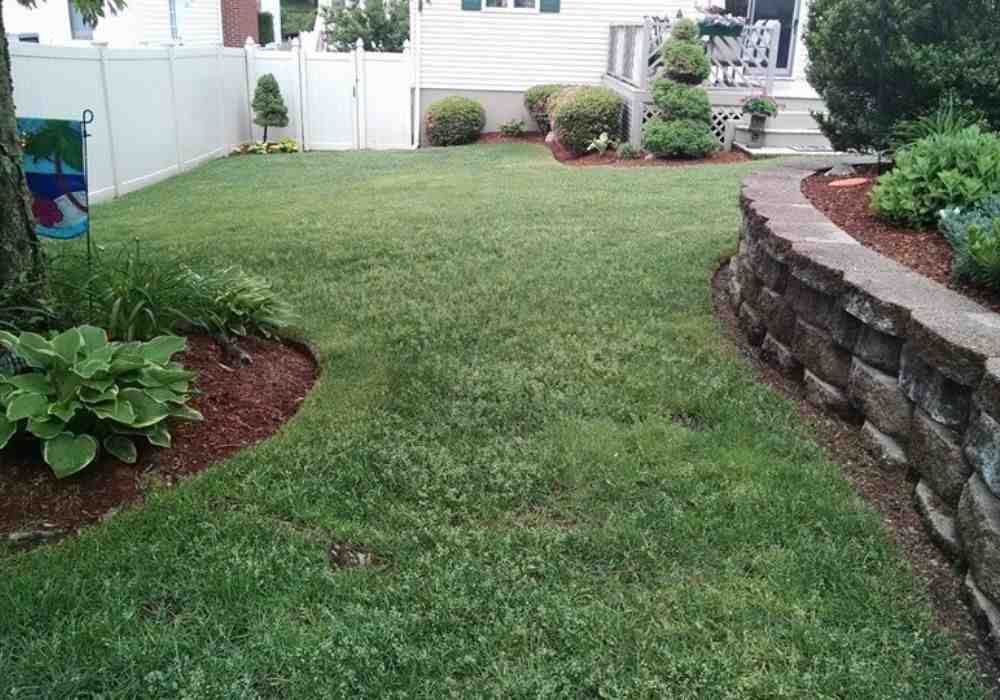



Why Understanding Retaining Wall Costs Matters for Your Property
Understanding the cost of a small retaining wall is the first step in planning your landscaping project. The final price depends on several key factors:
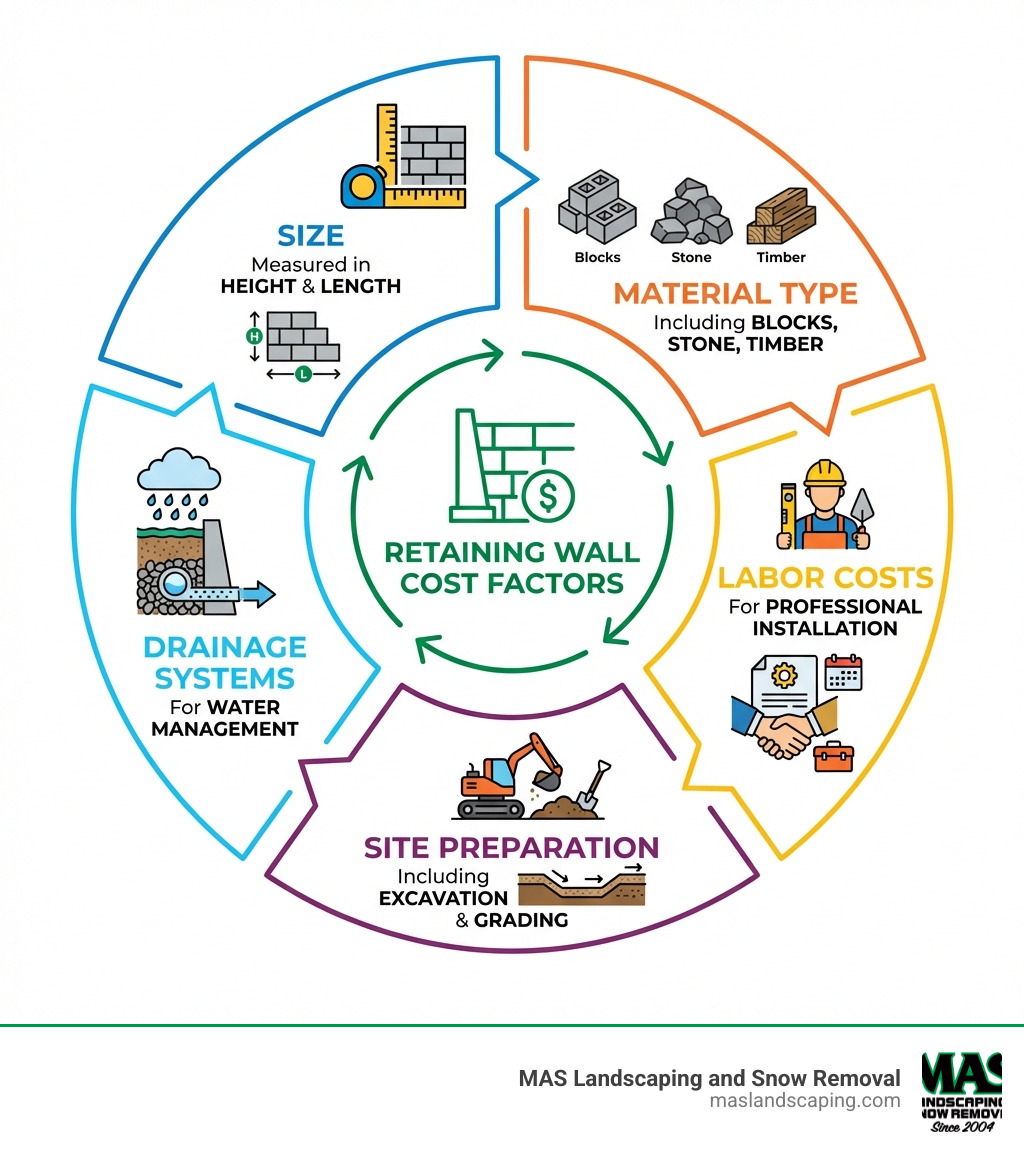
Main Cost Factors:
- Size – Height and length of the wall
- Materials – Concrete blocks, natural stone, timber, or poured concrete
- Labor – Professional installation vs. DIY
- Site preparation – Excavation and grading needs
- Drainage – Proper water management systems
A small retaining wall serves two important purposes: it prevents soil erosion on sloped properties and creates usable, tiered spaces in your yard. Whether you’re looking to protect your foundation, add garden beds, or maximize your outdoor living area, understanding the cost factors helps you plan and budget effectively. The price you’ll pay isn’t just about materials. Site accessibility, soil conditions, local labor rates, and drainage requirements all play significant roles. In the Greater Boston area, these factors can vary widely from property to property. This knowledge helps you make smart decisions about materials, design, and whether to tackle the project yourself or hire a professional.
Basic cost of small retaining wall vocab:
Understanding the Average Cost of a Small Retaining Wall
When you’re considering a project like a small retaining wall, one of the first questions on your mind is often, “How much will this cost?” The cost of small retaining wall projects can fluctuate significantly based on a multitude of factors. Internet data suggests that, on average, the installed cost for a small retaining wall can range widely from $25 to $250+ per square foot, or $100 to $400+ per linear foot, depending on the material, complexity, and regional labor rates. It’s vital to remember that these are general internet averages based on national data and do not represent the actual costs for MAS Landscaping or any specific contractor. Our goal here is to provide you with a comprehensive understanding of what influences these averages.
Regional variations play a substantial role in these costs. In areas like Everett, Lynnfield, Malden, and other surrounding towns in Massachusetts where we operate, labor and material costs can be higher than national averages due to local market conditions. This means the specific cost of small retaining wall in New England could fall on the higher end of the spectrum.
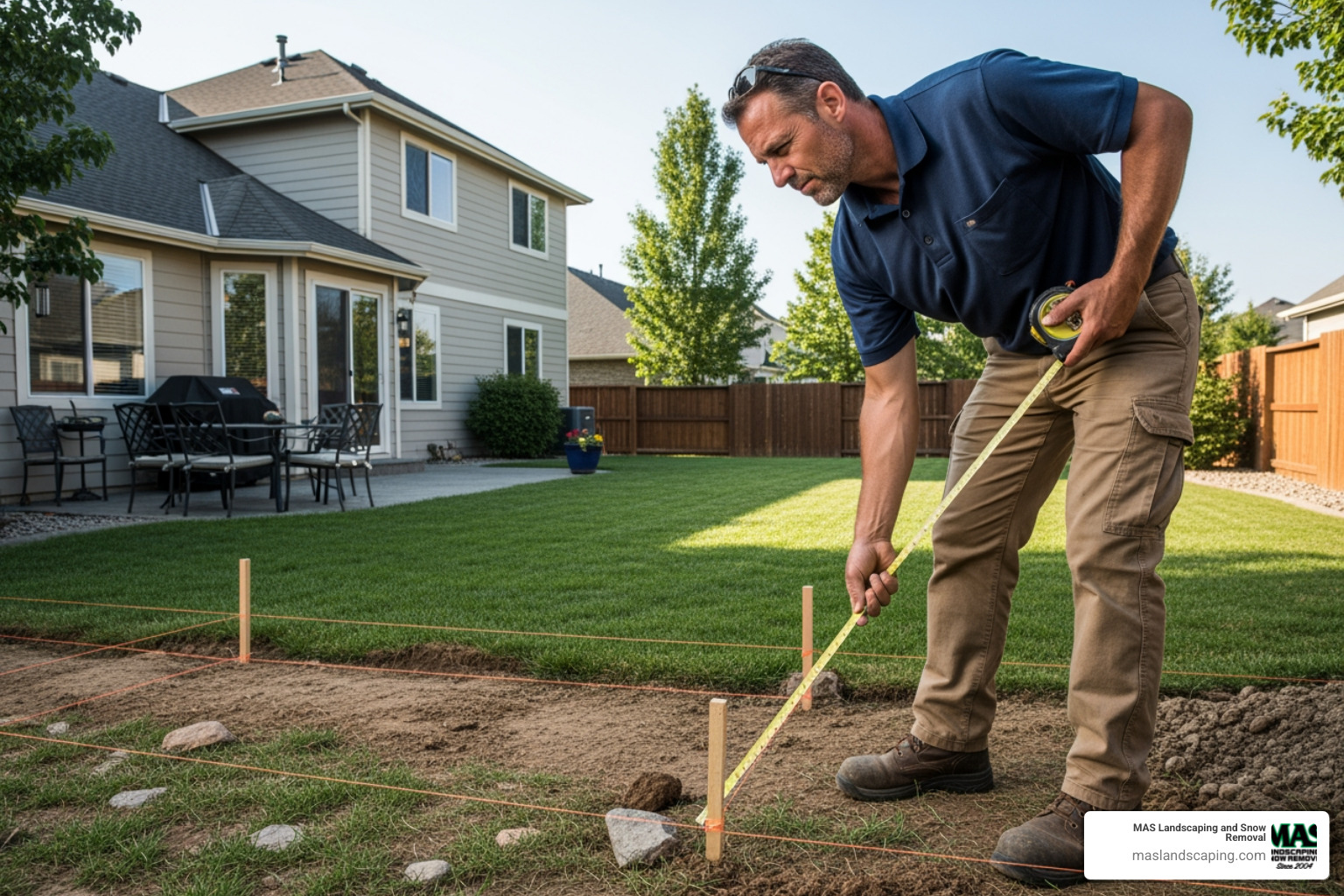
A contractor carefully measuring the length and height of a planned retaining wall area, a crucial first step in estimating costs.
Key factors that influence the cost of a small retaining wall
Let’s dive deeper into the specific elements that dictate the final price tag of your small retaining wall project:
- Wall Dimensions: Both the height and length directly impact the amount of material and labor required. Taller walls also need more reinforcement and deeper foundations.
- Material Choice: The type of material—from affordable concrete blocks to premium natural stone—is a major cost driver.
- Site Conditions: Difficult-to-access sites, poor soil quality, or the need for extensive excavation will increase labor and equipment costs.
- Drainage Systems: Proper drainage is crucial for the wall’s longevity and involves additional materials and labor, but prevents costly future repairs.
- Design Complexity: Simple, straight walls are more budget-friendly than curved or multi-tiered designs with features like built-in steps.
- Labor and Permits: Professional installation rates vary by region. Additionally, permits may be required depending on the wall’s height and local regulations in towns like Saugus or Medford.
Understanding these variables helps you grasp why a precise quote requires a thorough site assessment. For more detailed insights into various hardscaping projects, you can explore our resources on More info about hardscaping services.
Comparing Common Retaining Wall Materials and Prices
The material you choose for your retaining wall is not just about aesthetics; it profoundly impacts the durability, lifespan, and, of course, the cost of small retaining wall construction. Each material offers a unique blend of benefits and price points.
For instance, interlocking concrete blocks are a popular choice for their versatility and relative affordability, while natural stone offers timeless beauty at a higher investment. Treated timber can be an economical option but typically has a shorter lifespan than masonry. Poured concrete, though initially more complex to install, provides exceptional strength and customization.
We’ve found that clients in Everett, Lynnfield, and Malden often weigh these factors carefully, balancing their budget with their desired aesthetic and long-term performance.
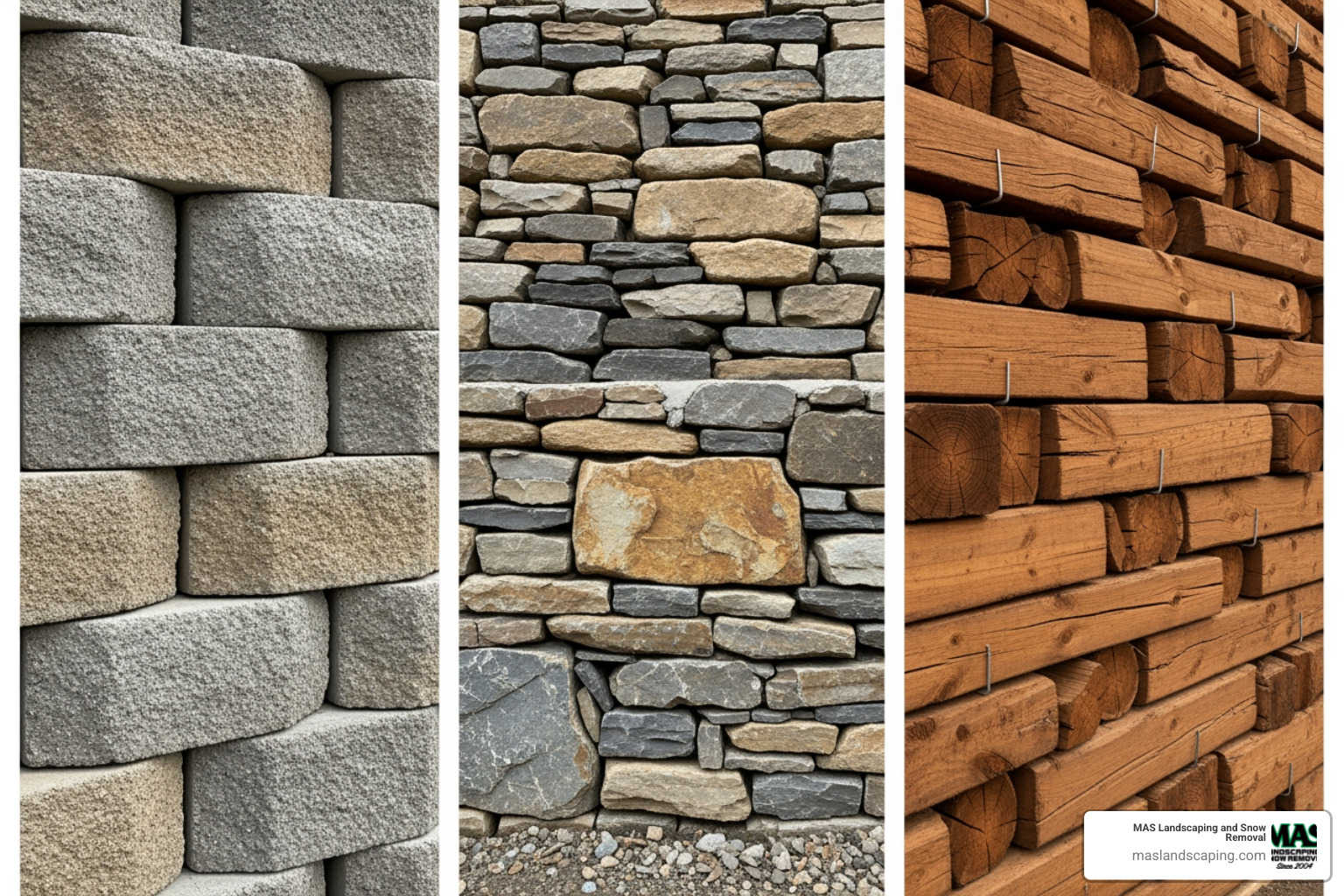
A collage showcasing the diverse beauty and functionality of interlocking concrete blocks, natural stone, and timber retaining walls.
[TABLE] comparing retaining wall material costs
Below is a general comparison of common retaining wall materials. Please remember that the “Average Installed Cost per Square Foot” ranges are based on broad internet data and can vary significantly based on your specific location in Massachusetts, project complexity, and the contractor you choose. These figures are not representative of MAS Landscaping’s specific pricing.
| Material Type | Average Installed Cost per Square Foot (Internet Data Range) | Lifespan (Years) | Best For |
|---|---|---|---|
| Interlocking Concrete Blocks | $30 – $100+ | 50-100+ | DIY-friendly, versatile designs, good drainage |
| Natural Stone | $50 – $250+ | 100+ | High-end aesthetic, natural look, longevity |
| Poured Concrete | $40 – $150+ | 75-100+ | Maximum strength, custom shapes, modern look |
| Wood/Treated Timber | $25 – $75+ | 20-40 | Economical, natural feel, easy to install |
A closer look at material choices
Let’s explore each material in a bit more detail:
- Interlocking Concrete Blocks: A popular and versatile choice, these blocks are engineered to fit together, making installation efficient. They come in many styles and colors, offering a great balance of durability, aesthetics, and affordability for a cost of small retaining wall project.
- Natural Stone Varieties: For a timeless, high-end look, natural stone is best. Each stone is unique, creating a custom wall that can last for centuries. This option is more labor-intensive and thus has a higher initial cost of small retaining wall, but it adds significant long-term value and curb appeal.
- Treated Timber: A budget-friendly choice for a rustic look, treated timber is ideal for smaller, less critical walls. While the upfront cost is low, timber has a shorter lifespan (20-40 years) than masonry and may require more maintenance.
- Poured Concrete: Offering superior strength and design flexibility, poured concrete is perfect for custom shapes and modern aesthetics. It can be reinforced for maximum stability, making it suitable for taller walls. The installation is more complex, but the result is a highly durable, low-maintenance wall.
DIY vs. Hiring a Professional: A Cost-Benefit Analysis
When faced with a small retaining wall project, the thought of “doing it myself” often crosses a homeowner’s mind. It’s tempting to save on labor costs, but it’s crucial to evaluate the full picture before you grab that shovel. Building a retaining wall, even a small one, is more complex than it appears, especially when you consider its critical role in managing soil and water.
We’ve seen many well-intentioned DIY projects in Lynnfield and Malden turn into bigger headaches (and expenses) down the road. Evaluating the project’s complexity, honestly assessing your skills, and considering your time commitment are paramount.
A professional landscaper carefully setting the base course for a retaining wall, a critical step for stability and longevity.
Calculating the true cost of a small retaining wall DIY project
While you might eliminate labor costs from your immediate budget, a DIY project introduces other expenses and risks:
- Material & Tool Costs: You’ll be responsible for buying all materials (often at retail prices) and renting specialized equipment like compactors or concrete mixers.
- The Cost of Mistakes: An improperly built foundation or poor drainage can lead to wall failure. The cost of rebuilding is far greater than the initial savings.
- Your Time: Don’t underestimate the time and physical effort required. A project that takes a professional a few days could take a DIYer several weekends.
Why hiring a professional can be cost-effective
While the upfront cost of small retaining wall installation by a professional might seem higher, it’s often the more cost-effective solution in the long run. Here’s why:
- Expertise & Durability: Professionals understand soil mechanics and proper drainage, ensuring your wall is built to last and withstand New England weather.
- Efficiency & Quality: An experienced crew works quickly, has the right tools, and delivers a polished, professional finish that improves your property’s value.
- Peace of Mind: A professional installation often comes with a warranty, protecting your investment. They also handle permits and ensure the project is built to code, saving you from potential legal issues and safety hazards.
For more information on the science behind stable outdoor structures, you can Learn about soil and wall stability. Investing in professional installation for your small retaining wall is an investment in its longevity, safety, and the overall value of your property in places like Chelsea and Everett.
Frequently Asked Questions about Small Retaining Wall Costs
We understand that starting on a retaining wall project, even a small one, comes with many questions. Here are some of the most common inquiries we receive from homeowners in and around Saugus, MA, regarding the cost of small retaining wall projects and related considerations.
Do I need a permit for a small retaining wall?
Whether you need a permit depends on your local regulations and the wall’s height. Generally, walls over 3 or 4 feet high require a permit, but this varies by town. Municipalities like Saugus, Everett, and Lynnfield have their own specific codes. Always check with your local building department before starting construction to avoid potential fines and ensure your wall is built to safety standards.
How can I reduce the cost of my retaining wall?
While we always advocate for quality and longevity, we understand that budgeting is key. Here are some practical tips to potentially reduce the cost of small retaining wall projects:
- Choose Cost-Effective Materials: Interlocking concrete blocks or treated timber are more budget-friendly than natural stone.
- Simplify the Design: A straight wall is less expensive to build than a curved or multi-tiered one.
- Reduce the Height: A shorter wall requires less material and labor and may not require a permit (always check local codes).
- Prioritize Drainage: While it’s an upfront cost, proper drainage prevents expensive future repairs, making it a smart long-term investment.
- Improve Site Access: If possible, clearing a path for equipment and materials can reduce labor time.
How long will my new retaining wall last?
The lifespan of your wall depends on the material and the quality of installation.
- Lifespan by Material:
- Treated Timber: 20-40 years.
- Interlocking Concrete Blocks: 50-100+ years.
- Poured Concrete: 75-100+ years.
- Natural Stone: 100+ years, potentially centuries.
- Quality of Installation: A professionally built wall with a proper foundation and, most importantly, an effective drainage system will prevent failure and last for decades. Poor drainage is the number one cause of wall collapse, so it’s a critical investment. A high-quality retaining wall, professionally installed with careful attention to drainage, is a long-term investment that will improve your property for decades to come.
Conclusion: Plan Your Project with Confidence
Understanding the cost of a small retaining wall involves considering materials, size, site conditions, and labor. While a DIY approach can seem tempting, professional installation is a long-term investment in your property’s safety and value, ensuring proper drainage and structural integrity. A well-built wall prevents erosion and creates beautiful, usable outdoor space for years to come.
At MAS Landscaping and Snow Removal, we serve Saugus, Everett, Lynnfield, Malden, and surrounding communities with expert hardscaping services. We understand the local landscape and are committed to building durable, attractive retaining walls that meet your needs and budget.
Ready to transform your yard? Let us assess your property, discuss your vision, and provide you with a precise, custom quote.
Get a precise quote for your retaining wall project and take the first step towards a more beautiful and functional outdoor living space.
Conclusion: Plan Your Project with Confidence
Understanding the cost of small retaining wall projects can feel like navigating a maze, but with the right knowledge, you can approach your project with confidence and clarity. As we’ve explored, the final price isn’t just a single number; it’s a dynamic sum influenced by the wall’s size, the materials you choose, the labor involved, and crucial site-specific factors like soil conditions and drainage needs. Material and labor are often the biggest variables, shaping the majority of your investment.
While the allure of a DIY project might tempt some, professional installation ensures not only the aesthetic appeal but, more importantly, the structural integrity and longevity of your retaining wall. A properly built wall is an investment that protects your property, prevents erosion, and creates beautiful, functional outdoor spaces for decades.
At MAS Landscaping and Snow Removal, we pride ourselves on our commitment to professionalism, personalized service, and local expertise. Based in Saugus, MA, we’ve had the pleasure of creating functional and beautiful hardscaping solutions for clients in Everett, Lynnfield, Malden, Melrose, Medford, Revere, and Chelsea. We understand the unique challenges and opportunities presented by the New England landscape and are dedicated to delivering results that exceed expectations.
Ready to transform your sloped yard or define your garden beds with a durable and attractive retaining wall? We’re here to help. Let us assess your property, discuss your vision, and provide you with a precise, custom quote.
Get a precise quote for your retaining wall project and take the first step towards a more beautiful and functional outdoor living space.