



Gabion Fence Cost: Smart Guide 2025 – Save Big!
Understanding Gabion Fence Cost: What to Expect
Gabion fence cost varies widely, but here’s a quick overview of what to expect based on national averages:
Quick Cost Overview:
- Materials only: $15-$75+ per linear foot
- Small project (50ft x 3ft): $1,500-$2,500 total
- Professional installation: Add $5-$15 per linear foot
- Key cost drivers: Wire basket quality, stone fill type, wall height, and site preparation
If you’re exploring fencing options for your Greater Boston property, you’ve likely seen gabions—striking, modern walls made from wire baskets filled with rocks. They offer a unique combination of durability, eco-friendliness, and design appeal. However, pricing information is often inconsistent, with some calling them cost-effective and others warning of high costs.
The truth is that your final cost depends on your specific choices. The quality of the wire mesh, the type of stone fill, DIY vs. professional installation, and site conditions are all major factors. A small DIY garden border might cost a few hundred dollars, while a professionally installed retaining wall could be several thousand.
This guide breaks down every factor influencing gabion fence pricing, helping you understand what you’re paying for and how to make smart choices that fit your budget without sacrificing quality.
The Core Components: What Drives Gabion Fence Cost?
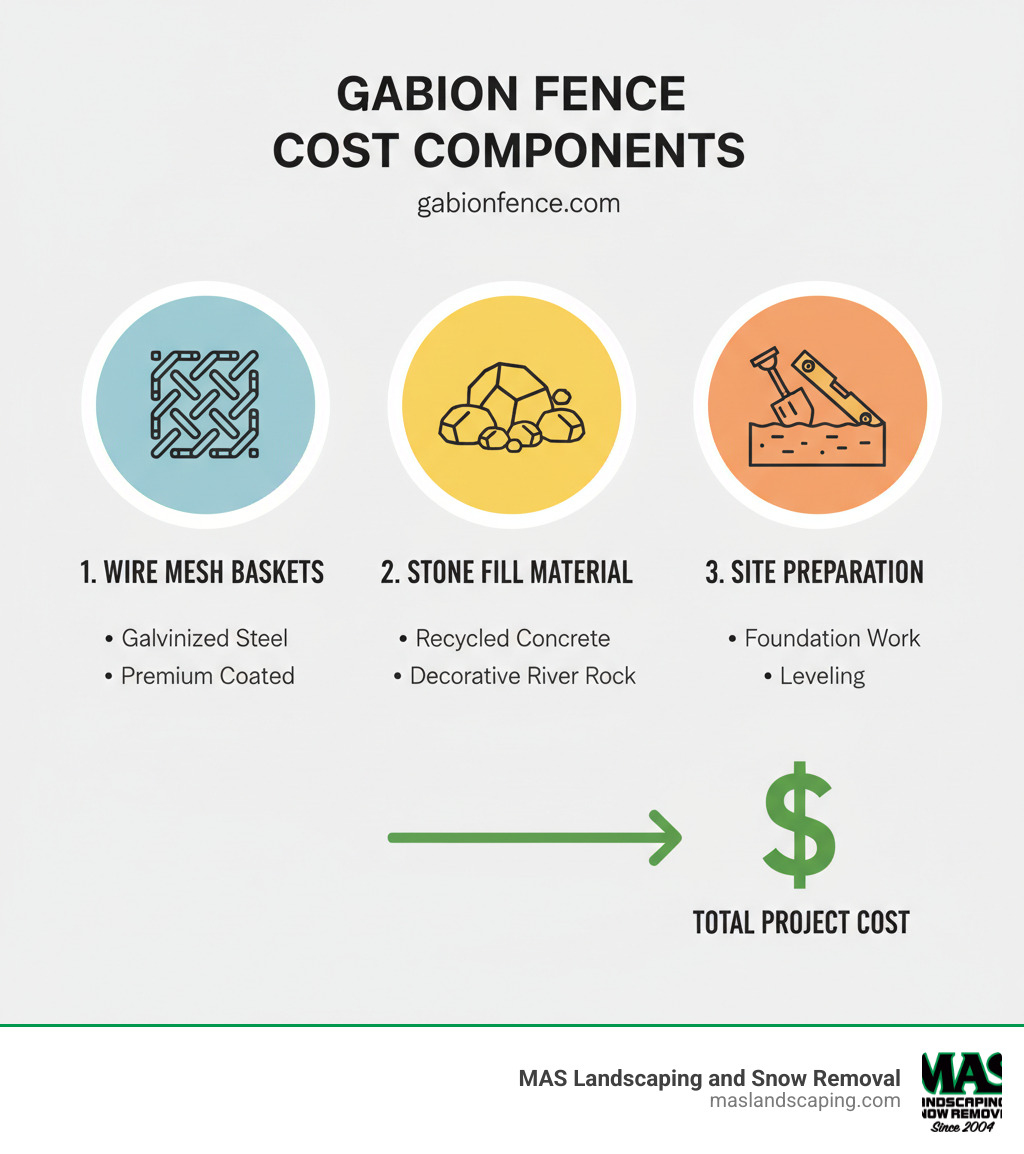
Understanding gabion fence cost means looking at its three key parts: the wire baskets, the stone fill, and the installation labor. Let’s break down what you’re paying for to help you make smart choices.
Gabion Baskets: The Cage Itself
The gabion basket is the structure that holds everything together, so quality is crucial to prevent sagging or rust. You have several options at different price points.
- Standard galvanized steel baskets are the affordable workhorse for most residential projects.
- Stainless steel or PVC-coated mesh are premium options that cost more but offer superior protection against rust and corrosion, which is ideal for coastal Massachusetts weather.
The wire gauge (thickness) is also critical; a thicker wire (lower gauge number) creates a stronger, more durable basket. You’ll also choose between welded mesh, which is more rigid and better for taller structures, and woven mesh, which offers more flexibility. For larger projects, buying in bulk can often secure quantity discounts, reducing the per-unit cost. That these averages are based on national data, and high-end options can easily cost three times more than basic baskets.
For more detailed insights into pricing factors, you can check out How Much Do Gabions Cost.
Fill Material: The Heart of the Wall
What you put inside the baskets can cause your gabion fence cost to swing from budget-friendly to premium.
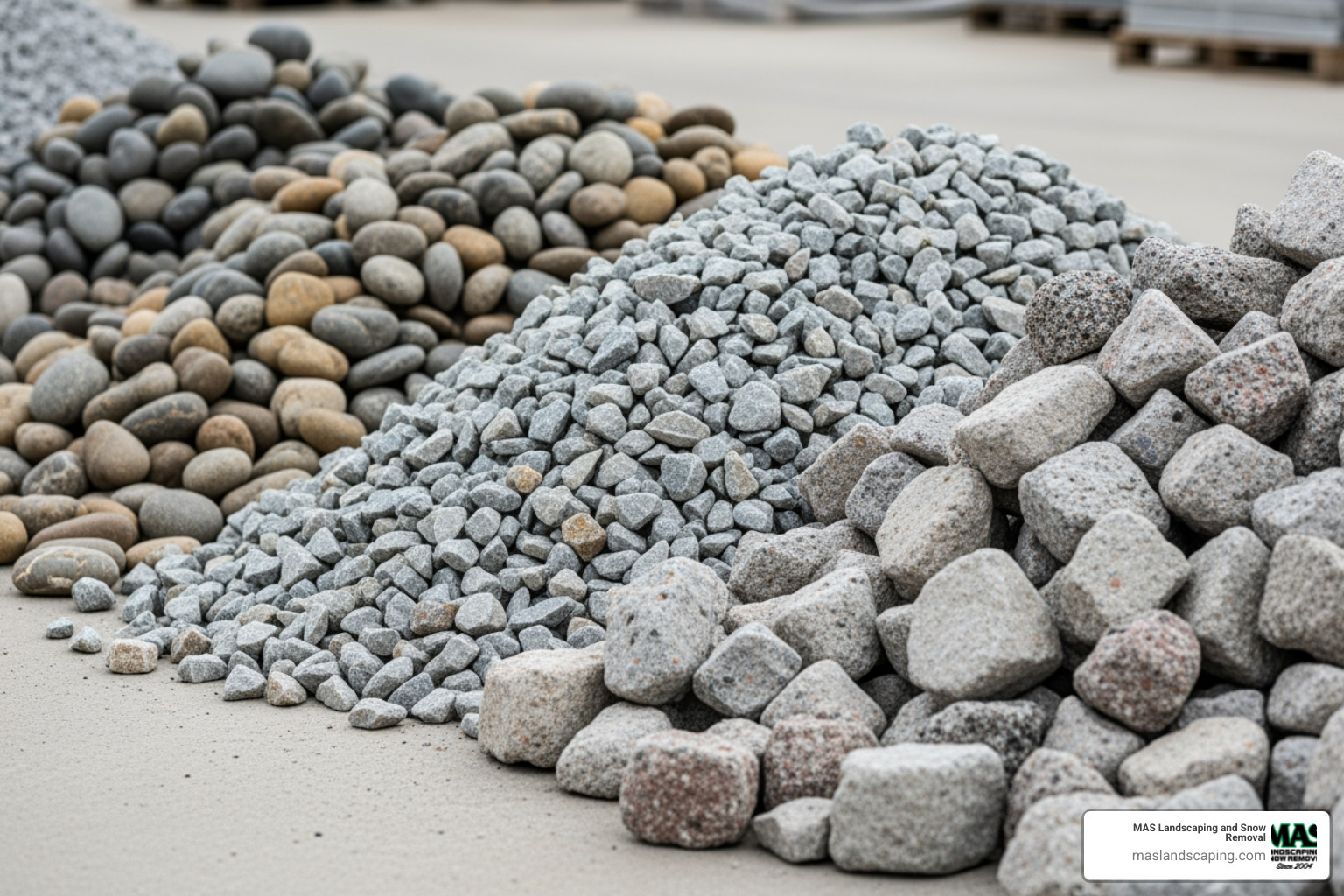
To save money, source your fill material locally. Transporting tons of rock is expensive, so finding a local quarry or supplier in the Saugus area is a smart move. Common, affordable fill options include river rock, granite, and recycled concrete. Recycled concrete is a particularly practical, eco-friendly choice that is often cheaper than virgin stone and may even be free if sourced from a demolition project.
For a more decorative look, you can use materials like smooth river pebbles, polished granite, or colorful recycled glass. These options create a stunning visual feature but come at a significantly higher cost.
A practical tip: ensure your stones are at least 1.2 times larger than the basket’s mesh openings to prevent them from falling through. For highly visible fences, hand-filling the baskets creates a more polished, gap-free appearance. For functional walls hidden by landscaping, you can simply pour the stones in. The fill material provides weight, stability, and character, so choose wisely based on your budget and aesthetic goals.
Sizing Up Your Project: Cost Per Linear Foot and Total Estimates
Now that you understand the components, let’s see how they affect the total gabion fence cost for your project. The final price depends heavily on the fence’s dimensions and whether you opt for DIY or professional installation.
Important Note: The price estimates discussed here are based on national averages and do not reflect specific pricing for MAS Landscaping. Your actual costs will vary based on location, material choices, and site complexity.
| Fence Height | Basket Cost (50 ft) | Fill Material Cost (50 ft) | Estimated Material Cost (50 ft) |
|---|---|---|---|
| 3 feet | $150 – $450 | $150 – $750 | $300 – $1,200 |
| 4 feet | $200 – $600 | $200 – $1,000 | $400 – $1,600 |
| 6 feet | $300 – $900 | $300 – $1,500 | $600 – $2,400 |
Note: This table provides estimated material costs only for a 50-foot gabion fence, assuming standard basket and fill material prices. Actual costs will vary significantly based on material quality, fill density, and local prices.
Calculating Your Gabion Fence Cost Per Foot
Fencing is often estimated by the linear foot, but with gabions, the cost per foot changes dramatically with height and width. A standard 3-foot high gabion fence typically runs $15 to $25 per linear foot for materials (baskets and basic fill). A taller 6-foot fence can cost $30 to $50 per linear foot. For premium materials or complex designs, costs can climb to $75-$150 per linear foot or more.
For example, a 50-foot long, 3-foot high gabion fence in the Everett or Malden area, including materials and professional installation, would likely fall in the $1,500 to $2,500 range. The key takeaway is that every foot of height adds significant material and labor costs.
DIY vs. Professional Installation: Factoring in Labor
Choosing between DIY and professional installation is a major budget decision. The DIY route saves on labor but requires serious physical effort, time, and the right tools.
Professional installation rates, based on national averages, typically range from $40 to $100+ per hour per worker. For gabion fences, this often translates to an additional $5 to $15 per linear foot for labor, depending on project complexity and site access.
While DIY saves money, be aware of the physical demands. Gabions are extremely heavy once filled, and the work involves moving baskets and tons of stone. More importantly, improper installation can lead to bulging, settling, or even collapse—a costly and dangerous failure. Fixing a failed DIY project often costs more than hiring a professional from the start.
For larger projects, taller fences, or any retaining wall, we strongly recommend professional installation. The team at MAS Landscaping has extensive hardscaping experience in the Greater Boston area and understands the critical details for a long-lasting structure. You can learn more about our approach here: More info about retaining wall installation services. For small, decorative projects, DIY can be a great option. For anything substantial, professional installation provides peace of mind.
Beyond the Basics: Additional and Hidden Costs
Beyond baskets and stone, the total gabion fence cost includes other expenses that can surprise homeowners. Site preparation, permits, and delivery fees can add hundreds or thousands to your budget if you’re not prepared.

Site Preparation and Foundation
Proper ground preparation is non-negotiable. For a short, decorative fence on flat, stable ground, simple clearing and leveling may suffice. However, many properties in Greater Boston have slopes or rocky soil, requiring more extensive work.
Leveling and grading are essential for a stable fence. Minor work might cost a few hundred dollars, but significant excavation on a sloped yard in Lynnfield or Malden can run into the thousands. Sometimes, unstable soil must be removed and replaced with compacted gravel to prevent future problems.
Gabion fences don’t always need a concrete foundation, but they require a solid base. For fences under four feet, a compacted gravel base is usually enough to provide stability and drainage. However, taller walls or retaining walls often need concrete footings to remain safe and stable for decades. This is not an area to cut corners, as foundation failure is dangerous and expensive to fix.
Our team at MAS Landscaping has the equipment for all site preparation needs, from minor grading to major excavation. We offer comprehensive Bobcat services for excavation and grading to ensure a solid foundation.
Permits, Delivery, and Accessories
Logistical costs also factor into your budget. Building permits may be required depending on your fence’s height and local rules in Saugus, Medford, or other towns. Costs typically range from $50 to several hundred dollars. Check with your local building department early to avoid redesigns.
Delivery fees for tons of stone and bulky baskets can be significant, ranging from $50 for a local drop-off to $300+ for bulk deliveries, depending on distance and volume.
Finally, don’t forget specialized accessories. Spacers prevent the baskets from bulging, tension anchors reinforce the structure, and C-clip pliers make assembly easier. Some designs also use gabion fence posts for added stability. These small items are essential for a professional result, so it’s wise to add 10-15% to your materials estimate to cover these overlooked expenses.
Gabions vs. The Rest: A Cost and Value Comparison
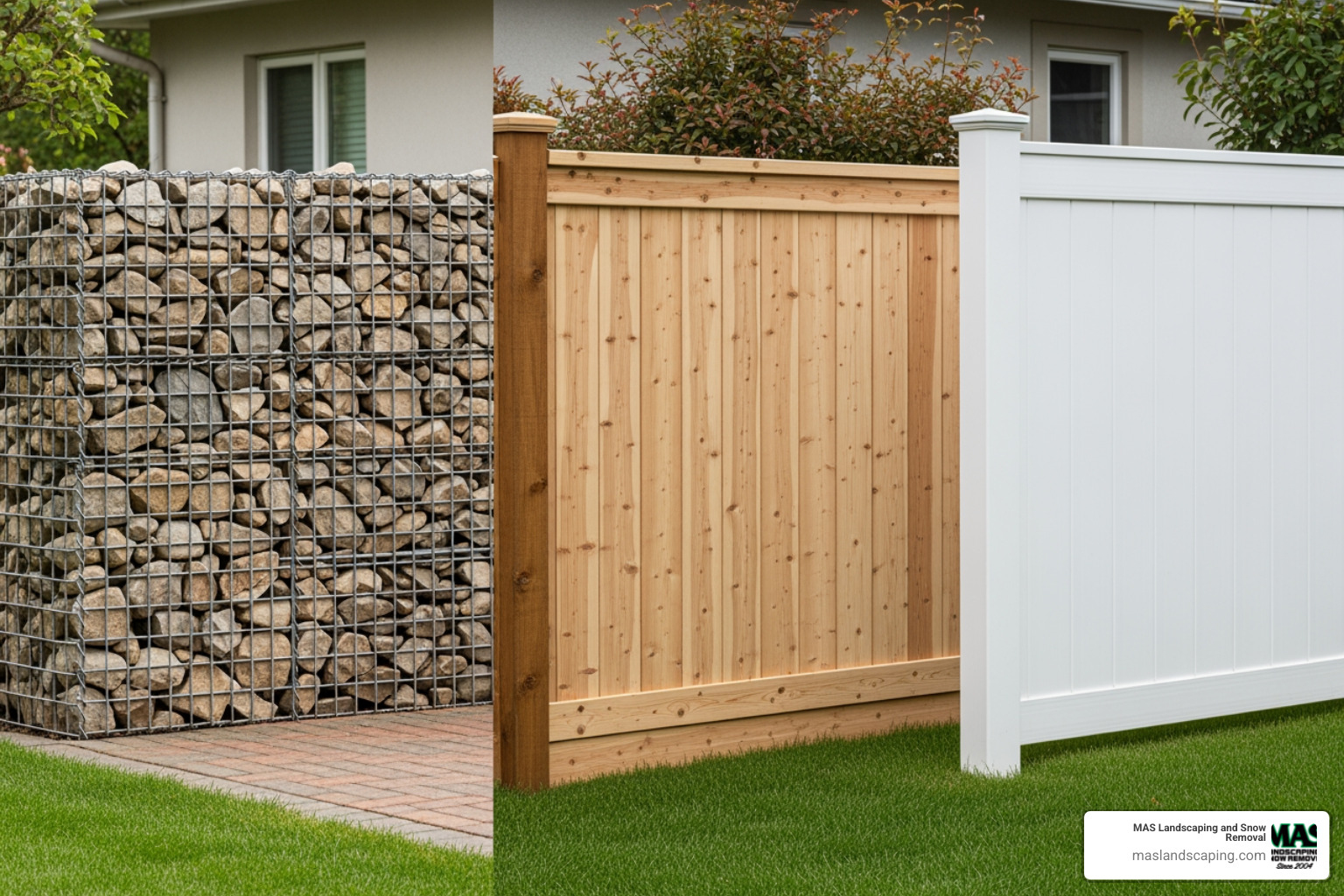
When comparing gabion fence cost to other options, it’s crucial to look beyond the initial price tag. The cheapest fence upfront is rarely the best long-term investment. While gabions can sometimes have a higher initial cost, their longevity and low maintenance often make them more economical over time.
Upfront Cost Comparison
- Wood Fences: A basic wood fence may seem cheaper initially, but it requires constant maintenance like staining and replacing rotted boards. It typically lasts only 10-20 years before needing major repairs or replacement. High-end wood can easily match or exceed the cost of gabions.
- Vinyl Fencing: Vinyl is low-maintenance and can last 20-30 years. Its upfront cost is often similar to gabions, but it lacks the natural beauty and structural strength of a stone-filled wall.
- Traditional Stone Walls: A mortared stone wall is beautiful but extremely expensive and time-consuming to build. Gabions provide a similar stone aesthetic and durability at a fraction of the cost of traditional masonry. For more on stone wall pricing, see our rock retaining wall cost guide.
Long-Term Value and Cost-Effectiveness
This is where gabions truly excel and prove to be a smart investment.
- Durability: High-quality gabion baskets can last 50 to 100 years, and the stone fill is essentially permanent. They will outlast wood and vinyl fences multiple times over.
- Maintenance: Gabions are virtually maintenance-free. There is no painting, staining, or repairing rot. This saves thousands of dollars and countless hours over the fence’s lifespan.
- Eco-Friendly: Gabions are a sustainable choice. You can use local or recycled materials, which reduces transportation impacts. They also promote natural water drainage. Gabion production can generate up to 80% less CO2 than a concrete wall of the same size. These scalable and adaptable structures can even be dismantled and relocated, offering flexibility that permanent installations cannot.
When you consider the decades of service, zero maintenance, and environmental benefits, the initial gabion fence cost is clearly an investment that pays dividends for years.
Smart Savings: How to Reduce Your Gabion Fence Cost
While gabions offer incredible long-term value, the upfront investment can be significant. Fortunately, you have control over your gabion fence cost. With strategic planning, you can build a stunning, durable gabion fence without breaking the bank by knowing where to save money without cutting corners.
Tips for a Budget-Friendly Gabion Project
- Source Local Stone: Transportation is a major cost. Using native rocks from nearby Massachusetts quarries or even stones cleared from your own property will significantly reduce delivery fees and your environmental footprint.
- Use Recycled Fill: Recycled concrete, broken bricks, or other clean demolition debris can be an excellent, low-cost fill material, especially for retaining walls where the back is not visible. It’s an eco-friendly choice that can sometimes be sourced for free.
- DIY Assembly (for small projects): For smaller, decorative projects like garden edging, assembling the baskets yourself can save substantially on labor. However, for taller walls or any structure retaining soil, professional installation is crucial for safety and stability.
- Optimize Basket Layout: When building a long fence, you can share panels between adjacent baskets. This simple design trick can reduce the number of panels needed by over 20% on large projects, lowering your material bill.
- Phased Installation: If the budget is tight, build your fence in sections. Gabions are scalable, allowing you to add more later. This spreads the gabion fence cost over time and lets you tackle the project at your own pace.
Smart planning and creative sourcing can make gabion fencing accessible for a wider range of budgets without compromising the durability and beauty that make them so appealing.
Frequently Asked Questions about Gabion Fence Costs
Homeowners across the Greater Boston area often have questions about gabion fences. Here are answers to the most common ones we hear in communities from Chelsea to Medford.
Are gabion fences cheaper than other fences?
It depends on the comparison. Upfront, a gabion fence may cost more than a basic wood picket fence. However, when compared to high-end cedar, quality vinyl, or traditional stone masonry, the gabion fence cost is very competitive. The real savings come long-term. With virtually no maintenance and a lifespan of 50-100+ years, gabions are often far more cost-effective than fences that require regular repairs and eventual replacement.
Do I need a foundation for a gabion fence?
It depends on the project. For short, decorative fences (under 3-4 feet) on stable, level ground, a compacted gravel base is usually sufficient for drainage and stability. For taller fences, retaining walls holding back soil, or on sloped ground, a more substantial foundation, often including concrete footings, is required to safely support the immense weight. Professional assessment is crucial, as building codes vary by town and a proper foundation prevents dangerous failures.
How long do gabion fences last?
This is where gabions truly stand out. High-quality galvanized or PVC-coated steel baskets can last 50 to 100 years, depending on the coating and local climate. In New England, a premium coating like Galfan is a wise investment against moisture and salt. The stone fill itself is permanent. This incredible durability makes gabions one of the longest-lasting fencing options available, far outliving wood and vinyl.
Conclusion: Is a Gabion Fence the Right Investment for You?
As we’ve seen, there is no single answer to the gabion fence cost. Your final investment will depend on your choices in materials, project size, site conditions, and installation method. While the upfront cost may be higher than a basic fence, the long-term value is undeniable.
Gabion fences are built to last 50 to 100 years with almost no maintenance—no staining, painting, or replacing rotted boards. This durability, combined with a modern aesthetic and sustainable benefits, makes them a smart investment. They offer a unique look that is both bold and timeless, using local or recycled materials to create a feature that is as eco-friendly as it is beautiful.
For homeowners throughout Saugus and surrounding communities like Everett, Lynnfield, Malden, and Chelsea, MAS Landscaping offers local expertise for every hardscaping project. We understand our region’s climate and soil, and we’ve helped countless neighbors create functional and beautiful outdoor spaces.
Curious to see what’s possible? Browse our hardscaping photo gallery to view real projects we’ve completed. When you’re ready to discuss your vision, reach out to us for a professional consultation. Let’s explore if a gabion fence is the right investment for your property.
