



Protect Your Paver Investment with the Right Sealer
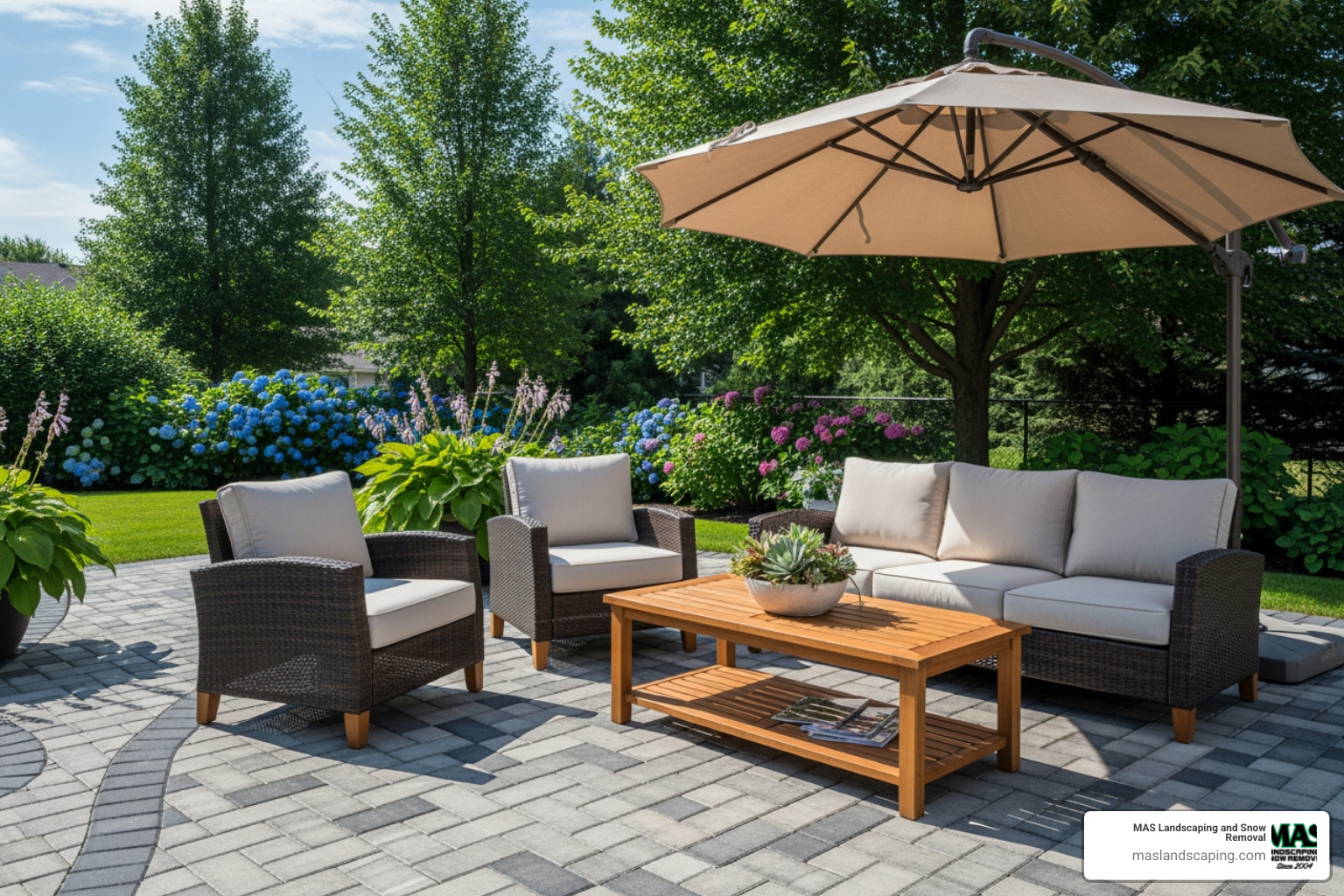
Patio paver sealing is a crucial step to protect your outdoor investment and keep it looking great. Whether you’re installing a new patio or refreshing an old one, the right sealer makes all the difference.
Quick Answer: Top 5 Paver Sealing Options to Evaluate
- Water-Based Sealers – Low VOC, easy cleanup, natural matte finish
- Solvent-Based Sealers – High gloss, improves color, stronger protection
- Film-Forming Sealers – Creates surface barrier, stabilizes joint sand
- Penetrating Sealers – Invisible protection, maintains natural look
- Color-Enhancing Sealers – Brings out natural hues, available in various finishes
Choosing a sealer can be confusing, with dozens of options varying in formula, finish, and price. Some offer a “wet look” that improves color, while others provide a barely-there natural finish. Not all sealers are created equal; prices can range from $30 to over $150 per gallon, with coverage varying widely based on paver porosity.
This guide will simplify your decision. We’ll explain the key differences between sealer types, help you match a product to your pavers, and highlight what to consider for your climate and usage. Whether you’re planning a DIY project or hiring a professional, you’ll learn what matters most in protecting your patio investment.
Why Sealing Your Pavers is a Smart Investment
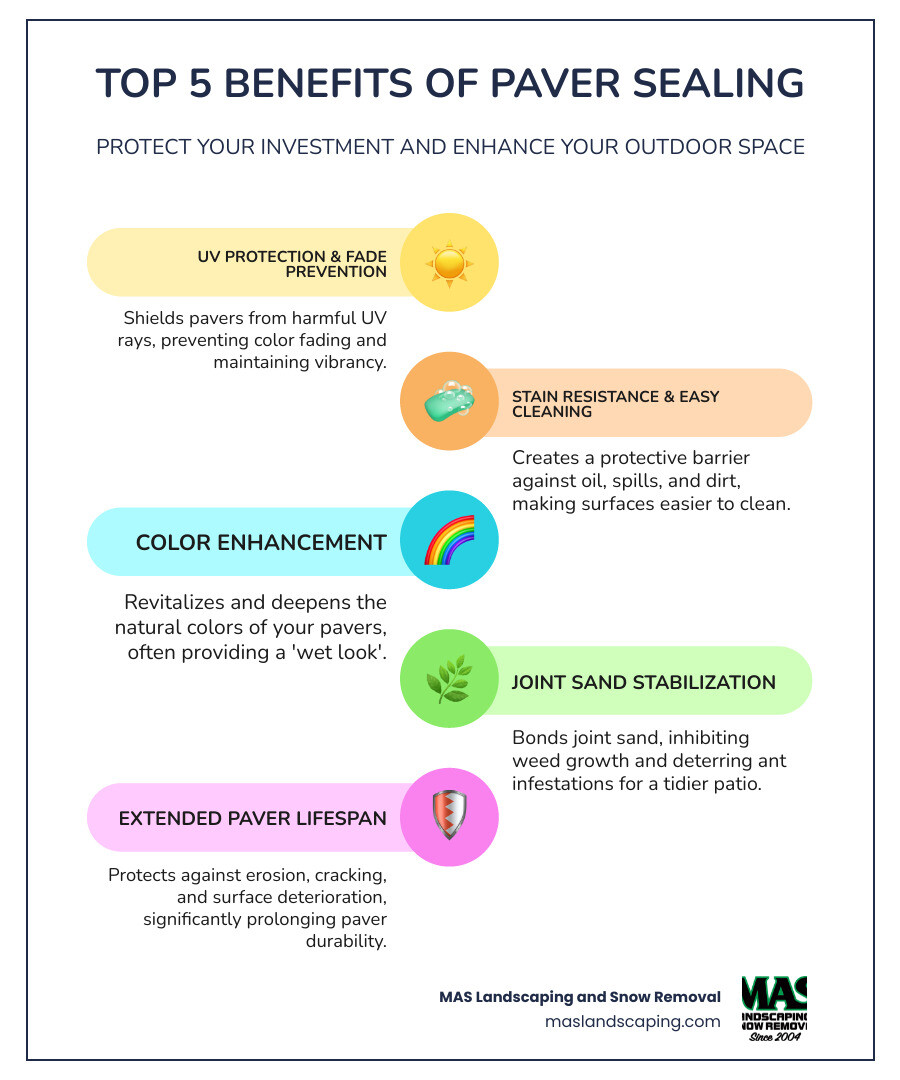
Investing in a paver patio or driveway improves your outdoor space, but it requires protection to maintain its value. Paver sealing acts as a shield, safeguarding your investment from daily wear and the harsh New England weather.
The benefits of sealing are significant:
- Protection from the Elements: Sealing creates a barrier against our Massachusetts climate, from freezing winters to humid summers, protecting pavers from damage caused by rain, snow, and ice.
- UV Ray Protection: A good sealer acts like sunscreen, preventing the sun’s UV rays from fading the vibrant colors of your pavers.
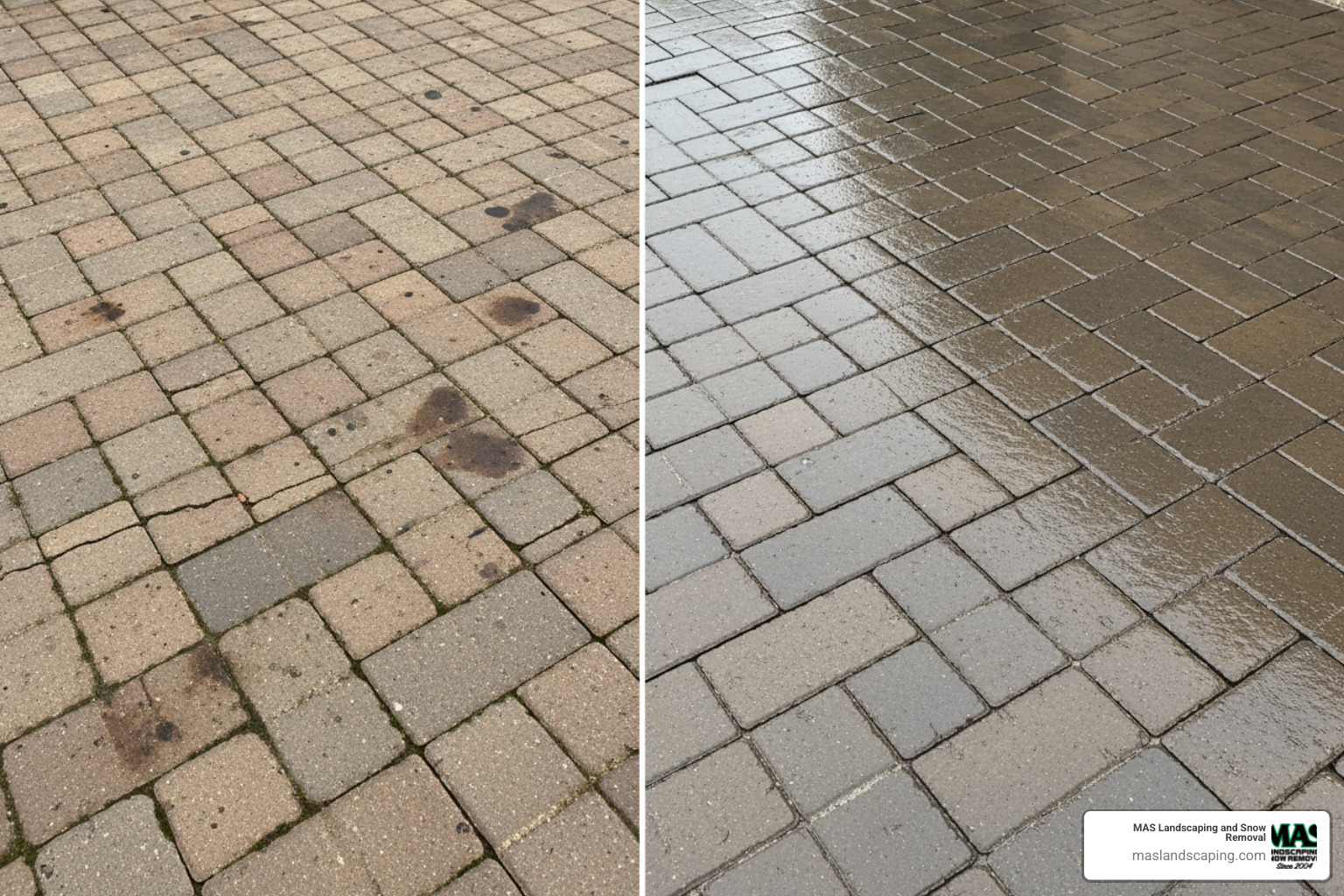
- Improved Color and Appearance: Many sealers improve the natural beauty of pavers, offering a “wet look” that deepens and enriches their colors, revitalizing even weathered patios.
- Stain Resistance and Easier Cleaning: Sealing makes the paver surface less porous, causing spills like oil, grease, and food to bead up on the surface for easy cleanup.
- Joint Sand Stabilization and Weed Prevention: Many sealers harden the sand between pavers, locking them in place and preventing erosion. This solid barrier also makes it difficult for weeds to sprout.
- Mold and Mildew Inhibition: By filling the tiny pores in pavers, sealing makes it harder for mold, mildew, and algae to grow, especially in damp, shady areas.
- Driveway Protection: Sealing a paver driveway is crucial for protecting it against heavy traffic, oil leaks, and tire marks, preserving its appearance and integrity.
Properly sealed pavers can last a lifetime, ensuring your outdoor spaces remain beautiful and functional. For more on creating stunning outdoor areas, explore our patio installation services.
Understanding the Pros and Cons of Patio Paver Sealing
When considering patio paver sealing for your property in the Everett or Saugus area, it’s important to weigh the advantages and disadvantages.
Pros of Sealing Pavers:
- Improved Appearance: Improves color and can create a rich, wet-look finish.
- Easier Maintenance: Sealed surfaces are less porous and easier to clean.
- Prevents Erosion: Hardens joint sand to maintain structural integrity.
- Extends Paver Lifespan: Protects from UV rays, stains, and weather damage.
- Inhibits Weed Growth: Stabilized joint sand blocks weeds from sprouting.
- Protects Against Stains: Repels oil, grease, rust, and organic matter.
- Reduces Efflorescence: Helps minimize the white, powdery salt buildup on concrete.
Cons of Sealing Pavers:
- Cost: There is an upfront cost for the sealer and professional application.
- Potential for Slipperiness: High-gloss sealers can become slippery when wet without an anti-slip additive.
- Requires Reapplication: Sealer must be reapplied every 3-5 years to remain effective.
- Improper Application Risks: Incorrect application can cause cloudiness, peeling, or trapped moisture.
- Can Harm Plants: Overspray from some sealants can damage nearby landscaping.
Should All Pavers Be Sealed?
While not always strictly necessary, sealing offers significant benefits for most paver types. The decision often balances aesthetic goals with structural needs.
- Concrete Pavers: As a porous material, concrete is highly susceptible to stains and fading. Sealing is strongly recommended to protect its appearance and stabilize joint sand.
- Brick Pavers: Clay brick is also porous and benefits from sealing to prevent stains, improve color, and reduce efflorescence.
- Natural Stone (Bluestone, Granite, etc.): Porosity varies by stone type. Porous stones like bluestone need sealing to prevent stains and fading. Denser stones like granite benefit from easier cleaning and improved appearance. Penetrating sealers are often preferred to maintain a natural look.
While some manufacturers offer pre-sealed pavers, most standard pavers require an aftermarket sealer to add a crucial layer of protection and extend their beauty and lifespan. For beautiful and durable walkways that benefit from proper sealing, explore our walkway installation services.
Choosing the Right Sealer for Your Pavers
The “right” sealer for your patio in Malden or Medford depends on your paver material, desired aesthetic, and local climate. Our New England freeze-thaw cycles make sealing particularly important, as it provides a barrier against moisture penetration that can cause damage over time.
Water-Based vs. Solvent-Based Sealers
This is the most fundamental choice. Both have distinct advantages suitable for different situations.
| Feature | Water-Based Sealers | Solvent-Based Sealers |
|---|---|---|
| VOCs (Volatile Organic Compounds) | Low VOCs, more environmentally friendly | High VOCs, stronger odor, less eco-friendly |
| Application | Easier cleanup with water, can be applied to damp surfaces | Requires completely dry surface, cleanup with solvents |
| Finish | Typically matte, natural look, or satin | Often high-gloss, wet look, or color-enhancing |
| Color Improvement | Subtle improvement, natural look | Deeper, richer color improvement |
| Breathability | More breathable, allows moisture vapor to escape | Less breathable, can trap moisture if applied too thick |
| Durability | Good, often requires multiple coats | Excellent, typically very hard-wearing |
| Cost (per gallon) | Average $80-$150+ | Average $80-$150+ |
| Coverage (per gallon) | 100-150 sq ft (often multiple coats needed) | 80-120 sq ft (often single coat for film-forming) |
| Application Temperature | Generally 50-90°F | Generally 50-90°F, lower temps better due to faster evaporation |
Water-based sealers are popular for their low odor, eco-friendliness, and easy water cleanup. They typically provide a natural matte or satin finish and are more breathable, which is beneficial in humid climates.
Solvent-based sealers are known for delivering a high-gloss, “wet look” and deeper color improvement. They create a very durable surface but have higher VOCs, a strong smell, and require solvents for cleanup. The paver surface must be completely dry before application.
Film-Forming vs. Penetrating Sealers
Sealers also differ in how they protect the paver surface:
- Film-Forming Sealers: These create a protective film on the paver surface, which is excellent for stabilizing joint sand and providing a gloss or “wet look” finish. They offer a physical barrier against stains and UV rays but can trap moisture if applied incorrectly, leading to a hazy look.
- Penetrating Sealers: These soak into the paver to form a protective barrier within its pores, offering “invisible” protection. They maintain the natural look and texture of the paver, repel water, and resist stains without making the surface slippery. However, they typically do not stabilize joint sand.
Choosing the Right Finish for Your Patio Paver Sealing Project
The sealer’s finish dramatically impacts your patio’s final look:
- Matte Finish (Natural Look): Offers protection with a subtle, non-reflective finish that preserves the paver’s original appearance. Often achieved with penetrating sealers.
- Semi-Gloss / Satin Look: Provides a slight sheen that improves color without being overly reflective. A popular middle-ground choice.
- High-Gloss / Wet Look: Creates a rich, deep appearance that makes colors “pop,” as if the pavers were wet. Achieved with film-forming sealers.
- Color-Enhancing Sealers: Formulated to deepen and enrich the existing colors of your pavers. Available in various finishes.
Slip Resistance: High-gloss sealers can reduce traction. For pool decks or walkways, consider a product with anti-slip additives or a matte finish to ensure safety.
The Ultimate Guide to Patio Paver Sealing: Prep, Application, and Mistakes to Avoid
Proper patio paver sealing is all about preparation. The final result is only as good as the prep work, especially in our Massachusetts climate where temperature and moisture can affect the outcome.
Ideal weather for sealing is a dry, cool day with low humidity and no rain expected for at least 24-48 hours. The best temperature range is between 50°F and 90°F. For new pavers, wait 60-90 days before sealing to allow natural efflorescence (white salt deposits) to escape. Sealing too soon can trap moisture and efflorescence, causing a cloudy finish. Always check the sealer manufacturer’s recommendations, as some breathable products can be applied sooner.
The Essential Preparation Process
A clean, dry, and stable surface is non-negotiable for a successful sealing project.
- Clear the Area: Remove all furniture, planters, and other items from the paver surface.
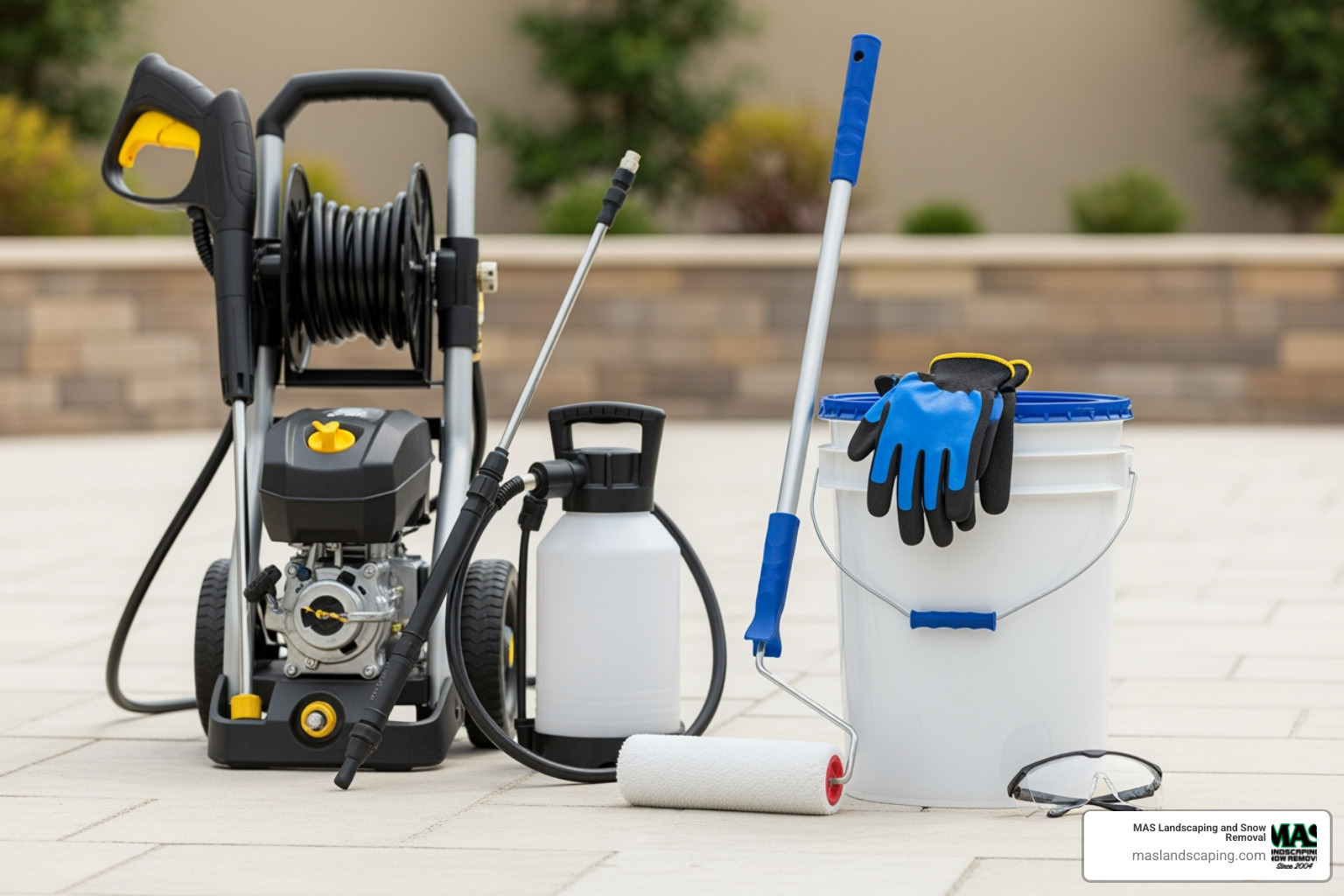
- Thorough Cleaning: Start by sweeping or blowing off loose debris. Pull any weeds from the joints. Then, power wash the entire area to remove embedded dirt, grime, and algae. Use a fanned nozzle at an angle to avoid damaging the pavers.
- Stain Removal: Treat specific stains like oil or rust with appropriate paver cleaners. Rinse thoroughly after using any cleaning product.
- Efflorescence Treatment: If a white, powdery residue is visible, scrub it with a paver-specific efflorescence cleaner before sealing.
- Level Pavers: Inspect for and level any uneven or shifted pavers by adjusting the base material underneath.
- Fill Joints with Sand: After cleaning, sweep fresh joint sand (polymeric sand is recommended for its hardening properties) into the gaps. Follow the sand manufacturer’s instructions for activation and curing before sealing.
- Ensure Complete Drying: Pavers must be completely dry before sealing. This can take 24-48 hours after washing. Trapped moisture is the primary cause of a cloudy, peeling finish.
How to Apply Sealer and Avoid Common Mistakes
With a pristine and dry surface, you’re ready for application.
Tools Needed:
- Sprayer: A low-pressure garden or battery-operated sprayer for even coverage.
- Roller: A large nap roller for textured surfaces or back-rolling.
- Protective Gear: Gloves, eye protection, and a respirator mask (especially for solvent-based products).
Application Technique:
- Test Patch: Always test the sealer on a small, inconspicuous area first to check the final look.
- Stir Gently: Stir the sealer before and during application. Do not shake, as this can create bubbles.
- Apply Thin, Even Coats: Two thin coats are better than one thick coat. Work in manageable sections, maintaining a “wet edge” to avoid lap marks.
- Flood the Joints: Ensure the sealer gets into the paver joints to help with stabilization. Back-roll to push sealer into the joints and ensure even coverage.
- Avoid Puddles: Immediately spread or remove any puddles of excess sealer with a dry roller or leaf blower to prevent shiny, slippery spots.
- Drying Time: Follow manufacturer instructions for drying time between coats and before allowing traffic. Typically, wait 24 hours for light foot traffic and 48-72 hours for vehicles.
Common Mistakes to Avoid:
- Applying on a Wet Surface: This traps moisture and causes a cloudy finish.
- Over-Application: Too much sealer leads to a sticky, hazy, or overly slippery surface.
- Applying in Direct Sun/High Heat: Can cause the sealer to dry too fast, resulting in bubbles and streaks.
- Skipping the Test Patch: A crucial step to ensure you like the finish.
- Ignoring Manufacturer Instructions: Each product has specific guidelines that must be followed.
For a comprehensive visual guide on how to seal pavers, you might find resources like this guide helpful.
Maintenance and Longevity of Sealed Pavers
Once sealed, a little ongoing care will maximize the lifespan of the protective layer. A paver sealer is not permanent; it wears down over time from traffic and exposure to the elements. Typically, a quality sealer lasts three to five years, but this varies based on:
- Type of Sealer Used: Higher-quality formulas offer longer durability.
- Exposure and Traffic: Pavers in constant sun, harsh weather (like our Saugus, MA winters), or high-traffic areas will need more frequent reapplication.
- Preparation and Cleaning: Proper initial prep and routine sweeping help the sealer last longer.
To know when it’s time to reseal, perform a simple water test. If water beads up on the surface, the sealer is working. If it soaks in and darkens the paver, it’s time to reapply. Other signs include color fading, new stains appearing, or loose joint sand.
How Often Should Paver Sealer Be Reapplied?
The general rule is every three to five years, but you should inspect your pavers annually. Factors influencing reapplication frequency include:
- Climate and Sun Exposure: In areas like Everett and Lynnfield, the combination of strong UV rays and freeze-thaw cycles can degrade sealers faster. Sun-drenched patios may need resealing more often than shaded ones.
- Traffic Levels: A busy driveway will wear down sealer faster than a decorative walkway. Driveways often need resealing on the shorter end of the 3-5 year spectrum.
- Visual Cues: Don’t wait for the sealer to fail completely. Proactive reapplication based on water absorption or fading is the best approach.
The Cost of Patio Paver Sealing
Understanding the cost of patio paver sealing helps in planning. The total expense depends on the sealer type, project size, and whether you DIY or hire a professional.
Average Costs (Based on Internet Data, Not Actual MAS Landscaping Costs):
- Per Gallon Price: Paver sealants typically range from $30 to $150+ per gallon. The price varies by quality, type (water-based vs. solvent-based), and finish.
- Coverage Area: One gallon of sealer generally covers between 80 to 250 square feet. Porous pavers will absorb more sealer, reducing coverage.
Important Note on Pricing: These are average costs based on internet data and not actual costs for MAS Landscaping. The final price for your project will depend on a detailed assessment.
DIY vs. Professional Cost:
- DIY: Your costs will be the sealer, cleaning supplies, and application tools. This is cheaper but requires significant time and effort.
- Professional Application: Hiring a service like MAS Landscaping includes materials and labor. While a higher upfront cost, it ensures expertise, proper equipment, and a flawless result, avoiding common DIY mistakes. For many, the time savings and peace of mind are well worth the investment.
For more information on maintaining your outdoor spaces, please visit our landscape maintenance services.
Frequently Asked Questions about Paver Sealing
How long should new pavers cure before being sealed?
For new installations in areas like Saugus and Medford, it’s best to wait 60 to 90 days before sealing. This allows time for efflorescence (a natural, white, powdery salt deposit) to escape from the pavers. Sealing too early can trap this efflorescence, creating a permanent cloudy or milky look under the sealer. Some breathable sealers are designed for earlier application, so always check the manufacturer’s specific recommendations for your products.
Can sealing pavers make them slippery?
Yes, some sealers can make pavers slippery, especially when wet. This is primarily a concern with high-gloss and film-forming sealers that create a smooth surface film. For pool decks, walkways, or other high-traffic areas, consider these options for better slip resistance:
- Choose a matte or penetrating sealer, which maintains the paver’s natural texture.
- Select a sealer that includes an anti-slip additive in its formula.
- Add a separate anti-slip grit to the sealer during application.
Can sealing help prevent weed growth?
Absolutely. This is a major benefit of patio paver sealing. Film-forming sealers are particularly effective at preventing weeds. When applied, the sealer soaks into and hardens the sand in the paver joints. This creates a solid barrier that makes it very difficult for weed seeds to take root and grow. For best results, ensure joints are properly filled with quality joint sand (like polymeric sand) before sealing.
Protect Your Investment with Professional Sealing
Choosing and correctly applying the right paver sealer is critical for preserving the beauty and longevity of your outdoor spaces. Patio paver sealing protects against harsh New England weather, prevents stains, and inhibits weeds, extending the life of your investment.
While DIY is an option, the process has many pitfalls. Mistakes in preparation or application can lead to costly issues like a cloudy or peeling finish. For a flawless, long-lasting result without the hassle, the expert team at MAS Landscaping is here to help.
Homeowners in Saugus, MA, and surrounding areas like Everett, Lynnfield, and Malden can rely on our local expertise and professional equipment. Let us protect your investment and keep your outdoor spaces beautiful for years to come.
