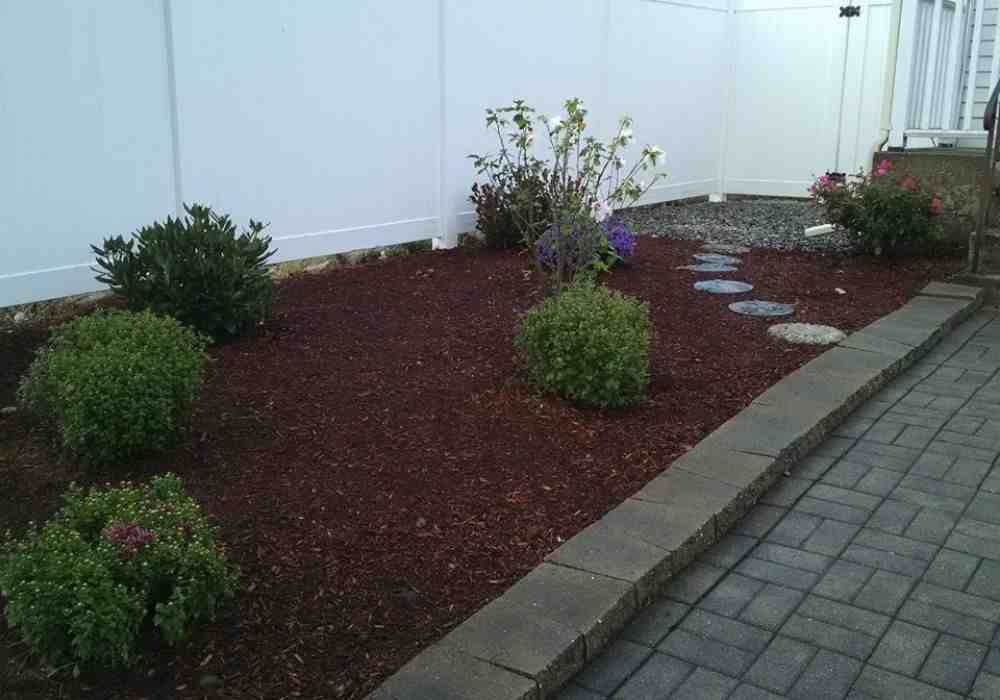



Your Local Guide to Finding River Rock Near Me in 2026
If you’re searching for river rock near me in the Greater Boston area — including Saugus, Everett, Lynnfield, and Malden — here’s the short answer:
Where to find river rock locally:
- Local landscape supply yards and gravel pits (bulk by the yard or ton)
- Masonry and garden centers (smaller quantities, sometimes by the bucket)
- Online ordering through local bulk material suppliers with delivery to your address
What to expect:
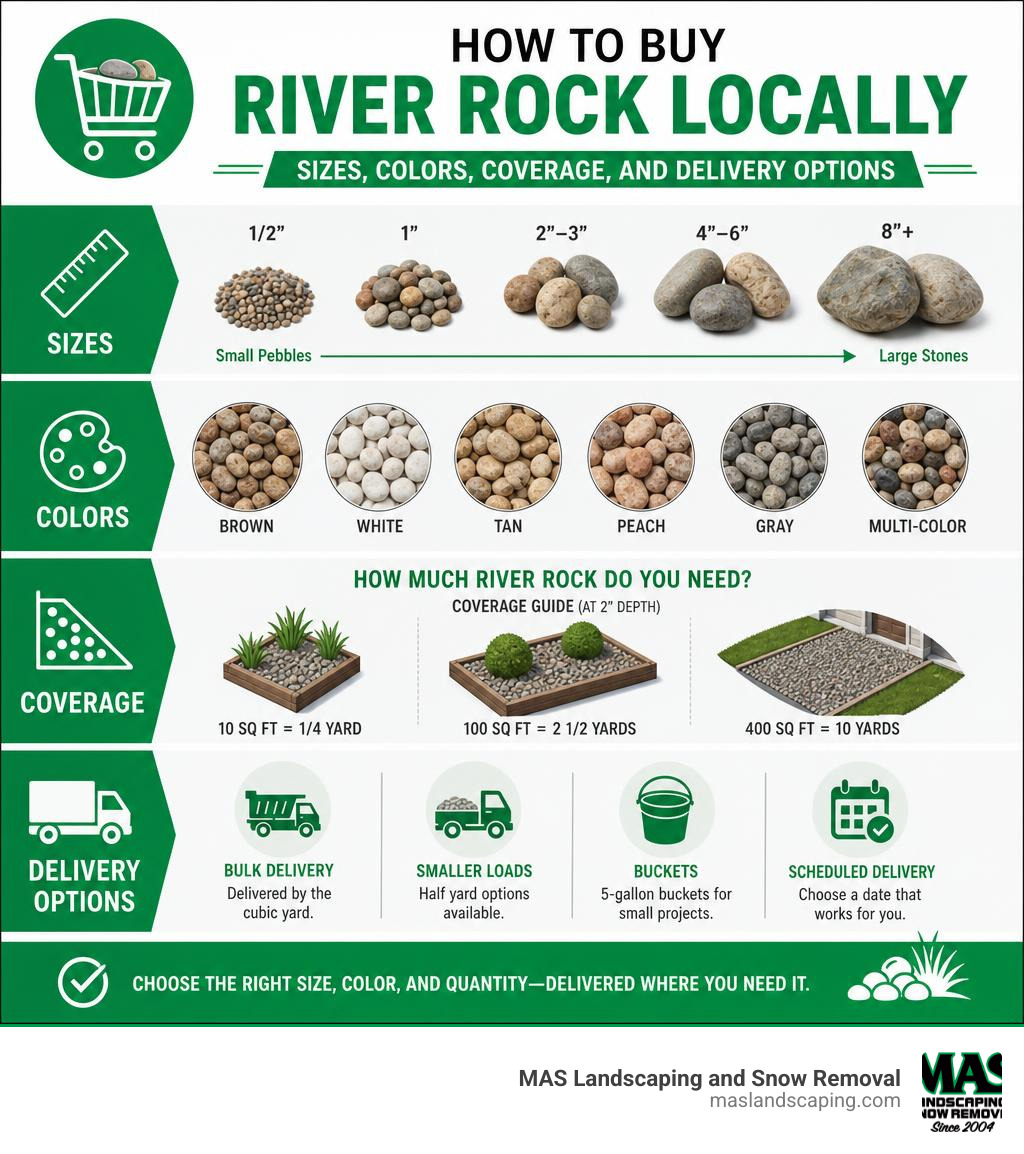
- Sizes range from 1/2 inch pebbles up to 8-inch stones
- Colors include brown, white, tan, peach, gray, and multi-color blends
- Sold by the cubic yard, half yard, or 5-gallon bucket
- Most local suppliers offer delivery, often with a minimum order requirement
River rock is one of the most popular landscaping materials in New England — and for good reason. It’s low maintenance, it handles our wet springs and harsh winters well, and it looks great in everything from garden beds to drainage swales.
But buying it isn’t always straightforward. Sizes, colors, pricing structures, and delivery policies vary widely between suppliers. Order the wrong size or quantity and you’re either making a second trip or paying for material you don’t need.
This guide is built for homeowners and property managers in the North Shore and Greater Boston area who want to plan a river rock project in 2026 — without the guesswork. Whether you’re covering a garden bed, building a dry creek, or solving a drainage problem, we’ll walk you through everything you need to know before placing an order.
Must-know river rock near me terms:
What River Rock Is and How It Compares to Other Landscape Stone
When you see the term “river rock,” it refers to naturally water-worn, rounded stones harvested from riverbeds or ancient glacial deposits. Unlike manufactured stones that are crushed mechanically, river rock gets its smooth, rounded edges from centuries of moving water friction.
In the landscaping trade, you might also hear it called river jack or Delaware rounds. Because of its smooth texture and natural aesthetic, it’s widely used as a decorative stone, a high-performance drainage stone, a durable mulch alternative, and a structural hardscaping material.
To help you understand where river rock fits in the landscape design world, here is how it stacks up against other common choices:
| Feature | River Rock | Pea Gravel | Crushed Stone | Bark Mulch |
|---|---|---|---|---|
| Shape | Rounded, smooth | Small, rounded | Angular, sharp | Organic shreds |
| Common Sizes | 1 to 8 inches | 1/4 to 3/8 inch | 1/2 to 1.5 inches | N/A |
| Walkability | Poor (shifts underfoot) | Fair (easy to sink in) | Excellent (packs tight) | Excellent |
| Drainage | Outstanding | Excellent | Good | Fair (can wash away) |
| Lifespan | Lifetime | Lifetime | Lifetime | 1 to 2 years |
| Best Use | Dry creeks, borders, drains | Path accents, play areas | Driveways, sub-bases | Garden soil health |
If you are looking for creative ways to integrate these stones into your yard, check out our guide on decorative river rock ideas.
River Rock vs Pea Gravel, Crushed Stone, and Mulch
Choosing the right stone requires knowing how each material behaves underfoot and in New England’s variable climate.
- Pea Gravel: Like river rock, pea gravel is rounded, but it is much smaller (typically pea-sized). While it offers a softer texture, it shifts easily. Walking on a deep bed of pea gravel can feel like walking through loose sand.
- Crushed Stone: Angular stones like crushed gravel or blue stone lock together mechanically when compacted. This makes crushed stone the gold standard for driveways and structural sub-bases, whereas rounded river rock will roll and slide under heavy tire pressure.
- Bark Mulch: While organic bark mulch nourishes the soil as it decomposes, it must be replaced annually. It can also wash away during heavy spring downpours. River rock provides a permanent, heavy barrier that won’t blow away, rot, or attract wood-boring pests. However, stone retains and radiates solar heat, which can stress shallow-rooted plants during hot summer spells.
For a deeper dive into making the right pick, read our comparative river rock vs pea gravel guide.
Why River Rock Looks Different From Load to Load
One of the most common surprises for homeowners is ordering a second load of river rock and realizing it doesn’t perfectly match the first. Because river rock is a natural earth product, its appearance is highly dependent on the source quarry or geological deposit it was harvested from.
Furthermore, river rock is famous for its color-shifting properties when wet. Dry river rock often looks muted, dusty, or chalky due to the fine stone dust left over from the screening process. Once a heavy rain washes the stone—or when you spray it down with a hose—the deep, rich, underlying colors (pinks, deep grays, golds, and tans) instantly pop.
Because of this, we always recommend rinsing a small sample of stone to see its true colors before approving a bulk delivery.
River Rock Near Me: Local Sizes, Colors, Costs, and Delivery Options
When searching for river rock near me on the North Shore, you’ll find that suppliers sell stone in three primary ways: bulk cubic yards, tons, or by the 5-gallon bucket for small DIY touch-ups.
For local projects, sourcing from established regional suppliers is key. Depending on your exact location in our service area, you can find quality materials at places like Garden World Home – Saugus or Georgetown Building Supply. If you are closer to the Danvers area, you might look into sourcing options near Topsoil, Rocks and Gravel Near Danvers, Massachusetts.
Average Costs and Delivery Expectations
Please note: The pricing ranges below represent average market costs based on internet data from various regional suppliers and are not the actual project or material costs for MAS Landscaping.
- Bulk River Rock (Cubic Yard): Typically ranges from $80 to $350 per cubic yard, depending heavily on the size of the stone, color rarity, and whether it is a local New England blend or an imported variety.
- By the Ton: Ranges from $170 to $500 per ton (one cubic yard of river rock weighs roughly 1.3 to 1.5 tons).
- Delivery Fees: Local delivery fees generally run between $40 and $200+ depending on your distance zone, fuel surcharges, and the size of the truck required.
For example, when looking at bulk delivery structures, some regional suppliers like those featured in this bulk river rock sizing and delivery example charge flat rates for local zones and scale up for extended distances. To learn more about how bulk orders are managed, you can read our bulk landscaping material guidance.
Common River Rock Sizes Available Locally
Understanding stone sizing is critical because a mistake here can ruin the functionality of your project. River rock is sized by the screen it passes through during processing, meaning you will always see a natural variation in your load.

- 1/2 Inch to 3/4 Inch (Pea-to-Dime Sized): Excellent for small decorative borders, garden accents, and light pathways where larger stones would be uncomfortable to walk on.
- 1 to 3 Inches (Golf-Ball to Lemon Sized): The most popular choice for general landscaping, garden beds, and dry creek beds. It is heavy enough to resist leaf blowers but small enough to spread easily.
- 2 to 4 Inches (Fist Sized): Perfect for heavy-duty drainage swales, pond surrounds, and erosion control on sloped banks.
- 4 to 8 Inches (Melon Sized): Often used to line deep drainage channels, build decorative borders, or serve as structural accents in large landscape designs.
Common River Rock Colors in Massachusetts Landscapes
Our local geology gives New England river rocks a distinct, rugged aesthetic. The most common color palettes you will find near Saugus, Lynnfield, and Malden include:
- New England Blend: A beautiful, rustic mix of grays, soft tans, muted pinks, and charcoal tones that blend perfectly with our local native plants and historic homes.
- White and Tan: A bright, clean option that reflects light well, making shaded garden beds pop.
- Deep Browns and Grays: A subtle, earth-toned palette that mimics natural forest floors and stream beds.
How to Search for River Rock Near Me Without Overpaying
To get the best value on your stone, follow these local sourcing tips:
- Compare Yard vs. Ton Pricing: Some yards sell by volume (yards), while others sell by weight (tons). Always convert the measurements to make sure you are comparing apples to apples (remember: 1 cubic yard ≈ 1.5 tons of river rock).
- Watch the Delivery Radius: Sourcing stone from a yard directly in Saugus or Lynnfield will always save you money on fuel surcharges compared to ordering from a supplier south of Boston.
- Inquire About Split Loads: If you need both river rock and mulch, ask if the supplier has split-bed trucks. This allows them to deliver both materials in a single trip, saving you a second delivery fee.
You can find more details on local material selection from regional sources like Materials — William F. Dunn Landscaping & Contracting or check out general sizing guides like this river rock size and coverage reference.
River Rock Near Me Delivery Questions to Ask Before Ordering
Before you call a local supplier or authorize a delivery truck to enter your property, make sure you ask these key logistical questions:
- What is your minimum order quantity for delivery? (Many yards require at least 1 to 3 yards).
- Can your truck safely dump on my driveway, or do you require a paved street drop?
- Do you offer tarp placement services to protect my asphalt or lawn?
- What is your policy if the delivery truck damages my overhead branches or power lines?
- Are there additional fuel surcharges or rain-delay policies I should know about?
How to Calculate How Much River Rock You Need
Ordering the right amount of stone is a balancing act. Order too little, and your project looks unfinished; order too much, and you have a heavy pile of rocks sitting on your driveway with nowhere to put them.
Simple River Rock Formula for Homeowners
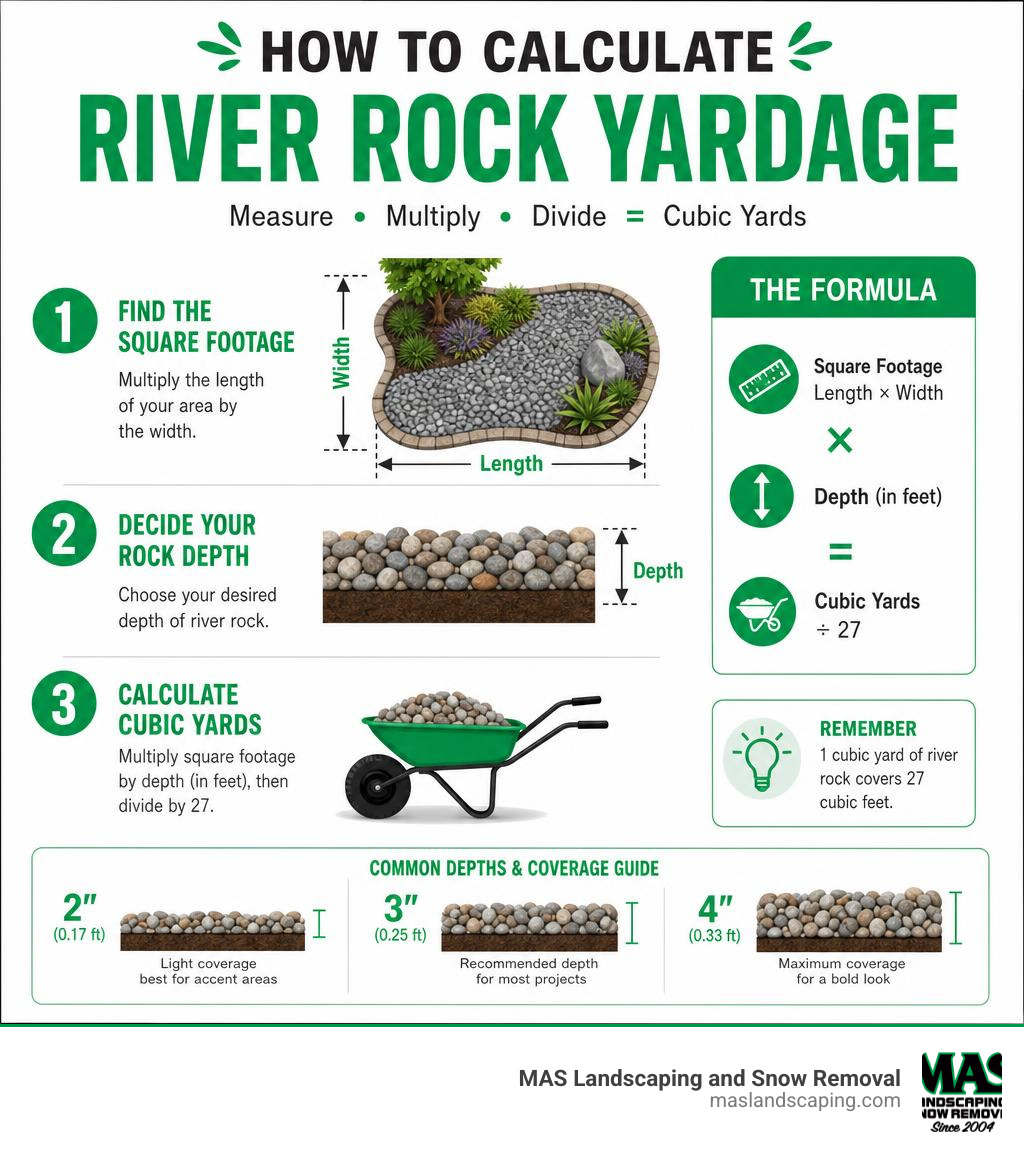
To calculate how many cubic yards of river rock you need, use this simple three-step formula:
- Find the Square Footage: Multiply the length of your project area by the width. $$text{Length (ft)} times text{Width (ft)} = text{Square Footage (sq ft)}$$
- Determine Your Depth in Feet: Divide your desired stone depth (in inches) by 12. $$text{Depth (inches)} div 12 = text{Depth (ft)}$$
- Calculate Cubic Yards: Multiply your square footage by your depth in feet, then divide by 27 (since there are 27 cubic feet in a cubic yard). $$frac{text{Square Footage} times text{Depth (ft)}}{27} = text{Cubic Yards}$$
As a rule of thumb, one cubic yard of river rock covers approximately 100 square feet at a 2-inch depth.
Recommended Depths by Project Type
- Garden Beds (Weed Suppression): 2 to 3 inches deep. This provides enough coverage to block sunlight from reaching weed seeds without suffocating your soil.
- Dry Creek Beds & Drainage Swales: 3 to 6 inches deep. A deeper bed prevents the fast-moving water from eroding the soil beneath the stones.
- Walkways & Pathways: 1.5 to 2 inches deep. Keeping the layer relatively thin prevents your feet from sinking too deeply into the rounded stones.
When to Order by Ton Instead of by Cubic Yard
If your local supplier prices their stone by the ton, you’ll need to convert your cubic yard calculation. Because river rock is highly dense, one cubic yard weighs roughly 2,600 to 3,000 pounds (1.3 to 1.5 tons).
If you have calculated that you need 4 cubic yards of stone, you should order approximately 6 tons of material to ensure complete coverage.
Best Uses for River Rock in Landscaping and Hardscaping
River rock is incredibly versatile. Its natural weight and rounded shape make it ideal for solving practical yard problems while elevating your home’s curb appeal.
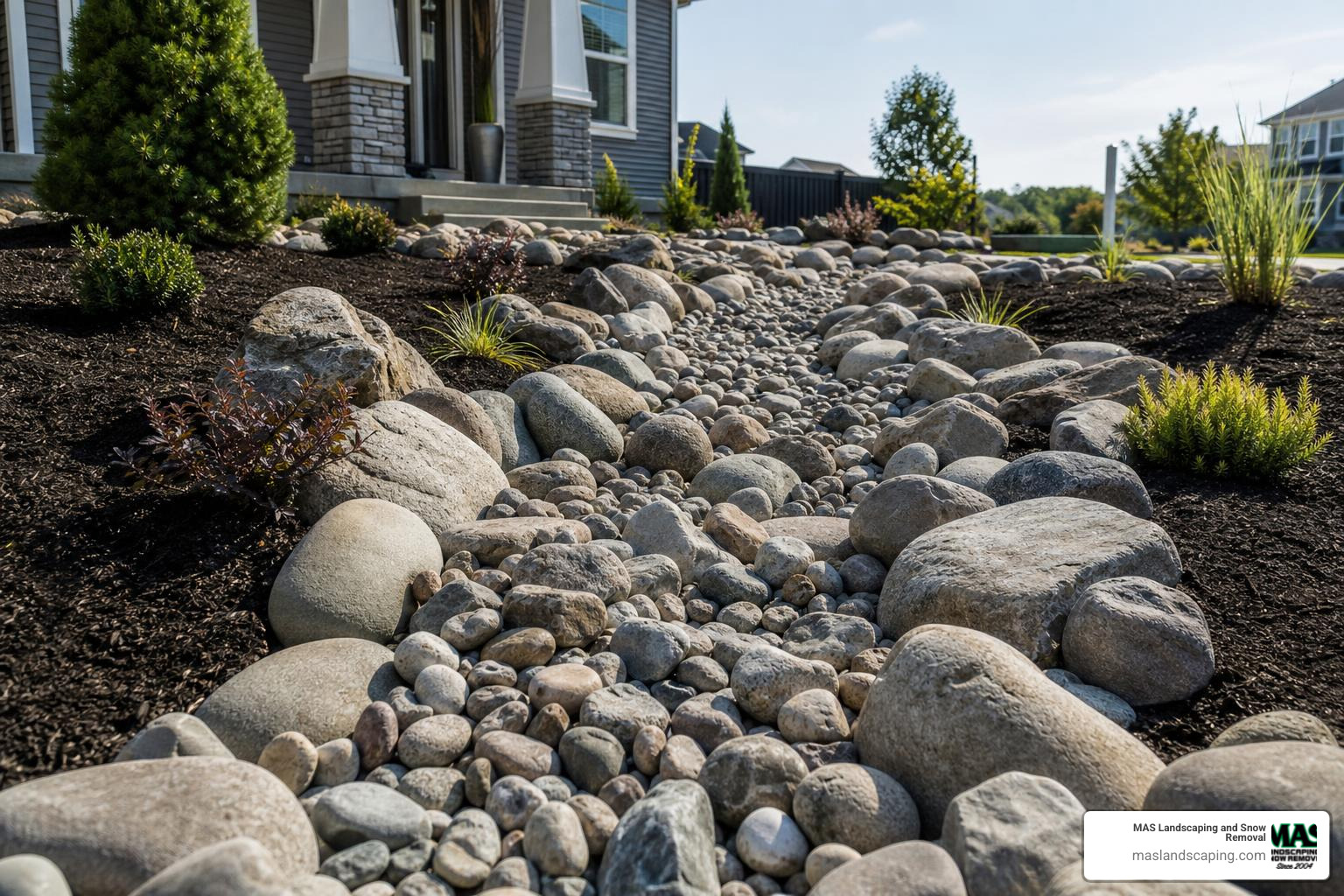
If you’re planning a larger outdoor renovation, you can read more about integrating stone structures in our guide to hardscaping with river rock.
Choosing River Rock for Driveways, Pathways, and Walkways
While river rock looks beautiful along a path, it behaves differently than crushed gravel. Because the stones are rounded, they slide against each other. If you use large river rocks (2 inches or larger) on a primary walkway, it can create a tripping hazard and make snow removal in the winter nearly impossible.
If you want the river rock look for a pathway, we recommend using a smaller 3/4-inch stone spread no deeper than 1.5 inches, bordered by a sturdy, compacted edging material to keep the stones contained.
Choosing River Rock for Garden Beds and Around Plants
Replacing bark mulch with river rock is an excellent way to create a clean, modern, low-maintenance garden. However, always install a heavy-duty, professional-grade landscape fabric beneath the stone first. Without it, the heavy rocks will sink into the New England soil over time.
Additionally, keep the stone a few inches away from the stems of delicate plants and shrubs. The rocks absorb heat during hot summer days, which can stress sensitive root systems if piled too close.
Choosing River Rock for Drainage and Erosion Control
This is where river rock truly shines. Because of their rounded shapes, these stones leave natural gaps that allow water to flow through incredibly fast.
- French Drains: Use 1-to-3-inch river rock to line trenches and cover perforated pipes.
- Downspout Splash Pads: Place a cluster of 2-to-4-inch stones where your gutters discharge to break the fall of the water and prevent lawn erosion.
- Dry Creek Beds: Construct a winding channel of mixed 1-to-3-inch and 4-to-8-inch stones to guide heavy stormwater runoff safely away from your home’s foundation.
Local River Rock vs Imported Decorative Stone
When sourcing stone, you’ll have to choose between local New England river rock and imported varieties (like Mexican Beach Pebbles).
Local stone is highly cost-effective, readily available, and matches the natural rocky landscape of Massachusetts. Imported decorative stones offer incredibly uniform shapes and deep, exotic colors (like jet black or pure white), but they come with a much higher price tag and a larger carbon footprint due to shipping.
Performance, Maintenance, and Buying Checklist
Before you head out to purchase your stone, it helps to understand the long-term maintenance requirements and have a clear game plan. To help you select the right materials for your entire yard, check out our comprehensive guide on landscaping material planning.
How River Rock Performs for Drainage and Weed Control
River rock provides world-class drainage because it doesn’t absorb water or compact into an impermeable layer.
For weed control, river rock works mechanically by blocking sunlight. However, windblown dirt, leaves, and organic debris will eventually settle into the gaps between the rocks. If left uncleaned, this debris creates a fertile compost layer where weed seeds can germinate on top of your landscape fabric.
River Rock Maintenance Tips After Installation
To keep your stone beds looking pristine year after year:
- Blow Leaves Regularly: Use a leaf blower on a low setting to clear fall leaves and twigs before they decompose into the stone bed.
- Rinse Annually: Spray down the stones with a garden hose every spring to wash away accumulated pollen, dirt, and dust.
- Apply Pre-Emergent: Spray a weed pre-emergent over the stones twice a year to stop windblown seeds from taking root in the rock gaps.
- Keep Edges Neat: Occasionally rake back any stones that have migrated onto your lawn or walkways.
Quick Buyer Checklist Before You Place an Order
Before you sign off on a bulk delivery, run through this quick checklist:
- [ ] Measure twice: Verify your square footage and depth calculations.
- [ ] Get a sample: See the stone dry and wet before buying.
- [ ] Check delivery access: Make sure there are no low-hanging branches, wires, or soft lawns in the path of the dump truck.
- [ ] Inquire about delivery minimums: Confirm the yard’s minimum load requirements.
- [ ] Prep the site: Lay down your professional-grade landscape fabric and install sturdy edging before the truck arrives.
Frequently Asked Questions About Buying River Rock Locally
Is river rock better than mulch?
It depends on your goals. River rock has a much higher upfront cost than bark mulch, but it lasts a lifetime and never needs to be replaced. However, unlike mulch, river rock does not break down to enrich the soil, and it can retain heat in the summer. It is best for drainage areas, modern architectural beds, and low-maintenance borders.
How much does one cubic yard of river rock cover?
One cubic yard of river rock covers approximately 100 square feet at a 2-inch depth. If you need a deeper 3-inch layer for larger stones, one yard will cover about 65 to 80 square feet.
Can river rock be used for a driveway?
No, pure rounded river rock is not recommended for driveways. Because the stones are smooth and round, they will shift, roll, and rut under the weight of vehicles. For a functional stone driveway, you should use an angular, self-compacting material like crushed stone or native gravel.
Conclusion
Integrating river rock into your yard is one of the smartest upgrades you can make to your property. It solves tough New England drainage issues, prevents soil erosion during heavy spring rains, and provides a beautiful, permanent architectural frame for your home.
At MAS Landscaping and Snow Removal, we have spent years helping homeowners across Saugus, Lynnfield, Malden, Everett, and the surrounding North Shore communities design and build outdoor spaces that last. Whether you need help calculating your stone needs, choosing the perfect New England blend, or executing a flawless installation, our team is here to help.
Ready to transform your yard with the perfect stone features? Plan your landscaping material project with us today and let’s bring your outdoor vision to life!