




Commercial Property Snow Removal: Essential 2025 Guide
Why Commercial Property Snow Removal Matters for Your Business
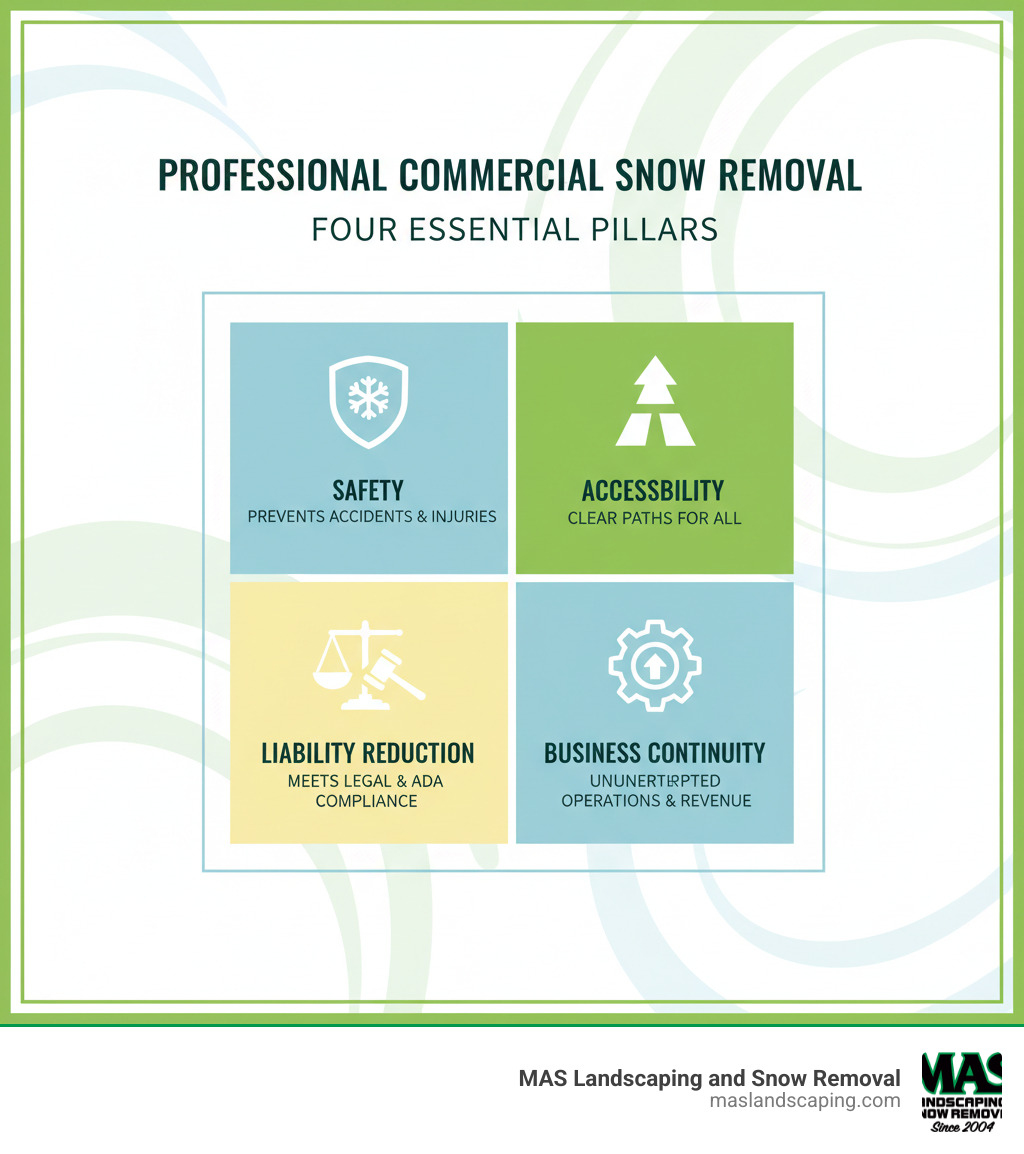
Commercial property snow removal is critical for three key reasons:
- Safety and Liability – Prevents slip-and-fall accidents that can lead to costly lawsuits.
- Business Continuity – Keeps customers and employees able to access your property.
- Legal Compliance – Ensures ADA accessibility and meets local ordinance requirements.
Winter in the Greater Boston area is notoriously unpredictable. One season might be mild, while the next brings a polar vortex and feet of snow. For commercial property owners and managers, this isn’t just an inconvenience—it’s a significant business risk.
Every winter storm places your property at the intersection of safety concerns, legal liability, and operational continuity. A single slip-and-fall accident can cost tens of thousands of dollars. An inaccessible parking lot means lost revenue. Blocked emergency vehicle access could be catastrophic.
According to the National Safety Council, thousands of slip-and-fall accidents occur daily in the U.S., many on icy or snow-covered surfaces. As a property owner, you have a legal duty of care to maintain safe conditions. But professional snow removal isn’t just about avoiding lawsuits. It’s about keeping your business running when others shut down and ensuring your tenants and customers can safely reach your doors.
This guide walks you through everything you need to know about commercial property snow removal, from building a winter management plan to choosing the right contractor.
The Stakes of Winter: Why Professional Snow Removal is Non-Negotiable
For commercial property owners and managers in Everett, Lynnfield, Malden, Melrose, Medford, Revere, Saugus, and Chelsea, winter weather is a serious business concern. Let’s look at what’s at stake when the first snowflake falls.
Risk Mitigation: Protecting Your People and Your Business
A slip-and-fall accident on an icy surface can lead to staggering medical bills, legal fees, and potential lawsuits. A typical claim can range from $10,000 to $50,000 or more. As a property owner, you have a legal duty of care to maintain safe conditions. Failing to clear snow and ice with “reasonable care” can leave you liable. This is why a proactive approach to workplace safety is crucial during winter.
Beyond personal injuries, unmanaged snow can cause vehicle accidents, property damage from improper plowing, and damage to underground utilities. While Commercial Snow Plow Insurance provides protection, preventing incidents is always the better strategy.
Business Continuity: Keeping Your Doors Open and Accessible
When a nor’easter hits, an inaccessible property means lost business. Customers can’t reach you, employees can’t get to work, and deliveries are turned away. For high-traffic properties like retail centers, corporate campuses, and healthcare facilities, even a few hours of downtime translates to significant lost revenue. Professional commercial property snow removal keeps you operational.
Furthermore, the Americans with Disabilities Act (ADA) requires you to maintain accessible parking spaces, ramps, and pathways, regardless of weather. Failure to comply can lead to fines and lawsuits. Equally important is ensuring clear routes for emergency vehicles like fire trucks and ambulances.
Property Protection: Beyond Just Clearing Snow
Effective snow management is about protecting your entire investment. Heavy snow can stress roofs and awnings, while ice dams can cause water damage. Careless plowing can damage curbs, pavement, light fixtures, and landscaping.
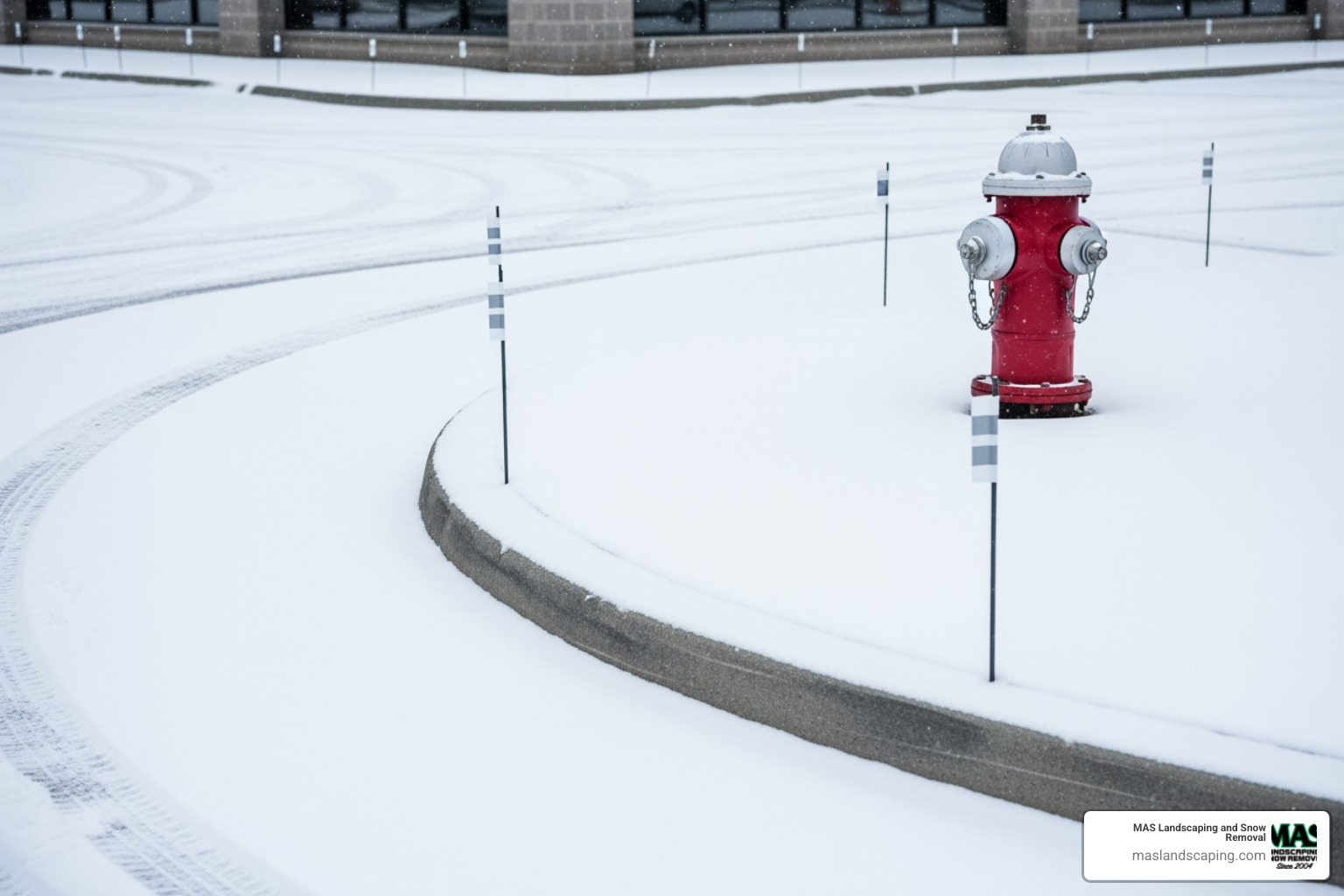
A professional service understands how to manage snow piling strategically, preventing blocked sightlines, drainage issues, and damage to critical infrastructure like fire hydrants. They use appropriate de-icing agents and mark sensitive areas before the season begins, preventing costly repairs in the spring.
Building Your Winter Defense: A Comprehensive Commercial Property Snow Removal Plan
A robust winter management plan transforms you from reacting to every snowfall into being strategically prepared. This preparation begins long before the first storm.
Pre-Season Property Preparation
Effective winter management starts in late summer or early fall. A pre-season property walk-through is essential to identify and address potential issues before they’re hidden by snow.
- Inspect and Repair Surfaces: Fix potholes and cracks in pavement and walkways to prevent trip hazards and plow damage.
- Check Drainage: Clear gutters and storm drains of debris to prevent ice dams and puddles that turn into ice slicks.
- Protect Landscaping: Prune weak tree branches that could break under heavy snow. Winterize irrigation systems to prevent burst pipes.
- Mark Hazards: Use brightly colored snow stakes to mark curbs, fire hydrants, drainage grates, and other obstacles. This is critical for preventing damage during low-visibility plowing operations.
For more tips, see this guide on How to Prepare Commercial Properties for Snow.
Developing the Snow and Ice Management Plan
Work with your snow removal contractor to create a detailed plan customized for your property.
- Site Map: Create a detailed map showing all service areas, obstacles, sensitive landscaping, and designated snow piling locations.
- Priority Areas: Define which areas need immediate and continuous attention, such as main entrances, ADA ramps, and emergency exits.
- Snow Piling Strategy: Designate locations for snow piles that won’t block visibility, cover fire hydrants, or cause drainage problems during a thaw.
- Communication Plan: Establish clear protocols for who to contact and how information will be shared before, during, and after a storm.
An effective Commercial Snow and Ice Management plan relies on this level of detail.
Best Practices for De-Icing and Salting
De-icing is often more critical for safety than plowing. A plowed lot with a thin layer of ice is a major hazard.
- De-icing Agents: Traditional rock salt is cost-effective but works best above 20°F. Calcium chloride is more expensive but effective in much colder temperatures (down to -25°F). Liquid brine is a proactive solution applied before a storm to prevent ice from bonding to pavement, making plowing easier and reducing overall salt usage.
- Application Timing: The most effective strategy is “anti-icing”—applying liquid brine before precipitation starts. This is more efficient and environmentally friendly than “de-icing” after ice has already formed.
- “Zero Tolerance” Approach: For critical sites like hospitals or high-traffic retail, a “zero tolerance” policy ensures the property is treated before, during, and after a storm to maintain constant safety and accessibility. This is especially important for Commercial Sidewalk Snow Removal.
Choosing Your Partner: Selecting the Right Snow Removal Contractor
Choosing a commercial property snow removal contractor is a critical decision. You’re entrusting them with the safety of your property, the continuity of your business, and your liability exposure. This isn’t a decision to base on the lowest bid alone.

Vetting Potential Contractors
Your vetting process should be thorough to ensure you’re hiring a professional operation.
- Experience and Reputation: How long has the contractor been serving commercial properties in the Greater Boston area? A Commercial Snow Removal Company with local experience will understand our region’s specific challenges. Ask for client references from properties similar to yours.
- Insurance and Liability: This is non-negotiable. Your contractor must have comprehensive general liability and workers’ compensation insurance. Ask for a current certificate of insurance. Understanding Commercial Snow Plow Insurance requirements will help you verify they have adequate coverage.
- Industry Certifications: Credentials like Certified Snow Professional (CSP) or ASCA-C (Accredited Snow Contractors Association Certification) demonstrate a commitment to best practices, safety, and professionalism.
Evaluating Equipment and Technology
A contractor’s tools reveal their capabilities, especially during major storms.
- Equipment and Staff: Do they have a diverse, well-maintained fleet of plows, loaders, and sidewalk equipment? Is their staff properly trained to operate it safely and efficiently, protecting your landscaping and pavement? For demanding jobs, you need a team equipped for Heavy Duty Snow Removal.
- Technology: Modern contractors use GPS tracking for fleet management and to provide you with service verification. Advanced weather monitoring allows them to be proactive, tracking storms 24/7 to decide when to pre-treat and when to plow.
- Communication: How will they keep you informed? Look for clear protocols and multiple channels (phone, email, text) for updates before, during, and after a storm. Good communication is the hallmark of a reliable partner.
Understanding the Fine Print: Contracts and Costs
Navigating snow removal contracts can be confusing, but understanding the options is key to finding a service that fits your property’s needs and budget.

Understanding Your Commercial Property Snow Removal Contract Options
There is no one-size-fits-all contract. The right choice depends on your budget, risk tolerance, and service requirements.
| Contract Type | How It Works | Best For | Considerations |
|---|---|---|---|
| Per-Push | Pay for each plowing event. | Properties with flexible budgets in areas with unpredictable snowfall. | Costs can escalate quickly in a heavy snow season. |
| Seasonal (Flat-Rate) | One fixed price for the entire winter. | Properties requiring budget certainty and guaranteed service. | You pay the same amount regardless of how much it snows. |
| Time & Materials | Billed by the hour plus the cost of materials used. | Unique, one-time jobs or special circumstances. | Costs are highly unpredictable and can be difficult to budget. |
Some contractors offer hybrid contracts that blend these models. Before signing, carefully review the trigger depth (how much snow prompts service), response times, and what’s included (e.g., salting, sidewalk clearing). A detailed Commercial Snow Removal Contract prevents confusion later.
Cost Factors for Commercial Property Snow Removal Services
Several factors influence the price of professional snow removal.
- Property Size and Complexity: A large, open parking lot is easier and cheaper to clear than a smaller, intricate property with many obstacles and tight corners.
- Trigger Depth: A lower trigger depth (e.g., 1-2 inches) means more frequent service and higher seasonal costs than a 4-inch trigger.
- Level of Service: The price will vary based on whether your contract includes basic plowing only, or also covers sidewalks, entryways, and de-icing services.
- Equipment Needed: Properties requiring heavy-duty loaders for Heavy Duty Snow Removal will have higher costs than those serviceable by standard plow trucks.
Pricing varies widely. Based on general internet data, hourly rates can range from $150 for basic services to over $600 for large-scale operations with heavy machinery. Seasonal contracts can range from a few thousand dollars to tens of thousands, depending on the factors above. For an accurate quote based on your specific needs, see How Much Does Commercial Snow Plowing Cost. The cheapest option isn’t always the best value when safety and business continuity are on the line.
The Stakes of Winter: Why Professional Snow Removal is Non-Negotiable
Winter in Everett, Lynnfield, Malden, Melrose, Medford, Revere, Saugus, and Chelsea isn’t just an inconvenience—it’s an operational risk. For commercial properties, snow and ice affect safety, accessibility, legal compliance, and your bottom line.
Risk Mitigation: Protecting Your People and Your Business
Slip-and-fall incidents on icy surfaces can lead to serious injuries and costly claims. As a property owner, you have a legal duty to maintain safe conditions and demonstrate “reasonable care.” A proactive approach to workplace safety is essential in winter. Beyond injuries, unmanaged snow can cause vehicle accidents, structural stress, and property damage. While Commercial Snow Plow Insurance offers protection, preventing incidents is always the best strategy.
Business Continuity: Keeping Your Doors Open and Accessible
An impassable lot means lost revenue and delayed operations. Professional commercial property snow removal keeps customers, tenants, employees, and deliveries moving. You’re also responsible for ADA accessibility—keeping accessible parking, ramps, and pathways clear—to avoid fines and legal exposure. Don’t overlook emergency access: clear routes for fire, police, and ambulances are non-negotiable.
Property Protection: Beyond Just Clearing Snow
Effective snow management protects your entire site. Heavy snow loads can stress roofs and awnings; ice dams can cause water damage. Inexperienced plowing can gouge pavement, crack curbs, and harm landscaping. Strategic snow piling prevents blocked sightlines, drainage issues, and refreeze hazards. The right partner focuses on safety, compliance, and the long-term health of your property.
In short, professional commercial property snow removal safeguards people, operations, and assets—so your business stays open when it matters most.
Building Your Winter Defense: A Comprehensive Commercial Property Snow Removal Plan
A clear, proactive plan turns winter from a scramble into a manageable season. Here’s how to prepare and execute effectively.
Pre-Season Property Preparation
Address issues before the first storm:
- Inspect and repair pavement, curbs, and walkways to reduce trip hazards and plow damage.
- Clear gutters and storm drains to limit pooling and ice formation.
- Prune weak branches, protect sensitive landscaping, and winterize irrigation systems.
- Mark curbs, hydrants, drains, and islands with durable snow stakes for safer plowing in low visibility.
- Verify lighting and update emergency contacts.
For more guidance, see How to Prepare Commercial Properties for Snow.
Developing the Snow and Ice Management Plan
Create a site-specific plan with your contractor:
- Site map: identify service areas, obstacles, and designated snow pile locations.
- Priorities: main entrances, ADA routes, emergency exits, and critical loading docks get first attention.
- Snow piling: choose locations that preserve sightlines, protect infrastructure, and minimize drainage/refreeze issues.
- Communication: define contacts and update protocols before, during, and after storms.
An effective Commercial Snow and Ice Management plan covers all of the above.
Best Practices for De-Icing and Salting
- De-icers: rock salt is cost-effective above ~20°F; calcium chloride works faster and in much colder temps (down to -25°F). Liquid brine applied before storms prevents bonding, improves plowing, and reduces total salt use.
- Timing: prioritize anti-icing (pre-treatment) over reactive de-icing.
- Environmental care: apply precisely and select products based on conditions to protect pavement, vehicles, and landscaping.
- Zero tolerance: for high-risk or high-traffic sites (e.g., medical, retail), maintain continuous treatment and clearing—especially for Commercial Sidewalk Snow Removal.
Choosing Your Partner: Selecting the Right Snow Removal Contractor
Your commercial property snow removal contractor is a key operational partner during winter. Look for proven capability, clear communication, and a proactive approach.
Vetting Potential Contractors
- Experience and reputation: choose teams with a strong track record on commercial sites in Everett, Lynnfield, Malden, Melrose, Medford, Revere, Saugus, and Chelsea. Ask for references from similar properties. A reputable Commercial Snow Removal Company will be transparent.
- Insurance and liability: require current certificates for general liability and workers’ compensation. Confirm coverage meets your property’s needs.
- Certifications: credentials like CSP or ASCA-C show commitment to best practices and safety.
Evaluating Equipment and Technology
- Equipment and staffing: a maintained fleet (trucks, loaders, sidewalk machines, spreaders) and trained operators signal readiness for routine events and Heavy Duty Snow Removal.
- Technology: GPS tracking and 24/7 weather monitoring enable proactive dispatch and service verification.
- Communication: ensure multi-channel updates (phone, email, text) and clear escalation paths so you know when crews are dispatched and when service is complete.
Understanding the Fine Print: Contracts and Costs
Understanding Your Commercial Property Snow Removal Contract Options
Choose a structure that fits your budget, risk tolerance, and service level:
- Per-Push: pay per plowing event; good for unpredictable winters, but costs can rise in heavy seasons.
- Seasonal (Flat-Rate): one fixed price for the season; ideal for budget certainty and guaranteed service regardless of snowfall totals.
- Time & Materials: billed hourly plus materials; useful for unique or variable needs, but hardest to predict.
Hybrid models combine these approaches. Before signing, confirm trigger depth, response times, and inclusions (e.g., sidewalks, de-icing). Pricing and scope should be clearly defined and documented.
