



Why Choosing the Right Paver Stone Sealer Can Save You Thousands
Quick answer: The best paver stone sealers by use case:
| Goal | Best Sealer Type |
|---|---|
| Natural look on stone patios | Penetrating silane/siloxane (water-based) |
| Wet look / color enhancement | Solvent or water-based acrylic (gloss finish) |
| Pet- and plant-safe DIY use | Zero-VOC, water-based penetrating sealer |
| New England freeze-thaw protection | Penetrating silane/siloxane with salt resistance |
| Low maintenance, long service life | Penetrating sealer (up to 5-10 years) |
Your outdoor pavers take a beating — especially here in Greater Boston.
Rain, snow, road salts, UV rays, and foot traffic all chip away at stone and concrete surfaces year after year. A quality paver stone sealer is one of the most effective ways to slow that wear down and keep your patio, walkway, or pool deck looking sharp.
But here’s the thing: not all sealers work the same way. Some soak deep into the stone and stay invisible. Others coat the surface and add a glossy “wet look.” Some last two years. Others claim up to a decade. And the wrong choice can actually cause problems — like trapped moisture, peeling, or a slippery surface near your pool.
With hundreds of options on the market (Amazon alone returns over 500 results for “paver sealer”), picking the right product is genuinely confusing.
This guide cuts through the noise. We’ll compare the top-rated paver sealers by project type, explain the key differences between formulas and finishes, and walk you through exactly how to apply sealer for lasting results in New England’s demanding climate.
Paver stone sealer vocab to learn:
What Is Paver Stone Sealer and Why Does It Matter?
At its simplest, paver stone sealer is a protective liquid coating or penetrating treatment applied to hardscape surfaces. Think of it like a high-end raincoat for your driveway or a permanent wax job for your patio.
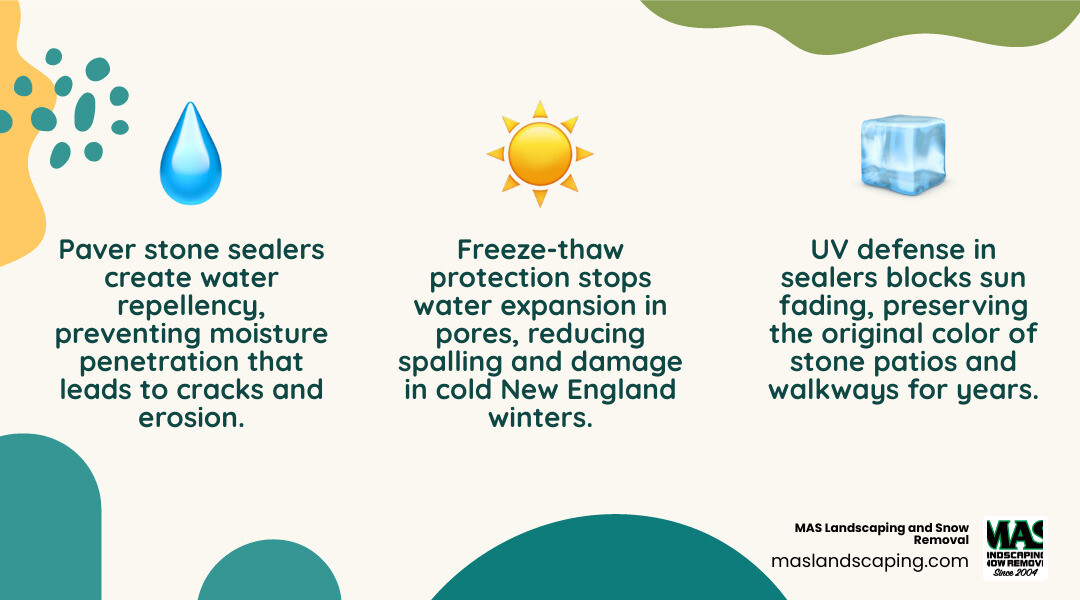
Without protection, porous materials like concrete pavers, brick, and natural stone act like giant sponges. They soak up water, oil, and grime. In our neck of the woods — from Saugus to Lynnfield — that moisture is a major enemy. When water gets trapped inside stone and then freezes during a typical Massachusetts January, it expands. This “freeze-thaw” cycle causes microscopic cracks that eventually lead to crumbling and “spalling.”
A good sealer provides:
- Water Repellency: Stops moisture from entering the stone.
- UV Defense: Prevents the sun from fading the vibrant colors of your pavers.
- Stain Resistance: Gives you a window of time to clean up spilled red wine or grill grease before it becomes a permanent part of the patio.
- Efflorescence Control: Helps prevent that annoying white, chalky salt residue from rising to the surface.
How paver stone sealer protects patios, walkways, and pool decks
Different surfaces face different threats. On a driveway in Everett, the main concern might be oil leaks and deicing salts. On a pool deck in Melrose, the sealer needs to handle constant moisture and chlorine while remaining slip-resistant.
For natural stone like bluestone or travertine, a sealer maintains the structural integrity of the rock. For concrete pavers, it often helps stabilize the joint sand, preventing weeds from popping up and keeping the “locking” mechanism of the pavers tight. By creating a breathable barrier, the right sealer allows interior moisture to escape while preventing exterior liquids from getting in.
When sealing is worth it and when a natural look is better
We often get asked if sealing is always necessary. While we highly recommend it for longevity, there are times when you might prefer the unsealed look. Some high-quality modern pavers are incredibly durable on their own.
If you love the rugged, weathered look of old-world stone, you might skip the sealer. However, most homeowners in the North Shore area prefer the “just-installed” look. If you want to protect your investment for the long haul, should you seal your paver patio is a question usually answered with a resounding “yes.”
Types of Paver Sealers: How to Choose the Right Formula
Choosing a sealer isn’t just about the brand; it’s about the chemistry. You generally have to choose between two main “bases” and two main “styles.”
Water-based vs solvent-based paver stone sealer
- Water-Based: These are the modern standard for DIYers and eco-conscious homeowners. They have low odor (low VOC), are easy to clean up with just soap and water, and are generally safer for pets and plants. They usually don’t darken the stone as much as solvent-based options.
- Solvent-Based: These are the “heavy hitters.” They typically provide a much deeper “wet look” and are very durable. However, they have a strong chemical smell, require special thinners for cleanup, and can be trickier to apply in humid New England summers.
Penetrating vs topical sealers for stone and pavers
This is the most important distinction to understand:
| Feature | Penetrating Sealer | Topical (Film-Forming) Sealer |
|---|---|---|
| How it works | Soaks into the pores; works from the inside out. | Sits on top; creates a protective layer. |
| Appearance | Usually invisible; keeps the natural look. | Adds shine (Matte to High Gloss). |
| Breathability | High; moisture escapes easily. | Lower; can trap moisture if applied poorly. |
| Lifespan | Long (5–10 years). | Shorter (1–3 years). |
| Slippiness | Does not change surface texture. | Can be slippery when wet without additives. |
Finish options: high gloss, semi-gloss, matte, and natural
The finish you choose determines the “vibe” of your outdoor space.
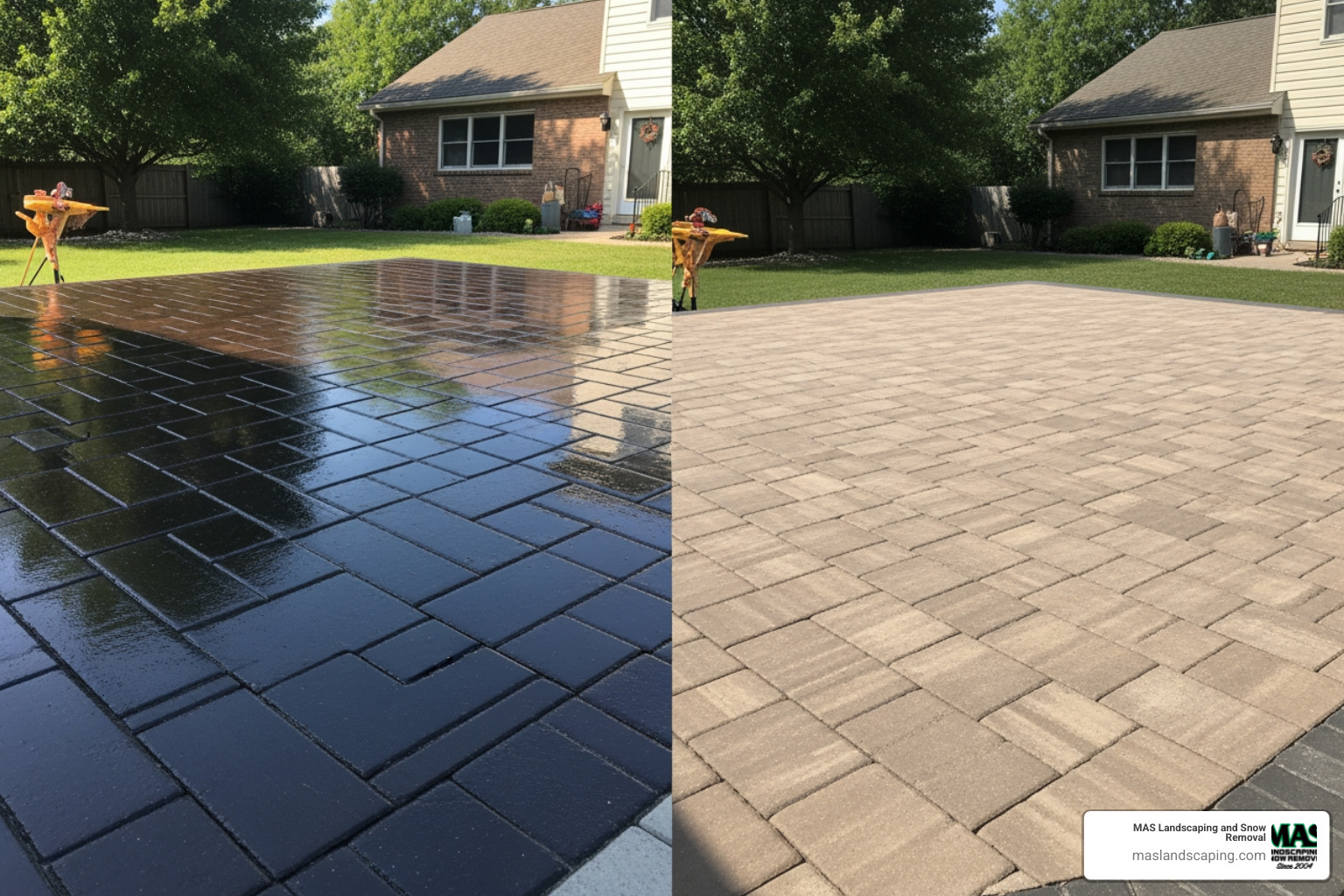
- High Gloss: Often called the “wet look.” It makes colors pop and gives a mirror-like shine. Great for decorative patios, but use caution around pools.
- Semi-Gloss: A balanced shine that looks clean and polished without being overwhelming.
- Matte: Provides protection and slight color enhancement with very little shine.
- Natural: The “invisible” option. You won’t even know it’s there until you see water beading on the surface.
For more details on specific looks, check out our wet look paver sealer guide or our deep dive into the natural look paver sealer aesthetic.
Top-Rated Paver Stone Sealer Picks by Project Type
When we look at the market in May 2026, several brands consistently stand out based on performance and user reviews.
Best for natural-look protection on stone patios
If you have beautiful natural stone like limestone, slate, or bluestone, you probably don’t want to change its color. Foundation Armor SX5000 is a top-tier silane-siloxane sealer that is virtually invisible but offers incredible water repellency. Another excellent choice is Armor SX5000 WB, which has a 4.5/5 rating from over 1,000 reviews. It’s a water-based penetrating sealer that keeps your stone looking exactly like stone while protecting it from the elements.
Best for wet-look color enhancement on concrete and brick pavers
For that deep, rich look, Foundation Armor AR350 (Low Gloss) or AR500 (High Gloss) are industry favorites. The AR350 holds a 4.5/5 rating from over 2,100 reviews and is known for its “wet look” without being overly plastic-looking. Seal King also offers professional-grade high-gloss options that are breathable, preventing the dreaded “whitening” or blushing that occurs when moisture gets trapped under a film.
Best low-VOC and DIY-friendly options around homes and pets
If you’re tackling a project in a backyard where the kids and the golden retriever play, look for water-based, zero-VOC formulas. Rainguard Water Sealers offers a “Paver Sealer, Natural Finish” that is non-toxic and safe for plants. BEHR PREMIUM also offers widely available water-based sealers at big-box stores that are very user-friendly for a weekend warrior.
Best for freeze-thaw climates and deicing salt exposure
In places like Reading and Stoneham, we deal with heavy snow and the road salt that comes with it. Armor SX5000 is specifically designed to resist deicing salts and chloride ion penetration. This prevents the “pitting” you often see on older driveways. If you want to compare retail options before buying, you can also browse Paver sealers at Lowe’s.

Average prices, ratings, and what they really mean
Note: The following are average costs based on internet data and not actual costs for MAS Landscaping services.
When shopping for paver stone sealer, you’ll find a wide range of prices. A single gallon can range from $35 to over $120. Five-gallon buckets, which are much more cost-effective for larger projects, typically range from $150 to $650.
Don’t just look at the price tag; look at the coverage rate. A cheaper sealer might cover only 100 sq. ft. per gallon, while a premium one might cover 300 sq. ft. Always check the review counts – products like the BEHR PREMIUM Wet Look Sealer have over 3,000 reviews, giving you a very clear picture of how they perform in the real world.
How to Prepare and Apply Sealer for the Best Results
The biggest secret in the landscaping industry? Sealing is 90% preparation and 10% application. If you seal over dirt, you’re just preserving the dirt forever.
Cleaning, drying, and removing old sealer before application
- Deep Clean: Use a pressure washer to remove mold, algae, and weeds. If you have oil stains, use a dedicated degreaser.
- Efflorescence Removal: If you see white chalky spots, use an efflorescence cleaner before sealing.
- Strip Old Sealer: If there is a failing, peeling sealer already on the stone, it must be removed chemically or mechanically. New sealer won’t stick to old, flaking sealer.
- Dry Time: This is where most people fail. The pavers must be bone-dry. We recommend waiting at least 24 to 48 hours after washing before you even open the sealer can.
For a more detailed breakdown, see our guide on how to seal patio pavers in 5 easy steps.
Step-by-step paver stone sealer application instructions
- Check the Weather: You need a window of at least 24 hours with no rain and temperatures between 50°F and 85°F.
- Test Patch: Always apply sealer to a small, hidden area first to make sure you like the color and finish.
- Application Method: Use a high-quality pump sprayer or a 3/8″ nap roller. If you use a sprayer, “back-roll” the surface with a roller immediately after spraying to ensure an even coat.
- Thin Coats: Two thin coats are always better than one thick, gloppy coat.
- Add Traction: If you’re using a gloss sealer on a pool deck or walkway, mix in a non-slip traction additive (like SharkGrip) to prevent the surface from becoming a skating rink when wet.
Want to see different techniques? Check out how to patio paver sealing 5 methods that guarantee results.
Coverage rates: how much sealer you need for small and large projects
Coverage varies wildly based on how porous your stone is.
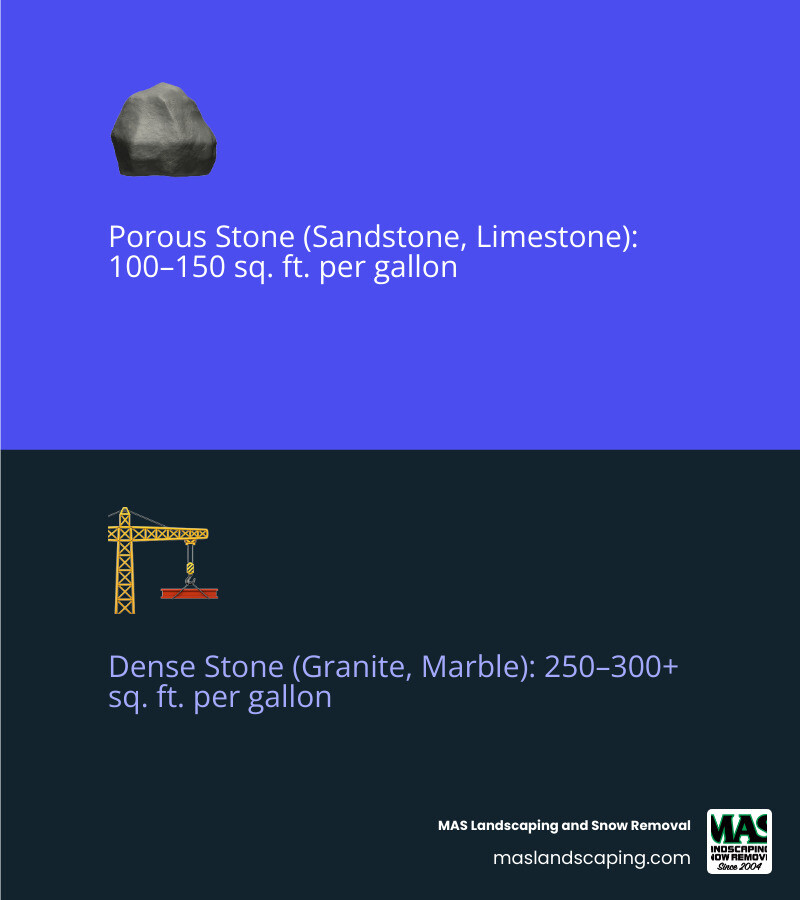
- Porous Stone (Sandstone, Limestone): 100–150 sq. ft. per gallon.
- Standard Concrete Pavers: 150–200 sq. ft. per gallon.
- Dense Stone (Granite, Marble): 250–300+ sq. ft. per gallon.
For a 500 sq. ft. driveway, you’ll likely need about 3 to 5 gallons of sealer depending on the number of coats and the thirstiness of the concrete.
How Long Paver Sealer Lasts, Common Mistakes, and Climate Tips
Sealing isn’t a “one and done” task. It’s part of a healthy home maintenance routine.
How long sealers last and when to reapply
- Topical/Acrylic Sealers: Usually last 1 to 3 years. You’ll know it’s time to reapply when the shine fades or water stops beading.
- Penetrating Sealers: These can last 5 to 10 years. Even if the “beading” effect stops after a few years, the internal protection often remains.
Common sealing mistakes that cause haze, peeling, or poor adhesion
- Trapped Moisture: If you seal damp pavers, the moisture tries to evaporate and gets stuck under the sealer, creating a white, cloudy “haze.”
- Over-Application: Putting on too much sealer can lead to bubbles, peeling, and a plastic-like appearance.
- Wrong Temperature: Applying in the direct, midday sun can cause the sealer to dry too fast and not bond correctly. It’s best to apply in the early morning or late afternoon.
Climate-specific tips for New England stone and paver surfaces
In Massachusetts, we recommend sealing in late spring or early fall. Avoid the high humidity of July and the unpredictable frosts of late October. Because of our heavy salt use in the winter, we suggest a quick “maintenance wash” every spring to remove salt residue that can eat away at your sealer’s finish.
If you’re looking for concrete paver sealer advice specifically for our local weather, breathability is your best friend to avoid freeze-thaw damage.
Frequently Asked Questions About Paver Stone Sealer
Is paver stone sealer safe for natural stone, brick, and concrete pavers?
Most high-quality sealers are compatible with a wide range of surfaces, but you should always check the label. Penetrating sealers are generally safer for natural stone, while acrylics are great for concrete and brick.
Will sealing make my patio or pool deck slippery?
Topical gloss sealers can be slippery. If you are sealing a pool deck in Peabody or a walkway in Danvers, we highly recommend using a matte finish or adding a traction additive to your gloss sealer.
What products help a sealing project last longer?
Using a dedicated paver cleaner before sealing ensures a better bond. Additionally, ensuring your joint sand is topped off before sealing helps the sealer “lock” the sand in place, reducing weed growth and erosion.
Conclusion: Choose the Right Sealer for Long-Lasting Results
Sealing your pavers is like putting an insurance policy on your landscaping. Whether you choose a high-gloss “wet look” to boost your curb appeal in Lynnfield or a natural penetrating sealer to protect your bluestone patio in Andover, the key is quality products and meticulous preparation.
At MAS Landscaping and Snow Removal, we’ve seen how the right paver stone sealer can transform a tired outdoor space and protect it against the harsh New England elements. If you’re ready to restore your patio to its former glory but aren’t sure which product is right for your specific stone, we’re here to help.
Check out our ultimate guide to sealing your patio pavers like a pro for even more tips, or contact us for a consultation on your next hardscaping project. Your patio works hard for you — give it the protection it deserves!
