




Laying turf on existing lawn: Avoid 1 Huge Mistake!
Why Laying Turf on Existing Lawn Seems Like a Good Idea (But Isn’t)
Laying turf on existing lawn might seem like a shortcut to a green makeover, but it’s a temptation to resist. Here’s the bottom line:
The Quick Answer:
- Don’t do it: Laying new turf over old grass is poor practice.
- Why it fails: The old grass blocks new roots from reaching the soil.
- What happens: Your new lawn will likely die, develop drainage issues, and become uneven.
- The right way: Remove the old lawn completely and prepare the soil properly.
We understand the appeal of a quick fix for a tired, patchy lawn. But just like putting new wallpaper over old, damp wallpaper, you’re not fixing the underlying problem—you’re just covering it up. The real issue is usually in the soil beneath.
In this guide, we’ll cover:
- The risks of laying turf over existing grass
- The effects on drainage, pests, and long-term lawn health
- The professional method for replacing your lawn correctly
- Alternatives like renovation and overseeding
Landscaping professionals agree: laying new turf on an old lawn is a waste of money. We’ll show you the proper way to get the healthy lawn you want.
Find more about laying turf on existing lawn:
The Big Question: Can You Lay Turf Directly Over an Existing Lawn?
Let’s address the big question: Can you roll out new turf over your old lawn?
While skipping the removal work is tempting, the answer is a firm no. We’re trying to save you from a costly mistake. Laying turf on existing lawn is like wallpapering over damp, peeling wallpaper—it looks better for a moment, but the underlying problems remain. It’s a waste of money because the new turf will struggle, fail to root, and eventually die.
Why New Turf Fails Over Old Grass
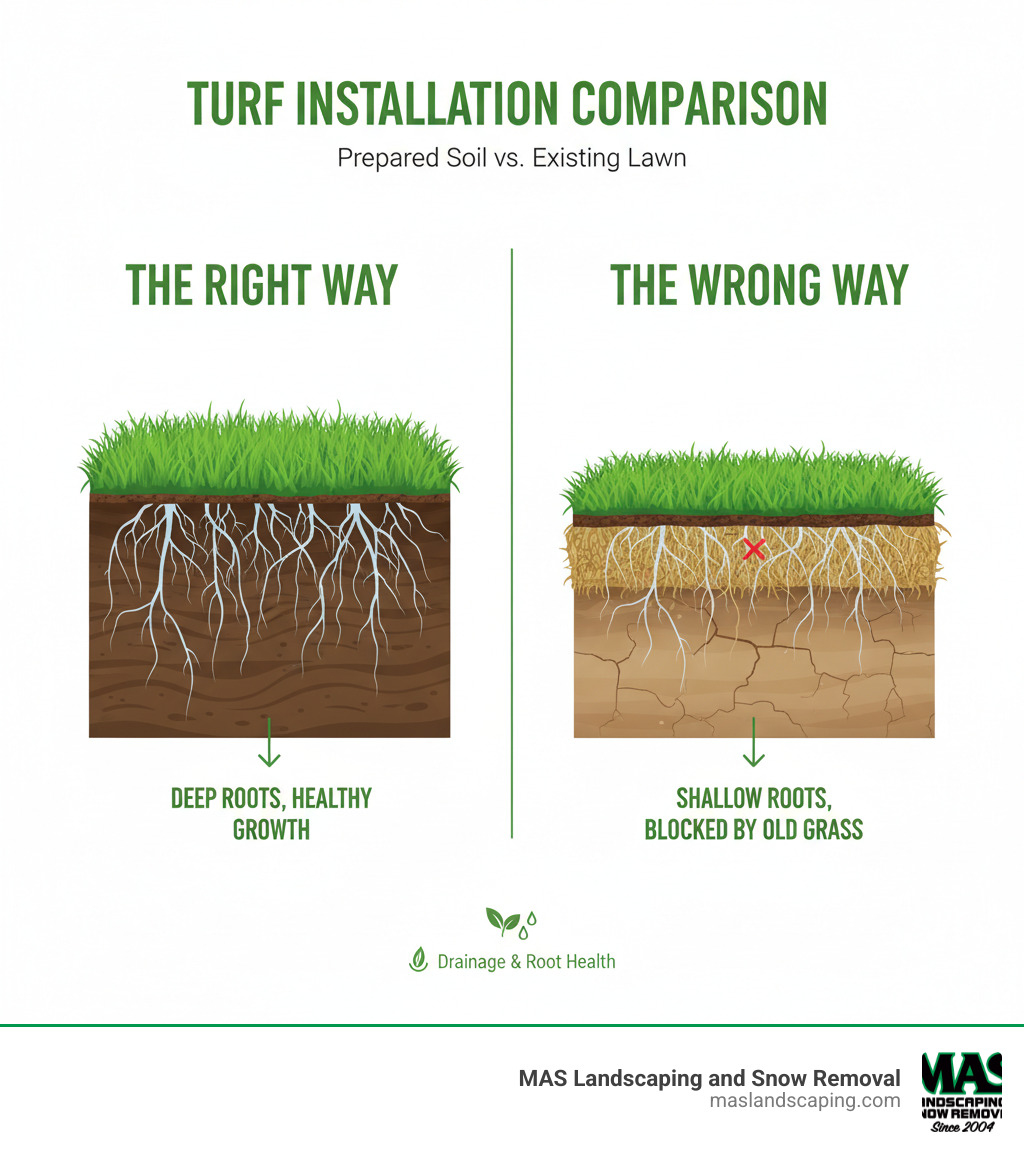
When you lay new turf over old grass, you create a “lawn sandwich” that guarantees failure. Here’s why:
- Poor Root-to-Soil Contact: New turf roots need to reach nutrient-rich soil. The old grass acts as a barrier, preventing roots from growing deep, leaving them shallow and weak.
- Suffocation and Decomposition: The old grass underneath dies and decomposes, creating a dense thatch layer. This layer suffocates the new turf by blocking air, water, and nutrients. As it breaks down unevenly, it also creates a bumpy, messy surface.
- Compaction and Poor Drainage: The combination of old grass and new turf creates a compacted layer that restricts drainage and root growth. Water either can’t penetrate, leaving the turf thirsty, or gets trapped, causing root rot.
- Inherited Problems: Whatever caused your old lawn to fail—poor soil, compaction, nutrient deficiencies, pests, or diseases—is still there. Your new lawn inherits all these issues. Pests and weeds are simply trapped underneath, ready to re-emerge and attack your new grass.
The result is eventual lawn deterioration. Within weeks or months, your investment will thin out, develop bare patches, and look as bad as the lawn you tried to cover up.
Long-Term Consequences of an Improper Installation
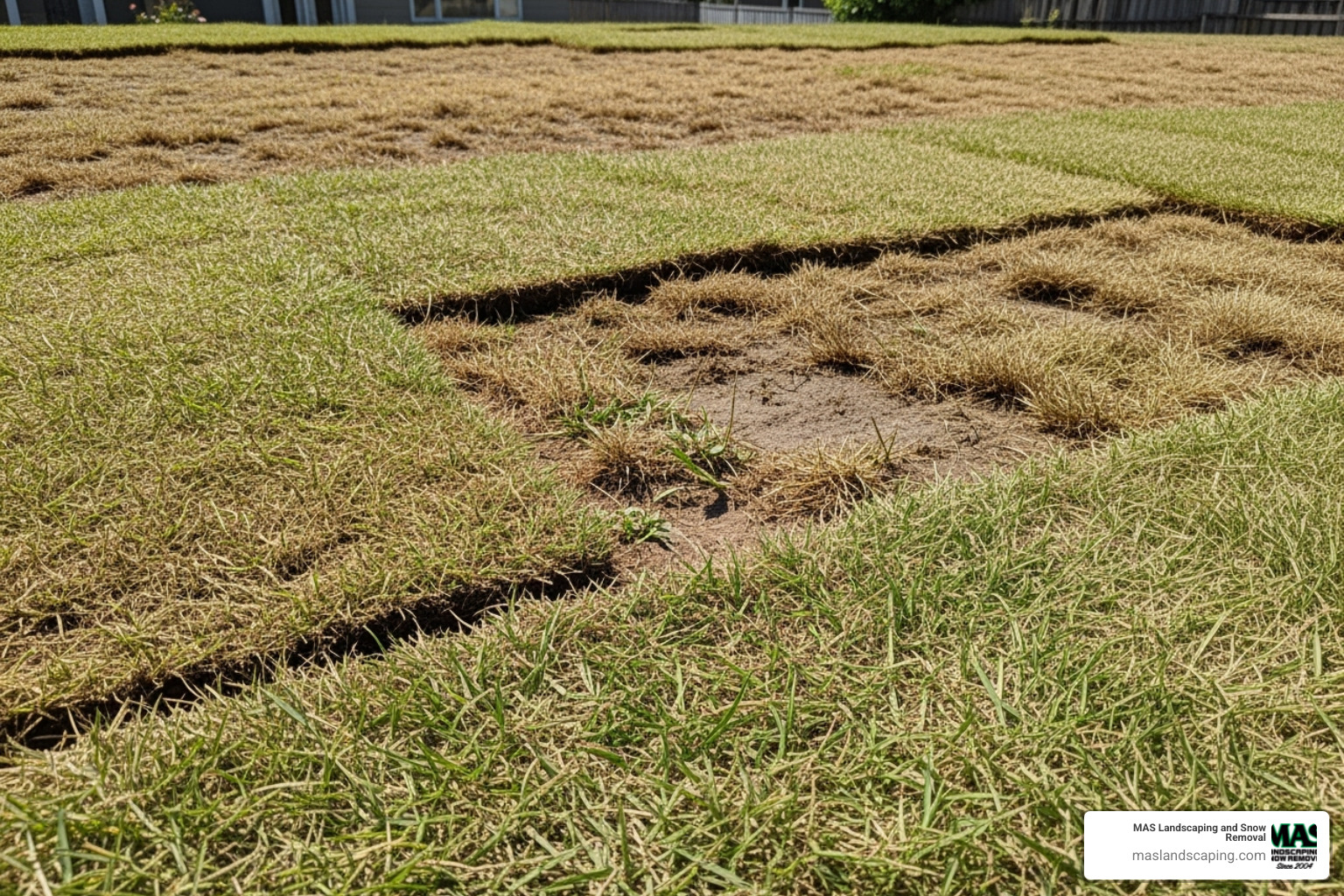
While new turf might look good for a few weeks, the long-term consequences of laying turf on existing lawn are costly and frustrating. Hidden problems will emerge, turning your dream lawn into a nightmare.
How it Affects Drainage and Soil Health
Improper installation severely compromises drainage and soil health. As the old grass underneath decomposes, it creates a thick layer of decomposing thatch. This layer acts like a soggy sponge, holding too much moisture and becoming an impermeable barrier. Water can’t drain, leading to surface waterlogging.
This excess water causes root rot, starving the new turf of oxygen and making it vulnerable to fungal diseases. It also creates anaerobic soil conditions, meaning the soil can’t breathe, which is fatal for a healthy lawn. The weight of the new turf only worsens compaction, creating a vicious cycle. This shortcut doesn’t fix underlying soil issues; it makes them harder to fix later.
Proper soil preparation is crucial, which is why our landscape design services address these factors from the start.
Pests, Diseases, and Weeds
Covering your old lawn doesn’t eliminate existing problems—it traps them. Existing problems get trapped beneath the new turf, creating a perfect environment for them to thrive and attack from below.
- Pests: Grubs like chafer grubs and leatherjackets that were in your old lawn will happily feed on the roots of your new turf.
- Diseases: The damp, poorly draining conditions are a breeding ground for fungal diseases, which can quickly cause brown patches and decline.
- Weeds: Persistent weeds and even the old grass itself will push through weak spots in the new turf, creating an uneven, unhealthy appearance.
The old lawn’s problems become the new lawn’s future. While our yard clean-up services can help tackle infestations, prevention through proper installation is always the best and most cost-effective solution.
The Professional Method: How to Properly Replace Your Lawn
While laying turf on existing lawn is a shortcut to failure, the right way is worth the effort. Proper ground preparation builds a foundation for a beautiful lawn that will last for years. Here’s how the pros do it.
Step 1: Remove the Old Lawn and Debris
This is the most critical step. All old grass, weeds, and roots must be removed.
- Mow the lawn as short as possible.
- Use a sod cutter for large areas to slice and lift the old grass. Our bobcat services can handle this efficiently. For smaller spots, a sharp spade will work.
- Consider solarization for a chemical-free option. Cover the area with clear plastic for several weeks in summer to bake and kill all vegetation.
The goal is to clear every trace of the old lawn to prevent it from growing through your new turf.
Step 2: Prepare and Level the Soil
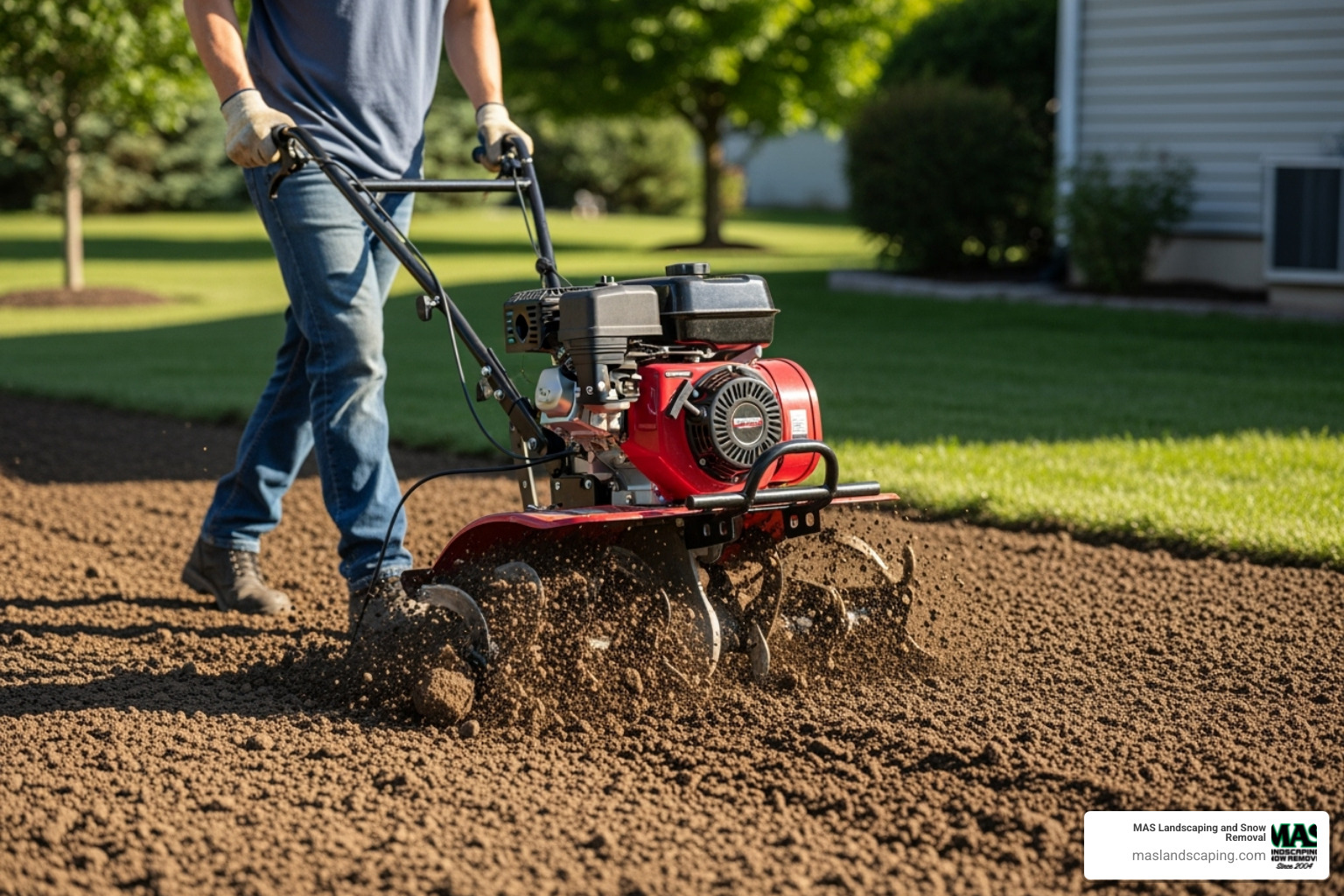
With the old lawn gone, it’s time to create the perfect bed for new roots.
- Loosen the soil to a depth of 4-6 inches with a tiller or garden fork to break up compaction.
- Improve the soil by adding 3-4 inches of quality compost or organic matter. A soil test can tell you exactly what your soil needs.
- Rake the surface until it’s smooth and level, removing any rocks or debris. Ensure the ground slopes away from buildings. The final turf level should be about an inch below sidewalks or driveways.
- Lightly compact the soil with a roller or by walking over the area. It should be firm enough to not leave deep footprints but loose enough for roots to penetrate.
Step 3: Laying the New Turf
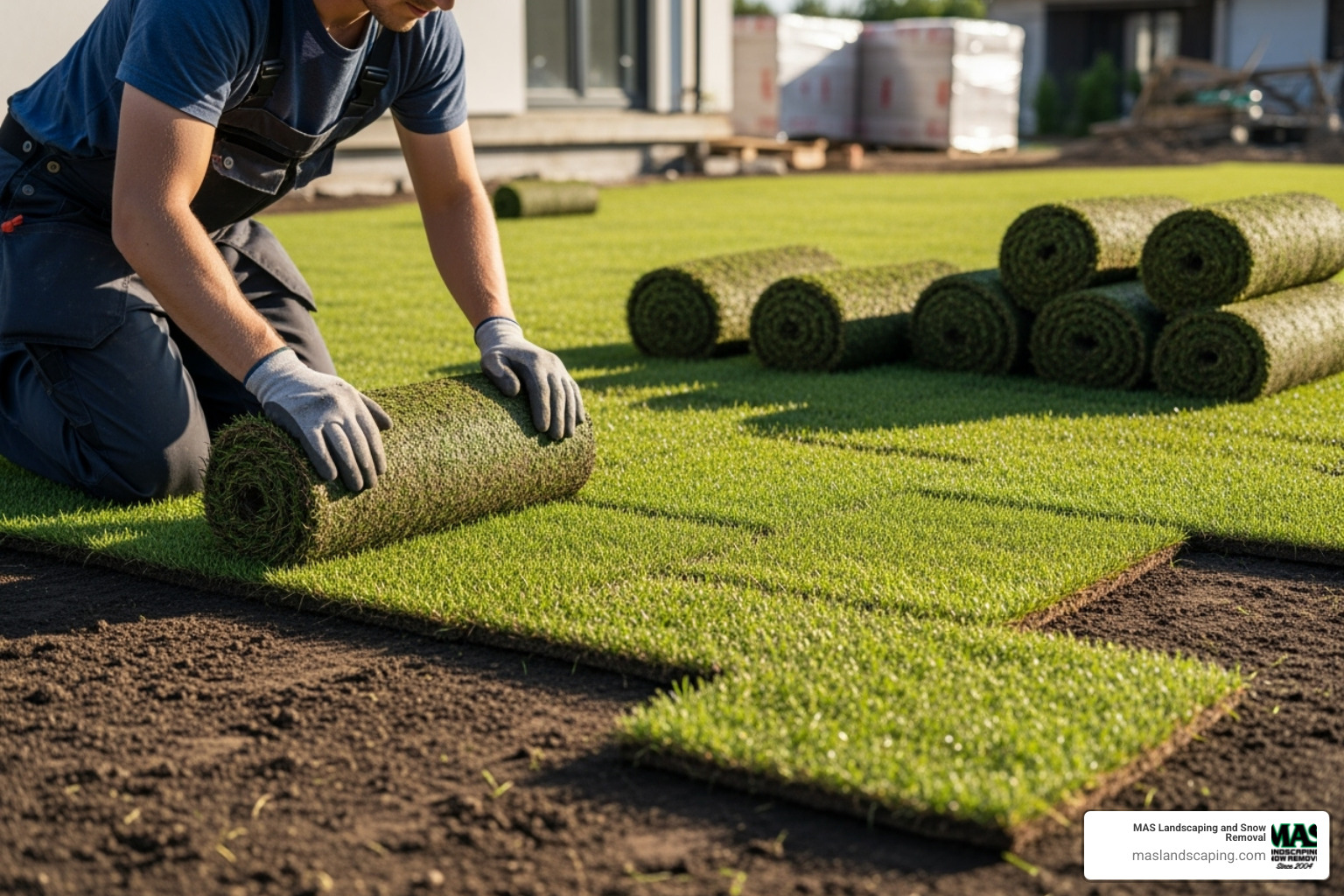
Now it’s time to lay the turf. Timing is critical; lay turf within 24 hours of delivery. If you must wait, keep it shaded and lightly watered.
- Start along a straight edge, like a driveway or patio.
- Lay rows in a staggered, brick-like pattern to avoid aligning the seams.
- Push edges together tightly without overlapping or stretching. Use a sharp knife to trim around obstacles.
Step 4: Watering and Aftercare
Nurture your investment to help it establish strong roots.
- Water within 30 minutes of laying. Soak the turf and the top 6 inches of soil thoroughly.
- Water daily for the first two weeks, possibly more in hot weather. Check that the soil underneath is moist. After roots establish, you can water less frequently but more deeply. For more guidance, see these garden watering tips.
- Keep off the grass for 2-3 weeks to allow the delicate roots to knit into the soil without being disturbed.
- Perform the first mow when the turf is firmly rooted (you can’t lift a corner). Set the mower blade high and only remove the top third of the grass height.
Proper care in the first few weeks ensures a deep, robust root system and a resilient, lasting lawn.
Alternatives to a Full Replacement for Laying Turf on Existing Lawn
A full replacement isn’t always necessary. If your lawn is just tired or thin but not a total loss, renovation might be a better option. The key is to honestly assess your lawn’s condition.
Proper Soil Prep vs. Laying Turf on Existing Lawn
Before exploring renovation, let’s be clear on why proper prep is non-negotiable for new turf. This table shows the difference between doing it right and taking the shortcut of laying turf on existing lawn:
| Feature | Proper Soil Preparation & New Turf Installation | Laying Turf on Existing Lawn (Not Recommended) |
|---|---|---|
| Old Grass Removal | Complete removal of existing grass, weeds, and debris. | Old grass left underneath. |
| Soil Preparation | Loosening, amending (compost, etc.), leveling, light compaction. | Minimal to no soil preparation; may add thin layer of topsoil. |
| Root Establishment | Deep, strong root growth into healthy, prepared soil. | Shallow, weak root growth due to barrier of old grass and compaction. |
| Drainage | Improved drainage; underlying issues addressed. | Poor drainage; waterlogging; anaerobic conditions. |
| Pest/Disease Risk | Reduced risk; existing issues removed during prep. | High risk; existing pests/diseases trapped and transferred to new turf. |
| Weed Control | Most weed seeds removed; new turf establishes densely. | High risk of old grass/weeds growing through new turf. |
| Lawn Uniformity | Smooth, level, even surface. | Uneven surface as old grass decomposes; potential tripping hazards. |
| Longevity | Long-lasting, healthy, resilient lawn. | Short lifespan; rapid deterioration; likely to look like old lawn quickly. |
| Cost-Effectiveness | Higher upfront cost, but a worthwhile, long-term investment. | Lower upfront cost, but a waste of money due to guaranteed failure and re-work. |
| Overall Outcome | Beautiful, thriving lawn with strong roots and excellent curb appeal. | Patchy, unhealthy lawn with persistent problems, requiring eventual re-do. |
The difference is stark. The upfront investment in proper preparation is money well spent.
Lawn Renovation: Aeration and Overseeding
If your lawn is fundamentally healthy but looks tired or thin, aeration combined with overseeding can revitalize it without a full replacement. A core aerator pulls out small plugs of soil, breaking up compaction and allowing air, water, and nutrients to reach the root zone.
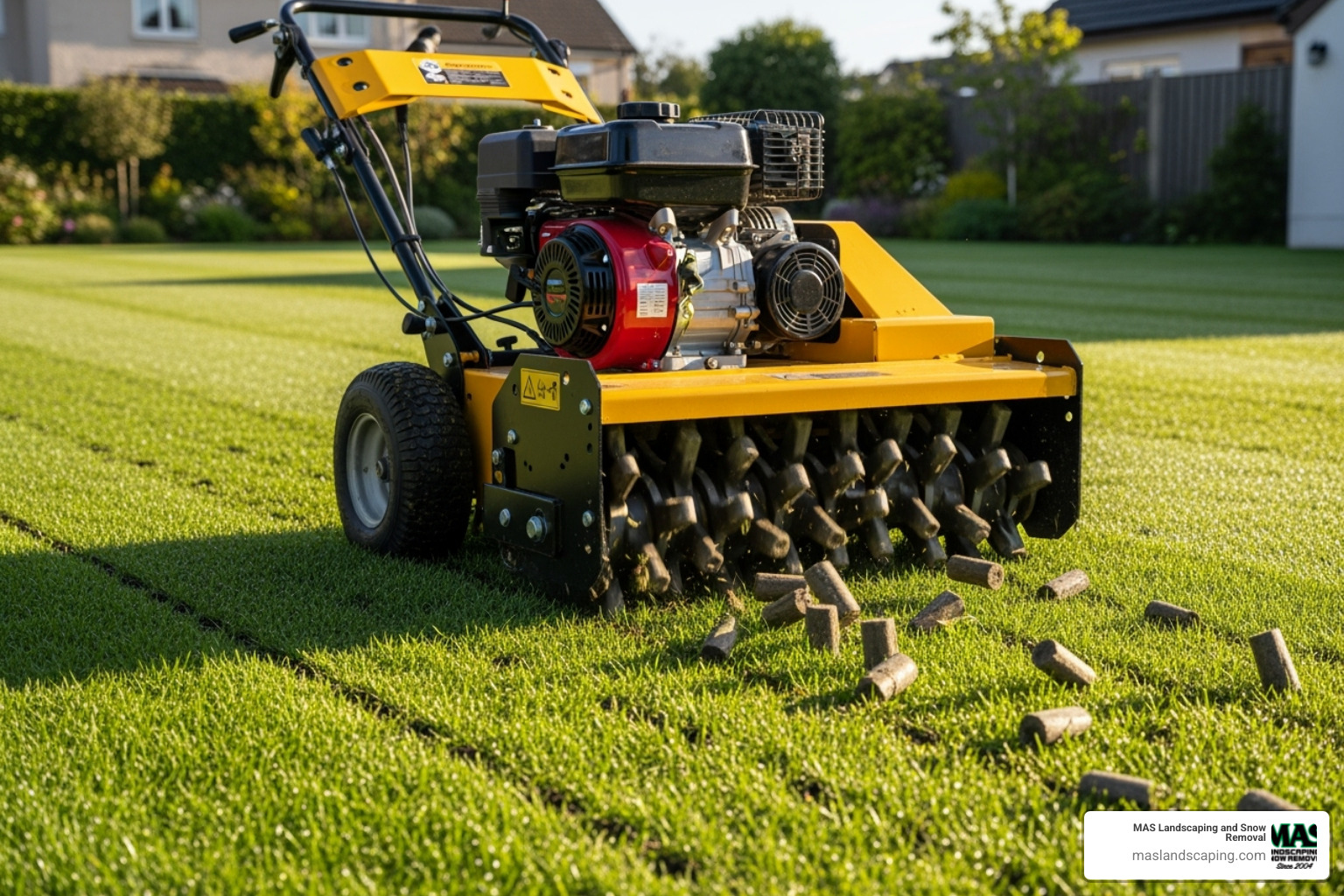
Overseeding immediately after aeration allows new grass seed to fall into the holes, ensuring excellent seed-to-soil contact for strong germination. This process fills in thin spots, crowds out weeds, and restores a thick, healthy appearance. Our landscape maintenance services include professional aeration and overseeding to keep your lawn looking its best.
Power Seeding for More Damaged Lawns
For lawns with more significant issues like bare patches or severe thinning, power seeding (or slice seeding) is a more aggressive option. A power seeder uses blades to cut narrow grooves into the soil and drops seeds directly into them.
This method ensures seeds are protected and tucked into the soil, leading to much higher germination rates than simply broadcasting seed. It’s highly effective for filling in stubborn bare spots. While more intensive than overseeding, it’s far less disruptive than a full replacement, making it a great middle-ground solution for struggling lawns.
Frequently Asked Questions about Laying New Turf
Homeowners often have questions about installing new turf, especially about shortcuts like laying turf on existing lawn (which don’t work). Here are answers to the most common questions.
When is the best time of year to lay new turf?
The ideal time to lay new turf is early spring or fall. The milder temperatures and natural rainfall in these seasons reduce stress on the new grass as it establishes roots. Summer installations are risky due to intense heat, and winter is not an option because of frozen ground.
Laying turf in spring gives it a full growing season to establish before summer, while a fall installation allows roots to develop before winter dormancy, leading to vigorous spring growth.
Do I need a weed membrane under new turf?
No, absolutely not. We strongly advise against using a weed membrane or landscape fabric under new turf. A membrane creates a physical barrier that prevents turf roots from growing deep into the soil to access water and nutrients. This results in a shallow-rooted, stressed lawn that is vulnerable to drought.
Your best defense against weeds is proper ground preparation. By completely removing the old lawn and establishing a thick, healthy new one, you naturally crowd out weeds far more effectively than any fabric can.
How much does professional turf installation cost?
The cost of professional turf installation varies widely as every project is unique. Factors include lawn size, soil condition, property accessibility, turf type, and the level of preparation required.
Based on general internet data, average costs can range from $5 to $20 or more per square foot for a complete professional installation, including ground prep, materials, and labor. A small, simple project might be on the lower end, while a large, complex site with poor soil could be at the higher end.
These are internet-based averages, not official quotes from MAS Landscaping. We provide transparent, personalized estimates for every project after a thorough property assessment. This ensures you receive a clear, honest price for quality work.
Conclusion
By now, the answer is clear: you cannot lay turf on an existing lawn. Taking this shortcut leads to a patchy, struggling lawn and wasted money. Laying turf on existing lawn is a recipe for failure.
A beautiful, lasting lawn is built on a solid foundation. Removing old grass and properly preparing the soil is a crucial investment. It pays off with a lawn that drains well, resists pests, and thrives for years thanks to a deep, robust root system. The extra effort upfront saves you from the frustration and cost of a failed installation.
For homeowners in Saugus, MA, and surrounding areas like Everett, Lynnfield, Malden, Melrose, Medford, Revere, and Chelsea, MAS Landscaping offers local expertise. We understand New England soil and what it takes to create stunning, durable outdoor spaces.
Whether you need a full lawn replacement, renovation services like aeration, or hardscaping projects like a patio installation, walkway, or retaining wall, we provide the right solutions.
Ready to do it right the first time? Contact us for your landscaping needs and see the quality work we deliver on our landscaping photos page. Let’s create a lawn you’ll love.
