




How to grow grass fast on dirt: 6 Quick Steps
From Bare Earth to Beautiful Lawn: Your Quick-Start Guide
How to grow grass fast on dirt is a common challenge, especially after construction or when reviving a neglected yard. The good news is that with the right preparation, you can transform bare dirt into a lush, green lawn faster than you might think.
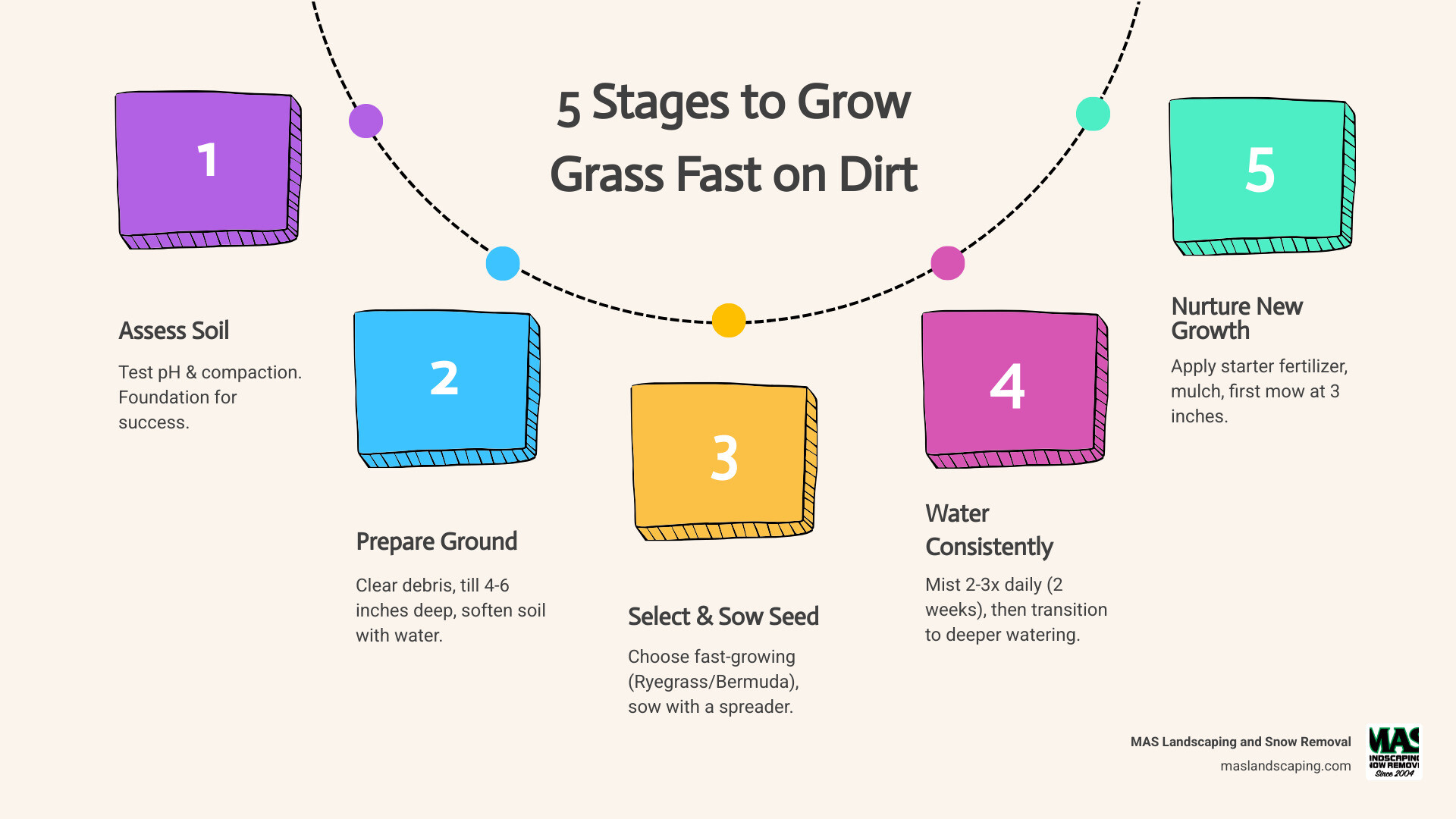
Quick Answer: 5 Essential Steps to Grow Grass Fast on Dirt
- Test and prepare your soil – Check pH and add amendments like compost.
- Choose fast-germinating grass seed – Perennial ryegrass (5-10 days) or Bermuda grass (7-10 days) sprout quickest.
- Sow seeds properly – Use a spreader in a crisscross pattern for good seed-to-soil contact.
- Water consistently – Mist 2-3 times daily until germination, then water deeply.
- Feed with starter fertilizer – Use a high-phosphorus fertilizer to boost early growth.
Hard, compacted dirt is the biggest obstacle to a healthy lawn. Without proper loosening and enrichment, grass seed simply won’t establish strong roots. By addressing the underlying soil issues before seeding, you set the stage for rapid, healthy growth.
This guide walks you through each critical step, from testing your soil to choosing the right seed and watering correctly. Whether starting from scratch or fixing problem areas, you’ll learn how to grow grass fast on dirt using proven methods.
Basic how to grow grass fast on dirt vocabulary:
Understanding Your Canvas: Why Dirt Becomes Hard and Compacted
Before you can grow grass fast on dirt, you must understand why soil becomes hard. Soil compaction is the main culprit. When soil particles are pressed together, the air pockets that roots, water, and nutrients need are squeezed out.
Compaction is often caused by:
- Heavy foot traffic from people and pets.
- Heavy equipment from construction or landscaping projects.
- Regular mowing, especially on wet soil.
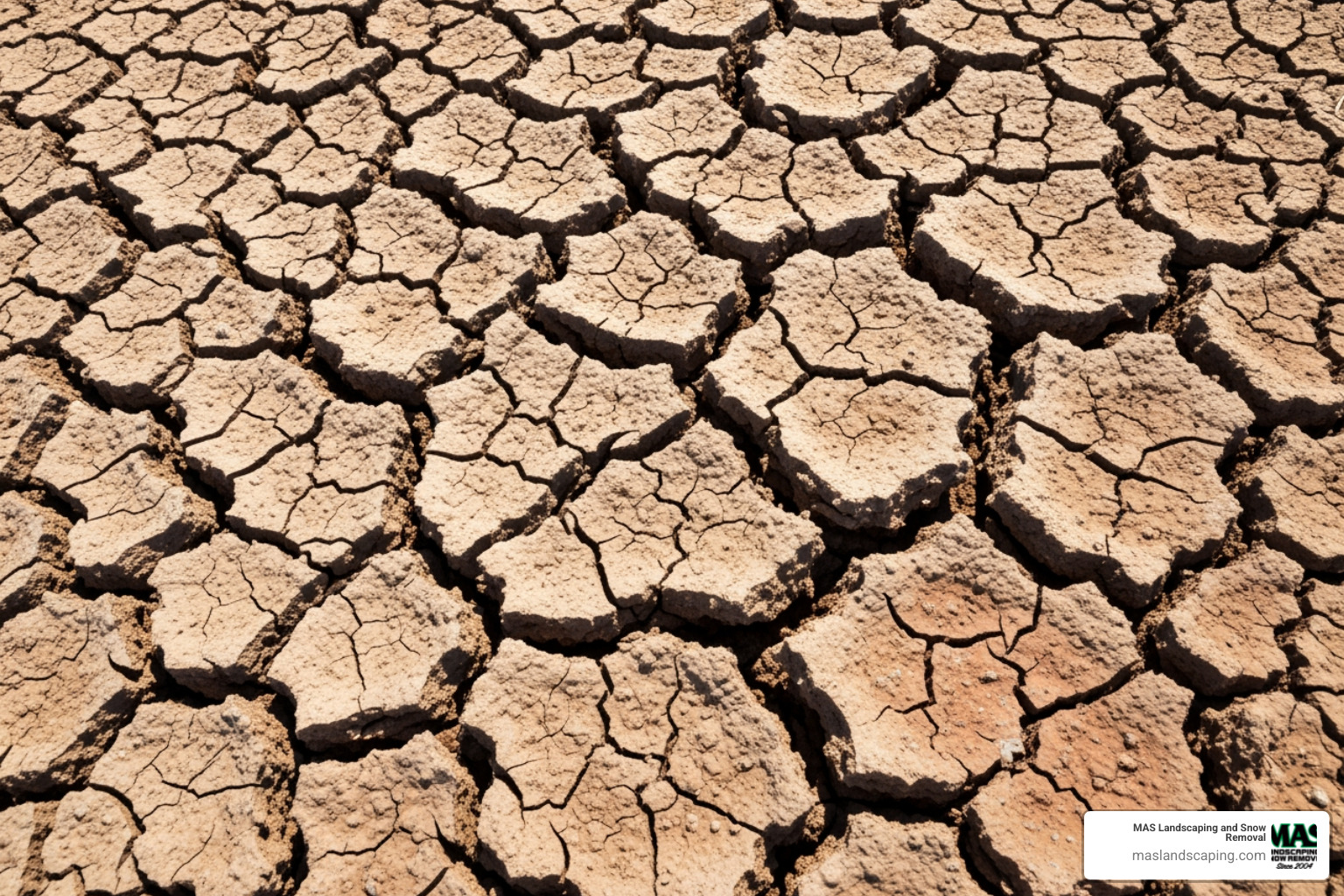
Soils with heavy clay content are naturally prone to compaction. Clay particles are tiny and pack together tightly, becoming hard as concrete when dry. This density makes it nearly impossible for delicate grass roots to penetrate.
Compacted soil also leads to poor drainage, causing water to pool on the surface. This deprives roots of oxygen. Another issue is a lack of organic matter. Healthy soil is full of decomposing material that creates structure and holds moisture. Without it, soil becomes dense and lifeless.
On hard dirt, seeds struggle to germinate, and any that do sprout will have weak, shallow roots that can’t survive heat or drought. If you’ve had heavy machinery on your property, you’re likely dealing with significant compaction. Learning about professional grading and soil work, such as our bobcat services, can help prevent these issues in the future.
Understanding why your dirt is hard is the first step to fixing it, which we’ll cover next.
The Ultimate Guide on How to Grow Grass Fast on Dirt
Let’s get our hands dirty and transform that hard dirt into a vibrant lawn. This process requires some work, but the results are worth it.
Step 1: Assess and Test Your Soil
Before you do anything, test your soil. A soil test is your roadmap, preventing wasted effort and resources. You can use a DIY soil test kit or send a sample to your local Cooperative Extension Service for a detailed analysis of pH levels and nutrient deficiencies.
Most grasses thrive in a pH between 6 and 7. If the pH is off, grass can’t absorb nutrients. The test will also reveal if your soil lacks key nutrients like nitrogen, phosphorus, and potassium, guiding your choice of amendments and fertilizer.
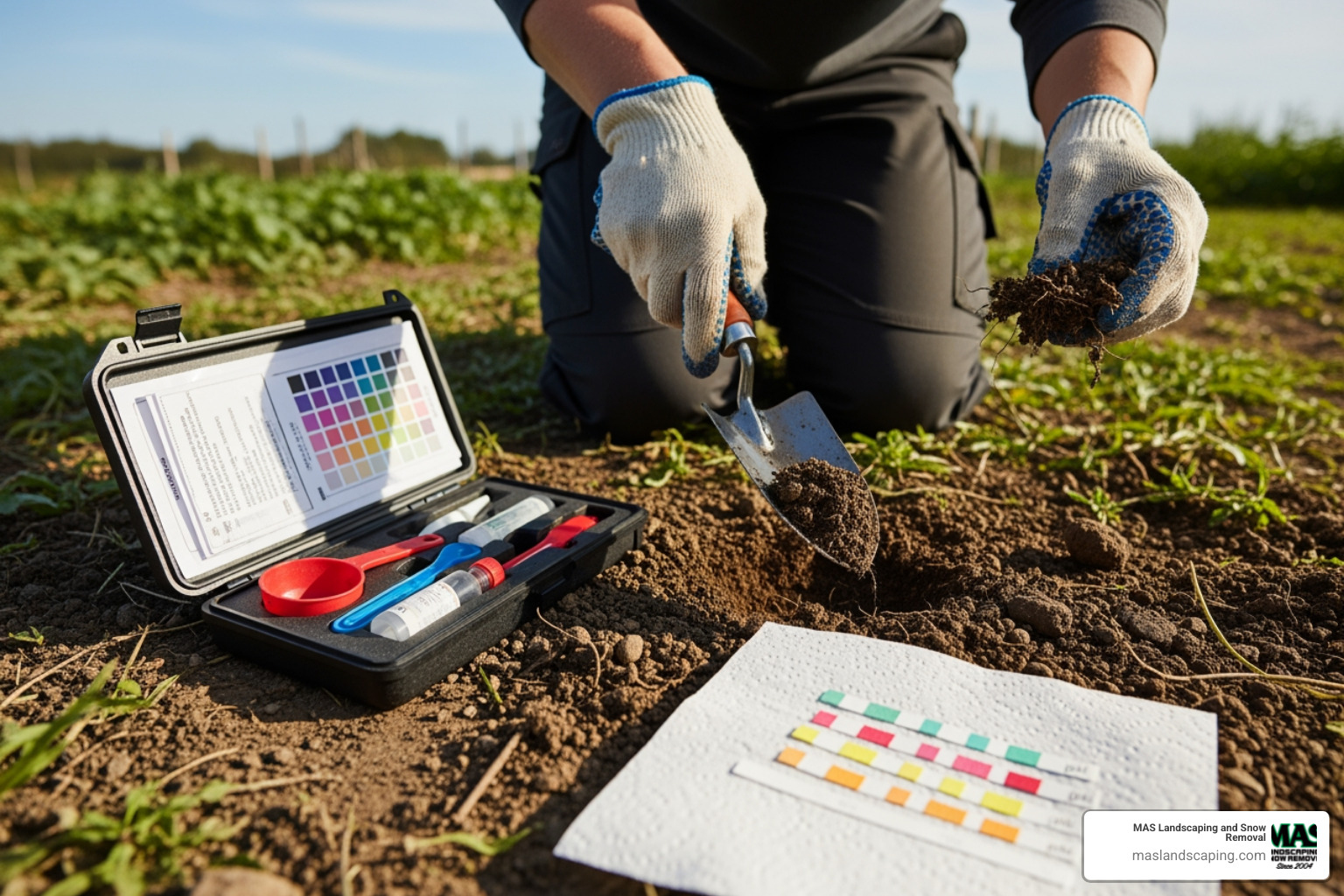
For a visual guide, you can find more info about soil [testing](https://commons.wikimedia.org/wiki/File:CSIROScienceImage1739Testingsoil_pH.jpg).
Step 2: Clear the Area and Loosen the Soil
Proper soil prep is non-negotiable to grow grass fast on dirt. Start by clearing the area of all rocks, sticks, weeds, and debris. Next, remove weeds by hand-pulling or using a non-selective herbicide, but be sure to check the product label for how long you must wait before seeding.
Pro Tip: Water the ground thoroughly a few days before tilling. Moist soil is much easier to work with. For severely compacted areas, tilling is your best bet. Rent a rototiller and aim for a depth of four to six inches. If your soil is less compacted, core aeration is a great alternative. It pulls small plugs of soil from the ground, creating pockets for air, water, and seeds.
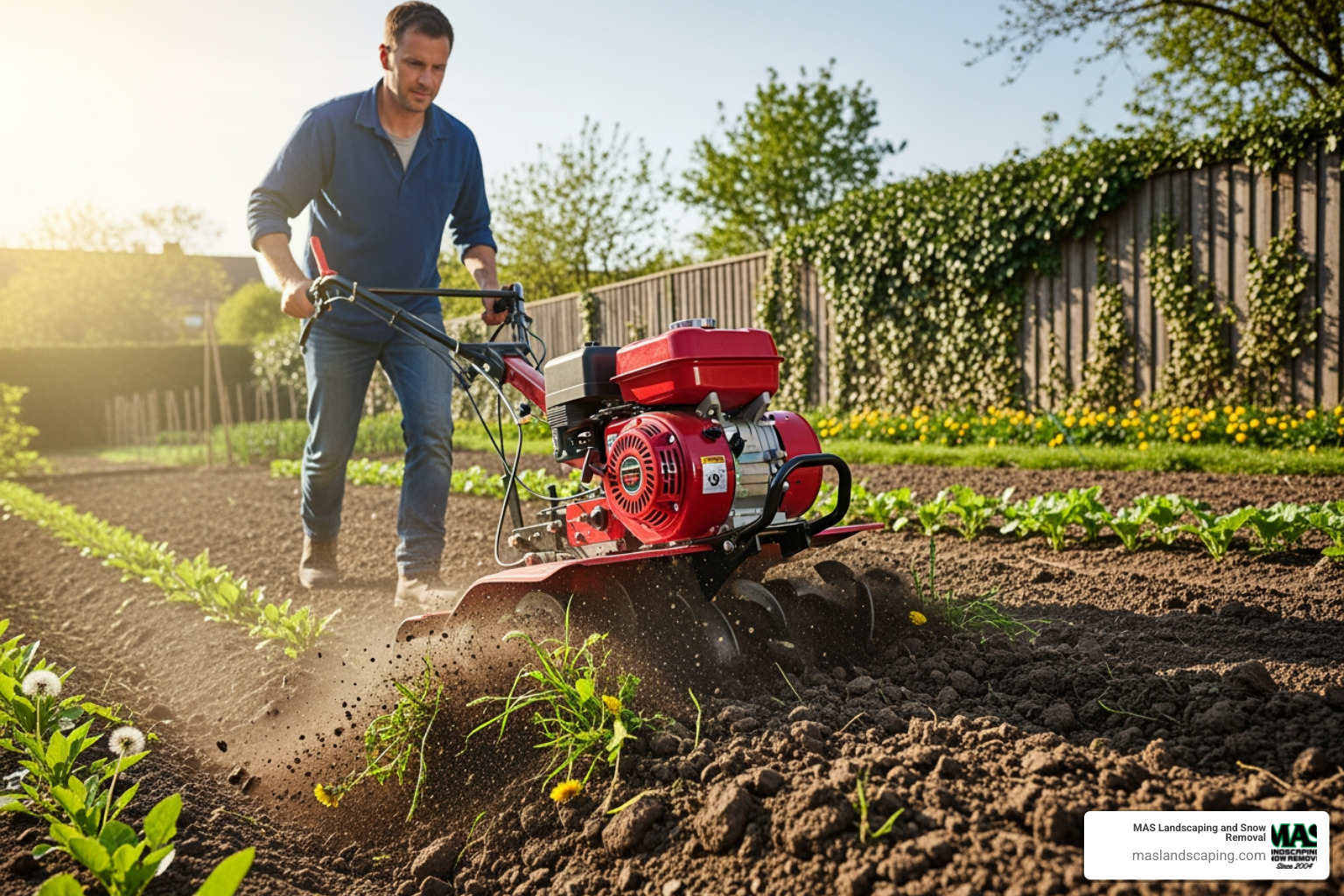
A thorough site preparation makes all the difference. Learn more about our yard clean ups services.
Step 3: Amend and Enrich the Soil
Once loosened, it’s time to enrich the soil. Organic matter is key. Incorporate a thin layer (about one-quarter to one-half an inch) of compost, well-rotted manure, or peat moss into the top four to six inches. This improves drainage, water retention, and fertility. If your existing dirt is very poor, you may need to add four to six inches of high-quality topsoil.
Based on your soil test, adjust the pH. Add agricultural lime for acidic soil (low pH) or elemental sulfur for alkaline soil (high pH), tilling it into the soil for best results.

Improving your soil is a foundational step. Consider our mulching service for bulk organic materials.
Step 4: Choose a Fast-Growing Grass Seed
For our Massachusetts climate—including Everett, Lynnfield, Malden, Melrose, Medford, Revere, Saugus, and Chelsea—cool-season grasses are the best choice. They grow best in spring and fall when air temperatures are between 60-75°F. Also, consider your area’s light exposure, choosing a sun or shade mix accordingly.
Here’s a comparison of fast-germinating cool-season grass types:
| Grass Type | Germination Time | Characteristics |
|---|---|---|
| Perennial Ryegrass | 5-10 days | Fastest germination, excellent wear tolerance, good for high-traffic areas |
| Annual Ryegrass | 5-10 days | Very fast germination, often used as a temporary cover or nurse grass |
| Tall Fescue | 10-14 days | Deep roots, drought-tolerant once established, good all-around choice |
| Kentucky Bluegrass | 2-4 weeks | Slower to establish but forms dense, beautiful turf, excellent cold tolerance |
Bermuda grass, a warm-season grass, germinates quickly but won’t survive our cold winters. Stick with high-quality cool-season blends. For more information, explore our guide on new lawns.
Step 5: How to sow grass seed on hard dirt for success
Proper sowing ensures even coverage. Use a broadcast or drop spreader for uniform distribution. Apply half the recommended amount of seed in one direction (north-to-south), then apply the other half perpendicularly (east-to-west). This crisscross pattern prevents patchiness.
Next, ensure seed-to-soil contact. Lightly rake the area to cover the seeds with about 1/8 to 1/4 inch of soil. This anchors the seeds, retains moisture, and protects them from birds. For even better contact, you can use a lawn roller to gently press the seeds into the soil.
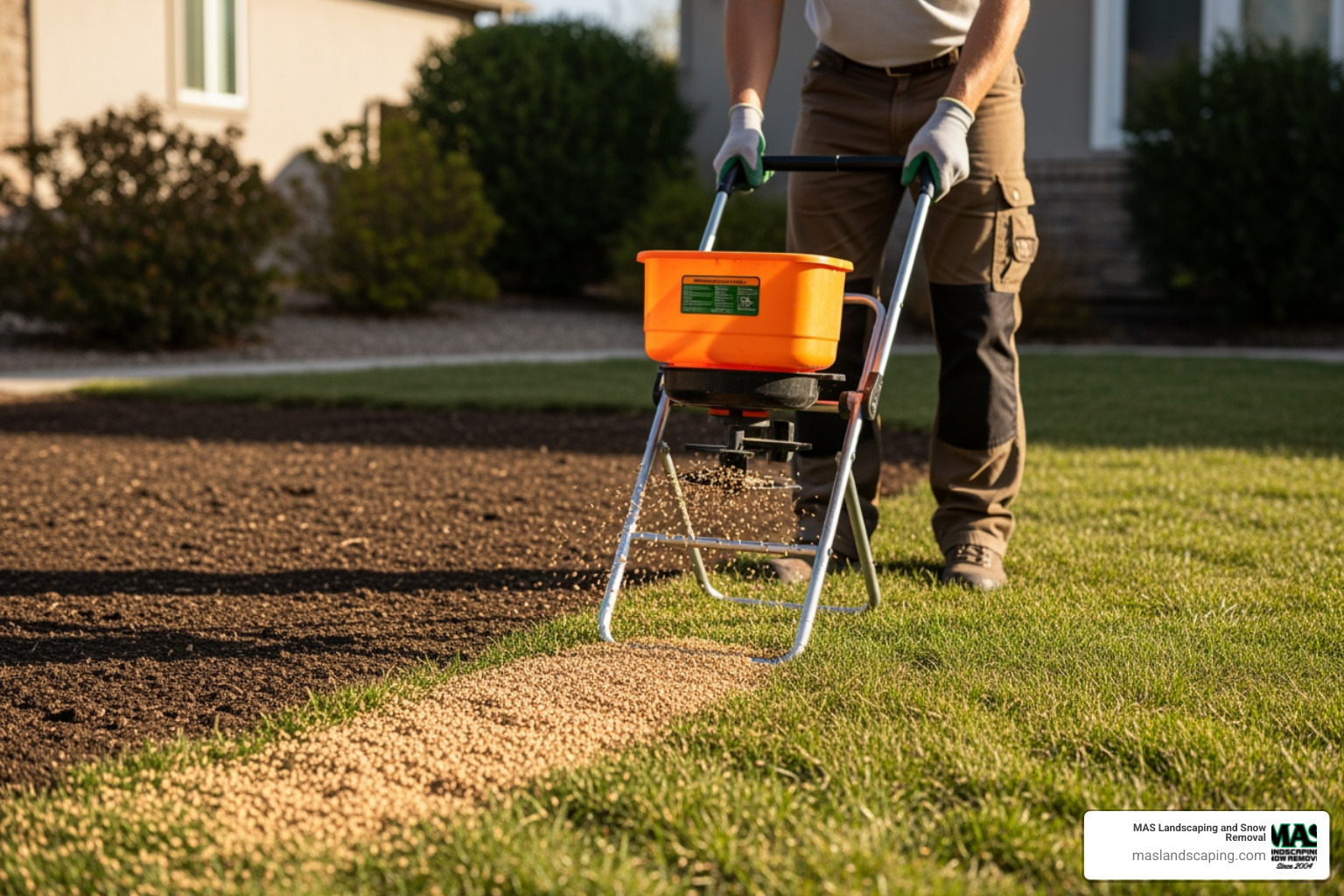
Learn more about the process in our guide on laying a new lawn with grass seed.
Step 6: Fertilize and Protect Your Seeds
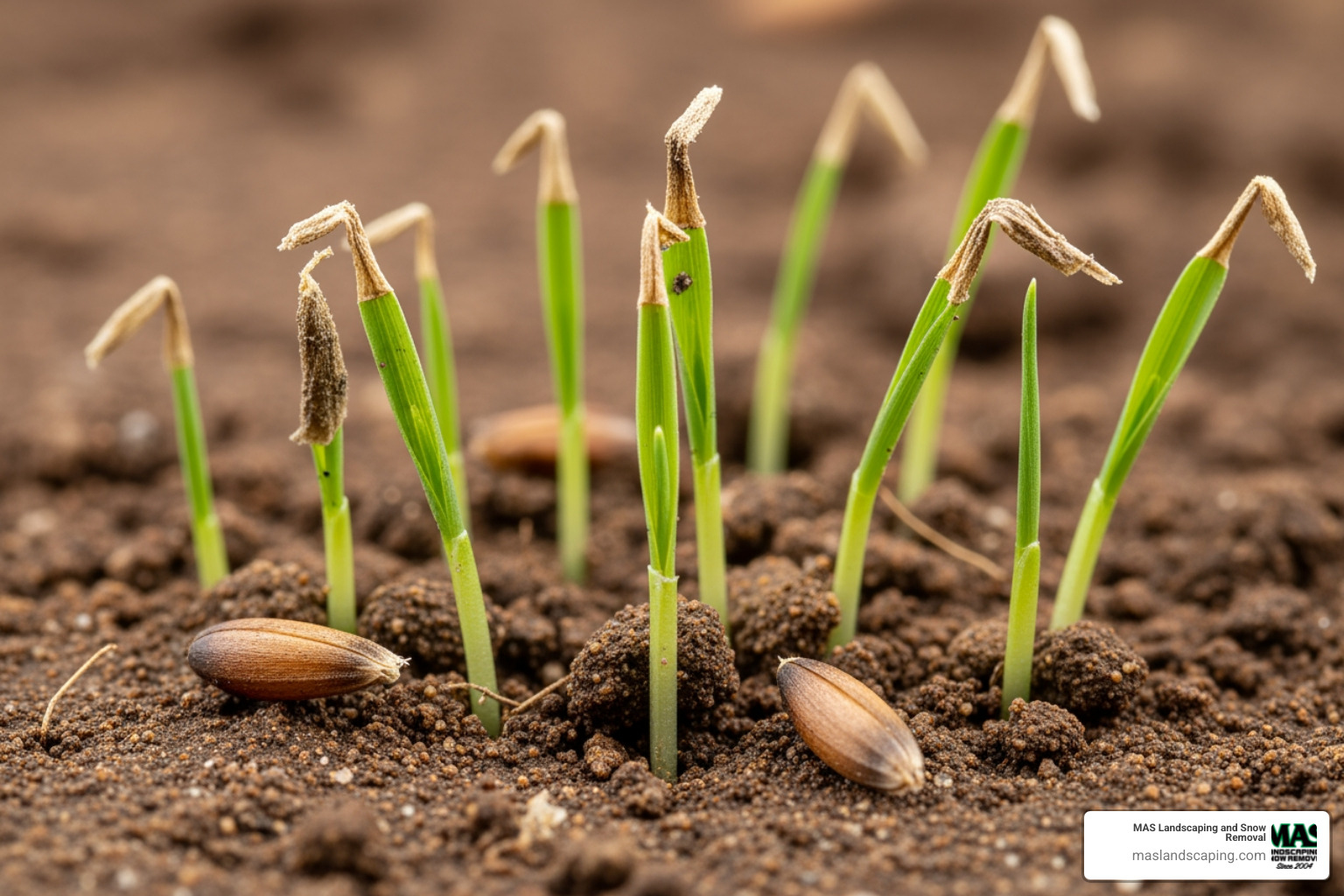
A starter fertilizer is a must for fast growth. Apply it immediately after seeding. These fertilizers are high in phosphorus to promote strong root development. After fertilizing, cover the area with a thin layer of weed-free straw. You should still see 50-75% of the soil through the straw. This layer helps retain moisture and protects seeds from birds and erosion.
Nurturing Your New Lawn: The First Critical Weeks
The first few weeks after seeding are the most active and critical time for care. Your attention now will determine the success of your new lawn.
How to grow grass fast on dirt with the right watering schedule
Proper watering is the lifeblood of your new lawn. Without it, your efforts will dry up.
During the first 1-2 weeks (germination), keep the top inch of soil consistently moist, not waterlogged. This typically means misting the area 2-3 times a day for 5-10 minutes. If a seed dries out during this phase, it can die. Use a gentle spray to avoid washing away seeds.

Once you see green sprouts, continue light watering until the grass is about three inches tall. The young seedlings still need consistent moisture to establish their roots.
After the first mow, shift your watering strategy. Water less frequently but more deeply—about one inch of water per week, soaking the soil 6-8 inches deep. This encourages deep root growth, creating a more drought-tolerant lawn. The best time to water is early morning (6-10 a.m.) to reduce evaporation and prevent fungal disease. An efficient irrigation system can simplify this process; you can see an example of a sprinkler system in action.jpg).
The First Mow and Beyond
Patience is key for the first mow. Wait until your new grass is 3 to 3.5 inches tall. Mowing too soon can stress or pull out young seedlings.
When you do mow, follow these rules:
- Set your mower to its highest setting.
- Follow the 1/3 rule: Never remove more than one-third of the grass blade in a single mowing.
- Ensure your mower blades are sharp. Dull blades tear grass, making it susceptible to disease.
Finally, keep foot traffic off the new lawn for at least the first month. Young grass is delicate and the soil can be easily compacted again. This temporary sacrifice ensures long-term results. For ongoing care, see our guide on lawn care and maintenance.
Common Mistakes to Avoid When Planting on Hard Dirt
To successfully grow grass fast on dirt, avoid these common missteps that can derail your efforts and lead to frustration.
- Skipping the soil test: Without knowing your soil’s pH and nutrient levels, you’re just guessing with amendments and fertilizer. This is the costliest mistake.
- Watering incorrectly: Too little water and seeds die; too much and they wash away or rot. The key is light, frequent misting during germination, followed by deep, infrequent watering once established.
- Seeding at the wrong time: Planting cool-season grass in the heat of summer is a recipe for failure. Seedlings can’t handle the stress. Early fall is the ideal time in Massachusetts, with spring as a backup.
- Choosing the wrong grass seed: A seed not suited for your climate or sun exposure won’t thrive, no matter how well you care for it. Stick to cool-season grasses in sun or shade-specific blends for our region.
- Inadequate soil preparation: Simply scattering seed on hard dirt is a waste of time and money. You must loosen the soil and add amendments to give roots a place to grow.
- Applying weed killer too soon: Young grass is extremely sensitive to herbicides. Wait until you’ve mowed your new lawn at least four times before applying any weed control products, and always read the label.
By sidestepping these common mistakes, you’ll save time and money, and your lawn will thank you with thick, healthy growth. For more on ground prep, see our guide on how to prepare ground for sod.
Frequently Asked Questions About Growing Grass on Dirt
Here are answers to the most common questions about changing bare dirt into a lush lawn.
How long does it really take for grass to grow on hard dirt?
The timeline depends on the seed type and conditions. Germination (the first green sprouts) can happen quickly:
- Perennial Ryegrass: 5-10 days
- Tall Fescue: 10-14 days
- Kentucky Bluegrass: 2-4 weeks
However, seeing sprouts is just the beginning. It takes several more weeks for the grass to establish a strong root system. You can expect a reasonably established lawn that can handle light traffic in about five to eight weeks with fast-growing varieties. A truly thick, robust lawn often takes several months to mature.
Can I just throw grass seed on hard dirt?
In short: no, not if you want it to grow. This approach almost always fails. Seeds need direct contact with soil to get the moisture and warmth required for germination. On hard dirt, seeds are exposed to birds, wind, and rain. Even if a few sprout, their roots can’t penetrate the compacted surface, and they will quickly wither and die.
Proper soil preparation is non-negotiable. Loosening the soil, adding organic matter, and lightly raking seeds in are essential steps for success.
What is the fastest-growing grass seed?
For our Massachusetts climate (serving Everett, Lynnfield, Malden, and surrounding areas), the fastest-growing options are cool-season grasses.
- Perennial Ryegrass is the champion, germinating in just 5-10 days. It establishes quickly and handles foot traffic well.
- Annual Ryegrass is just as fast but only lives for one season, making it better for temporary cover.
- Tall Fescue is also a great choice, germinating in 10-14 days and developing into a resilient, drought-tolerant lawn.
While you may hear that Bermuda grass is fast-growing (7-10 days), it is a warm-season grass that will not survive our cold New England winters. Stick with high-quality cool-season grasses suited for our climate. For more help choosing, check out our guide on new lawns.
From Dirt to Dream Lawn: When to Call a Professional
While a DIY lawn installation is rewarding, sometimes the smartest move is to call in a professional. This can save you time, frustration, and a sore back, especially with challenging projects.
Consider calling a pro if you’re facing:
- Severe Compaction: If your soil is rock-hard from heavy construction equipment, a professional team with commercial-grade tillers can properly prepare the ground.
- Large Areas: What might take you multiple weekends can be handled by a professional crew in a fraction of the time, ensuring even coverage over a large space.
- Steep Slopes or Drainage Issues: Experts can implement proper grading and erosion control to prevent your seed and topsoil from washing away.
- Lack of Time or Equipment: If your schedule is packed, or the cost of renting aerators, tillers, and rollers is adding up, a professional service can be a cost-effective and efficient solution.
MAS Landscaping and Snow Removal serves Everett, Lynnfield, Malden, Melrose, Medford, Revere, Saugus, and Chelsea, MA. We bring local expertise to handle the specific challenges of New England soil and climate. We know exactly how to grow grass fast on dirt in our region.
Our professional lawn installation service handles everything from soil testing to seeding, guaranteeing results without the guesswork. We can also integrate your new lawn into a cohesive outdoor space with our landscape design services.
Ready to transform that hard dirt into a lush, green lawn? Reach out to us for a consultation and let’s bring your yard to life.
