




Poured Concrete Walls Cost: The Real Truth 2025
Why Understanding Poured Concrete Walls Cost Matters for Your Project
Poured concrete walls cost varies widely based on your project’s specific needs, but understanding the basic pricing structure helps you plan and budget effectively. Whether you’re building a foundation, basement, or retaining wall, knowing what drives these expenses ensures you make informed decisions.
Quick Cost Overview:
- Per Square Foot: $10 to $40+ (can reach $100 for complex designs)
- Per Linear Foot: $90 to $320+ (for 6-8 foot tall walls)
- Foundation Walls: $2,900 to $37,500+
- Full Basement: Up to $30,000+
- 50-Foot Wall Project: $4,500 to $14,000+
Note: These are average costs from national sources and not quotes from MAS Landscaping.
Poured concrete walls offer remarkable benefits for homeowners in the Greater Boston area. They provide superior strength compared to block alternatives, resist water infiltration more effectively, and can last anywhere from 30 to 100 years with proper maintenance. As one contractor noted, “properly engineered poured concrete walls are better than poorly built alternatives,” highlighting the importance of quality installation over material choice alone.
The investment in a poured concrete wall goes beyond the initial price tag. These structures form the literal foundation of your property’s safety and value. Understanding what influences your final cost—from excavation and reinforcement to finishing touches and permits—helps you avoid surprises and ensures your project delivers lasting results.
Your specific project cost depends on several interconnected factors: the wall’s dimensions, your site’s accessibility, soil conditions, required drainage systems, and the complexity of your design. A simple straight foundation wall costs considerably less than a curved retaining wall with decorative finishes, and a flat, accessible site requires less preparation than one with challenging terrain.
Understanding the Average Poured Concrete Walls Cost
When considering a project involving poured concrete walls, it’s natural to wonder about the financial commitment. While every project is unique, national average cost data from various online sources can provide a valuable starting point for budgeting. We want to emphasize that these figures are for informational purposes only and are not a quote from MAS Landscaping for any specific project in Everett, Lynnfield, Malden, Melrose, Medford, Revere, Saugus, or Chelsea, MA. For a precise estimate custom to your needs, we always recommend a personalized consultation.
Cost Per Square Foot and Linear Foot
The poured concrete walls cost is often calculated in two primary ways: per square foot or per linear foot. This helps break down the overall project into manageable units for estimation.
- Per Square Foot: You can generally expect to see prices ranging from $10 to $40 per square foot for basic poured concrete walls. However, for more intricate designs, specialized finishes, or challenging site conditions, this cost can climb significantly, sometimes reaching up to $100 per square foot. This broad range accounts for variations in concrete mix, reinforcement, and labor intensity.
- Per Linear Foot: For walls that are typically 6 to 8 feet tall, the cost often falls between $90 and $280 per linear foot. More complex projects or taller walls can push this figure higher, even up to $320 per linear foot. The height and thickness of the wall directly influence the volume of concrete and the complexity of formwork, naturally impacting the linear foot pricing.
Typical Project Costs: Foundations, Basements, and Retaining Walls
Beyond the unit costs, it’s helpful to look at the typical total investment for common applications of poured concrete walls:
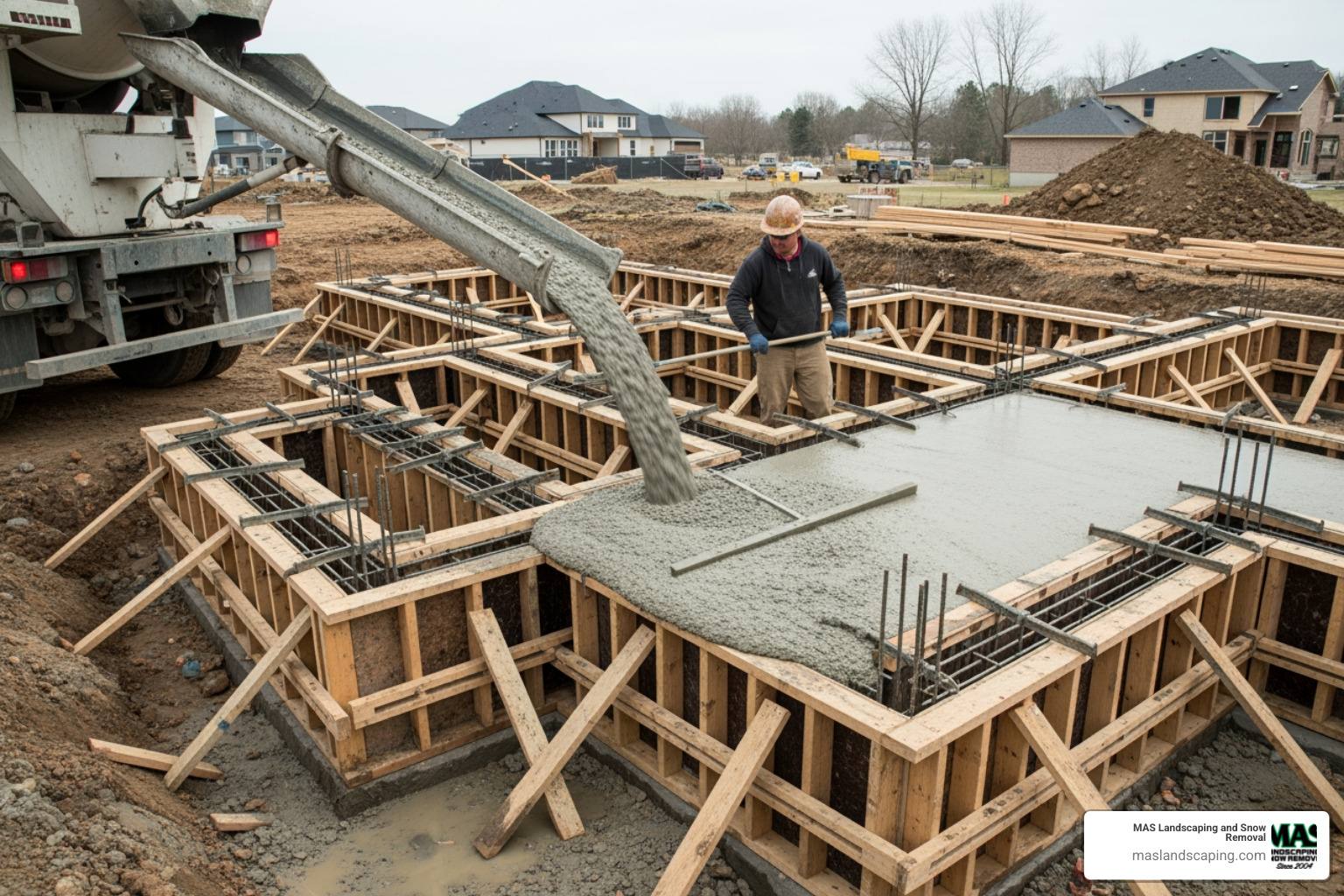
- Poured Concrete Foundation Walls: For a standard foundation wall, national averages suggest costs typically range from $2,900 to $10,400. Larger or more complex foundations can easily extend this range, with some projects costing up to $37,500 or more.
- Full Basement Walls: If you’re envisioning a full basement, the costs for poured concrete walls can be a substantial part of the overall construction, often reaching up to $30,000 or more, depending on the size, depth, and additional features like windows or egress points.
- Poured Concrete Retaining Walls: These essential structures, designed to hold back soil, have their own cost considerations. For a comprehensive breakdown of what to expect, we’ve prepared a detailed guide on poured concrete retaining wall cost.
- Example Project – A 50-Foot Wall: To give you a concrete idea (pun intended!), a 50-foot long poured concrete wall, typically 6 to 8 feet tall, might cost anywhere from $4,500 to $14,000 or even higher, depending on the factors we’ll explore next.
Key Factors That Influence Your Final Price
Understanding the average poured concrete walls cost is just the first step. The real magic (and the real variability in pricing) happens when we consider the many factors that influence your final project price. Think of it like baking a cake: the basic ingredients are there, but the size, decorations, and even the oven you use will change the final product and its price!
Several elements come together to determine the ultimate investment for your poured concrete walls in the Greater Boston area:
- Project Size: This is fairly straightforward – larger walls require more materials and labor.
- Design Complexity: Simple, straight lines are less costly than intricate curves or unique architectural features.
- Site Conditions: The lay of your land, the type of soil, and how easily equipment can access the work area all play a significant role.
- Labor Rates: Skilled concrete professionals are essential, and their expertise comes at a fair price. In our region, labor rates can vary based on demand and specialized skills.
- Material Quality: The type of concrete mix, the grade of steel reinforcement, and any additives will impact material costs.
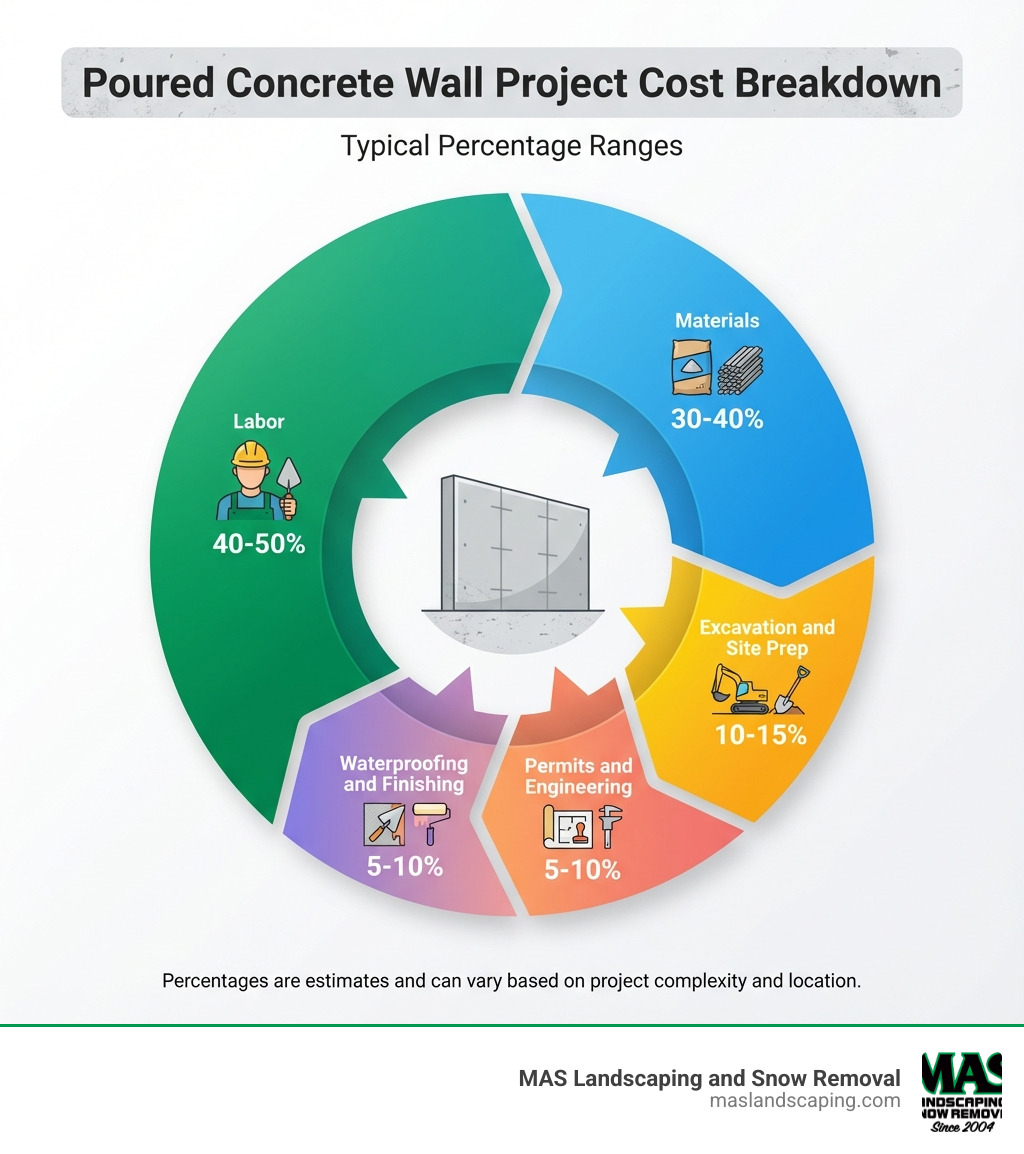
Indeed, materials typically account for about 50% to 75% of the total cost, while labor can be a substantial portion, sometimes even up to 85% for highly specialized or challenging installations.
Core Project Specifications and Design
The very blueprint of your project significantly shapes the poured concrete walls cost.
- Wall Dimensions (Height, Length, Thickness): As a rule of thumb, a poured concrete wall is typically 8 to 12 inches thick, but this can vary from 6 to 12 inches. The precise thickness depends on the wall’s height, the amount of underground pressure it needs to resist, and local building codes in towns like Saugus or Medford. Taller and thicker walls naturally require more concrete and more robust formwork.
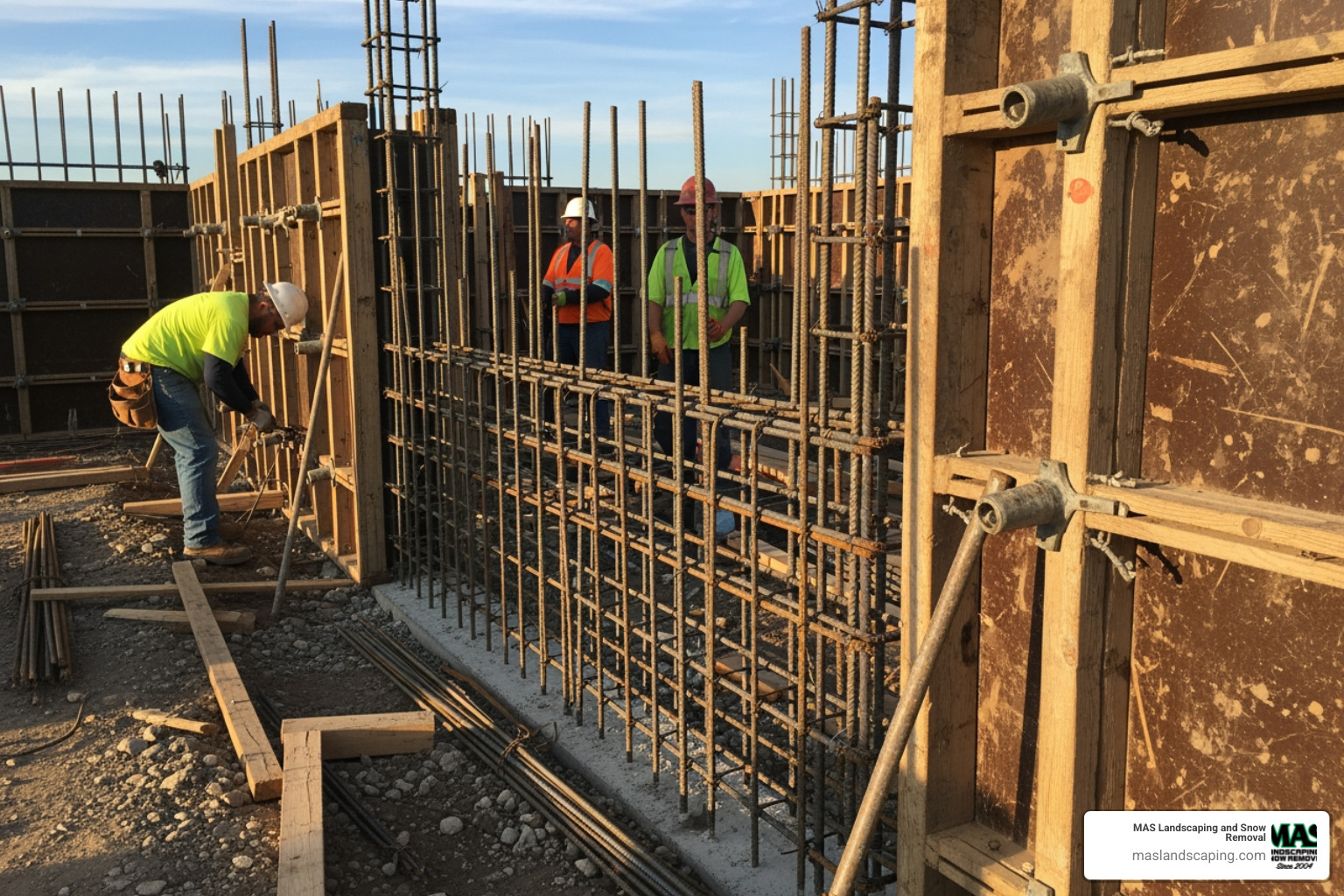
- Reinforcement (Rebar): Concrete is incredibly strong under compression, but it needs a little help with lateral strength and tension. That’s where steel reinforcement, like rebar, comes in. This crucial addition strengthens the wall, preventing it from bending or cracking under pressure. Rebar can add between $1.40 and $2.55 per linear foot to the cost, but it’s an investment in the wall’s longevity and structural integrity.
- Design Complexity (Curves vs. Straight Lines): Poured concrete is fantastic because it can be molded into virtually any shape. However, creating curves or custom shapes requires more intricate formwork and specialized labor, increasing the cost compared to simple, straight walls. While theoretically limitless, complex designs can be costly.
- Finishes (Board-Formed, Stamped Textures): The aesthetic appeal of your wall can also influence the price. A smooth, standard finish is the most economical. If you’re dreaming of a unique look, like board-formed concrete that mimics wood grain, or stamped concrete that resembles brick or stone, these decorative treatments will add to your poured concrete walls cost.
Site Preparation and Additional Services
Before any concrete is poured, a lot happens on site. These preparatory steps and additional services are vital for a successful and long-lasting project.
- Excavation and Grading: Preparing the ground for your wall involves excavation and grading. This can add an estimated $2 to $10 per square foot to your project, depending on the depth and complexity. If your yard needs significant leveling, expect costs ranging from $0.40 to $2.00 per square foot for that service.
- Soil Type: The type of soil on your property in Everett or Revere matters. Wet, heavy soil, common in many regions, can exert immense pressure on retaining walls. Understanding soil conditions is critical for proper design and potentially for drainage solutions.
- Site Accessibility: Can a concrete truck easily access the pour site? What about heavy machinery for excavation? Difficult access (e.g., narrow driveways, steep slopes) can increase labor time and potentially require smaller, more frequent deliveries, driving up your poured concrete walls cost.
- Drainage Systems (French Drains): Proper drainage is, without a doubt, one of the most critical components for any concrete wall, especially retaining walls and foundations. Without it, water can build up, exerting pressure and potentially leading to frost heave in our Massachusetts climate. French drains, a common solution, can cost between $10 and $50 per linear foot for exterior applications, while interior perimeter drains might range from $40 to $85 per linear foot.
- Waterproofing: Concrete is porous, meaning water can eventually seep through. For below-grade walls (basements, foundations, retaining walls), waterproofing is non-negotiable. This involves applying membranes or sealants during installation, typically costing $3 to $10 per square foot. It’s a key defense against dampness and leaks.
- Permits and Engineering Fees: Building permits are almost always required for structural concrete walls, ensuring compliance with local building codes in your town. These fees can range from $150 to $2,000. For walls over a certain height (often 4 feet for retaining walls), or for complex structural designs, engineering fees (typically $350 to $720, or $100 to $500 per hour for a structural engineer) are necessary to ensure safety and stability. An architect might also be involved in the design phase, with costs from $1,500 to $5,000.
Poured Concrete vs. Alternative Wall Types
When planning your project, you’ll encounter various options beyond just poured concrete. Understanding how poured concrete walls compare to alternatives like concrete block (CMU) and precast concrete walls can help you make an informed decision about the best fit for your needs and budget.
| Feature | Poured Concrete Walls | Concrete Block (CMU) Walls | Precast Concrete Walls |
|---|---|---|---|
| Average Cost | $10 – $40+ per sq ft ($90 – $280+ per linear ft) | $10 – $30+ per sq ft | $20 – $40+ per sq ft ($150 – $320+ per linear ft) |
| Strength | Excellent, seamless, high lateral pressure resist. | Good compression, but joints are weaker points | Excellent, factory-controlled quality |
| Water Resistance | High (seamless), but requires proper waterproofing | Moderate (prone to leaks at joints), cores can hold water | Very high (dense concrete, fewer joints) |
| Installation Speed | Moderate (formwork, pouring, curing) | Moderate (laying blocks, mortaring) | Fast (panels manufactured off-site, quick assembly) |
| Curing Time | Up to 28 days on-site | Minimal on-site for blocks, mortar needs curing | None on-site (cured at factory) |
| Design Flexibility | Very high (can be molded into any shape) | Moderate (modular units, limited curves) | Moderate (limited by mold designs, custom molds costly) |
| Weather Dependency | High (requires good weather for pouring/curing) | Moderate | Low (installation can happen in most weather) |
Poured Walls vs. Concrete Block (CMU) Walls
For decades, concrete block (or CMU – Concrete Masonry Unit) walls were a common choice, especially for homes built before the 1970s. However, poured concrete has largely become the preferred standard, and for good reason.
- Strength Comparison: Poured concrete walls offer superior strength because they are monolithic – a single, seamless structure. This provides excellent resistance to underground lateral pressure. Concrete block walls, while strong in compression, consist of individual blocks joined by mortar. These joints are inherent weak points and can be vulnerable to shifting or buckling under pressure.
- Water Resistance: This is where poured concrete truly shines. Its seamless nature means fewer pathways for water to penetrate. Concrete block walls, with their numerous mortar joints, are significantly more prone to leaks. As one expert noted, puddling or pooling water near the foundation is a common drawback for block foundations because those joints, and even the hollow cores inside the blocks, can fill with water, leading to damp basements in areas like Malden or Melrose.
- Installation Process: Poured concrete requires building forms, pouring the concrete, and allowing it to cure. Block walls involve laying individual blocks with mortar. While block laying can be faster for smaller, simpler walls, it requires highly skilled masons to ensure a strong, watertight bond.
- Cost Differences: The poured concrete walls cost per square foot can be comparable to or slightly higher than concrete block walls. While block walls might range from $10 to $30 per square foot, poured concrete walls typically start at $10-$25 per square foot and can go up to $40 per square foot for standard applications. The true cost difference often comes down to labor and the need for extensive waterproofing for block walls. For more details on block wall construction, explore our guide on More on block walls.
Poured Walls vs. Precast Concrete Walls
Precast concrete walls represent another modern alternative, offering distinct advantages in certain scenarios.
- Manufacturing Process: The fundamental difference lies here. Poured concrete walls are constructed on-site, with forms built and concrete mixed and poured directly into them. Precast concrete walls, on the other hand, are manufactured in a controlled factory environment using molds, and then transported to the site as finished panels.
- Installation Speed: Precast walls boast significantly faster installation times. Factory-cured panels can often be set in place in just 1-2 days, compared to the 7-14 days required for on-site formwork, pouring, and initial curing of poured concrete walls. Some advanced systems, like Superior Walls, can even be installed in 2-3 hours!
- Curing Time & Weather Dependency: Because precast panels are already cured when they arrive, there’s no on-site curing time, allowing for immediate backfilling. Poured concrete, however, needs up to 28 days to reach its full strength, and the pouring process itself is highly dependent on good weather conditions. Precast can often be installed year-round, a significant advantage in areas like Chelsea or Lynnfield with variable weather.
- Cost Comparison: While the material costs for precast panels can sometimes be higher per square foot ($20-$40 per square foot or $150-$320 per linear foot) than poured concrete ($10-$25 per square foot or $90-$280 per linear foot), the reduced labor and faster installation can make precast a more economical choice overall, with some sources suggesting precast can be 23% less expensive than poured concrete, and specific systems up to 55% cheaper to install. For more insights into this alternative, check out our precast concrete retaining wall guide.
Long-Term Value and How to Save Money
Investing in poured concrete walls is a long-term decision, one that can significantly improve the value and structural integrity of your property. Understanding the long-term costs, including maintenance and potential repairs, is just as important as the initial poured concrete walls cost. Plus, who doesn’t love a good money-saving tip?
Maintenance, Repairs, and Lifespan
We often say that concrete is built to last, and it’s true! A well-built concrete wall can last anywhere from 30 to 100 years. With proper support and ongoing maintenance, some reinforced foundation walls have even been known to reach the two-century mark!
- Routine Maintenance (Sealing): While highly durable, concrete is not entirely maintenance-free. For below-grade walls, resealing is recommended every 10 years to maintain its waterproofing effectiveness. This proactive step can cost between $1 and $8 per square foot.
- Crack Repair Costs: It’s a common misconception that concrete never cracks. Newly poured concrete can develop small, hairline cracks as it cures, which often disappear. However, if cracks appear later or widen (especially beyond 1 inch), they should be addressed. Repairing a medium-sized crack might cost around $200, while more significant issues, like stabilizing a bowing basement wall, could average around $4,500. Foundation crack repairs typically range from $250 to $800 per crack.
- Long-Term Durability and Structural Integrity: The longevity of your poured concrete wall hinges on its initial installation, particularly the proper use of steel reinforcement. Concrete is strong in compression, but it needs rebar to handle lateral forces and prevent cracking. For any concerns about structural integrity, especially as a wall nears its expected lifespan, we always recommend consulting a structural engineer. Professionals from organizations like the Mason Contractors Association of America (MCAA) are a great resource for understanding best practices in masonry and concrete construction.
Smart Ways to Manage Your Poured Concrete Walls Cost
We understand that managing project expenses is a top priority for homeowners in the Greater Boston area. Here are some smart strategies to help you get the most value for your poured concrete walls cost:
- Simplify Your Design: While custom shapes and intricate details are possible, they add to the complexity and labor cost. Opting for simpler, straighter lines can significantly reduce expenses.
- Handle Your Own Site Cleanup: If you’re physically able and have the time, clearing brush, debris, or even handling some basic landscaping cleanup yourself before the crew arrives can save on labor costs.
- Schedule During the Off-Season: Demand for concrete work often peaks in spring and summer. If your project allows, scheduling during the slower fall or winter months might give you more flexibility in pricing and scheduling, provided weather conditions are suitable for pouring.
- Get Multiple Professional Quotes: We always encourage homeowners to gather at least three comprehensive bids from reputable local professionals. This allows you to compare pricing, understand the scope of work, and ensure you’re getting competitive rates for your specific project in Medford, Revere, or anywhere in our service area. Don’t be afraid to ask about budgeting options!
Frequently Asked Questions about Poured Concrete Walls
We encounter many questions from homeowners about poured concrete walls, and rightly so! It’s a significant investment, and understanding the nuances can help you feel confident in your decisions.
How thick should a poured concrete wall be?
The thickness of a poured concrete wall isn’t a one-size-fits-all answer. Typically, you’ll find poured concrete walls ranging from 8 to 12 inches thick. However, this can be influenced by several critical factors:
- Wall Height: Taller walls naturally need to be thicker to support their own weight and resist external forces.
- Soil Pressure: If the wall is retaining soil (like a basement or retaining wall), the pressure exerted by the soil and any water in it dictates a greater thickness.
- Local Building Codes: Every town in our service area, from Saugus to Malden, has specific building codes that dictate minimum wall thicknesses for various applications to ensure structural integrity and safety. Our team is always up-to-date on these requirements.
Do new poured concrete walls always crack?
It’s a common concern, but here’s the “concrete truth”: small, hairline cracks in newly poured concrete walls are quite normal. This is part of the curing process as the concrete dries and shrinks. Often, these minor cracks will tighten up and become less noticeable within the first 30 days.
However, not all cracks are created equal:
- Hairline Cracks (Normal): These are usually superficial and don’t affect structural integrity. Proper concrete mix, placement, and curing techniques (like keeping the concrete moist) help minimize them.
- Structural Cracks (Concern): If a crack is wider than about 1 inch, or if it’s actively leaking water, it could indicate a more serious issue. In such cases, it’s crucial to contact a professional for an inspection. The importance of proper installation, including adequate steel reinforcement and expert formwork, cannot be overstated in preventing these more problematic cracks.
Is waterproofing necessary for all poured concrete walls?
While poured concrete walls are highly resistant to water, they are not entirely impervious. Concrete is a porous material, meaning it can absorb moisture over time. Therefore, waterproofing is often, but not always, necessary.
- Below-Grade Walls (Basements, Foundations): For any wall that is below ground level, waterproofing is absolutely essential. This includes basement walls and foundation walls. These walls are constantly exposed to soil moisture and potential hydrostatic pressure (water pushing against the wall). Without proper waterproofing, moisture can seep into your basement, leading to dampness, mold, and potential structural issues.
- Retaining Walls: Similar to foundation walls, retaining walls are built to hold back soil, which often contains moisture. Proper drainage and waterproofing are critical for these walls to prevent water buildup and potential failure, especially in our region’s climate with its freeze-thaw cycles.
- Preventing Moisture Damage: Even above-grade walls can benefit from a breathable sealant to protect against rain and humidity. Effective waterproofing and good site drainage are your best defense against long-term moisture problems and ensuring the longevity of your poured concrete walls cost investment.
Conclusion: Building a Lasting Investment
The poured concrete walls cost represents an investment in the long-term stability, safety, and value of your property. From foundational support to neat retaining walls, these structures offer unparalleled strength, durability, and resistance to environmental challenges, especially when installed correctly. While the initial costs can vary widely depending on factors like size, complexity, site conditions, and additional services like excavation and waterproofing, understanding these elements empowers you to make informed decisions.
We’ve explored how poured concrete stands strong against alternatives like concrete block walls, offering superior water resistance due to its seamless nature. We’ve also compared it to precast options, noting the trade-offs between on-site and off-site construction, speed, and overall cost-effectiveness.
At MAS Landscaping, we pride ourselves on our professionalism, personalized service, and local expertise in creating functional, beautiful outdoor spaces throughout Everett, Lynnfield, Malden, Melrose, Medford, Revere, Saugus, and Chelsea, MA. We understand the unique challenges and opportunities presented by our local climate and terrain.
Choosing poured concrete walls is choosing a lasting investment. By focusing on quality installation, proper reinforcement, and essential protective measures like drainage and waterproofing, you ensure that your concrete walls will stand strong for decades to come.
For a detailed guide on your next hardscaping project, learn more about the cost for concrete retaining wall installation. We’re here to help you lay a solid foundation for your outdoor dreams.
