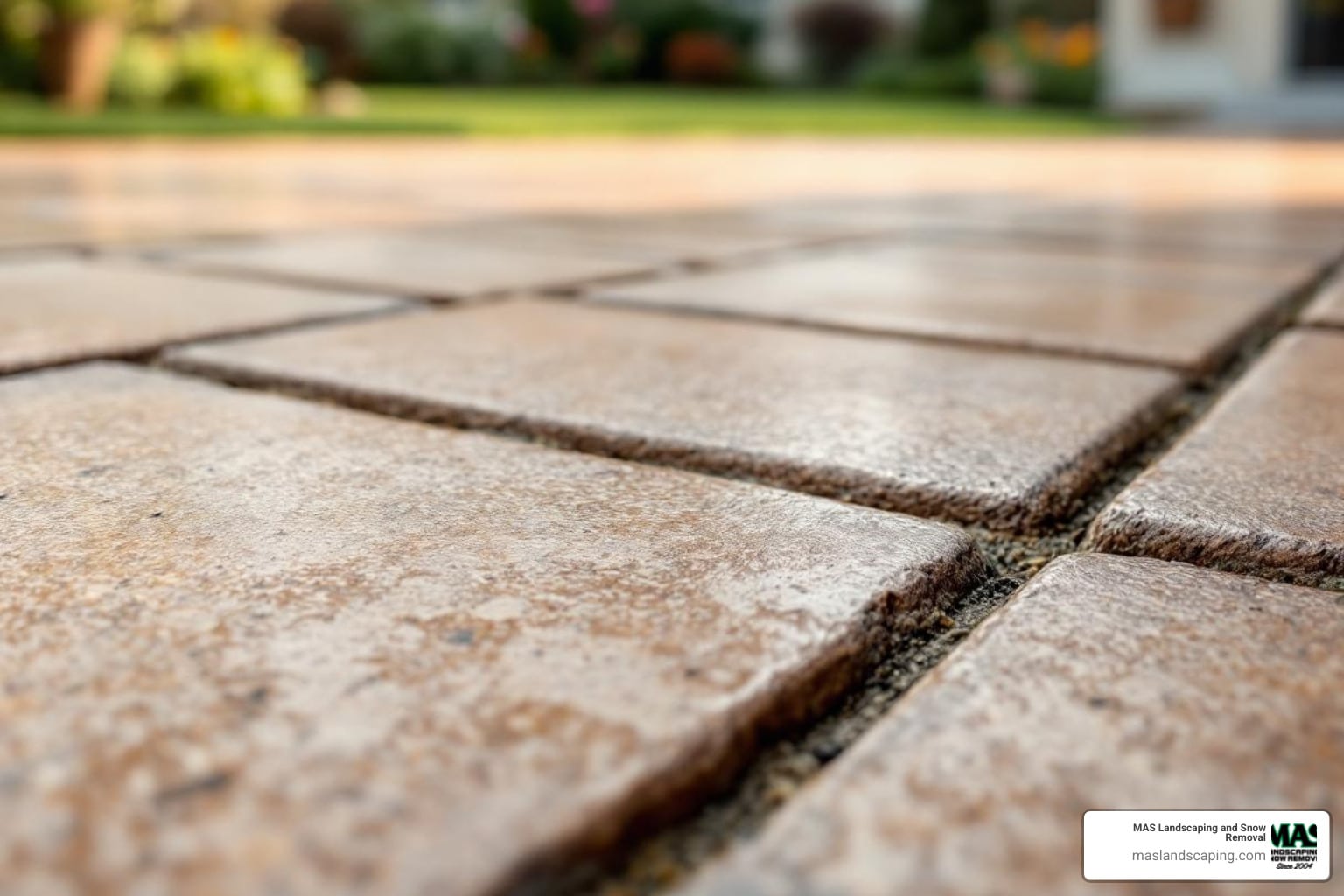



Why Sealing Your Concrete Paver Patio Matters
Sealing concrete paver patio surfaces is a protective process that applies a specialized coating to improve durability, prevent stains, and improve appearance. Here’s a quick overview:
The Essential Sealing Process:
- Wait 60-90 days after installation before first sealing
- Clean thoroughly – remove all dirt, stains, and efflorescence
- Choose your sealer – water-based (natural look) or solvent-based (wet look)
- Apply in ideal conditions – 50-90°F, dry weather, no rain for 24+ hours
- Reseal every 3-5 years to maintain protection
Your paver patio is a significant investment that deserves protection. Think of sealer as sunscreen for your patio; without it, UV rays fade colors, water seeps in causing cracks during freeze-thaw cycles, and stains from oil or leaves become permanent. Unsealed pavers absorb everything, and the damage adds up fast.
Fortunately, sealing is a manageable DIY project with a big payoff. A sealed patio resists stains, keeps colors vibrant, blocks weeds, and simplifies cleaning. The process can be done over a weekend with basic tools and the right weather. Whether you prefer a natural matte finish or a glossy “wet look,” sealing is key to protecting your pavers from moisture, stains, and harsh New England weather.
Why Sealing Your Paver Patio is a Smart Investment
Deciding to seal your paver patio is a smart choice for homeowners in Saugus, Everett, Lynnfield, and other MA towns. Our challenging weather makes porous pavers vulnerable, but sealing creates a protective barrier to prevent damage and protect your investment.
While sealing isn’t a one-time task—it requires reapplication every 3-5 years and has an initial cost—the benefits far outweigh the drawbacks. A sealed patio looks better, resists stains, and lasts longer. For ongoing care beyond sealing, explore our landscape maintenance services.
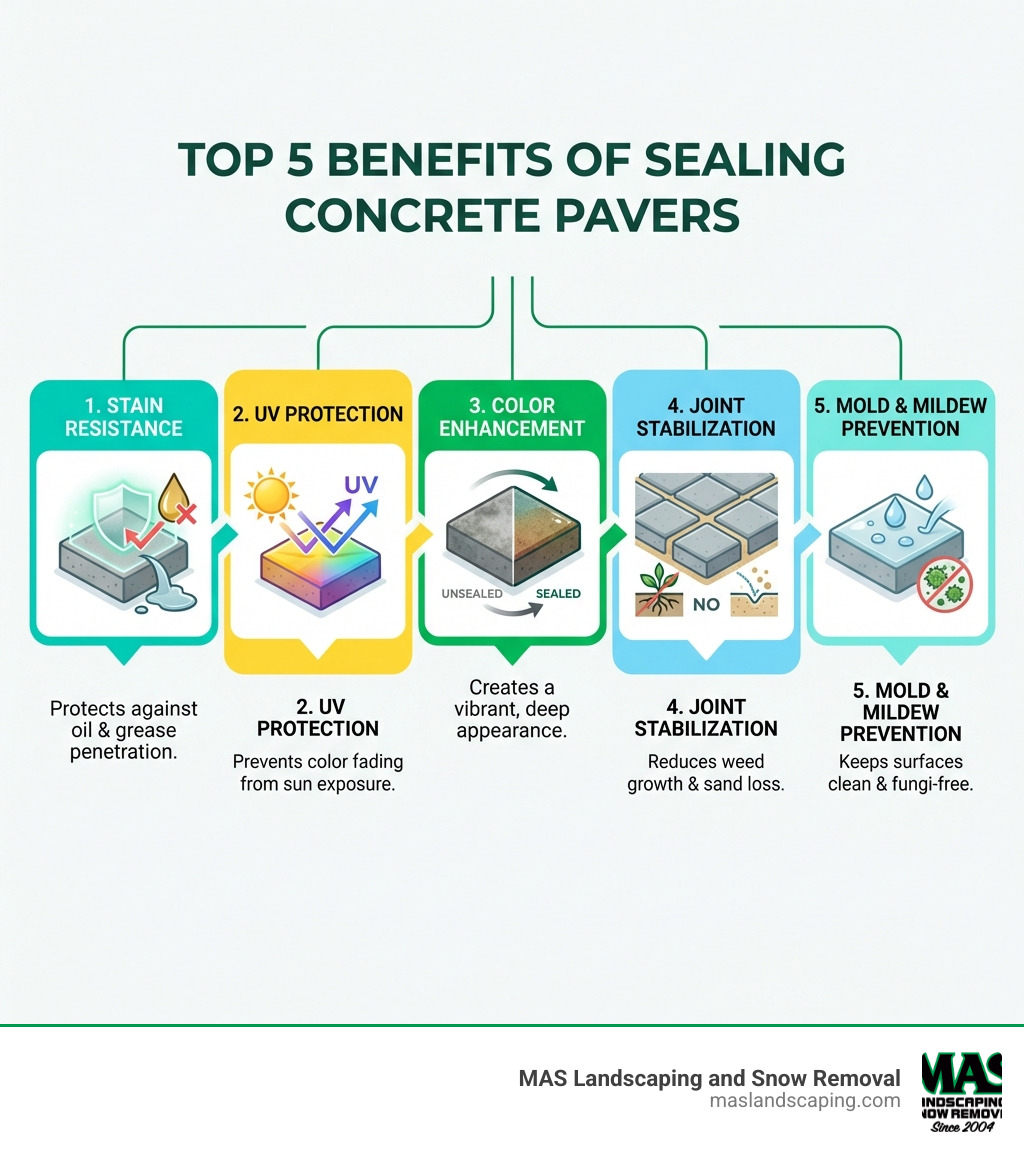
The Benefits of Protecting Your Pavers
Sealing your pavers offers numerous advantages for your property:
- Improved Appearance: Sealers improve and deepen paver colors, offering finishes from a glossy “wet look” to a natural matte that still protects against UV fading.
- Protection from Stains: A sealed surface prevents oil, grease, food spills, and rust from penetrating the paver, keeping your patio pristine.
- Extends Paver Life: By preventing water absorption, sealers protect pavers from cracking during New England’s freeze-thaw cycles. They also stabilize the joint sand, preventing erosion and loose pavers.
- Easier to Clean: Dirt and grime sit on top of a sealed surface, making cleaning a breeze with a simple sweep or rinse.
- Inhibits Growth: Sealing creates an environment less hospitable to mold, mildew, and algae, and makes it harder for weeds to sprout in the joints.
What Happens if Concrete Pavers Are Not Sealed?
Failing to seal your pavers leaves them vulnerable to damage that shortens their lifespan and detracts from their beauty:
- Water Damage: Porous, unsealed concrete absorbs water. In our climate, this leads to cracking and spalling from freeze-thaw cycles.
- Fading and Stains: The sun’s UV rays will cause colors to fade. Spills like oil, drinks, and fallen leaves will soak in, creating permanent stains.
- Unwanted Growth: Moisture retention encourages mold and mildew, while unsealed joints are a prime spot for weed growth.
- Increased Maintenance & Shorter Lifespan: An unsealed patio requires more aggressive cleaning and will deteriorate faster, potentially leading to costly repairs or early replacement.
Choosing the Right Armor: Types of Paver Sealants
When it comes to sealing concrete paver patio surfaces, selecting the right sealer is critical. Options generally fall into two categories: film-forming and penetrating sealers, which can be either water-based or solvent-based.
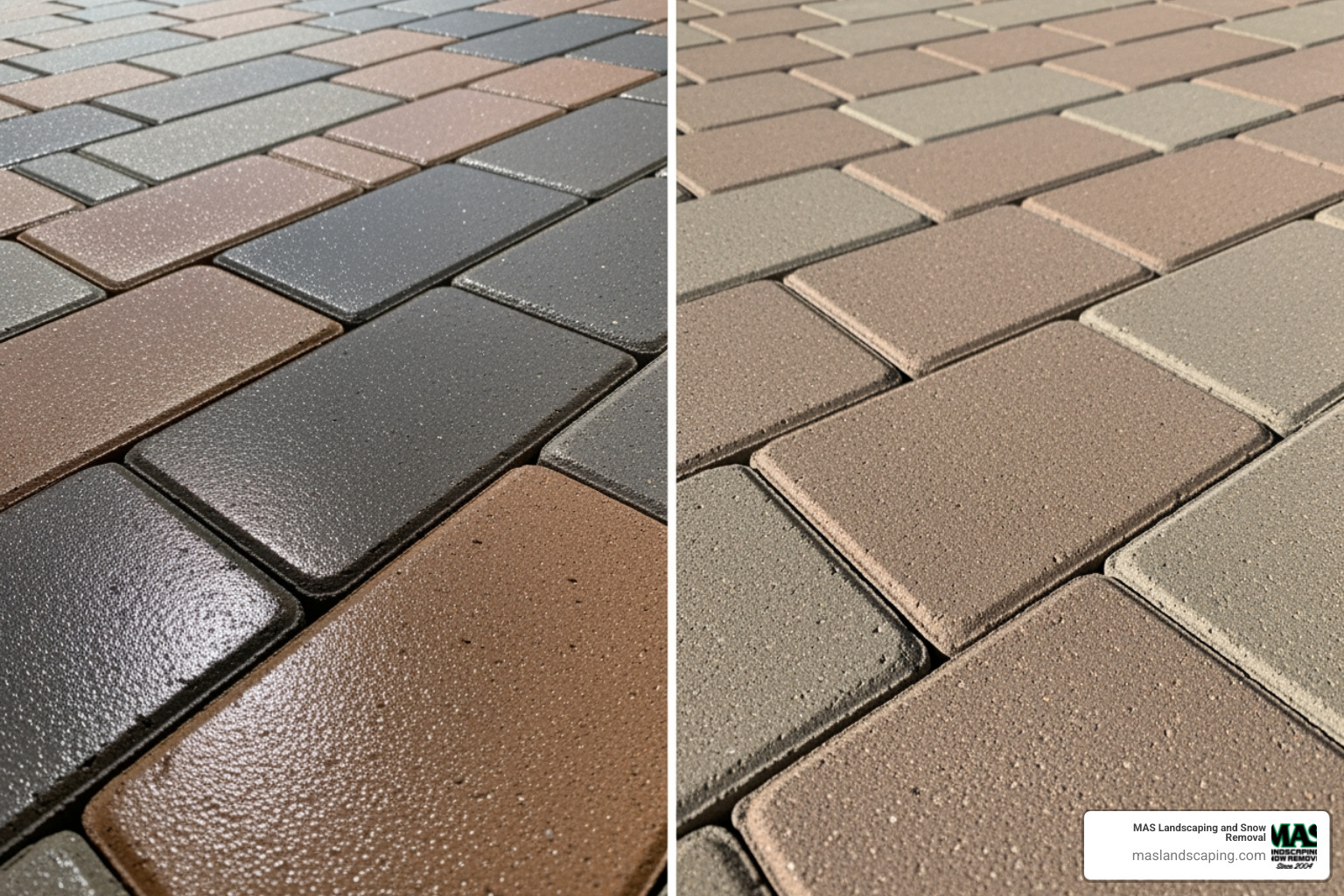
Understanding the differences will help you choose the best protection for your patio:
Film-Forming Sealers for a “Wet Look” or Gloss Finish
These sealers create a protective top layer, providing a noticeable aesthetic change and a finish ranging from a subtle sheen to a high-gloss “wet look.” They form a physical barrier offering excellent protection against stains and UV rays.
- Types: Acrylic sealers are a popular choice. Terms like High-Gloss, Semi-Gloss, Wet Look, or Clear Look describe the final appearance. Brands like Techniseal offer products like Wet Look and Clear Look.
- Slipperiness: A key consideration is that this type can make surfaces slippery when wet. We strongly recommend adding anti-skid additives to the sealer for safety, especially in high-traffic areas.
Penetrating Sealers for a Natural, Matte Finish
These sealers soak into the paver’s pores instead of forming a film on top. They offer invisible protection that maintains the natural look, texture, and slip resistance of the paver.
- Function: They create a water-repellent (hydrophobic) barrier within the paver, protecting against freeze-thaw damage and efflorescence. Common types are silane/siloxane-based.
- Appearance: Ideal for a matte or Natural Look, these sealers don’t change the paver’s appearance. Techniseal offers Natural Look options.
- Durability: Because they are not on the surface, they are not subject to wear from foot traffic and can be very long-lasting.
| Feature | Water-Based Sealers | Solvent-Based Sealers |
|---|---|---|
| Finish | Matte, natural, low-sheen, satin | High-gloss, “wet look,” color-enhancing |
| Application | Easier to clean up, less odor, generally rolled | Stronger odor, requires more ventilation, often sprayed |
| Odor | Low odor, safer for indoor use (if applicable) | Strong fumes, requires good ventilation |
| Durability | Good, often penetrate deeper, less prone to peeling | Excellent surface protection, more prone to wear/peel |
| Cost (per gal) | Average $80-$150 (covers 100-150 sq ft) | Average $80-$150 (covers 80-120 sq ft) |
The 5-Step Guide to Sealing a Concrete Paver Patio
Sealing your paver patio is a rewarding DIY project. Following these steps carefully will ensure a successful application. Always wear protective gear, including gloves, safety glasses, and a mask. For new installations or professional hardscaping advice, consider our patio installation services.
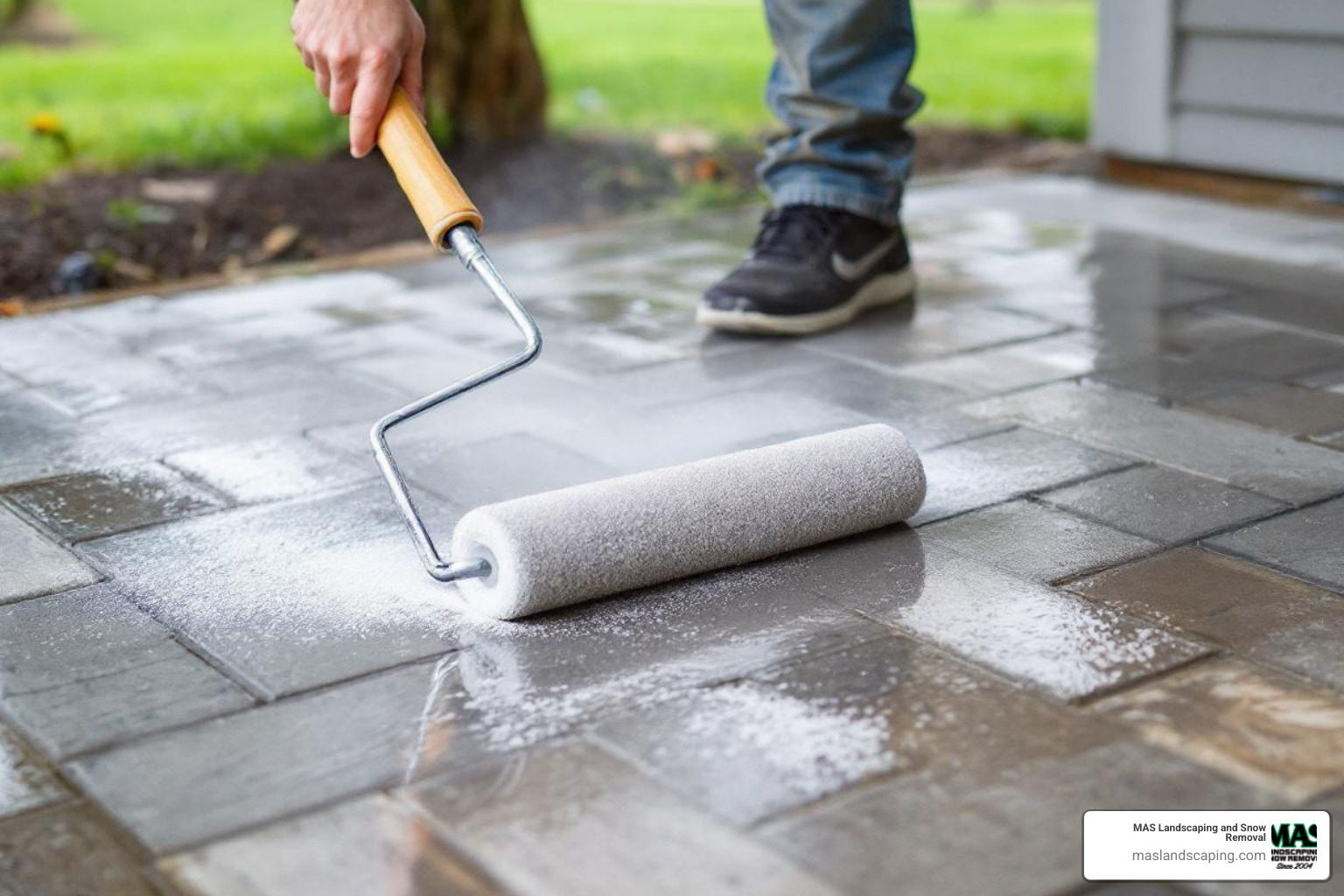
Step 1: Timing and Preparation
Proper preparation is crucial for sealer adhesion and maximum protection.
- Best Weather Conditions: Seal when temperatures are between 50-90°F with low humidity. Ensure the forecast is clear of rain for 24-48 hours before and after application. Avoid windy days.
- Cleaning Pavers: The surface must be perfectly clean. Remove debris with a broom or blower, then pressure wash the patio. Use a fanned nozzle at a 30-degree angle, 12 inches from the surface, to prevent damage.
- Removing Stains & Efflorescence: Use appropriate cleaners for stains like oil or rust. Sealer will highlight, not hide, imperfections. Remove any whitish salt buildup (efflorescence) with a dedicated cleaner like Techniseal® Paver Prep.
- Weeding and Drying: Pull all weeds from the joints. After cleaning, allow pavers to dry completely (this can take up to 24 hours). Trapped moisture can cause the sealer to fail.
Step 2: Gather Your Tools and Materials
Having everything ready will make the process smooth:
- Paver Sealant
- Pump Sprayer or Roller with tray and extension pole
- Squeegee
- Protective Gear: Chemical-resistant gloves, safety glasses, mask/respirator
- Drop Cloths/Plastic Sheeting
- Old Clothes
Step 3: Applying Polymeric Sand (If Needed)
If your joints have been cleaned out, now is the time to apply polymeric sand before sealing. This sand hardens when wet, creating a durable joint that resists weeds and erosion.
- Application: Sweep the sand thoroughly into the dry paver joints. Use a leaf blower on a low setting to remove all excess sand and dust from the paver surfaces. Any remaining sand will be sealed in place.
- Activation & Curing: Lightly mist the sand with water per the product’s instructions to activate it. Allow it to cure fully (usually 24 hours) before sealing.
Step 4: The Process for Sealing a Concrete Paver Patio
Always follow the specific instructions on your sealant product.
- Test Spot: First, test the sealer in an inconspicuous area to check the finish and for any unexpected reactions.
- Apply Thin, Even Coats: Two thin coats are better than one thick coat, which can cause bubbling or a hazy finish.
- Work in Sections: Divide the patio into manageable sections, maintaining a “wet edge” by slightly overlapping each pass to prevent lap lines.
- Remove Excess: If using a sprayer, immediately back-roll to ensure even coverage. For penetrating sealers, saturate the pavers, then remove any excess from the surface with a squeegee or dry roller to prevent a sticky finish.
- Avoid Puddles: Never allow sealer to puddle. Spread any puddles immediately.
Step 5: Curing and Drying
Patience is key for the sealer’s performance and longevity.
- Drying Time: Refer to the manufacturer’s instructions. Generally, allow 2-3 hours for light foot traffic.
- Full Cure: Keep all heavy traffic, furniture, and vehicles off the surface for at least 24-72 hours to allow for a full cure.
- Pause Sprinklers: Ensure automatic sprinklers are off during the entire drying and curing period.
Once cured, your patio is ready to enjoy! To see examples of beautifully maintained hardscapes, visit our hardscaping photo gallery.
Long-Term Care: Resealing and Professional Help
Sealing your patio is an investment that requires ongoing care. Understanding the maintenance schedule ensures your patio remains beautiful for years. For broader outdoor changes, consider our landscape design process.
How to Tell if Your Pavers Need Resealing
Your pavers will show clear signs when they need a refresh, typically every 3 to 5 years. This frequency depends on traffic, weather exposure, and the sealer type used. Look for these indicators:
- Water Absorption Test: This is the most reliable method. Sprinkle water on the pavers. If it beads up, the sealer is working. If it soaks in and darkens the paver, it’s time to reseal.
- Fading Color or Loss of Sheen: If colors look dull or a glossy finish has lost its sheen, the sealer is wearing off.
- Stains Setting In: If dirt and spills that used to wipe away now leave marks, the protective barrier is gone.
The Cost of Sealing a Concrete Paver Patio
The cost of sealing your patio can vary based on a DIY vs. professional approach, patio size, and sealer type.
Please note: The following are average costs based on internet data and not actual costs for MAS Landscaping. We provide personalized quotes for all our services.
- Sealant Cost: A gallon of sealant can range from $30 to $150+, with coverage typically between 80 to 250 square feet per gallon, depending on paver porosity.
- Professional Sealing Costs: Hiring a professional can range, on average, from $1.50 to $8.00+ per square foot. This wide range accounts for patio size, surface condition (extensive cleaning or repairs will add to the cost), sealer type, and labor rates.
While DIY saves on labor, hiring a professional ensures proper preparation and a flawless finish, which is often worth the investment for larger patios.
Frequently Asked Questions about Sealing Pavers
We often get questions from homeowners in Saugus, Everett, Lynnfield, Malden, Melrose, Medford, Revere, and Chelsea, MA about sealing their patios. Here are some of the most common ones:
How long should I wait to seal new pavers?
We recommend waiting between 60 and 90 days after installation before sealing new pavers. This critical waiting period serves two main purposes:
- Efflorescence: It allows time for naturally occurring efflorescence (a whitish salt buildup) to appear and be cleaned off. Sealing too early traps this under the sealer, causing a permanent cloudy look.
- Curing Time: New pavers need time to fully cure and release trapped moisture. Sealing prematurely can interfere with this process.
While some breathable sealers can be applied sooner, waiting is the safest approach for the best long-term results.
Can sealing make my paver patio slippery?
Yes, film-forming sealers with a glossy finish can be slippery when wet. If you choose this type, we strongly recommend:
- Anti-skid Additives: Mixing these fine granules into the sealer before application provides texture and improves safety.
- Penetrating Sealers as an Alternative: These sealers do not form a surface film, so they maintain the paver’s natural texture and do not increase slipperiness, making them an excellent choice for high-traffic or poolside areas.
Should I seal brick and natural stone pavers too?
Absolutely. Brick and most natural stone are also porous and benefit from sealing. Brick is often more absorbent than concrete, making sealing especially important to prevent deep stains and moss.
- Sealer Compatibility: The key is to use a sealer specifically designed for your material. Always check the product label for compatibility, as some natural stones may require specialized products.
- Enhancing Natural Stone: Sealing can also improve the natural colors and veining of stone pavers, making them appear richer and more vibrant.
Protect Your Patio Investment for Years to Come
Your concrete paver patio is more than just an outdoor surface; it’s an extension of your home, a place for relaxation, entertaining, and making memories. By taking the time to properly seal it, you’re not just applying a coating – you’re safeguarding that investment.
The benefits are clear: improved beauty, protection from harsh New England weather, resistance to stains, improved durability, and a significantly longer lifespan for your patio. This proactive maintenance reduces future headaches and saves you money in the long run.
Whether you choose to start on this DIY project yourself or entrust it to professionals, the process of sealing concrete paver patio surfaces is a worthwhile endeavor. At MAS Landscaping, we pride ourselves on our local expertise in Saugus, Everett, Lynnfield, Malden, Melrose, Medford, Revere, and Chelsea, MA. We understand the unique challenges our climate presents and offer professional hardscaping services to ensure your outdoor spaces are not only beautiful but also built to last.
Don’t let your beautiful patio get soaked by the elements. Protect it, preserve it, and enjoy it for many seasons to come. Contact us to discuss your patio paver project today, and let us help you keep your outdoor oasis looking its best.