



Fake Grass for Patio: 5 Stunning Transformations
Why Transform Your Patio with Fake Grass?
If you’re looking to transform your outdoor space, fake grass for patio is a fantastic option. It provides the lush look of a lawn without the constant upkeep, creating an inviting green area for you to relax and entertain.
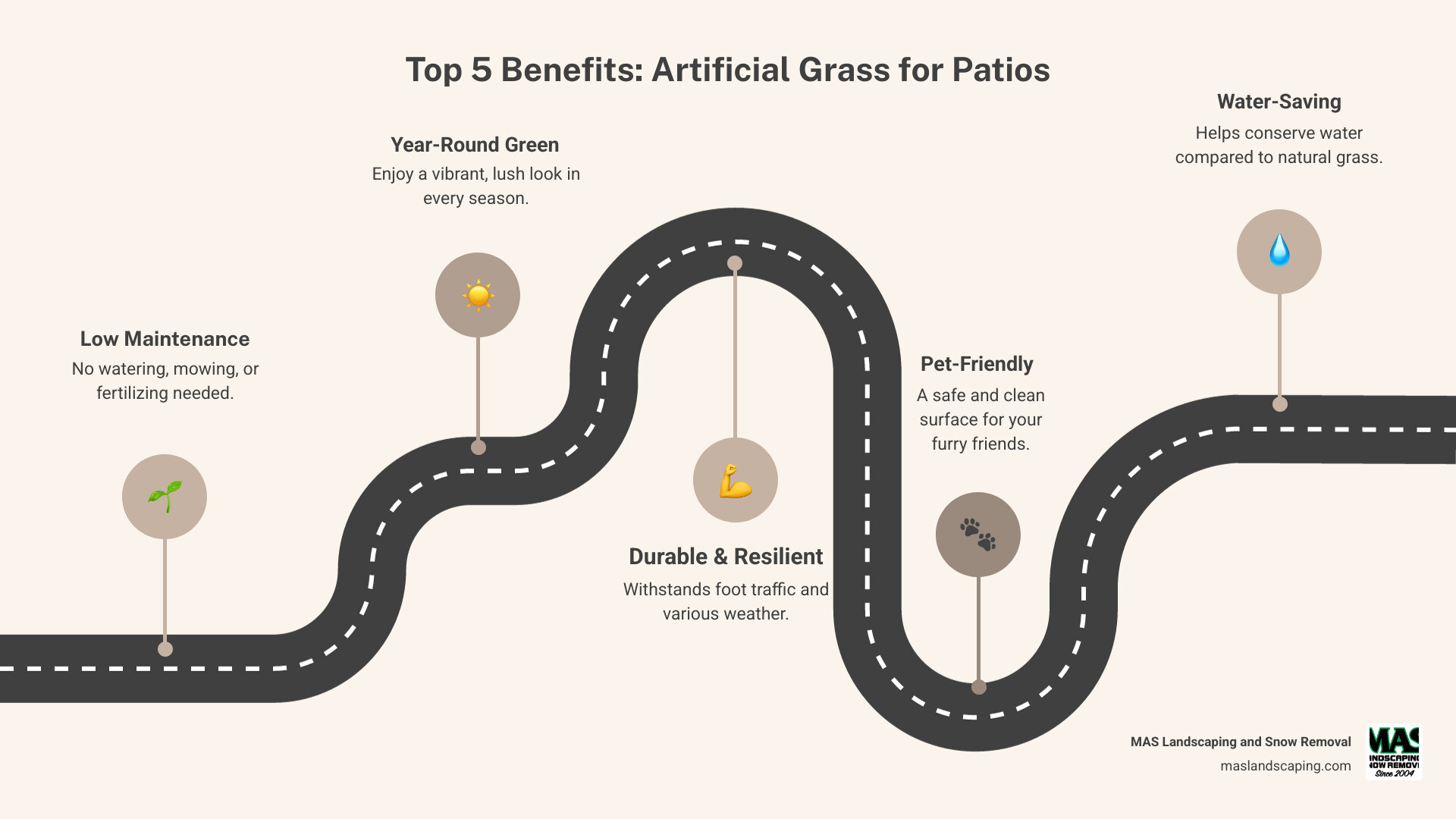
Here are the top reasons homeowners choose artificial grass for their patios:
- Low Maintenance: Say goodbye to watering, mowing, and fertilizing.
- Year-Round Green: Enjoy a vibrant, green look no matter the season.
- Durable: Designed to withstand foot traffic and various weather conditions.
- Pet-Friendly: A safe and clean surface for your furry friends.
- Water-Saving: Helps conserve water compared to natural grass.
Choosing artificial grass turns drab concrete into a lively, usable oasis, adding a touch of nature where it might not otherwise be possible.
Common fake grass for patio vocab:
Why Choose Artificial Grass for Your Patio?
A beautiful outdoor living space is a common dream, and fake grass for patio can turn a concrete slab or old deck into a vibrant extension of your home. It offers a unique blend of softness and visual appeal that instantly lifts any outdoor area.
The Pros: A Green Oasis Without the Hassle
The benefits of artificial grass extend far beyond just looking good:
- Year-Round Beauty: Unlike natural grass, artificial turf keeps its vibrant green hue 365 days a year. Your patio will always look ready for guests, rain or shine.
- Low Maintenance: This is the most celebrated perk. Imagine reclaiming your weekends! Artificial grass eliminates watering, mowing, and fertilizing, saving you time, effort, and money.
- Durability for High-Traffic Areas: Patios are meant for living. Artificial turf is built tough to withstand foot traffic, furniture, and playful pets without developing bare spots or muddy messes.
- Covers Imperfections: Artificial grass is a fantastic way to hide cracks, stains, and uneven spots on an old concrete patio or deck, providing an instant facelift without expensive resurfacing.
- Pet and Child-Friendly: It provides a clean, soft, and cushioned surface for pets and children. Say goodbye to muddy paws, grass stains, and allergens. Plus, without organic matter, you’ll enjoy a more bug-free experience.
- Water Conservation: Reducing your water usage is a win for both your wallet and the environment.
- Aesthetic Versatility: It provides a versatile foundation for any design, from a cozy reading nook to a sophisticated entertaining space. You can even create a dynamic look by combining Artificial Turf with Pavers.
The Cons: What to Consider Before You Buy
While we’re huge fans, it’s important to know the potential drawbacks to ensure it’s the right choice for you:
- Upfront Investment: The initial cost to purchase and install high-quality fake grass for patio can be higher than other options. However, when you factor in the long-term savings on water and maintenance, it often proves to be a wise financial decision.
- Surface Temperature in Direct Sun: Artificial grass can get warmer than natural grass in direct sunlight. Thankfully, modern innovations like specialized Cooling infill can reduce surface temperature by up to 50 degrees, keeping your patio comfortable on hot days.
- Quality and Installation Matter: Not all artificial grass is created equal. Opting for cheap turf can lead to fading and poor drainage. A professional installation is crucial for a long-lasting, beautiful result, ensuring proper base preparation and drainage. An experienced installer from a company like MAS Landscaping can make sure your investment performs perfectly for years.
Key Features to Look for in the Best Fake Grass for a Patio
Choosing the best fake grass for patio requires understanding a few key features. This guide will help you select the perfect turf for your outdoor space with confidence.
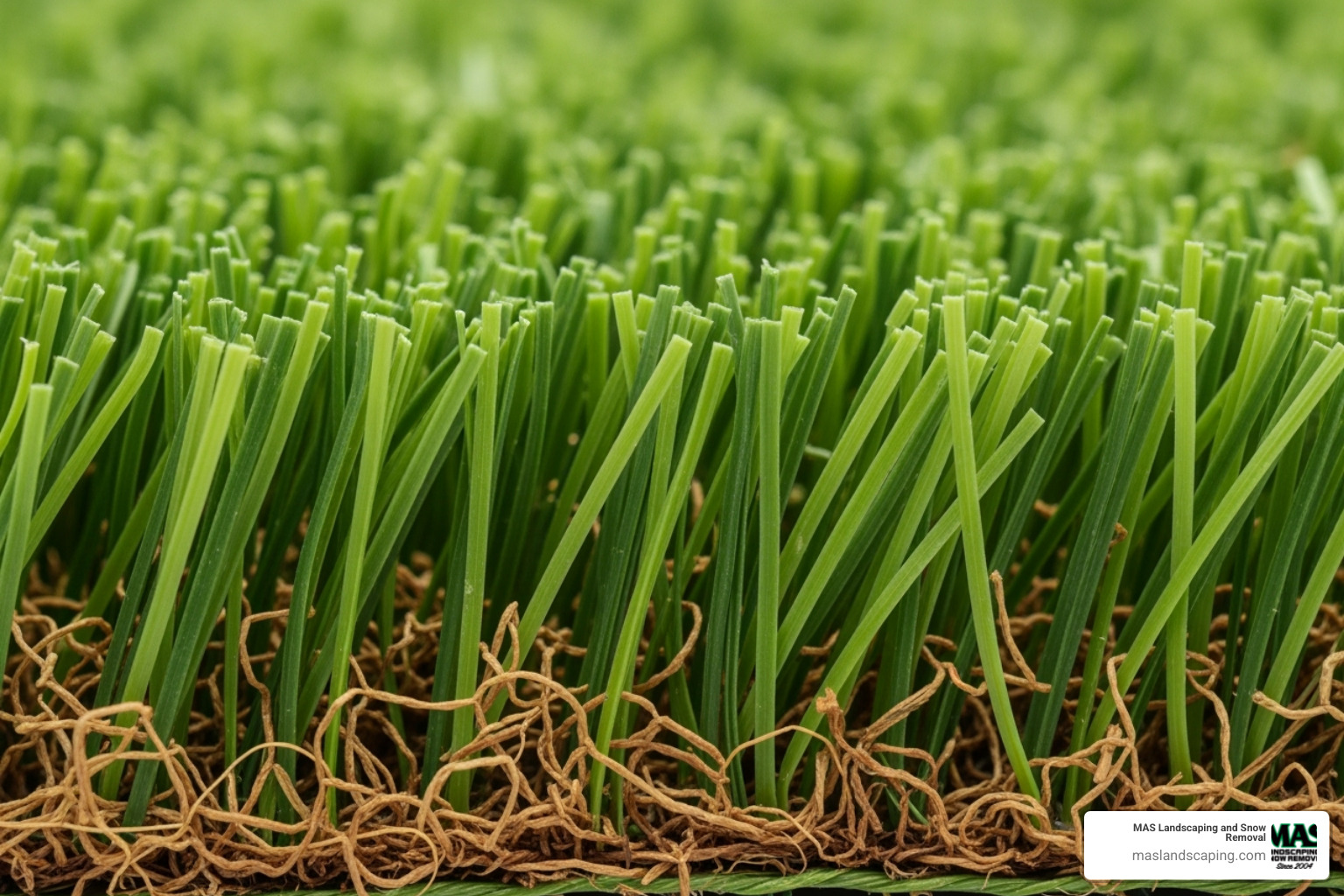
Here’s a quick buyer’s guide to key terminology:
- Face Weight: The weight of the grass fibers per square yard (excluding the backing). A higher face weight generally means the grass is denser, more luxurious, and more durable—ideal for high-traffic patios.
- Density: This refers to how closely packed the grass blades are. Denser turf looks more realistic and provides better cushioning.
- Thatch: These are the brown or tan fibers at the base of the turf that mimic the look of a natural lawn. Thatch adds realism, cushioning, and helps the main blades stand upright.
- UV Protection: This is a crucial treatment that helps the turf resist fading and breaking down from sun exposure, keeping your grass vibrant for years.
Choosing the Right Pile Height for your fake grass for patio
Pile height refers to the length of the grass blades, and it significantly impacts the look, feel, and function of your turf.
- Short Pile (under 1.5 inches): More durable, easier to clean, and stands up better to foot traffic. It offers a neat, manicured look, great for dining areas or high-traffic spots.
- Long Pile (1.5 inches or more): Feels softer and more luxurious underfoot, creating a lush, natural look. It’s best for lounging areas where comfort is the top priority.
Here are our recommended pile heights for different patio uses:
- Lounging/Relaxation Areas: 1.5 to 2 inches
- General Entertaining/Dining: 1 to 1.5 inches
- Play Areas (children/pets): 1 to 1.75 inches
- Decorative/Low Traffic: 2 inches or more
Understanding Turf Materials: Polypropylene vs. Polyethylene vs. Nylon
The fiber material affects the turf’s look, feel, durability, and cost.
- Polyethylene (PE): The most popular choice, offering a great balance of softness, durability, and a natural look. It’s ideal for most patio applications, including relaxation and pet areas.
- Polypropylene (PP): A budget-friendly but less durable option. It can flatten easily, so it’s often used for the thatch layer or in low-traffic decorative areas.
- Nylon: The most durable and resilient material, with excellent “memory” to spring back into shape. It’s also the most expensive and less soft, making it best for extreme-traffic areas like putting greens.
Backing and Drainage: A Crucial Factor for Patios
Proper drainage is essential when installing fake grass for patio over hard surfaces like concrete or on a balcony to prevent puddles, mold, and odors.
- Hole-Punched Backing: This is the standard option, with small holes punched in the backing to let water drain through. It’s suitable for most patios with a proper slope.
- 100% Permeable Backing: This advanced system allows water to drain through the entire backing surface, not just through holes. It offers superior, faster drainage, which is a huge plus for pet owners, rainy climates, and any installation on a balcony or rooftop. For clients looking for the Best Artificial Grass for Dogs, we always recommend products with this superior drainage.
The Installation Process: From Concrete to Green
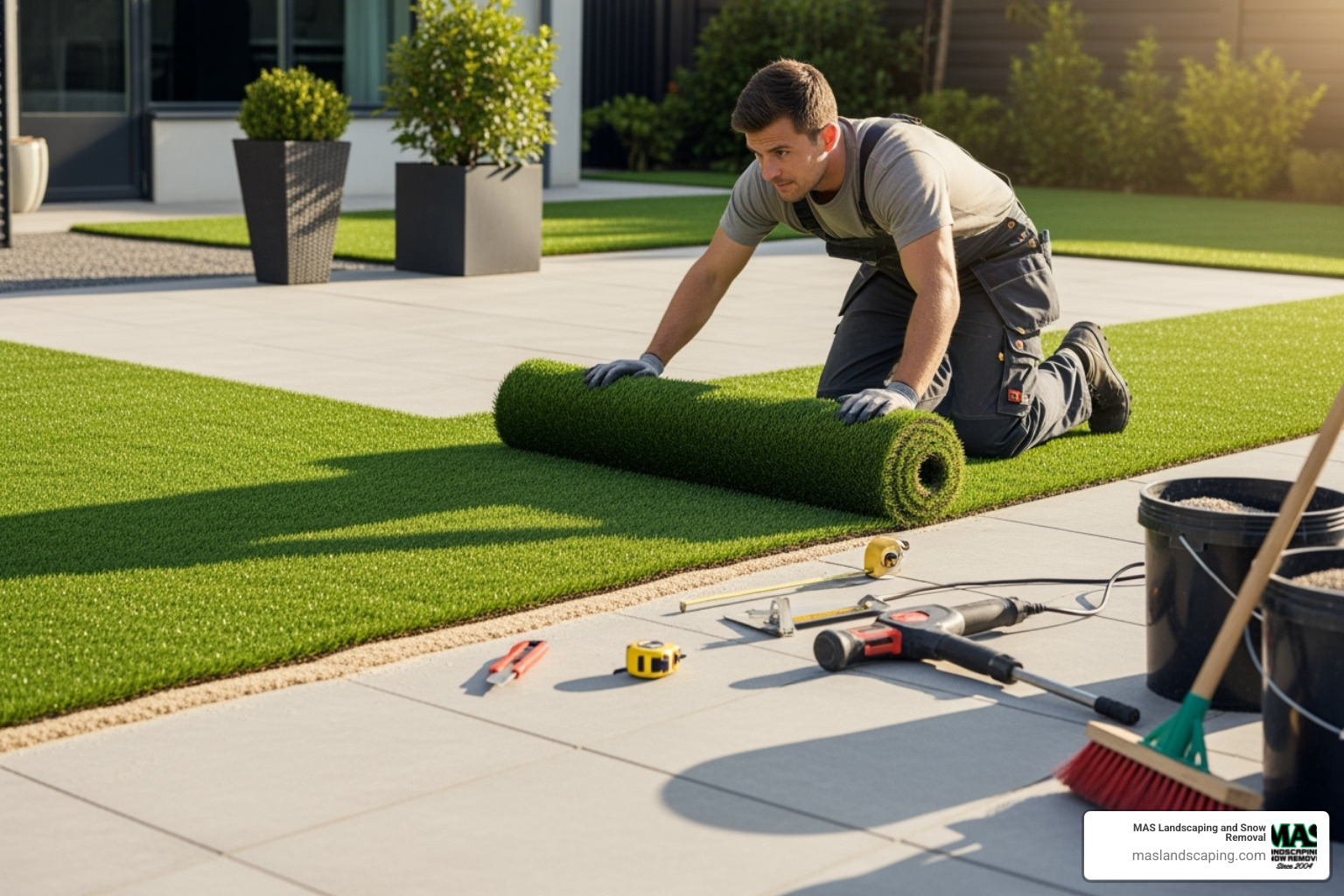
Changing your patio with fake grass for patio requires a careful installation process. While a small DIY project is possible, professional installation is key for a seamless, durable result on larger or complex surfaces like concrete patios, decks, or rooftops. At MAS Landscaping, our Artificial Grass Installation process ensures your turf looks amazing and lasts for years.
Step 1: Surface Preparation
Proper preparation of the existing hard surface is the most crucial step. We begin by thoroughly cleaning the patio to remove all dirt and grime. We then repair any cracks or holes to ensure a smooth surface, as imperfections can show through the turf. Next, we check for proper slope to ensure water drains correctly and away from your home’s foundation. A final sweep removes any remaining debris.
Step 2: Laying and Securing the Turf
With the surface prepped, we precisely measure and cut the turf rolls to fit your patio’s unique shape. The turf is then rolled out, ensuring the pile direction is consistent for a uniform look. For larger areas, seaming multiple pieces with special tape and adhesive is key to a flawless appearance. Finally, the perimeter is secured by securing edges with a strong, outdoor-grade adhesive to prevent any lifting or shifting. You can learn more about the components in our guide on Synthetic Grass Layers.
Step 3: Applying Infill
The final step is applying infill, a granular material spread over the turf. The purpose of infill is to help the grass blades stand upright, add weight and stability, protect the backing from UV rays, and provide extra cushioning. For types of infill, options range from basic silica sand to advanced acrylic-coated sands that can help keep the surface cooler and offer antimicrobial properties for pet areas. After spreading the infill, we use a power broom for brushing the fibers, which helps the infill settle and makes the grass blades stand tall.
Cost and Maintenance of Your New Patio Turf
Investing in fake grass for patio brings immediate aesthetic rewards and long-term value. While there’s an initial cost, the savings on water and maintenance often outweigh it over the years. For a clear idea of what your project might entail, we recommend getting a personalized Artificial Grass Estimate Cost.
What is the Average Cost of fake grass for patio?
The cost of fake grass for patio can vary based on turf quality, project size, and installation complexity. The prices shared here are general national averages based on internet data and are not actual quotes from MAS Landscaping.
- Material Costs: Expect artificial grass materials to range from $2 to $8 per square foot. The price depends on features like pile height, fiber material, density, and backing quality.
- Installation Costs: Professional installation can range from $6 to $20+ per square foot. This typically covers labor, surface preparation, infill, and securing the turf. For more details, see our guide on Artificial Turf Installation Cost Per Square Foot.
Here’s a simple comparison of potential long-term costs over ten years:
| Feature | Paver Patio (10-Year Cost) | Artificial Grass Patio (10-Year Cost) |
|---|---|---|
| Initial Install | Moderate to High | Moderate to High |
| Annual Maint. | Low (weed/stain control) | Very Low (rinsing/brushing) |
| Watering | None | None |
| Repairs | Moderate (shifting, cracks) | Low (rare, minor fixes) |
| Total 10-Year | Moderate | Moderate to Low |
This table offers a general idea of long-term costs. Actual expenses will vary.
How to Maintain Your Patio Grass
One of the best parts about fake grass for patio is its low maintenance. A few simple steps will keep it looking fresh.
- Simple Cleaning: Periodically rinse with a hose to wash away dust and pollen. Brush the fibers with a stiff broom against the grain in high-traffic areas to keep them upright. Remove leaves and debris with a broom or leaf blower.
- Spot Cleaning: For spills, blot the liquid and rinse with water. Use a mild soap solution for tougher stains.
- Pet Waste Cleanup: Remove solid waste, then rinse the area with a hose. For odors, a mix of white vinegar and water or a specialized enzymatic cleaner works well. Find more tips in our guide to Artificial Pet Turf Installation.
- Weed Control: While the turf blocks most weeds, any airborne seeds that sprout in the infill are easily pulled by hand.
Frequently Asked Questions about Patio Turf
It’s natural to have questions when considering fake grass for patio. Here are answers to some of the most common ones.
How long does artificial grass last on a patio?
A key benefit of fake grass for patio is its longevity. A high-quality, professionally installed artificial turf can easily last 15 to 25 years. This impressive lifespan depends on the quality of materials, the expertise of the installation, the amount of foot traffic, and basic maintenance. Most reputable products also come with warranties ranging from 8 to 20 years, giving you peace of mind.
Can you put patio furniture on artificial grass?
Yes, absolutely. Artificial grass is designed to be a functional living space that can accommodate tables, chairs, and loungers. To keep your turf in top shape, we recommend a few simple tips: use furniture coasters under the legs of heavy items to distribute weight, rearrange furniture periodically to allow fibers to bounce back, and always use a heat-resistant mat under grills or fire pits to prevent melting.
Is artificial grass safe for pets and children?
Yes, modern fake grass for patio is designed to be safe for the whole family. High-quality turf is made from non-toxic, lead-free materials. It provides a soft, cushioned surface that’s safer for play than concrete and eliminates the need for toxic pesticides or fertilizers. Many products also have antimicrobial properties to inhibit bacteria and manage pet odors. Finally, the surface is allergen-reducing, making it a great choice for family members with grass allergies.
Conclusion
Changing your outdoor area with fake grass for patio is a smart investment that offers year-round beauty, significantly less maintenance, and a durable, safe surface for your family and pets. It’s a decision that gives you back your weekends to simply enjoy your own personal green retreat.
For homeowners in the Saugus, MA area, and our neighbors in Everett, Lynnfield, Malden, Melrose, Medford, Revere, and Chelsea, MAS Landscaping is here to help bring your vision to life. We offer expert Hardscaping Services to prepare the perfect foundation and provide professional installation to ensure your new patio looks stunning and lasts for years.
Ready to trade the hassle for a perpetually green, inviting patio? Contact us for your patio installation project today. We’d be thrilled to help you create an outdoor living area you’ll adore!
