




Garden Artificial Grass Installation: Top 10 Expert Tips
Garden artificial grass installation is an excellent choice for homeowners and business owners seeking a beautiful, low-maintenance outdoor space. Here’s a quick breakdown of why artificial grass might be perfect for your garden:
- Low-Maintenance: Say goodbye to mowing, watering, and fertilizing. Artificial grass stays green all year long without constant attention.
- Eco-Friendly: Saves water and reduces chemical use by eliminating the need for pesticides and fertilizers.
- Durability: Perfect for areas with high foot traffic; it withstands wear better than most natural grass.
- Pet-Friendly: Resilient against pet activities and easy to clean, making it ideal for pet owners.
If you’re wondering whether installing artificial grass in your garden is right for you, this guide will walk you through the essentials to help you make an informed decision.

Essential Preparations Before Installing Artificial Grass
Before diving into garden artificial grass installation, it’s crucial to prepare thoroughly. Careful planning and research will ensure a smooth process and a beautiful result.
Choose the Right Artificial Grass
Selecting the right type of artificial grass is key. Consider the following factors:
- Durability: Think about how much foot traffic your garden will have. If you have kids or pets, you’ll need something robust. Nylon is the most durable but also the most expensive. Polyethylene offers a good balance between durability and cost, while polypropylene is softer and more affordable but less durable.
- Foot Traffic: For areas with heavy use, choose a turf with a higher face weight. This means more fibers per square inch, providing a denser and more resilient surface.
- Pet-Friendly Options: If you have pets, look for turf that is easy to clean and resistant to wear and tear from their activities.
- Cost: Artificial grass prices range from $1.50 to $11.60 per square foot. Higher-end options often come with exclusive warranties and brand name recognition.
Check Local Permit Requirements
Before starting your project, check with your local government to determine if you need a building permit. This is especially important if:
- You’re installing on a slope or hillside.
- The project disturbs over 2,500 square feet of soil.
- You’re changing the grade by more than 24 inches.
Typically, backyard installations don’t require a permit, but front yard projects might. Always confirm with local regulations to avoid any legal issues.
Check for Utilities
Before digging, know where your utility lines are. Contact Call Before You Dig, a service available across the U.S., to mark gas lines, water pipes, and electric cables. This step is crucial to avoid damaging utilities and facing potential hazards.
Measure the Area You Want to Cover
Accurate measurements ensure you order the right amount of artificial grass. Here’s how to get it right:
- Odd Shapes and Corners: Pay attention to any unusual shapes or corners in your garden. These areas may require specific cuts.
- Double-Check Measurements: Verify your measurements to avoid ordering too much or too little turf. Artificial grass typically comes in 15-foot rolls, so plan accordingly.
By taking these essential steps, you’ll be well-prepared for a successful garden artificial grass installation. Next, we’ll explore the materials you’ll need for the job.
Materials Needed for Garden Artificial Grass Installation
To make your garden artificial grass installation a success, you’ll need a comprehensive list of materials and tools. Here’s what you’ll need:
Artificial Grass
The star of the show is, of course, the artificial grass itself. It typically comes in 15-foot rolls, so measure your area carefully to ensure you order the right amount. Consider the factors we discussed earlier, like durability and cost, to choose the best type for your needs.
Base Material
A solid base is crucial for a smooth, long-lasting turf installation. Use materials like:
- Crushed Rock: Offers excellent drainage and stability.
- Decomposed Granite: Provides a firm yet slightly cushioned surface.
- Gravel or Builder’s Sand: Helps level the area and aids drainage.
Seaming Tape and Adhesive
To join different pieces of turf seamlessly, you’ll need:
- Seaming Tape: This special tape holds the turf pieces together.
- Artificial Turf Adhesive: A strong adhesive ensures the seams stay put, even under heavy use.
Weed Barrier
A weed barrier is optional but highly recommended. It prevents weeds from popping up through your new lawn, keeping it looking pristine.
Lawn Spikes
Use lawn spikes or landscaping staples to secure the edges of your artificial grass. These will keep the turf from shifting or lifting over time.
Infill
Adding infill helps the turf blades stand upright and improves drainage. Options include:
- Silica Sand: A popular choice for a natural look.
- Crumb Rubber: Offers additional cushioning.
- Copper Slag: Provides excellent drainage and durability.
Tools
Having the right tools can make the installation process much smoother. Here’s what you’ll need:
- Utility Blade/Carpet Knife: For cutting the turf.
- Hammer: To drive in the lawn spikes.
- Shovel/Spade: For digging and leveling the base.
- Tape Measure: To ensure precise measurements.
- String Level: To check for evenness.
- Garden Hose: For watering the infill.
- Landscape Rake: To spread and level materials.
- Carpet Rake or Power Broom: To brush the turf fibers upright.
- Roller, Plate Compactor, or Hand Tamp: To compact the base material.
With these materials and tools at hand, you’re ready to start changing your garden with artificial grass. Next, we’ll guide you through the step-by-step installation process.
Step-by-Step Guide to Installing Artificial Grass
Changing your garden with artificial grass is a rewarding project. Follow these steps to ensure a successful installation:
Clean Up the Area and Dig Up the Topsoil
Start by clearing the area: Remove any debris, plants, or old grass. Use a weed killer if necessary, but check local regulations to ensure compliance.
Dig up the topsoil: Use a sod cutter or shovel to remove about 2-3 inches of soil. This will make room for your base material and ensure a smooth surface.
Compact the Soil
Compact the area: Use a hand tamper, roller, or plate compactor to compact the soil. This will create a firm foundation for your artificial grass and prevent shifting.
Install a Border
Choose your border material: Install a plastic bender board or a concrete wall around the edges. This keeps the grass in place and prevents it from separating over time.
Set Up a Drainage System
Ensure proper drainage: Drill small holes in the base, about 8 inches apart. Fill these with pea gravel to prevent waterlogging and mold buildup.
Add a Weed Barrier
Install a weed barrier: Lay landscape fabric over the area, overlapping the edges by at least 6 inches. Secure it with sod staples every few feet to prevent weeds from growing through.
Spread Base Material
Add base material: Spread 3-4 inches of crushed rock, gravel, or decomposed granite over the area. Use a compactor to ensure the surface is even and stable.
Lay Artificial Turf Pieces
Prepare the turf: Unroll the artificial grass and let it settle for a few hours. Lay the turf in the direction of the grass blades for a natural look.
Connect the Turf Pieces Together
Seam the pieces: Use seaming tape and adhesive to join the turf pieces. Create a V-shaped connection to ensure a seamless appearance.
Secure the Perimeter
Anchor the edges: Use nails or spikes to secure the grass every 4-6 inches along the perimeter. Offsetting the placement helps prevent movement.
Infill the Grass
Add infill: Use a drop-spreader to evenly distribute infill materials like silica sand or crumb rubber. This helps the blades stand upright and improves drainage.
Water the Lawn
Finish with a spray-down: Lightly water the infill to help it settle and encourage the blades to rise. This final step ensures your new lawn looks lush and natural.
By following these steps, your garden artificial grass installation will be both beautiful and functional. Next, we’ll cover how to care for and maintain your new lawn to keep it looking its best.
Care and Maintenance of Artificial Grass
To keep your new artificial grass looking fresh and vibrant, follow these simple maintenance tips. Regular care will ensure that your lawn remains beautiful and functional for years.
Cleaning
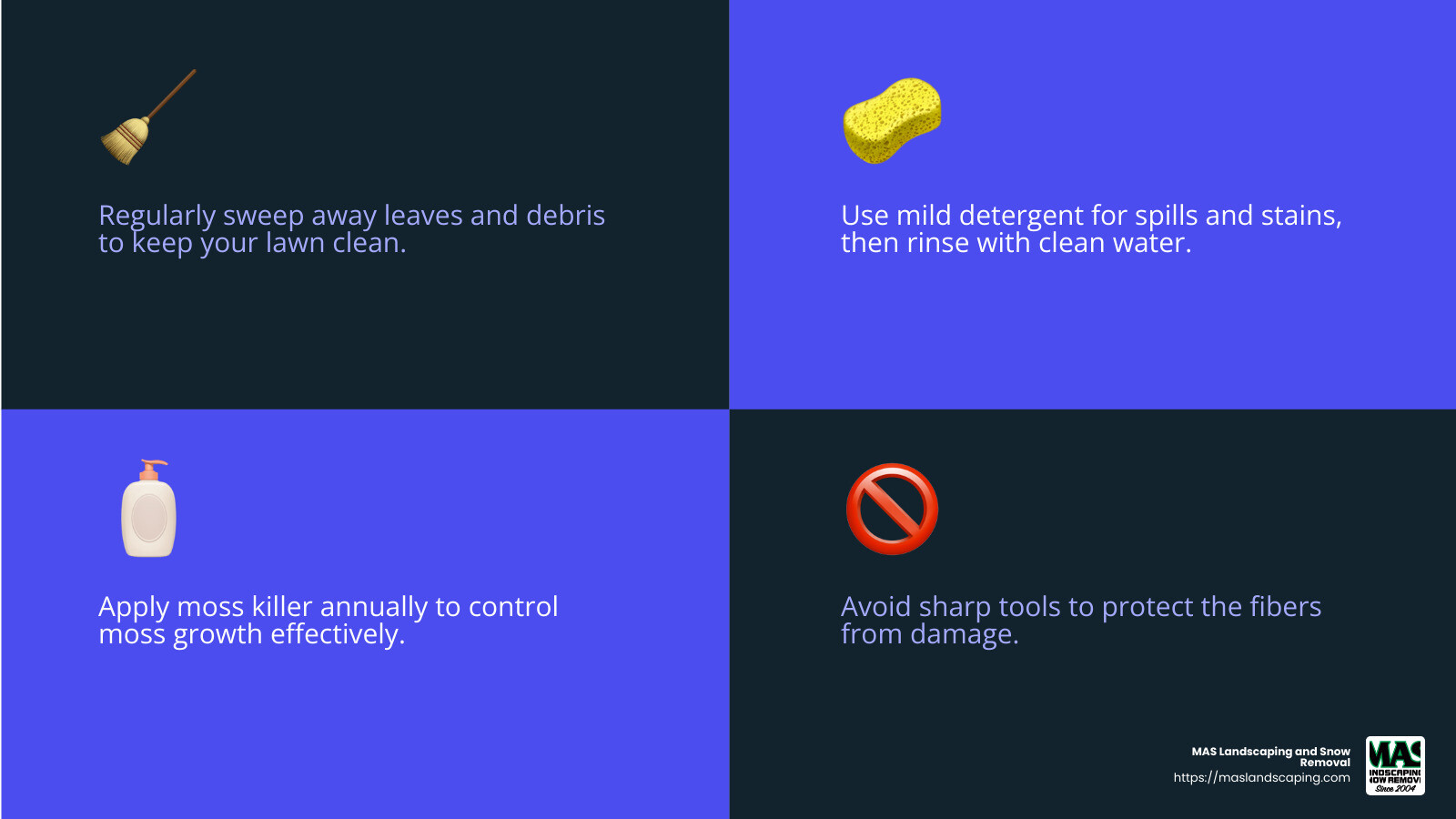
Regular cleaning is key. Sweep away leaves, dirt, and debris with a broom or leaf blower. For spills or stains, use a mild detergent mixed with water to scrub the area. Rinse thoroughly with clean water to remove any soap residue.
Brushing
Brush your grass regularly to keep the blades standing tall. Use a stiff-bristled broom or a carpet rake to brush against the grain of the turf. This will help lift the fibers and give your lawn a natural, lush appearance.
Silica Sand
Add silica sand infill periodically to maintain the integrity of your artificial grass. This infill helps the blades stand upright and improves drainage. Sprinkle a thin layer over the surface and brush it in using a broom.
Avoid Sharp Tools
Be cautious with tools. Avoid using sharp gardening tools like metal rakes or garden forks on your artificial grass. These can damage the fibers and create tears. Instead, use plastic or rubber tools designed for synthetic turf.
Moss Killer
Control moss growth with a liquid-based moss killer containing dichlorophen. Apply it annually or as needed to prevent moss from taking hold. Follow the manufacturer’s instructions for safe and effective use.
Weed Control
Keep weeds at bay by monitoring the edges of your lawn. If you notice any weeds growing through or around your turf, remove them by hand or use a post-emergent herbicide. Regularly check your weed barrier for any gaps that might allow weeds to sprout.
By following these straightforward tips, your artificial grass will stay beautiful and functional for years to come. In the next section, we’ll address some frequently asked questions about garden artificial grass installation to further improve your understanding and experience.
Frequently Asked Questions about Garden Artificial Grass Installation
What Should I Put Down Before Installing Artificial Grass?
Before you lay down your artificial grass, you need to prepare the ground properly. Start by removing any existing vegetation. This includes grass, weeds, and any plants. You can use a weed killer, but make sure it complies with local regulations.
Once the area is clear, compact the subsoil. This step is crucial to create a stable foundation. Use a hand tamper, roller, or plate compactor to level the ground. This helps prevent any uneven spots once the artificial grass is installed.
Next, add a weed barrier. This is a layer of landscape fabric that stops weeds from growing through your artificial grass. Overlap the edges of the fabric to ensure complete coverage, and secure it with sod staples.
What is the Best Base to Lay Artificial Grass On?
Choosing the right base is essential for a successful garden artificial grass installation. The best base is a layer of Class II road base. This material is a mix of crushed rock and fine aggregates, which provides excellent stability and drainage.
For a softer feel underfoot, you can use decomposed granite. Lay this in a 4 to 6-inch layer to offer shock absorption and a smooth surface.
Proper drainage is key to maintaining your artificial lawn. Make sure to grade the base slightly so that water flows away from your home or other structures.
Can I Install Artificial Grass Myself?
Yes, you can install artificial grass yourself, but be prepared for a big job. This task requires special tools and careful attention to detail. It’s similar to laying carpet indoors.
You’ll need to follow the manufacturer’s instructions closely to ensure a professional finish. If you’re confident in your DIY skills and have the right tools, such as a carpet stretcher and a plate compactor, you can achieve a great result.
However, if you’re unsure or have a large area to cover, consider hiring a professional. They have the experience and equipment to handle complex installations, ensuring your lawn looks perfect.
By understanding these key points, you’re well-prepared to tackle your artificial grass installation project. Next, we’ll explore the conclusion of our guide, highlighting the benefits of professional installation with MAS Landscaping and Snow Removal.
Conclusion
Installing artificial grass in your garden can transform your outdoor space into a lush, green oasis without the hassle of traditional lawn care. While a DIY approach is possible, it does require time, patience, and the right tools. If you’re considering professional installation, MAS Landscaping and Snow Removal is here to help.
Our team combines years of experience with a deep understanding of local conditions in Saugus, MA, and surrounding areas like Everett, Lynnfield, and Malden. We know exactly what it takes to create beautiful, functional, and sustainable outdoor spaces. Our local expertise ensures that your artificial grass installation not only looks great but also lasts for years to come.
Why choose us?
- Professional Installation: We handle every step of the process, from preparing the ground to laying the turf. Our professional touch guarantees a smooth, even finish that improves the beauty of your garden.
- Personalized Service: We understand that every garden is unique. That’s why we offer custom solutions that match your specific needs and vision. Whether you’re looking for a play area for your kids or a low-maintenance lawn, we can make it happen.
- Local Expertise: With our knowledge of the local climate and soil conditions, we select the best materials and techniques for your garden. This ensures optimal drainage, longevity, and appearance of your artificial grass.
Ready to transform your garden with artificial grass? Let us bring your vision to life with precision and care. Visit our full-service landscape installation page to learn more about how we can help you create the perfect outdoor space. Contact us today to discuss your project and find why MAS Landscaping and Snow Removal is the trusted choice for homeowners in the region.
