


Gas Firepit Installation: Mastering 2025 Safe Setup
Why Gas fire pit installation Creates the Ultimate Outdoor Experience
Gas fire pit installation transforms any backyard into a year-round gathering space. Unlike wood-burning alternatives, gas fire pits offer instant ignition, consistent flames, and minimal cleanup, making them a popular choice for homeowners seeking maximum enjoyment with minimal hassle.
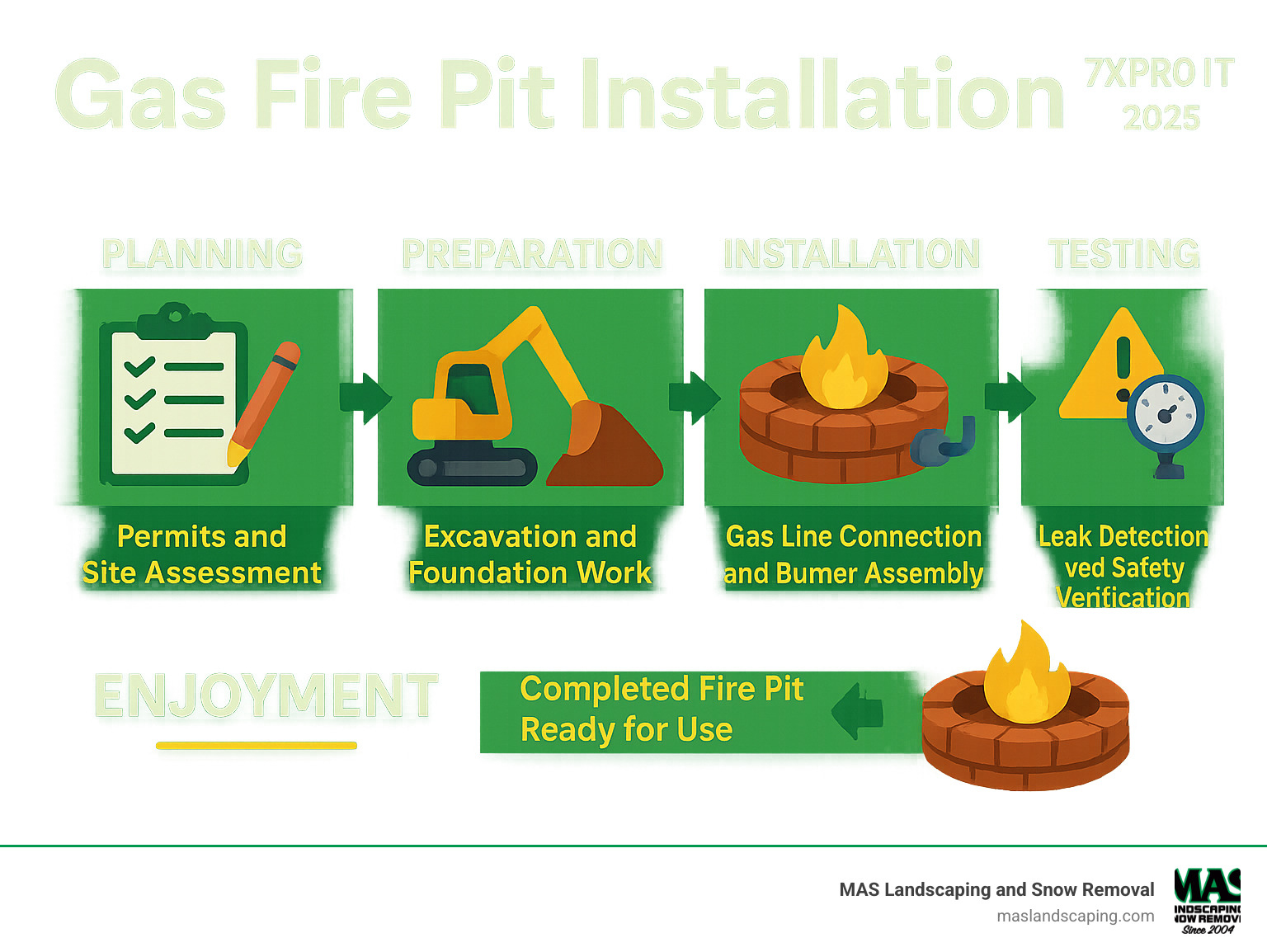
Key Steps for Gas Fire Pit Installation:
- Planning & Permits – Check local codes and obtain necessary permits.
- Site Preparation – Level ground and prepare the foundation.
- Gas Line Installation – Run natural gas or propane lines (professional required).
- Structure Assembly – Build fire pit walls and install the burner system.
- Testing & Safety – Pressure test all connections and verify proper operation.
Essential Safety Requirements:
- 10 feet minimum clearance from structures
- 21 feet minimum clearance from vegetation
- 7-10 feet overhead clearance required
- Professional gas connections are non-negotiable
A typical DIY gas fire pit structure takes approximately 3 hours to build once materials are gathered. However, the gas line installation requires professional expertise to ensure safety and code compliance.
“While on site doing a house call for a propane fire pit installation of the 180,000 BTU crossfire burner, we noticed a major issue that could have been very hazardous. It is very important that you install your fire pit burner correctly.” – Industry installation expert
Whether you choose natural gas or propane, proper installation ensures decades of safe outdoor enjoyment. This guide walks you through each step, highlighting when professional help is essential for your safety.
Before You Ignite: Essential Planning & Preparation
Proper planning is the most critical phase of your gas firepit installation. Before work begins, you must address safety, permits, and design choices to ensure a smooth and successful project.
Safety is the foundation of your installation. Local building departments in communities like Everett, Lynnfield, and Malden have permit requirements and codes to protect your home and family. Checking with them is your first step.
Proper planning saves time and money by forcing you to consider fuel type, clearance distances, and ventilation requirements upfront. For a cohesive design that integrates your fire pit into a larger outdoor living space, our Landscape Design Services can create a unified plan.
Choosing Your Fuel: Natural Gas vs. Propane
Your choice between natural gas and propane will shape the installation process.
Natural gas is the ultimate convenience. Tapped directly from your home’s existing line, it provides an endless supply of fuel. You’ll never run out mid-party. However, if you don’t have a gas line near your desired location, installation is more complex and requires a licensed professional to extend the line and potentially add a pressure regulator.
Propane offers best flexibility. It doesn’t require a connection to your home, so the fire pit can be placed almost anywhere. The trade-off is fuel management. High-BTU burners (180,000+) can cause a standard 20-pound tank to freeze up in under an hour, so you may need larger 40-pound tanks or a multi-tank setup.
| Feature | Natural Gas (NG) | Propane (LP) |
|---|---|---|
| Convenience | Unlimited supply, no refilling | Portable, but tanks need refilling |
| Installation | Requires professional gas line extension | Easier setup, needs tank storage |
| Operating Cost | Generally lower | Generally higher |
| Fuel Storage | No visible storage needed | Requires tank storage space |
| Gas Density | Lighter than air (rises) | Heavier than air (sinks) |
Selecting the Right Burner and Materials
The burner is the heart of your fire pit. For both safety and aesthetics, select a fire pit ring that is about 12 inches narrower than your fire pit’s inside diameter. This provides a safe buffer and ensures proportional flames.
Your burner’s BTU rating determines its heat output and gas supply needs. A powerful 180,000 BTU burner creates impressive flames but requires a robust gas line. For peace of mind, choose CSA-certified burner kits, which include the pan, burner, hoses, controls, and safety features like a thermocouple that shuts off gas if the flame goes out. Always consult the burner manual for proper assembly instructions.
Fire pit materials define the look and durability. Steel is affordable and durable, especially when powder-coated. Aluminum offers excellent corrosion resistance, ideal for coastal climates. Corten steel develops a unique, protective rust patina over time. Concrete provides a modern, substantial look but can develop cosmetic hairline cracks or browning from high heat.
Mapping Your Layout: Clearances and Codes
Clearance requirements are non-negotiable safety rules. Heat radiation requires a minimum of 10 feet between your fire pit and any structure. Some models may require more. Keep a 21-foot clearance from vegetation and 7-10 feet of overhead clearance to allow heat to dissipate safely.
For seating, maintain at least 15 inches between the fire pit and furniture to prevent burns or heat damage. Your fire pit must sit on a stable, level, non-combustible surface like a concrete patio, stone pavers, or a gravel area. If placing it on a wooden deck, ensure the unit is specifically rated for that use.
Local building codes in areas like Malden and Everett often incorporate national standards like NFPA 58 and ANSI Z21.97. These regulations are safety nets for you and your neighbors. Our Patio Installation services can create the perfect non-combustible foundation for your project.
Your Step-by-Step Gas Firepit Installation Guide
With planning complete, it’s time for the hands-on part of your gas firepit installation. While building the structure can be a rewarding DIY project, the gas line installation is not. For safety, a licensed professional must handle all gas connections.
Tools & Materials:
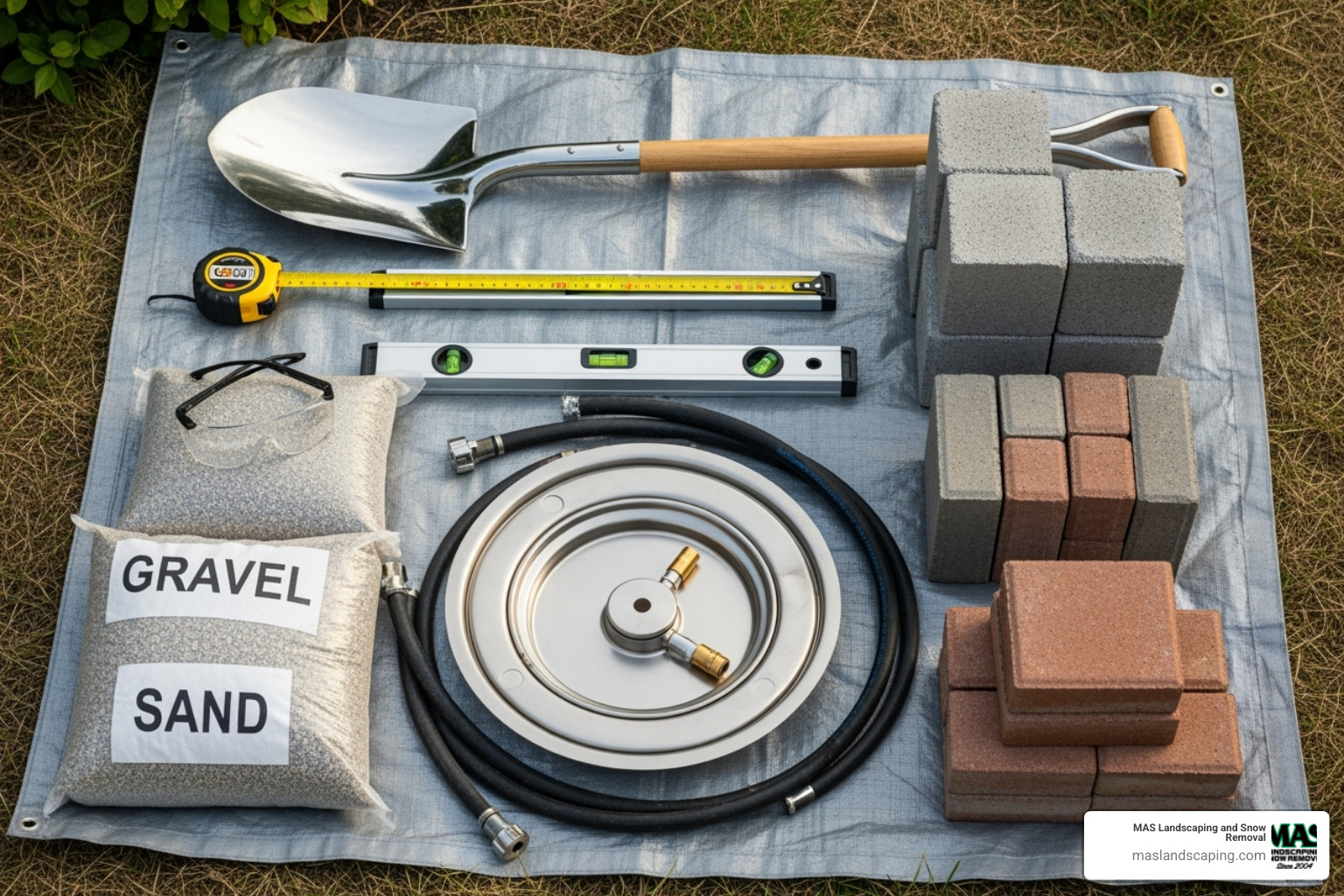
- Construction: Shovel, tape measure, 4-foot level, rubber mallet, caulk gun, safety glasses, and gloves.
- Fire Pit: Paver blocks, exterior-grade concrete adhesive, paver base, gravel, and your complete burner kit (burner, pan, flex line, key valve, igniter).
- Finishing: Lava rock or fire glass.
Step 1: Site Preparation and Foundation
A solid foundation is critical. Start by marking your location; a 40-inch diameter circle is a common size. Excavate about 2 inches of soil within the marked area, ensuring it is perfectly level.
Next, add your paver base. Spread and compact 1-2 inches of crushed gravel to create a stable, well-draining foundation that prevents shifting. For installations on grass or existing pavers, consider laying a heavy-duty plastic vapor barrier over the compacted base to block moisture from reaching burner components. This is not needed on a concrete slab.
Our Hardscape Contractors specialize in creating durable foundations for all outdoor features.
Step 2: Running the Gas Line
This step must be performed by a licensed professional. Running gas lines involves calculating gas demand, ensuring proper pipe sizing according to a gas flow chart, and following strict safety codes.
A professional will map the safest route, ensure proper trench depth (typically 12-24 inches), and select the correct pipe material (e.g., black iron, stainless steel, or polyethylene). They will install a crucial shut-off valve near the fire pit for maintenance and emergencies. Finally, they will pressure test the entire system to guarantee there are no leaks, giving you peace of mind.
Step 3: Assembling the Structure and Burner
With the foundation and gas line ready, you can build the structure.
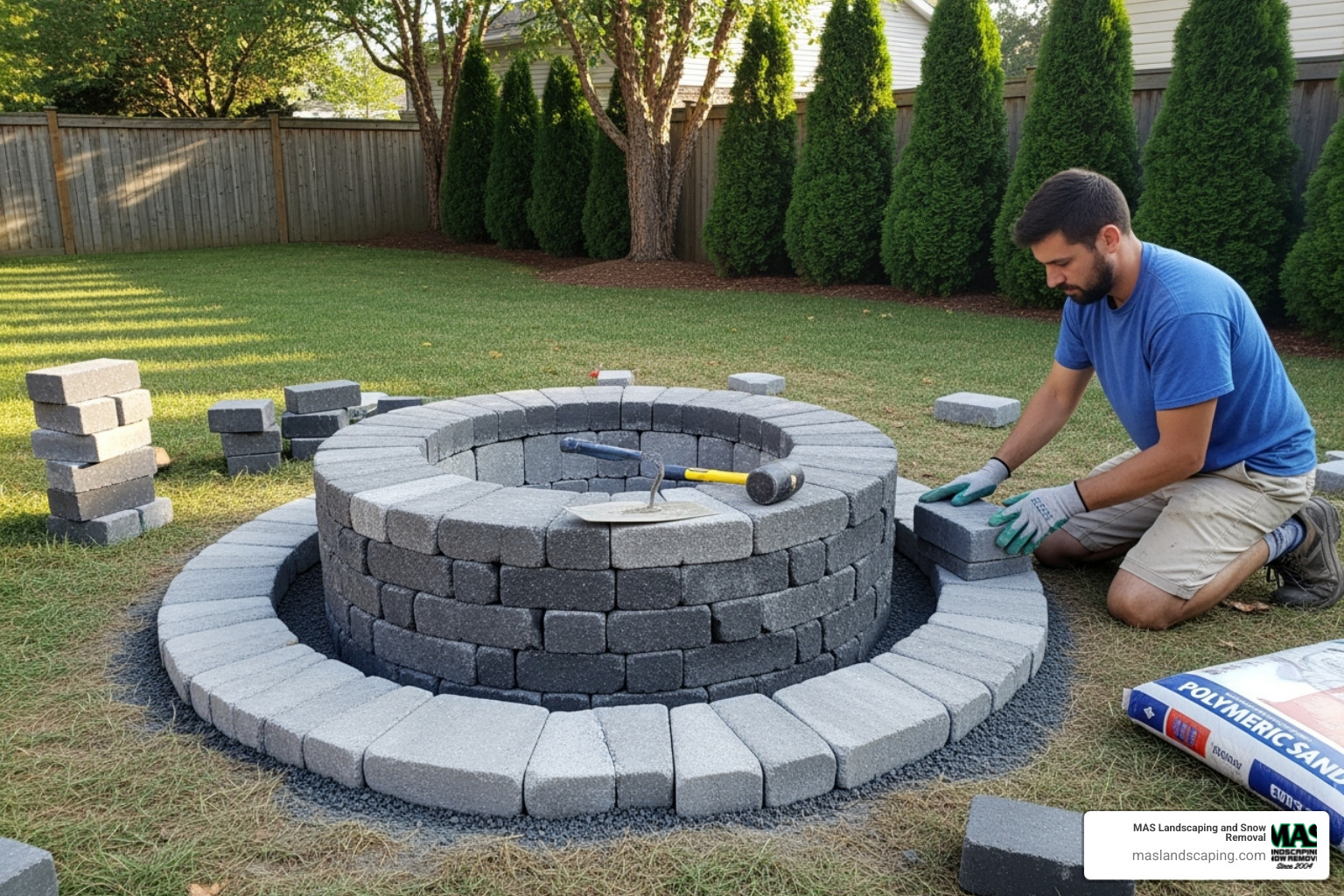
Dry stack the first layer of blocks, using a 4-foot level to ensure it is perfect. Apply exterior-grade concrete adhesive between each layer, staggering the blocks to create a strong, interlocking structure.
You must leave openings for your control panel and vent blocks. Proper ventilation is critical: you need at least two openings on opposite sides, each providing 18 square inches of open area. For propane (heavier than air), vents go near the bottom. For natural gas (lighter than air), vents go near the top.
Once the adhesive has cured, assemble the burner per the manufacturer’s instructions. Consult the burner manual for proper assembly instructions and ensure the burner pan has at least 1 inch of overlap on its support. Finish by adding your fire media, like lava rock or fire glass, covering the burner by about 2 inches.
Step 4: Connecting and Testing for Leaks
This final phase is critical for safe operation. Even with a professionally installed line, you must test the final connections.
Connect the flex line from the burner to the main gas supply. Use gas-rated yellow Teflon tape on threaded NPT fittings, but never on flared fittings, which seal via metal-to-metal compression. Install the spark igniter according to the manual.
Next, perform the soapy water test. With all controls off, slowly turn on the gas supply. Apply a 50/50 mix of dish soap and water to every joint and connection. Watch carefully for bubbles, which indicate a gas leak. If you see any, turn off the gas immediately and tighten the connection. If bubbles persist, call your gas professional. Never use an open flame to check for leaks.
Once you are certain there are no leaks, perform the final ignition test following your manual’s instructions. If it doesn’t light within 10 seconds, turn off the gas, wait 5 minutes for gas to dissipate, and try again. Make the soapy water test a regular part of your maintenance routine.
The Investment: Gas Fire Pit Installation Costs & Timelines
A gas fire pit installation is an investment in your home’s outdoor living space. Understanding the time and financial commitments helps you plan effectively.
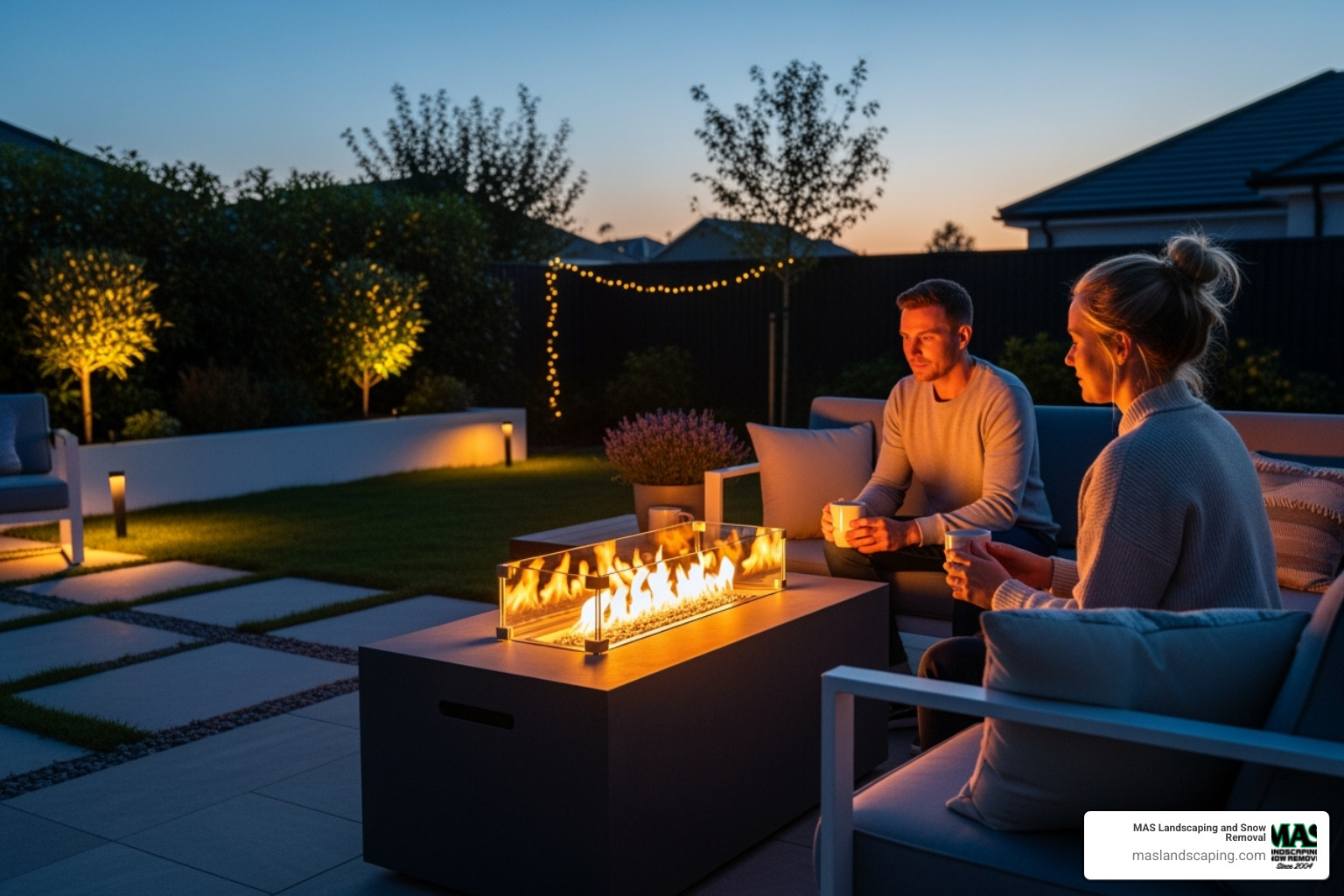
The project timeline depends on your approach. A DIY fire pit structure can take about 3 hours to build once materials are on site. However, this excludes planning, material gathering, and the professional gas line installation, which can take half a day to several days depending on the complexity.
Disclaimer: All prices are estimates based on public data and do not reflect actual quotes from MAS Landscaping. Costs vary widely based on location, materials, complexity, and specific labor rates.
The financial investment varies dramatically. For a DIY approach, material costs alone typically range from $500 to $2,500+. This covers the kit, burner, and supplies but does not include the mandatory cost of professional gas line installation.
Professional installation for a complete project generally ranges from $3,000 to $15,000 or more. This wide range reflects design complexity, material choices, the difficulty of the gas line run, local labor rates, and permits. While a larger upfront investment, it includes professional expertise, safety measures, code compliance, and warranties.
DIY vs. Professional Gas Fire Pit Installation: Making the Right Choice
Choosing between DIY and professional installation is a decision about balancing cost, safety, and expertise.
- DIY Approach: The main benefit is saving on labor costs. It also offers the satisfaction of building something yourself. However, the risks are significant. Improper installation poses serious safety hazards, especially with gas. The project’s complexity, from understanding gas pressure to local codes, is often underestimated, and there are no warranties on your labor.
- Professional Installation: This route provides invaluable expertise and safety assurance. Licensed professionals ensure your system operates safely and meets all local codes in areas like Saugus, Chelsea, or Revere. They work efficiently, completing the job in days, not weeks. You also gain peace of mind from warranties on materials and workmanship.
Professionals like MAS Landscaping can also integrate the fire pit into a cohesive landscape design, delivering better long-term value.
While building the structure can be a DIY task for some, all gas line work must be left to certified professionals. For complex projects or to guarantee the highest safety standards, hiring a professional is the recommended choice.
Keeping the Flame Alive: Maintenance and Troubleshooting
With your gas firepit installation complete, a simple care routine will ensure it provides warmth and enjoyment for years. Gas fire pits are low-maintenance, but a little attention goes a long way.
Your Fire Pit’s Simple Care Routine
- Regular Cleaning: Every few months, clean your fire media. Rinse fire glass with water and let it air dry. For lava rock, a gentle brush-off to remove dust and debris is sufficient. Always check the burner area for leaves or insects before use.
- Annual Burner Inspection: Once a year, inspect the burner for damage, corrosion, or blockages. Use a pipe cleaner or compressed air to clear clogged burner holes. A brass wire brush can remove surface corrosion from stainless steel burners.
- Cover Your Fire Pit: A fitted cover is the best defense against rain, snow, and debris. It protects the burner and internal components, extending their life. Ensure the fire pit is completely cool before covering it.
- Perform Leak Checks: Annually, or anytime you suspect an issue, perform the soapy water test on all connections to ensure they remain secure.
When Things Don’t Go According to Plan
Most common fire pit issues have simple solutions.
- Uneven Flames or Low Heat: This often points to blocked burner holes or gas pressure issues. First, check for debris. For propane users, a standard 20-pound tank may be “freezing up” under high demand; consider upgrading to a larger tank.
- Ignition Problems: If your fire pit won’t light, clean the igniter electrode, check the ignition module battery, and ensure you’re holding the control knob down for at least 30 seconds after lighting to engage the thermocouple. Strong wind can also cause issues.
- Whistling Noise: This is often caused by gas moving through standard flexible hoses. Switching to a “whistle-free” hose or having a professional adjust your gas pressure can resolve it.
- Smelling Gas: If you ever smell gas, turn off the gas supply at the source immediately. Extinguish any nearby flames and keep everyone away. Do not try to find the leak yourself. Call your gas supplier or a licensed professional for emergency service.
While many maintenance tasks are DIY-friendly, always call a professional when you are unsure or dealing with a potential gas leak. For more ideas on improving your outdoor sanctuary, explore our Outdoor Living Spaces services.
Frequently Asked Questions about Gas Firepit Installation
Here are answers to some of the most common questions about gas firepit installation.
How much ventilation does a gas fire pit need?
Proper ventilation is essential for safety to prevent dangerous gas accumulation. An enclosed fire pit structure requires at least two ventilation openings on opposing sides to create cross-ventilation. Each vent must provide a minimum of 18 square inches of open area.
The placement depends on the fuel type:
- Natural Gas is lighter than air, so vents should be placed in the upper portion of the enclosure to allow gas to rise and escape.
- Propane is heavier than air, so vents must be placed as low as possible in the structure to allow the gas to drain out.
What is the best material to put under a gas fire pit?
The foundation must be stable, level, and non-combustible. The best options include:
- Concrete Patios/Slabs: The gold standard for stability and fire resistance.
- Pavers: Properly installed interlocking pavers over a compacted base are an excellent and attractive choice.
- Gravel or Crushed Stone: A good option that also provides excellent drainage.
Avoid placing a fire pit directly on a wood deck or grass unless the specific unit is tested and certified for that application. Always follow the manufacturer’s requirements.
Can I convert my propane fire pit to natural gas?
Yes, most fire pits can be converted, but this is not a DIY job. The conversion must be performed by a licensed gas professional to ensure safety.
The process involves replacing the burner orifice (the small opening where gas exits) with one correctly sized for the lower pressure of natural gas. The gas regulator may also need to be changed. An incorrect conversion can lead to dangerous gas buildup, incomplete combustion, and improper flame behavior.
A licensed technician has the knowledge and tools to perform the conversion safely, test gas pressures, and verify that the appliance operates correctly according to all safety codes.
Conclusion
A gas firepit installation is more than an outdoor feature; it’s the heart of future gatherings, where memories are forged under the stars. The magic of a flickering flame draws people together, turning any evening into an opportunity for connection.
We’ve covered the critical aspects of this project, from planning and fuel choices to hands-on installation and maintenance. Throughout this guide, safety has been our top priority. While building the structure can be a rewarding DIY task, we must reiterate that gas line installation requires a licensed professional. This is to protect your family and your home.
The investment you make adds year-round functionality and value to your property, creating a cherished gathering place for decades. Proper installation and simple maintenance are the keys to long-term enjoyment.
At MAS Landscaping and Snow Removal, we bring local expertise to every project in communities like Saugus, Everett, and Lynnfield. We understand the unique challenges of New England weather and local requirements.
Ready to transform your backyard into the neighborhood’s favorite gathering spot? Let our experienced team handle the complexities while you plan your first evening by the fire.
Ready to create the perfect outdoor oasis? Explore our expert hardscaping services!