

Hardscape Retaining Walls: Top 10 Stunning Ideas 2025
Hardscape retaining walls are an essential element in creating stunning and functional outdoor spaces. Whether you’re dealing with an uneven slope or you’re simply looking to add structure and style to your yard, these walls offer practical and aesthetic benefits.
Quick Answers:
– Definition: A hardscape retaining wall is a structure designed to hold back soil and create usable flat areas in a landscape.
– Purpose: They prevent soil erosion, manage drainage, and add visual appeal.
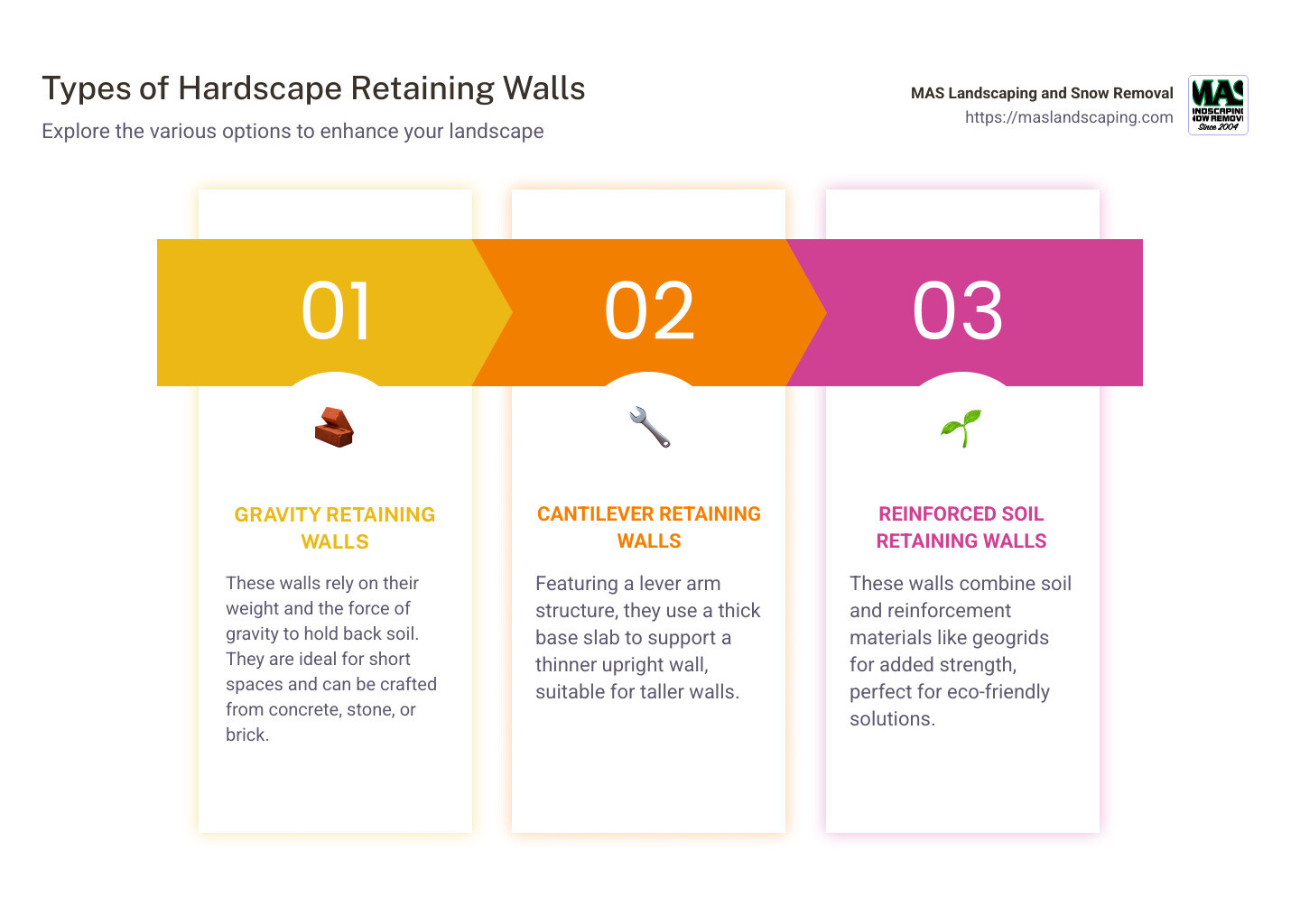
– Types: Options include gravity, cantilever, and reinforced soil walls.
At MAS Landscaping and Snow Removal, located in the Greater Boston area, we transform ordinary yards into beautiful, personalized retreats. Our expertise ensures that each project not only aligns with your vision but also thrives in the local climate, making your outdoor space both functional and inviting.
Common Hardscape retaining walls vocab:
– Hardscape design services
– Landscape Walls
– Outdoor wall construction
What Are Hardscape Retaining Walls?
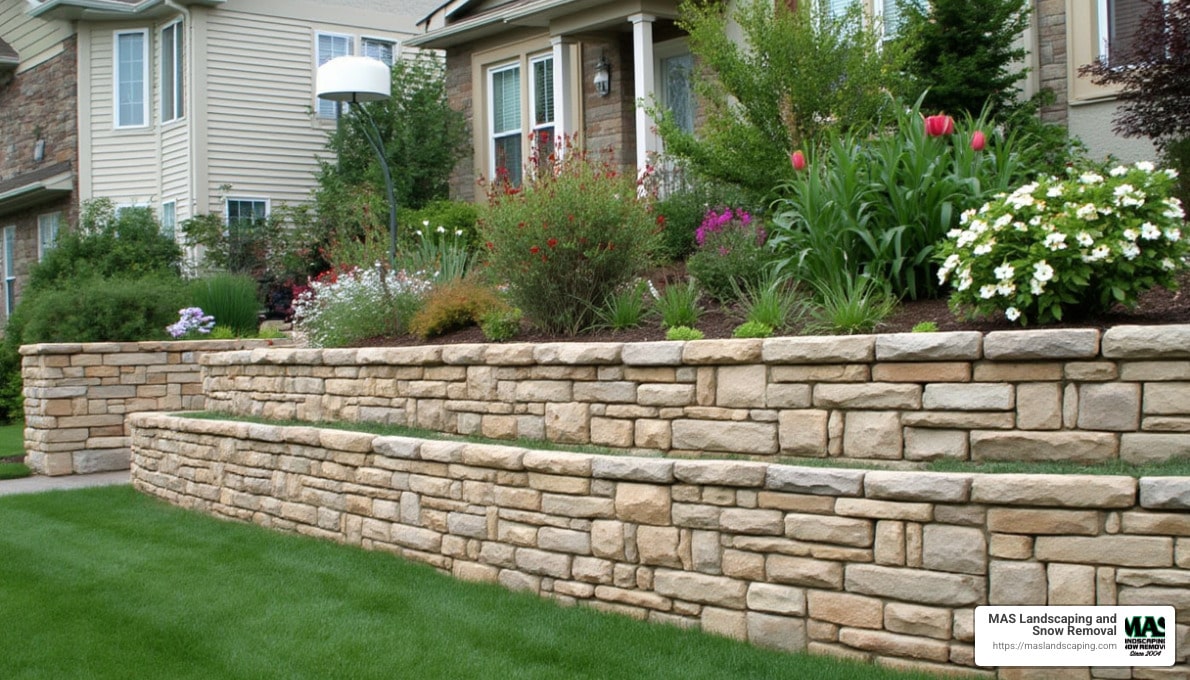
Hardscape retaining walls are vital structures in landscaping, designed to hold back soil and create flat, usable spaces. These walls are not just functional but also add a touch of elegance to your outdoor area.
Definition and Purpose
A retaining wall is a robust barrier that supports soil laterally so it can be retained at different levels on the two sides. This is crucial for preventing soil erosion and managing rainwater effectively. In areas like Greater Boston, where terrain can be uneven, retaining walls transform slopes into functional spaces.
Freestanding walls, on the other hand, are not built to hold back soil. Instead, they serve aesthetic purposes, such as dividing spaces or providing seating areas. They are ideal for flat terrains where soil retention is not needed.
Types of Retaining Walls
There are several types of retaining walls, each designed for specific needs:
- Gravity Retaining Walls: These rely on their weight to hold back soil. They are typically made from heavy materials like stone or concrete.
- Cantilever Retaining Walls: These use a slab and base structure to leverage the weight of the soil above. They are efficient for higher walls.
- Reinforced Soil Retaining Walls: These incorporate reinforcement strips or geogrids, making them suitable for supporting large loads.
Freestanding Walls
Freestanding walls are more about aesthetics and function rather than structural support. They can be used to:
- Improve Visual Interest: Break up large spaces or add a focal point.
- Provide Seating: Create built-in benches for gatherings and relaxation.
- Define Spaces: Separate different areas within a garden or yard.
Incorporating hardscape retaining walls into your yard not only addresses practical concerns like soil erosion but also lifts the visual appeal of your outdoor space. At MAS Landscaping and Snow Removal, we specialize in designing and installing walls that are both beautiful and functional, custom to your specific needs and the local environment.

This sets the stage for exploring the various types of retaining walls and how they can be used in your landscape design.
Types of Retaining Walls
Choosing the right type of hardscape retaining wall is crucial for both functionality and aesthetics in your landscape design. Let’s explore the various types of retaining walls and their unique benefits.
Gravity Retaining Walls
Gravity retaining walls rely solely on their mass to resist the pressure from the soil behind them. These walls are typically constructed from heavy materials like stone, concrete, or bricks. Their simple design makes them a popular choice for many homeowners.
- Materials: Stone, concrete, bricks
- Ideal For: Short to medium-height walls
- Benefits: Simple construction, durable
Cantilever Retaining Walls
Cantilever retaining walls use a slab and base structure to support soil. They are designed to be slender, with a base that extends under the soil. This design uses the weight of the retained soil to stabilize the wall.
- Materials: Reinforced concrete
- Ideal For: Taller walls
- Benefits: Efficient use of materials, suitable for higher walls
Embedded Retaining Walls
Embedded retaining walls are supported by inserting part of the wall into the ground. This type of wall is often used in areas with limited space or where additional support is needed.
- Materials: Steel, concrete
- Ideal For: Urban areas or tight spaces
- Benefits: Space-efficient, strong support
Reinforced Soil Retaining Walls
Reinforced soil retaining walls use materials like geogrids or metal strips to strengthen the soil behind the wall. This type of wall is particularly effective for supporting large loads or in areas with unstable soil.
- Materials: Soil reinforcement with geogrids, metal strips
- Ideal For: Large-scale projects, unstable soil conditions
- Benefits: Cost-effective for large walls, adapts to various soil types
Hardscape retaining walls are more than just functional barriers. They are an opportunity to improve your outdoor space with structural beauty and practicality. Whether you choose a gravity wall for its simplicity or a reinforced soil wall for its strength, MAS Landscaping and Snow Removal can help you select and install the perfect solution for your needs.
Next, we’ll explore affordable options for building retaining walls, ensuring that you can achieve your desired look and functionality without breaking the bank.
Affordable Retaining Wall Options
Creating beautiful and functional outdoor spaces doesn’t have to be expensive. Let’s explore some affordable retaining wall options that can add both style and structure to your landscape.
Concrete Blocks
Concrete blocks are a popular choice for hardscape retaining walls due to their durability and cost-effectiveness. These blocks come in various sizes and styles, making them versatile for different designs. They are easy to stack and can be used for both straight and curved walls.
- Benefits: Durable, versatile, easy to install
- Ideal For: DIY projects, straight or curved walls
Railroad Ties
Railroad ties offer a rustic charm that can improve any garden. These sturdy wooden beams are often repurposed for landscaping projects. They are easy to work with and provide a natural look.
- Benefits: Rustic appearance, strong
- Ideal For: Rustic or natural-themed gardens
Gabion Walls
Gabion walls consist of wire cages filled with stones or other materials. They are excellent for erosion control and can be customized with different fill materials for a unique look.
- Benefits: Erosion control, customizable
- Ideal For: Modern landscapes, erosion-prone areas
Timber Sleepers
Timber sleepers are another affordable and natural option. They can be used vertically or horizontally to create small retaining walls. Their natural wood look blends well with gardens.
- Benefits: Natural appearance, easy to cut and shape
- Ideal For: Small walls, garden borders
Retaining Wall Kits
Retaining wall kits provide all the materials needed for a DIY project. These kits simplify the building process, making it easier for homeowners to construct their own walls.
- Benefits: Convenient, cost-effective
- Ideal For: DIY enthusiasts, small projects
Natural Stone
Natural stone offers timeless beauty and strength. Although it may be slightly more expensive than other materials, natural stone provides a classic look that can increase property value.
- Benefits: Aesthetic appeal, durable
- Ideal For: High-end landscapes, classic designs
Terraced Gardens
Terraced gardens use a series of small retaining walls to create levels in sloped areas. This design maximizes planting space and adds visual interest to your yard.
- Benefits: Maximizes space, visually appealing
- Ideal For: Sloped yards, gardeners
Pallets
For a truly budget-friendly option, consider using pallets. These can be stacked and secured to create simple retaining walls. While not as durable as other options, pallets are a creative and eco-friendly choice.
- Benefits: Low-cost, eco-friendly
- Ideal For: Temporary solutions, experimental designs
With these diverse options, you can find the perfect hardscape retaining wall solution that fits your budget and improves your outdoor space. From the rustic charm of railroad ties to the sleek look of gabion walls, there’s something for every style and need.
Next, we’ll discuss the benefits of hardscape retaining walls and how they can improve your property’s value and functionality.
Benefits of Hardscape Retaining Walls
Hardscape retaining walls offer several benefits that can transform your outdoor space into a more functional and visually appealing area. Let’s explore some of the key advantages:
Structural Support
Retaining walls provide crucial structural support to your landscape. They hold back soil and prevent it from shifting, which is especially important for properties with uneven terrain. By creating level areas, retaining walls transform sloped or hilly landscapes into usable spaces for gardening, patios, or play areas.
Erosion Control
One of the main functions of retaining walls is to control erosion. Without them, rainwater can wash away topsoil, leading to landscape damage and loss of plant life. By holding soil in place, retaining walls protect your garden beds and maintain the integrity of your outdoor space.
Rainwater Management
Retaining walls also play a significant role in managing rainwater. They can be designed to direct water away from your home’s foundation, preventing potential damage. By altering the slope of your landscape, these walls help disperse water evenly, reducing the risk of flooding and soil erosion.
Aesthetic Appeal
Beyond their functional benefits, retaining walls add aesthetic appeal to your property. With a variety of materials and designs available, you can choose a style that complements your home and landscape. Whether you prefer the rustic look of natural stone or the sleek lines of concrete blocks, a well-designed retaining wall can improve the beauty of your outdoor space.
Increased Property Value
Finally, hardscape retaining walls can increase your property’s value. They not only improve the functionality and appearance of your yard but also make it more attractive to potential buyers. A well-maintained landscape with retaining walls can significantly boost curb appeal, making your home stand out in the market.
These benefits make retaining walls a smart investment for any homeowner looking to improve their outdoor space. Next, we’ll explore some creative design ideas for incorporating retaining walls into your landscape.
Design Ideas for Hardscape Retaining Walls
Adding hardscape retaining walls to your yard can do more than just hold back soil; they can transform your outdoor space into a beautiful and functional area. Here are some creative design ideas to inspire your next project:
Terraced Gardens
Terracing with retaining walls is a fantastic way to make the most of a sloped yard. By creating multiple levels, you can plant different types of flowers, shrubs, or vegetables on each tier. This not only maximizes your gardening space but also adds visual interest to your landscape. Terraced gardens can turn a steep incline into a lush, multi-layered garden.
Built-in Planters
Why not integrate planters directly into your retaining wall? Built-in planters allow you to showcase your favorite flowers or greenery at eye level. This design choice not only saves space but also adds a splash of color and life to your wall. Consider using cascading plants like creeping thyme or moss phlox for a stunning effect that softens the hard edges of the wall.
Outdoor Kitchens
Imagine cooking and dining in your backyard with an outdoor kitchen nestled against a retaining wall. By incorporating a retaining wall into your outdoor kitchen design, you can create a cozy and functional space for entertaining. Use the wall to house built-in grills, countertops, or even a pizza oven. This setup makes your yard a true extension of your home’s living space.
Fire Pits
A fire pit surrounded by a retaining wall offers a perfect spot for gathering with friends and family. The wall can double as seating and provide wind protection, making your fire pit area comfortable and inviting. Choose materials that complement your home and landscape to create a cohesive look.
Seating Walls
Seating walls are a practical addition to any outdoor space. By using retaining walls as benches, you provide extra seating without cluttering your yard with furniture. This is especially useful for hosting large gatherings. A seating wall can follow the curve of your patio or garden, offering a seamless blend of form and function.
Pathways
Guide guests through your garden with pathways flanked by retaining walls. These walls can help define the path and protect the landscape from foot traffic. Use different materials like natural stone or concrete to match your garden’s style. Pathways add structure to your yard and make it easier to steer, especially on sloped terrain.
These design ideas showcase the versatility of hardscape retaining walls. Whether you’re looking to add functionality or aesthetic appeal, there’s a solution that can lift your outdoor space.
Next, we’ll explore how to choose the right retaining wall for your yard, considering factors like slope, soil type, and drainage needs.
How to Choose the Right Retaining Wall for Your Yard
Selecting the perfect hardscape retaining wall for your yard isn’t just about aesthetics; it’s about functionality and durability too. Here’s how to make the best choice for your landscape:
Slope Considerations
The slope of your yard is a crucial factor. Steeper slopes require stronger retention solutions. Gravity retaining walls are ideal for mild slopes, while reinforced soil retaining walls are better suited for steeper inclines. This ensures stability and prevents erosion.
Soil Type
Different soils have different stability and drainage properties. Clay soils hold water and can exert more pressure on a wall, necessitating a more robust design. Sandy soils drain well but may require additional stabilization. Understanding your soil type will guide you in choosing the right wall structure and materials.
Drainage Needs
Proper drainage is essential to prevent water buildup behind the wall, which can lead to failure. Consider incorporating drainage pipes or gravel backfill to manage water flow. This is especially important in areas prone to heavy rainfall, where rainwater management becomes a priority.
Aesthetic Preferences
Your retaining wall should complement your home’s style and the existing landscape. If you prefer a natural look, consider natural stone or timber sleepers. For a modern aesthetic, concrete blocks or poured concrete offer clean lines and a sleek finish. The right choice can improve your property’s curb appeal and value.
Material Options
The material you choose impacts the wall’s durability and appearance. Concrete blocks and poured concrete are long-lasting and versatile. Gabion walls provide a rustic look and are excellent for drainage. Railroad ties and timber sleepers offer a more traditional, earthy aesthetic but may require more maintenance over time.
By considering these factors, you can select a retaining wall that not only meets your functional needs but also improves the beauty of your outdoor space. Next, we’ll dig into installation and maintenance tips to ensure your wall stands the test of time.
Installation and Maintenance Tips
Building and maintaining hardscape retaining walls involves several key considerations. Whether you choose to tackle the project yourself or hire professionals, understanding the process and upkeep is essential for lasting results.
DIY vs. Professional Installation
DIY Installation
– Pros: Cost-effective, hands-on experience, and personal satisfaction.
– Cons: Requires time, effort, and a good understanding of construction techniques. Mistakes can lead to structural issues.
Professional Installation
– Pros: Expertise and experience ensure a sturdy, well-designed wall. Professionals can handle complex projects and offer warranties.
– Cons: Higher upfront costs.
For complex designs or situations involving steep slopes and significant drainage issues, hiring a professional is advisable. Simple projects, like small garden walls, can be suitable for DIY enthusiasts.
Maintenance Practices
Regular maintenance is key to the longevity of your retaining wall. Here are some practices to follow:
- Inspect regularly: Look for signs of wear, such as cracks or bulges.
- Clear drainage: Ensure that drainage systems are free from debris to prevent water buildup.
- Vegetation control: Remove plants growing too close to the wall, as roots can cause damage.
- Repoint joints: For stone and brick walls, repoint any deteriorating mortar to maintain stability.
Common Issues and Troubleshooting
Even well-built walls can encounter problems. Here are common issues and how to address them:
- Cracking: This can occur due to soil movement or poor drainage. Seal minor cracks with appropriate fillers. For significant cracks, consult a professional for assessment and repair.
- Bulging: Often a sign of pressure from behind the wall. This may require reinforcing or rebuilding sections of the wall.
- Water pooling: Indicates drainage issues. Ensure drainage pipes are clear and consider adding gravel backfill to improve water flow.
By staying proactive with maintenance and addressing issues promptly, you can ensure your hardscape retaining wall remains a beautiful and functional part of your landscape.
Next, we’ll answer some frequently asked questions to further assist you in your retaining wall journey.
Frequently Asked Questions about Hardscape Retaining Walls
What is the cheapest retaining wall to build?
When it comes to affordable options for hardscape retaining walls, three materials stand out: concrete blocks, railroad ties, and pallets.
- Concrete Blocks: These are a popular choice due to their affordability and versatility. They come in various shapes and sizes, making them easy to stack and customize for different designs.
- Railroad Ties: These are often used for their rustic look and low cost. However, it’s important to note that while they are inexpensive, they may have a shorter lifespan due to potential rot and chemical treatments.
- Pallets: For the ultimate budget-friendly option, consider using recycled pallets. They are easy to source and can be creatively arranged to form a unique retaining wall. Though, that they may not offer the same durability as other materials.
What is the strongest retaining wall design?
For those seeking strength and durability, poured concrete and reinforced soil retaining walls are top contenders.
- Poured Concrete: This design is one of the strongest due to its solid, seamless structure. It’s ideal for holding back large amounts of soil and can be customized with different finishes for aesthetic appeal.
- Reinforced Soil Retaining Walls: These walls combine soil with reinforcement materials like geogrids or steel strips to create a stable structure. They are particularly effective in areas with challenging soil conditions or significant height requirements.
How do retaining walls help with drainage?
Hardscape retaining walls play a crucial role in managing rainwater and preventing erosion. Here’s how they contribute to effective drainage and soil stabilization:
- Rainwater Management: Retaining walls can be designed to redirect water flow away from vulnerable areas, such as building foundations. This helps prevent waterlogging and reduces the risk of flooding.
- Erosion Control: By holding back soil, retaining walls prevent the displacement of earth caused by water runoff. This is especially important on sloped properties where erosion can be a significant issue.
- Soil Stabilization: Retaining walls provide structural support that stabilizes soil, preventing it from shifting or collapsing. This is vital for maintaining the integrity of landscaping and ensuring plant health.
By understanding these aspects, you can make informed decisions about the best retaining wall solutions for your outdoor space.
Conclusion
At MAS Landscaping and Snow Removal, we believe that changing your outdoor space is about more than just aesthetics—it’s about creating a personal retreat that improves your lifestyle. With our local expertise in the Saugus, MA area and surrounding communities like Everett, Lynnfield, and Malden, we know what it takes to design landscapes that are both beautiful and functional.
Our commitment to personalized service ensures that every project reflects your unique vision and needs. We take the time to understand your preferences, whether you’re seeking a serene garden for relaxation or a lively space for entertaining. Our team listens, collaborates, and delivers results that exceed expectations.
When it comes to professional installation, our skilled team is equipped to handle all aspects of your hardscape retaining wall project. From selecting the right materials to ensuring proper drainage and structural integrity, we focus on quality and durability. This attention to detail not only improves the beauty of your yard but also increases your property’s value.
Beautiful outdoor spaces are more than just a vision—they’re a reality with MAS Landscaping and Snow Removal. Our approach combines creativity with practicality, resulting in outdoor environments that truly stand out. Whether it’s a terraced garden, an inviting seating area, or a functional fire pit, we bring your ideas to life with precision and care.
Ready to lift your outdoor space with expertly crafted hardscape retaining walls? Contact us today to start planning your perfect landscape with MAS Landscaping and Snow Removal. Let’s create a stunning outdoor experience that’s a perfect fit for your lifestyle and a reflection of your personal taste.