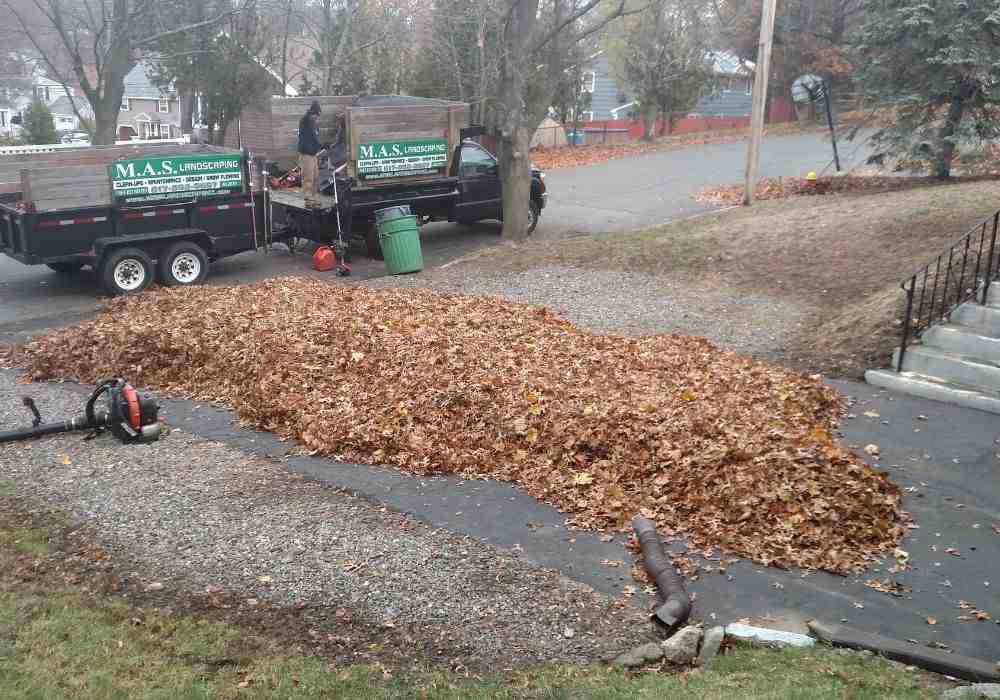



What You Need to Know About Leaf and Brush Pick Up
Leaf and brush pick up is a seasonal municipal service that lets residents place yard waste — bagged leaves, bundled branches, and garden trimmings — at the curb for free collection.
Here’s the short version of what most programs require:
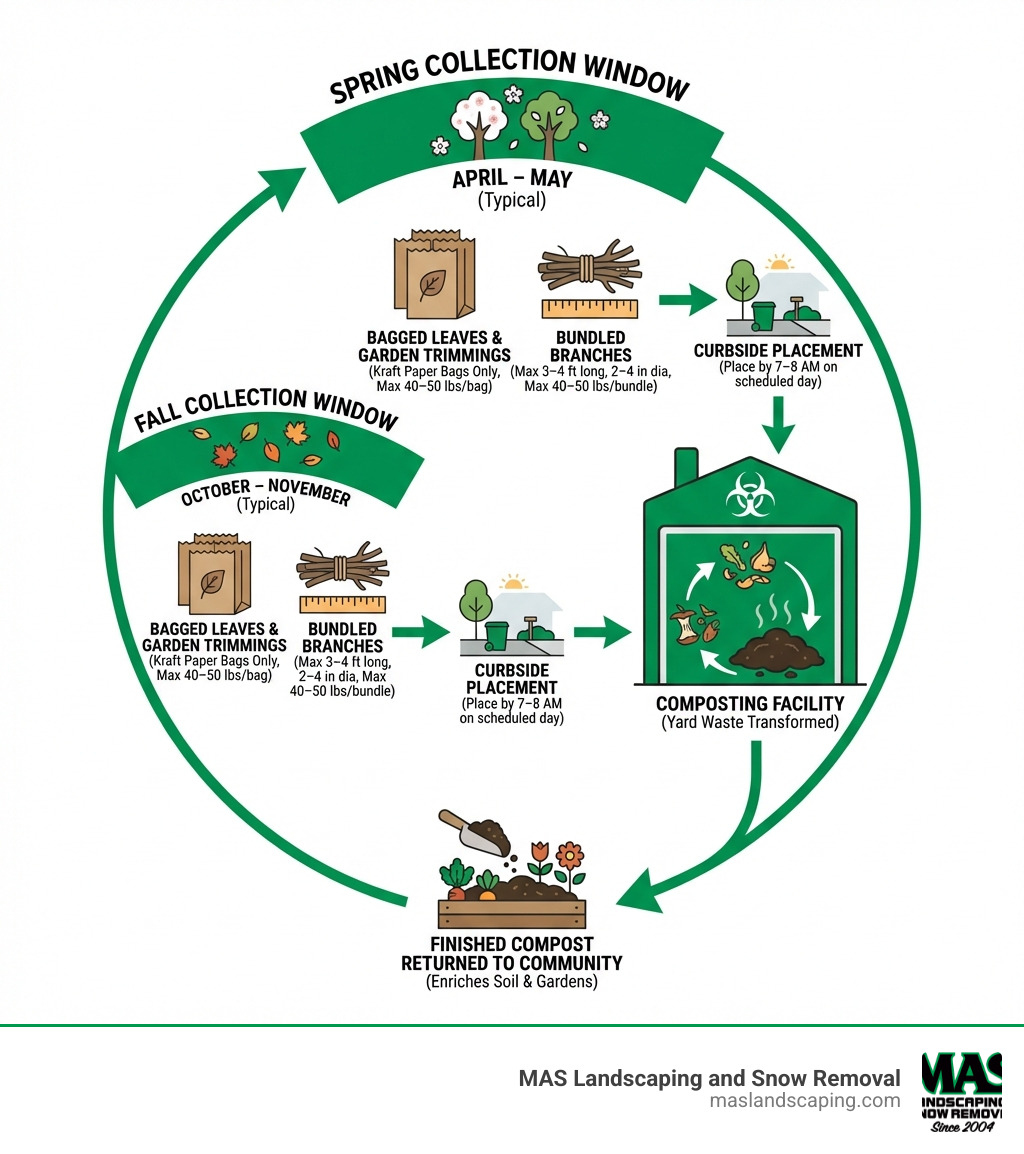
- Bags: Kraft (brown) paper bags only — no plastic, even if labeled compostable
- Weight: Each bag or bundle must stay under 40–50 lbs
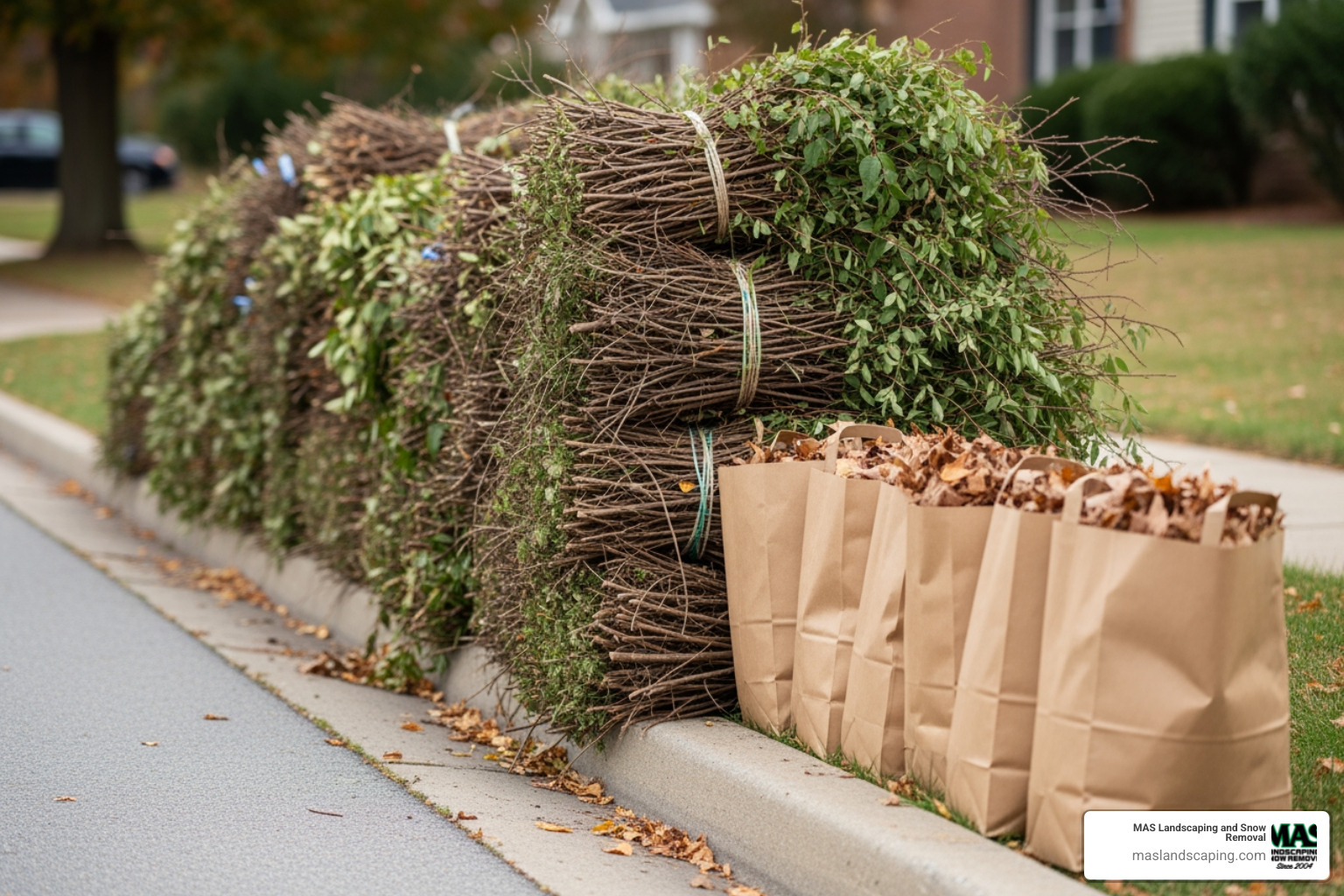
- Branches: Cut to 3–4 feet long, bundled with twine, no more than 2–4 inches in diameter
- Timing: Place at the curb by 7–8 a.m. on your scheduled collection day
- Schedule: Most programs run spring and fall; some offer bi-weekly pickup April through November
Fall arrives fast in Greater Boston. One week your yard looks fine — the next, it’s buried under a foot of wet leaves and a pile of branches from last night’s wind.
If you miss your municipality’s pickup window, that debris can sit for weeks. And if it’s packed wrong — wrong bag, wrong size, too heavy — it won’t get collected at all.
Getting it right the first time saves you a lot of frustration.
This guide covers everything you need to know: what’s accepted, how to bundle and bag it, when to put it out, what to do when pickup is missed, and when it makes sense to just call a professional.
According to municipal data, yard waste programs like these divert roughly 85,000 tonnes of organic material from landfills every year — so getting it right isn’t just good for your yard. It’s good for the environment too.
Leaf and brush pick up word roundup:
Understanding Municipal Leaf and Brush Pick Up Rules
In our neck of the woods—whether you’re in Lynnfield, Saugus, or Danvers—municipalities take their yard waste seriously. Curbside collection isn’t just a convenience; it’s a massive logistics operation. To keep things running smoothly, cities and towns have strict local ordinances about what can sit on the curb and how it’s packaged.
Most of our local programs in Essex and Middlesex counties rely on specialized trucks, like knuckle-boom loaders or standard waste haulers with rear-load compactors. Because this waste is destined for a composting facility rather than a landfill, the rules are designed to prevent “contamination.” Contamination is just a fancy word for “stuff that doesn’t turn into dirt.”
To ensure your leaf and brush pick up goes off without a hitch, you need to know your specific zone and the weight limits. Most municipalities enforce a strict 50lb limit per bag or bundle. If the worker can’t lift it safely, it stays on your lawn. You can often find your specific collection dates by checking your town’s DPW calendar. For those who need a bit more help with the heavy lifting, you can always check out more info about pick up green waste services to see how we can bridge the gap between municipal limits and your yard’s reality.
Sizing and Bundling for Leaf and Brush Pick Up
If you’ve ever tried to shove a six-foot oak limb into a paper bag, you know why bundling rules exist. For most towns like Andover or Peabody, the “Rule of Fours” is a good baseline:
- Length: Branches should be no longer than 4 feet.
- Diameter: Individual branches should usually be under 2 to 3 inches in diameter.
- Bundle Size: The total bundle shouldn’t exceed 2 feet in diameter.
When you’re bundling, use biodegradable twine or natural fiber rope. Never use wire, plastic strapping, or duct tape. These materials don’t break down during the composting process and can damage the industrial grinders used at the depots. If your “brush” looks more like a fallen forest, you might need professional brush removal near me to handle the oversized logs and stumps that the city won’t touch.
Timing and Placement for Leaf and Brush Pick Up
Timing is everything. Most DPW crews start their routes at the crack of dawn—usually 7 a.m. We recommend putting your waste out the night before, but check the weather first. Saturated paper bags have a nasty habit of tearing open when the collector picks them up, leaving a soggy mess of leaves on your sidewalk.
As for placement, keep your bags and bundles at the edge of the curb, but at least one foot back from the road. Never place them on top of storm drains or near fire hydrants. In towns like Medford or Somerville, where street parking is tight, make sure your piles aren’t hidden behind parked cars. For a deeper dive into the logistics of clearing out your property, see our comprehensive guide to brush and debris removal.
Preparing Your Yard Waste for Successful Collection
Success starts with the right containers. Plastic bags are the number one reason yard waste gets left behind. Even the ones that claim to be “biodegradable” often don’t meet the high-heat requirements of municipal composting facilities. Stick to Kraft paper bags or reusable rigid containers (like a plastic trash can) clearly marked with a “Yard Waste” decal.
When you’re removing overgrown bushes, the city sees a “bush” and a “stump” as two very different things. Stumps and root balls are almost never accepted in curbside programs because the dirt clinging to them ruins the composting mix.
Acceptable Materials for Curbside Pick Up
What actually counts as yard waste? Generally, if it grew in your garden and it’s relatively small, it’s fair game. This includes:
- Leaves and Grass: The bread and butter of fall cleanup.
- Twigs and Hedge Trimmings: Small snips from your weekend pruning.
- Fallen Fruit and Pumpkins: Yes, those post-Halloween Jack-O-Lanterns are usually welcome (just remove the candles!).
- Garden Plants: Dead flowers, vines, and old mulch.
If you’re overwhelmed by the sheer volume of foliage, our landscaping leaf cleanup services can help you get everything bagged and ready before the first snow flies.
Prohibited Items and Disposal Alternatives
It’s tempting to treat yard waste bags as a “catch-all” for outdoor junk, but that’s a quick way to get a rejection sticker. Items that are strictly off-limits include:
- Sod and Soil: These are too heavy and don’t compost the same way as greenery.
- Pressure-Treated Wood: Contains chemicals that contaminate the compost.
- Pet Waste: A major health and safety hazard for workers.
- Large Logs: Anything over the 3- or 4-inch diameter limit.
- Invasive Species: This is a big one. Plants like Giant Hogweed or Oriental Bittersweet often need to be bagged in plastic and put in the regular trash to prevent them from spreading through the compost. Check your local invasive species management guidelines (or your local MA town’s specific rules) to be sure.
Eco-Friendly Alternatives to Curbside Disposal
While leaf and brush pick up is a great service, it’s not the only way to handle your yard’s leftovers. In fact, many environmental experts suggest that the best thing you can do for your soil is to keep those nutrients right where they are.
One of the most popular trends is “Grasscycling”—simply leaving your grass clippings on the lawn after you mow. These clippings are about 90% water and break down quickly, returning nitrogen to the soil. This can reduce your need for fertilizer by up to 30%!
Then there’s the “Leave the Leaves” movement. Many pollinators, like moths and butterflies, overwinter in leaf litter. By leaving a thin layer of leaves in your garden beds, you’re providing essential habitat for the critters that keep our Massachusetts ecosystem healthy. If the look of whole leaves is too messy for you, consider a mulching mower. Mulched leaves act as a natural fertilizer and can even help suppress broadleaf weeds.
If you’re interested in a more structured approach, backyard composting is a fantastic way to turn your kitchen scraps and yard waste into “black gold” for your garden. For those who prefer a clean slate every season, our fall clean up services can help you balance ecological health with that crisp, professional look.
Professional Services vs. DIY Removal
We get it—raking leaves is “therapeutic” for about the first twenty minutes. After that, it’s just back-breaking labor. For many homeowners in Beverly or Saugus, the sheer volume of debris is more than a weekend project can handle.
Professional services offer a few things that DIY just can’t:
- Speed: What takes you three weekends, a crew can often finish in a few hours.
- Equipment: We use high-powered vacuums and heavy-duty chippers that can handle volumes that would overwhelm a standard lawnmower.
- Safety: Climbing ladders to prune branches or handling heavy logs carries a real risk of injury.
- Haul-Away: You don’t have to worry about the “Rule of Fours” or weight limits. We take it all.
Whether you need a one-time backyard clean up solution or regular professional yard clean ups, outsourcing the work can save you a trip to the chiropractor and give you your weekends back.
Average Costs for Yard Waste Removal
When you’re looking into professional help, it’s helpful to know the ballpark figures. Based on general internet data, the cost for yard waste removal can vary wildly depending on your property size and how much “stuff” you have.
- Small Yard/Light Debris: $150 – $350
- Medium Property/Average Cleanup: $350 – $650
- Large Estate/Heavy Storm Damage: $650 – $950+
Please note: These are average costs based on internet research and are not the actual costs for MAS Landscaping. Our pricing is personalized based on your specific needs and location.
If you’re searching for brush removal in my area, the high end of these ranges usually involves specialized equipment or the removal of very large trees.
Frequently Asked Questions about Yard Waste
What should I do if my leaf and brush pick up was missed?
It happens to the best of us. You put the bags out, but the truck drove right by. First, check the basics:
- Was it out on time? If it wasn’t there by 7 a.m., they might have already passed your street.
- Was it too heavy? Most towns have a 40-50 lb limit.
- Did you use plastic? This is the most common reason for a missed pickup.
- Was it hidden? If your bags were behind a car or a snowbank, the driver might not have seen them.
If everything looks correct, most towns (like Kingston or Nashville, for example, but also our local MA towns) suggest waiting 24-48 hours. Sometimes routes run late due to high volume. If it’s still there, call your local DPW or submit a service request online.
Can I use “compostable” plastic bags for my yard waste?
In a word: No. Most municipal composting programs in Massachusetts strictly require Kraft paper bags. The problem with “compostable” plastic is that it looks exactly like regular plastic to a worker on a fast-moving truck. Additionally, these bags often take much longer to break down than paper, which can gum up the machinery at the processing facility. Stick to paper—it’s the safest bet for guaranteed collection.
How do I handle invasive species like Giant Hogweed?
Invasive species are the “villains” of the plant world. If you put them in your yard waste, they can survive the composting process and end up in someone else’s garden when they buy municipal compost. For plants like Giant Hogweed, Multiflora Rose, or Oriental Bittersweet, most experts recommend bagging them in plastic and putting them in your regular trash. This ensures they end up in a landfill where they can’t spread. Safety Note: Always wear gloves and long sleeves when handling Giant Hogweed, as its sap can cause severe skin burns.
Conclusion
Managing your yard’s seasonal transitions doesn’t have to be a headache. By following the rules for leaf and brush pick up, you’re helping your community stay clean and keeping our local environment healthy. From Saugus to Lynnfield and everywhere in between, a little preparation goes a long way.
However, we know that life gets busy. If your “to-do” list is growing faster than your grass, we’re here to help. At MAS Landscaping and Snow Removal, we pride ourselves on providing the professional, personalized service that our neighbors in Everett and Malden have come to rely on. Whether it’s a massive fall leaf clearing or a tricky brush removal project, we have the tools and the expertise to get the job done right.
Ready to reclaim your yard? Schedule a professional brush removal service with us today and let us handle the heavy lifting while you enjoy the view!