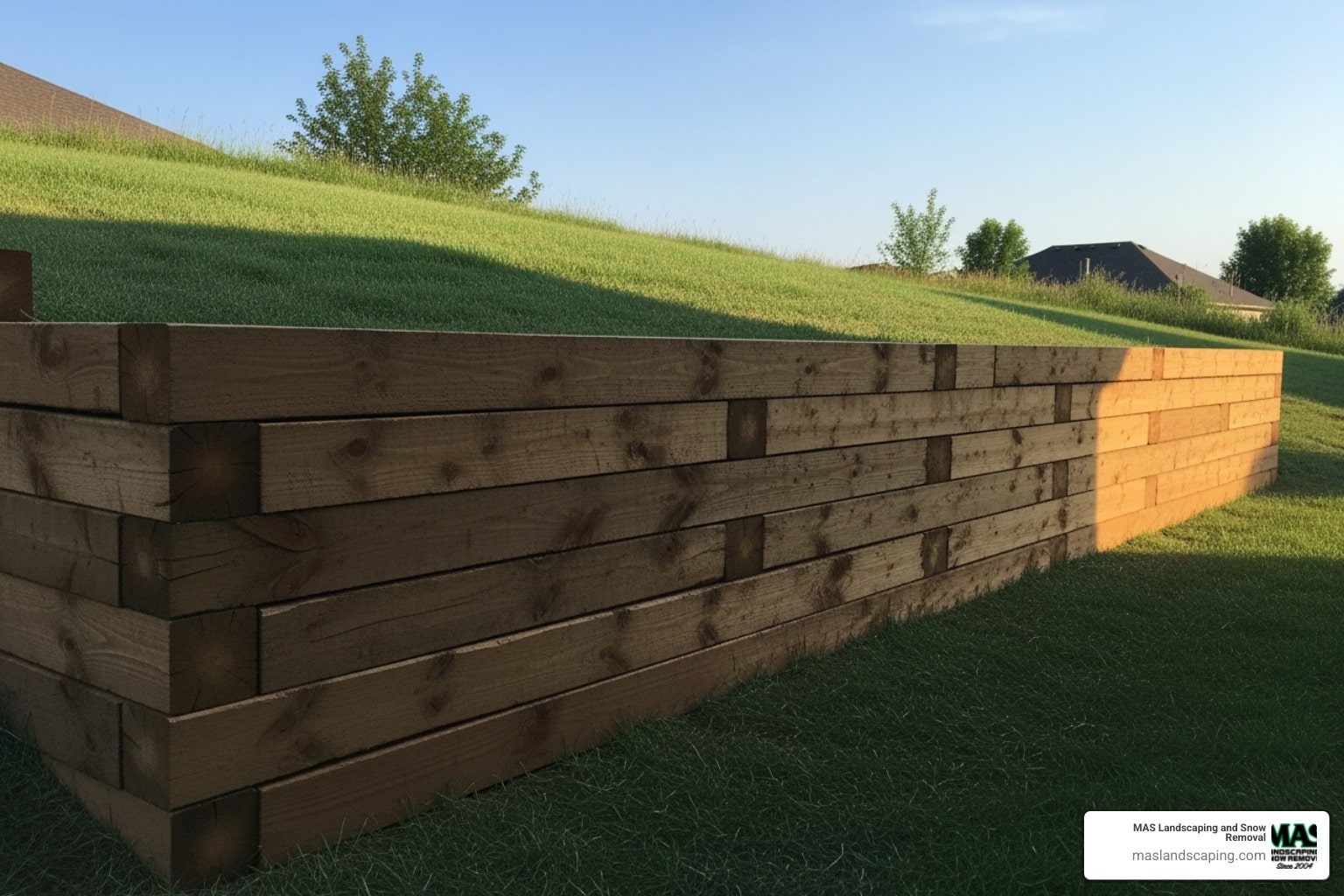



How to build a retaining wall with landscape timbers 1 Bst
Transform Your Sloped Yard into Functional Space
How to build a retaining wall with landscape timbers is a popular DIY project that improves your property’s usability and appearance. The basic process is:
- Plan and excavate – Mark your layout, dig the foundation trench 8 inches deep
- Set the foundation – Add 2-3 inches of compacted gravel, lay first timber course
- Secure with rebar – Pin first course with 3-4 foot rebar stakes every 2 feet
- Build up courses – Stack timbers, stagger joints, step back each row 1/4 inch
- Install drainage – Add perforated pipe behind wall with gravel backfill
- Reinforce tall walls – Use deadmen anchors for walls over 2-3 feet high
A timber retaining wall serves two main purposes: controlling soil erosion and creating level, usable space on sloped terrain. Unlike concrete or stone alternatives, landscape timbers offer a cost-effective solution that’s accessible to most DIY enthusiasts.
The average wood retaining wall lasts 10-20 years with proper construction and maintenance. Professional installation typically ranges from $15-90 per square foot, but building it yourself can cut costs in half while giving you complete control over the project.
Key benefits of timber retaining walls include:
- Affordability – About half the cost of concrete block walls
- DIY-friendly – No specialized masonry skills required
- Natural appearance – Blends well with landscape plantings
- Flexibility – Easy to modify or extend later
The most critical factors for success are proper drainage and solid anchoring to the hillside. Water buildup behind the wall creates enormous pressure that can cause failure, while inadequate anchoring allows the wall to bow outward over time.
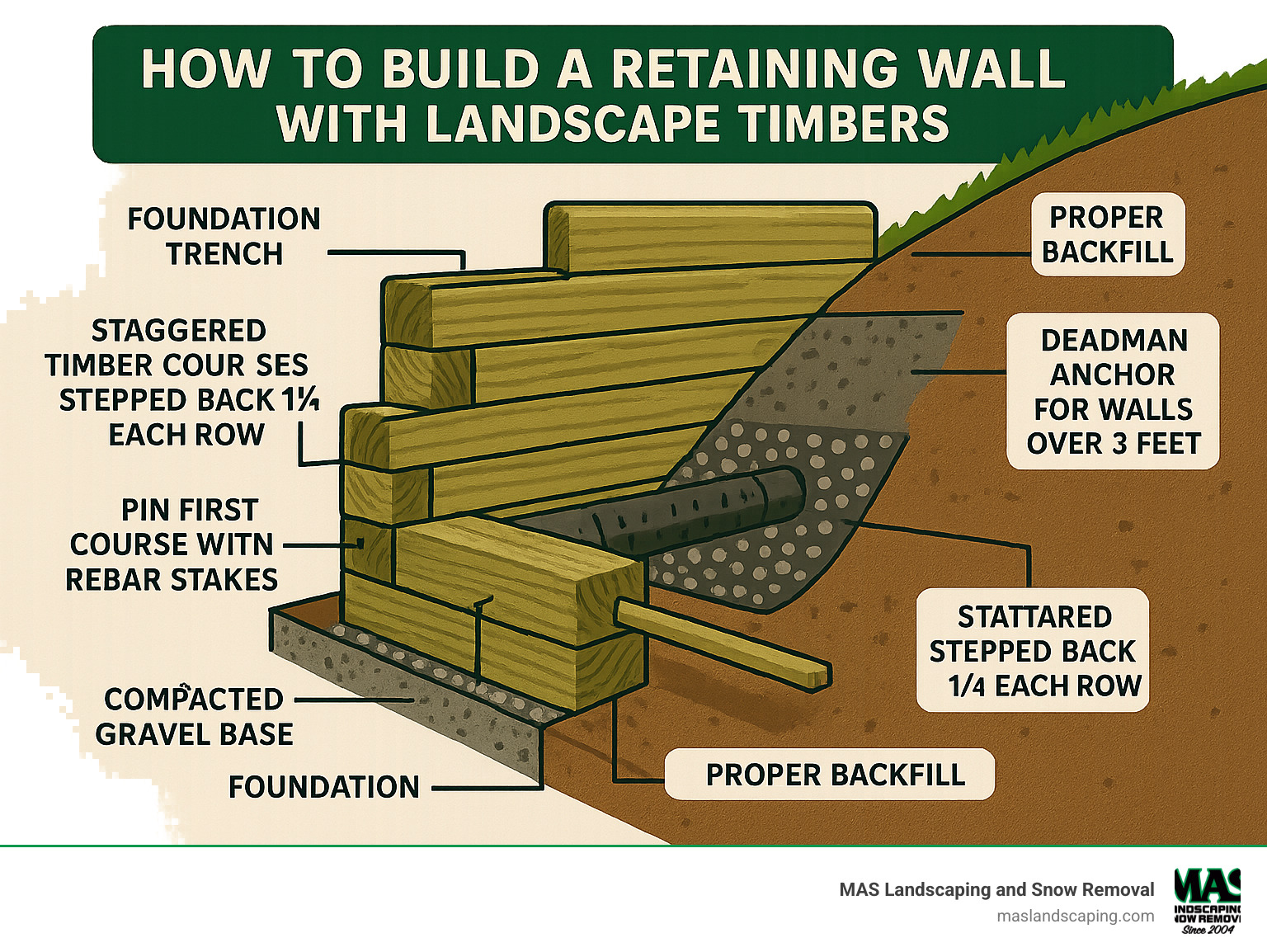
Simple guide to how to build a retaining wall with landscape timbers:
Essential Planning and Preparation
Proper planning is the groundwork for success. Getting these details right from the start will save you headaches later on.
Project scope is your first consideration. Define the purpose: are you creating terraced garden beds, stopping erosion, or carving out space for a patio? The goal drives wall height and material choices, as a decorative border requires less engineering than a structural wall.
Site selection is key. Walk the area and visualize the finished wall. Consider how water flows during heavy rains, where you’ll access the work site with materials, and how the wall will look from different vantage points.
Checking for underground utilities is not optional. Before digging, call 811 (or your local utility marking service). Hitting a gas line or electrical cable is dangerous and expensive. Utility companies typically mark lines for free.
Assessing soil conditions is straightforward. Dig an 18-inch test hole where your wall will go. Sandy soil drains well but is loose. Clay soil holds its shape but can become waterlogged. Rocky soil provides stability but makes digging difficult. Very loose or unstable soil might need professional evaluation.
Wall height and length calculations determine your material needs. Measure carefully and add 10% extra materials. Walls over 4 feet tall typically require permits and professional engineering.
Different timber sizes serve different purposes in how to build a retaining wall with landscape timbers projects:
| Timber Size (Nominal) | Typical Use | Notes |
|---|---|---|
| 4×4 inches | Smaller borders, low garden beds, decorative elements | Lighter duty, less structural for retaining soil |
| 6×6 inches | Standard retaining walls, raised beds, steps, fence posts | Common for most DIY retaining walls up to 3-4 feet |
| 8×8 inches | Heavier duty retaining walls, structural supports | For taller or more demanding retaining applications |
Choosing the Right Materials
The right materials determine if your wall lasts for decades. Pressure-treated lumber is essential for this project, as regular lumber will rot quickly when buried in soil.
Look for timbers with a ground-contact rating of .40 or higher. This number indicates the level of chemical treatment for protection against rot and insects. The lumber should have a stamp showing this rating. For code compliance details, check the American Wood Protection Association guidelines.
Avoid using railroad ties. They are often treated with creosote, a hazardous chemical that is messy, smells unpleasant, and can leach into your soil.
Beyond timbers, you’ll need 3/4″ crushed stone for your foundation and backfill, a 4-inch perforated drain pipe to channel water away, and non-woven filter fabric. The fabric is essential to prevent soil from clogging your drainage system. You’ll also need heavy-duty fasteners like exterior-grade screws or galvanized spikes that won’t rust.
Gathering Your Tools
Having the right tools makes the project smoother. You will need a shovel (a trenching shovel is great for precision), a level (4-foot and 2-foot), and a hand tamper for compacting gravel. A drill with an auger bit and a hammer drill attachment will make drilling easier.
For cutting, a circular saw or chainsaw will work. A sledgehammer is needed for driving rebar and spikes. Don’t forget a tape measure, marking paint, a string line with stakes, and a wheelbarrow.
Finally, invest in proper safety gear: work gloves, safety glasses, and steel-toed boots are essential when handling heavy timbers and tools.
When to Call a Professional
Some situations require professional expertise. We strongly recommend keeping DIY timber walls under 4 feet tall. Above that height, the soil pressure becomes immense and requires engineering knowledge. Most municipalities also require permits for taller walls.
Complex slopes, poor soil conditions (like expansive clay or loose sand), and permit requirements are other reasons to call a professional. Permit rules vary, but many areas require them for walls over 3-4 feet or near property lines. Check local resources like Fairfax County’s permit requirements for examples.
Based on average internet data, professional installation can range from $15 to $90 per square foot. These are general estimates, not actual costs for MAS Landscaping, and vary based on wall height, site access, and complexity.
Step-by-Step: How to Build a Retaining Wall with Landscape Timbers
This section details the three main construction phases. Patience and precision are key, as each step builds on the last.
Step 1: Site Excavation and Trenching
Start by marking the wall’s path using marking paint and a taut string line between stakes. This line will guide the front face of your wall.
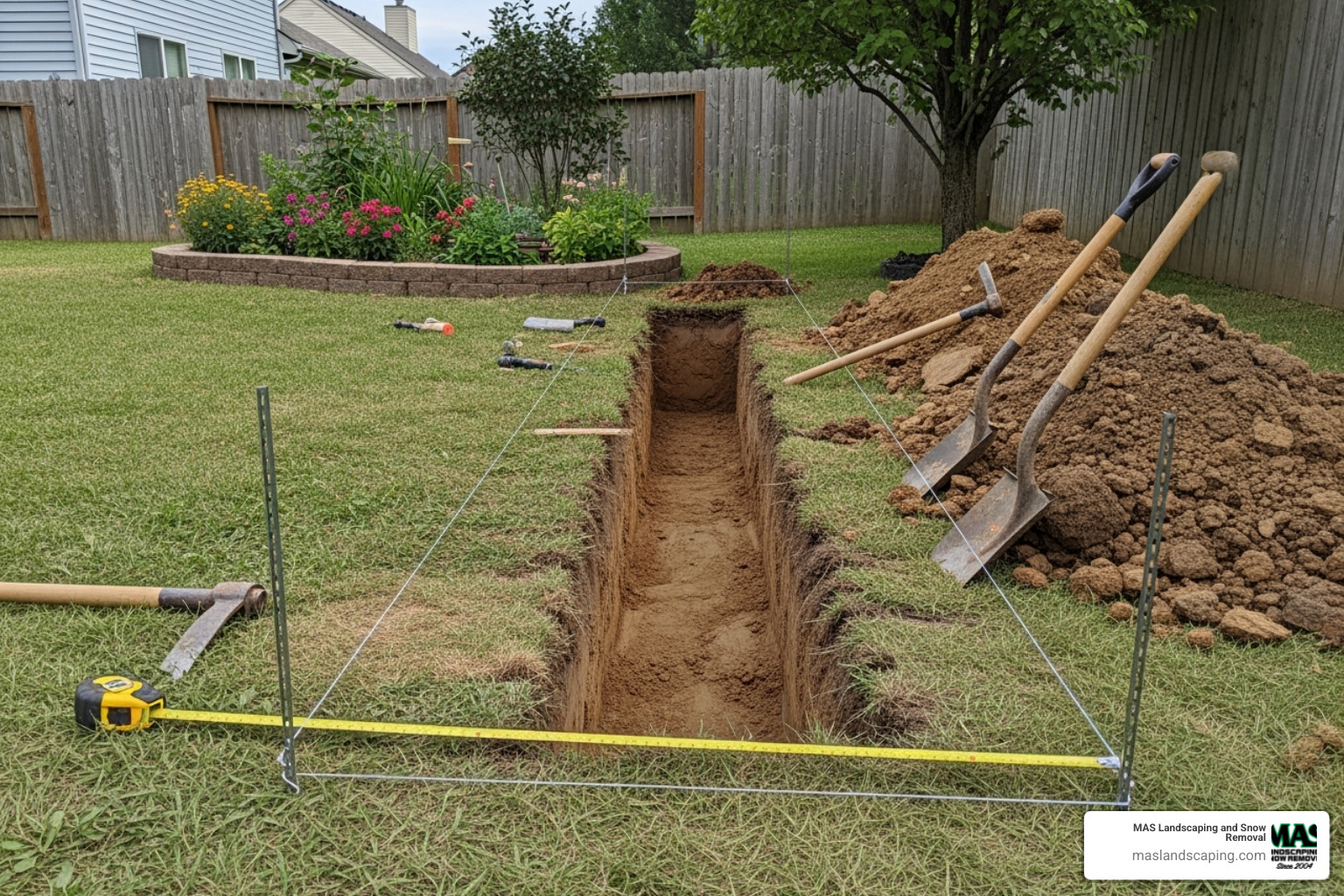
On a slope, you must cut back into the hillside. A good rule is to cut back a distance equal to the wall’s height. A 3-foot wall requires excavating about 3 feet back, providing room to work and install drainage.
For larger projects, renting a mini skid steer can be a back-saver. If you’re in the Saugus area, our bobcat services can handle the heavy lifting.
Next, dig the foundation trench 8 inches deep and at least 16 inches wide. This accommodates the timbers and the gravel base. Once the trench is dug, compact the bottom thoroughly with a hand tamper. A solid, level foundation prevents settling and shifting later.
Step 2: Setting a Stable First Course
The first course of timbers is critical for the wall’s long-term stability. Begin by spreading 2-3 inches of 3/4″ crushed gravel evenly in the trench. Rake it smooth, then use the hand tamper to compact it until it’s rock-solid.
Now, lay the first timber on the compacted gravel. Use a long level to ensure it is perfectly level. If it’s off, add or remove small amounts of gravel until it’s exact. An unlevel first course cannot be fixed later, as the error will multiply with each subsequent course.
To secure the timber, drill 1/2-inch holes every 2 feet and 6-12 inches from each end. Drive 3 to 4-foot lengths of rebar through these holes deep into the soil. A sledgehammer works, but a drill with a ground rod driver attachment can make the job easier.
Step 3: Building Up and Fastening Subsequent Courses
With a solid foundation, you can begin stacking the timbers. The golden rule is to stagger the joints. Never line up the ends of timbers vertically. Instead, offset each joint by at least 4 inches to create a strong, interlocked structure.
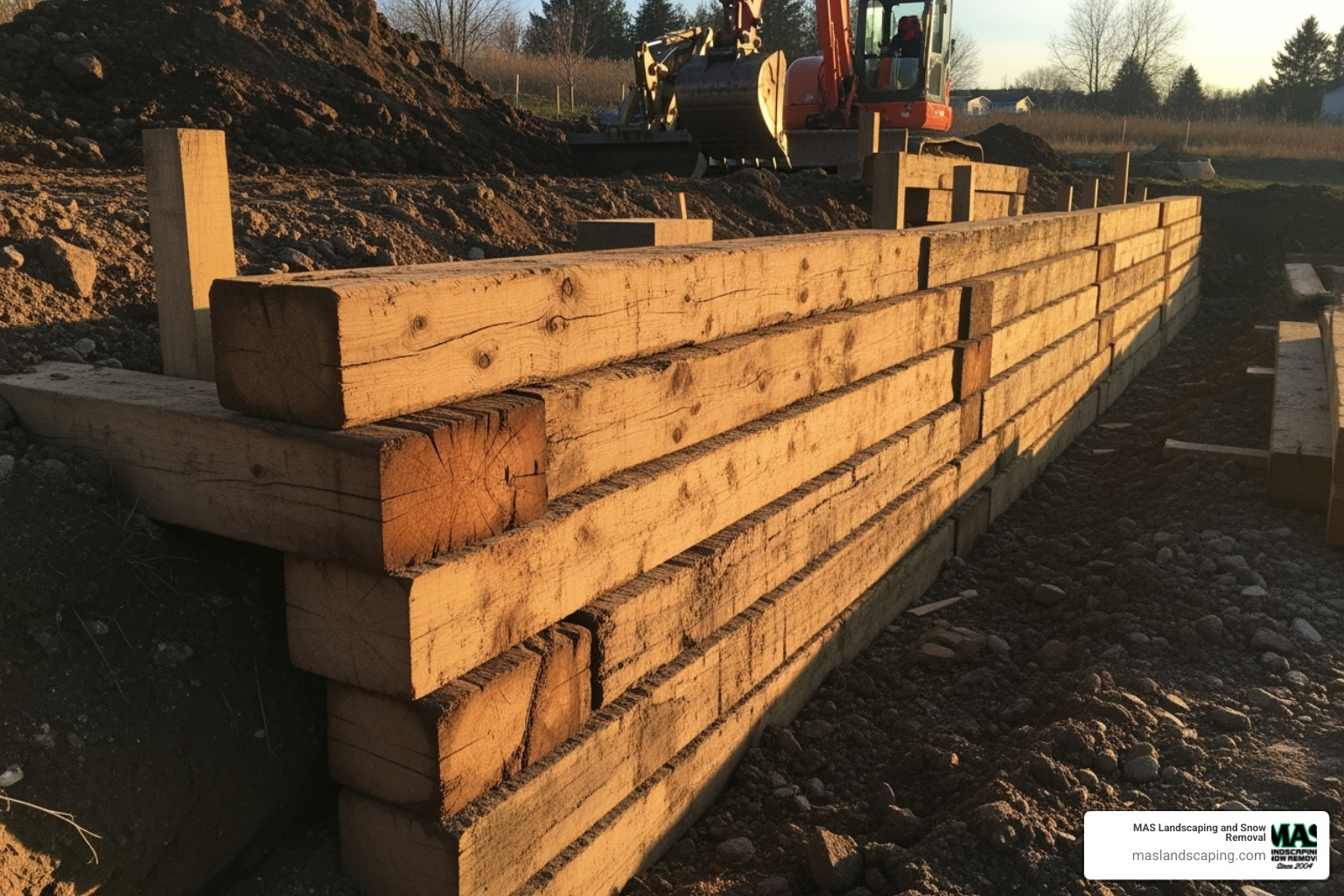
Another key technique is battering, which means stepping each course back slightly. Set each new timber back about 1/4 to 1/2 inch from the course below. This backward lean helps the wall resist soil pressure.
For fastening, use 10-inch timber screws or 10-inch galvanized spikes. Place fasteners every 2 feet to lock each timber to the course below.
Whenever you cut a timber, the exposed end is vulnerable to rot. Paint each cut end generously with a wood preservative to seal and protect it. This small step adds years to your wall’s life.
Reinforcing Your Wall for Maximum Strength
Proper reinforcement is the secret to how to build a retaining wall with landscape timbers that lasts. This means providing excellent drainage and strategic anchoring to withstand the immense pressure of soil and water.
How to build a retaining wall with landscape timbers that lasts: The Importance of Drainage
Water trapped behind a wall creates hydrostatic pressure, a powerful force that can cause even well-built walls to fail. A proper drainage system is essential.
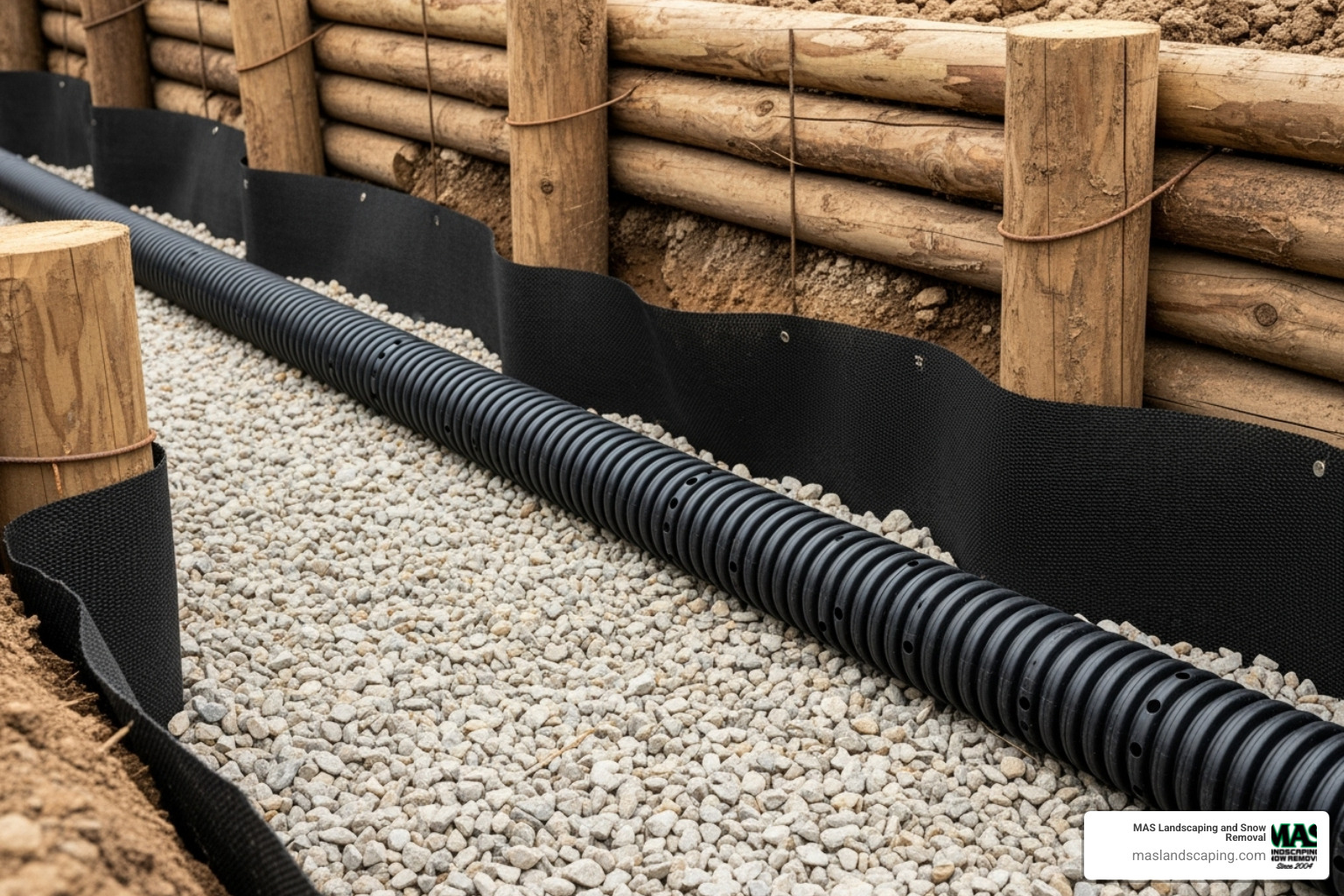
After setting the first course, install a 4-inch perforated drain pipe on a thin bed of gravel behind the wall. The pipe must slope gently—about 1 inch for every 4 feet—toward a safe exit point where water can flow away.
Next, use non-woven filter fabric. Spread it under the pipe and up the back of the hillside. Backfill around and over the pipe with clean 3/4″ gravel, then wrap the filter fabric over the top of the gravel. This fabric barrier prevents soil from migrating into the gravel and clogging the drainage system, which would render it useless.
Incorporating “Deadmen” Anchors for Support
When your wall reaches 2-3 feet in height, it needs reinforcement from “deadmen” anchors. These are T-shaped timber anchors that tie the wall back into the stable hillside behind it.
A deadman is constructed from a timber laid perpendicular to the wall, with a shorter timber fastened to its end to form a ‘T’. This anchor is then buried in the hillside.
The deadman’s length should match your wall’s height. A 4-foot wall requires 4-foot deadmen to reach back into undisturbed soil, beyond the unstable soil wedge pushing against the wall.
Space these anchors every 6 to 8 feet horizontally along the wall and on every second or third course vertically. This creates a balanced support network that distributes soil pressure evenly.
To install deadmen, dig individual trenches back into the hillside, level with the timber course. Set each deadman level and square, then secure it to the wall with heavy-duty timber screws or spikes. For extra holding power, you can drive rebar through the end of the deadman deep into the undisturbed soil.
Finishing Touches and Long-Term Maintenance
The final steps ensure your wall is strong, looks great, and lasts for years. This involves proper backfilling, grading, and ongoing maintenance.
Backfilling and Final Grading
Once the timber courses and deadmen are installed, it’s time to backfill. Start by using clean 3/4″ gravel to fill the space behind the wall up to the top of your wrapped drainage pipe. This gravel zone is the wall’s defense against water damage.
Above the gravel, use the excavated soil or fresh topsoil. Backfill in layers, or “lifts,” of 6 to 8 inches at a time. Compact each layer thoroughly with a hand tamper before adding the next. This prevents future settling.
For a polished look, consider capping the wall with a wider timber on the top course. This creates a nice sitting surface and gives the wall a finished appearance.
Finally, grade the topsoil behind and in front of the wall so it slopes gently away from the timbers. This positive drainage prevents water from pooling against the wall.
When planting, choose grass or small plants. Avoid large trees or shrubs too close to the wall, as their roots can create pressure over time. For help with ongoing care, consider our landscape maintenance services.
How to build a retaining wall with landscape timbers for longevity: Maintenance Tips
With proper care, your timber wall can last 10-20 years.
Annual inspections are key. Each spring, walk along the wall and look for signs of shifting, bulging, rot, or insect damage. Catching issues early saves you from major repairs later.
Cleaning the timbers with a brush and mild soap solution removes accumulated dirt and mildew, restoring the look and helping you spot problems.
If you applied protective sealants or stains, reapply them every few years, especially on cut ends, to protect against moisture and UV damage.
Most importantly, keep the drainage system clear. Periodically check the pipe’s exit point for blockages from leaves or debris. A healthy drainage system is the single most important factor in your wall’s longevity.
Frequently Asked Questions about Timber Retaining Walls
Here are answers to some of the most common questions about how to build a retaining wall with landscape timbers.
What is the cheapest way to build a retaining wall?
Pressure-treated wood is often the most budget-friendly option for a DIY retaining wall. Material costs are significantly lower than concrete blocks or natural stone, and by building it yourself, you save on labor costs. While poured concrete might seem inexpensive, it typically requires professional installation, which increases the total cost. A DIY timber wall can cost roughly half of what you might pay for other professionally installed materials.
How high can you build a landscape timber retaining wall?
For DIY projects, we strongly recommend keeping timber retaining walls under 4 feet in height. This is a common threshold where most building codes begin to require permits and professional engineering. As walls get taller, the soil pressure behind them increases dramatically, requiring specialized engineering to ensure safety. For any wall higher than 4 feet, it’s best to call in professionals.
Do all wood retaining walls need drainage?
Yes, absolutely. Proper drainage is critical for every retaining wall, especially those made of timber. Without it, water builds up behind the wall, creating hydrostatic pressure. This force can cause the wall to bulge, shift, or completely fail. Water also accelerates wood rot, even in pressure-treated timbers. The drainage system—with its perforated pipe, gravel, and filter fabric—is not optional; it’s essential for the wall’s stability and lifespan. If you’re in the Saugus area and want to ensure your project is done right, our team at MAS Landscaping has the experience to help.
Your New Retaining Wall
Building a timber retaining wall is a rewarding DIY project that creates a beautiful and functional landscape feature. You’ve turned an unusable slope into something valuable.
Your new wall controls erosion and creates level, functional space for a garden or patio, adding both practical value and curb appeal to your property. The skills you’ve learned—from leveling to understanding drainage and reinforcement—will serve you well in future outdoor projects.
Proper maintenance is key to ensuring your wall serves you for its entire 10-20 year lifespan. Annual inspections and drainage checks are small investments that will keep your wall performing flawlessly. The drainage system you installed is the most critical component, preventing the hydrostatic pressure that can destroy retaining walls.
For more complex projects—walls over 4 feet tall, challenging soil conditions, or steep slopes that require professional engineering—or if you’re in the Saugus, MA area and prefer to leave it to the experts, MAS Landscaping and Snow Removal is ready to help. We serve clients throughout Everett, Lynnfield, Malden, Melrose, Medford, Revere, Saugus, and Chelsea, MA, bringing local expertise and personalized service to every project. Contact us for professional retaining wall installation and let us put our experience to work for you.