




How to get additional nutrients into your plants: 8 Ways to Thrive
Why Your Plants Need More Than Water and Sunlight
How to get additional nutrients into your plants is simpler than you might think. The key is to test your soil, choose the right fertilizer (organic or synthetic), and apply it correctly. You can even use quick boosters you can use today like cooled pasta water, banana peels, or coffee grounds.
Did you know plants can get “hangry”? When they lack proper nutrition, they show it with yellow leaves, stunted growth, or weak stems—clear signals they need more than just water and sunlight.
Plants require 17 essential nutrients. While three come from air and water, the other 14 must come from the soil. This is where many gardeners face challenges, but adding nutrients doesn’t have to be complicated or expensive. Whether you’re growing vegetables or maintaining flower beds around your Greater Boston property, understanding what your plants need makes all the difference between a struggling garden and a thriving one.
Understanding Plant Nutrition: The Building Blocks of Health
To understand how to get additional nutrients into your plants, you need to know what they are and what they do. Without the right nutritional balance, your garden won’t thrive, no matter how much you water it.

What are the Essential Nutrients for Plants?
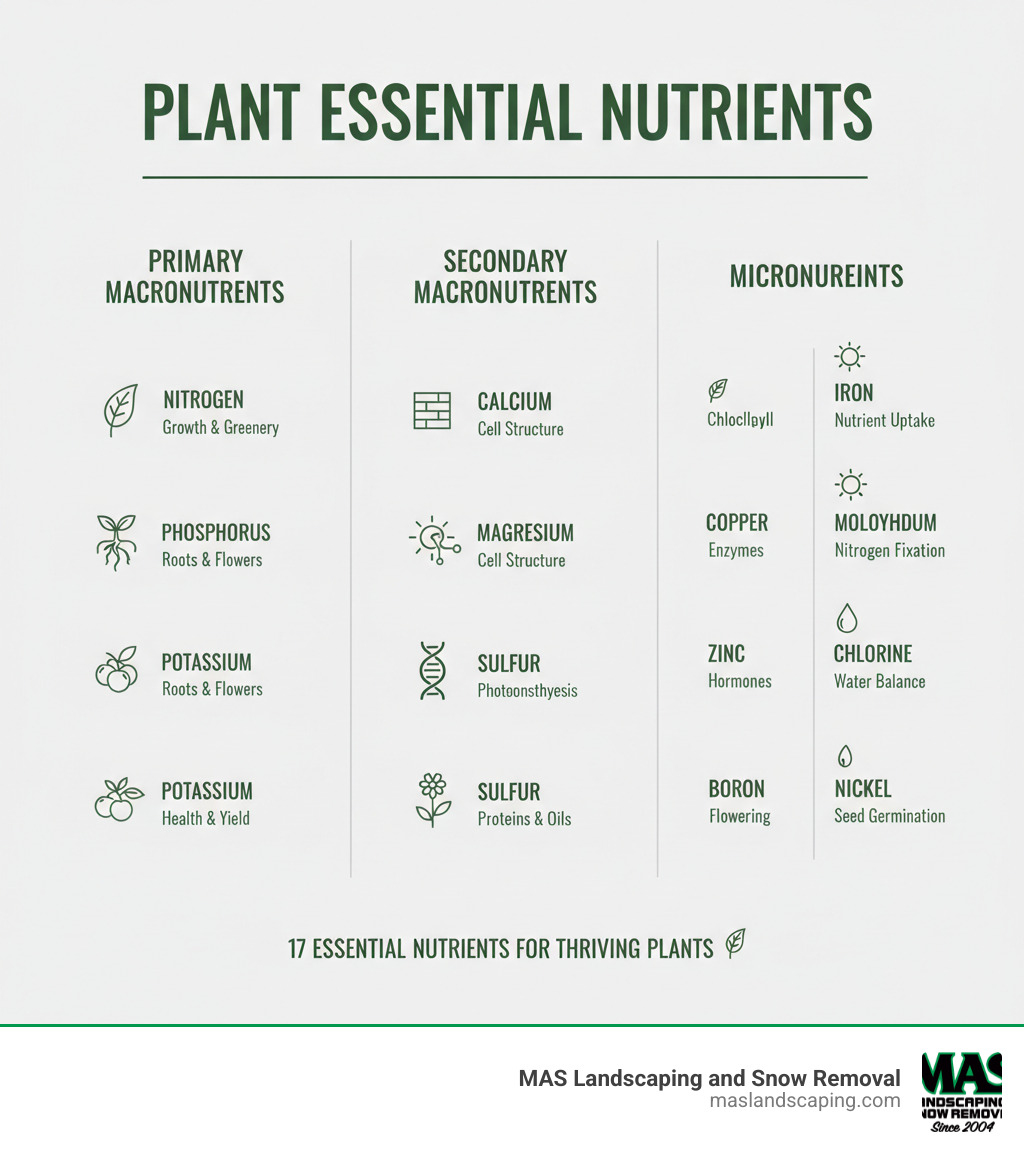
Plants need 17 essential nutrients, which fall into two categories: macronutrients (needed in larger amounts) and micronutrients (needed in tiny amounts).
Primary Macronutrients (The Big Three):
- Nitrogen (N): For lush, green foliage. A lack of it causes pale, stunted plants.
- Phosphorus (P): For strong roots, flowers, and fruit. Deficiency can lead to weak seedlings or a purplish tint on leaves.
- Potassium (K): Boosts disease resistance and strengthens stems. Deficiency often appears as browning on older leaf edges.
Secondary Macronutrients:
- Calcium (Ca): Builds strong cell walls. A lack of it can cause blossom end rot on tomatoes.
- Magnesium (Mg): Key for photosynthesis. Deficiency causes yellowing between leaf veins.
- Sulfur (S): Helps create proteins for growth. Deficiency leads to spindly plants.
Micronutrients like Iron, Copper, and Zinc are also vital in small doses for functions like enzyme activity and chlorophyll formation.
Decoding Fertilizer Labels: What the NPK Ratio Means
The three numbers on a fertilizer bag are the NPK ratio, representing the percentage by weight of Nitrogen (N), Phosphorus (P), and Potassium (K). A 10-10-10 fertilizer is balanced, containing 10% of each.
- A 20-5-5 fertilizer is high in nitrogen, great for lawns and leafy greens.
- A 5-10-5 blend is high in phosphorus, ideal for flowers and root development.
- A 5-5-10 mix with more potassium boosts overall plant health and disease resistance.
Understanding this ratio helps you choose the right product for your plant’s specific needs. For more on the history of fertilizers, see A Historical Overview of Fertilizer Use.
Recognizing the Signs: Is Your Plant Hungry?
Plants show you when they’re hungry. Learning these visual cues helps you diagnose problems and understand how to get additional nutrients into your plants.
- Yellow leaves: All-over yellowing on older leaves suggests nitrogen deficiency. Yellowing between green veins points to magnesium deficiency.
- Stunted growth: Slow, weak growth with small leaves often indicates a phosphorus or sulfur deficiency.
- Brown leaf edges: Crispy, brown edges on older leaves typically signal potassium deficiency.
- Weak stems & blossom drop: This often means a calcium deficiency.
- Unusual coloring: A purplish tint on leaves is a classic sign of phosphorus deficiency.
That overwatering can also cause wilting and prevent nutrient uptake. In Greater Boston’s climate, cold springs can slow phosphorus uptake, so understanding these signs is key for local gardeners.
How to Get Additional Nutrients into Your Plants: A Practical Guide
Now let’s dive into the practical steps for providing your plants with essential nutrients. This involves a bit of detective work to investigate what’s missing, then choosing the right tools for the job.
First, Test Your Soil to Identify Deficiencies
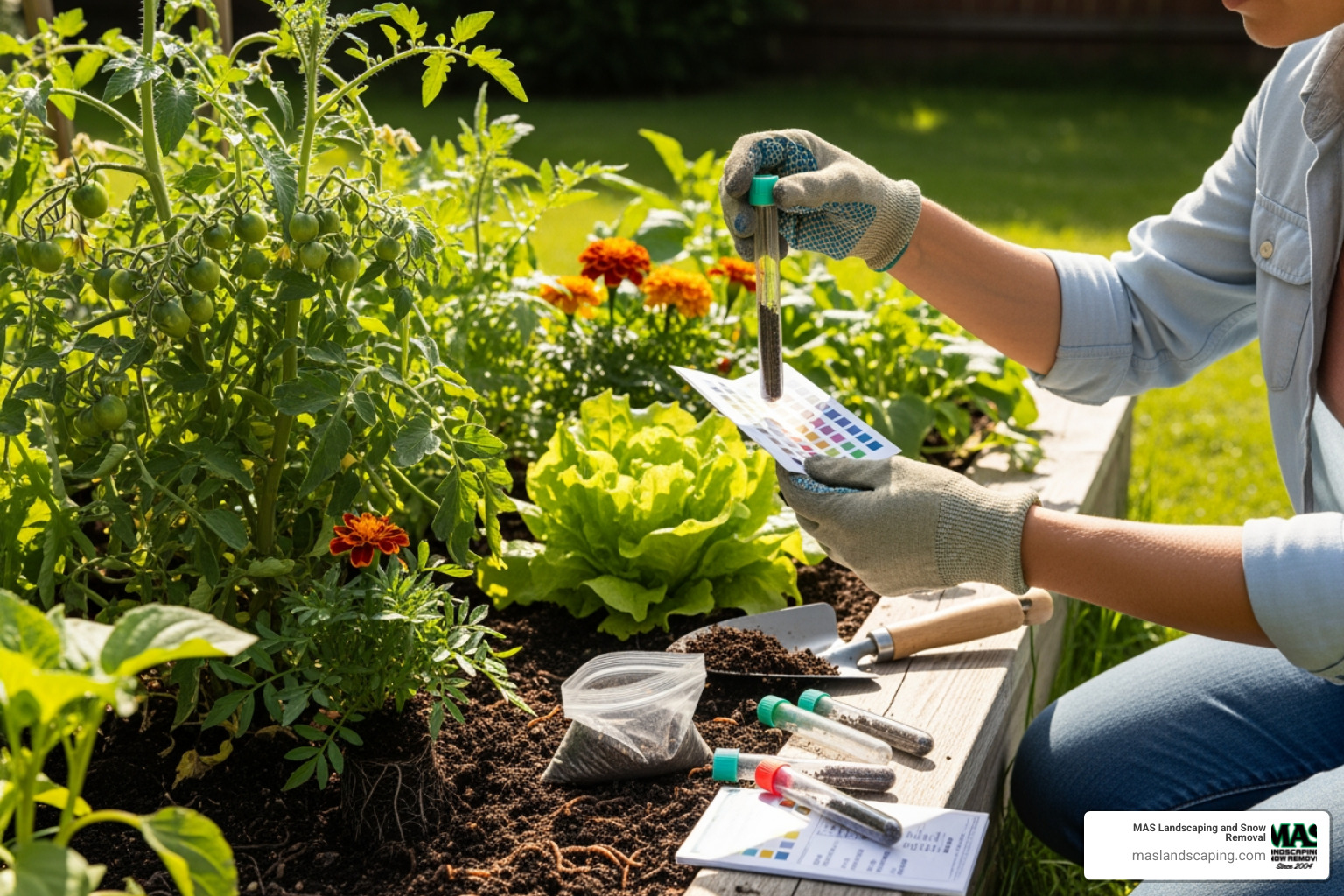
Before adding anything to your garden beds in Everett or Malden, test your soil. This crucial step saves money and prevents misapplication by revealing exactly what nutrients are missing. It takes the guesswork out of how to get additional nutrients into your plants.
Soil pH is also critical. If the pH is too high or low (most plants prefer 5.5-7.0), nutrients can become “locked up” and unavailable to your plants.
- Home testing kits from garden centers offer a quick snapshot of pH and NPK levels. You can also try DIY methods to test pH and texture, as shown in this guide on how to test soil for nutrients without a kit.
- Professional lab analysis provides a complete picture. Services are available through university extensions like the University of Minnesota’s Soil Testing Laboratory or local labs in Massachusetts. They provide specific recommendations based on your soil’s composition.
With test results, you can fertilize with confidence, knowing you’re giving your soil exactly what it needs.
Choosing Your Tools: Organic vs. Synthetic Fertilizers
You have two main choices for feeding plants: organic or synthetic fertilizers. Each has its place in the garden.
- Organic fertilizers (compost, manure) are derived from natural sources. They release nutrients slowly, improving soil structure and health over time. They are gentle on plants but act slowly.
- Synthetic fertilizers are manufactured chemical compounds that provide nutrients in a concentrated, fast-acting form. They are great for a quick fix but don’t improve long-term soil health and carry a higher risk of burning plants or causing water runoff if over-applied.
Here’s a quick comparison:
| Feature | Organic Fertilizers | Synthetic Fertilizers |
|---|---|---|
| Nutrient Release | Slow (weeks to months) | Fast (days to weeks) |
| Soil Health | Improves structure & microbes | No long-term benefit |
| Environmental Risk | Low | Higher (runoff risk) |
| Burn Risk | Low | High if over-applied |
Many gardeners, including professionals at MAS Landscaping, use a hybrid approach: build soil with organic matter and use synthetics for a quick boost when needed. For more details, see Here’s the scoop on chemical and organic fertilizers.
How Often Should You Fertilize Your Plants?
Fertilizing frequency depends on the plant, the season, and the type of fertilizer. Understanding how to get additional nutrients into your plants means knowing when to feed them.
In the Greater Boston area, fertilize during the spring and summer growing season. Reduce or stop in fall and winter when plants are dormant.
- Indoor Plants: Feed most houseplants monthly with a diluted liquid fertilizer during the growing season. Cacti and succulents need feeding only once or twice a year.
- Vegetable Gardens & Annuals: These heavy feeders need nutrients about once a month during the growing season.
- Perennials, Trees & Shrubs: A single spring feeding is often enough, especially in healthy soil. Wait to fertilize newly planted trees and shrubs until they are established.
- Lawns: In Massachusetts, spring and fall applications are typically best.
The golden rule is to under-fertilize rather than over-fertilize. Watch your plants for signs of hunger (yellowing leaves) or overfeeding (burned tips).
DIY Plant Food: 8 Natural Ways to Nourish Your Garden
Your kitchen is likely full of natural fertilizers you’ve been tossing in the trash. These everyday items can become powerful plant food, giving you a practical answer to how to get additional nutrients into your plants while saving money and reducing waste.
How to get additional nutrients into your plants with Cooking Water
Don’t pour that cooking water down the drain! Once cooled, it’s a free nutrient boost for your plants.
- Pasta water: Contains starches, phosphorus, nitrogen, and potassium.
- Vegetable water: Rich in vitamins and minerals like phosphorus, nitrogen, and calcium.
- Egg boiling water: Provides calcium that strengthens cell walls and can help prevent blossom end rot in tomatoes and peppers.
Important: Always let the water cool to room temperature before using it on plants, and make sure it’s unsalted.
How to get additional nutrients into your plants with Household Scraps
Many kitchen scraps can be turned into cost-effective, natural fertilizer.
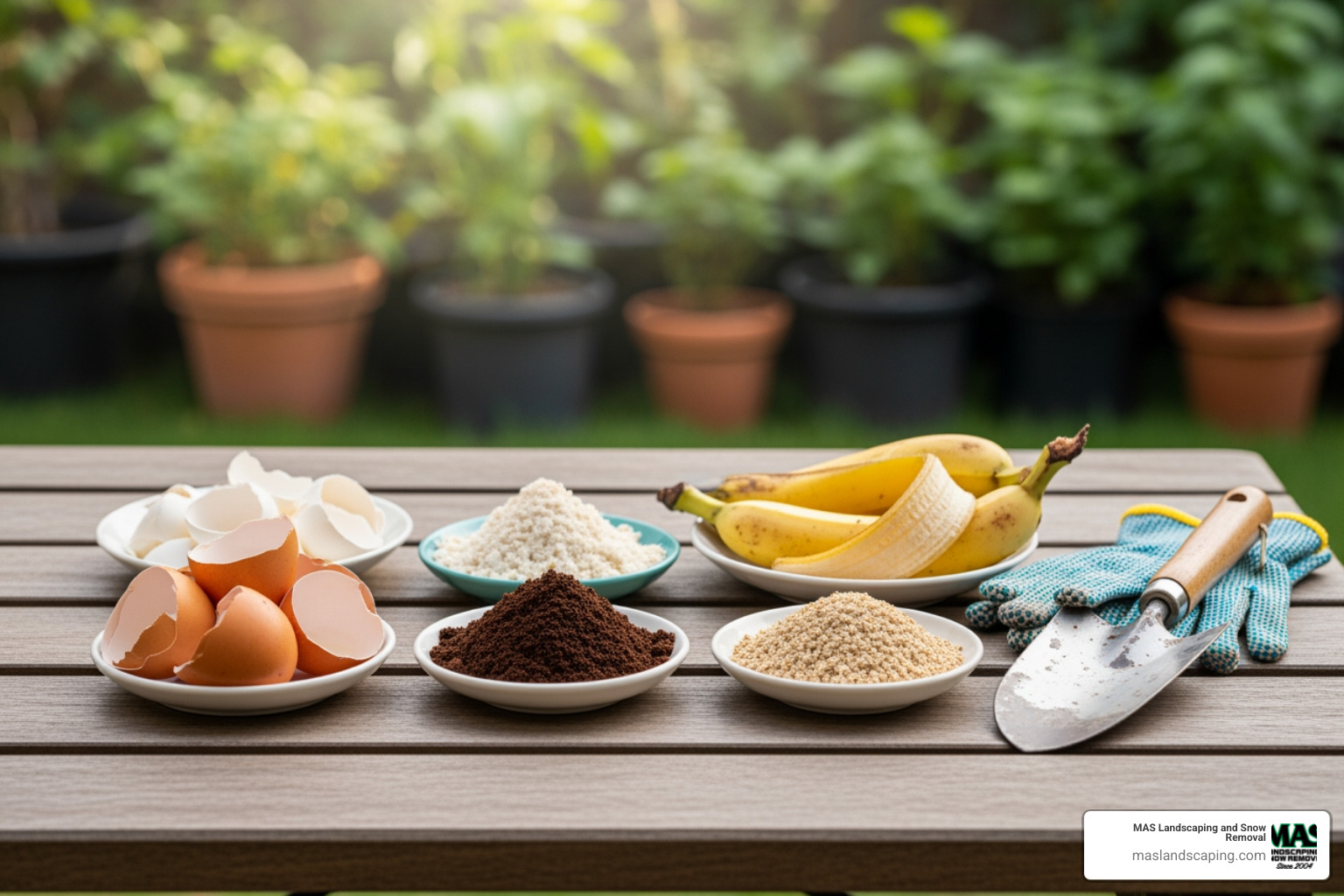
- Banana peels: A great source of potassium for flowering and fruiting plants. Chop and bury them in the soil or make a “banana tea” by steeping them in water.
- Coffee grounds: Provide a nitrogen boost and are great for acid-loving plants like blueberries and azaleas. Use in moderation by sprinkling on the soil.
- Eggshells: Rich in calcium. Crush them and work them into the soil to prevent blossom end rot and strengthen plants.
- Epsom salt: This magnesium sulfate provides magnesium and sulfur, boosting chlorophyll production. Dissolve a tablespoon in water for your plants.
- Wood ash: Contains potassium and raises soil pH. Use sparingly and keep it away from acid-loving plants.
- Grass clippings: A nitrogen-rich mulch. Use a thin layer from an untreated lawn.
- Dead leaves: Excellent as mulch for long-term soil health. They slowly decompose, releasing nutrients and improving soil structure.
- Expired animal food: Old kibble contains NPK. Work small amounts into the soil, but be aware it may attract wildlife.
Using these scraps is a great way to understand how to get additional nutrients into your plants while reducing waste.
Safety First: Precautions for Using Plant Food
Whether you’re using store-bought fertilizer or a DIY solution, understanding the potential risks is just as important as knowing how to get additional nutrients into your plants. You can have too much of a good thing.
The Dangers of Too Much Fertilizer
Over-fertilizing is a common mistake that can cause serious harm. More is not better.
- Nutrient Burn: Concentrated salts in synthetic fertilizers can pull water from roots, causing dehydrated plants with brown, crispy leaf tips.
- Root Damage: High fertilizer concentrations can directly harm or kill roots, preventing them from absorbing water and nutrients.
- Water Pollution: Excess nutrients can wash into local Massachusetts waterways, fueling harmful algal blooms that disrupt aquatic ecosystems.
- Wasted Money: Applying more fertilizer than plants can use is simply a waste.
Always follow package directions. When in doubt, use less. It’s easier to add more later than to fix the damage from over-fertilizing.
Precautions for Homemade Plant Food
DIY plant foods are great, but follow these precautions to ensure they help, not harm, your garden.
- Use unsalted cooking water. Salt builds up in soil and can become toxic to plants.
- Never use dog or cat feces. Unlike manure from herbivores, pet waste contains harmful pathogens that can contaminate your soil and vegetables. Learn more about what not to compost, including why you should never use dog or cat feces as fertilizer.
- Prevent mold and pests. Bury kitchen scraps a few inches in the soil or add them to a compost pile to avoid attracting pests and mold. Always use cooled cooking water.
- Test on a small area first. Before applying a new homemade solution to your whole garden, test it on a single plant and wait a week or two to observe the effects.
These simple steps will help you safely figure out how to get additional nutrients into your plants using homemade solutions.
Frequently Asked Questions about Plant Nutrients
Here are some common questions we get from clients in Everett, Lynnfield, and Malden about how to get additional nutrients into your plants.
Are fertilizer and plant food the same thing?
Yes, “plant food” and “fertilizer” are essentially the same thing. “Plant food” is a casual term for fertilizer, which is any substance that provides essential nutrients for plant growth.
Technically, plants make their own food through photosynthesis. Fertilizers provide the raw materials (nutrients) they need for this process, much like a cook needs ingredients to make a meal.
Can you over-fertilize with organic options like compost?
Yes, it is possible to over-fertilize with organic options. While they have a much lower risk of burning plants due to their slow-release nature, excessive amounts can still cause problems.
Too much compost or manure can lead to nutrient imbalances in the soil over time (e.g., excess phosphorus). Piling organic matter too high against plant stems can also trap moisture, promote rot, and attract pests. Use organic amendments in moderation.
How quickly will I see results after feeding my plants?
The time it takes to see results depends on the fertilizer type and the plant’s condition.
- Synthetic fertilizers are fast-acting. You can often see improvements in a plant with a nutrient deficiency within a few days to a week.
- Organic fertilizers are slow-release. They must be broken down by soil microbes, so results may take several weeks to months. They provide sustained feeding and improve long-term soil health.
A severely deficient plant will show improvement more quickly than one with a mild deficiency. Patience is key, especially when using organic methods to learn how to get additional nutrients into your plants.
Nurture Your Garden to Its Full Potential
You now have a roadmap for how to get additional nutrients into your plants, from decoding NPK ratios to using pasta water as a plant boost.
The most important takeaway is to start with a soil test. This eliminates guesswork, saves money, and ensures you give your plants exactly what they need. From there, you can choose the right tool for the job, whether it’s fast-acting synthetic fertilizers, soil-building organic amendments, or a combination of both.
Don’t forget your kitchen scraps! Banana peels, coffee grounds, and cooled cooking water can make a real difference while reducing waste.
Healthy soil is the foundation of a thriving garden. Building rich, living soil makes your plants more resilient, productive, and easier to maintain. At MAS Landscaping and Snow Removal, we’ve seen how proper nutrition transforms landscapes across Everett, Malden, and Lynnfield. A well-fed garden is healthier and better equipped to handle New England weather.
Ready to take your landscape to the next level? We can help you create an outdoor space that’s not just beautiful, but thriving. Learn More info about landscaping and design services and let’s build the garden of your dreams.
