


Why Knowing How Long to Wait to Seal Pavers After Polymeric Sand Can Make or Break Your Project
Knowing how long to wait to seal pavers after polymeric sand is one of the most important — and most overlooked — steps in any paver project.
Quick Answer: How Long to Wait to Seal Pavers After Polymeric Sand
| Scenario | Minimum Wait Time |
|---|---|
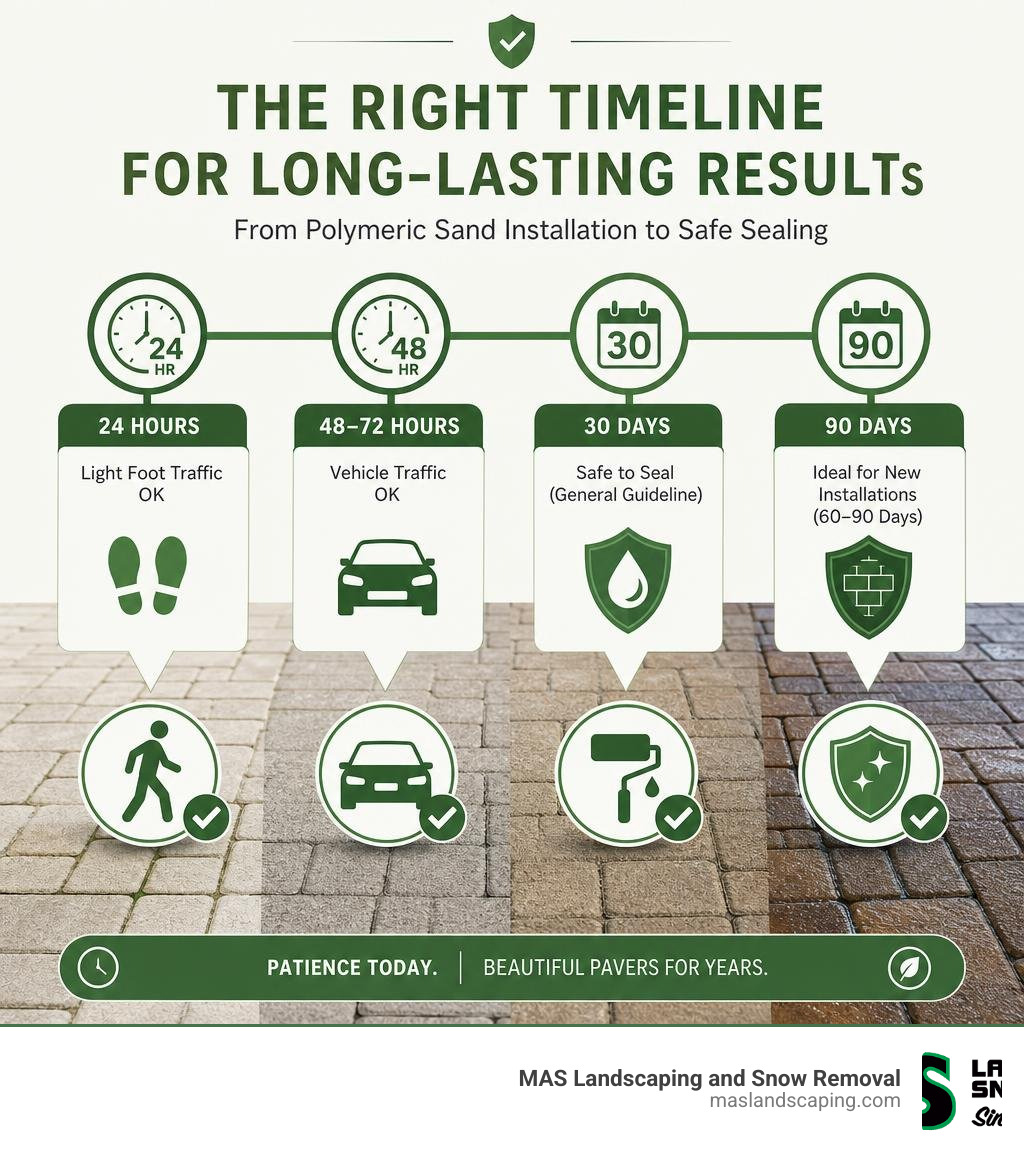
| Light foot traffic after polymeric sand | 24 hours |
| Vehicle traffic after polymeric sand | 48-72 hours |
| Sealing after polymeric sand (general guideline) | 30 days |
| Sealing new concrete pavers (manufacturer standard) | 60-90 days |
| Sealing after polymeric sand on new installation | 90 days recommended |
The short version: wait at least 30 days before sealing in most cases. For brand-new paver installations, many manufacturers recommend waiting 60 to 90 days to allow efflorescence to work its way out and the concrete to fully cure.
More than 70% of DIY enthusiasts choose polymeric sand for paver projects — and for good reason. It locks joints, blocks weeds, and keeps pavers stable for years. But here’s the problem: nearly 40% of DIY sealing jobs fail because homeowners seal too soon.
Rushing this step traps moisture under the sealer. That leads to hazy, cloudy pavers, weakened joints, and a sealing job that peels or fails within months. Patience here isn’t just a virtue — it’s the difference between a patio that looks great for years and one that needs expensive repairs.
This guide walks you through exactly how long to wait, what factors change that timeline, and how to seal your pavers correctly the first time.
Important how long to wait to seal pavers after polymeric sand terms:
What is Polymeric Sand and How Does It Work?
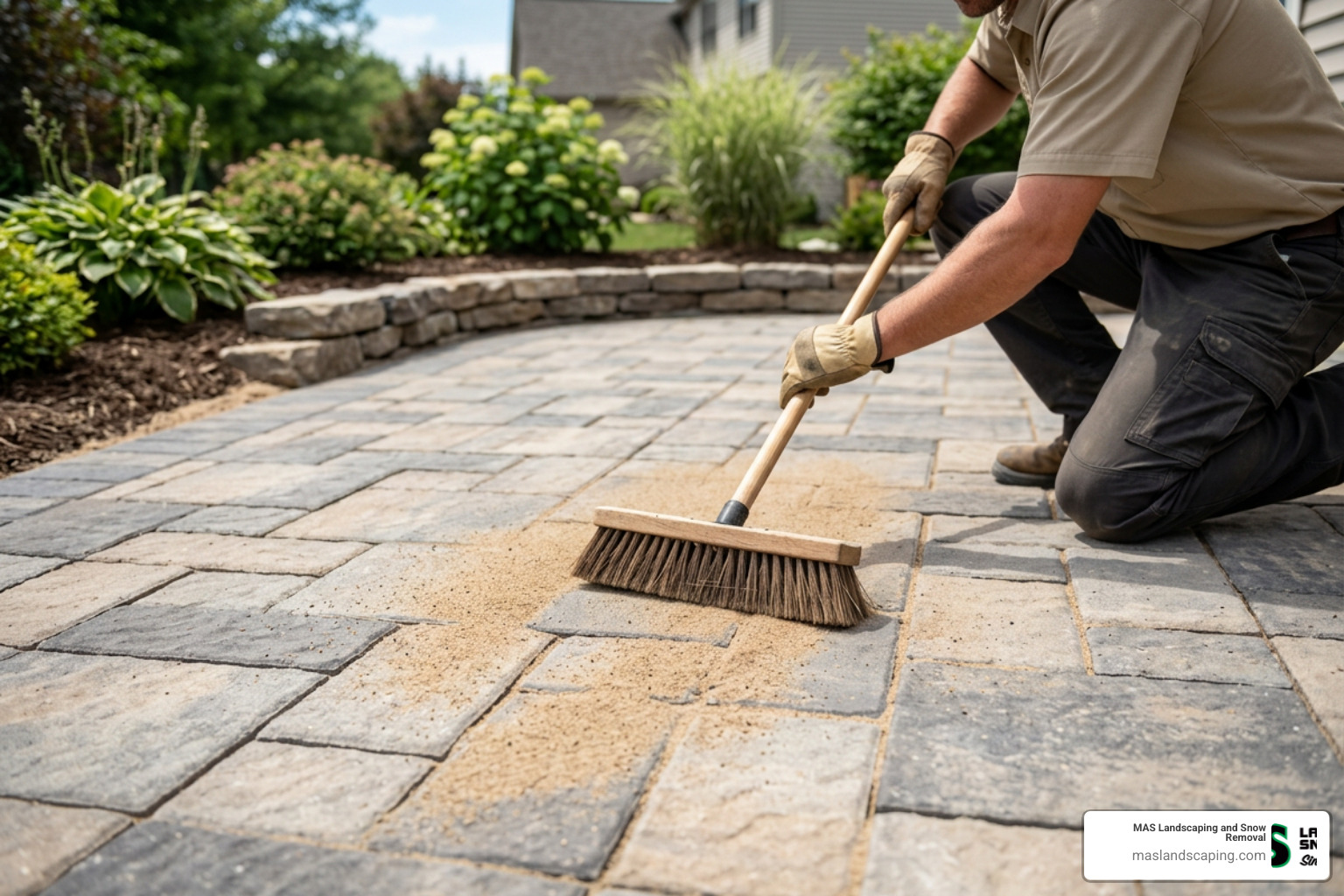
Polymeric sand is not your average sandbox sand. It is a precise blend of graded fine silica sand and specially formulated chemical binders or polymer additives. When dry, it sweeps easily into the joints between concrete pavers, clay bricks, or natural stone. However, the real magic happens when you introduce water.
Once activated by a light water misting, these polymer binders dissolve, integrate, and then dry to create a semi-rigid, flexible joint. Unlike traditional mortar, which is completely rigid and prone to cracking under shifting ground conditions, polymeric sand remains flexible. This is particularly crucial here in Eastern Massachusetts, where our dramatic temperature swings between humid summers and freezing winters cause the ground to shift constantly.
This flexible joint stabilization provides several major benefits:
- Weed Prevention: It creates a durable barrier that stops airborne weed seeds from taking root in the joints.
- Ant and Insect Deterrence: It prevents ants and other pests from digging up the joint sand and building nests under your patio.
- Washout Protection: It resists heavy rain and wind, keeping your joint sand exactly where it belongs.
While polymeric sand does an incredible job of locking your pavers in place, sealing the surface adds an extra layer of defense. To understand why these two products must work in harmony, it helps to read up on Should You Seal Your Paver Patio? A Complete Guide to Protection and Longevity.
How Long to Wait to Seal Pavers After Polymeric Sand
If you ask five different online forums how long to wait before sealing, you will likely get five different answers. Some product labels claim you can seal after 24 hours, while experienced professionals often advise waiting 30 to 90 days. Why is there such a massive gap?
The truth lies in the difference between “drying,” “curing,” and “settling.”
While polymeric sand can feel firm to the touch within 1 to 4 hours and is technically cured enough for foot traffic after 24 hours, it still holds deep, microscopic moisture. Additionally, new concrete pavers go through a natural process called efflorescence—a white, powdery salt residue that migrates to the surface of concrete as moisture evaporates.
If you apply a paver sealer too quickly, you will trap both the residual joint moisture and this white salt buildup beneath a permanent plastic barrier. To avoid this costly mistake, we highly recommend reading The Ultimate Guide to Sealing Your Patio Pavers Like a Pro.
As a general professional rule of thumb:
- Minimum wait time for existing, dry patios: 30 days after installing new polymeric sand.
- Minimum wait time for brand-new paver installations: 60 to 90 days. This allows the pavers to settle, the concrete to complete its curing process, and the efflorescence to escape.
Factors That Affect Polymeric Sand Curing Time
No two patio projects cure at the exact same rate. Several local climate and physical factors will speed up or slow down your timeline:
- Ambient Temperature: Polymeric sand needs warm weather to cure properly. Ideal curing temperatures range between 50°F and 90°F. If you install sand during a cool Massachusetts autumn, the polymers will take significantly longer to bond.
- Humidity Levels: High humidity slows down evaporation. If the air is thick with moisture, the water trapped inside the joints cannot escape, extending your wait time.
- Rain Forecast: You need a solid, dry weather window of at least 24 to 48 hours after water activation. Active rain within this window can wash out the polymers or ruin the bond.
- Joint Depth and Width: Deep joints (such as those in natural stone projects) hold more water and sand. The deeper and wider the joints, the longer they take to dry completely from the bottom up.
How Long to Wait to Seal Pavers After Polymeric Sand: New vs. Existing Patios
The age of your patio plays a massive role in your project timeline.
- New Paver Installations: Newly manufactured concrete pavers require at least 28 days just to complete their internal chemical curing process. During this time, they release large amounts of moisture and calcium hydroxide, which reacts with the air to form efflorescence. For new installations, we always recommend waiting a minimum of 90 days before sealing. This gives the patio plenty of time to settle, breathe, and shed its initial salts.
- Existing Patios (Re-sanding): If you are clearing out old sand from a five-year-old patio in Saugus or Lynnfield and replacing it with new polymeric sand, you do not have to worry about concrete curing. However, you must still wait at least 30 days. This ensures that any water used during the cleanout and sand-activation processes has completely evaporated from the joints and the bedding sand beneath.
The Risks of Sealing Pavers Too Soon
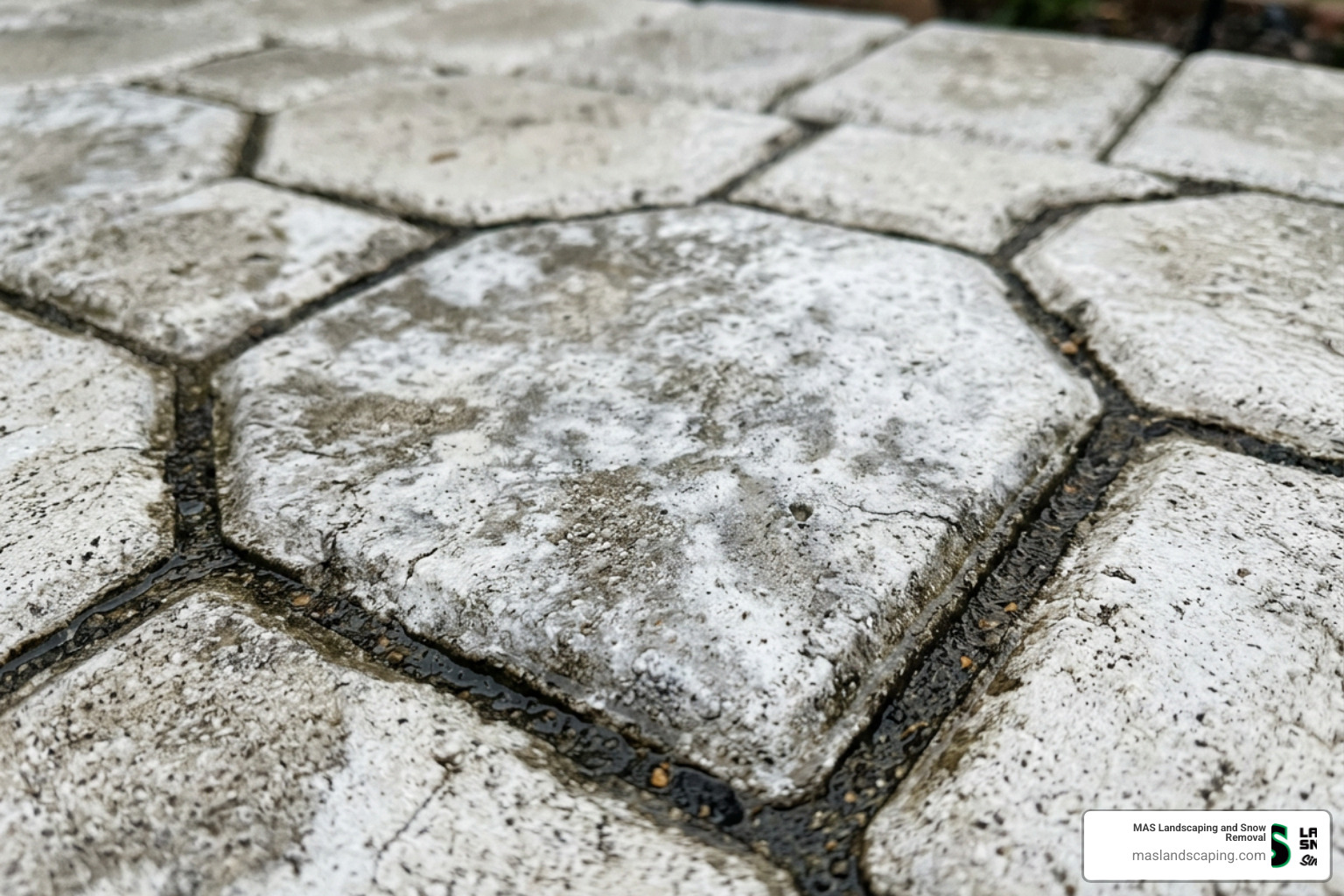
It is highly tempting to finish sanding and immediately roll on a shiny coat of sealer to complete the job. However, rushing this process is the number one cause of ruined hardscape aesthetics. Approximately 40% of DIY sealer applications fail due to early sealing, which often results in a permanent white haze.
When you seal damp joints, the sealer creates an impermeable barrier over the wet sand. As the sun heats the pavers, that trapped water tries to evaporate. Because it has nowhere to go, it pushes upward, separating the sealer from the paver surface. This leads to a phenomenon known as “blushing”—where the sealer turns an unsightly, cloudy white or silver color.
Furthermore, sealing uncured sand can disrupt the chemical bonding of the polymers, leading to soft, crumbling joints that wash away during the next heavy storm. To prevent these headaches, check out our guide on how to Don’t Get Soaked: How to Properly Seal Your Concrete Paver Patio.
Signs Your Polymeric Sand is Fully Cured and Ready
Before you open that can of sealer, perform these simple field tests to confirm your sand is dry and ready:
- The Hardness Test: Take a flathead screwdriver or a fingernail and gently press into the joint sand. It should feel as hard as a pencil eraser or concrete. If it feels soft, muddy, or crumbles easily, it is not ready.
- The Spray Test: Mist a tiny amount of water onto a small section of the sand. If the water beads up or runs off, the polymers have fully cured and are resisting water. If the sand immediately drinks up the water like a sponge, it may need more drying time.
- The Moisture Meter: If you want to be 100% certain, use a digital wood/masonry moisture meter. Insert the pins gently into the joint. A reading below 5% moisture is generally safe for sealing.
- The Weather Window: Ensure you have had at least 4 to 5 consecutive days of dry, sunny weather above 60°F before sealing.
What Happens If You Don’t Know How Long to Wait to Seal Pavers After Polymeric Sand?
If you seal too early, you run into serious long-term issues:
- Peeling Sealer: The lack of a proper bond causes the sealer to flake and peel off like a bad sunburn.
- Polymeric Haze: Trapped dust and polymers form a cloudy white film that ruins the vibrant color of your stones.
- Costly Repairs: Fixing a failed sealer job is incredibly labor-intensive. It requires applying harsh chemical strippers, pressure washing, re-sanding, and starting completely from scratch.
For a detailed look at how to prepare your site properly and avoid these issues, refer to the technical bulletin Ready To Seal? Prepare or Beware! – SEK SUREBOND.
How to Seal Pavers After Polymeric Sand: Step-by-Step
Once you have waited the appropriate amount of time and confirmed your sand is dry, you are ready to seal. Follow this professional step-by-step process to ensure a flawless finish.
Step 1: Deep Cleaning and Prep
Even if your pavers look clean, they likely have a layer of microscopic dust, pollen, or early efflorescence. Use a dedicated paver cleaner and a stiff-bristled broom to scrub the surface. For a visual walkthrough of this prep work, watch this helpful video on How to Clean and Seal Pavers | COMPLETE GUIDE – YouTube.
Step 2: Check Your Sand Levels
Ensure your polymeric sand is sitting approximately 1/8 inch below the bevel or top edge of the pavers. If the sand is flush with the surface, the sealer can pool on top of the joints and peel.
Step 3: Choose Your Sealer
Always opt for a high-quality, breathable sealer. For help picking the right product, check out Choosing the Best Paver Sealer for Your Patio: A Buyer’s Guide and our Wet Look Paver Sealer Guide.
Step 4: Application
Using a professional-grade pump sprayer, apply the sealer evenly across the pavers. Follow immediately behind with a foam roller to back-roll the surface, pushing any pooled sealer out of the joints and low spots.
Step 5: Curing
Keep all foot traffic off the patio for at least 24 hours, and keep vehicles off for 48 to 72 hours.
| Feature | Breathable Sealer (Recommended) | Non-Breathable Sealer |
|---|---|---|
| Moisture Escape | Allows water vapor to pass through | Traps moisture underneath |
| Hazing Risk | Very Low | Extremely High |
| Best For | Polymeric sand joints, damp climates | Dry climates, interior stone only |
| Finish Options | Natural, Matte, Satin, Wet-Look | High-Gloss, Semi-Gloss |
Can you seal pavers immediately after applying polymeric sand?
No. Sealing immediately after applying polymeric sand is a recipe for disaster. The water used to activate the sand must have a path to evaporate. Sealing immediately traps this water, prevents the polymers from curing to their maximum strength, and guarantees a cloudy, failed finish. Always wait at least 30 days.
What is the best type of sealer to use over polymeric sand?
The best type of sealer to use over polymeric sand is a breathable, water-based urethane sealer or a specialized joint-stabilizing sealer. These sealers are designed to penetrate both the concrete and the sand joints, adding an extra layer of hardening strength to the sand while still allowing deep-seated moisture to escape.
To explore different options for your specific stone type, read Paver Perfection: Your Go-To Guide for Selecting the Right Sealant. Additionally, you can consult professional resources like The Expert Guide to Sealing Pavers – Nicolock Paving Stones and When to Seal Pavers: Time and Temperature | Cedar Bridge for deeper industry insights.
How do you fix polymeric sand haze before sealing?
If you notice a cloudy white film on your pavers after sanding, do not seal over it! This is polymeric haze, caused by leftover sand dust that wasn’t blown off before watering. Here is how to fix it:
- Vinegar Solution: For light haze, mix a 1-to-1 solution of white vinegar and water. Scrub the affected areas with a stiff nylon brush and rinse thoroughly.
- Proprietary Haze Removers: For stubborn haze, purchase a specialized polymeric haze remover. Apply it according to the manufacturer’s instructions, scrub, and rinse.
- Pressure Washing: Use a pressure washer with a fan tip (keep it under 1,200 PSI and at least 12 inches away from the surface to avoid washing out the joints).
- Dry Thoroughly: Allow the pavers to dry completely for several days before attempting to seal.
Conclusion
Sealing your pavers is the ultimate way to protect your outdoor investment, but rushing the process will only lead to headaches, white haze, and costly repairs. By understanding how long to wait to seal pavers after polymeric sand — and giving your patio the necessary time to cure, breathe, and shed its natural salts — you ensure a beautiful, long-lasting finish.
If you want to skip the guesswork, avoid the risk of DIY failure, and get the job done right the first time, we are here to help. At MAS Landscaping and Snow Removal, based in Saugus, MA, we bring years of local expertise, professional equipment, and high-quality materials to every project. Whether you are in Everett, Lynnfield, Malden, or any of our surrounding North Shore communities, we can handle your professional patio installations, cleaning, sanding, and sealing with precision.
Let us give you the peace of mind you deserve. Contact us today to schedule a consultation and transform your outdoor living space!