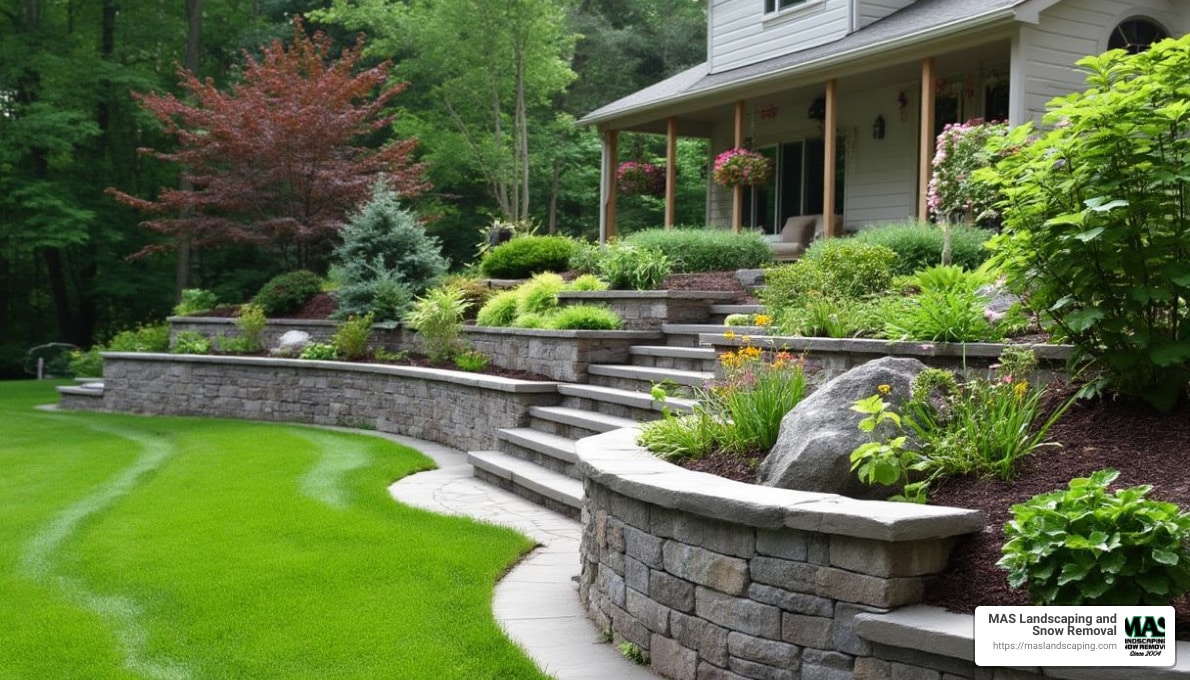



Landscape Walls: Top 5 Stunning Ideas for 2024
Landscape walls transform outdoor spaces by adding beauty, structure, and functionality. Whether you need support on a sloping yard or want to create defined areas for an inviting atmosphere, these walls offer practical solutions and aesthetic appeal.
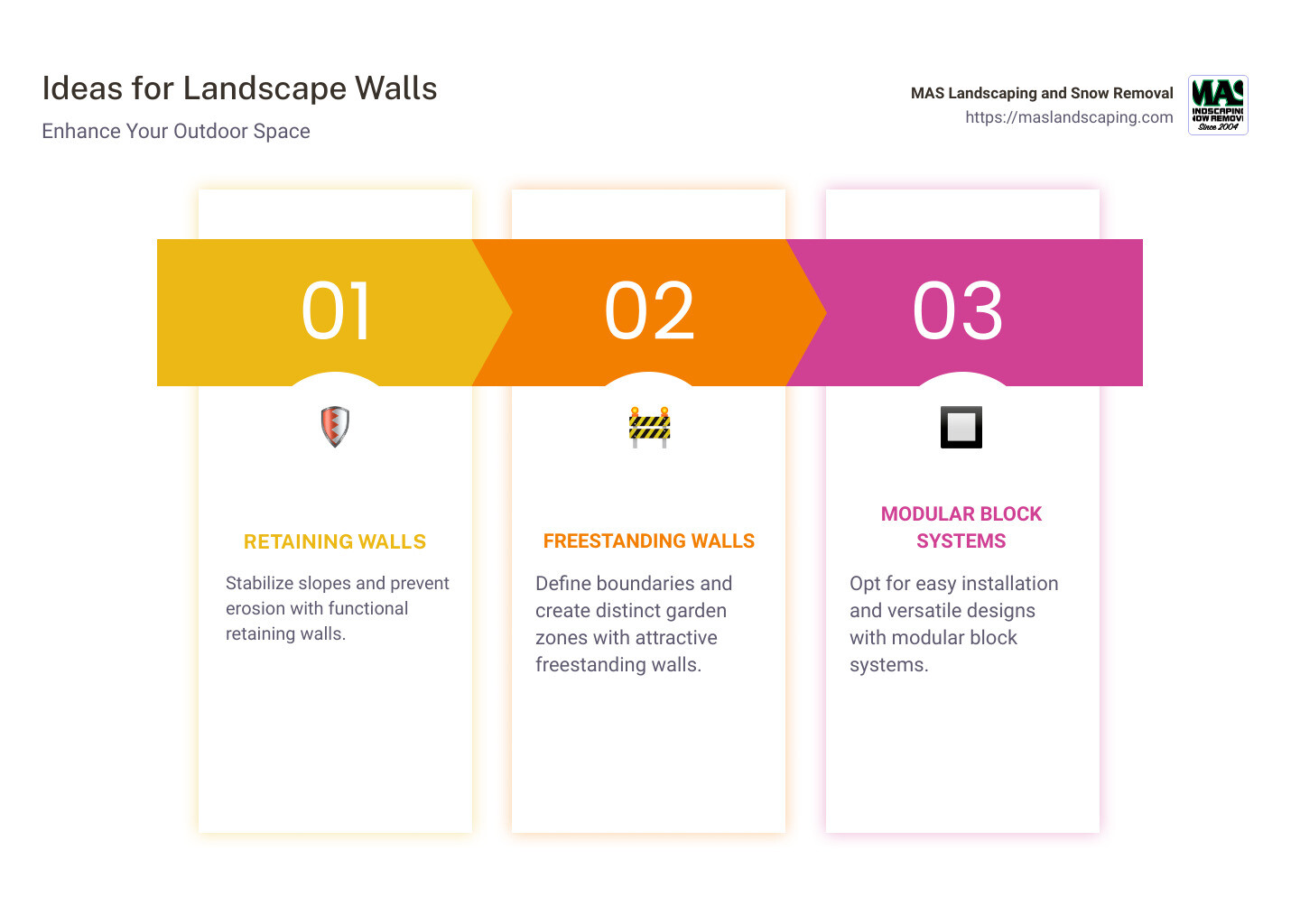
If you’re looking to improve your yard, here’s a quick look at popular ideas for landscape walls:
- Retaining walls: Perfect for stabilizing slopes and preventing erosion.
- Freestanding walls: Great for marking boundaries and creating distinct garden zones.
- Modular block systems: Easy to install and versatile in design.
- Natural finishes: Mimic the look of tumbled or chiseled stone for neat appeal.
Landscape walls aren’t just about function; they also boost the visual interest of any garden or yard. From rustic stones to modern textures, the materials and styling are endless. These features are not only aesthetic but also practical, providing additional seating, privacy, and yard structure.
Landscape Walls terms to remember:
– Custom wall services
– Hardscape design services
– Wall construction services
Types of Landscape Walls
When it comes to landscape walls, understanding the different types is crucial for choosing the right one for your outdoor space. Each type serves a unique purpose and offers distinct benefits. Let’s explore the main types:
Gravity Retaining Wall
Gravity retaining walls rely on their weight to hold back soil. They are made from heavy materials like concrete, stone, or bricks. These walls are thick at the base and taper towards the top, providing stability and support.
- Ideal for: Small to medium slopes.
- Materials: Concrete blocks, stone, or bricks.
Gravity walls are simple to construct and work well in gardens with moderate slopes.
Cantilevered Retaining Wall
Cantilevered retaining walls are constructed from reinforced concrete. They have a thin stem and a base slab that extends into the earth, forming an “L” shape. This design leverages the weight of the soil on the base to stabilize the wall.
- Ideal for: Taller walls requiring more strength.
- Materials: Reinforced concrete.
These walls are efficient for supporting large loads and are often used in commercial projects.
Sheet Piling Retaining Wall
Sheet piling walls are made by driving thin steel, vinyl, or wood sheets into the ground. They are typically used in tight spaces where soil is soft and loose.
- Ideal for: Areas with limited space.
- Materials: Steel, vinyl, or wood sheets.
These walls are quick to install and are suitable for temporary or permanent applications.
Anchored Retaining Wall
Anchored walls use cables or other stays anchored into the rock or soil behind the wall. This method provides additional support to retaining walls, making them suitable for high loads and challenging terrains.
- Ideal for: High load-bearing situations.
- Materials: Various, often combined with other wall types.
Anchored walls are versatile and can be used in conjunction with other wall systems for added stability.
Choosing the right type of landscape wall depends on factors like the slope of your land, the load it needs to bear, and the aesthetic you want to achieve. Each type offers unique advantages, so consider your specific needs when planning your outdoor space.
Affordable Retaining Wall Options
When planning your landscape, finding cost-effective retaining wall solutions is key. Here are some of the most affordable options to consider:
Concrete Blocks
Concrete blocks are a popular choice for building retaining walls due to their durability and affordability. They come in various shapes and sizes, making them versatile for different designs.
- Benefits: Long-lasting, easy to install, and available in various styles.
- Ideal for: DIY projects and gardens with moderate slopes.
Concrete blocks can mimic the appearance of natural stone, offering a stylish yet budget-friendly option for your landscape.
Railroad Ties
Railroad ties are a classic and rustic option for retaining walls. These large wooden beams are often repurposed from old railway tracks, giving them a second life in your garden.
- Benefits: Eco-friendly, provides a rustic look, and is relatively inexpensive.
- Ideal for: Informal garden settings and terraced landscapes.
While they add charm, ensure the ties are treated to prevent rot and insect damage.
Gabion Walls
Gabion walls are constructed by filling wire cages with stones or other materials. They are gaining popularity for their modern and industrial look.
- Benefits: Strong, flexible, and allows for drainage.
- Ideal for: Areas requiring erosion control or steep slopes.
Gabion walls are cost-effective because they can be filled with locally sourced stones, reducing material costs.
Timber Sleepers
Timber sleepers are another affordable option, offering a natural and warm aesthetic. They are easy to work with and can be arranged in various designs.
- Benefits: Easy to install, natural appearance, and adaptable to different styles.
- Ideal for: Gardens with gentle slopes and informal designs.
Choose rot-resistant timber for longevity, especially if the wall will be in contact with soil.
Natural Stone
Natural stone walls are timeless and can add significant value to your property. They offer a classic look that blends well with any landscape.
- Benefits: Aesthetic appeal, durability, and a wide variety of stone types.
- Ideal for: High-end landscapes and projects where appearance is a priority.
While more labor-intensive, sourcing local stone can help keep costs down.
Each of these retaining wall options has its own set of benefits and ideal applications. Consider your specific landscape needs, budget, and design preferences when choosing the best option for your project.
Design Ideas for Landscape Walls
When it comes to designing landscape walls, creativity is your best friend. These structures can transform your outdoor space, offering both beauty and functionality. Here are some inspiring ideas to consider:
Terraced Gardens
Terraced gardens are perfect for sloped landscapes. By creating multiple levels, you can turn a challenging slope into a series of flat, usable spaces. Each level can serve a different purpose, such as a flower bed, vegetable patch, or seating area.
- Benefits: Maximizes space, reduces erosion, and creates a visually appealing structure.
- Ideal for: Sloped yards that need functional and aesthetic improvements.
Terraced gardens not only stabilize the soil but also provide a unique opportunity to showcase a variety of plants. The use of different materials like stone or timber can add texture and interest.
Freestanding Walls
Freestanding walls are versatile and can be used to divide spaces, create privacy, or add a focal point to your garden. Unlike retaining walls, they do not need to hold back soil.
- Benefits: Adds structure and privacy, can be decorative.
- Ideal for: Flat areas where division or decoration is desired.
These walls can be crafted from various materials, including brick, stone, or concrete, allowing for a range of styles from rustic to modern.
Modular Block Systems
Modular block systems offer a flexible and easy-to-install option for both retaining and freestanding walls. These systems consist of pre-cast concrete blocks that interlock, making them sturdy and simple to assemble.
- Benefits: Easy installation, customizable, and durable.
- Ideal for: DIY projects and quick installations.
The modular block systems can be arranged in various patterns and heights, allowing you to tailor the wall to your specific needs and landscape style. They are available in different textures and colors to match your existing outdoor decor.
Stone-like Finishes
If you love the look of natural stone but want a more cost-effective solution, consider stone-like finishes. These finishes mimic the appearance of real stone and can be applied to various wall types.
- Benefits: Aesthetic appeal, budget-friendly, and versatile.
- Ideal for: Enhancing the look of existing walls or new builds.
Stone-like finishes can transform plain concrete or block walls into neat features that blend seamlessly with natural surroundings. They provide a timeless look without the hefty price tag of natural stone.
These design ideas for landscape walls highlight the versatility and aesthetic potential of these structures. Whether you’re looking to create a functional terrace, a decorative freestanding wall, or a stylish modular system, there are plenty of options to suit your landscape needs.
Benefits of Landscape Walls
Landscape walls are more than just a pretty addition to your outdoor space. They offer a range of practical benefits that make them a worthy investment for any property. Let’s explore how these structures can improve your yard.
Slope Stabilization
If your property is on a slope, you know the challenges it can present. Retaining walls are a great solution for slope stabilization. They hold back soil and create level areas, preventing landslides and soil erosion.
- Key Benefit: Keeps your landscape intact and prevents soil from washing away.
- Ideal for: Hilly or sloped properties needing flat, usable spaces.
By stabilizing slopes, retaining walls help maintain the integrity of your landscape while also providing additional space for planting or recreation.
Erosion Protection
Erosion can be a major issue, especially in areas with heavy rainfall. Landscape walls, especially those with proper drainage systems, protect against erosion by holding soil in place.
- Key Benefit: Protects your landscape from the damaging effects of water runoff.
- Ideal for: Areas prone to heavy rains or water flow.
These walls act as barriers, directing water away from vulnerable areas and safeguarding your garden beds and foundations.
Visual Interest
Beyond their functional benefits, landscape walls add visual interest to your yard. They can be designed with various materials, textures, and colors to complement your home’s aesthetic.
- Key Benefit: Improves the beauty of your outdoor space.
- Ideal for: Creating focal points and defining garden areas.
Whether it’s a rustic stone wall or a sleek modern design, a well-placed wall can transform an ordinary yard into a stunning landscape.
Structural Support
Landscape walls provide essential structural support, especially in multi-level gardens or yards with significant elevation changes. They allow for the creation of terraces and other features that require strong, stable foundations.
- Key Benefit: Supports additional landscaping features and structures.
- Ideal for: Complex landscapes with varying elevations.
By offering structural support, these walls enable you to build features like patios, walkways, and garden beds on otherwise challenging terrain.
The benefits of landscape walls go beyond aesthetics. They provide crucial support and protection for your property, all while enhancing its visual appeal. Whether you’re dealing with slopes, erosion, or simply want to add some flair to your yard, landscape walls are a versatile and valuable choice.
Frequently Asked Questions about Landscape Walls
What is the cheapest option for a retaining wall?
When it comes to building a retaining wall on a budget, there are several cost-effective materials to consider:
- Poured Concrete: This is often a go-to choice due to its durability and affordability. It’s a straightforward option for creating solid, long-lasting walls without breaking the bank.
- Pressure-Treated Pine: This material is relatively inexpensive and easy to work with. It’s perfect for DIY enthusiasts looking to build a simple retaining wall.
- Granite: While not the cheapest, granite offers a balance between cost and aesthetic appeal. It provides a natural look and can be a cost-effective option if sourced locally.
What are landscape walls called?
Landscape walls can have various names depending on their design and function:
- Gravity Wall: Relies on its own weight to hold back soil. It’s simple and effective for short walls.
- Cantilevered Wall: Uses a structural footing to support the wall and is suitable for taller structures.
- Sheet Piling Wall: Made from steel, vinyl, or wood planks driven into the ground, ideal for tight spaces.
- Anchored Wall: Reinforced by cables or other supports anchored into the ground, providing extra stability.
How to decide between DIY and professional installation?
Deciding whether to tackle a landscape wall project yourself or hire a professional can depend on several factors:
- DIY Projects: If you’re handy and the wall is relatively small, a DIY approach can save money and provide personal satisfaction. Materials like pressure-treated pine or simple concrete blocks are suitable for DIY projects.
- Professional Landscaper: For larger or more complex projects, hiring a professional ensures the job is done safely and correctly. They bring local expertise and can handle intricate designs or challenging terrain.
- Local Expertise: Consider the local climate and soil conditions. A professional familiar with the area can recommend the best materials and techniques for your specific needs.
Choosing the right approach will depend on your budget, skills, and the complexity of your project. Whether you go DIY or professional, landscape walls can add both beauty and function to your outdoor space.
Conclusion
At MAS Landscaping and Snow Removal, we understand the importance of crafting outdoor spaces that are both functional and beautiful. Our commitment to personalized service and local expertise ensures that every project we undertake is custom to meet your specific needs and the unique conditions of your area.
Personalized Service is at the heart of what we do. We believe that every outdoor space has the potential to become a stunning landscape that improves your quality of life. From the initial design concept to the final installation, we work closely with you to transform your vision into reality. Our team listens to your ideas and preferences, providing guidance and expertise every step of the way.
Local Expertise sets us apart. With our deep understanding of the local climate, soil types, and plant species, we design landscapes that are not only beautiful but also sustainable and low-maintenance. This knowledge allows us to select the most appropriate materials and techniques that will thrive in your specific environment. Moreover, our familiarity with local zoning laws and building codes ensures that your project progresses smoothly, without any legal hassles.
Choosing MAS Landscaping and Snow Removal means partnering with a team dedicated to creating a space you’ll love for years to come. Our professionalism, attention to detail, and commitment to customer satisfaction make us leaders in the landscape design industry.
Ready to transform your outdoor living space? Contact us today to discuss your project and find how we can help bring your landscape wall ideas to life. Let’s create a beautiful and functional outdoor area that improves your property and provides a welcoming space for you and your loved ones.