


Landscaping ideas for retaining walls: Stunning 2025
Why Retaining Walls Are the Secret to Beautiful, Functional Landscapes
Landscaping ideas for retaining walls can transform a steep slope or erosion problem into a stunning, functional feature. The right design creates usable outdoor space while combining form and function beautifully.
Quick landscaping ideas for retaining walls:
- Built-in seating – Add bench caps for extra outdoor seating
- Integrated planters – Create raised garden beds within the wall structure
- Cascading plants – Use trailing flowers and greenery to soften hard edges
- Tiered designs – Build multiple shorter walls instead of one tall wall
- Lighting integration – Install LED strips under caps or along the base
- Water features – Add fountains or small waterfalls for ambiance
- Natural stone veneer – Cover plain concrete blocks for a premium look
- Mixed materials – Combine stone, wood, and metal for visual interest
As one landscaping expert noted: “Retaining walls are often thought of as unattractive intrusions into landscaping, but they don’t have to be.” The key is to view your wall as an opportunity for creative design, not just a structural necessity.
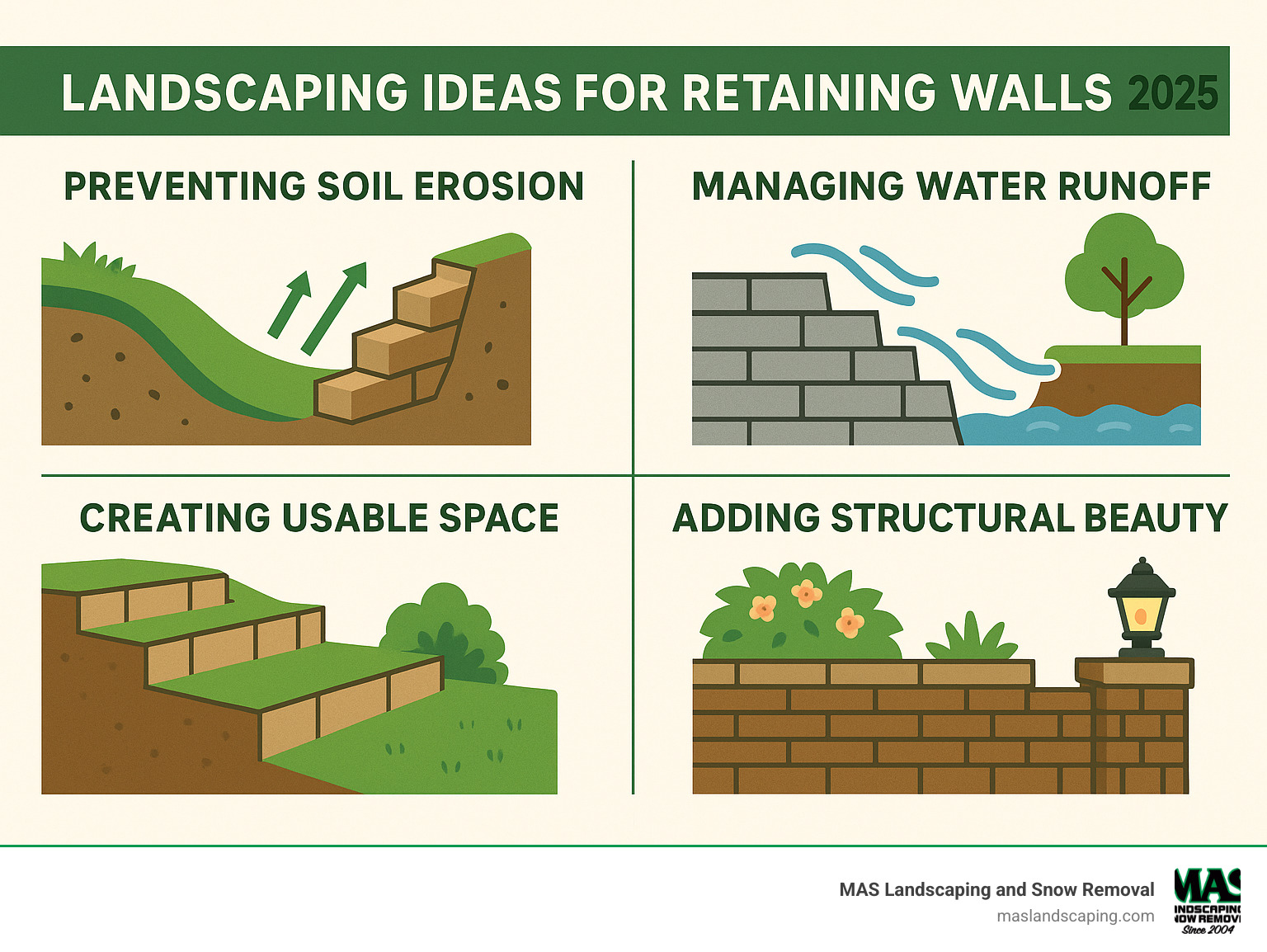
Retaining walls solve practical problems like soil erosion and water runoff, creating flat, usable areas from steep slopes. With the right approach, they also frame outdoor living spaces, support gardens, and provide built-in seating or storage.
The national average cost ranges from around $1,677 to $6,765 for most projects, but the functional and aesthetic value they add often far exceeds the investment.
Quick landscaping ideas for retaining walls terms:
Choosing Your Wall’s Foundation: Materials and Styles
Your material choice is where the magic begins. It determines your wall’s longevity and aesthetic, setting the tone for your entire outdoor space, from natural elegance to modern sophistication.
Natural Stone
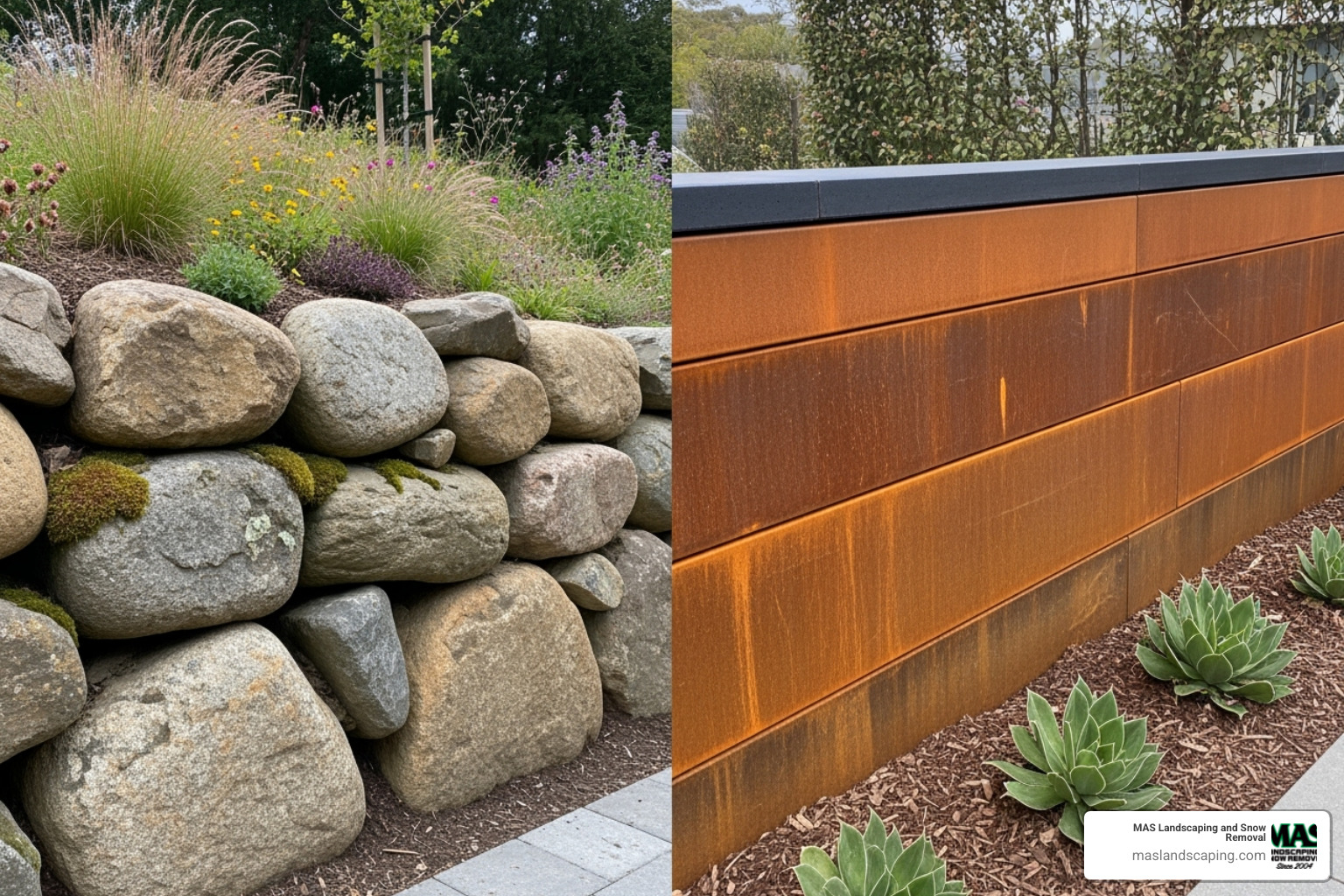
There’s something timeless about natural stone. Rugged boulders offer an “it’s been here forever” look, while neat fieldstone provides rustic charm. Stone walls age beautifully within your landscape.
Formal cut stone brings sophistication, while weathered fieldstone creates a perfect cottage garden feel. The durability is best, as these walls can outlast generations with proper installation. While stone requires a bigger upfront investment, it adds significant value to your property.
Our Hardscape Retaining Wall services can help you explore natural stone options that work beautifully in New England landscapes.
Manufactured Blocks
Manufactured blocks, like our Concrete Retaining Wall Block options, are a practical choice, offering a great balance of beauty and budget.
These blocks provide a uniform look that’s cost-effective and still looks great. They’re DIY-friendly for smaller projects and come in a surprising variety of colors and textures. You can achieve the look of natural stone without the high price tag.
The interlocking systems make installation straightforward, which is why many homeowners start here.
Timber and Wood
For classic New England charm, nothing beats the warmth of wood. Pressure-treated pine creates instant rustic charm and is wonderfully inexpensive.
Wood retaining walls fit perfectly into garden settings. The trade-off is a shorter lifespan than stone or concrete, typically 5-10 years. But for budget-conscious homeowners or temporary solutions, wood can be a perfect choice.
If you’re considering treated lumber, the EPA provides helpful information about wood treatment safety.
Modern Metals & Composites
To make a statement, Corten steel is a great answer. This weathering steel develops a gorgeous, protective weathered patina that strengthens over time. Its sleek lines create dramatic focal points while providing incredible strength.
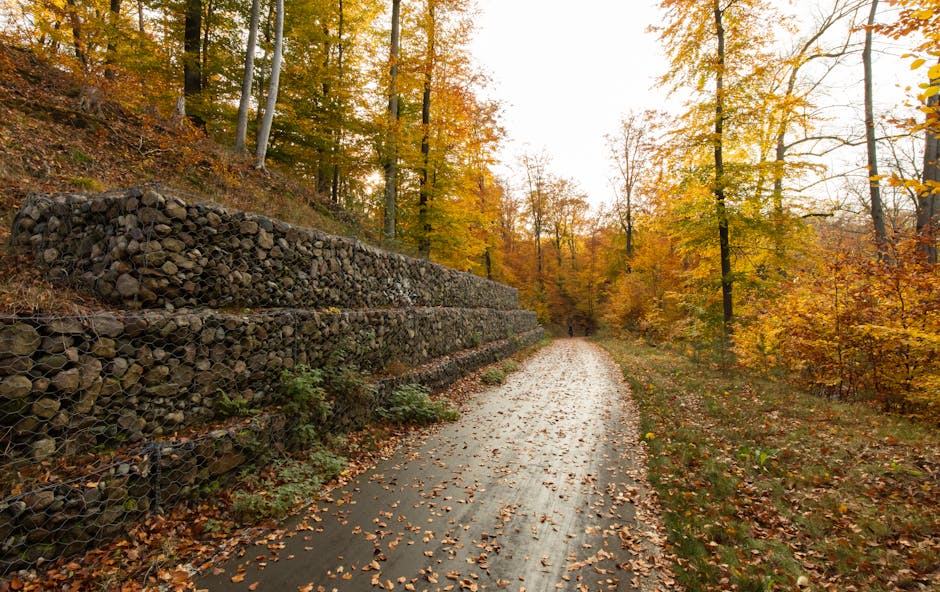
Gabion walls—wire cages filled with stones—offer another modern approach. They’re surprisingly affordable and create interesting textural elements that work well with contemporary landscaping ideas for retaining walls.
These materials shine in modern landscapes where clean lines and industrial elegance are desired. Your material choice becomes the personality of your wall, opening up different design possibilities for every budget.
Creative Landscaping Ideas for Retaining Walls
Once you’ve chosen your materials, it’s time to transform your retaining wall from a simple structure into a standout feature. The best landscaping ideas for retaining walls go beyond holding back soil to create opportunities for beauty, function, and year-round enjoyment.
Create Multi-Functional Masterpieces
The most successful retaining walls serve multiple purposes. Instead of just holding back dirt, a wall can become a multi-functional focal point in your landscape.
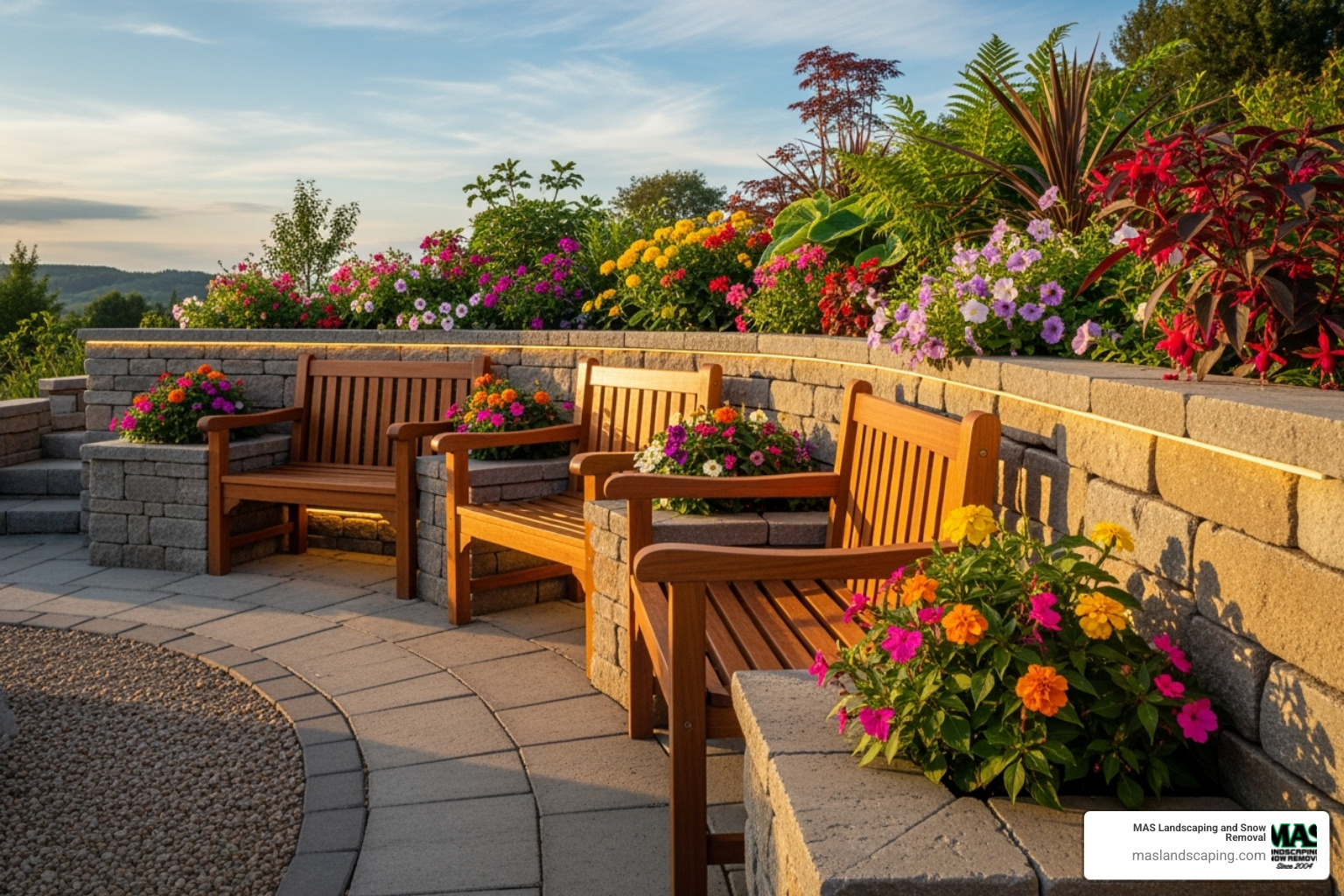
Built-in seating is a favorite way to maximize space. Adding sturdy wall caps or custom benches creates comfortable outdoor seating, saving precious space in smaller yards. Explore more Outdoor Retaining Wall Ideas that combine comfort and style.
Integrated planters are another brilliant way to soften the hardscape. Building raised garden beds into the wall creates natural transitions and provides better drainage for plants. Plus, deep root systems can help stabilize the wall. Our Garden Wall Designs show how planters can transform a wall into a living masterpiece.
For those who love the sound of water, water features can turn your wall into a tranquil oasis. A fountain or small waterfall creates movement and soothing sounds, making your outdoor space feel like a private retreat.
Sunken fire pits are the ultimate in cozy outdoor living. Integrated with retaining walls using heat-resistant blocks, they create intimate gathering spaces for year-round enjoyment. Our experienced Hardscape Contractors can help design the perfect fire feature for your space.
Design Solutions for Sloped Yards
Sloped yards offer exciting opportunities for creative landscaping ideas for retaining walls. The key is to work with your terrain, not against it.
Terraced walls are often the smartest solution for steep slopes. Instead of one massive wall, multiple shorter walls create a stepped effect that is visually interesting and easier to build. Each terrace becomes a mini-landscape for different plantings or activities. See how we’ve used Landscape Walls to create stunning terraced designs.
Curved walls offer a softer, more natural approach. Following the land’s contours, they create an organic flow that blends seamlessly with the landscape, working especially well in naturalistic garden designs.
Integrated steps are essential for connecting different levels safely and stylishly. Incorporating them into the wall design from the start creates a cohesive look and improves accessibility.
Add Ambiance with Integrated Lighting
Lighting transforms your retaining wall from a daytime feature into an evening showstopper, extending your outdoor enjoyment while adding safety and beauty.
Under-cap lighting creates a warm glow by installing LED strips beneath the capstones, highlighting the material’s texture.
Downlighting fixtures placed along the top cast beautiful shadows and highlight plantings below, creating depth.
Path lighting integrated into walls bordering walkways guides safe passage and creates a welcoming atmosphere.
Well-planned lighting ensures your retaining wall makes an impact 24 hours a day. Our Hardscape Design Services always include thoughtful lighting plans to bring out the best in your investment.
The Finishing Touch: Planting for Your Retaining Wall
Your retaining wall structure is complete, but the right plants bring your landscaping ideas for retaining walls to life. They soften hard edges and seamlessly blend the hardscape with nature.
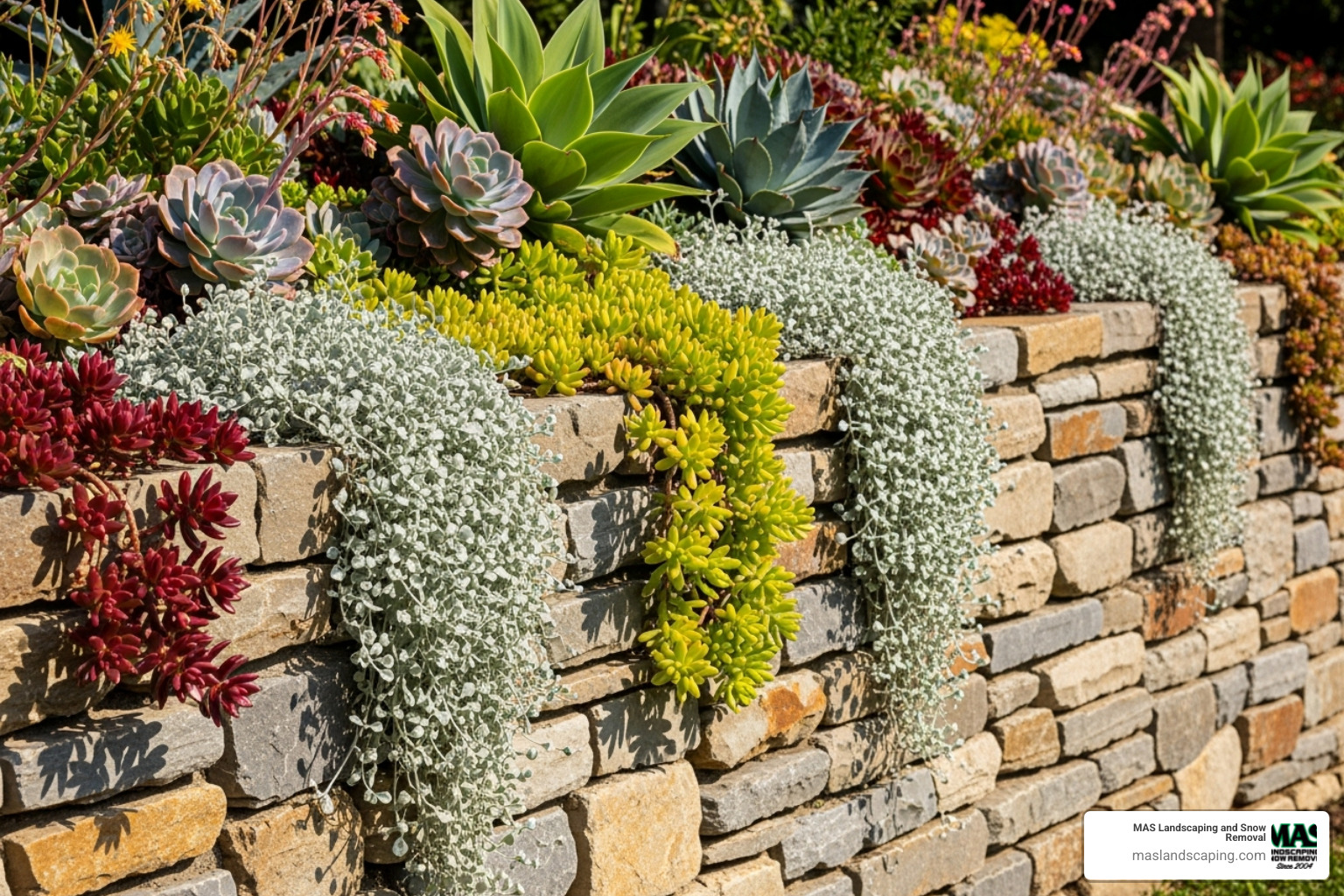
Plant selection is key to integrating your wall, changing a stark structure into a living garden feature that looks established and natural.
Best Plants for Cascading and Spilling
Plants that gracefully spill over the edges are perfect for softening a retaining wall. These “spillers” create movement and flow, making the wall feel welcoming and natural.
Creeping Phlox is a spring showstopper, creating cascades of vibrant flowers. Creeping Thyme offers fragrant, year-round mats that can even handle light foot traffic.
For a low-maintenance option, Sedum varieties like Angelina Stonecrop are cascading champions that thrive in poor, dry conditions. Sweet Alyssum brings a delicate fragrance and a soft, cottage garden feel.
Bacopa creates dramatic spillage with its trailing stems and abundant flowers. These cascading plants help create a “wild garden” effect, making your wall look like nature designed it. For expert advice, the Royal Horticultural Society offers excellent guidance in their resource on More on trailing plants from the RHS.
Low-Maintenance and Drought-Tolerant Choices
For stunning results without constant maintenance, drought-tolerant plants are ideal. They are perfect for sunny, dry spots and dramatically reduce watering needs.
Succulents like agave and aloe create architectural interest with almost no care, looking particularly striking on modern retaining walls.
Lavender brings Mediterranean charm with its silvery foliage and fragrant purple spikes, thriving in full sun and well-drained soil.
Ornamental grasses add graceful movement and year-round texture. Many varieties are incredibly drought-tolerant and create beautiful seasonal interest.
These plants are perfect for our New England climate, keeping your wall looking fantastic even during the hottest, driest months.
Planting in Wall Crevices for a “Living Wall”
For ultimate natural integration, plant directly in your wall’s crevices. This technique creates an aged, established look.
Rock garden plants and alpine species are naturals for this approach. Sempervivum, or Hens and Chicks, is particularly effective. These charming succulents spread to fill gaps, creating beautiful rosette patterns across your wall.
When planting, always consider your wall’s sun exposure and ensure proper drainage behind the wall to prevent root rot and ensure plant health. Combining different planting approaches—cascading plants, drought-tolerant perennials, and crevice plants—creates depth and that coveted “established garden” look.
Budgeting and Building: What You Need to Know
Planning your landscaping ideas for retaining walls requires balancing vision with practicality. Cost is a major concern for many homeowners, so let’s break down what to expect.
Understanding Retaining Wall Costs
Every project is unique, and costs vary dramatically. Your final investment depends on materials, wall height and length, site accessibility, and design complexity.
Disclaimer: The national average cost for a professionally installed retaining wall can range from $3,000 to over $15,000. This data is based on internet research and is not an official quote. Costs vary widely based on materials, height, length, and site complexity.
Most homeowners spend between $3,000 and $15,000, though costs can climb higher for elaborate designs or challenging sites. Some large, complex structures can reach $100,000 or more, while smaller garden walls might be less.
Cost per linear foot typically ranges from $114 to $261, depending on materials and design. Natural stone generally costs more than concrete blocks, while timber is often the most budget-friendly choice upfront.
Labor costs are a significant portion of the investment, especially if the site requires heavy equipment or drainage systems. Walls over three feet often need frost footings and reinforcement, adding to the expense but ensuring long-term stability.
The terrain also affects pricing. Steep slopes or limited backyard access can increase costs. For more detailed insights, More on retaining wall costs offers helpful information.
DIY-Friendly Landscaping Ideas for Retaining Walls
If you’re handy, smaller retaining walls can be great DIY projects. The key is knowing your skill limits and when to call a professional.
Small concrete block walls are often the most DIY-friendly. These interlocking blocks are designed for straightforward installation for walls under three feet and are among the most affordable materials. Our Block Walls page shows examples of professionally installed projects.
Low timber walls are another manageable DIY option for raised garden beds or gentle slopes, often completable in a weekend.
However, even small projects require careful site preparation, a level base, and proper drainage. Skipping these steps can lead to future problems.
When to Call a Professional
While DIY projects are great, professional expertise is essential in certain situations for safety and the longevity of your investment.
Walls over 4 feet high should always be handled by professionals. They bear enormous pressure and can fail catastrophically if not properly engineered, leading to property damage and safety hazards.
Permit requirements often apply for walls over three or four feet, depending on local rules. Permits may be required for taller walls provides insight into when permits are necessary. A professional contractor will manage this process.
Poor drainage is the silent killer of retaining walls. Professionals know how to implement solutions like gravel backfill, perforated pipes, and geotextile fabric to manage water pressure.
Steep slopes and complex designs like curved walls or integrated steps require specialized knowledge. A professional ensures these elements are safe and beautiful.
As one expert noted, “Not all landscaping companies are equally skilled in building retaining walls…” The foundation and drainage make the difference between a wall that lasts decades and one that fails. Here in the Saugus area, our team at MAS Landscaping and Snow Removal has over 35 years of experience with local soil conditions and permit requirements in Everett, Lynnfield, Malden, Melrose, Medford, Revere, Chelsea, and surrounding communities.
Learn more about how we can help through our Retaining Wall Services.
Frequently Asked Questions about Landscaping Ideas for Retaining Walls
We often discuss the exciting possibilities of retaining walls with homeowners. Here are some of the most common questions we hear, which get to the heart of what makes these features so valuable.
What is the primary purpose of a retaining wall?
Retaining walls solve multiple problems at once. The main functions are to hold back soil on a slope, prevent erosion, and create level, usable areas in your yard. They turn challenging inclines into functional spaces for patios, gardens, or lawns.
Beyond that, they manage water runoff, which can protect a home’s foundation from excess moisture by directing water away. They also stabilize ground that might otherwise shift or wash away over time.
Think of retaining walls as problem-solvers that also happen to look great.
What is the most affordable retaining wall to build?
For budget-conscious homeowners, there are several wallet-friendly options. Generally, walls made from pressure-treated timber or interlocking concrete blocks are the most budget-friendly.
Gabion walls—wire mesh cages filled with stones—are often cited as the most affordable way to retain soil. They have an industrial-chic look that works well in modern landscapes.
The key to keeping any wall affordable is to keep it lower to the ground, shorter in length, and built with less expensive materials. A 2-3 foot timber wall for a garden bed, for example, is much more budget-friendly than a towering stone masterpiece.
How can I make my existing retaining wall look better?
If you have a plain retaining wall, there are many ways to give it new life and improve its appearance.
Adding a stone or stucco veneer can completely change the surface, making a basic block wall look like expensive natural stone. Planting cascading flowers and greenery to spill over the top is perhaps the most dramatic improvement, softening hard edges and integrating the wall into your garden.
Installing integrated lighting creates nighttime drama and extends your enjoyment of the space. Even a simple finished capstone can give a wall a polished, intentional look.
For the truly creative, painting a mural on a plain concrete wall can add a unique artistic touch. Many of these improvements can be done gradually, allowing you to spread out the cost and effort while seeing immediate results.
Conclusion: Bring Your Wallscaping Vision to Life
Landscaping ideas for retaining walls offer an exciting opportunity where practical necessity meets creative potential. As we’ve explored, the right approach can transform a structural challenge into your property’s most stunning feature.
The journey begins with choosing the perfect materials to match your vision, whether it’s the timeless elegance of natural stone, the versatility of manufactured blocks, the rustic charm of timber, or the sleek lines of modern metals.
The real magic happens when you think beyond basic soil retention. Built-in seating, integrated planters, water features, terraced designs, and strategic lighting can turn a simple wall into a multi-functional centerpiece.
The finishing touches with thoughtful plant selection complete the change. Cascading flowers and hardy succulents make your wall feel like it has always belonged in your landscape.
Bringing these visions to life involves budget, permits, and proper construction. While some projects are great for DIY, others require professional expertise for safety and longevity.
For homeowners throughout Saugus, Everett, Lynnfield, Malden, Melrose, Medford, Revere, Chelsea, and surrounding Massachusetts communities, our team at MAS Landscaping and Snow Removal brings over 35 years of experience to every project. We know how the right retaining wall doesn’t just solve a problem—it becomes the foundation for years of outdoor enjoyment.
Our commitment to professionalism, personalized service, and deep local expertise means we handle the technical details, from drainage solutions to permit requirements, so you can focus on the results.
Ready to transform that challenging slope into your favorite outdoor feature? Explore our Retaining Wall Installation services to get started on bringing your wallscaping vision to life.