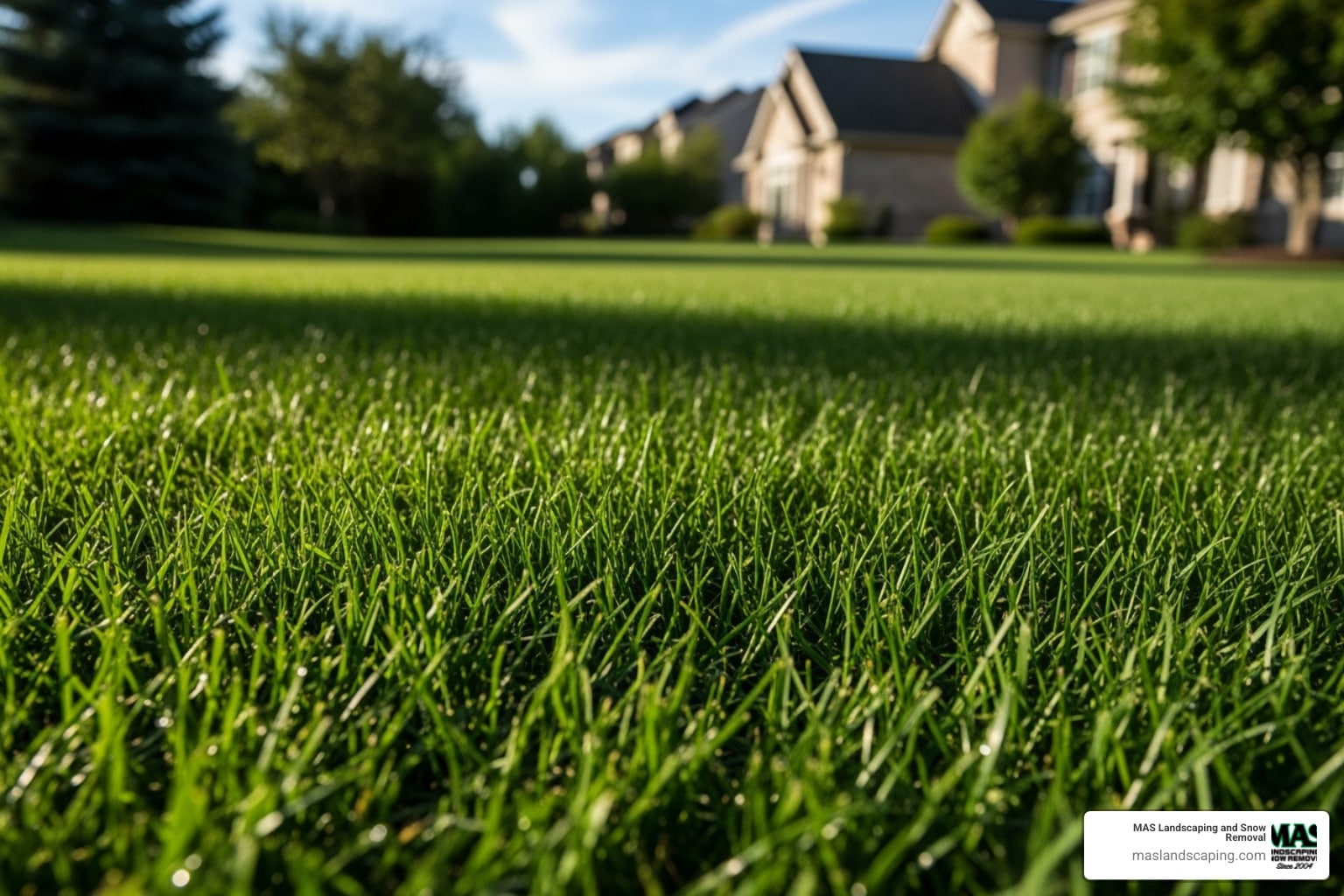



Lawn Care and Maintenance: Expert Tips 2025
What is Lawn Care and Maintenance All About?
Lawn care and maintenance is the practice of keeping your grass healthy, green, and beautiful year-round. It’s a combination of essential tasks that help your lawn thrive, including:
- Mowing: Regular cutting at the correct height.
- Watering: Providing sufficient, but not excessive, water.
- Fertilizing: Feeding the grass the nutrients it needs.
- Weed & Pest Control: Managing unwanted plants and insects.
- Soil Health: Ensuring the soil is rich and balanced.
- Seasonal Tasks: Specific care for spring, summer, fall, and winter.
- Specialized Treatments: Services like aeration and overseeding.
A lush, vibrant lawn is a key part of a property’s appeal, making a great first impression and creating a welcoming space. However, achieving that perfect look takes consistent effort, time, and knowledge. For busy property owners in the Greater Boston area, this can be a significant challenge.
This guide will walk you through the essential steps of proper lawn care and maintenance, from understanding soil needs to handling pesky weeds, helping you transform your yard into an outstanding outdoor space.
Lawn care and maintenance further reading:
The Foundation of a Great Lawn: Understanding Soil Health
The secret to a stunning lawn lies beneath the surface, in the soil. Healthy soil is the foundation for your home’s curb appeal. Without it, efforts like watering and fertilizing won’t produce the lush, green carpet you desire. Healthy soil is a living ecosystem that should feel crumbly and soft, often with earthworms present. This structure helps grass grow strong roots, making it more resilient against moss, weeds, insects, and diseases.
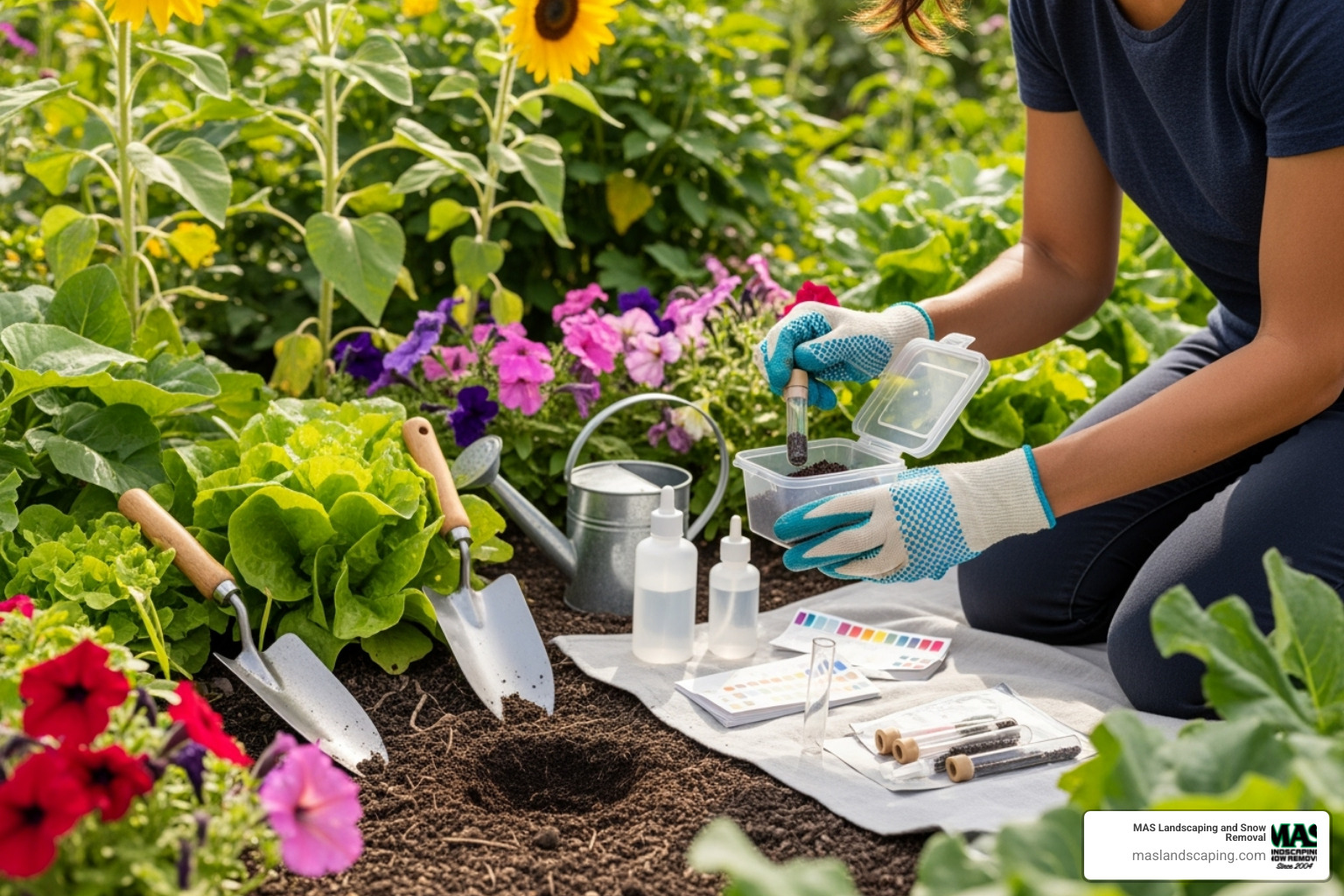
To understand your soil, you need to know its composition—whether it’s fast-draining sand, heavy clay, or the ideal blend known as loam. A soil test is the best way to determine your soil’s makeup, pH level, and nutrient content. While DIY kits are available, professional tests provide more accurate and detailed recommendations. For guidance on collecting samples, resources like A Guide to Collecting Soil Samples for Farms and Gardens are very helpful.
Understanding and Adjusting Soil pH
Soil pH measures how acidic or alkaline your soil is. Most grasses thrive in a pH range of 6.0 to 6.5. This range is critical because it affects the grass’s ability to absorb nutrients. If the pH is too high or low, nutrients in the soil become unavailable to the plant’s roots, leading to a weak lawn even with regular fertilizing.
In the Greater Boston area, including Everett and Lynnfield, soil conditions can vary. A soil test reveals exactly what your lawn needs. If soil is too acidic (pH below 6.0), lime can be added to raise it. If it’s too alkaline (pH above 6.5), sulfur can lower it. For compacted or nutrient-poor soil, adding high-quality loam—a balanced mix of sand, silt, and clay—can revitalize it. We offer Loam Delivery to help upgrade your lawn’s foundation.
Fertilizing for Optimal Growth
Once your soil pH is balanced, it’s time to fertilize. Fertilizers provide essential nutrients for strong, green growth. The three main nutrients are Nitrogen (N) for greenness, Phosphorus (P) for roots, and Potassium (K) for overall health. You’ll see these represented as N-P-K numbers (e.g., 10-10-10) on fertilizer bags.
Fertilizers can be organic or synthetic. Organic options release nutrients slowly and improve soil health over time. Synthetic fertilizers offer a quick nutrient boost for rapid greening. The choice depends on your goals and preferences.
For the cool-season grasses common in Massachusetts, fertilizing in the spring and fall is most effective. Avoid fertilizing in extreme heat or when grass is dormant, as this can burn the lawn. A simple way to naturally fertilize is to leave grass clippings on the lawn after mowing. This practice, called mulch-mowing, returns valuable nitrogen to the soil. Adding organic compost or using Garden Mulch in beds can also enrich the soil.
While an unfertilized lawn may struggle, too much fertilizer is also harmful. Over-fertilizing can burn the grass and increase susceptibility to pests and diseases. Finding the right balance is key.
A Year-Round Guide to Lawn Care and Maintenance
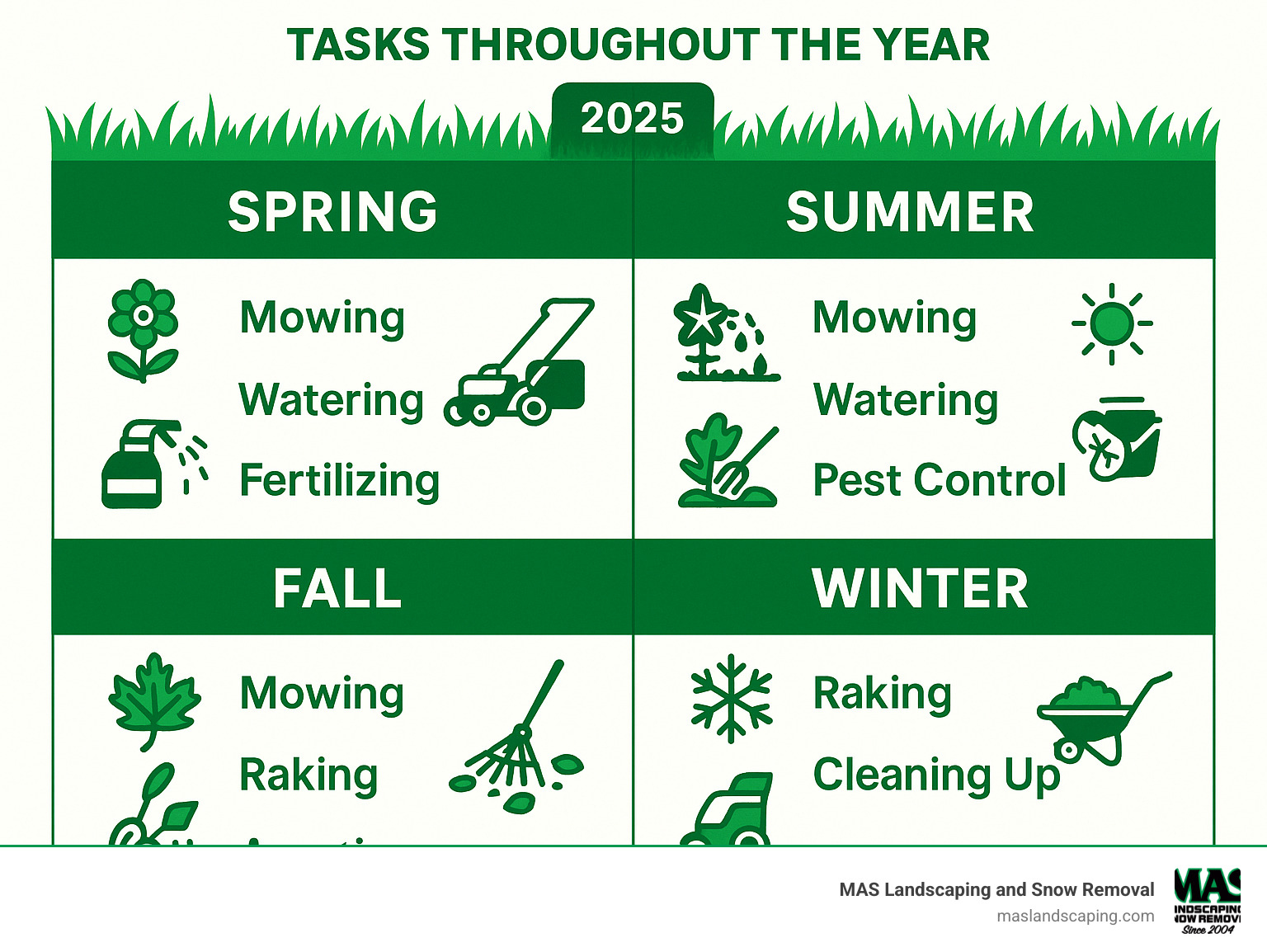
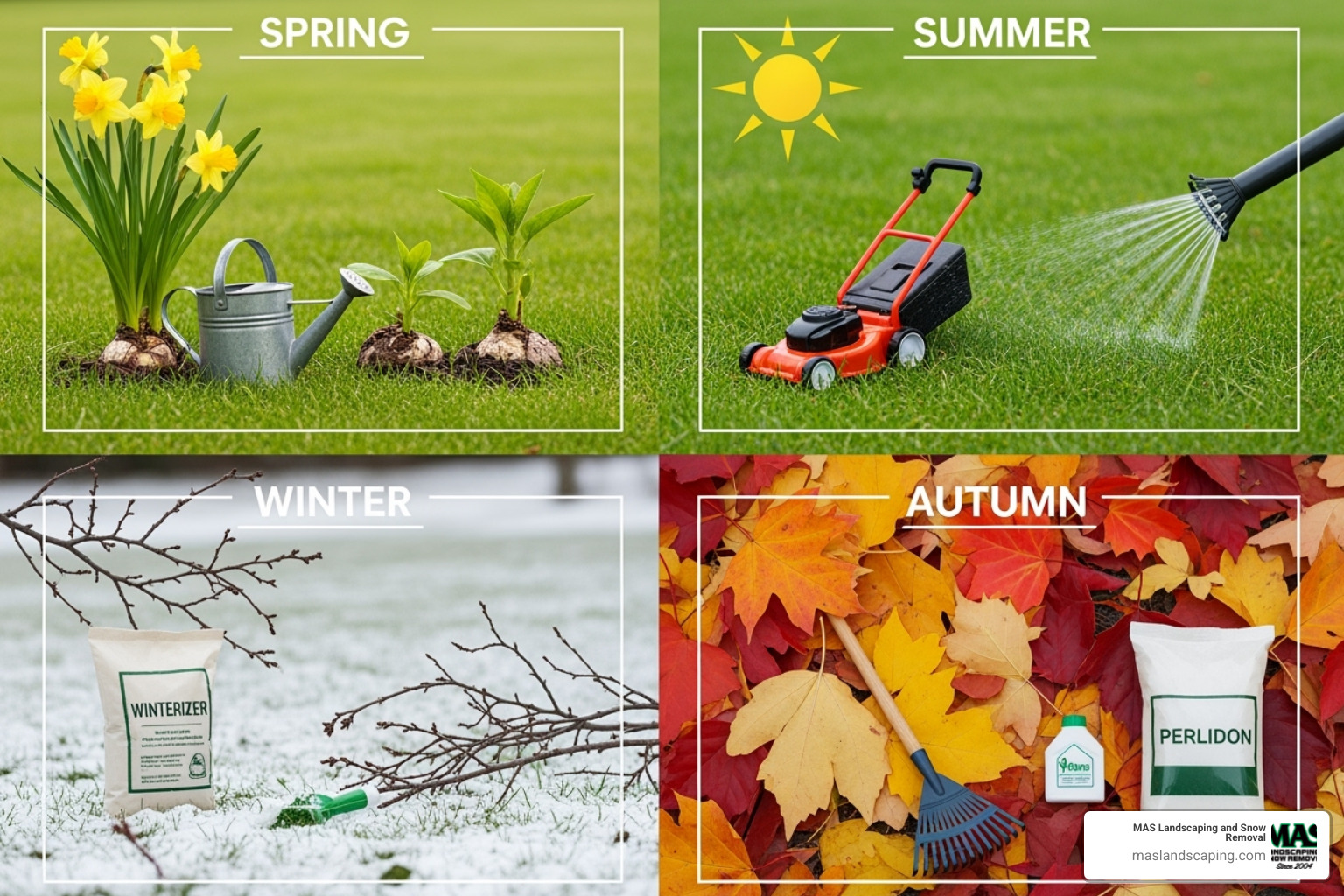
Your lawn requires attention all year long, with a continuous cycle of tasks that adapt to the seasons. In New England, understanding these seasonal cycles is the secret to a thriving green space. Following a year-round plan ensures your grass remains healthy and impressive no matter the month.
Essential Spring Lawn Care and Maintenance Tasks
Spring awakens your lawn from dormancy, and the care provided now sets the stage for the entire summer. Start with a mower tune-up: change the oil and filters, and most importantly, sharpen the blade. A sharp blade cuts cleanly, while a dull one tears grass, inviting disease.
Next, clean up your yard by raking away leaves, debris, and dead grass. This prevents mold and disease. Our Spring Yard Cleanups can handle this task thoroughly. Spring is also the time to apply a pre-emergent herbicide to prevent weeds. For the first mow, aim for a height of 2-3 inches to encourage deep roots and shade out weed seeds. A spring-specific fertilizer will promote healthy growth. If your lawn is compacted, spring is a good time for aeration. For bare spots, overseeding in mid-April to mid-May is ideal.
Summer Survival: Mowing and Watering
Summer’s heat and sun require a focus on proper mowing and smart watering. Maintain a mowing height of 2–3 inches, and never cut more than one-third of the grass blade at a time (the “one-third rule“). This reduces stress on the grass. Mow weekly during peak growth, vary your pattern, and always use sharp blades to prevent tearing the grass.
Watering wisely is just as crucial. A lawn needs 1-1.5 inches of water per week, applied deeply and infrequently to encourage deep root growth. This may mean watering for 45-60 minutes per zone. The best time to water is early morning (3 a.m. to 6 a.m.) to minimize evaporation and allow blades to dry, preventing fungal diseases. Avoid watering at night. For new sod, consistent moisture is critical, as detailed in our guide on How to Care For New Sod.
Fall Preparation for a Healthy Winter
As summer fades, lawn care shifts to preparing for winter. This work is crucial for your lawn’s survival and its spring revival. Raking leaves is essential; a thick layer of leaves can smother grass and promote disease. Our Fall Clean Up services ensure your lawn is clear. Continue mowing until the grass stops growing, gradually lowering the blade height for the final cut to prevent winter matting.
Before the first freeze, apply a winter fertilizer rich in phosphorus and potassium to strengthen roots and store energy. Fall is also an excellent time for aeration and overseeding, as warm soil and cool air are ideal for new grass. These steps give your lawn the best chance to emerge healthy next spring.
Advanced Lawn Care and Maintenance: Aeration and Dethatching
Sometimes, lawns need advanced care like aeration and dethatching to breathe and absorb nutrients.
Aeration involves creating small holes in the lawn to relieve soil compaction caused by foot traffic and mowing. This allows air, water, and nutrients to reach the roots. The benefits are significant: it relieves compaction, improves water and nutrient penetration, and promotes stronger roots, making your lawn more resilient. We recommend aerating in spring or fall during active growth.
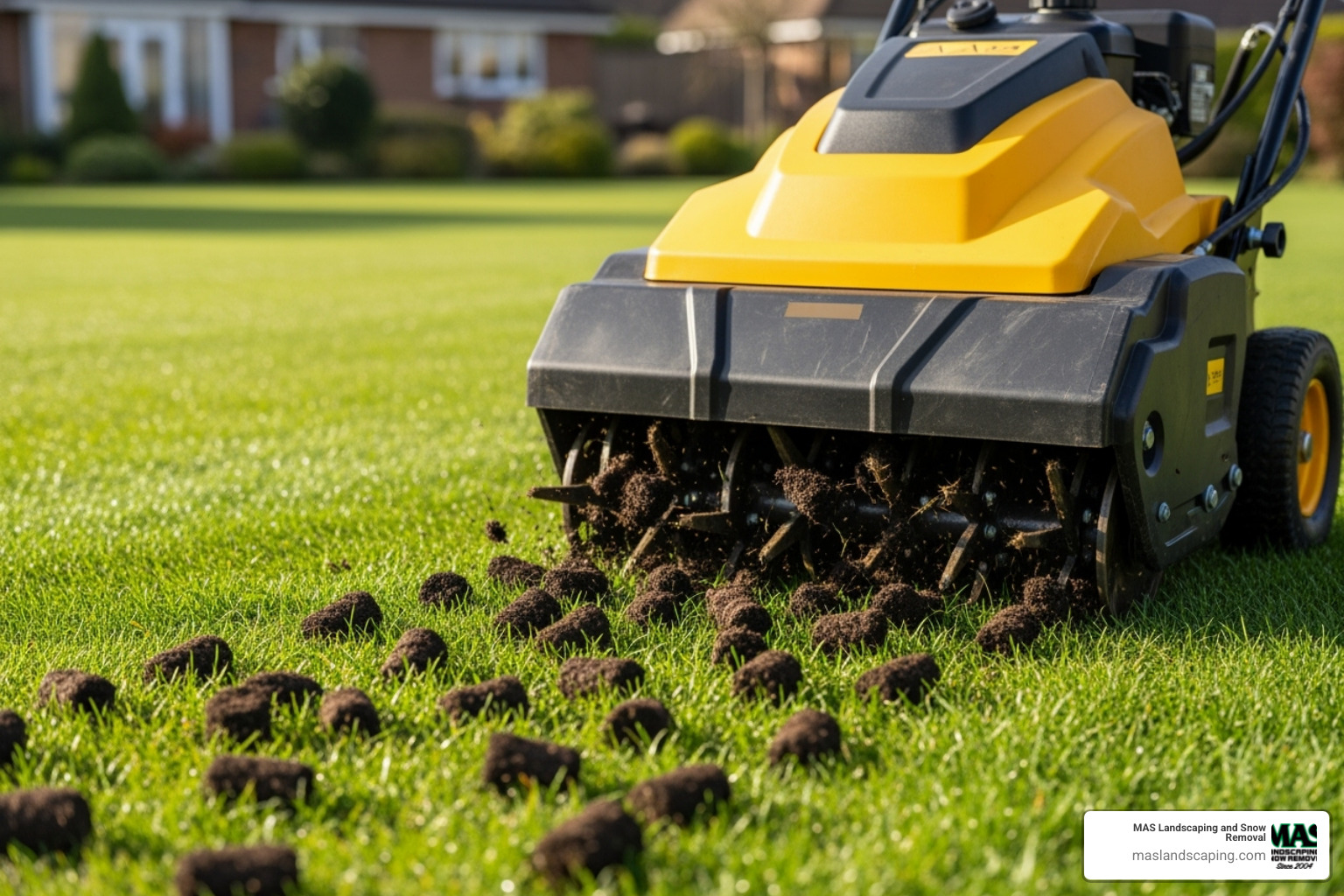
Dethatching removes excess thatch—the layer of dead and living grass stems between the green blades and the soil. A thin layer is beneficial, but thatch thicker than a half-inch can block water and nutrients, creating a breeding ground for pests and diseases. We use specialized tools to remove excess thatch. These advanced techniques can dramatically improve your turf’s health. Our Lawn Treatment Services Near Me offer comprehensive options for properties in Chelsea, Everett, and beyond.
Tackling Common Lawn Problems
Even well-cared-for lawns can face challenges like weeds, pests, and diseases. A healthy, dense lawn is the best defense, but knowing how to identify and address issues is key. We focus on an integrated approach, using prevention and early detection. Often, the type of weed can give clues about underlying soil problems.
Weed Identification and Control
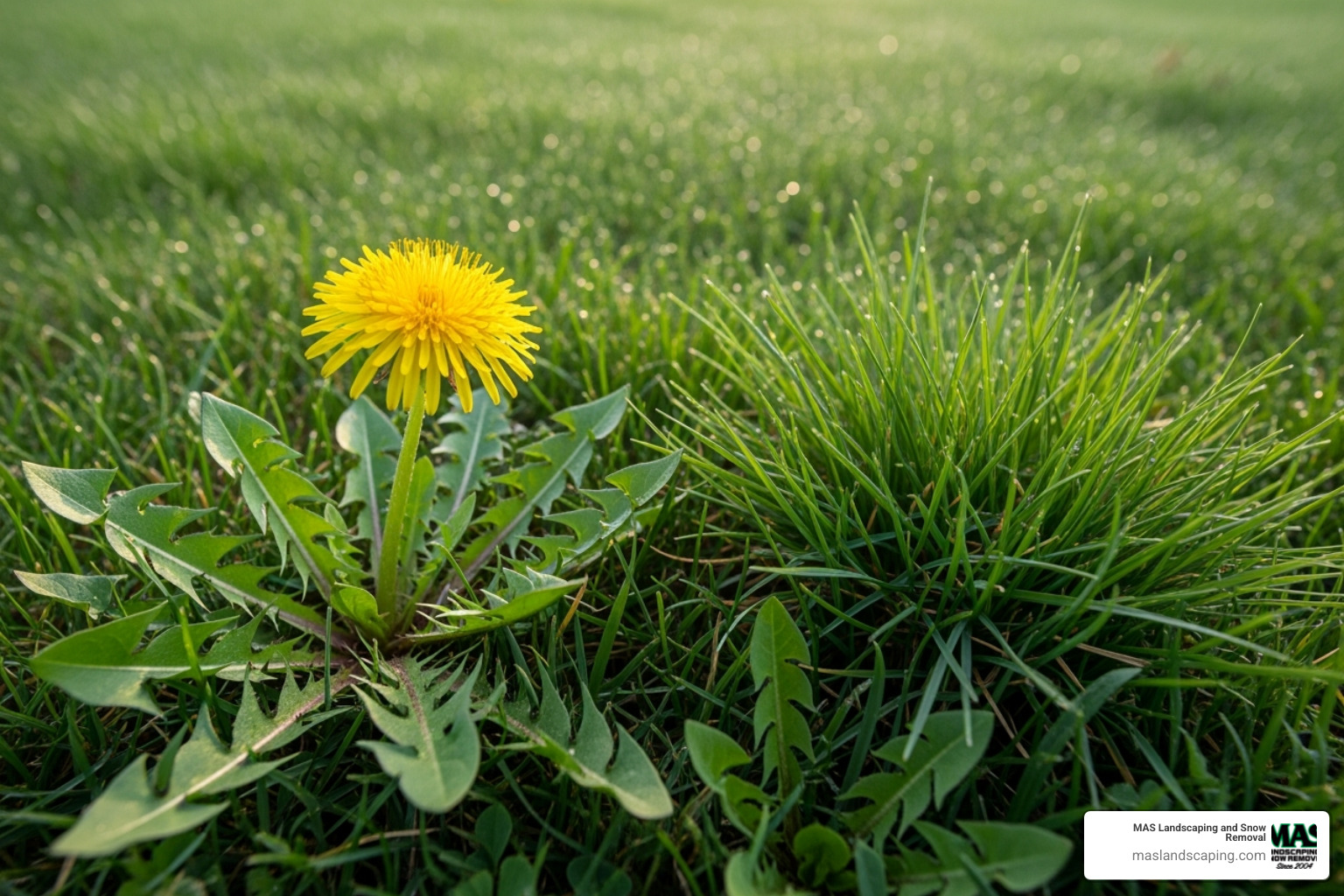
Weeds can choke out healthy grass. The best control is a thick lawn that naturally crowds them out. When weeds appear, identification is the first step. For example, moss often indicates shady, acidic soil, while nutsedge suggests poor drainage. Crabgrass can mean your turf isn’t dense enough or you’re mowing too low.
For small infestations, hand-pulling is effective. For larger areas, targeted herbicides can be used. Prevention is always the best strategy. Proper fertilizing, watering, and mowing create a dense lawn that resists weeds. Using mulch in adjacent garden beds, through services like our Installing Mulch option, also acts as a natural weed barrier. For those interested in chemical-free methods, Natural Lawn Care Techniques | Gardener’s Supply offers valuable insights.
Managing Pests and Diseases
Lawn pests and diseases can quickly damage a lush lawn. Common insects in our region include white grubs, sod webworms, and chinch bugs.
Here are some signs of common lawn pests:
- Grubs: Irregular brown patches that lift easily, or increased animal digging.
- Chinch Bugs: Irregular yellow or brown patches in hot, dry areas that don’t improve with water.
- Sod Webworms: Small brown patches with chewed-off grass blades.
Many fungal diseases, like Brown Patch or Dollar Spot, thrive on wet foliage. This is why watering in the early morning is so important—it allows grass blades to dry during the day. Avoid watering at night.
Our approach often involves Integrated Pest Management (IPM), which focuses on long-term prevention through healthy ecosystem practices and monitoring. Pesticides are used by licensed professionals as a last resort to control active infestations, minimizing chemical use while protecting your lawn.
The Benefits of Hiring a Professional Lawn Care Service
Maintaining a beautiful lawn is a significant commitment. For many homeowners and businesses in busy areas like Medford and Melrose, finding the time and energy for comprehensive lawn care and maintenance is a challenge. This is where a professional service can transform your experience, allowing you to enjoy your yard without the hard work.
The primary benefits of hiring a professional include:
- Time Savings: Reclaim your weekends. Professional care frees up hours you would otherwise spend on lawn tasks.
- Expertise and Knowledge: Professionals understand local challenges, from New England’s clay-heavy soils to specific regional pests. We can diagnose problems accurately that an untrained eye might miss.
- Professional Equipment: We use commercial-grade mowers for cleaner cuts and precision spreaders for even fertilization, delivering superior results that are difficult to achieve with consumer tools.
- Consistent Results: Your lawn receives high-quality care on a regular schedule, ensuring it never gets neglected. This consistency is what creates a truly impressive lawn.
- Increased Property Value: A well-maintained lawn significantly boosts curb appeal, making a powerful first impression and increasing your property’s long-term value.
If you’re searching for the Best Lawn Care Service Near Me, we’re here to take the stress out of lawn care and give you back your free time.
What Services Do Professionals Offer?
Professional lawn care and maintenance is a comprehensive service that addresses every aspect of your lawn’s health. Key offerings include:
- Mowing and Edging: We maintain optimal cutting heights and create crisp, clean edges for a polished look.
- Fertilization Programs: We develop customized feeding schedules that provide the right nutrients at the right time.
- Weed and Pest Control: We identify specific issues and create targeted, effective, and environmentally responsible treatment plans.
- Aeration and Overseeding: We offer these advanced services, which require specialized equipment, to dramatically improve lawn health.
- Seasonal Cleanups: Our Landscape Cleanup Services handle spring and fall transitions to prepare your lawn for the coming season.
These services are often bundled into seasonal packages to ensure your lawn receives consistent, coordinated care throughout the year.
Is Professional Lawn Care Cost-Effective?
When comparing professional care to DIY, it’s important to consider the hidden costs. DIY requires purchasing and maintaining equipment, buying products, and investing significant time in labor and research. Avoiding costly mistakes is a major financial benefit of hiring professionals. Errors like over-fertilizing or misidentifying pests can lead to expensive repairs.
The value of your time is also a key factor. When you calculate the opportunity cost of those weekend hours, professional service often becomes a very sensible investment.
Based on general internet data, basic lawn mowing services can range from $40 to $100 per visit. Comprehensive annual programs that include fertilization and pest control may range from $300 to over $1,500, with premium services for larger properties potentially costing three times as much. Please note these are average costs based on internet data and not actual costs for MAS Landscaping.
For businesses, a well-maintained landscape reflects professionalism. Our Commercial Landscape Maintenance Services ensure your property always makes the right first impression.
Frequently Asked Questions about Lawn Care
Many homeowners have questions about achieving a beautiful lawn. Lawn care and maintenance can seem complex, but the principles are straightforward. Here are answers to some of the most common questions we receive.
How often should I mow my lawn?
Mowing frequency depends on the grass growth rate, which varies by season. During peak growing seasons like late spring and summer, mowing once a week is typical. The most important guideline is the “one-third rule”: never cut more than one-third of the grass blade at once. Cutting too much at once stresses the grass, making it vulnerable to disease and discoloration. As growth slows in cooler or drier weather, you can reduce mowing to every two weeks or less.
What’s the best way to fix bare spots in my lawn?
Bare spots are fixable with a few simple steps. First, prepare the area by clearing away dead grass and debris, then loosen the top few inches of soil with a rake. Next, amend the soil by adding a thin layer of compost or topsoil to provide nutrients for the new seeds. Then, spread a high-quality grass seed suitable for your climate and sun exposure. Lightly rake the seeds into the top layer of soil to ensure good seed-to-soil contact. Finally, water consistently. Keep the patch moist with light, daily watering until the new grass is a few inches tall, then transition to deeper, less frequent watering.
For large bare areas or a complete lawn renovation, our professional New Lawns services, including sod and hydroseeding, offer excellent results.
When is the best time to water my lawn?
The best time to water your lawn is in the early morning, between 3 a.m. and 6 a.m. There are two key reasons for this:
- It reduces evaporation. Watering in the cool, calm morning air ensures more water reaches the soil and roots instead of evaporating.
- It helps prevent disease. Morning watering allows the grass blades to dry completely during the day. Lawns that remain wet overnight create a damp environment perfect for fungal diseases to grow and spread.
The golden rule is to water deeply but infrequently. Aim for a total of 1 to 1.5 inches of water per week, which encourages deep, drought-resistant roots.
Conclusion
We’ve covered the essentials of creating and maintaining a fantastic lawn, from understanding soil health to mastering seasonal rhythms. It’s clear that a lush, green yard is the result of consistent care, smart techniques, and a proactive approach.
The key takeaways are simple: healthy soil is the foundation, consistency is crucial, and proactive care like aeration and weed management prevents bigger problems later. A vibrant lawn boosts your home’s curb appeal, increases its value, and provides an inviting space for you to enjoy.
We understand that for busy homeowners and businesses in Saugus, MA, and surrounding towns like Everett, Lynnfield, and Malden, finding the time for these tasks can be overwhelming. That’s where MAS Landscaping can help. We offer personalized, professional lawn care and maintenance services to take the work off your hands.
If you dream of a stunning, hassle-free yard, consider our professional Residential Landscape Maintenance Services. We’re here to help your outdoor space shine.