




Loam Delivery: Top 3 Reliable & Best Services in 2025
Why Professional Loam Delivery Transforms Your Landscaping Projects
Loam delivery services bring premium soil directly to your property, eliminating the hassle of hauling heavy materials yourself. Whether you’re establishing a new lawn, filling garden beds, or leveling uneven areas, bulk loam delivery offers the convenience and quality you need for successful landscaping projects.
Quick Loam Delivery Overview:
– What it is: Screened soil blend of sand, silt, and clay delivered in bulk
– Common uses: Lawn seeding, garden beds, top-dressing, filling low spots
– Delivery options: Bulk truck loads (2-25 yards) or bagged materials
– Typical timeline: 1-3 days from order to delivery
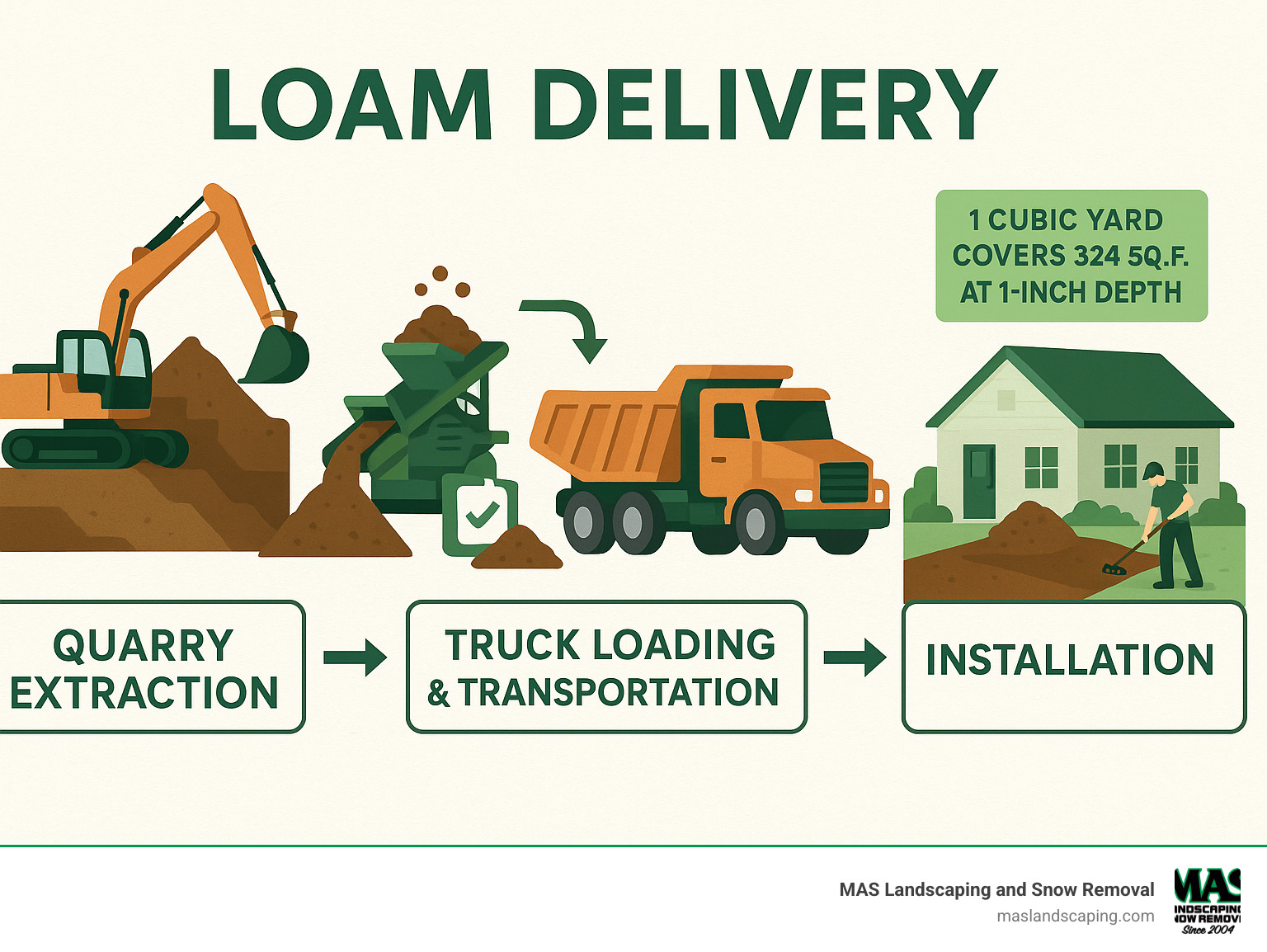
– Coverage: 1 cubic yard covers 324 square feet at 1-inch depth
For Greater Boston area homeowners, loam delivery has become increasingly popular as more people find the time savings and superior results compared to bagged store-bought soil. As one Massachusetts supplier notes, “Over 1.5 million bags of black garden soil and mulch have been delivered to customers,” highlighting the growing demand for convenient soil delivery services.
The key advantage of professional loam delivery lies in both quality and convenience. Screened loam is typically processed down to 1/2 inch particles, ensuring consistent texture that’s ideal for lawns and gardens. Most suppliers offer delivery within 1-3 days, with many providing same-day service depending on your location and order size.
Understanding your options helps you make the right choice for your specific project needs, budget, and timeline.
Loam delivery terminology:
– Mulch Delivery Saugus MA
– landscaping material
Understanding Loam: Composition, Benefits & Popular Blends
Think of loam delivery as ordering nature’s perfect recipe for your garden. While many people assume all soil is basically the same, loam represents something special—a carefully balanced blend that makes plants thrive in ways that regular dirt simply can’t match.
The magic happens in the mixture. Quality loam contains roughly 40% sand, 40% silt, and 20% clay, creating what soil experts call the “texture triangle” sweet spot. The sand particles create spaces for air and water to move freely, preventing that soggy, waterlogged feeling that kills plant roots. Clay particles act like tiny magnets, grabbing onto nutrients and holding them until your plants need them. Silt fills in the gaps, creating the smooth, workable texture that makes loam so pleasant to dig and plant in.
But here’s what really sets premium loam apart: the organic matter content. Quality loam delivery services provide soil with 4-6% organic humus—decomposed plant material that acts like a natural fertilizer factory. This organic component improves the soil’s ability to hold both water and nutrients, creating what scientists call “cation exchange capacity.” Basically, it means your soil becomes a nutrient savings account for your plants.
When suppliers screen their loam to ½ inch particles, they’re removing rocks, sticks, and debris while creating that consistent texture that spreads evenly and looks professional. The result is soil that retains moisture during dry spells while draining properly during heavy rains—something that’s particularly important here in Massachusetts where we get everything from summer droughts to spring deluges.
| Soil Type | Sand Content | Drainage | Nutrient Retention | Best Uses |
|---|---|---|---|---|
| Loam | 40% | Excellent balance | High | Lawns, gardens, general landscaping |
| Topsoil | Varies widely | Often poor | Low to moderate | Basic fill, rough grading |
| Fill Dirt | Varies | Poor to fair | Very low | Grading, foundation work |
What Makes Loam the “Gold Standard” Soil?
The secret lies in that 40-40-20 mixture and what it creates underground. When you water loam, it absorbs moisture like a sponge but doesn’t become waterlogged. When plants need nutrients, the clay particles release them gradually instead of washing away with the first rain.
This balance creates ideal conditions for root growth. Plant roots can push through loam easily, spreading out to find water and nutrients. The soil stays loose and workable, which means less compaction and better long-term health for your lawn or garden.
Most quality loam maintains a pH between 6.5 and 7.5, which happens to be the range where most grass types and garden plants absorb nutrients most efficiently. This natural pH balance means you’re starting with soil that’s already optimized for plant growth.
Common Loam Blends You Can Order Today
Modern loam delivery services understand that different projects need different soil characteristics. Screened loam serves as the foundation—basic loam processed to remove debris and create consistent texture. This works beautifully for lawn establishment and general landscaping projects where you need reliable, workable soil.
Sandy loam contains extra sand content, making it ideal for areas where drainage is critical. If you’re dealing with clay-heavy existing soil or planting areas that tend to stay wet, sandy loam helps water move through more quickly while still retaining enough moisture for healthy plant growth.
Plant bed mix typically combines screened loam with about 20% organic compost, creating soil that’s immediately ready for flower beds and garden areas. The extra organic matter provides an initial nutrient boost that helps new plantings establish quickly.
Super soil represents the premium option—a rich blend that often includes loam, compost, and peat moss in carefully measured proportions. This creates the ultimate growing medium for vegetable gardens or areas where you want maximum plant performance.
Each blend serves specific needs, and understanding these differences helps you choose the right soil for your particular project and growing conditions.
Calculating How Much Loam You Need for Any Project
Nothing’s worse than running out of soil halfway through your project—or having a mountain of leftover loam delivery sitting in your driveway for months. The good news? Calculating your loam needs is actually pretty straightforward once you know the basics.
Here’s the magic number to remember: one cubic yard of loam covers 324 square feet at 1-inch depth. Think of it like a pizza—the thinner you slice it, the more area it covers. At 2 inches deep, that same yard covers 162 square feet. At 3 inches, you’re looking at 108 square feet.
The depth you need depends entirely on what you’re doing. For lawn top-dressing (basically giving your grass a nutritious blanket), you only need about 1/4 to 1/2 inch. Starting a brand new lawn? You’ll want 2-4 inches to give those grass roots a proper foundation.
Garden beds typically need 2-3 inches of fresh loam mixed into existing soil, while raised beds require much more—anywhere from 6-12 inches depending on what you’re growing.
Here’s a pro tip from years of experience: always order 10-15% extra material. Soil settles more than you’d expect, and it’s much easier to find a use for leftover loam than to schedule another delivery for that one stubborn corner you miscalculated.
Most loam delivery trucks can handle 15-25 cubic yards per load, which is perfect for most residential projects. If you’re thinking about picking up soil yourself, a standard pickup truck can safely carry about 2 cubic yards—but that’s some serious weight, so make sure your truck (and your back) can handle it.
Quick Formula for DIY Estimating
Ready for some simple math? The formula is: Length × Width × Depth ÷ 27 = Cubic Yards Needed
The key is converting everything to feet first. That 3-inch depth becomes 0.25 feet (just divide 3 by 12). Don’t worry—even seasoned landscapers still pull out their phones for this calculation.
Let’s walk through a real example. Say you’re preparing a 20-foot by 30-foot area for new sod and want 3 inches of loam:
– 20 × 30 × 0.25 ÷ 27 = 5.56 cubic yards
– Round up to 6 cubic yards to account for settling
Always round up rather than down. Trust me, you’ll thank yourself later when you’re not scrambling to find that extra half-yard of matching soil.
When to Order Bulk vs Bagged
The decision usually comes down to project size and your specific situation. For smaller projects under 2 cubic yards, bagged soil might make more sense—especially if you have limited access or need to store the material for a while.
Bagged loam works best when you need precise control over quantities, have tight spaces to steer, or want to tackle the project over several weekends. It stays dry until you’re ready to use it, and there’s something satisfying about knowing exactly how many bags you need.
But here’s where bulk loam delivery really shines: once you’re looking at larger areas, the cost savings become significant, and you’ll avoid the backbreaking work of hauling dozens of heavy bags. Plus, bulk loam tends to be more consistent throughout the entire load.
For more detailed information about calculating your material needs and exploring other options, check out our comprehensive guide on bulk landscaping materials.
Loam Delivery: Options, Costs & Logistics
When it comes to loam delivery, you have a few straightforward choices that fit most budgets and project sizes. In Greater Boston, suppliers typically run trucks that hold 23 yards for smaller runs and up to 25 yards for bigger residential jobs.
Based on publicly available internet data (not MAS Landscaping pricing), average costs fall between $25 and $150 per cubic yard, while specialty blends can reach $300+ per yard. Most quotes include delivery inside the supplier’s normal service radius; longer distances or rush service may add a mileage or convenience fee.
Delivery Styles at a Glance
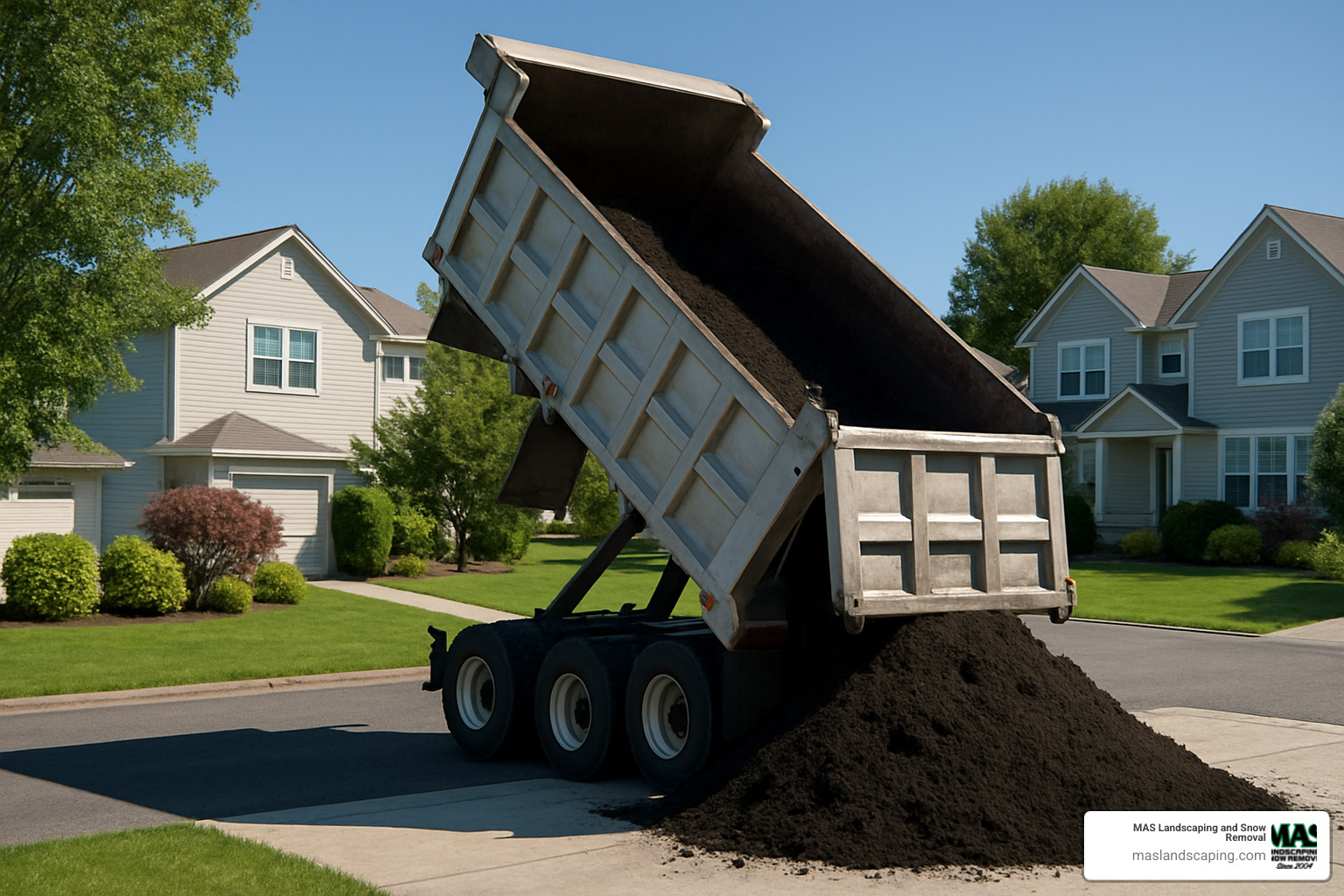
- Bulk dump: Most economical. The truck tips its bed and leaves a single pile in your driveway.
- Fork‐bag (super-sack): Soil arrives in large reusable bags that can be placed more precisely. Expect a higher per-yard fee for the extra handling.
- Split load: Combine loam with compost or mulch in one trip to save a second delivery charge.
What Affects Your Final Quote?
- Distance: Many suppliers include the first 105 miles, then charge per additional mile.
- Order size: Larger quantities often score a small discount, while anything under 2 yards may trigger a minimum-load fee.
- Site difficulty: Tight turns, steep grades, or soft driveways may require special equipment or a waiver.
- Timing: Same-day or weekend drops usually cost more, especially during peak spring and fall.
Prep Checklist for a Smooth Drop-Off
- Clear 35 ft of straight driveway and 14 ft of width.
- Remove overhead obstructions: limbs, wires, hoops, or basketball nets.
- Lay down a tarp or plywood if rain is expected or your driveway is new asphalt.
- Mark sprinkler heads or underground utilities.
Need help tidying up before the truck arrives? Our yard clean-ups team can prep the space so delivery day is hassle-free.
Site Preparation, Spreading & Incorporation Best Practices
Getting your loam delivery properly installed makes all the difference between a thriving landscape and ongoing problems. The secret isn’t just dumping the loam and hoping for the best—it’s about creating the right foundation from the start.
Before that beautiful pile of loam even arrives, your site needs some attention. Removing existing vegetation is crucial if you’re establishing new lawn or garden areas. Leaving grass or weeds underneath creates a barrier that prevents proper drainage and lets unwanted plants push through later.
Grading comes next, and it’s more important than most homeowners realize. A gentle slope away from buildings prevents water from pooling and causing foundation issues. Even garden beds benefit from subtle grading that encourages water to flow naturally rather than collecting in low spots.
Tilling compacted areas helps the new loam integrate with your existing soil. This step is especially important if heavy equipment has been on your property or if you’re dealing with clay-heavy Massachusetts soil. The goal is creating a smooth transition where roots can easily move from the loam layer into the subsoil below.
Testing your soil’s pH before installation can save headaches later. If your existing soil is highly acidic (common in our area), you might want to add lime before spreading the loam. This creates better growing conditions right from the start.
Step-by-Step Guide to Spreading Bulk Loam
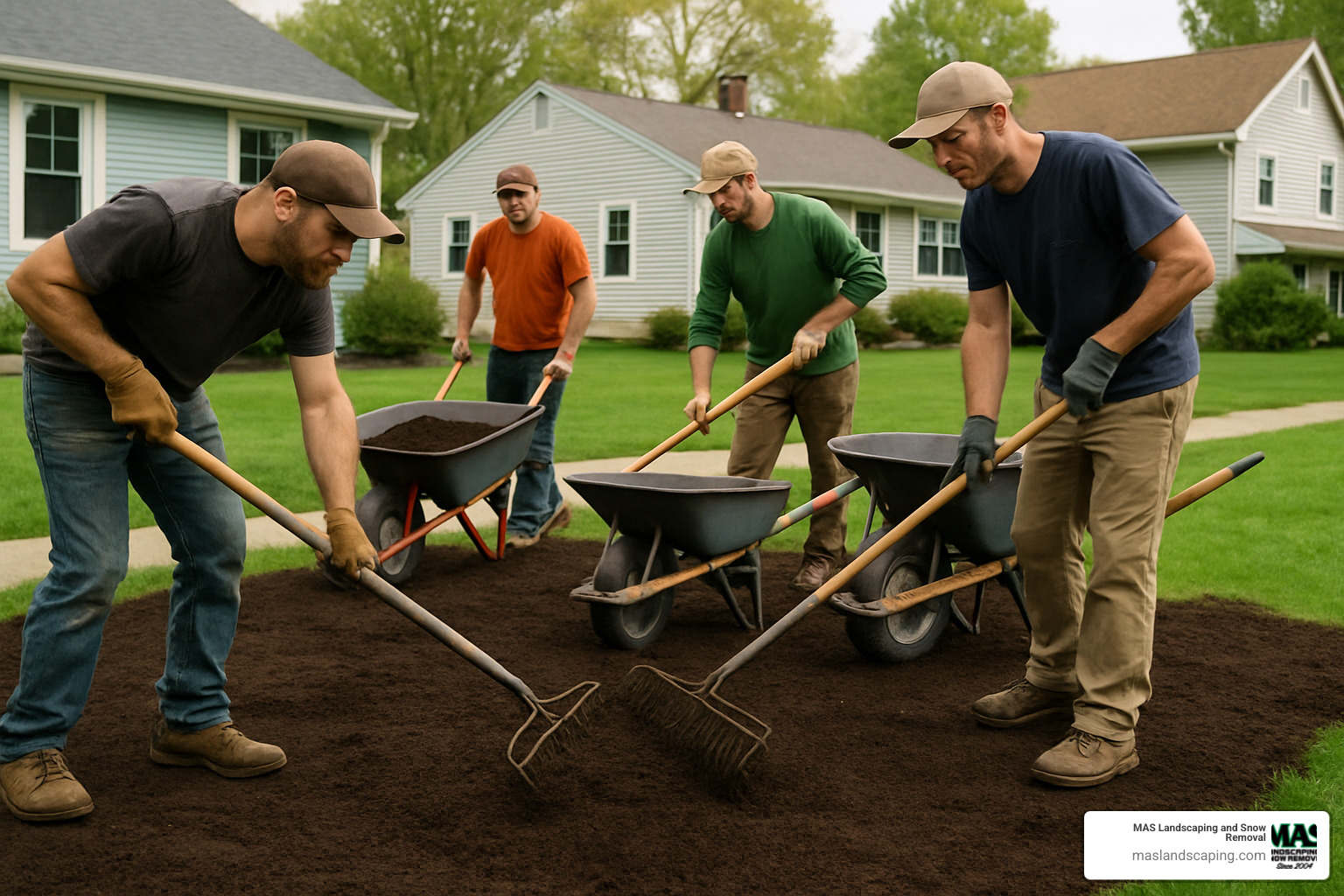
Once your loam arrives, having the right tools makes everything easier. You’ll need a sturdy wheelbarrow, steel rake, leaf rake, shovel, and garden hose. A tamper helps with light compaction, though your feet work fine for smaller areas.
Planning your wheelbarrow routes saves your back and protects existing landscaping. Map out paths that avoid delicate plants and provide easy access to all areas you’re covering.
The actual spreading works best when you tackle manageable sections—about 10×10 feet at a time. This keeps you from getting overwhelmed and helps maintain consistent quality throughout your project.
Depth matters more than you might think. Apply loam in 2-3 inch layers, never dumping more than 4 inches at once. Thick layers don’t settle properly and can create drainage problems. For lawn top-dressing, you might only need 1/2 inch, while new garden beds typically need 2-3 inches.
Raking smooth comes next, using your steel rake to achieve even coverage and eliminate air pockets. This step takes patience, but it’s worth doing right. Light compaction follows—either walk over the area systematically or use a tamper to settle the loam without creating a concrete-hard surface.
Gentle watering helps everything settle and reveals any uneven spots you might have missed. Use a sprinkler or gentle spray setting rather than a hard stream that can wash away your careful work.
Boosting Soil Health After Installation
Fresh loam provides an excellent foundation, but smart amendments can boost your long-term success. The specific improvements depend on what you’re planning to grow.
For new lawns, starter fertilizer applied before seeding gives grass seedlings the nutrients they need during those critical first weeks. Follow up with slow-release fertilizer programs to maintain healthy growth without encouraging excessive top growth.
Garden beds benefit from additional organic matter mixed into the loam. Compost or aged manure introduces beneficial microorganisms that help plants access nutrients more effectively. These amendments also improve the soil’s water-holding capacity during dry spells.
Mulching completes the soil improvement process beautifully. A 2-3 inch layer of organic mulch conserves moisture, suppresses weeds, and gradually improves soil structure as it decomposes. It’s like giving your new loam a protective blanket that keeps working year after year.
The investment in proper soil preparation and installation pays dividends for years to come. Your plants will establish faster, require less maintenance, and show better resistance to drought and disease.
Our Mulch Delivery and Installation Services can help complete your soil improvement project with quality organic mulches that complement your new loam installation.
Ensuring Quality, Sustainability & Local Compliance
Premium loam delivery should look, smell, and feel right the moment it hits your driveway. Expect a rich, dark‐brown color and that classic earthy scentno sour or chemical odors.
Quick Field Tests You Can Do
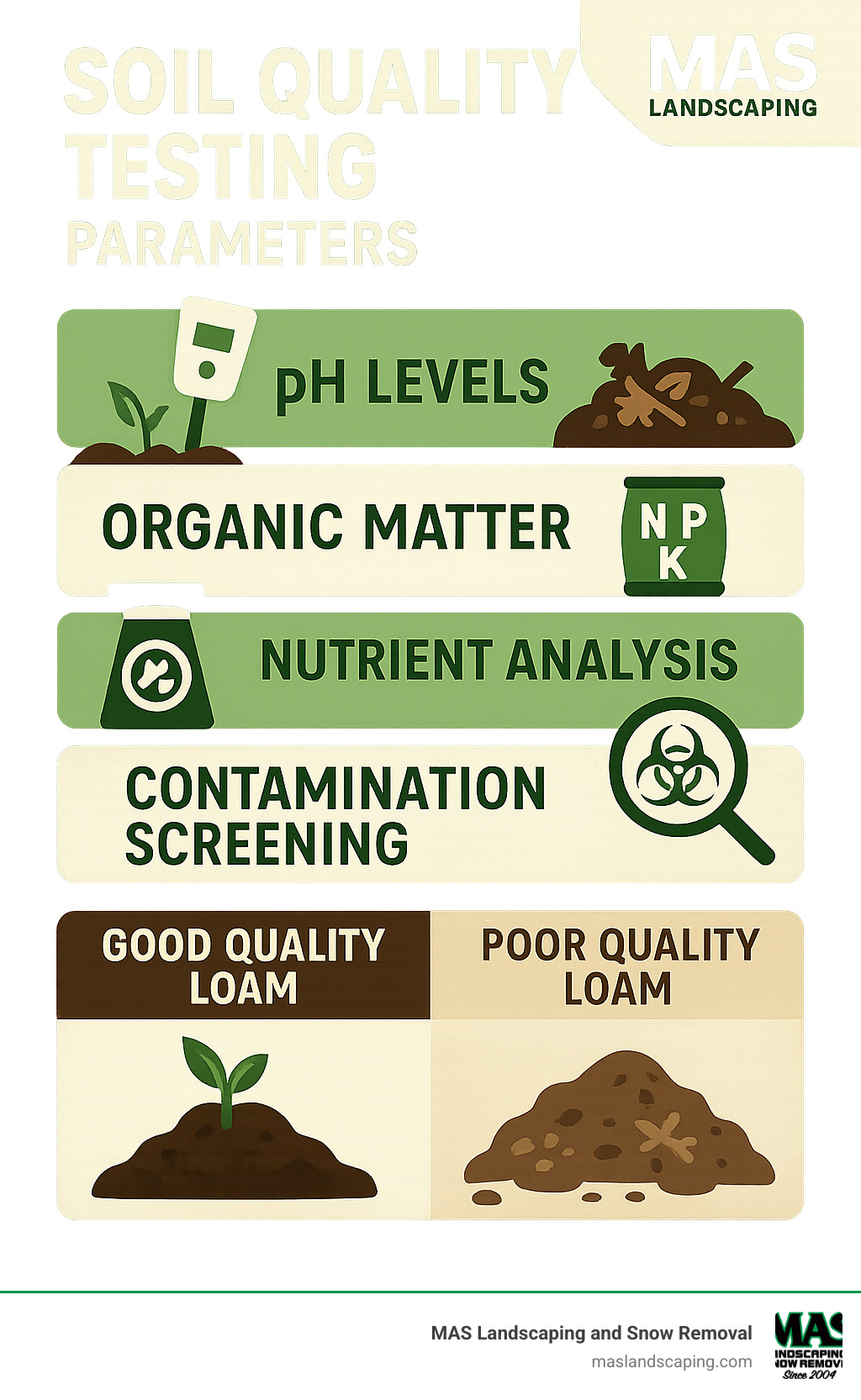
- Visual: Consistent texture, few stones, no weeds.
- Squeeze: Slightly moist soil should clump, then crumble with a tap.
- pH: Quality loam centers around 6.57.5, perfect for lawns and most ornamentals.
Reputable suppliers back their product with screening certificates and gladly answer questions about origin, testing, and invasive‐species compliance. If the load falls short, take photos and call immediatelymost companies will swap material or issue credit.
Why Buy Local?
- Lower carbon footprint: Fewer miles on the road.
- Regional know-how: Soil blends matched to our North-Shore climate.
- Circular economy: Yard waste from nearby towns is composted and returned to gardens as organic matter.
Supporting local processors keeps dollars in Everett, Lynnfield, Malden, and surrounding communitiesand gives you faster service if you ever need an extra yard or two.
For deeper dives into improving soil without harming the planet, visit the USDA’s soil health research hub.
Frequently Asked Questions about Loam Delivery
How quickly can I schedule a loam delivery?
Getting loam delivery scheduled is usually pretty straightforward, with most suppliers able to deliver within 1-3 days of your order. If you need material quickly, many companies offer same-day service for smaller loads, especially during quieter periods in summer and winter.
Spring and fall are the busy seasons when everyone’s thinking about their landscaping projects. During these peak times, you might need to plan a bit further ahead – sometimes up to a week during the heaviest demand periods. Weather plays a big role too, since delivery trucks can’t safely steer wet or muddy driveways.
Pro tip: Call early in the week to get the best scheduling options, and have a backup date in mind during peak seasons. Most suppliers are pretty flexible and will work with your timeline when possible.
What if I ordered too much or the quality isn’t right?
Don’t worry – reputable loam delivery companies stand behind their products and understand that estimating can be tricky for homeowners. Most suppliers offer satisfaction guarantees, so if the quality doesn’t meet expectations, they’ll typically replace the material or provide refunds for the unused portion.
Quality issues should be reported immediately after delivery – ideally the same day. Take photos if you notice problems like excessive debris, poor color, or bad odors. Good suppliers want happy customers and will make things right.
For excess material, the situation varies by company. Some will pick up unused loam for a fee, while others may offer credit toward future orders. Since removal isn’t always available, it’s better to slightly underestimate your needs and order more if needed rather than dealing with a big pile of leftover soil.
Does loam attract weeds or pests?
Quality screened loam should be relatively clean, though it’s important to have realistic expectations about any natural soil product. The screening process removes most vegetation and debris, but some weed seeds can still be present – that’s just the nature of working with natural materials.
The good news is that healthy loam actually supports beneficial organisms that help control harmful pests naturally. You’re much more likely to see earthworms and other helpful creatures than problem pests in quality soil.
Managing weeds is pretty straightforward with proper maintenance. Wind-blown seeds will find their way to any exposed soil surface, whether it’s new loam or existing garden beds. Regular mulching after your loam delivery prevents most weed problems and keeps your new soil looking great. A 2-3 inch layer of organic mulch makes a huge difference in weed control and soil health.
Conclusion
Professional loam delivery transforms landscaping projects from overwhelming weekend struggles into smooth, successful endeavors. When you understand soil composition, calculate the right quantities, and follow proper installation techniques, you’re setting yourself up for the kind of results that make neighbors ask, “Who did your landscaping?”
The beauty of working with quality loam delivery services lies in both the convenience and the long-term payoff. Instead of making countless trips to the garden center with bags of questionable soil, you get premium screened loam delivered right where you need it. Your plants get the foundation they deserve, and you get to skip the backbreaking work of hauling heavy bags.
At MAS Landscaping and Snow Removal, we’ve seen how the right soil makes all the difference. After years of serving homeowners throughout Everett, Lynnfield, Malden, Melrose, Medford, Revere, Saugus, and Chelsea, we know that successful landscapes start from the ground up—literally. Whether you’re dreaming of a lush new lawn or productive garden beds, quality loam provides the foundation that turns those dreams into reality.
The investment in professional loam delivery pays for itself through healthier plants, reduced maintenance headaches, and landscapes that actually thrive instead of just surviving. Your property value benefits too, but more importantly, you get to enjoy outdoor spaces that look and feel exactly like you envisioned.
Ready to give your landscape the foundation it deserves? Let’s talk about your project and how quality loam delivery can make it happen. We’re here to help you choose the right blend, calculate the perfect amount, and ensure everything gets installed properly.
For all your soil, mulch, and stone needs, explore our complete selection at Bulk Landscaping Materials. Your plants will thank you, and your landscape will show the difference quality makes.
