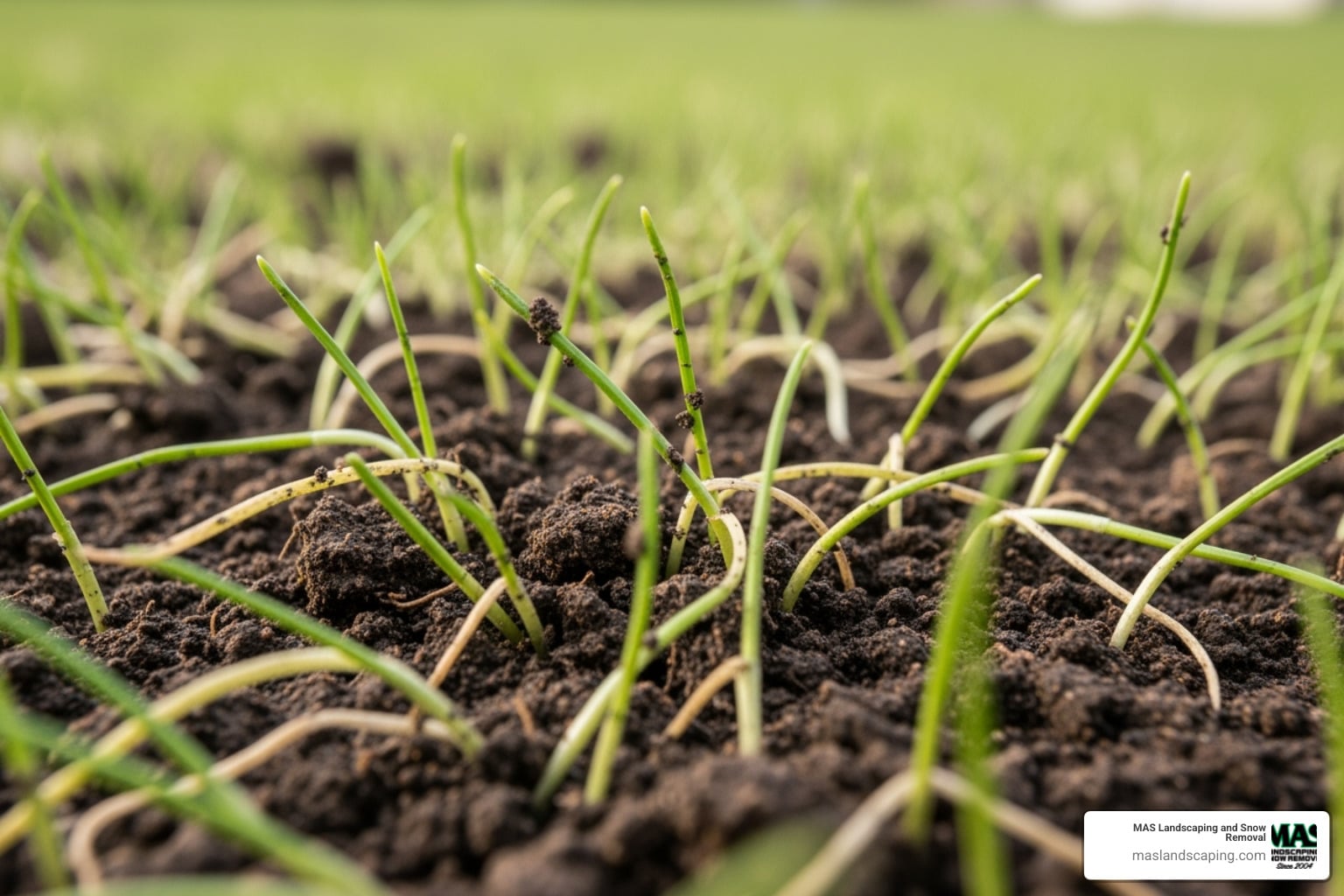



New grass laying down: Top 3 Fixes!
Why Your New Lawn Isn’t Standing Up
New grass laying down is a common issue for homeowners with a fresh lawn. If your newly seeded or sodded grass is flopping over, don’t worry—it’s a normal phase and usually fixable. The grass isn’t dying; it’s just too young to stand up to the elements.
Quick Answer: What Causes New Grass to Lay Down?
- Weak, Immature Stems: New grass lacks the structural strength to stand upright.
- Excess Moisture: Heavy rain or overwatering weighs down tender blades.
- Physical Pressure: Foot traffic or mower wheels compress grass that can’t bounce back.
- Wrong Mower Type: Cylinder or roller mowers flatten new grass instead of lifting it.
Most new lawns go through this awkward phase. Seeded lawns need about 4-8 weeks to become sturdy, while sod establishes faster in 2-4 weeks. Both can still lay down if conditions aren’t right.
The key is to understand the cause and take the right steps. With proper watering, gentle handling, and correct mowing, those droopy blades will develop into a thick, upright lawn.
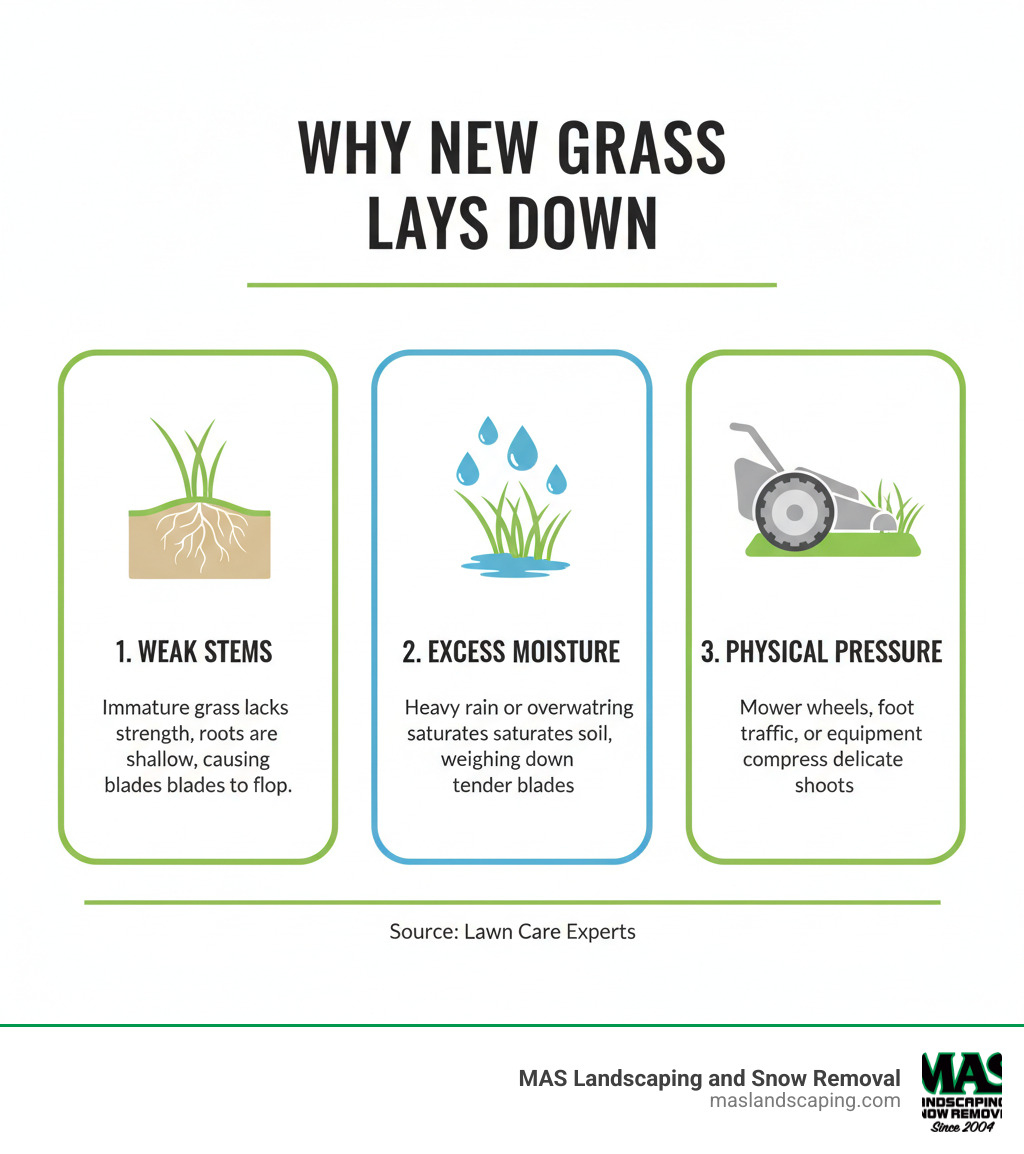
Simple new grass laying down glossary:
Diagnosing the Flop: Why Your New Grass is Laying Down
If your new grass shoots are sprawled flat instead of standing proud, what’s going on? The main culprit is usually just youth. New grass hasn’t developed the strength to stand tall, and its root system is still shallow after the germination process. Seeded lawns need four to eight weeks before their first mow, while sod needs two to four weeks for its roots to anchor. During this vulnerable period, several factors can knock your grass down.
- Weak Stems and Immature Grass: Young blades are soft and bend easily because they haven’t had time to thicken or develop side shoots (tillering). They lack the structural rigidity that comes with maturity.
- Heavy Rain and Overwatering: While new grass needs consistent moisture, too much water weighs down tender blades and can glue them to the ground, especially where drainage is poor.
- Mower Weight and Foot Traffic: The pressure from walking or rolling a mower over a new lawn can easily flatten blades that aren’t strong enough to bounce back.
- Soil Compaction: If the soil underneath is packed tight, roots struggle to penetrate deeply and drainage slows. Properly prepared, loose soil is essential for strong growth. For tips on starting right, see this guide on new lawn installation.
Signs of new grass laying down improperly
How can you tell if your new grass laying down is a normal growing pain or a problem? Look for these signs:
- Matted Patches: Sections of grass are pressed completely flat, usually after rain.
- Swirl Patterns After Mowing: The grass isn’t springing back, leaving flattened patterns from the mower.
- Uncut Blades After Mowing: Random patches of grass remain long because they were lying too flat for the blade to catch them.
- A Slimy Feel: In damp areas, slick grass that pulls out easily can indicate overwatering or fungal issues.
- Grass Doesn’t Spring Back: If grass stays flat for hours or days after being stepped on, it’s not recovering properly.
How grass type influences its tendency to lay down
Not all grass is created equal. The type you plant makes a difference in how prone it is to flopping over.
- Fine Fescue: Known for its delicate, narrow blades, this shade-tolerant grass lacks stiffness and is very susceptible to laying flat after rain or dew.
- Tall Fescue: With broader, more robust blades, Tall Fescue (especially newer turf types) stands up much better and is a popular choice for a durable, low-maintenance lawn.
- Perennial Rye: This grass establishes quickly but can be delicate in its first few weeks. It may lay down more easily in hot, dry conditions.
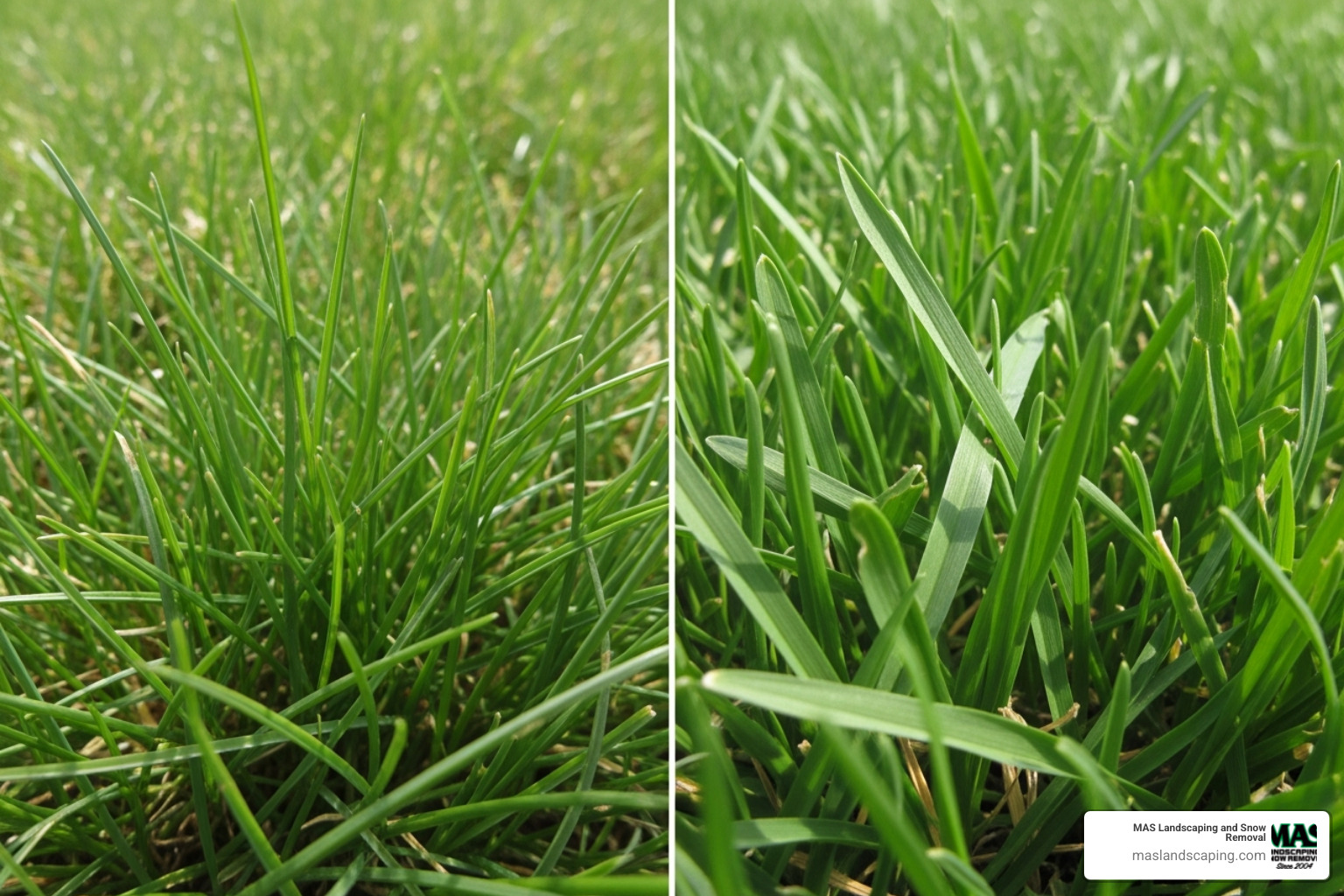
Understanding your grass type helps you anticipate its behavior and adjust your care routine accordingly. The blade structure plays a bigger role than most homeowners realize in achieving an upright lawn.
The Stand-Up Routine: How to Make New Grass Stand Up
If you have new grass laying down, you can help it stand tall. The trick is to be gentle, using a leaf blower or a flexible rake with the lightest touch imaginable. An aggressive approach can yank out young plants by their shallow roots.
How to Lift New Grass Before Mowing
Timing and technique are everything. Intervene after heavy rainfall to prevent matting or right before the first mow when the grass is too flat for the blades to catch.
- Wait for Dry Conditions: This is essential. Trying to lift or mow wet grass is ineffective, messy, and can spread disease. Allow the lawn to dry completely.
- Use a Leaf Blower on Low: Walk slowly, directing a gentle stream of air to coax the blades upright. This air circulation also helps dry the grass and can disrupt fungal growth.
- Rake Gently (If Needed): For stubborn spots, use a flexible leaf rake. Employ a light, upward combing motion to “fluff” the grass. If you’re pulling out plants, you’re being too aggressive. The goal is to lift the blades while avoiding uprooting them. A homeowner’s experience confirms this: “Wet grass sticks to the ground. So even if your leaf blower is just blowing the grass over in a different direction, you’re helping it dry out.” A homeowner’s tip on using a leaf blower shows this practical wisdom.
- Mow in the Opposite Direction: If the grass has a noticeable lean, mow against it. The mower’s suction will help lift the blades for a cleaner cut.
Sometimes, patience is the best tool. A combination of gentle blowing, dry weather, and proper timing before mowing allows the grass to regain its posture naturally. As the lawn matures, this problem will disappear. For a strong foundation from the start, see our details on Sod Installation.
First Cut Best Practices for Encouraging Upright Growth
The first mow is a critical step in training your lawn to grow strong and upright, and it’s often when new grass laying down becomes most frustrating. Getting it right sets your lawn up for long-term success.
Timing is crucial. For seeded lawns, wait until the grass is 3 to 4 inches tall, which can take up to eight weeks. For sod, wait two to four weeks for the roots to anchor. Test it by gently tugging a corner; if it resists, it’s ready. If it lifts easily, give it more time. For more guidance, see our resource on how to lay sod.
Before you start, ensure your mower blades are sharp. Dull blades tear grass, causing stress and browning.
How the type of mower affects new grass standing up
The right mower makes a huge difference for delicate new grass.
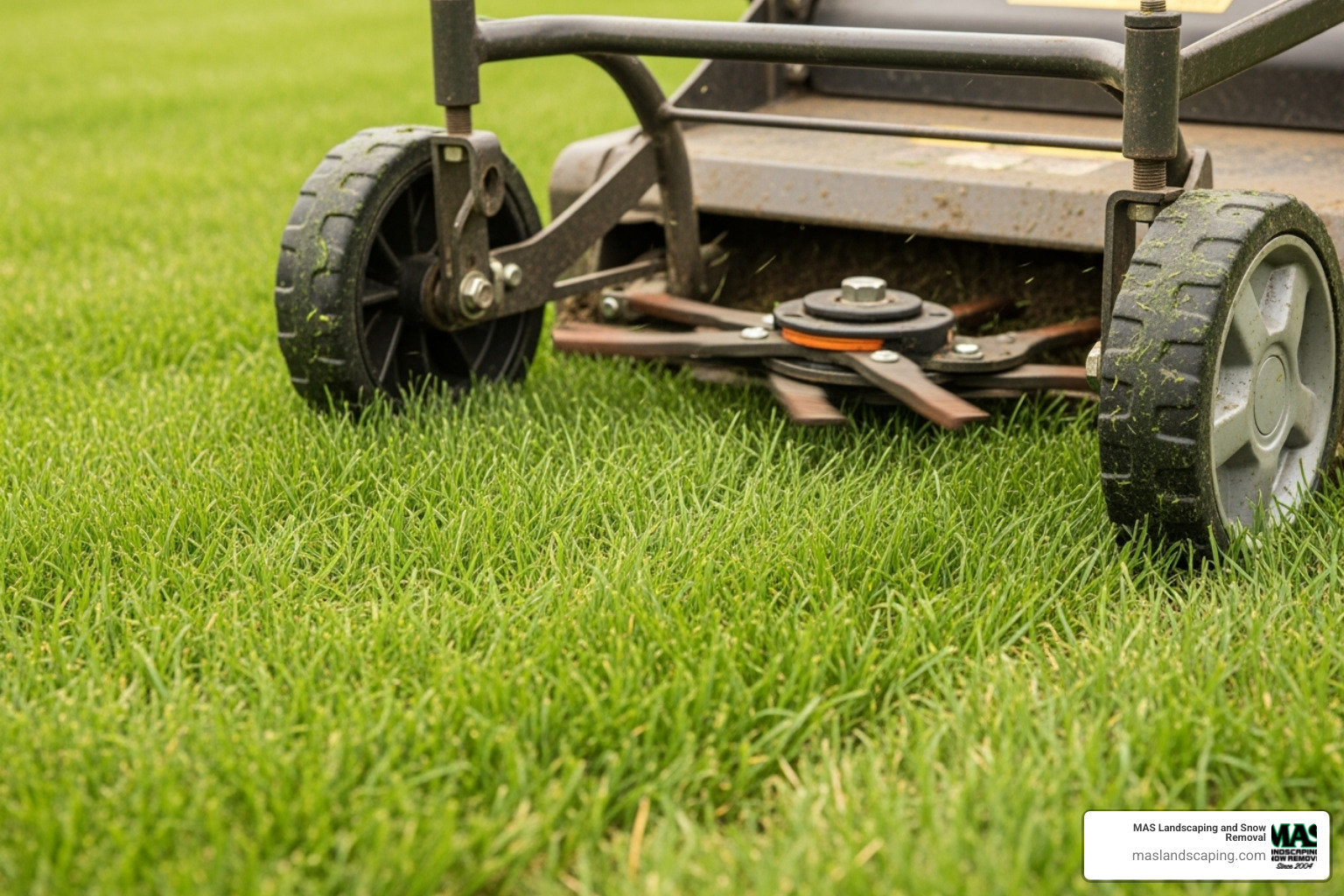
- Rotary Mowers: These are best for new lawns. The spinning blade creates suction that pulls grass blades upright before cutting, ensuring an even trim.
- Cylinder (Reel) and Roller Mowers: Avoid these on new lawns. Their front rollers press down on tender blades, causing them to lay flat and resulting in an uneven cut and more matting. Save them for when your lawn is fully mature.
How often to mow a new lawn to encourage upright growth
An early, consistent mowing routine encourages strong, upright growth.
- Follow the One-Third Rule: Never remove more than one-third of the blade’s height in a single mow. Cutting more shocks the young plants.
- Start High: For the first few mows, set your deck to 3-4 inches. Taller grass has more surface for photosynthesis and helps shade out weeds.
- Lower Height Gradually: As the lawn matures, you can slowly lower the cutting height over several weeks, still respecting the one-third rule.
- Alternate Mowing Patterns: Change your mowing direction each time. This encourages upright growth, prevents ruts, and distributes wear evenly.
- Mow When Dry: Always mow a dry lawn. Wet grass clumps, clogs the mower, and can spread disease.
By following these practices, you’re not just cutting grass—you’re training it to become a thick, resilient lawn.
The Role of Watering and Long-Term Lawn Health
Proper watering is critical for turning a new lawn into a lush, strong carpet of green. It directly impacts whether new grass laying down is a brief phase or a persistent problem.
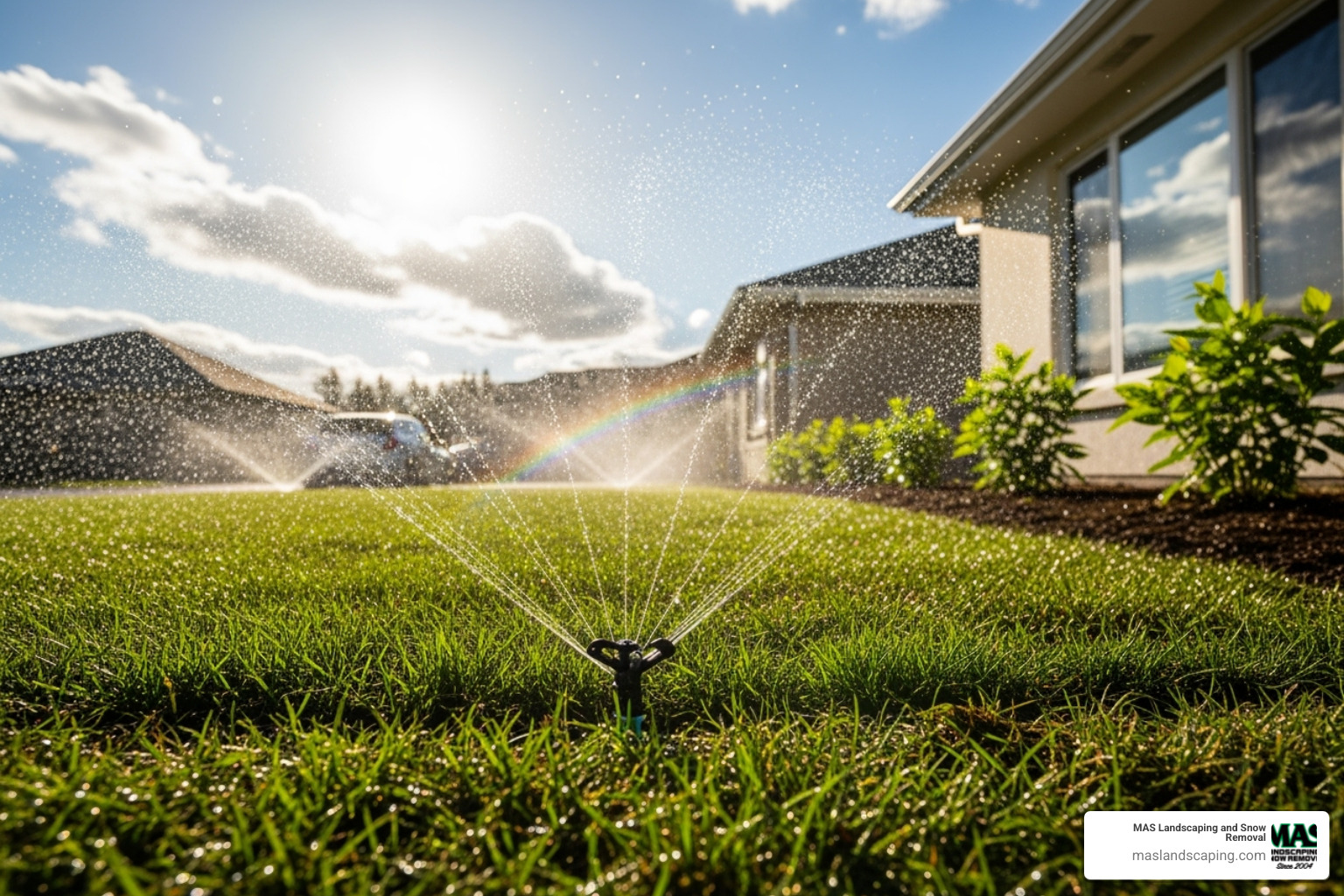
New grass needs consistent moisture near the surface because its roots are shallow. Keep the top inch of soil damp, but not waterlogged. As the lawn establishes over a few weeks, you can gradually shift to the deep and infrequent watering schedule recommended for mature lawns. This encourages deep root growth, creating a more drought-resistant lawn.
How watering helps new grass stand up
Water gives grass its backbone through turgor pressure—the internal water pressure in plant cells that keeps blades firm and upright. Well-hydrated grass is more elastic and bounces back easily from pressure. Watering a few hours before mowing can stiffen the blades for a cleaner cut, but always ensure the grass surface is dry before you start the mower.
Avoiding over-saturation is just as critical. Too much water weighs down blades, suffocates roots, and invites fungal disease. The best time to water is early morning (between 2 AM and 7 AM) when evaporation is low. This allows blades to dry before nightfall, reducing disease risk.
Risks and long-term benefits of new grass laying down
Ignoring matted grass can lead to a cascade of problems, while fixing it provides lasting benefits.
Risks of Matted Grass:
- Fungal Disease & Rot: Trapped moisture and poor airflow create a breeding ground for fungus.
- Pest Infestation: Matted grass offers shelter for insects.
- Poor Root Development: Blocked sunlight and weak plants lead to shallow roots.
- Uneven Growth: Some areas thrive while matted patches remain sparse.
Benefits of Upright Growth:
- Denser Turf: Upright grass encourages tillering (new shoots), which chokes out weeds.
- Stronger Root System: Healthy photosynthesis fuels deep, drought-tolerant roots.
- Better Curb Appeal: An even, upright lawn looks vibrant and well-cared-for.
- Increased Resilience: A well-established lawn better handles foot traffic and heat stress.
At MAS Landscaping, we understand the effort required for a beautiful lawn. Learn more about our grass installation services and how we can help you achieve your goals.
Frequently Asked Questions about New Grass Problems
Homeowners often have questions during the critical first few weeks of establishing a new lawn. Here are answers to the most common concerns, including why you might see new grass laying down.
Why is my new grass turning yellow after mowing?
This is common and usually points to your mowing technique. The most likely causes are:
- Scalping: Cutting the grass too short (removing more than one-third of the blade) shocks the plant, causing it to yellow. Always follow the one-third rule.
- Dull Mower Blades: Dull blades tear grass instead of cutting it cleanly. The ragged, wounded tips turn yellow or brown as they heal. Ensure your blades are sharp.
- General Stress: New lawns are already working hard to establish roots. Mowing adds stress, which can be amplified by heat, inconsistent watering, or poor soil, leading to yellowing.
- Nutrient Deficiency: If you didn’t use a starter fertilizer, your grass might be hungry. However, wait until after the first mow to fertilize to avoid burning young blades. For guidance, see our recommendations for the best fertilizer for new sod.
Can I walk on my new lawn before the first mow?
It’s best to avoid it. Walking on a new lawn can cause significant setbacks.
- Soil Compaction: Your footsteps squeeze air pockets out of the soil, making it difficult for new roots to spread and hindering drainage.
- Damage to Shoots: Tender new grass blades are fragile and can easily break or be uprooted by foot traffic, creating bare or matted patches.
Wait until the lawn has been mowed several times and feels firm underfoot. If you must cross the area, lay down wide boards or plywood to distribute your weight.
How long does it take for new grass stems to get strong?
This requires patience, as the timeline depends on grass type, conditions, and whether you used seed or sod.
- Seeded Lawns: Expect it to take about two months for stems to become truly strong. After germination, the plant needs weeks to develop a robust root system and begin tillering (sending out side shoots) to thicken the turf.
- Sod Lawns: Sod gives you a head start with mature grass, but the roots still need two to four weeks to knit into your soil and provide a firm anchor.
Root establishment is key. Strong stems require strong, deep roots. Rushing the process by mowing or walking on the lawn too soon will only set you back. For a detailed timeline, review our guide on the new lawn installation process.
Achieve a Strong, Upright Lawn
Establishing a new lawn takes patience, especially when dealing with new grass laying down. This is a normal phase for young grass as it develops the stem strength and root system needed to stand tall.
By following the key techniques—waiting for dry conditions, using a rotary mower, obeying the one-third rule, and watering deeply but infrequently—you are building the foundation for long-term lawn health. A properly established lawn develops into a dense, resilient turf with a strong root system that can handle summer heat and foot traffic.
The result is a lush, uniformly green lawn that adds significant beauty and value to your property. However, if you’re struggling with persistent issues or want professional guidance from the start, expertise can make all the difference.
For homeowners in the Saugus, MA area—including Everett, Lynnfield, and Malden—MAS Landscaping and Snow Removal offers local knowledge to get your lawn right the first time. Whether you need help with a new installation or ongoing maintenance, our team can save you time and frustration. Explore our landscaping services to see how we can help you achieve the lawn you’ve always wanted.