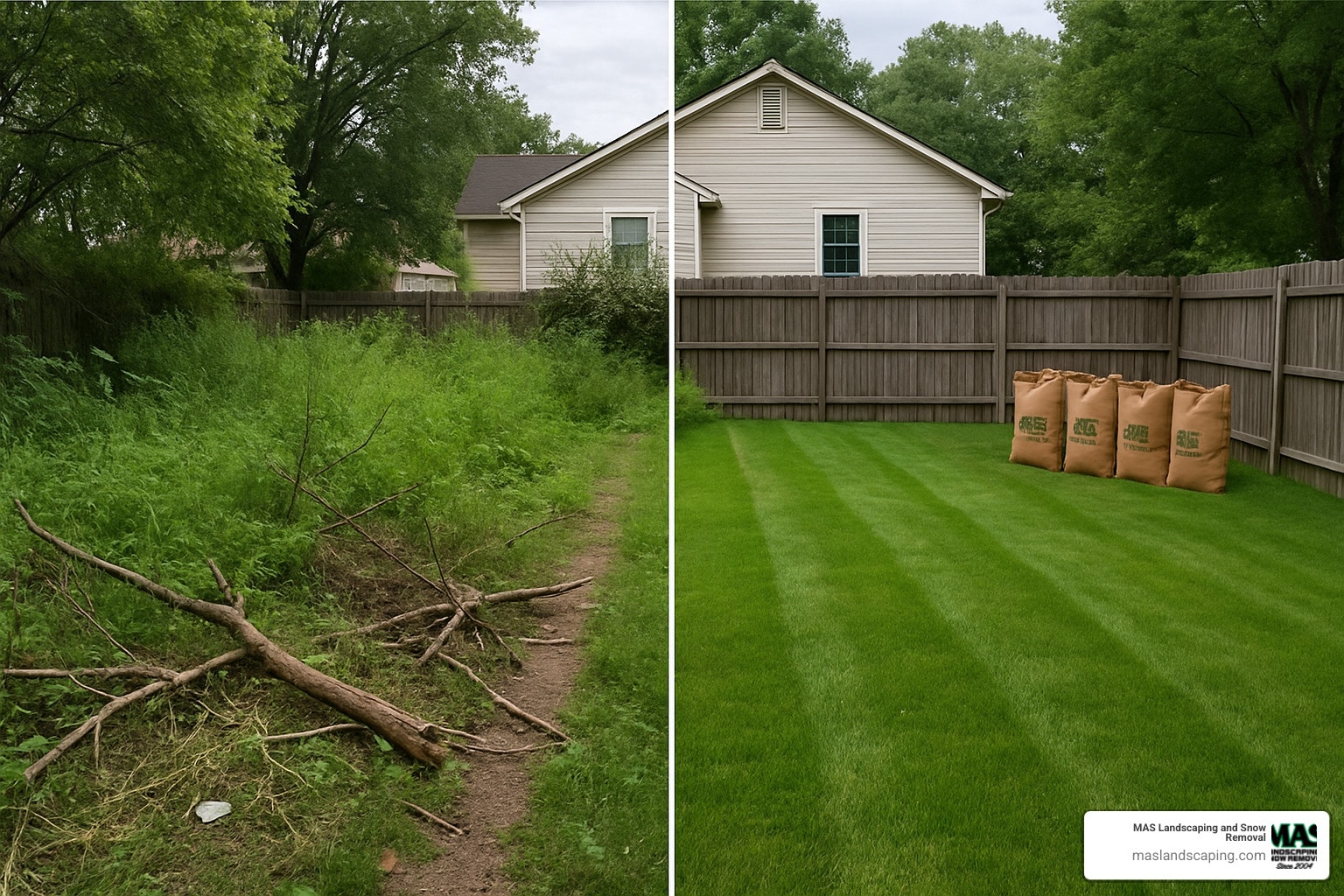



Overgrown Property Cleanup: 7 Powerful Steps for Stunning Results
Why Tackling an Overgrown Yard Is More Important Than You Think
Overgrown property cleanup involves removing debris, cutting back excessive vegetation, and restoring order to neglected outdoor spaces. Whether you’re dealing with months of neglect or inherited a jungle from the previous homeowner, the process follows these essential steps:
Quick Overgrown Property Cleanup Checklist:
– Remove debris – Clear trash, fallen branches, and obstacles first
– Cut down tall vegetation – Use brush cutters for thick growth, string trimmers for lighter areas
– Identify keepers – Separate valuable plants from weeds and invasive species
– Mow and trim – Work from center outward once obstructions are cleared
– Define edges – Create clean borders around walkways, beds, and structures
– Plan maintenance – Set up regular care to prevent future overgrowth
The hidden costs of letting your yard go wild are serious. Beyond the obvious eyesore factor, overgrown properties become magnets for pests and rodents. Tall grass and dense brush create perfect hiding spots for ticks, while accumulated debris provides breeding grounds for mosquitoes.
Safety becomes a major concern too. Nearly 10,000 children under 18 receive hospital treatment for lawn mower-related injuries annually in the US – many from attempting to cut grass that’s grown too tall for standard equipment. Overgrown areas also create trip hazards and can fuel fires during dry seasons.
A well-executed cleanup can boost your property value by 15% or more. Landscaping improvements often deliver a 100-200% return on investment, making this one of the smartest home improvement projects you can tackle.

Overgrown property cleanup terms at a glance:
– landscape maintenance near me
– cost of leaf removal
– best way to clean up acorns from lawn
Overgrown Property Cleanup 101: Why It Matters
Overgrown property cleanup is the process of bringing wild outdoor spaces back under control. When landscaping professionals talk about overgrown properties, we’re referring to yards where vegetation has grown beyond normal maintenance levels – grass that’s knee-high, shrubs that have doubled in size, or trees with branches reaching toward your roof.
The health risks hiding in overgrown yards are real and serious. Dense vegetation becomes a perfect breeding ground for mosquitoes, while tall grass provides ideal habitat for ticks that can carry Lyme disease. Rodents often move in permanently, treating overgrown areas like shelter with protection from predators.
According to scientific research on lawn mower injuries, attempting to tackle severely overgrown grass leads to thousands of accidents each year. When vegetation gets too tall, standard mowing equipment becomes dangerous and often ineffective.
From a financial standpoint, letting your property go wild is like watching money disappear. Property values drop significantly when yards become overgrown, and the longer you wait, the more expensive the eventual cleanup becomes. Professional Yard Clean Ups protect your largest financial asset.
Hidden Dangers Lurking in Tall Grass
Ticks and rodents love overgrown properties – creating health risks for your family and pets. Disease-carrying ticks thrive in tall grass and dense brush, while these tiny dangers are practically invisible until it’s too late.
Trip hazards multiply exponentially when vegetation grows unchecked. Fallen branches, hidden rocks, and uneven ground become invisible beneath tall grass, creating liability issues when someone gets hurt on your property.
Fire risk becomes serious during dry seasons. Overgrown brush and accumulated debris act as fuel for fires, and proper defensible space around your home isn’t just recommended – in many areas, it’s required by law.
Top Benefits of a Clean, Maintained Landscape
Your property value gets an immediate boost when you tackle overgrown areas professionally. Real estate experts consistently report that landscaping improvements deliver some of the highest returns on investment – often 100-200% or more.
Stress reduction happens naturally when you transform chaotic outdoor spaces into organized, beautiful landscapes. There’s something deeply therapeutic about stepping outside and feeling proud of what you see.
Your outdoor space becomes usable again once it’s properly maintained. Family gatherings, backyard barbecues, and simple evening relaxation become possible when your yard is a place people actually want to spend time.
Your 7-Stage Roadmap to Reclaiming Your Yard

Overgrown property cleanup doesn’t have to be overwhelming. We’ve broken down the entire process into seven manageable stages that work whether you’re dealing with a backyard that got away from you or a property that looks like it’s been claimed by nature.
The secret is resisting the urge to tackle everything at once. Working in stages lets you see real progress along the way and prevents burnout. Each stage builds naturally on the last one, creating momentum that keeps you motivated.
If any stage feels too challenging, our One Time Yard Clean Up Near Me services can step in to help get your project back on track.
Stage 1 – Inspection & Planning
Before you fire up a single power tool, grab a notepad and take a slow walk around your property. This might feel like procrastination, but it’s actually the most important step.
Site mapping starts with identifying what you’re working with. Walk the entire area and make notes about different zones – where’s the worst overgrowth? Which areas have valuable plants hiding under the chaos? Take photos from multiple angles for planning purposes.
Permit checking can save you serious headaches later. Some areas require permits for major tree removal or large brush clearing projects. A quick call to your local building department clarifies what’s needed – permit costs are always cheaper than violation fines.
Priority zones should focus on safety first, then visibility. Start with areas near your home’s entrances and windows where overgrowth creates security concerns or blocks natural light.
Stage 4 – Mid-Project Checkpoint
By stage four, you can actually see the potential in your yard again. The debris is gone, the worst of the jungle has been cut back, and now it’s time for creating order from chaos.
Mowing finally becomes possible once you’ve cleared obstacles. If your grass has been neglected for months, use a brush mower or set your regular mower to its highest setting for the first pass. Never try to cut grass that’s grown too tall in one go.
String trimming around fence lines, trees, and landscape features is where you start to see clean lines emerge. Work systematically around the entire area rather than bouncing from spot to spot.
Weed suppression becomes your focus at this stage. Hand-pulling works best around plants you want to keep, while larger areas might benefit from targeted treatments.
Stage 7 – Finishing Touches & Maintenance Plan
Stage seven transforms your overgrown property cleanup from “cleared brush” to “beautiful landscape.” The finishing touches make all the difference between a cleared lot and professional landscaping.
Mulching around trees, shrubs, and garden beds instantly gives your yard a professional appearance. Apply a two to three-inch layer of organic mulch, keeping it away from tree trunks to prevent rot issues.
Reseeding bare spots helps establish healthy grass coverage that can compete with weeds naturally. Choose seed appropriate for your local climate and soil conditions.
Edging creates crisp, clean lines that separate professional landscaping from amateur work. Use a spade or edging tool to define borders along walkways, driveways, and garden beds.
The final step is creating a realistic maintenance schedule that prevents you from ending up back where you started. Regular weekly mowing, seasonal pruning, and annual mulch refresh will keep your reclaimed yard looking great with minimal effort.
Tools, Safety & Disposal Essentials

The right tools make the difference between a successful overgrown property cleanup and a frustrating, potentially dangerous experience. Investing in quality equipment – whether purchased or rented – saves time, reduces fatigue, and produces better results.
Safety should be your top priority throughout the cleanup process. According to the Bureau of Labor Statistics, back injuries are a leading cause of work-related musculoskeletal disorders, and many occur during yard work due to improper lifting techniques. Nearly 10,000 children under 18 receive hospital treatment for lawn mower-related injuries annually, highlighting the importance of proper safety procedures.
For comprehensive cleanup services that include all necessary tools and disposal, consider our Landscape Cleanup Services to ensure your project is completed safely and efficiently.
Must-Have Power & Hand Tools
String trimmers are essential for cutting grass and light brush in areas where mowers can’t reach. Look for models with at least 25cc engines for adequate power, and consider brush cutter attachments for thicker vegetation.
Brush mowers or brush hogs can handle woody brush up to 3 inches thick, making them invaluable for heavily overgrown areas. These machines mulch vegetation into fine material that decomposes quickly.
Chainsaws are necessary for tree removal and cutting large branches, but they require skill and safety equipment. If you’re not experienced with chainsaw operation, consider hiring professionals for this aspect of your cleanup.
Hand tools remain important even in power-tool-heavy projects. Quality loppers, pruning shears, rakes, and shovels allow for precise work around valuable plants. A sturdy wheelbarrow or garden cart is essential for moving debris efficiently.
Protective Gear & Safe Techniques
Personal protective equipment (PPE) isn’t optional. At minimum, wear safety glasses, hearing protection, long pants, long sleeves, and closed-toe shoes. Heavy-duty, well-fitted gloves provide protection for most tasks.
Proper lifting technique prevents back injuries that can sideline your project for weeks. Lift with your legs, not your back, and avoid twisting motions when carrying heavy loads. Get help with items that are too heavy or awkward to handle alone.
Keep children and pets away from work areas when using power tools. Flying debris from string trimmers and brush mowers can cause serious injuries, even at considerable distances from the equipment.
Smart Debris Disposal
Renting a yard waste dumpster provides a centralized disposal point and keeps your work area organized. Most yard cleanup projects generate more debris than homeowners expect.
Municipal pickup services may be available in your area for yard waste, but check regulations carefully. Many communities have restrictions on the types and quantities of yard waste they’ll collect.
On-site composting is an environmentally friendly option for organic debris. Create a compost pile in an out-of-the-way area for leaves, grass clippings, and small branches.
Wood chipping allows you to recycle removed trees and large branches into useful mulch. You can rent a wood chipper for larger projects or hire a service to chip material on-site.
Cost, Timing & Regulations in 2024
Planning your overgrown property cleanup budget requires understanding the various factors that influence pricing. For a typical residential yard, cleanup costs average between $400 and $2,000 according to industry data, though projects can range from as little as $40 for small areas to over $6,000 for severely neglected properties.
These pricing ranges are based on national averages and don’t reflect MAS Landscaping’s specific rates – every property is unique, and we provide customized quotes based on your specific needs.
Professional landscapers typically charge $50 to $150 per hour for cleanup work, but specialized services like tree removal can push costs much higher. Large properties are often priced per acre, with brush clearing ranging from $20 to $6,000 per acre depending on terrain and vegetation density.
Timing your cleanup project affects both cost and results. Spring cleanup typically runs $125 to $400 for average properties, while fall cleanup ranges from $150 to $500 due to the added complexity of leaf removal and winter preparation.
Our Spring Yard Cleanups service helps you get ahead of the growing season, tackling winter damage and preparing your landscape for healthy growth.
2024 Price Breakdown
Equipment rental costs add up quickly for DIY projects. Brush mowers rent for $100 to $300 per day, while stump grinders can cost $200 to $600 daily. Smaller tools like chainsaws typically rent for $40 to $120 per day, and string trimmers run $30 to $90 daily.
Labor costs vary significantly by region, with areas like Everett, Lynnfield, and Malden typically seeing higher rates due to local market conditions. Professional crews bring efficiency and expertise that can actually save money compared to extended DIY efforts.
Disposal charges often surprise homeowners. Debris removal for a standard yard typically costs between $40 and $300, but properties with extensive overgrowth may require multiple dumpster loads that can triple these costs.
Best Seasons & Permit Tips
Late fall and early spring offer the best conditions for cleanup when plants are dormant and easier to remove. Working during these seasons reduces stress on plants you want to keep and makes the physical work more manageable.
Permit requirements vary widely depending on your location and project scope. Tree removal permits are common in many communities, typically costing $50 to $600, but fines for not obtaining required permits can be much steeper.
Defensible space regulations are becoming increasingly important with growing wildfire concerns. California’s Cal Fire regulations require specific vegetation management within 100 feet of structures, with detailed guidelines for defensible space that provide excellent templates even for properties outside high-risk areas.
DIY vs Pro Services: Making the Right Choice

When facing an overgrown yard, the big question becomes: tackle it yourself or call in the pros? Time commitment is where most DIY plans hit reality. That “weekend project” you’re picturing often stretches across several weekends. What takes a professional crew two days might take you two months of Saturday mornings.
Physical demands shouldn’t be underestimated. Clearing thick brush, hauling debris, and operating heavy equipment is genuinely hard work. If you’re not regularly active or have health concerns, the physical strain can leave you sidelined.
Tool requirements present another reality check. A serious cleanup might need brush cutters, chainsaws, stump grinders, and specialized safety equipment. Buying everything new could cost thousands, while renting for weeks can approach the cost of hiring professionals.
Skill level matters more than many homeowners realize. Safely removing large trees near power lines or structures requires real expertise. Liability concerns are worth considering too – if something goes wrong during DIY work, your insurance might not cover mishaps the same way it would professional accidents.
For homeowners who want professional results without the DIY headaches, our Yard Cleaning Near Me services take care of everything from initial assessment to final cleanup.
Questions to Ask Before Hiring
Before hiring any contractor, licensing and insurance should be your first conversation topics. Any legitimate landscaping company should carry proper liability insurance and workers’ compensation coverage. Don’t just take their word for it – ask to see current certificates.
Experience with overgrown properties matters more than general landscaping experience. Ask specifically about similar projects they’ve completed and request references from recent cleanup jobs.
Detailed quotes protect you from surprise charges and help you compare providers fairly. A good quote breaks down labor costs, equipment fees, disposal charges, and any additional services like stump grinding or soil amendments.
Timeline expectations should include realistic completion dates, weather contingencies, and seasonal considerations. Professional contractors understand how weather affects outdoor work and should communicate clearly about potential delays.
Preventing Future Overgrowth
The secret to avoiding another overgrown property cleanup crisis is surprisingly simple: consistent, manageable maintenance. Weekly mowing during growing season, prompt debris removal after storms, and seasonal pruning keep small problems from becoming overwhelming projects.
Mulch barriers are your best friend for long-term maintenance reduction. A proper 2-3 inch layer of organic mulch around trees and in planted areas suppresses weeds, retains moisture, and creates clean borders. Refresh it annually.
Strategic plant choices make future maintenance easier. Native plants adapted to your local conditions require less water, fertilizer, and pest control than exotic species. When replacing plants removed during cleanup, think about their maintenance requirements in five or ten years.
Early intervention saves money and effort in the long run. When you notice problem areas developing, address them immediately rather than waiting until they become major issues.
Our Efficient Spring Yard Cleanup services help establish maintenance routines that keep your property looking great year-round.
Frequently Asked Questions
We hear the same questions repeatedly when homeowners face an overgrown property cleanup project. Most concerns are easily addressed once you understand the basics.
How much time does an average cleanup take?
It depends on what you’re starting with and how much help you have. A typical residential yard that’s been neglected for one growing season might require 2-3 weekends of intensive work if you’re tackling it yourself. But if you’re dealing with years of neglect or a large property, you could be looking at weeks or months of weekend work.
Professional crews work much faster because they have the right equipment and experience. What might take you a month of weekend work can often be completed by professionals in just a few days.
Breaking large projects into phases is usually the smartest approach. This prevents burnout and lets you see progress along the way. Start with the areas most visible from the street or your main living spaces.
Can I dispose of brush in a regular trash bin?
Absolutely not – and trying to sneak yard waste into your regular garbage can create bigger problems. Most municipal trash services have strict rules against yard waste in regular collection, and some will skip your pickup entirely if they spot branches or grass clippings mixed in.
The volume of debris from cleanup projects usually surprises homeowners. What looks like a manageable pile of brush can quickly fill multiple truck loads once you start cutting and clearing.
Check with your local waste management provider about yard waste collection schedules and requirements. Many communities offer seasonal yard waste pickup or have designated drop-off locations. For larger projects, renting a yard waste dumpster or hiring a debris removal service makes the most sense.
When should I schedule the next maintenance visit?
The best time to think about future maintenance is right now, while you’re planning your cleanup project. Once you’ve invested the time and effort to reclaim your yard, regular maintenance becomes your insurance policy against having to do it all over again.
Most properties benefit from professional maintenance visits every 4-6 weeks during growing season. Think of it like getting regular haircuts – a little maintenance goes a long way toward keeping everything looking neat and tidy.
Newly cleaned properties often need extra attention initially because disturbed soil can actually promote weed growth. The first growing season after a major cleanup is critical for establishing the maintenance routine that will keep your property looking great.
Conclusion & Next Steps
Taking back your outdoor space from nature’s wild side is more than just yard work – it’s about reclaiming a piece of your home that can bring joy, value, and pride for years to come. When you look out your window and see a well-maintained landscape instead of an overgrown jungle, you’ll understand why so many homeowners consider this one of their most satisfying projects.
The journey from overgrown property cleanup to beautiful outdoor oasis doesn’t happen overnight, but it doesn’t have to feel impossible either. Our 7-stage approach breaks down what seems overwhelming into manageable steps that build momentum as you go.
The key to long-term success is thinking beyond the initial cleanup. The real victory comes from establishing routines that keep your yard looking great without requiring another major overhaul. Regular maintenance is like brushing your teeth – a little effort consistently beats a lot of effort sporadically.
Here in New England, we understand the unique challenges that come with our climate and growing conditions. At MAS Landscaping and Snow Removal, we’ve helped countless homeowners in Everett, Lynnfield, Malden, Melrose, Medford, Revere, Saugus, and Chelsea transform their outdoor spaces from embarrassing eyesores into neighborhood showcases.
Whether you’re ready to dive into a DIY project or prefer to have professionals handle the heavy lifting, the important thing is taking that first step. Every day you wait is another day of missed opportunities to enjoy your outdoor space and another day your property value isn’t reaching its full potential.
Ready to start your change? Our team brings decades of local expertise to every Yard Clean Ups project, and we’d love to help you find what’s possible when you reclaim your yard from the wild side. The investment you make today in professional cleanup and ongoing maintenance will reward you with increased property value, reduced stress, and the simple pleasure of having a beautiful outdoor space to call your own.