


Pavers for Patios: Top 3 Best Choices in 2025
Pavers for patios are an essential element for any homeowner looking to improve their outdoor spaces with beauty and functionality. Whether you’re dreaming of a cozy backyard retreat or an impressive entertaining area, choosing the right pavers can transform your vision into reality. Here’s what you need to know:
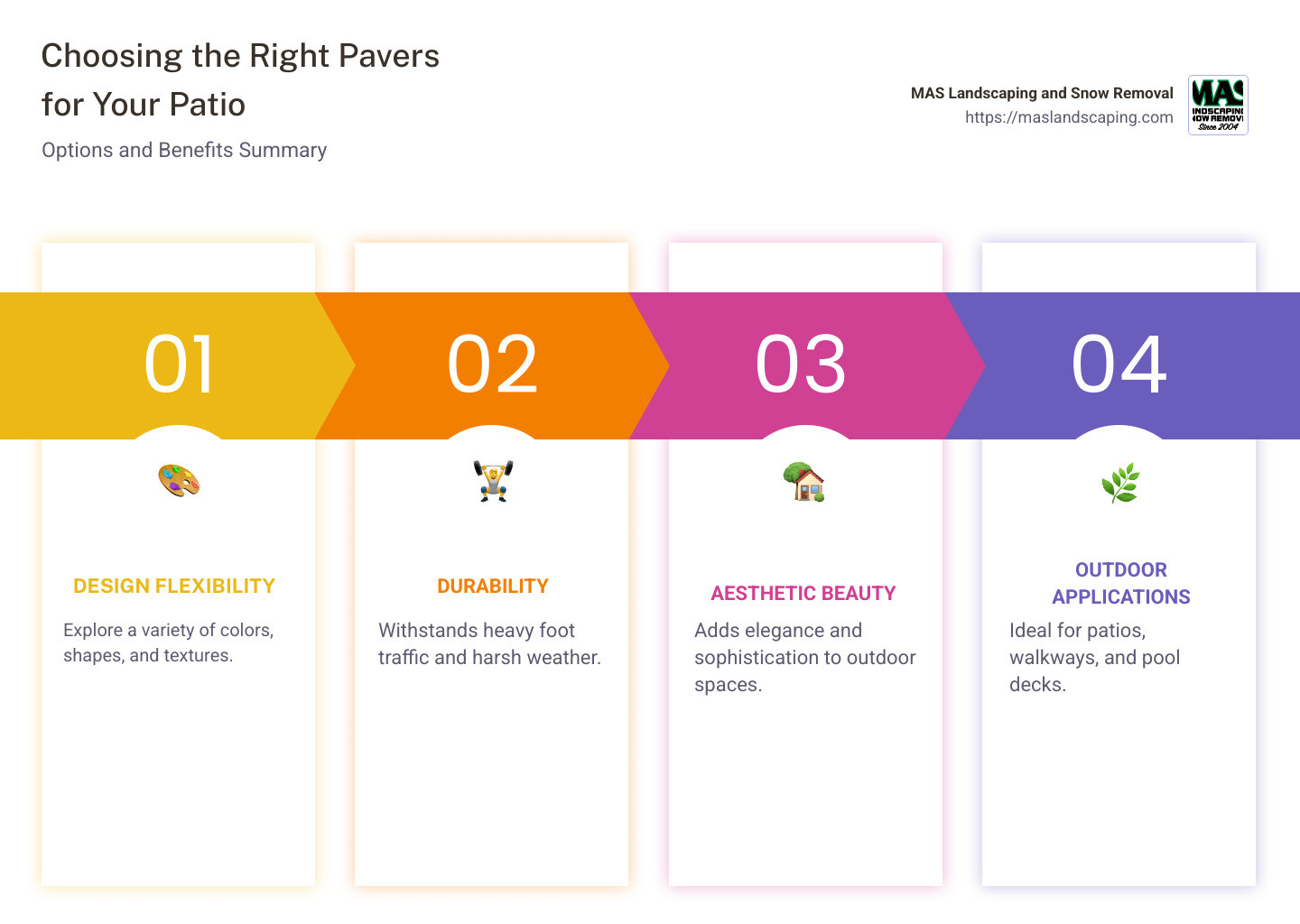
- Design Flexibility: Pavers come in a wide range of colors, shapes, and textures. This allows for endless design possibilities to match your style and the architecture of your home.
- Outdoor Spaces: Suitable for various applications, pavers can create stunning patios, walkways, and pool decks. They bring a touch of elegance and sophistication to any setting.
- Durability: Quality pavers are built to withstand heavy foot traffic and harsh weather conditions, ensuring your patio remains stunning for years to come.
Accept the limitless creativity and strength of pavers as you design your outdoor oasis.
Pavers for patios word list:
– installing a patio
– backyard patio design
– patios contractors
Types of Pavers for Patios
When it comes to creating a beautiful and functional outdoor space, selecting the right pavers for patios is crucial. Let’s explore the different types available and their unique benefits:
Natural Stone Pavers
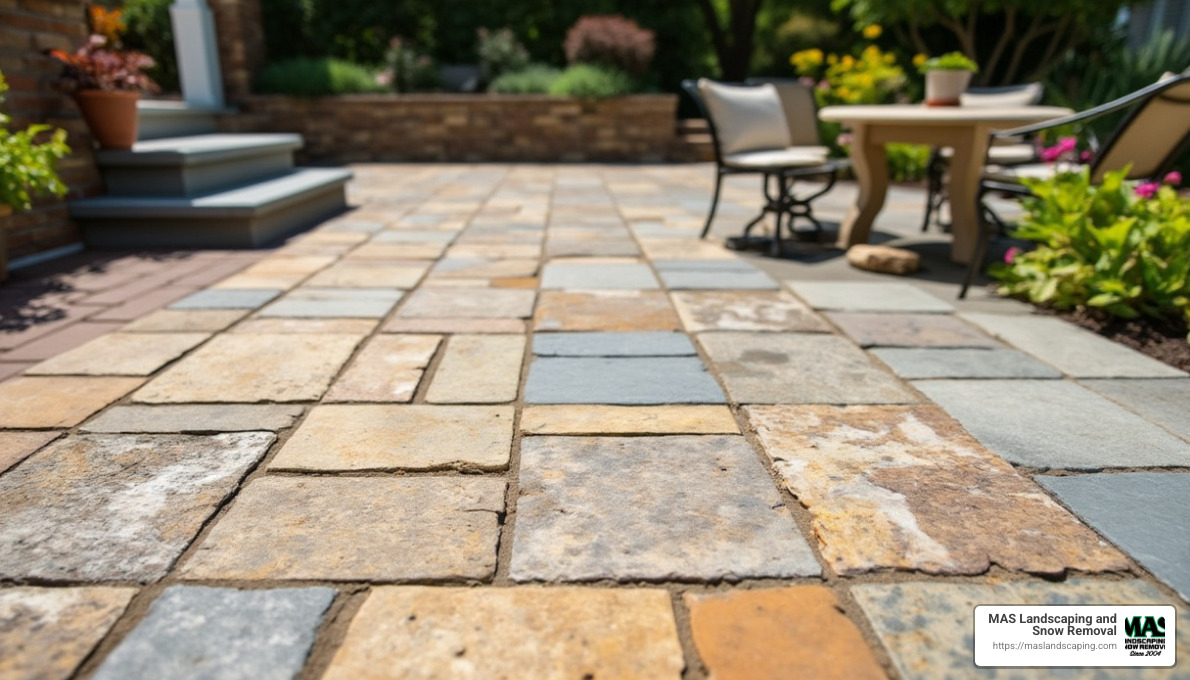
Natural stone pavers, like sandstone, limestone, and granite, are renowned for their timeless beauty and durability. Sandstone offers a warm, earthy palette, perfect for creating a welcoming patio. Limestone provides a sleek, sophisticated look with its smooth texture and light color tones. Granite is celebrated for its extreme durability and resistance to wear and tear, making it ideal for high-traffic areas.
Concrete Pavers
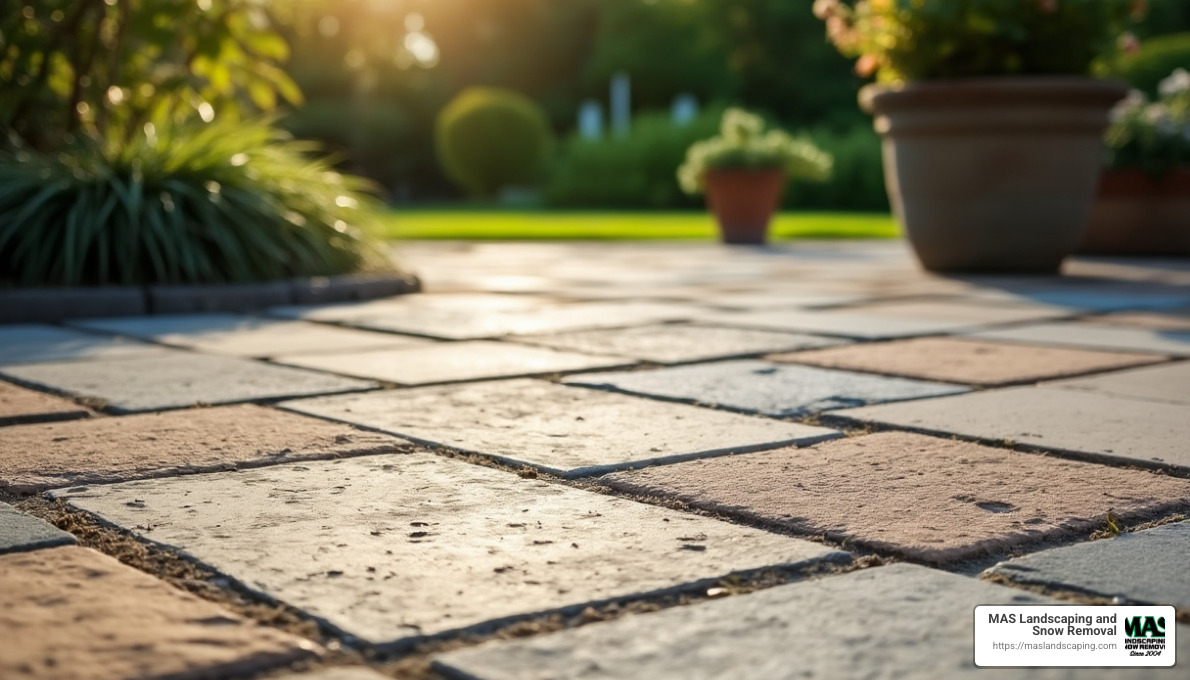
Concrete pavers are a popular choice due to their affordability and versatility. They come in a wide range of colors and styles, mimicking the appearance of natural stone or brick. Concrete pavers are also extremely durable, able to withstand the freeze-thaw cycles common in regions like Massachusetts.
Clay Brick Pavers
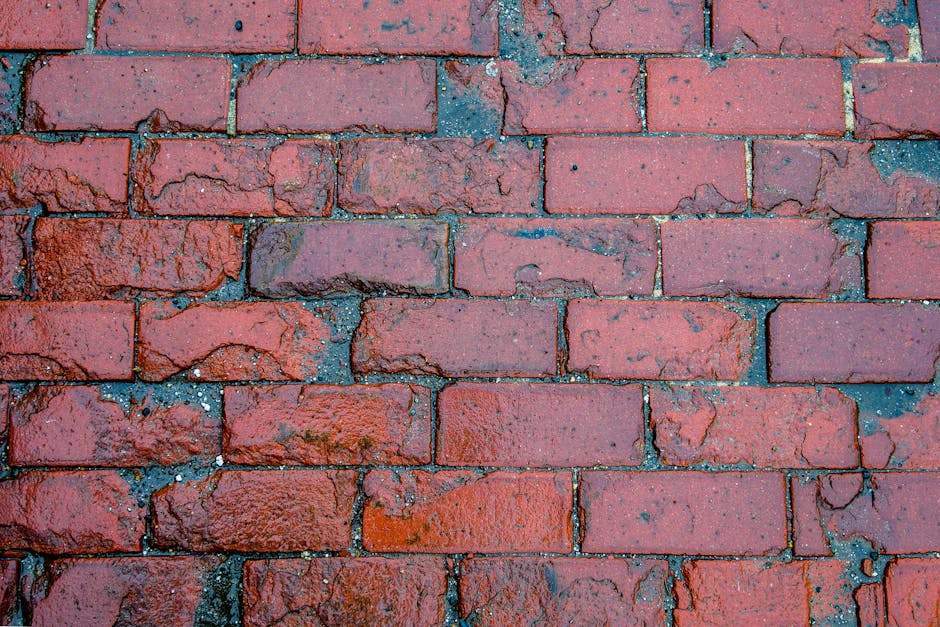
For those who love a classic, rustic look, clay brick pavers are a perfect choice. Made from natural clay, they are eco-friendly and known for their long-lasting nature. The rich, warm colors of clay bricks add a timeless charm to any patio setting.
Permeable Pavers
Permeable pavers are an eco-conscious option designed to manage stormwater effectively. They allow water to pass through the surface, reducing runoff and helping to recharge groundwater supplies. This makes them an excellent choice for environmentally friendly landscaping projects.
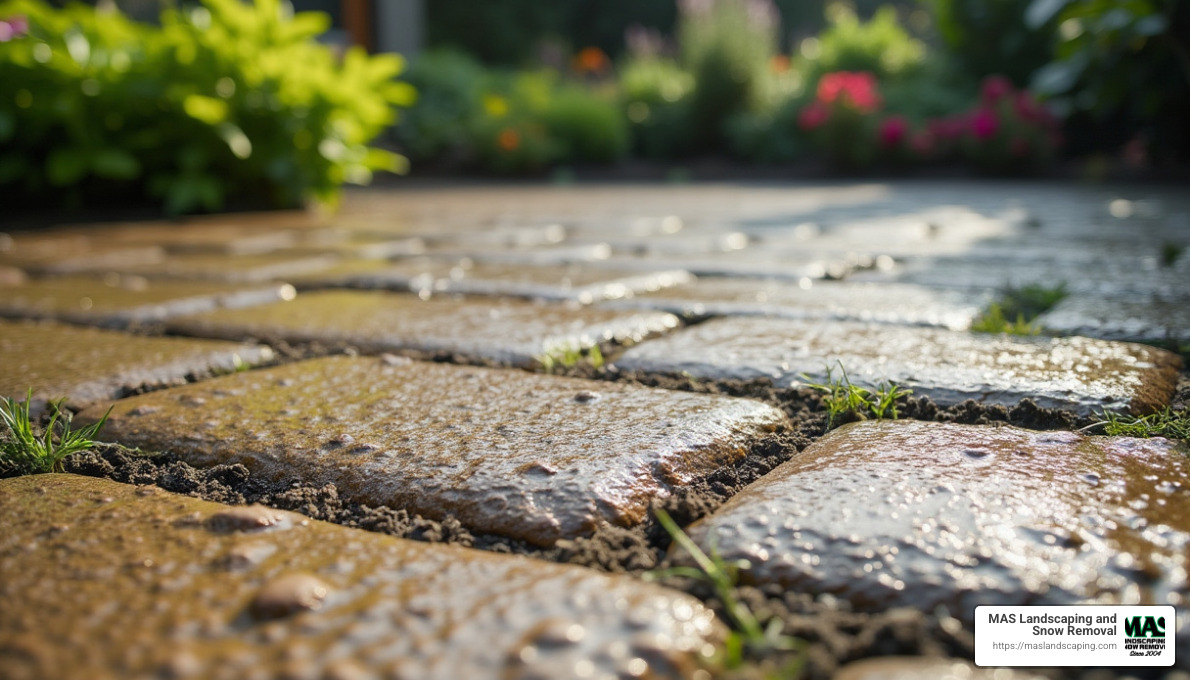
Each type of paver offers distinct advantages, making it essential to consider your specific needs and aesthetic preferences when choosing the right pavers for patios. Whether you prioritize sustainability, classic appeal, or modern versatility, there’s a perfect paver waiting to improve your outdoor space.
Benefits of Using Pavers for Patios
Choosing the right pavers for patios can transform your outdoor space into a durable, low-maintenance, and aesthetically pleasing area. Let’s explore the key benefits that make pavers an excellent choice for patios:
Durability
Pavers are incredibly durable. Unlike poured concrete, which can crack over time, pavers are designed to withstand heavy use and harsh weather conditions. Their interlocking design provides superior stability, preventing shifting and settling. This makes them ideal for regions like Massachusetts, where freeze-thaw cycles are common. Plus, if a paver does get damaged, you can easily replace it without disturbing the entire patio.
Low Maintenance
Maintaining a patio should be hassle-free. Pavers offer low maintenance because they resist stains and are easy to clean. A simple soap and water solution with a stiff bristle broom can tackle most spills. Some pavers even come with EasyClean™ technology, ensuring that stains don’t set in. This means less time worrying about upkeep and more time enjoying your outdoor space.
Aesthetic Beauty
Pavers come in a wide variety of colors, textures, and styles, allowing for endless design possibilities. Whether you prefer the refined surfaces of EnduraColor™ or the unique beauty of Elegance™, pavers can improve your patio’s curb appeal. Their aesthetic versatility means you can create a look that complements your home’s architecture and personal style.
Design Flexibility
With pavers, you have the freedom to design a patio that fits your vision. From sleek, modern slabs to rustic, timeworn pavers, there’s a style for every taste. You can even mix and match different pavers to create unique patterns and layouts. This flexibility allows you to tailor your patio design to suit your needs, whether it’s a cozy corner for relaxation or a spacious area for entertaining.
In summary, the benefits of using pavers for patios are clear: they’re durable, low maintenance, beautiful, and incredibly flexible in design. These features make them an excellent choice for creating an outdoor space that’s both functional and inviting.
Top Paver Materials
When selecting the best materials for your pavers for patios, understanding the characteristics of each option is key. Let’s explore the top choices: natural stone, concrete, and clay brick pavers.
Natural Stone Pavers
Natural stone pavers are a popular choice for their timeless beauty and durability. Here’s a closer look at some common types:
- Sandstone: Known for its warm, earthy tones, sandstone creates a welcoming and natural look. It’s versatile and blends well with various landscape designs. However, sandstone is softer than other stones, which means it may require sealing to prevent weathering.
- Limestone: Limestone offers a smooth, matte finish and comes in shades of gray and blue. It’s relatively durable and provides a sophisticated, neat appearance. That limestone can lighten over time when exposed to sunlight.
- Granite: As one of the hardest natural stones, granite is extremely durable and resistant to scratches and stains. It comes in a range of colors, making it a versatile option for any design. Granite’s durability makes it ideal for high-traffic areas.
Concrete Pavers
Concrete pavers are an affordable and versatile option for patios. They are available in various shapes, sizes, and colors, allowing for endless design possibilities.
- Affordable: Concrete pavers are generally less expensive than natural stone, making them a budget-friendly choice for many homeowners.
- Versatile: With a wide range of styles and finishes, concrete pavers can mimic the look of natural stone, brick, or even wood. This versatility makes them suitable for any design preference.
- Durable: Concrete pavers are engineered to withstand heavy use and harsh weather conditions. They are less likely to crack compared to poured concrete, providing a long-lasting solution for your patio.
Clay Brick Pavers
Clay brick pavers offer a classic and timeless look that never goes out of style. They are made from natural clay and fired at high temperatures, resulting in a durable and eco-friendly product.
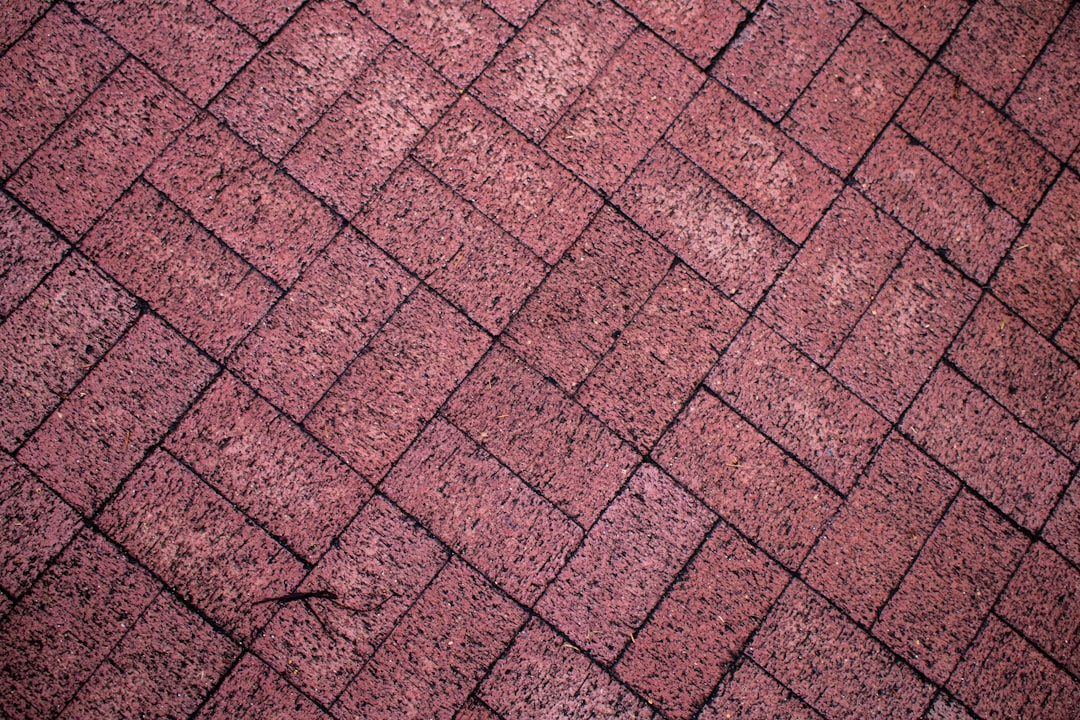
- Classic Look: The rich, red tones of clay brick pavers add a traditional charm to any patio. They can be laid in various patterns, such as herringbone or basket weave, for added visual interest.
- Long-Lasting: Clay bricks are known for their longevity. They can withstand the elements and maintain their color over time, making them a reliable choice for outdoor spaces.
- Eco-Friendly: Made from natural materials, clay brick pavers are an environmentally friendly option. They can be reused or recycled, reducing their impact on the environment.
In choosing the right pavers for patios, consider the unique qualities of each material and how they align with your design goals and budget. Whether you opt for the natural beauty of stone, the versatility of concrete, or the classic appeal of clay brick, you’ll be well on your way to creating a stunning outdoor space.
Installation Considerations
When planning to install pavers for patios, there are a few key considerations to ensure your project is successful. Let’s explore these below.
Proper Site Preparation
Proper site preparation is crucial for a long-lasting patio. It starts with clearing the area of plants, roots, and debris. Ensure the ground is level and compacted to create a stable base for your pavers. This step prevents shifting and uneven surfaces over time.
- Excavation: Dig to the appropriate depth, usually 6-8 inches, to accommodate the paver base and the pavers themselves.
- Base Material: Use a layer of crushed stone or gravel, compacted well, to provide a strong foundation. This layer should be about 4-6 inches thick.
Drainage
Good drainage is essential to prevent water pooling and damage. Permeable pavers are a great choice if drainage is a concern. They allow water to seep through the joints, reducing runoff and potential flooding.
- Slope: Ensure your patio slopes away from your home at a slight angle (about 1 inch per 8 feet) to direct water away from structures.
- Drainage Systems: Consider installing a drainage system beneath your pavers, like a French drain, to manage water flow effectively.
Interlocking Design
An interlocking design not only improves the aesthetic appeal but also adds strength and stability to your patio. Interlocking pavers fit together tightly, distributing weight evenly and resisting movement.
- Edge Restraints: Use edge restraints to keep pavers in place. These can be made from plastic, metal, or concrete and help maintain the shape of your patio.
- Joint Sand: Fill the joints between pavers with sand to lock them in place. This prevents weeds from growing and stabilizes the surface.
By focusing on these installation considerations, you’ll create a beautiful and durable patio that stands the test of time. Proper preparation and design choices are key to enjoying your outdoor space for years to come.
Frequently Asked Questions about Pavers for Patios
Is it cheaper to lay concrete or pavers?
When comparing costs, consider both the initial expense and long-term value. Concrete may have a lower upfront cost, especially for large areas. However, it can crack over time due to weight stress and temperature changes, potentially leading to costly repairs.
Pavers, on the other hand, might have a higher initial cost, but they offer better longevity. Their interlocking design allows for expansion and contraction, reducing the likelihood of cracking. Additionally, if a paver gets damaged, you can replace it individually rather than redoing the entire area.
Can you lay pavers directly on dirt?
Laying pavers directly on dirt is not recommended. For a stable and long-lasting patio, proper base preparation is crucial. Here’s a simple method to follow:
- Excavate the area to the required depth, generally 6-8 inches.
- Add a 4-6 inch layer of crushed stone or gravel, and compact it well.
- Lay a layer of sand on top of the base material for a smooth surface.
- Position your pavers and fill the joints with sand to lock them in place.
Skipping these steps can lead to uneven surfaces and shifting pavers over time.
How do you maintain paver patios?
Maintaining paver patios is relatively straightforward, ensuring they remain beautiful and functional for years.
- Cleaning: Regularly sweep your patio to remove debris. For deeper cleaning, use a mild detergent and water. Avoid harsh chemicals that might damage the pavers.
- Sealing: Applying a sealer can protect your pavers from stains and improve their color. Seal your patio every few years, depending on wear and tear and the type of pavers used.
- Weed Prevention: Weeds can grow in the joints between pavers. Use a joint sand with a polymer additive, which hardens and helps prevent weed growth. Regularly inspect and remove any weeds that appear.
By following these maintenance tips, your patio will remain a stunning feature of your outdoor space, offering both beauty and functionality.
Conclusion
At MAS Landscaping and Snow Removal, we understand that creating the perfect outdoor space is about more than just choosing the right materials—it’s about realizing your vision with precision and care. Our expertise in pavers for patios ensures that your outdoor area is not only beautiful but also functional and durable.
Local Expertise
Our team brings an in-depth understanding of the local climate and environmental conditions in areas like Everett, Lynnfield, and Malden. This knowledge allows us to select the most suitable materials and designs that will thrive in your specific environment. We know how to steer local zoning laws and building codes, ensuring your project progresses smoothly without any legal hassles.
Personalized Service
We pride ourselves on delivering personalized service that caters to your unique needs and preferences. From the initial design concept to the final installation, we work closely with you every step of the way. Our commitment to listening and understanding your vision ensures that your outdoor space reflects your personal style and improves your quality of life.
When you choose MAS Landscaping and Snow Removal, you’re not just hiring a contractor; you’re partnering with a team dedicated to changing your outdoor space into a breathtaking landscape. Our professionalism and attention to detail set us apart as leaders in the landscaping industry.
Ready to bring your vision to life? Explore our landscape design services and find how we can help you create the perfect outdoor space. Let’s work together to make your dream patio a reality, providing you with a beautiful and functional space to enjoy for years to come.