




Plantings Addition: Ultimate Guide 2025
Why a Plantings Addition Can Transform Your Garden
A Plantings Addition is the strategic process of adding new plants—trees, shrubs, perennials, or bulbs—to an existing garden. The goal is to increase density, improve aesthetics, boost biodiversity, and reduce maintenance over time.
Quick Answer: The Benefits of Adding More Plants
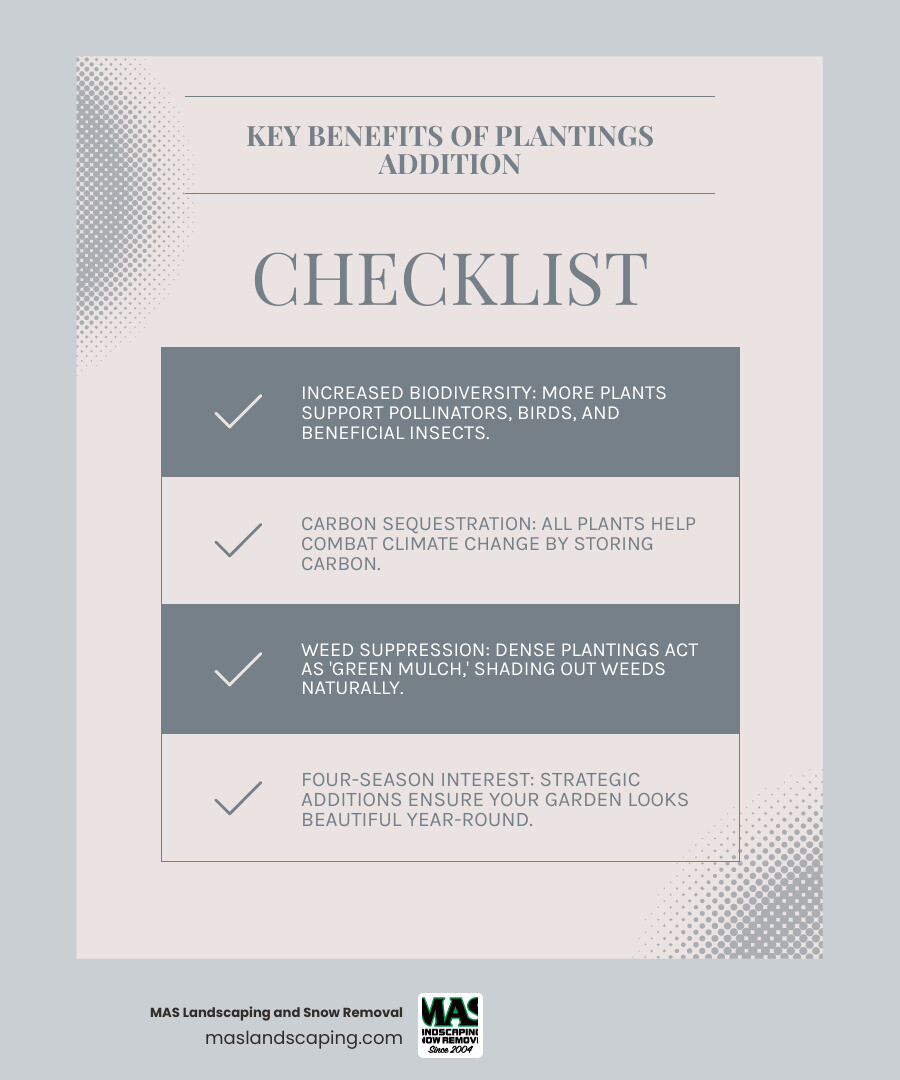
- Increased Biodiversity: Supports pollinators, birds, and beneficial insects.
- Carbon Sequestration: Helps combat climate change by storing carbon.
- Weed Suppression: Dense plantings act as “green mulch,” shading out weeds.
- Four-Season Interest: Strategic additions ensure year-round beauty.
- Reduced Maintenance: Less visible mulch means less weeding and replacement.
If you step outside in summer and see lots of mulch between your plants, your garden has room to grow. Adding more plants is about creating a healthier, more functional landscape that works with nature. Dense, biodiverse plantings support wildlife, reduce your carbon footprint, and make your yard easier to maintain.
The beauty of a plantings addition is that you don’t need to start from scratch. You can evolve your existing garden bed by bed, filling gaps with carefully chosen additions. Whether you’re tucking in spring bulbs, adding native groundcovers, or creating drifts of ornamental grasses, each new plant contributes to a more complete landscape.
For Greater Boston homeowners, the key is understanding what to plant, where to plant it, and how to arrange new additions to improve, not clutter, your garden’s existing design.
Why More is More: The Benefits of a Plantings Addition
After years of designing gardens in Massachusetts, we’ve learned a simple rule: if you can still see mulch in summer, your garden is ready for more plants.
This isn’t about cramming; it’s about embracing a more naturalistic approach, championed by designers like Kelly Norris, where plants do the work instead of bags of traditional garden mulch. When you shift focus to living plants, your garden becomes a working ecosystem.
Boost Your Local Ecosystem
Every Plantings Addition is a vote for biodiversity. In a world of struggling pollinator populations, your backyard can be a refuge. Dense, diverse plantings transform your garden into a habitat for butterflies, native bees, beneficial insects, and songbirds.
Different pollinators need different flower shapes, so diversity is key. Short-tongued bees prefer flat flowers like coneflowers, while long-tongued bees seek tubular blooms like salvia. Umbel-shaped flowers like yarrow attract hoverflies and butterflies. A variety of shapes creates a buffet for everyone.
Native plants are the MVPs. We aim for about 70% native species in our Massachusetts gardens because they are adapted to our climate and provide the best food for native insects, which in turn feed baby birds. Trees like oak, birch, and cherry are wildlife superstars. Shrubs such as chokeberry, fothergilla, and spicebush offer blooms, fragrance, fall color, and shelter.
As a bonus, every plant sequesters carbon. The more plants you add, the more you help combat climate change.
Improve Garden Health and Reduce Maintenance
A denser garden is an easier garden to maintain over time.
Think of plants as living mulch. Instead of buying bags of wood chips, you’re investing in perennials and groundcovers that shade the soil, retain moisture, and look beautiful. Your budget goes toward plants, not bark that needs replacing.
When plants grow close together, their canopy shades out weed seeds before they can germinate. No light, no weeds. After a few seasons, you’ll spend far less time pulling invaders.
Below ground, a dense network of roots improves soil structure, increasing its ability to hold water and nutrients. This leads to healthier plants that are more resilient to drought and disease.
Once established, dense plantings create their own microclimate, reducing evaporation and the need for frequent watering. The result is a garden that looks fuller, supports more life, and asks less of you.
Smart Strategies for Adding New Plants
Adding new plants can either create a masterpiece or a mess. The difference is a thoughtful approach based on key design principles. A successful plantings addition should improve your garden’s overall look, not overwhelm it. The secret lies in landscape layering, repetition, and creating visual flow.
With the right strategy, you can create a garden that feels abundant yet intentional, lush yet cohesive. Let’s explore how.
Use Landscape Layering for Depth and Fullness
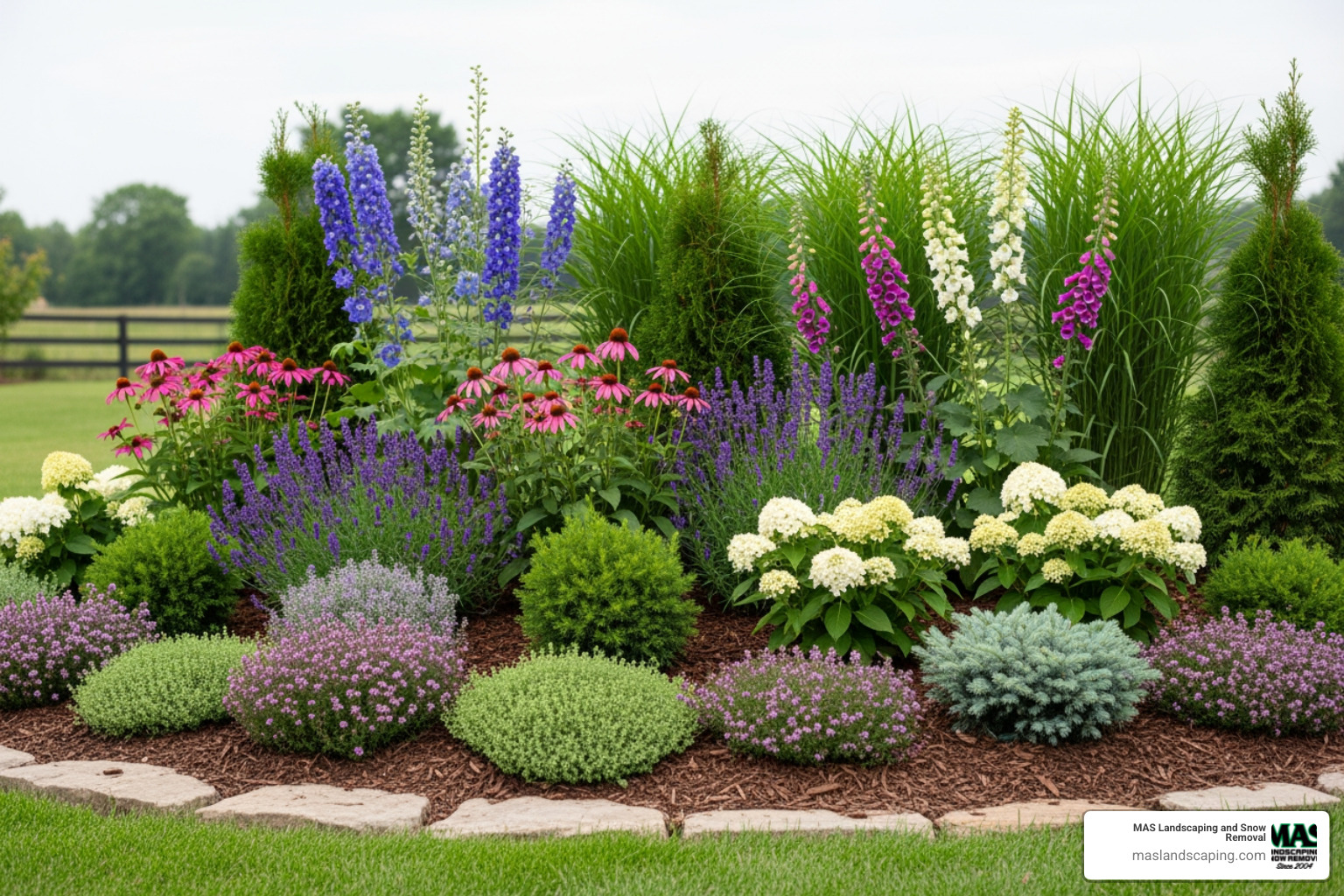
Landscape layering creates depth by arranging plants in staggered foreground, middle-ground, and background positions, often called a casual, mixed border planting. Tall plants form the backdrop, mid-height plants fill the middle, and shorter plants define the front edge, creating a three-dimensional effect.
The Garden Pyramid concept reminds us to balance trees, shrubs, perennials, and groundcovers. A lack of evergreens is often why a border feels empty in winter, as they provide year-round structure.
Instead of lining plants up by height, weave them in and out of layers for a more naturalistic feel. For effective layering, garden beds should be at least 5-6 feet deep, and ideally 10-12 feet if space allows. Extend beds outward from your home’s foundation to nestle the house into the landscape.
To dig deeper into creating stunning layered gardens, explore more info about our landscape design services.
Create Cohesion with Repetition and Massing
Repetition and massing transform a random collection of plants into a harmonious design, creating a framework that guides the eye and brings a sense of calm.
You can repeat a specific plant, color, or texture to create a visual rhythm. Repeating an element three times—a “visual three-pete”—is often enough to create a pattern without being monotonous.
Planting in drifts, or en masse, involves grouping the same plant for impact. Experts suggest using at least seven plants of one variety to achieve scale. The New American Garden style championed this principle with sweeping masses of perennials and grasses.
Ornamental grasses are particularly effective for massing due to their form and movement. The result is a calming aesthetic that feels intentional rather than chaotic.
Guide the Eye and Create Visual Flow
By strategically planning your plantings addition, you can create ‘eye paths’ that guide the viewer’s gaze. Arranging plants to follow a line or curve naturally moves the eye through the garden toward a focal point, like your front entrance or a specimen tree.
Establishing focal points gives these eye paths a destination. A unique plant or ornament can serve this purpose.
Color and contrast are powerful tools. Bright colors attract the eye, while contrasting shapes (spiky vs. round) and textures (fine vs. broad) add dynamic visual interest. Consider your entire property and how your house nestles into the landscape. Extending planting areas and using varied groupings helps integrate your home seamlessly into the garden.
What to Plant: Choosing the Right Additions for Your Garden
The best approach to a plantings addition is to focus on plants that work well in our Massachusetts climate, complement what’s already growing, and provide year-round beauty. Think of it as assembling a team where each plant brings its own strengths to the garden through the seasons.
Easy Additions for Instant Impact
For quick results, certain plants deliver instant gratification. These are easy wins that make a noticeable difference.
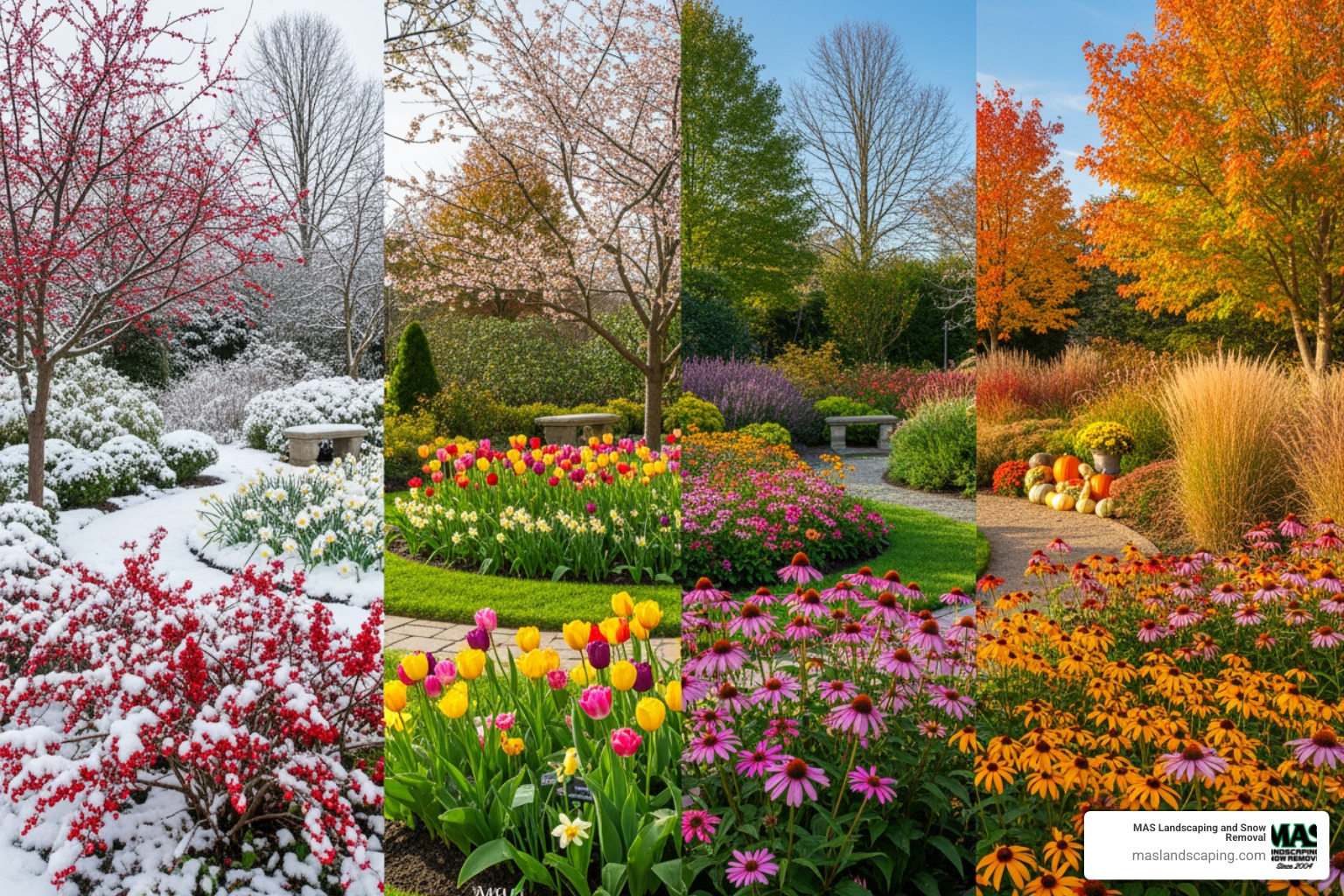
- Spring bulbs like daffodils and tulips are the easiest to add. Tuck them between perennials in the fall for a burst of spring color.
- Summer bulbs like dahlias keep the show going with vibrant blooms all summer.
- Smaller perennials (in 4-inch pots or plugs) slip into gaps easily, establishing quickly without disturbing existing roots.
- Groundcovers like creeping phlox or Ajuga create lush carpets that suppress weeds.
- Ornamental grasses provide texture, movement, and year-round interest with little fuss.
Bulbs stand out as particularly easy additions because they offer seasonal blooms without competing aggressively with established plants. They are perfect companions under deciduous trees, getting sun before the leaves emerge.
A Plantings Addition for Every Season and Style
To keep gardens vibrant year-round, we need to think about plant combinations for different seasons and conditions.
- Cool-Season (35-65 B0F): Frost-tolerant plants like kale, fava beans, carrots, lettuce, and calendula thrive in the chill.
- Warm-Season (65-85 B0F): Heat-lovers like tomatoes, peppers, basil, and marigolds make a great team.
For Massachusetts, prioritizing native New England plants is smart, as they are adapted to our climate and wildlife. Here are five excellent native choices:
- Red Maple (Acer rubrum): A stunning tree with brilliant fall color.
- Serviceberry (Amelanchier canadensis): Offers spring flowers, edible berries, and fall foliage.
- Highbush Blueberry (Vaccinium corymbosum): Provides fruit for you and the birds.
- Winterberry Holly (Ilex verticillata): Bright red berries persist into winter, providing color and food for birds.
- New England Aster (Symphyotrichum novae-angliae): Late-season purple flowers are crucial for pollinators.
For drought-tolerant areas, use plants like sedums, lavender, and certain ornamental grasses. For shady spots, hostas, ferns, and coral bells (Heuchera) provide lush foliage and color.
Planting in Challenging Spots like Under Trees
Planting under trees is a common challenge due to dry shade and root competition. Trees absorb most of the water and nutrients, making it hard for smaller plants to thrive near the trunk.
It’s critical to remember that adding more than a few inches of soil over tree roots can suffocate the tree. As a rule, never cut any tree root thicker than a marker pen when digging. For more detailed guidance, check out these helpful tips for planting under trees.
The secret is choosing drought-tolerant groundcovers with shallow root systems that can handle shade. Epimediums (Barrenworts), Stachys byzantina (Lambs Ear), and Ajuga are champions in these spots. Use small plugs or 4-inch pots to minimize digging and disturbance to the tree’s root system. This gentle approach ensures the long-term health of both the tree and your new understory planting.
The Gardener’s Toolkit: Planning and Evolving Your Design
An effective plantings addition comes from observation and planning. Think of yourself as a garden detective, piecing together clues your landscape offers throughout the year to make smarter choices.

Assess Your Space: Is There Room for More?
Before heading to the nursery, take an honest look at your garden. The mulch test is a great starting point. If you see a lot of bare mulch in mid-summer, that’s prime real estate for a plantings addition.
Gardens are dynamic, so what looks full in May might have gaps by September. This is where your smartphone becomes an invaluable tool. Take photos of each bed in every season. These seasonal snapshots become a visual record, showing you exactly where and when gaps appear. An empty corner in October is a perfect spot for spring bulbs. A sparse patch in June might need summer-blooming perennials.
Pair photos with simple notes about sun exposure or bloom times. This information guides your succession planting, ensuring something beautiful is always happening in your garden.
The Joy of Experimentation
Gardening would be boring if we only stuck to “safe” choices. Some of the most stunning gardens come from homeowners who aren’t afraid to experiment. Pushing hardiness zones can be rewarding if you understand your garden’s microclimates. A south-facing wall or a sheltered corner might stay a few degrees warmer, allowing you to try plants considered borderline for Massachusetts winters.
Of course, not every experiment succeeds. A plant that doesn’t make it teaches you something valuable about your soil, sun exposure, or personal aesthetic. Learning from failures is how we refine our taste and understand what truly works. Through experimentation, you find which plants are genuinely happy in your yard, leading to a garden that practically takes care of itself.
Using Digital Tools and Resources
Incredible information is just a few clicks away, taking the guesswork out of your plantings addition.
- USDA Zone Map: Enter your zip code to find which plants can handle your local winter temperatures. It’s the foundation of smart plant selection.
- Native Plant Finder: This tool helps you find native plants that thrive in your specific area and support local wildlife.
- Sunset Climate Zones: While more common on the West Coast, this system offers another layer of climate information.
Online resources like garden design websites and blogs are great for inspiration. Just remember to filter ideas through what will actually work in your specific Massachusetts garden conditions.
Frequently Asked Questions about Plantings Addition
We get questions about adding plants all the time. Here are the most common ones, with our straightforward answers.
How do I add plants to my garden without it looking messy?
The secret is to follow a few simple design principles. To create a look that’s intentional, not chaotic, focus on:
- Repetition: Repeat a specific plant, color, or texture at least three times to create a visual rhythm that ties the design together.
- Mass Planting: Instead of one of this and one of that, plant in groups of five to seven of the same variety for greater impact.
- Layering: Arrange plants in foreground, middle-ground, and background layers to create depth and fullness.
- Color Palette: Stick to a limited palette of three to five colors that work well together for a cohesive feel.
What are the easiest types of plants to add to an existing garden bed?
For quick wins with minimal disruption, some plants are friendlier than others.
- Bulbs (daffodils, tulips): These are our top recommendation. They can be tucked between existing plants in the fall and require very little effort.
- Small Perennials (4-inch pots or plugs): These are fantastic for filling gaps without requiring major digging that might disturb nearby roots.
- Spreading Groundcovers (creeping phlox, Ajuga): These work beautifully to cover bare soil, suppress weeds, and fill empty spaces naturally over time.
- Ornamental Grasses: Many varieties are easy to integrate and provide wonderful texture, movement, and winter interest.
How do I know if I have enough space for a plantings addition?
Here’s a simple test: if you can see lots of mulch at the height of the growing season, you have room for more plants. A thriving garden should be about plants, not the space between them.
Because gardens change throughout the year, take photos of your beds in every season. These pictures will reveal gaps that you might not notice otherwise. A bare spot in early spring is your cue to add bulbs; a sparse area in winter might need evergreens.
When adding new plants, always check the tag for their mature size. This ensures you’re giving them enough room to grow without creating future overcrowding problems.
Conclusion
Your garden is a living canvas, always ready for the next brushstroke. A plantings addition is about more than just filling empty spaces—it’s about creating a landscape that’s healthier, more vibrant, and more in tune with nature.
By adding more plants, you increase biodiversity, support pollinators, suppress weeds, and reduce maintenance. Most importantly, you create a garden that offers beauty in every season. You don’t need to overhaul everything at once. Start small by adding a drift of native grasses or tucking in some spring bulbs. Evolve your garden gradually by using strategies like layering and repetition.
Remember to take photos, keep notes, and don’t be afraid to experiment to find what thrives in your unique microclimate. For homeowners throughout Greater Boston—from Everett and Lynnfield to Malden, Melrose, Medford, Revere, and Chelsea—creating a lush, layered garden takes local expertise.
If you’re ready to take your garden to the next level with a thoughtful plantings addition, the team at MAS Landscaping can help. Explore our landscaping and design services to transform your outdoor space and learn how we can create the garden you’ve been dreaming of.
