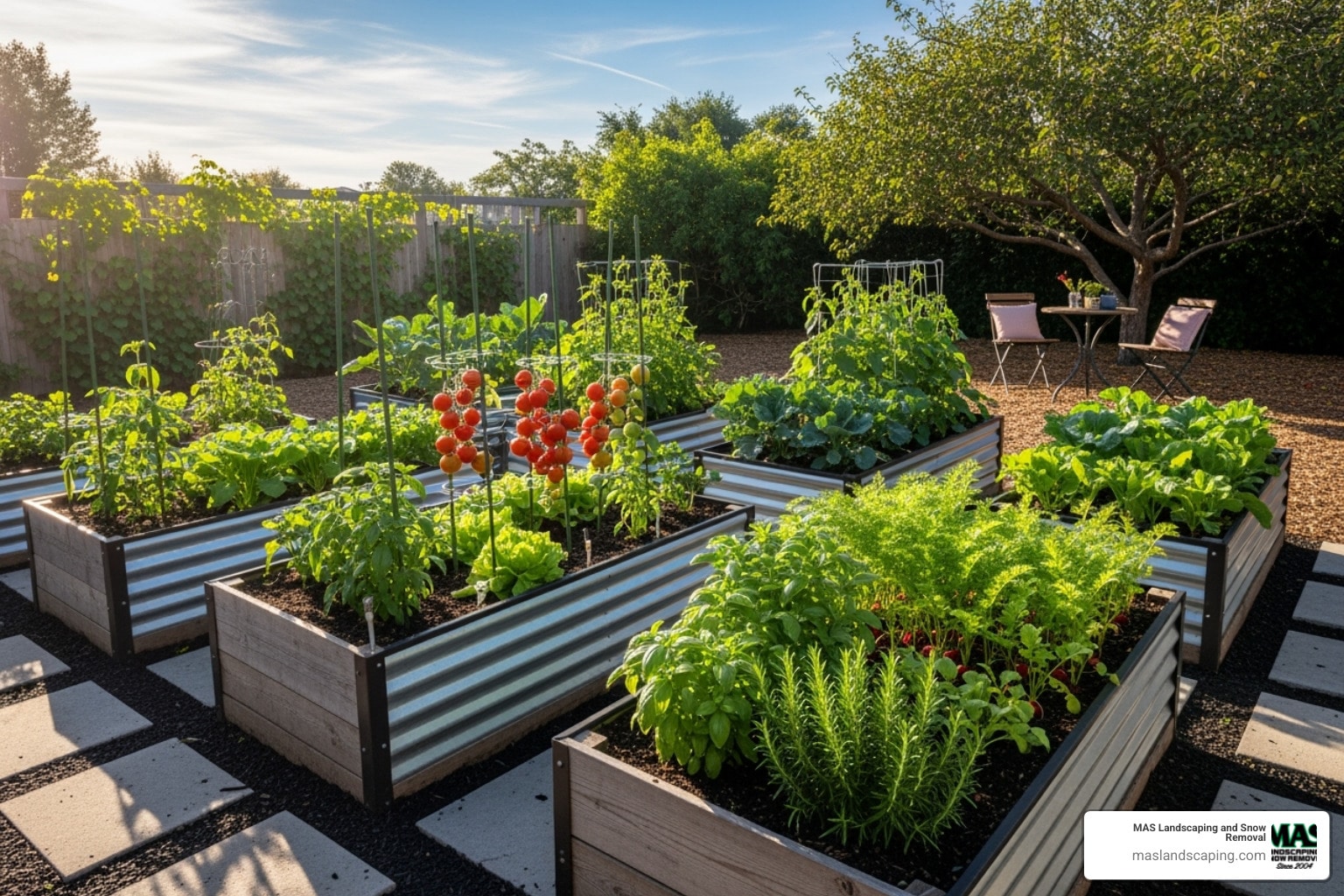



Raised garden beds: Top 5 Ultimate Benefits
The Power of Raised Garden Beds
Looking to add raised garden beds to your yard? Here’s a quick overview of your options for getting started:
- Buy Pre-Made: You can find many kits and ready-to-assemble options online and in stores. These come in various materials like wood, metal, or composite. Some even include self-watering systems or legs for liftd gardening.
- Build DIY: If you like hands-on projects, you can build your own. Simple designs often use lumber, corrugated metal, or concrete blocks. This can be a very budget-friendly approach.
- Hire a Pro: For a custom-designed, long-lasting garden bed that perfectly fits your landscape, consider hiring a landscaping expert. They can create beautiful, sturdy structures from stone or durable wood.
Don’t let bad soil or limited space stop you from growing the garden of your dreams. Raised garden beds are a simple yet powerful solution. They are essentially bottomless frames that sit directly on your existing soil. This allows plant roots to reach deep into the ground while giving you control over the top layer of soil.
Many gardeners call them a “secret weapon” for a reason. They offer an instant way to improve soil quality, boost yields, and reduce common gardening headaches like weeds and pests. Plus, they can make gardening much easier on your back and knees.
Raised garden beds terms to learn:
Why Choose a Raised Garden Bed?
Raised garden beds are a popular solution for a reason: they solve many common gardening challenges, turning tricky spots into productive, beautiful spaces.
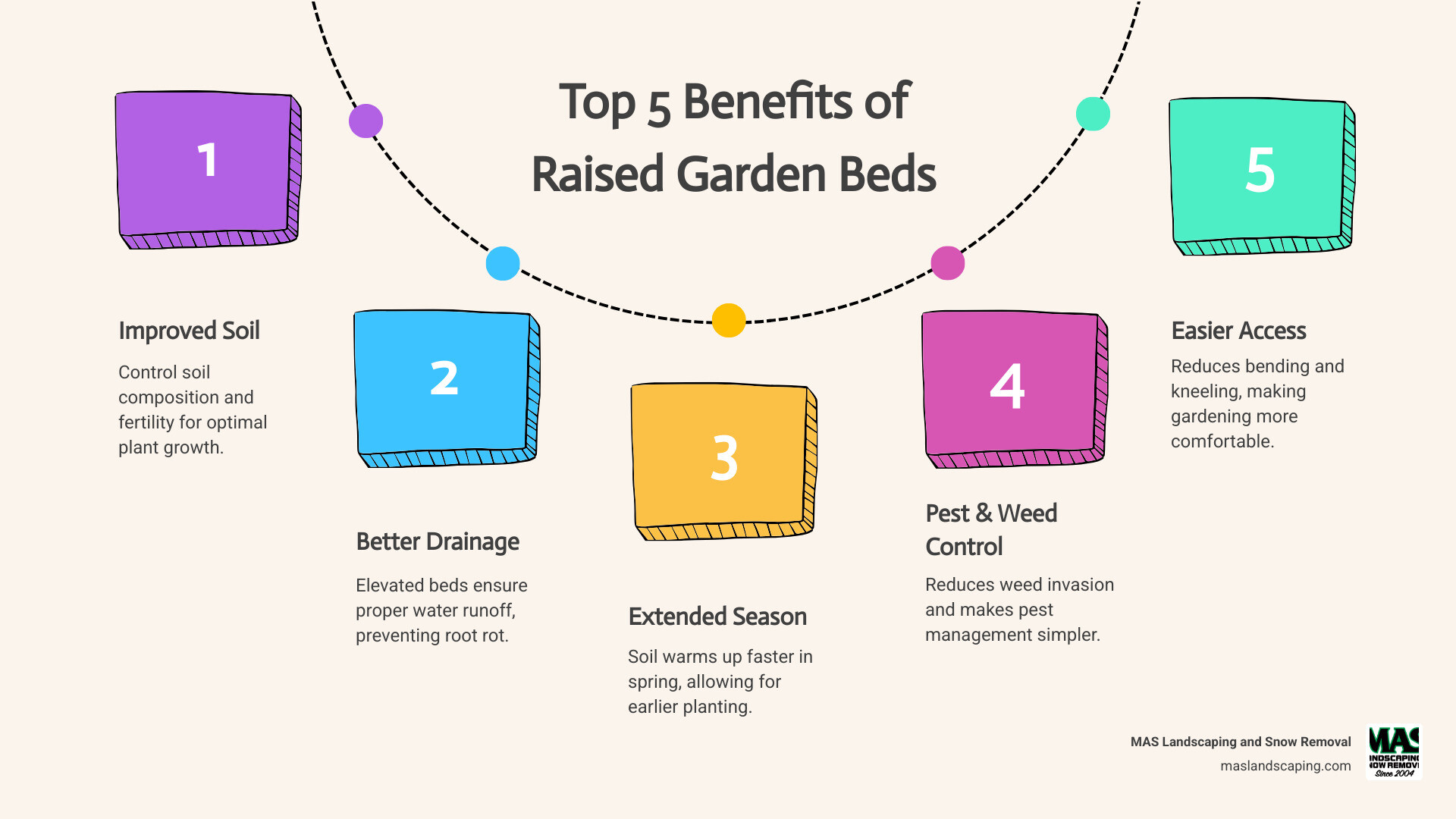
One of the biggest benefits is improved ergonomics and accessibility. By lifting the garden to a comfortable height, they reduce the bending and kneeling that can be tough on backs and knees. This makes gardening more enjoyable and accessible for everyone, including older gardeners, those with physical limitations, and even allows for wheelchair-accessible designs.
Soil quality control is another major advantage. If your yard has poor, clay-heavy, or compacted soil, raised beds allow you to start fresh. You can fill them with a perfect, nutrient-rich soil mix, ensuring excellent drainage and aeration for healthier roots, stronger plants, and bigger harvests.
You’ll also appreciate the pest and weed reduction. Raised beds create a physical barrier that makes it harder for lawn weeds to invade. Adding a layer of hardware cloth at the base can also protect your plants from burrowing pests like gophers and moles, meaning less time weeding and more time enjoying your garden.
Raised garden beds can also extend your growing season. The soil within a raised frame warms up faster in the spring, allowing for earlier planting and a quicker harvest. With added protection like a cold frame, you can often grow later into the cooler months.
Better drainage is a natural feature of raised beds. This prevents waterlogged soil and root rot, which is especially beneficial in areas with heavy rainfall or dense clay soil.
Finally, aesthetics are a key benefit. Raised garden beds add structure, order, and beauty to any outdoor space. They can define garden areas, create focal points, and improve the overall look of your landscape, whether on a patio, deck, or integrated into a larger design.
A well-designed outdoor space should be both beautiful and functional. Our team has the expertise to create outdoor areas that make your raised garden beds productive and integrate them seamlessly into your landscape design.
More info about our Landscape Design services
Choosing Your Material: A Comparison
When starting your raised garden bed journey, choosing a material is a key decision. Each option has pros and cons regarding longevity, cost, and maintenance. Here’s a quick overview based on average internet data to help you decide.
| Material Type | Longevity (Average) | Average Cost (Internet Data) | Maintenance Level |
|---|---|---|---|
| Wood (Pine) | 3-7 years | $ – $$ | Medium |
| Wood (Cedar/Redwood) | 10-15 years | $$-$$$ | Low-Medium |
| Galvanized Steel | 20+ years | $$-$$$ | Low |
| Composite Lumber | 20+ years | $$$-$$$$ | Low |
| Mortared Masonry (Brick/Stone) | Indefinite | $$$$-$$$$$ | Very Low |
| Stacked Stone (No Mortar) | 10-20+ years | $$$$ | Low-Medium |
Note: Costs are relative. ‘$’ indicates most budget-friendly, ‘$$$$$’ indicates highest investment.
Wood Raised Garden Beds
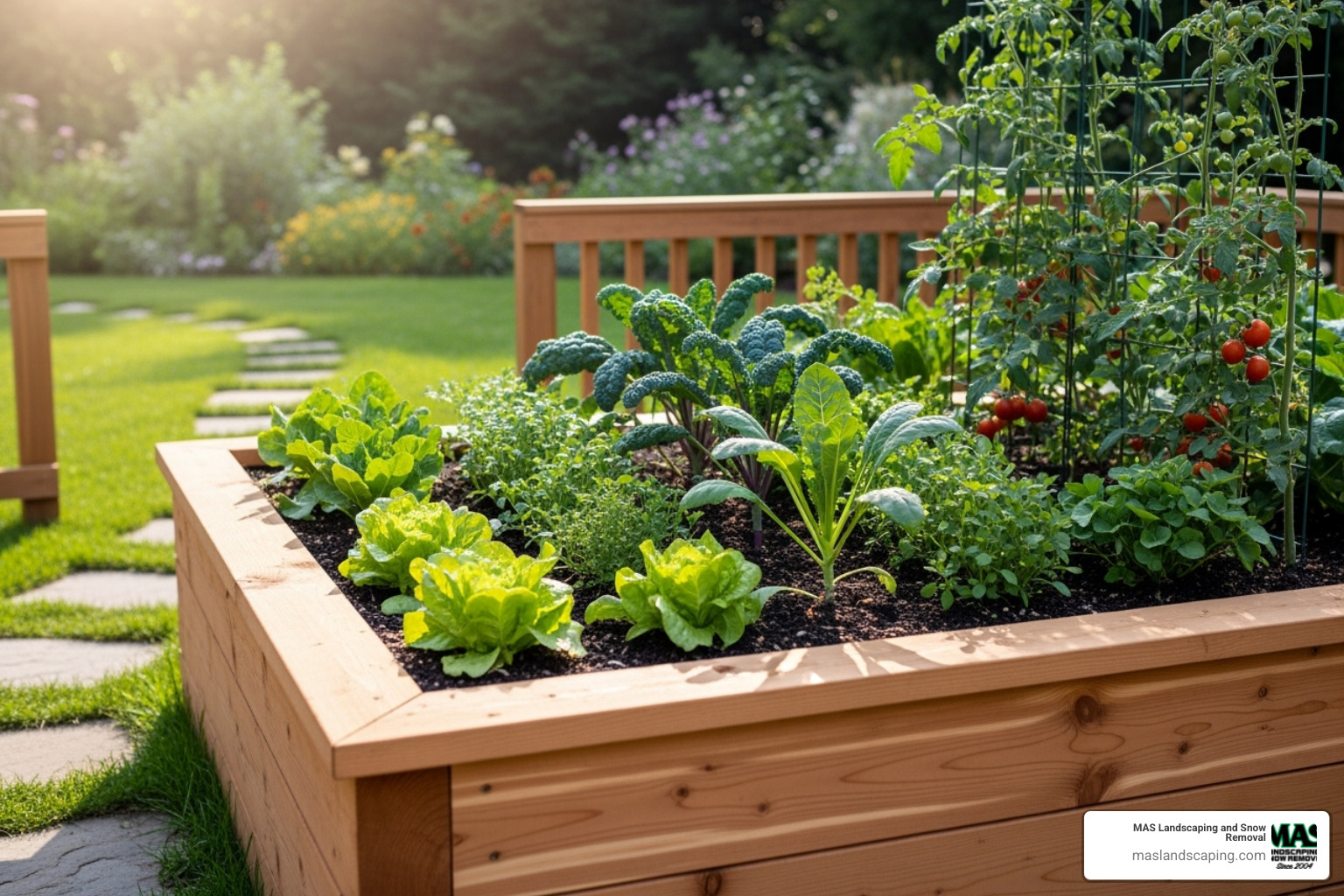
Wood is a classic, DIY-friendly choice for raised garden beds, offering a natural aesthetic that blends into any landscape.
Cedar and redwood are top choices due to their natural rot resistance, lasting 10-15 years. While the upfront cost is higher, their durability makes them cost-effective long-term. They can be left to weather to a silvery-gray or stained with a food-safe product.
Budget-friendly pine is a popular DIY choice. While not naturally rot-resistant, a pine bed can last 5-7 years with good drainage. It’s affordable and widely available.
Regarding treated wood, modern pressure-treated lumber (MCA or ACQ) is safer than older versions, but for edible gardens, we recommend untreated, rot-resistant wood like cedar to avoid any concerns about leaching. Alternatively, you can line a treated wood bed with food-grade plastic. Never use wood treated with creosote, like old railroad ties, as it contains harmful chemicals.
Wood’s DIY-friendly nature allows for simple rectangular boxes or more intricate designs, whether from a kit or built from scratch.
More info about building with wood blocks
Masonry and Composite Options
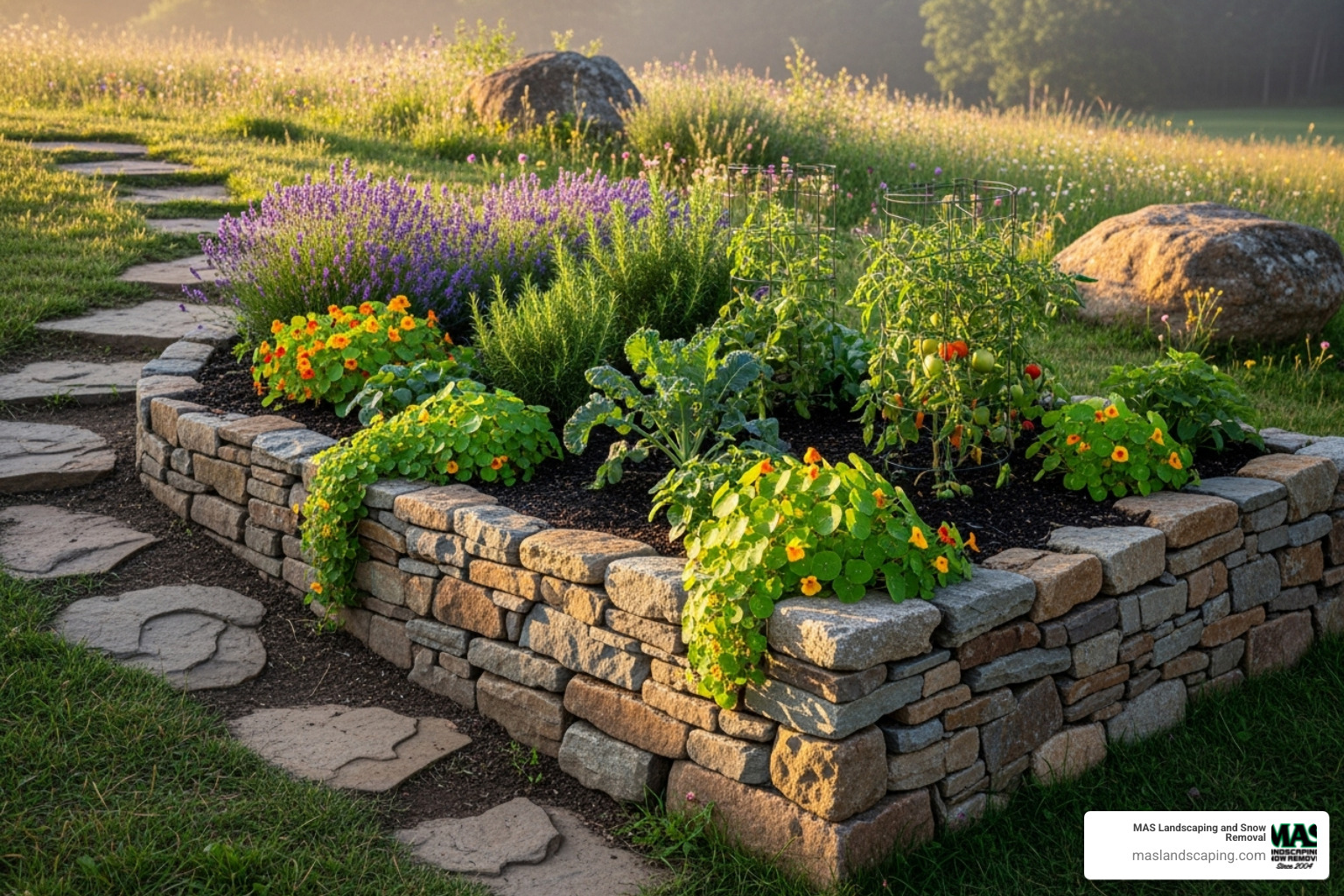
For maximum longevity and a sophisticated look, masonry and composite options are excellent. These materials create permanent architectural features in your landscape.
Concrete blocks and natural stone are incredibly durable. A mortared masonry bed can last indefinitely with minimal maintenance, providing a sense of permanence. While the initial investment for professional installation is higher (an average 4×8 brick-sided bed might cost around $2,000 based on internet data, though custom stone work can be upwards of $8,000 for a 12x4x2 foot bed), their lifespan makes them a wise long-term investment. Stacked stone (dry-stacked) also offers a beautiful, rustic look with good longevity.
Composite lumber, made from plastic and wood fibers, resists rot and insects, lasting 20+ years with low maintenance.
These materials offer great design flexibility, allowing for straight, curved, or multi-tiered designs. The thick walls of masonry also provide excellent soil insulation.
Note: MAS Landscaping specializes in natural stone, block, and wood installations. Other materials are referenced for informational purposes only.
For those in the Saugus, Everett, Lynnfield, or Malden areas looking for a custom and enduring raised garden bed solution, our team can design and build stunning masonry or durable wood structures.
More info about our Garden Wall Contractors
View our Hardscaping Photos gallery
Everything You Need to Know About Raised Garden Beds: Size and Setup
Once you’ve chosen your material, it’s time to plan the setup. Proper site selection and preparation are crucial for a thriving, low-maintenance garden.
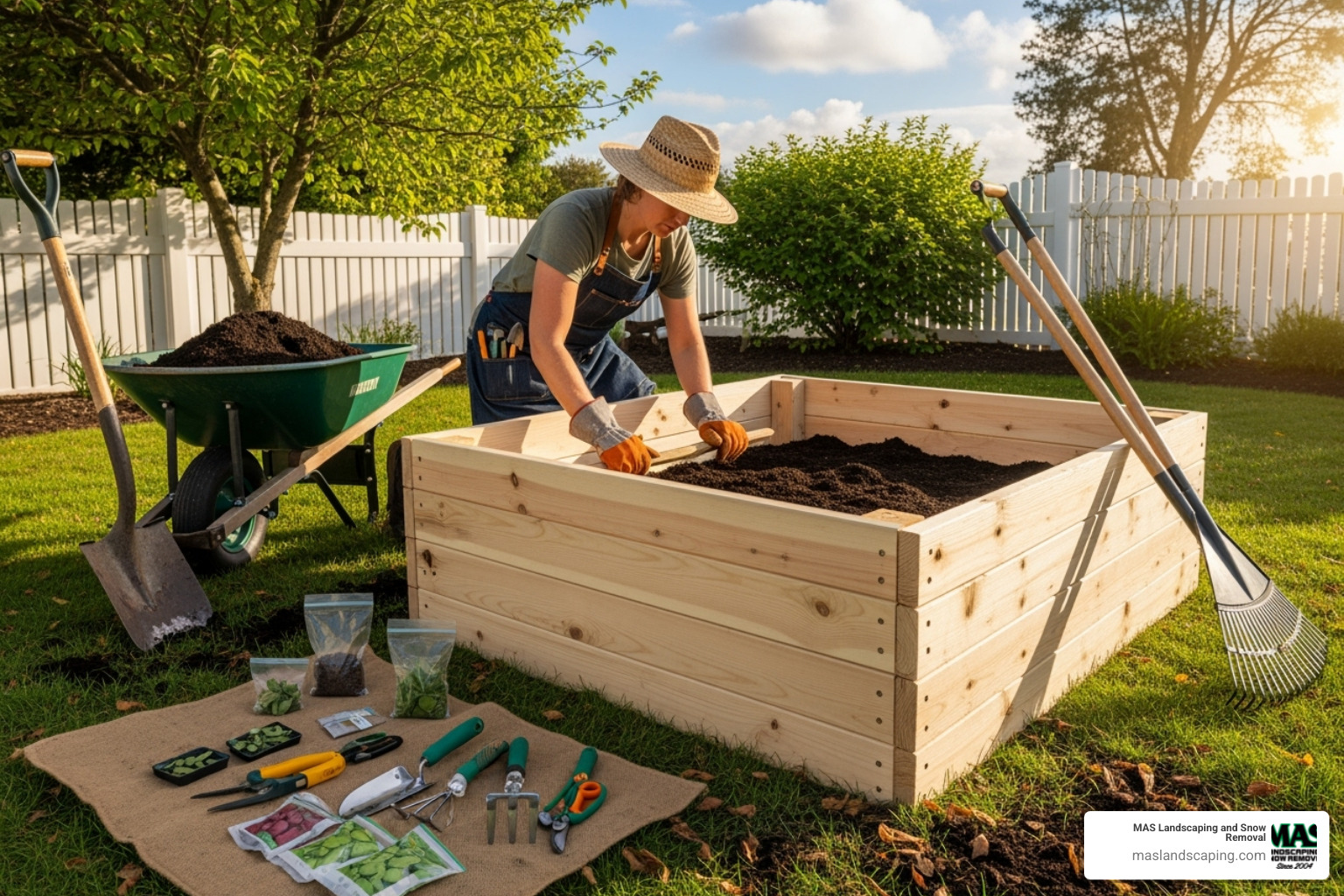
First, focus on site selection. Choose a spot with at least six to eight hours of direct sunlight daily. For convenience, place beds near a water source. The ground should be as level as possible for stability and proper drainage; our team can help prepare the site if needed.
Whether assembling kits or doing a DIY construction, ensure the frame corners are square and secure. When the frame is in place, prepare the base. For bottomless raised garden beds, we recommend laying down a weed barrier lining like landscape fabric or cardboard to stop weeds from growing up into your bed. If burrowing pests like gophers are a problem, add a layer of sturdy hardware cloth under the weed barrier.
When filling the bed, you’re creating a custom growing environment. To save on soil in deeper beds, you can use the Hugelkultur method: fill the bottom third with organic debris like logs and branches, which will break down to release nutrients and retain moisture. Top this with your primary planting mix. An Online soil calculator can help you determine the exact amount of soil needed.
How to Choose the Right Size for Your Raised Garden Beds
The right dimensions for your raised garden beds are crucial for plant health and your comfort.
For height, a depth of 10 to 12 inches is sufficient for most plants like leafy greens and herbs. For deep-rooted plants like tomatoes or for maximum ergonomic comfort, 18 to 24 inches is ideal. For wheelchair accessibility, beds should be 27 to 36 inches high.
The ideal width depends on accessibility. If you can reach the bed from both sides, a width of 3 to 4 feet is perfect, allowing you to reach the center without stepping on the soil. If the bed is against a wall or fence, keep the width to 1.5 to 2.5 feet.
Length can be whatever you desire. For beds longer than 8 to 10 feet, add internal bracing every 3 to 4 feet to prevent the sides from bowing under the soil pressure.
Finally, consider your plant root depth needs. While a 12-inch bed is versatile, plants like tomatoes and asparagus thrive with 24 to 36 inches of soil depth. A deeper bed is especially beneficial if the native soil underneath is poor.
More info about Hardscape Retaining Walls
The Best Soil and Maintenance for Raised Garden Beds
The key to a successful raised garden bed is the soil. You have the opportunity to create the perfect growing medium from scratch.
For your ideal soil composition, we recommend a mix that is light, rich in organic matter, and drains well. A popular recipe includes:
- 1/3 high-quality compost: Delivers essential nutrients and beneficial microbes.
- 1/3 peat moss or coco coir: Helps retain moisture while keeping the soil light.
- 1/3 coarse sand or vermiculite/perlite: Improves drainage and aeration.
This blend creates a fertile, well-draining soil that is easy for roots to grow in. To maintain it, simply add a few inches of fresh compost to the surface each year.
Mulching is a game-changer. A 2-3 inch layer of organic mulch (straw, shredded leaves) on top of your soil will suppress weeds, retain moisture, regulate soil temperature, and add nutrients as it breaks down.
For watering techniques, consistency is key. Raised garden beds dry out faster than in-ground gardens, so they require more frequent watering. Water deeply but infrequently to encourage strong root growth. Drip irrigation or soaker hoses are excellent options as they deliver water directly to the root zone, minimizing waste and reducing the risk of foliar diseases.
More info on Creating Raised Bed Planters from Iowa State University
Frequently Asked Questions about Raised Garden Beds
Here are answers to some of the most common questions we receive about raised garden beds:
What is the best soil mix for a raised bed?
The best soil mix is light, rich, and well-draining. A popular and effective recipe is a blend of one-third high-quality compost (for nutrients), one-third peat moss or coco coir (for moisture retention), and one-third coarse sand or perlite (for drainage and aeration). This mix creates an ideal environment for healthy root growth, helping your vegetables and flowers thrive.
Is it safe to use pressure-treated wood?
For edible gardens, it’s safest to use untreated, naturally rot-resistant wood like cedar or redwood. While modern pressure-treated wood (often labeled MCA or ACQ) is considered much safer than older, arsenic-treated versions, using untreated wood eliminates any concern about chemicals leaching into your soil. If you do use treated wood, line the inside of the bed with a heavy, food-grade plastic barrier to prevent direct soil contact. Never use wood treated with creosote, such as old railroad ties.
How deep does my raised bed need to be?
The ideal depth depends on your plants. A depth of 10 to 12 inches is sufficient for most plants, including leafy greens, herbs, and many root vegetables like carrots and radishes. For plants with deep root systems like tomatoes or potatoes, or for greater ergonomic benefits, a depth of 18 to 24 inches is ideal. Deeper beds reduce the need to bend and stoop, making gardening more comfortable.
Conclusion
Well, what a journey we’ve been on! We hope this deep dive has truly opened your eyes to the wonderful world of raised garden beds. They’re so much more than just pretty boxes; they’re a true game-changer for anyone looking to grow a thriving garden. From giving your plants the perfect soil and drainage they crave, to making gardening easier on your back and knees, these lifted growing spaces offer a world of benefits. Whether you’re dealing with tricky soil, a small space, or simply want a more joyful and productive gardening experience, raised garden beds offer a versatile and incredibly rewarding solution.
Achieving gardening success often comes down to setting yourself up for wins, and that’s exactly what raised garden beds do. They take away so many common headaches, letting you focus on the fun parts – planting, watching your garden grow, and harvesting your delicious bounty!
When it comes to bringing these amazing beds to life, you have a couple of paths. Building a simple wooden bed can be a fun and satisfying weekend project, perfect for those who love to get hands-on. However, if you’re dreaming of something truly durable, custom-designed, and built to last – perhaps a stunning stone or block raised garden bed that seamlessly blends into your landscape – then trusting a local expert is often the very best choice. These permanent structures add incredible beauty and value to your property.
Here at MAS Landscaping, we’re passionate about creating outdoor spaces that are both beautiful and functional. Based right here in Saugus, MA, and serving our wonderful neighbors in Everett, Lynnfield, Malden, Melrose, Medford, Revere, and Chelsea, we pride ourselves on our professionalism and personalized service. We specialize in expertly crafting stone, block, and durable wood installations that stand the test of time. We’re here to help you turn those gardening dreams into a vibrant reality, with raised garden beds that don’t just thrive, but truly improve the beauty and value of your home.
Ready to dig in? We’d love to chat about your vision!
Contact us for a retaining wall installation quote today!