



Why Seniors Need Accessible Yard Care Solutions
Yard cleanup for seniors presents unique challenges that go far beyond simply keeping grass trimmed. Physical limitations, fixed incomes, and safety concerns combine to make routine yard maintenance increasingly difficult as homeowners age.
If you’re looking for yard cleanup help for seniors, here are your main options:
- Free volunteer programs – National nonprofits like “I Want To Mow Your Lawn” and local youth groups
- Community-based assistance – Area Agencies on Aging, faith-based organizations, and senior centers
- Low-maintenance landscaping – Native plants, mulch, raised beds, and hardscaping to reduce work
- Professional services – Licensed companies offering senior discounts and specialized care
The reality is stark. About 40% of older Americans rely exclusively on Social Security income, averaging approximately $1,913 monthly. This limited budget makes regular lawn care services feel financially out of reach for many seniors. Meanwhile, studies show that gardening and yard work frequently cause low-to-moderate pain for seniors, particularly lower back pain during bending activities.
But there’s good news. A wide range of solutions exists—from completely free volunteer services to smart landscaping strategies that dramatically reduce maintenance needs. Some programs have helped hundreds of seniors in their first year alone. Pittsburgh’s “City Cuts” program served more than 950 seniors during its initial operation.
Many seniors worry about becoming burdens to family members while simultaneously concerning themselves with costly fees from private gardening contractors. This guide cuts through the confusion to show you exactly where to find help, how to reduce your yard work burden, and when professional services make the most sense.
Whether you’re managing on a fixed income, dealing with mobility challenges, or simply want to age safely in place, maintaining your yard shouldn’t feel overwhelming or impossible.
Understanding the Challenges of Senior Yard Maintenance
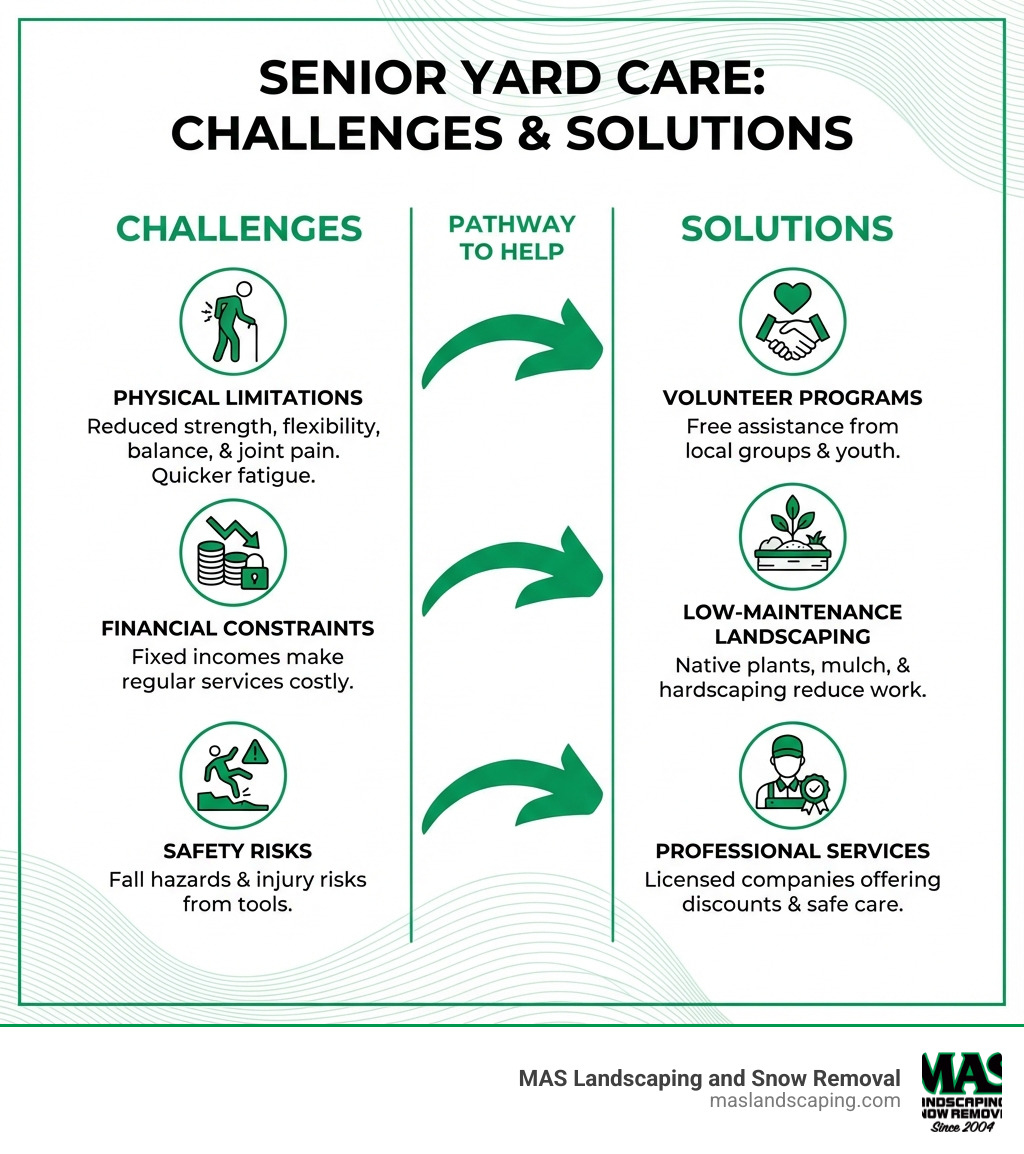
As we age, our bodies change, and tasks that were once simple can become significant problems. For seniors, maintaining a yard can become a source of stress rather than enjoyment. The primary challenges can be broadly categorized into physical limitations, financial constraints, and safety risks.
Physically, decreased strength, reduced flexibility, balance problems, and joint pain are common. We know from research that gardening and yard work frequently cause low-to-moderate pain for seniors, especially lower back pain from bending. Tasks like raking, mowing, or even just pulling weeds can lead to quicker onset of fatigue. This isn’t just about feeling tired; it’s about the real physical strain that can exacerbate existing health conditions.
Financially, many seniors live on fixed incomes, often relying primarily on Social Security. With an average monthly income of around $1,913 for about 40% of older Americans, regular, professional lawn care services can seem like an unaffordable luxury. In Massachusetts, where our local communities like Saugus, Malden, and Everett are, an alarming 63% of senior households face economic insecurity, with that number rising to 70% for single senior households. This makes every dollar count, and yard maintenance often takes a backseat to more pressing needs.
Safety is another critical concern. Older homes, often where seniors age in place, present their own challenges. We’ve seen statistics indicating that 34% of older adults’ homes have obstructed or broken paths, and 47% have problematic paving that hinders mobility. These issues, combined with the physical demands of yard work, create a dangerous environment.
Yard work challenges for seniors are multifaceted, encompassing physical limitations, financial constraints, and significant safety risks. Addressing these requires a thoughtful approach, combining practical strategies with accessible resources. For more on managing your outdoor spaces, you might find our guide on Streamlined Yard Cleanup for Seniors: Strategies and Services for Manageable Outdoor Spaces helpful.
The Physical Strain and Safety Risks
Let’s face it, nobody wants to spend their golden years recovering from a fall or nursing a strained back. Yet, the very act of tending to a yard can expose seniors to numerous physical and safety hazards.
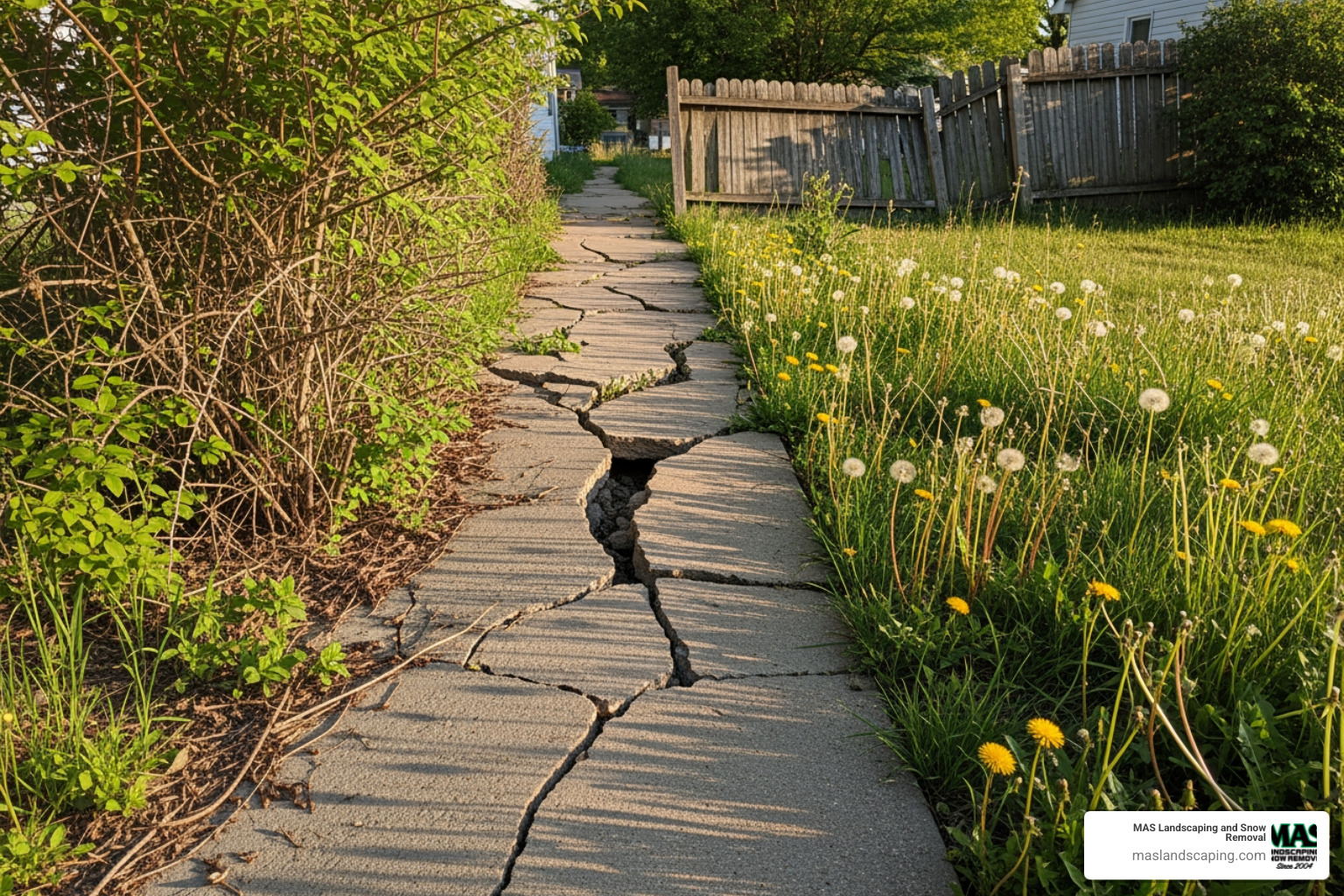
Bending to pull weeds, lifting heavy bags of soil, or even just repetitive raking can lead to significant lower back pain, as research frequently shows. Climbing ladders for gutter cleaning or tree pruning is particularly risky, with seniors facing higher fall risks, especially on uneven surfaces. Imagine trying to steer a yard where 32% of homes have unsafe steps and stairs, or where 34% have obstructed paths. It’s a recipe for disaster.
Operating power tools like mowers and trimmers demands strength, balance, and quick reflexes that naturally diminish with age. These tools can become dangerous in unsteady hands. Beyond physical injuries, seniors are also more susceptible to environmental dangers. Heat exhaustion and dehydration from sun exposure are serious concerns, particularly during the warmer months in places like Chelsea and Medford. Ensuring safe and clear paths is paramount to prevent falls and maintain mobility. For more insights on this, explore our information about More info about walkway installation.
Financial Burdens of Yard Care
The dream of aging in place often collides with the reality of maintaining a home on a fixed income. As we mentioned, roughly 40% of older Americans rely on Social Security, averaging about $1,913 monthly. This limited income makes the cost of regular yard maintenance a heavy financial burden.
Consider that 11.2 million older adult households were considered cost-burdened in 2021. This means a significant portion of their income goes towards housing, leaving little for other essential services, including yard care. In our home state of Massachusetts, 63% of senior households, and 70% of single senior households, face economic insecurity.
While DIY yard care might seem like the cheaper option, it often comes with hidden costs: potential injuries, the expense of buying and maintaining equipment, and the sheer time and effort involved. Comparing these “costs” against professional services becomes a delicate balance. For those exploring the financial aspects of yard upkeep, our page on More info about yard clean up service cost can offer some general insights into what to expect from professional services.
Free and Community-Based Yard Work Programs for Seniors
The good news is that seniors don’t have to face these challenges alone. A vibrant ecosystem of support exists, driven by volunteerism and community spirit. These programs can be a lifeline, providing much-needed assistance without the financial strain.
Many local senior centers in areas like Saugus, Malden, and Lynnfield are excellent starting points. They often maintain lists of individuals or groups willing to help with yard work, sometimes for free or a nominal fee. Area Agencies on Aging (AAA) are another crucial resource, connecting seniors with a wide range of services, including yard assistance. If you’re unsure where to begin, a simple call to 211 can often connect you to local resources and support networks in your community.
National and Local Non-Profit Organizations
Several dedicated non-profit organizations offer free yard cleanup for seniors, veterans, and disabled individuals. These groups rely on the kindness of volunteers to make a real difference:
- I Want To Mow Your Lawn Inc. This wonderful organization, founded during the 2020 COVID-19 pandemic, provides free lawn mowing services. Seniors over 65, military veterans, disabled individuals, and those experiencing financial hardships can apply for assistance. While service depends on volunteer availability, they aim to connect those in need with local help. You can find more information and apply at I Want To Mow Your Lawn Inc..
- Raising Men & Women Lawn Care Service. This inspiring program recruits youth to help seniors, disabled individuals, veterans, and single parents with lawn maintenance. It encourages kids to take the “50 Yard Challenge,” mowing 50 lawns for free. The program has expanded significantly, showing the power of youth engagement. Visit Raising Men & Women Lawn Care Service to learn more.
- Yard Angels program. Operating since 2012, the Yard Angels program matches volunteers with older adults to facilitate free yard work, landscaping, and yard cleanup. Services typically include weeding, grass cutting, and trimming small trees or bushes. Availability varies by area, but it’s worth checking with organizations like Volunteers of America for similar programs in Massachusetts. Learn more at Yard Angels program.
These programs are fantastic examples of how communities step up to support their elderly residents, ensuring they can maintain safe and tidy outdoor spaces.
Finding Help from Youth Groups and Faith-Based Organizations
Beyond formal non-profits, a wealth of assistance can be found right in your neighborhood. Local schools, particularly high schools and colleges, often require students to complete community service hours. This presents a perfect opportunity for students to help seniors with yard work tasks like raking leaves, clearing debris, or light gardening. We often find that a quick call to a school’s guidance counselor or community service coordinator in places like Revere or Everett can yield positive results.
Youth groups, such as Boy Scouts and Girl Scouts, are also deeply involved in community service. Their troops may be looking for projects that benefit local seniors, offering assistance with various outdoor chores. While some troops might have restrictions due to liability concerns, many are eager to help.
Faith-based organizations, including churches and synagogues, frequently run outreach ministries designed to support their elderly congregants and the wider community. These groups often organize volunteer days for seasonal cleanups or regular maintenance. A simple inquiry at a local church in Melrose or Chelsea could connect you with a compassionate group ready to lend a hand.
Lastly, don’t underestimate the power of neighborhood assistance programs. Platforms like NextDoor can be useful for finding local recommendations, but always exercise caution when sharing personal information. Sometimes, a simple conversation with a neighbor can lead to a mutually beneficial arrangement or a referral to trustworthy local help.
Low-Maintenance Strategies and DIY Yard Care Tips
Sometimes, the best solution isn’t just finding help, but reducing the need for it in the first place. Adopting low-maintenance landscaping strategies can significantly lessen the physical burden of yard cleanup for seniors, allowing them to enjoy their outdoor spaces without constant upkeep.

Adopting a Low-Maintenance Landscape
We often recommend a few key strategies to our clients in Saugus and surrounding areas looking to simplify their yards:
- Choose Native, Drought-Tolerant Plants: These plants are naturally adapted to our local climate, requiring less water, fertilizer, and pest control. They thrive with minimal intervention, reducing the need for constant care. Consider asking a gardening professional about native plants that flourish in Massachusetts and are drought-tolerant.
- Use Mulch Effectively: Mulch is a true superhero in the garden. Applying a 2-inch layer over soil not only protects it but also retains moisture, suppresses weeds, and improves plant health. This dramatically cuts down on watering and weeding time. For easy application, we suggest spreading mulch with a rake or gloved hands. If you need a hand with this, we offer More info about mulch delivery and installation.
- Accept Raised Garden Beds: For those who still love to garden but want to avoid bending and stooping, raised garden beds are a game-changer. They bring the garden up to a comfortable working height, making planting, weeding, and harvesting much easier. You can find more details on Raised garden beds on our site.
- Incorporate Hardscaping Elements: Think patios, walkways, and decorative stone areas. Hardscaping significantly reduces the amount of lawn that needs mowing and can create beautiful, functional outdoor rooms that require virtually no maintenance. We’re experts in More info about hardscaping services and can help design spaces that are both beautiful and easy to maintain.
- Consider Low-Maintenance Fake Grass: For areas where natural grass is hard to maintain or where you want to eliminate mowing entirely, artificial turf is an excellent option. It stays green year-round with minimal effort. Explore the benefits of low maintenance fake grass for a perpetually perfect lawn.
These strategies not only reduce physical strain but can also improve the beauty and value of your property, making your yard a source of joy, not endless chores.
Safety and Comfort While Working Outdoors
For seniors who still wish to engage in some yard work, prioritizing safety and comfort is crucial. We encourage a mindful approach to prevent injuries and heat-related illnesses.
- Stay Hydrated: Always have a water bottle nearby and drink frequently, especially on warm days. Dehydration can creep up quickly.
- Protect from the Elements: Wear sunscreen, a wide-brimmed hat, and sunglasses to shield yourself from the sun’s harmful UV rays. Gloves can protect hands from blisters and thorns.
- Use Ergonomic Tools: Invest in lightweight tools with comfortable grips and extended handles. These can significantly reduce strain on joints and muscles. For instance, long-handled cultivators can help with weeding without excessive bending.
- Take Frequent Breaks: Don’t push yourself. Locate a shady spot and rest whenever you feel tired. It’s not a race!
- Work During Cooler Parts of the Day: Tackle yard tasks in the early morning or late afternoon when temperatures are lower, especially during the summer months in places like Revere and Medford.
- Pace Yourself: Break down large tasks into smaller, manageable chunks. If a job typically takes an hour, spread it out over a few days or do 15-minute intervals with breaks. Listen to your body – it’s telling you something.
By following these simple tips, seniors can continue to enjoy the therapeutic benefits of gardening and yard work safely and comfortably.
Navigating Professional Yard Cleanup for Seniors
When DIY solutions and volunteer programs aren’t enough, professional yard cleanup services become an invaluable resource. The benefits extend far beyond just a tidy lawn; they encompass peace of mind, improved safety, and consistently high-quality results.
For seniors, professional help means eliminating the physical strain and safety risks associated with strenuous yard work. It means no more worrying about falls from ladders, back pain from lifting, or heat exhaustion. Instead, you get to enjoy a beautifully maintained outdoor space without lifting a finger. Professional services also bring expertise, the right equipment, and often, a more comprehensive approach to lawn health, utilizing professional-grade products and techniques.
This frees up valuable time and energy, allowing seniors to pursue hobbies, spend time with loved ones, or simply relax and enjoy their home. We pride ourselves on providing consistent, reliable landscape maintenance that keeps your property looking its best. You can learn more about our comprehensive services for More info about landscape maintenance.
Here’s a quick comparison to help you weigh your options:
| Feature | DIY Yard Care for Seniors | Professional Yard Care for Seniors |
|---|---|---|
| Cost | Low upfront, but hidden costs (equipment, injury risk) | Recurring expense, but can be offset by discounts and bundled packages |
| Time | Significant time commitment | Frees up personal time |
| Physical Effort | High strain, potential for injury and pain | Virtually none, all tasks handled by professionals |
| Safety | High risk of falls, heat-related illness, equipment accidents | Low risk, professionals are trained and insured |
| Quality | Varies based on skill and physical ability | Consistent, high-quality results from experienced teams |
How to Find and Hire a Reliable Service
Finding trustworthy and affordable professional yard care is a key step. We understand that seniors in our service areas like Everett, Lynnfield, and Malden want reliable, honest help. Here’s our advice:
- Check References and Reviews: Always request references from recent clients. When you call them, ask about reliability, consistency, and how the company handles unexpected problems. Online reviews are also a great indicator of a company’s reputation. Companies maintaining 4.7-star average ratings generally provide consistent quality service.
- Verify Insurance and Licensing: This is non-negotiable. A legitimate company should carry liability insurance to protect you in case of accidents or property damage. Ask for proof of insurance.
- Understand Service Agreements: Get everything in writing. A detailed service agreement protects both parties. It should clearly outline services included, frequency, payment schedules, and policies for inclement weather or cancellations. Never pay providers upfront for the entire season. Service agreements typically include 30, 60, or 90-day notice periods for termination, so be sure to clarify this.
- Ask About Senior Discounts and Packages: Many lawn care companies are willing to offer discounts for seniors or military veterans. Don’t be shy to ask! Additionally, look for bundled service packages, as these typically cost less than purchasing individual services separately. Some companies even offer lower rates during off-peak months.
- Get Written Estimates: Always obtain a detailed, written estimate that breaks down the costs for each service. This prevents hidden fees and ensures transparency.
- Red Flags to Watch For: Be wary of companies that demand full payment upfront, refuse to provide references or insurance proof, or offer prices that seem too good to be true. Building relationships with trustworthy service providers ultimately creates the best outcomes for older homeowners. For more tips on finding the right help, check out our guide on More info about finding the best landscapers near you.
If you’re ever not satisfied with the service provided, address your concerns directly and promptly with the service provider. Document all communication and, if necessary, refer back to your service agreement regarding termination clauses. Clearly communicating your needs from the outset and regularly evaluating the quality of work can prevent most issues.
Key Questions to Ask a Lawn Care Provider
Before committing to any yard maintenance service, we encourage you to ask these essential questions. They’ll help you gauge their professionalism, experience, and suitability for your specific needs, particularly for yard cleanup for seniors:
- Experience & Qualifications:
- How long have you been in business?
- What are your company’s specialties?
- What’s the expertise level of your team?
- Who will be my specific technician, and what is their experience?
- Do you have experience working with senior clients?
- Services & Safety:
- What specific treatments are included in your programs (e.g., mowing, trimming, fertilization, fall cleanup)?
- What might be potential extras or additional charges?
- Are your products safe for pets and children? Do you primarily spray lawns or use granular products?
- What safety protocols do you have in place for your team and my property?
- Communication & Responsiveness:
- How do you handle questions or concerns from clients?
- How quickly can I expect a response if I have an issue?
- How do you address property damage if it occurs?
- Pricing & Contracts:
- What does your service cost? Can you provide a detailed, written estimate?
- Are packages available, and do you offer senior discounts?
- Are there any hidden fees I should be aware of?
- What are your payment terms and cancellation policies?
- Can I see a copy of your service agreement?
- References & Reputation:
- Can you provide references from recent clients, particularly seniors? (When contacting references, ask about reliability, consistency, and problem-solving.)
- Are you licensed and insured?
Asking these questions upfront ensures clarity and helps you choose a provider that aligns with your expectations and needs. For example, if you’re looking for comprehensive seasonal help, understanding what’s included in a More info about fall clean up service is vital.
Frequently Asked Questions about Senior Yard Care
How can I find free grass cutting for seniors?
Several national and local programs connect volunteers with seniors needing lawn care. Organizations like “I Want To Mow Your Lawn Inc.” and “Raising Men & Women Lawn Care Service” are great starting points. Also, check with your local Area Agency on Aging, senior centers, and faith-based organizations for community-specific programs in Massachusetts, including our service areas like Saugus, Malden, and Medford. Don’t forget to inquire with local schools about student community service opportunities. A call to 211 can also often connect you with local resources.
What are the pros and cons of DIY lawn care versus hiring professionals for seniors?
DIY lawn care can save money and provide rewarding physical activity, but it comes with significant safety risks, physical strain, and may not yield professional results. The physical demands can lead to injuries, especially back pain from bending or falls from uneven terrain. Hiring a professional service like a landscape company ensures safety, provides high-quality results, and frees up time, though it is a recurring expense. Professionals have the right equipment, expertise, and insurance. The best choice depends on a senior’s health, budget, and property needs. It’s about balancing independence with safety and efficiency.
What are some tips for choosing low-maintenance plants?
Look for native plants that are adapted to your local climate and soil, as they require less water and care. Perennials that return each year, like Hostas and Daylilies, reduce replanting efforts. Drought-tolerant ornamental grasses and shrubs are also excellent choices for minimizing watering and pruning. Consider plants that don’t produce a lot of debris or require frequent deadheading. Consulting with a local nursery or landscape designer can help you select the best options for your specific yard in areas like Lynnfield or Everett.
Conclusion
Maintaining a beautiful and safe yard as we age doesn’t have to be a daunting task. While the challenges of yard cleanup for seniors are real—from physical limitations and safety risks to financial constraints—a wealth of solutions exists. Whether through compassionate volunteer programs, supportive community initiatives, smart low-maintenance landscaping, or reliable professional services, there are pathways to ensure your outdoor space remains a source of joy and peace, not stress.
We hope this guide empowers you to make informed choices, find the help you need, and maintain your independence and safety at home. For residents in Saugus, MA, and surrounding areas like Chelsea, Everett, Lynnfield, Malden, Medford, Melrose, and Revere, seeking reliable, professional assistance, MAS Landscaping offers comprehensive yard cleanup services custom to your needs, ensuring your outdoor space is both beautiful and safe. Reach out to us to learn how we can help you enjoy your yard for years to come.